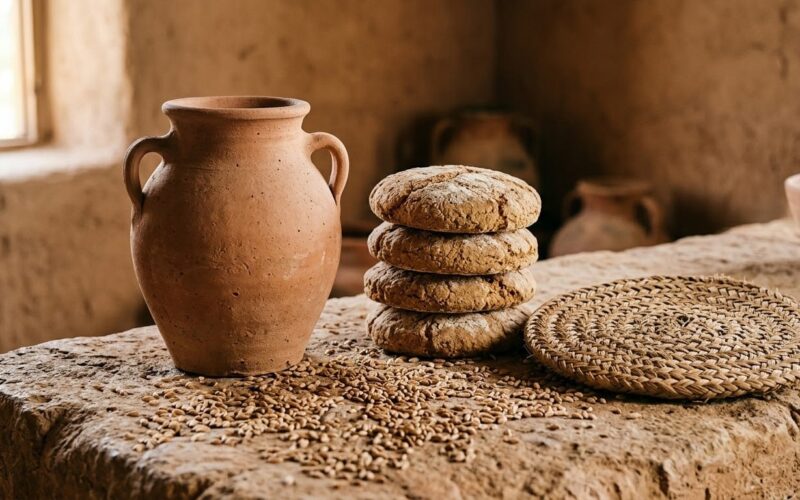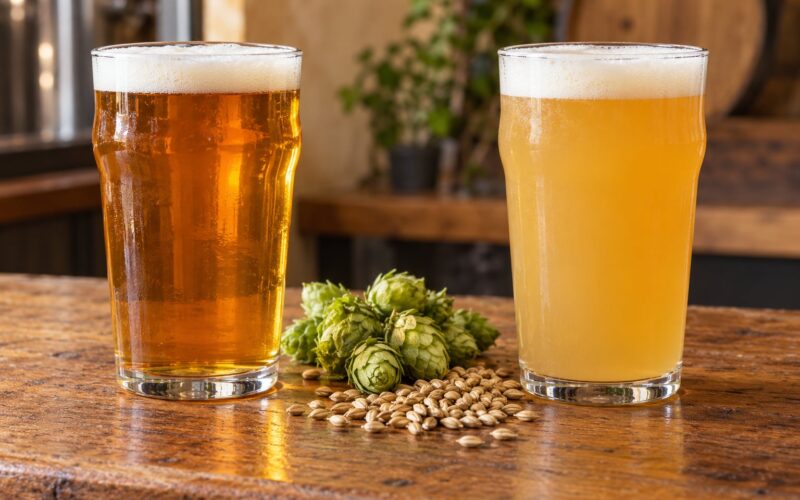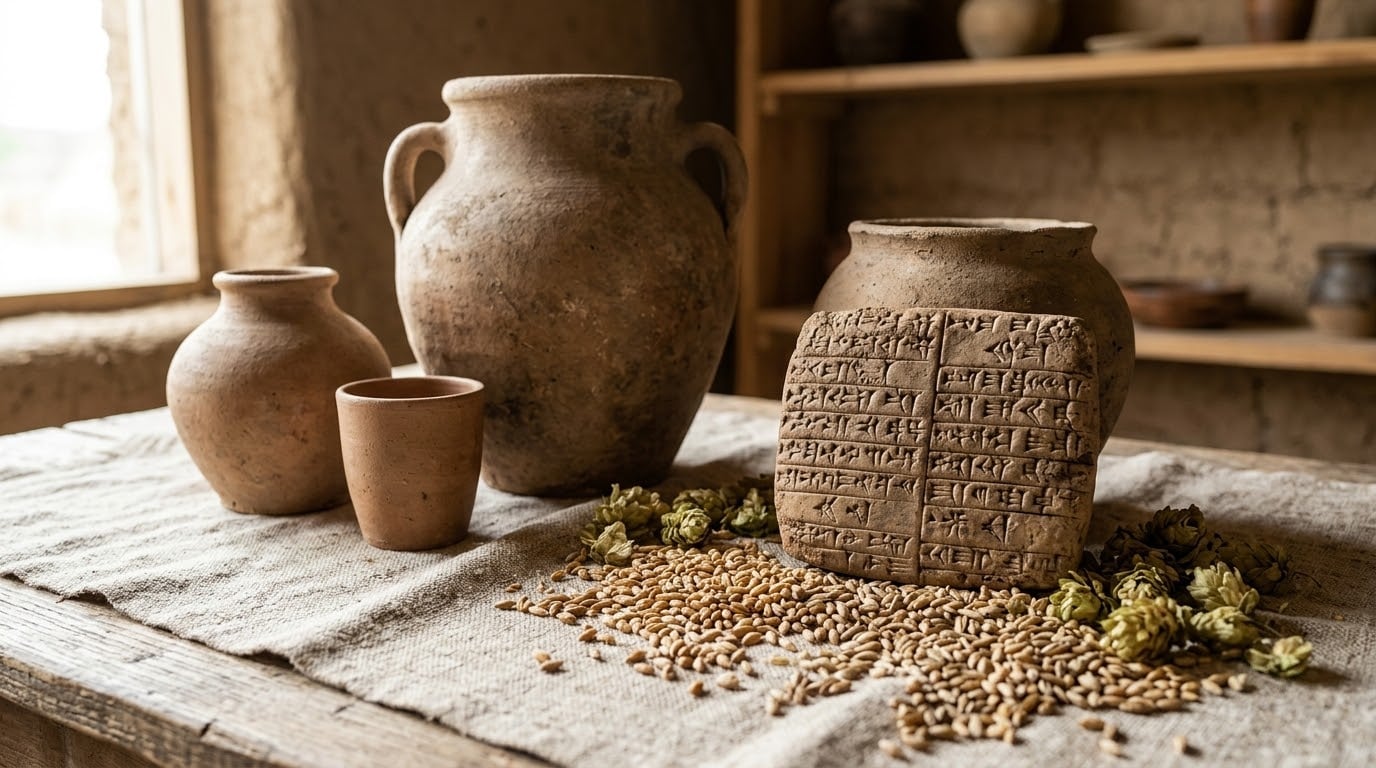
The history of beer is roughly 13,000 years long, and it most likely started by accident: people mixed wild grain with rainwater, wild yeast did the rest, and the resulting drink was safer and more nourishing than anything else on offer. By the time Sumerians were writing down recipes around 1800 BCE, beer was already a ration, a wage, a medicine and a religious offering.
Nobody invented beer. It emerged independently wherever people settled near wild cereal, which is why archaeologists keep finding new sites that move the date around. What we can say with confidence is where the evidence is strongest, how uncertain the earliest dates are, and which of today’s styles came out of which historical shift.
I have pulled together what residue analysis, written tablets and brewery records actually tell us, in chronological order. Where the evidence is contested, I flag it rather than picking a side.
Table of Contents
- When Was Beer First Brewed?
- The history of beer origin dates, side by side
- How Did Beer Begin in Mesopotamia?
- Bappir and the Hymn to Ninkasi
- What Was the History of Beer Before Written Records?
- How Did Beer Spread Through Egypt, Mesopotamia, and Europe?
- What Were Beer’s Middle Ages and Early Modern Years?
- Gruit, then hops
- The styles that came out of this era
- How Did Brewing Change in the 18th and 19th Centuries?
- How Prohibition Changed Beer in the United States?
- How Craft Beer Revived Beer Variety?
- What Does Beer Look Like Today?
- Frequently Asked Questions
- What is the oldest known beer?
- Who invented beer?
- Did ancient Egyptians drink the same type of beer as people today?
- When did hops first become widely used in beer?
- Why is lager associated with Germany and Czechia?
- How did Prohibition affect beer in the United States?
- Conclusion
When Was Beer First Brewed?
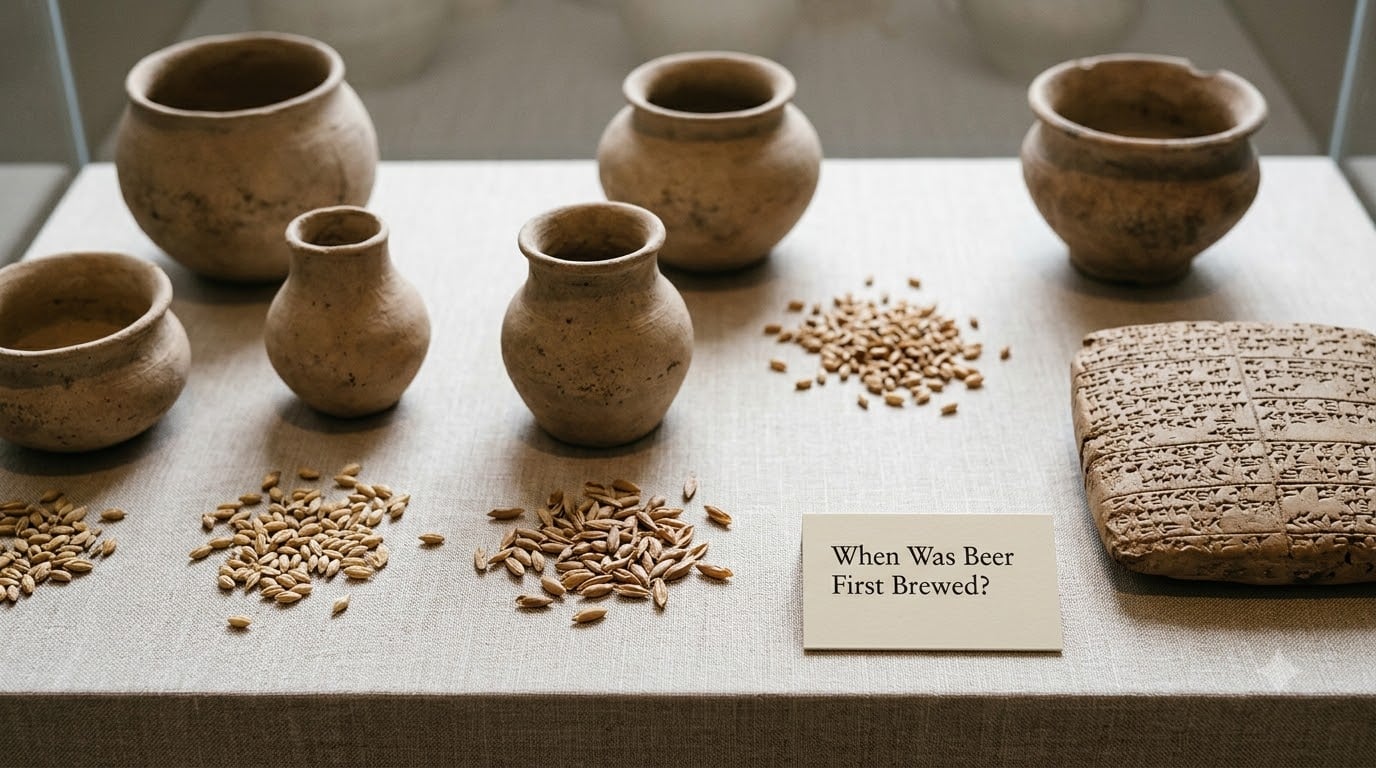
The earliest chemical evidence of a fermented grain drink comes from Ain Ghazal, a Natufian settlement in modern Jordan, where pottery from around 11,000 BCE still held traces of a yeast-and-beverage mix. That is a fermented drink, but whether anyone called it beer, or whether it was properly brewed rather than soured by accident, is a different question.
Other early sites turn up similarly ambiguous evidence. At Jiahu in China, around 7000 BCE, a mixed fermented beverage of honey, hawthorn fruit and rice or barley was found in sealed vessels, though no one has demonstrated it was alcoholic. Goebli Tepe, the monumental site in Anatolia built around 9500 BCE, turned up stone vessels chemically consistent with fermentation, which is remarkable given that the people who built it were still hunter-gatherers.
So why does the 13,000-year figure keep appearing? It comes from the Natufian wild barley and einkorn stores at sites such as Abu Hureyra in Syria, where people gathered grain so densely it looked like farming. If people were already managing wild cereals at that scale, the argument runs, fermented drinks were not far behind.
The history of beer origin dates, side by side
| Claim | Date | Evidence | How firm is it? |
|---|---|---|---|
| Natufian fermented drink, Ain Ghazal | Around 11,000 BCE | Residue in Natufian pottery | Fermentation confirmed, not a deliberate recipe |
| Goebli Tepe | Around 9500 BCE | Chemical traces in stone vessels | Plausible, heavily debated |
| Jiahu | Around 7000 BCE | Sealed vessels with rice, barley, honey and hawthorn mix | Fermented, but alcohol unproven |
| Yamnaya steppe culture | Around 4500 BCE | Infected sprouted grain found in pottery | Strongest link between beer and farming |
| Chemically confirmed barley beer, Iran | Around 5000 BCE | Bitumen-lined jars with barley and herbal additives | The first unambiguous brewed barley beer |
| Mesopotamian brewing | From about 4000 BCE | Sealed jars, tablets and later written recipes | Fully documented by the third millennium |
Read that table as a ladder rather than a race. The honest answer to when beer was first brewed is somewhere between 11,000 BCE and 5000 BCE, with the strongest evidence for real brewing at the bottom of that range and everything above it being increasingly speculative.
How Did Beer Begin in Mesopotamia?
Mesopotamia is where brewing stops being an accident and becomes an industry. By 4000 BCE in the Fertile Crescent, farmers were growing emmer wheat and barley specifically to brew with, not just to eat. Barley tolerates poor soil and short growing seasons better than wheat, which is part of why it became the default brewing grain across the region.
That single change matters enormously. Beer is a crop sink as much as a drink: a surplus of grain can be stored, but it can also be converted into a liquid that is calorie-dense, portable, and, crucially, keeps better than the grain does. Archaeobotanists now argue that barley and wheat were domesticated in part because of brewing demand rather than only because of bread.
Bappir and the Hymn to Ninkasi
Sumerian brewing used bappir, a type of double-baked bread made from barley, which was crumbled into water and left to ferment before being strained through a sieve. A tablet from Nippur dating to roughly the 18th century BCE lists the strainers, the strain, the mixing vat and the pitching jar needed to brew a batch, which tells you the equipment had a settled place in domestic brewing by then.
The same tablet carries the Hymn to Ninkasi, the oldest surviving beer recipe anywhere in the world. Ninkasi is the goddess of beer, credited in Sumerian tradition with being the one who settled the barley into bread and beer. The hymn lists her instructions directly: filter the malt through a sieve, then sweeten it with honey.
There is even a Sumerian proverb on the subject, something along the lines of beer having no equal. Beer was not a side effect of agriculture in Mesopotamia; it was one of the reasons agriculture existed.
It also functioned as a currency. Employers paid workers in beer rations, temple economies stored beer as wealth, and the standard administrative unit of liquid grain was a volume of beer. A tablet from the late third millennium BCE records a delivery of several large vessels to a temple, which is an accounting document rather than a party invite.
What Was the History of Beer Before Written Records?
Before Sumer there was only pattern, and the pattern is this: people who lived near wild cereal almost everywhere on earth drank fermented grain drinks. Chemical evidence for early brewing has surfaced in Africa, in the Andes and across the Fertile Crescent, often with different ingredients, which points strongly to independent invention rather than diffusion from one birthplace.
The Andes had chicha, a fermented maize drink made from a roughly two-stage process where corn is ground, fermented into a sour mash, and then fermented again. African communities across the continent brewed sorghum and millet beers, and in parts of West Africa those sorghum beers remain everyday drinks rather than curiosities. In the Levant and Anatolia, wild emmer and barley made a thinner gruel that fermented on its own whenever it got wet.
This is also where the famous beer-before-bread claim needs a careful hearing. Beer almost certainly existed in fermentable form before leavened bread, because bread requires a similar fermentation step and probably came later. But the Natufian gruel was not modern beer. It was likely sour, thin, faintly alcoholic and closer to a spoiled porridge than to anything you would recognize in a glass.
A 2018 archaeobotanical study sharpened this: the earliest evidence of barley and wheat appearing in cultivated fields aligns closely with the spread of fermented-drink consumption. Bread and beer appear together in the record, and the researchers argued that beer may have been the demand that drove cereal domestication, since nobody domesticates a wild grass for love of a mushy porridge.
The role of yeast deserves a note of its own. Ancient beer was almost certainly brewed with wild yeasts picked up from the air and from the grain itself, which is why it did not taste like modern beer and why it kept poorly. You can see what controlled fermentation does to flavor in our guide to what yeast does in beer.
How Did Beer Spread Through Egypt, Mesopotamia, and Europe?
Egypt picked up the Mesopotamian tradition and made it religion, state policy and ration system at once. Beer had a deity in the form of Osiris, and tomb paintings show brewers at work while offering inscriptions describe beer given to the deceased in the afterlife. Monumental breweries at Abydos and Heliopolis once produced beer on an industrial scale for temple festivals and state labor crews.
The most striking numbers come from the workers’ villages at Giza. Graffiti and ration records suggest laborers building the Great Pyramid received a daily allocation of beer, commonly cited as around five liters per man per day. Nobody should treat that figure as a measured fact, since rations varied, but the direction is clear: in Egypt, beer was considered food and drink as one.
From there it moved west. The Minoans of Crete had a flourishing Bronze Age brewing industry, with large ceramic fermentation vats recovered at Knossos and Akrotiri, and the evidence there resembles the Egyptian and Near Eastern brewing more closely than anything mainland European. The Etruscans and other central Italian peoples brewed their own version, and Homer writes ale being poured at the doors of palaces in the Iliad and Odyssey. Greek and Roman writers both describe ale as the normal drink, with wine as the luxury.
Rome is where the drinking infrastructure institutionalized. Tabernae, the roadside taverns, served cheap fermented drinks to travelers and soldiers on the roads the legions built, and along the Rhine frontier a mixed Celtic-Germanic brewing tradition took root that would later be recognized as the direct ancestor of modern German beer. How that tradition played out against British brewing is a story we cover separately in how British beer differs from American beer.
What Were Beer’s Middle Ages and Early Modern Years?
Medieval Europe did not lose the recipe, it scattered it. Monasteries were the largest single brewers on the continent, producing enough to sell surplus beer at market and to make the abbey money. Ordinary households brewed ale for their own table, and alehouses sold what a household did not want, which made the tavern one of the only places a medieval person could sit indoors with strangers.
Gruit, then hops
For most of the medieval period beer was brewed without hops, using a bittering and preservative mixture of herbs and spices known as gruit: bog myrtle, yarrow, gentian, rosemary and others, sweetened with honey. Gruit ales were regional in a way modern beer is not, so a Franconian gruit and a Flemish one shared a method but not a flavor.
Hops changed that. The first documented use in brewing is generally dated to 822 AD, when Adalard of Corbie, abbot of a Carolingian monastery in northern France, submitted a report on hops to Charlemagne. Hops came into German and central European brewing through the Low Countries over the following centuries.
There was resistance. Hildegard of Bingen, writing in the 12th century, treated hops with suspicion because she associated them with the corruption of beer and with beer causing melancholy. The practical argument eventually won on its own: the lupulin in hops contains beta acids that lower the pH of wort and inhibit the bacteria that spoil unrefrigerated beer, which gave hopped beer a longer shelf life than any gruit ale ever achieved.
Hops needed yeast to become a success, and that is where the 1516 Bavarian Reinheitsgebot comes in. The original text allowed only barley, hops and water, plus the implicit yeast in the brewing process, which caused no trouble because brewers had no notion of isolating it. Yeast became a permitted written ingredient only in 1806, when the rule was revised. What the law did was less about purity than about making regional beer enforceable and taxed in a single market.
The styles that came out of this era
- Porter, London, early 18th century, made possible only because top fermentation on brown malt needed no kiln, so bakers’ spent malt became beer.
- Lager, Bavaria, from the 15th century, fermented cold with bottom yeast and stored cold in cellars, so it survived summer without spoiling.
- Pilsner, Plzen 1842, a pale lager with Saaz hops, arguably the single most copied recipe in brewing.
- Pale ale and India pale ale, where extra hops and longer maturation shipped beer to British India and came back more bitter than it left.
How Did Brewing Change in the 18th and 19th Centuries?
The 1800s turned brewing from a household and monastic craft into an engineering discipline. No single inventor caused it, but a cluster of changes arrived together and fed each other.
Pale malt, kilned at higher temperatures, replaced smoky brown malt, so beer stopped tasting like woodsmoke unless brewers deliberately added smoke. Steam power replaced hand-fired furnaces and gave brewers steady, controllable heat. The thermometer made mash temperatures predictable, and the hydrometer, which measures specific gravity, let brewers know when fermentation had finished instead of guessing by taste.
Then Louis Pasteur, working from the mid-1860s, established that fermentation was caused by living microorganisms rather than by some chemical change in the wort itself. His 1876 book Studies on Beer showed brewers how to manage yeast as a cultured input, and he identified the spoilage organisms that ruined warm-fermented beer. His work is the reason lager yeast exists as a managed organism rather than whatever wild fungus was in the cellar.
Rail distribution changed scale. Draft beer did not travel. Bottled and kegged beer did, and a national market turned local brewers into national brands. In the United States, the number of breweries grew from roughly 400 in 1850 to several thousand by the 1870s, concentrated in the German and Czech immigrant communities that had carried lager brewing into the country. The 1876 Centennial Exhibition in Philadelphia is usually marked as the moment American brewers started branding for export, and the pilsner lager of the era is what most people mean when they say American beer today.
Antiseptic brewing and mechanized bottling arrived in the same window, which is why a bottle of 19th-century lager could cross a continent without going bad. What it also produced, by around 1900, was a market in which flavor variety started collapsing into a single pale lager template, and the American consumer genuinely liked it.
How Prohibition Changed Beer in the United States?
National Prohibition did not start in 1920. State-level alcohol bans had been spreading for decades, and Maine went dry in 1851, with dozens of states following before the First World War. The main targets of the temperance movement were saloons and distilled spirits rather than beer, and pre-Prohibition home brewing was lawful in many states.
The 18th Amendment took effect in January 1920 under the Volstead Act, which defined alcoholic beverages as anything above 0.5 percent alcohol. Brewing was allowed, but beer above 3.2 percent by volume was prohibited, which killed high-gravity brewing overnight. Breweries pivoted to near beer at around 2 percent, and U.S. breweries dropped from roughly 1,300 to a couple of hundred, leaving a small group of survivors.
Illegal brewing never stopped. Homebrew and bootleg beer moved openly onto speakeasies, medicinal supply chains, and soft drink bottling plants that turned their lines back to alcohol quickly after repeal. The taste memory of pre-Prohibition lager, served at a speakeasy, became the standard people compared every beer to afterward.
Repeal arrived with the 21st Amendment in 1933, and beer returned to a market that had spent thirteen years drinking 3.2 percent versions. The mass-market lager brands that emerged afterward, with industrial breweries, canned beer and national advertising, came out of that return rather than out of the pre-1920 industry.
How Craft Beer Revived Beer Variety?
For most of the 20th century American beer meant light lager and almost nothing else, and European brewing was in a similar rut. The reversal started with an unlikely law: the 1978 federal act that legalized the sale of equipment for homebrewing, letting homebrewers brew and share beer without paying commercial licensing fees.
Homebrewing gave brewers somewhere to experiment with a cheap recipe before risking money at scale, and by the late 1970s and early 1980s small breweries were opening to serve that audience directly. Anchor Brewing revived steam beer in 1984, and the brewpub model, which put brewing equipment in the middle of a bar, spread once states began allowing on-site brewing rather than treating the taproom as a separate retail question. The Great American Beer Festival, first held in 1981, gave the new segment an annual showcase.
What came back was specific: German lager styles that had faded, British pale ales and porters, Belgian lambic and tripel, and a renewed American obsession with hops that became the IPA. Barley wine, imperial stout and the barrel-aged sour styles grew out of the same willingness to brew in small batches without asking permission.
The other story of this period is consolidation. Mergers reshaped brewing through the late 1990s and 2000s, and the 2016 combination of Anheuser-Busch InBev and SABMiller pushed the share of global beer volume held by a small number of groups to levels nobody in the industry had seen before. Enthusiasts still argue about whether the craft segment counts as genuinely independent, and the Reinheitsgebot has reappeared in the conversation as a shorthand for that argument.
What Does Beer Look Like Today?
Beer’s history maps cleanly onto a modern shelf, and knowing the era a style came from changes how you read it. Pale lager dominates global volume because that is what industrial chemistry, refrigeration and rail distribution optimized for. Lager as a style is older and more Central European than most people assume.
Alongside it, porter and stout trace to 18th-century London, pilsner to a Bohemian town in 1842, lambic to spontaneous fermentation in Brussels, and IPA to the hop habit that grew in Britain and the United States over the last forty years. Non-alcoholic brewing, which existed as soft beer and near beer for as long as there has been a brewing industry, is now a real category with real shelves.
The other half of today’s picture sits outside Europe and North America. African sorghum beers, Andean chicha, Japanese sake and Chinese jiu are all living traditions with their own economics and their own scale, not historical footnotes. Beer tourism, brewery taprooms, festivals like Oktoberfest, and the shift toward ever more hop-forward styles are simply the current chapter of a story that ran for thousands of years without a single invention point.
If you want to taste the history rather than just read it, start with a gruit ale or a lambic, then find a steam beer or a pre-Prohibition-style pilsner, and read up on the grain underneath it with our guide to what malt does in beer flavor.
Frequently Asked Questions
What is the oldest known beer?
The oldest chemically confirmed brewed barley beer comes from jars found in Iran and dated to about 5000 BCE. Earlier fermented grain drinks exist, including residue at the Natufian site of Ain Ghazal in Jordan from around 11,000 BCE, but those are fermented beverages rather than confirmed beer. So the honest range is 11,000 BCE for a fermented grain drink and 5000 BCE for beer as we would recognize it.
Who invented beer?
Nobody knows, and the question is probably the wrong shape. There was no first brewer. Fermented grain drinks appear independently in the Fertile Crescent, in China, in Africa and in the Andes, using whatever cereal was local, which suggests people discovered the chemistry of fermentation wherever they found grain. The most useful answer is that brewing was invented many times, very early, probably several times before writing.
Did ancient Egyptians drink the same type of beer as people today?
No. Egyptian beer was made from emmer wheat and barley and was often heavily strained, so it read as a thin, gritty gruel rather than a clear drink. It was frequently sweetened and aromatized with honey, herbs or fruit, and it was brewed for immediate consumption in ancient Egypt rather than stored. Some sources add date syrup to rich brews, but fermentation itself was the standard flavor change.
When did hops first become widely used in beer?
Hops were first documented in brewing in 822 AD, when the abbot Adalard of Corbie reported on them to Charlemagne. Adoption spread through the Low Countries into Germany over the following centuries, and by around 1400 hopped beer was standard in northern Europe. The decisive advantage was not bitterness but preservation, since lupulin lowers wort pH and slows the bacteria that spoil unrefrigerated beer.
Why is lager associated with Germany and Czechia?
Lager is the product of cold fermentation and cold storage. German breweries in the 15th century developed bottom fermentation with yeast that works slowly in cool cellars, which let them brew in the winter and keep beer through the summer. Bohemian brewers took that method and pushed it further with pale malt and Saaz hops, producing pilsner in Plzen in 1842, the most copied lager recipe in the world.
How did Prohibition affect beer in the United States?
Prohibition from 1920 to 1933 banned beer above 3.2 percent alcohol by volume, which shut down high-gravity brewing and drove breweries into near beer at around 2 percent. Thousands of legal breweries closed and the survivors consolidated. Homebrewing and bootlegging continued throughout, speakeasies built a taste for pre-Prohibition lager, and the 21st Amendment repealed Prohibition in 1933.
Conclusion
The history of beer is not a march of progress from bad gruel to good lager. It is thousands of small local inventions that kept getting rediscovered, from a Natufian mix of wild grain and rainwater to Sumerian temple breweries, medieval abbeys, Victorian engineering and the taprooms that now serve styles a single revivalist brewery brought back from near extinction.
If you only follow one thread, make it this: nearly every beer style on the shelf is a fossil of a specific historical moment. Start with the timeline above, then pick a style whose origin decade interests you and find a version of it to drink this week.