What is a pumpkin beer actually made with? It is regular beer: water, malted barley, hops and yeast, plus pumpkin or a similar gourd added as an adjunct, and almost always a blend of warm spices. The part that surprises most people is how little of the flavor comes from the squash itself.
Here is the honest version. Pumpkin is a sugar and body ingredient, not a flavor ingredient. It brings fermentable sugars, starch for a thicker mouthfeel, and a faintly earthy note on the finish. Everything you actually identify as pumpkin – warm spice, sweetness, a hint of pie crust – comes from the spices added late in brewing. A brewery can bottle a pumpkin beer with no pumpkin in it at all and most drinkers would not notice.
That gap between what people expect and what is in the glass is the whole story of this style, so here is what goes in the kettle, where it goes, and how to check a bottle for yourself.
Table of Contents
- What Is a Pumpkin Beer Actually Made With?
- How Does Pumpkin Get Into Pumpkin Beer?
- What Gives Pumpkin Beer Its Spicy Flavor?
- Why Is Pumpkin Beer Orange or Brown?
- How Is Pumpkin Beer Brewed?
- Is Pumpkin Beer Always Sweet, Strong, or Seasonal?
- What Should You Check on a Pumpkin Beer Label?
- Frequently Asked Questions
- Is pumpkin beer made with real pumpkin?
- Does pumpkin beer contain pumpkin pie spices?
- Why does pumpkin beer taste sweet?
- Is pumpkin beer stronger than regular beer?
- Does pumpkin beer always taste like pumpkin pie?
- Is pumpkin beer seasonal or available year-round?
- Conclusion
What Is a Pumpkin Beer Actually Made With?
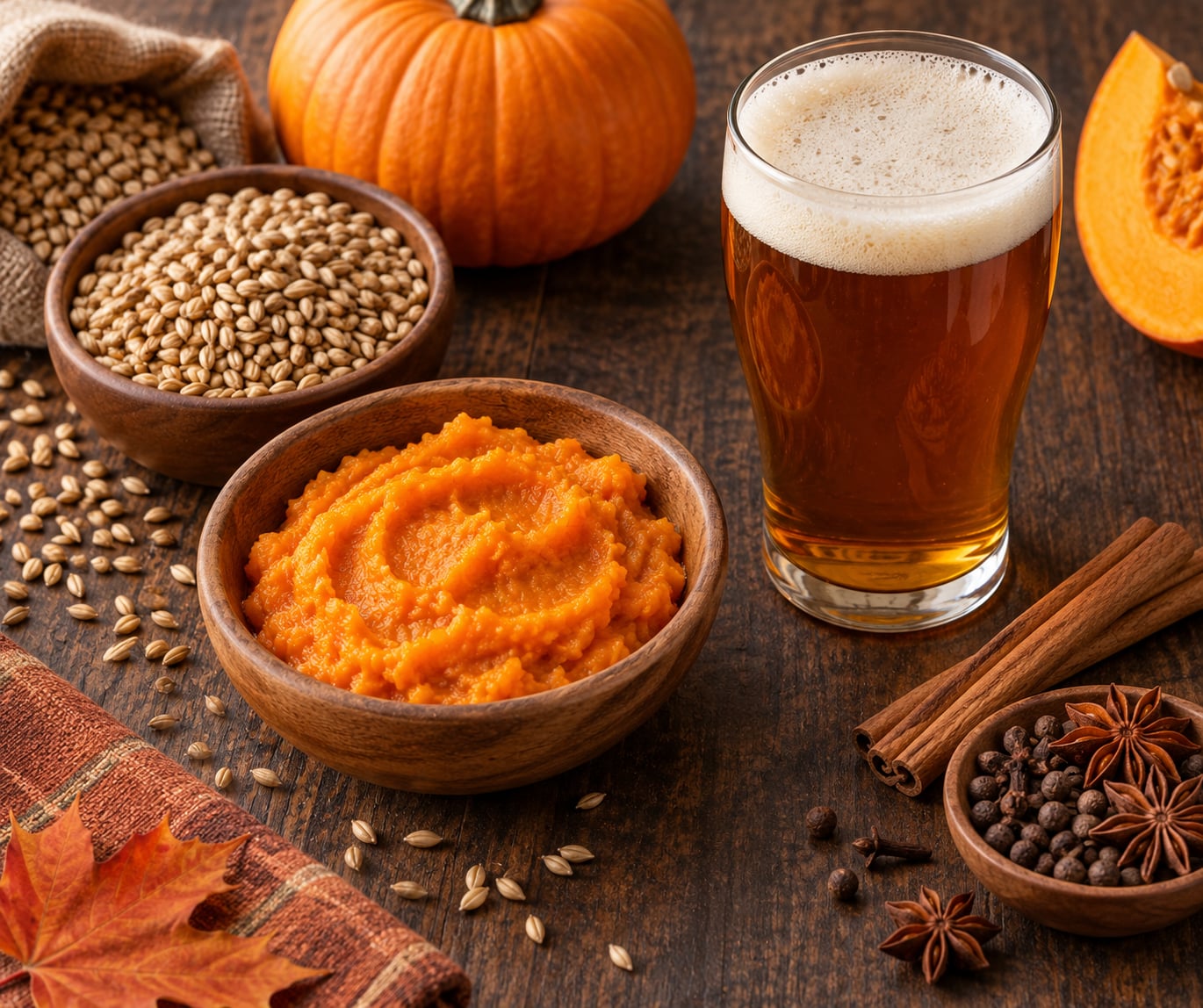
The base of any pumpkin beer is the standard four: water, malted barley, hops for bitterness and aroma, and yeast to ferment the wort. Pumpkin or squash joins that list as an adjunct, which simply means an ingredient added on top of the grain bill.
On top of that, most brewers add spices in the last minutes of the boil or during fermentation. Cinnamon, nutmeg, cloves, allspice and ginger are the usual suspects, and vanilla bean sometimes shows up too.
One thing worth knowing before you buy anything: “Pumpkin Ale” is not a beer style on its own. The Beer Judge Certification Program treats it as a characteristic, not a category, which means it can sit on top of an amber ale, a stout, a porter, a Belgian ale, a saison, or even a lager. What kind of beer is pumpkin beer? Honestly, whatever the base beer is, with squash and spice pushed through it.
Under the BJCP guidelines, a beer that leans on pumpkin, squash or spices is usually entered into the Spice, Herb, or Vegetable Beer category, where the pumpkin or vegetable character should be a clear part of the overall aroma. A beer with no pumpkin and only pie spices belongs there too, because the style is judged on the aroma, not on the label claim.
How Does Pumpkin Get Into Pumpkin Beer?
There are five routes a brewery can take, and they produce noticeably different beers.
| What the brewery uses | What it does to the beer | Trade-off |
|---|---|---|
| Fresh pumpkin or squash, roasted or raw | Adds body, a drier finish and real roasted or earthy depth | Gums up the mash and complicates sparging; seasonal only |
| Canned pumpkin puree | Consistent sugars and a smooth body year-round | Can taste flat and faintly vegetal; it is the shortcut brewers get judged for |
| Frozen puree | Similar to canned, often closer to fresh in aroma | Costs more and still arrives whenever it arrives |
| Other squash: butternut, kabocha, delicata | Brighter, sweeter and more aromatic than pumpkin, and cheaper in some regions | Calling it pumpkin beer stretches the name; some drinkers find it too fruity |
| Spices only, no pumpkin at all | Pie-spice character with a clean, light body and no vegetal notes | The “no actual pumpkin” complaint that drives homebrewers crazy |
The canning route exists for a boring, practical reason: fresh pumpkin cannot be harvested until early fall, and shelf space for seasonal beer fills up in August. Brewing with canned puree is how pumpkin beer lands on shelves two months before anyone is actually carving a jack-o’-lantern.
Homebrewers on r/Homebrewing have been blunt about the real-pumpkin tradeoff for years. The vegetable breaks up the mash bed, gums the sparge arm, and makes lauter a genuine chore. That is why a lot of small breweries skip pumpkin entirely and go with delicata squash and saison yeast, which gets you autumn character without the work.
What Gives Pumpkin Beer Its Spicy Flavor?
The spice blend, almost entirely. A typical pumpkin beer gets cinnamon for warmth, nutmeg for depth, cloves for a sharp edge, allspice as a bridge between them, and ginger for a little heat that lingers. Some brewers add cardamom, star anise, or a vanilla bean in the last few minutes of the boil.
Whole spices and ground spices behave differently. Ground powder disperses fast and can leave a dusty film in the bottom of the glass. Whole cinnamon sticks, cloves and vanilla pods infuse more slowly and give a cleaner, rounder result, which is why many craft brewers prefer them.
One warning: a baking packet of pumpkin pie spice is not the same thing as a beer blend. Baking blends are heavy on allspice and clove and often sweetened, and at beer-strength doses they can turn a clean amber ale into something that tastes like a candle. Breweries that care about balance make their own.
Why Is Pumpkin Beer Orange or Brown?
The color comes from three places: the pumpkin itself, the malt, and how long the beer sat around after it fermented. Roast a squash and it goes dark and sweet in the pan, and the same happens in a kettle.
A pale ale brewed with a little pumpkin stays a light copper. Roasted pumpkin or a dose of caramel or chocolate malt pushes it into amber and mahogany. Stout and porter base styles take it further, all the way to opaque brown, because the base beer was already that color.
Color tells you nothing about strength or sweetness. A deep amber pumpkin beer can be a sessionable 4.5 percent, and a pale golden one can be a warming 8 percent barrel-aged monster. Do not read the glass to guess the ABV.
How Is Pumpkin Beer Brewed?
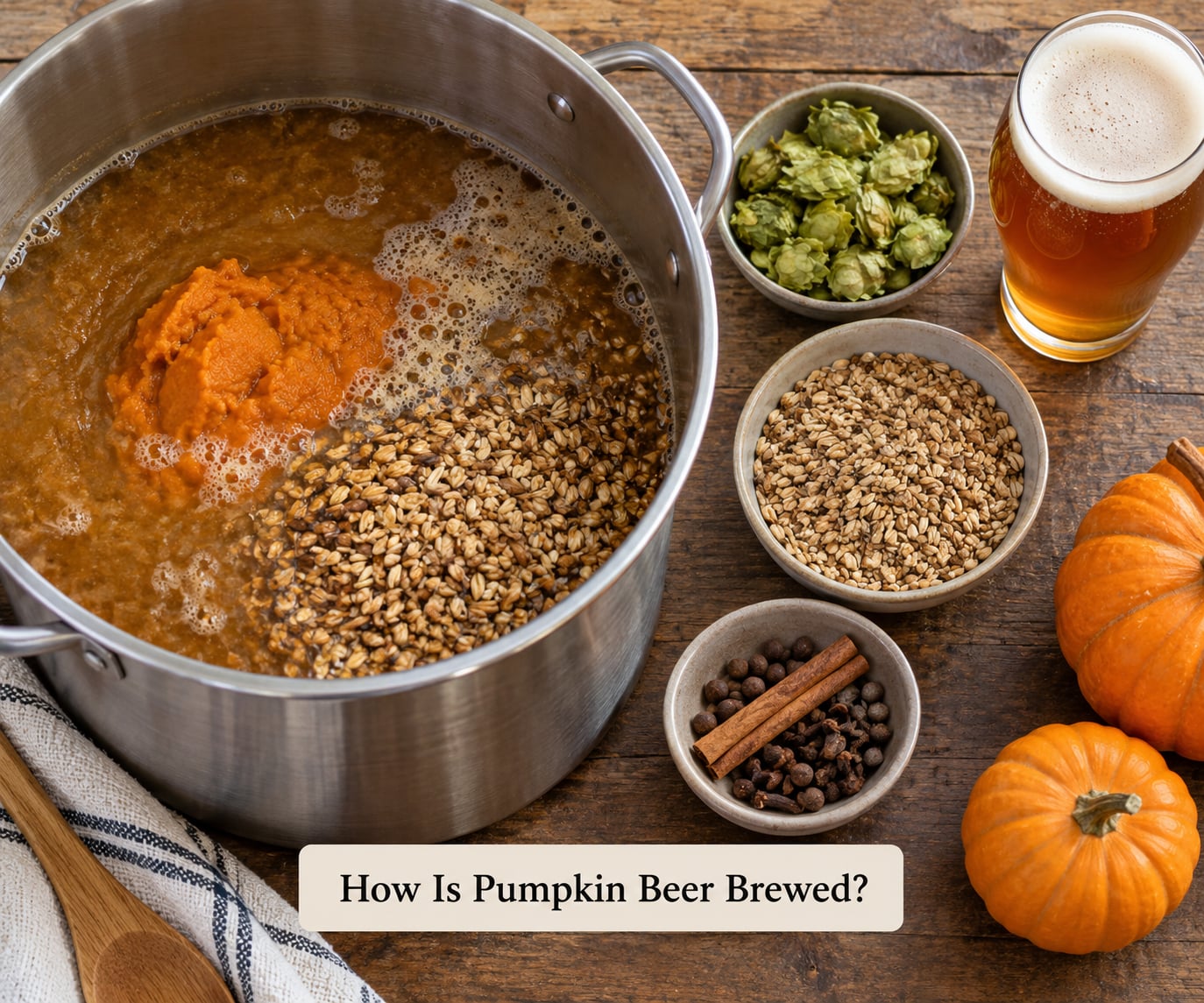
The process looks like a normal brew day until the pumpkin shows up. Breweries mash grain with hot water to convert starch into sugar, then rinse the spent grain with hot water, a step called sparging, to pull the remaining sugars into the wort.
When pumpkin goes into the mash tun, it brings unconverted starch with it, which is the useful part. Barley enzymes work on the pumpkin starch and convert it to fermentable sugar, which is where the extra body and dryness come from. If too much unconverted starch survives into the fermenter, you get a harsh, astringent, grassy note instead of pleasant squash character. That astringency is the single complaint homebrewers raise most.
Hops go in during the boil as usual. Spices usually go in late, somewhere in the last five to fifteen minutes of the boil, or during fermentation as a dry addition, so the aromatics stay bright instead of cooking away.
Yeast does the rest, turning those sugars into alcohol and carbonation. Most pumpkin ales ferment clean with a standard ale strain. Saison yeast is a popular alternative because its own peppery and fruity character does part of the seasonal work on its own.
Is Pumpkin Beer Always Sweet, Strong, or Seasonal?
No to all three. Sweetness comes from three sources, and knowing which one you are tasting explains most pumpkin beers: residual sugar left after fermentation, malt character from the base beer, and the sheer amount of pumpkin contributing fermentable sugars that the yeast converts and finishes out.
Strength sits roughly in the usual craft range, with many examples between about 4 and 7 percent ABV and barrel-aged or high-alcohol versions going higher. Pumpkin does not make a beer strong. A stout with pumpkin in it can be heavy without being strong, and a pumpkin-flavored pilsner can be sessionable despite the spice load.
As for the base style, the range is wide: amber ales and porters are the classic choice, but you will find pumpkin stouts, pumpkin sours, pumpkin IPAs, pumpkin brown ales and pumpkin lagers on shelves right now. Saison, porter and wheat beer bases are all common.
What Should You Check on a Pumpkin Beer Label?
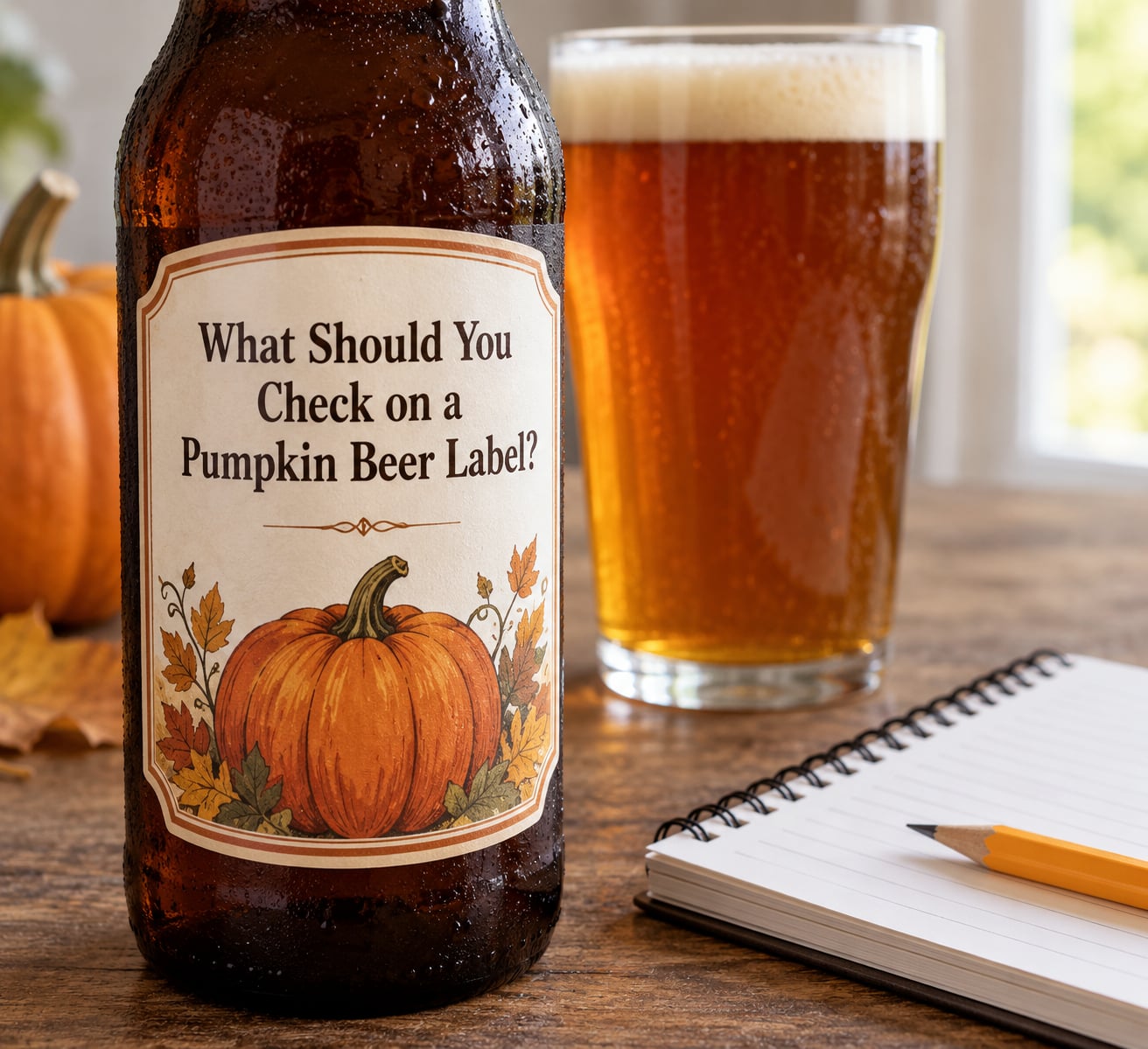
Front labels rarely tell you anything useful. Here is a short check that takes about thirty seconds.
First, read the style line on the label or the back. If it says amber ale, wheat, saison, stout or lager, you at least know the base. Then look at the ingredient statement for wording like pumpkin puree, pumpkin, or squash, and check whether pumpkin sits in the ingredient list or whether natural flavors are doing the work. Beer rules differ by state, so some labels carry full ingredients and others do not.
Next, check ABV and IBU. A beer listing 9 or more IBU is leaning bitter and more bitter than sweet, and a 5.5 percent ABV pumpkin ale is a completely different drinking occasion than a 9 percent one.
Finally, use the release date as a proxy. Beers that land in July and August were almost certainly brewed with canned or frozen puree. A beer released in September or October, from a brewery that talks about its squash sourcing on the website, is a better bet for actual pumpkin.
When in doubt, the brewery website usually lists the ingredients for every beer. That is faster than guessing from the bottle.
Frequently Asked Questions
Is pumpkin beer made with real pumpkin?
Some are, and some are not. Large breweries brewing a national seasonal release almost always use canned or frozen puree so the beer can hit shelves in August. Regional breweries releasing in September or October, and homebrewers, are far more likely to use fresh roasted squash or real purée. The label or the brewery website will usually tell you.
Does pumpkin beer contain pumpkin pie spices?
Nearly all of it. Cinnamon, nutmeg, cloves, allspice and ginger are the backbone, with vanilla or a wider spice bill showing up in some batches. Because pumpkin itself has very little aroma, the spices are doing most of the work. A beer with no pumpkin at all but a full spice blend is common and entirely legal.
Why does pumpkin beer taste sweet?
Three things drive the sweetness: unfermented sugar left after fermentation, the caramel character of the base malt, and the pumpkin itself, which is loaded with fermentable sugars. A pumpkin that was roasted before going into the kettle adds bready, almost gravy-like depth on top of that, which people read as sweetness.
Is pumpkin beer stronger than regular beer?
Not inherently. Most pumpkin beers land between roughly 4 and 7 percent ABV, right in the range of mainstream lager and amber ale. Strength comes from the base style, not the pumpkin. Watch out for barrel-aged, imperial and high-alcohol pumpkin stouts, which can run well past 9 percent.
Does pumpkin beer always taste like pumpkin pie?
No. That is the expectation rather than the rule. A beer spiced heavily toward clove and allspice will read as pie. One built on saison yeast and roasted delicata squash tastes earthy, peppery and faintly sweet instead. Stronger, more bitter examples taste more like a spicy amber ale than dessert.
Is pumpkin beer seasonal or available year-round?
Most is seasonal, released from late summer through early winter. Year-round versions exist, often as a core beer rather than a harvest release. Shelf space is the reason for the early timing: retailers want fall beer displayed in August, and brewing with canned puree is what makes that schedule work.
Conclusion
So, what is a pumpkin beer actually made with? Water, malted barley, hops, yeast, pumpkin or squash as an adjunct, and a spice blend that supplies nearly all the flavor. Pumpkin contributes sugar, body and a drier finish; the cinnamon, nutmeg, cloves and allspice are what you are actually tasting.
At the bar, start with the style line and the ABV, then check whether the brewery lists pumpkin in the ingredients. If you want real squash, look for a September or October release from a brewery that names its farm source. Anything labeled pumpkin ale with 20 IBU or more is going to taste like spiced beer rather than dessert, and that is usually the more interesting glass anyway.