A nanobrewery is a licensed commercial brewery working on a 1-3 barrel system, brewing under 3 barrels (about 93 gallons) at a time and producing fewer than 500 barrels a year. Most sell their beer straight from a small taproom rather than through distributors, which is why the beer is so fresh and the whole operation fits in a few hundred square feet.
The name describes scale, not style. A nano can make a crisp pilsner, a hazy IPA, a sour, or a barrel-aged stout, and the beer is brewed with the same steps any brewery uses: mash, lauter, boil, ferment, condition, package. What changes at this size is the volume, the pace, and how much of the work one or two people are doing by hand.
Here is what actually happens inside one, step by step, along with the parts that decide whether the beer comes out clean or oxidized, bright or dull.
Table of Contents
- What Are Nanobreweries?
- How a nanobrewery differs from homebrewing
- How a nanobrewery differs from a microbrewery
- How Small Is a Nanobrewery Batch?
- How Nanobreweries Work from Grain to Bottle
- How nanobreweries work on brew day
- Why Tiny Batches Can Taste More Intense
- What Ingredients Are Used in a Nanobrewery?
- What Equipment Does a Nanobrewery Need?
- How Does Nanobrewing Stay Consistent?
- How Are Nanobeers Packaged and Kept?
- Can a Nanobrewery Scale Up Without Changing the Beer?
- Are Nanobeers Better Than Beer from Large Breweries?
- Frequently Asked Questions
- Do nanobreweries make a specific style of beer?
- Can I use the same yeast for every nanobatch?
- How long does beer made in a tiny batch need to ferment?
- Do nanobeers need to be bottled like traditional beer?
- Is a nanobrewery allowed to sell beer commercially?
- Conclusion: Understand the Process Before the Batch Size
What Are Nanobreweries?
A nanobrewery is a commercial brewery that produces less than 3 barrels per batch on a 1-3 barrel system, with annual output usually under 500 barrels. The Brewers Association groups craft breweries by annual volume, and breweries in the smallest band operate with a tiny footprint, a handful of tanks, and often just the owner working on brew day.
Three things separate a nano from the other two ends of the hobby-to-commercial spectrum: it is licensed and legal, it sells beer rather than giving it away, and it runs on a scale where one batch is small enough to fill a couple of tanks in a single room.
How a nanobrewery differs from homebrewing
Homebrewers produce for themselves, often on a 5-15 gallon system, and federal law treats beer made at home for personal consumption as outside commercial sale. A nanobrewer makes the same beer in 60-120 gallon batches and needs a federal Brewer’s Notice from the TTB, state permits, and state-approved label artwork before a single pint leaves the building.
That paperwork is the real dividing line. Equipment can be bought on a weekend; licensing usually takes months and involves building plans, water testing, and sometimes a fire marshal visit.
How a nanobrewery differs from a microbrewery
A microbrewery runs the same process on a bigger footprint, typically with 10-30 barrel fermenters and enough throughput to supply distributors and restaurants across a region. A nano sells mostly in its own room, which keeps distribution costs near zero but caps how much it can ever sell.
| Scale | Batch size | Annual output | Where beer sells |
|---|---|---|---|
| Homebrew kettle | 5-15 gallons | Personal use | Not legal for sale |
| Nanobrewery | Under 3 barrels (about 93 gallons) | Under 500 barrels | Own taproom, local licenses |
| Microbrewery | 10-30 barrels | Thousands of barrels | Taproom plus wholesale |
| Regional brewery | 100 barrels and up | Tens of thousands of barrels | Distributed across many states |
One brewery asked on the r/TheBrewery forum what counts as nano capacity, and the answers clustered around 1-3 barrel systems with three or four fermenters. Adding tanks keeps you in the same category, it just buys you more of it.
How Small Is a Nanobrewery Batch?
Nanobatch sizes run from about 15 gallons to just under 100 gallons, with a 1 barrel batch at 31 gallons and a 3 barrel batch at about 93 gallons. A typical 3 barrel batch works out to roughly 1,000 twelve-ounce servings, though real yield is lower once you subtract grain, hop, and yeast losses and the beer still sitting in the lines.
There is no single legal cutoff that defines a nanobrewery. One operations guide puts it at under 3 barrels per batch with a 1-3 barrel system, but that is a convention the industry uses, not a regulation. A brewery could run a 5 barrel brewhouse and still be nano-scale if the total volume stays small.
Vessel size is also not the whole story. A 1 barrel brewhouse paired with eight fermenters turns out more beer per year than a 3 barrel brewhouse with two tanks.
| Batch size | Gallons | Liters | 12 oz servings |
|---|---|---|---|
| 15 gallon test batch | 15 | 57 | About 160 |
| 1 barrel | 31 | 117 | About 330 |
| 1.5 barrels | 47 | 177 | About 500 |
| 3 barrels | 93 | 352 | About 1,000 |
| 7 barrels | 217 | 821 | About 2,300 |
Do the throughput math yourself and the ceiling shows up fast. A 3 barrel system brewing twice a week for 52 weeks makes about 312 barrels a year. Brew four times a week and you are near 624 barrels, which is no longer nano territory by volume.
How Nanobreweries Work from Grain to Bottle
The full cycle takes roughly 12-20 hours of hands-on work on brew day, spread across milling, mashing, lautering, boiling, chilling, and transfer. Fermentation happens after everyone goes home, and packaging comes days or weeks later.
How nanobreweries work on brew day
- Milling and mashing (about 60-90 minutes). Brewers crush malt to expose starch, mix it with hot water in the mash tun, and hold it at 145-158 F while enzymes convert starch into fermentable sugar. The liquid that drains out afterward is wort.
- Lautering (about 45-75 minutes). Wort is drawn off through the grain bed. Slow lautering gives clearer beer but costs time, and most nanos accept a faster run and deal with haze later.
- Boiling (about 60-90 minutes). The kettle brings wort to a rolling boil. Early additions deliver bitterness, late additions deliver aroma, and a hop addition near the end of the boil and a quick chill preserve the hop character that drinkers expect.
- Whirlpool and chill (about 20-45 minutes). A whirlpool lets hop material settle so it can be removed, then wort passes through a heat exchanger or glycol chiller to hit pitching temperature in under an hour.
- Transfer to fermenters. A pump or gravity moves wort into a conical fermenter. Everything that touches it should be sanitized, and oxygen pickup here is the main cause of cardboard and apple off-flavors later.
- Fermentation (about 5-14 days). Yeast converts sugar to alcohol and carbon dioxide. Most ales finish in 5-10 days at typical ale temperatures, and lagers take two to three times longer at cooler temperatures.
- Cold crash and conditioning. The tank drops to near freezing for a day or two so yeast and proteins drop out, which clears the beer and lets harsh edges settle.
- Carbonation and packaging. Beer moves to a brite tank, is carbonated with CO2, then goes out on keg or gets filled into cans or bottles.
- Cleanup. Tanks and lines get washed and sanitized before the next run. A clean-in-place (CIP) skid automates this with caustic and acid cycles, and at nano scale it is the difference between a consistent beer and one that fouls.
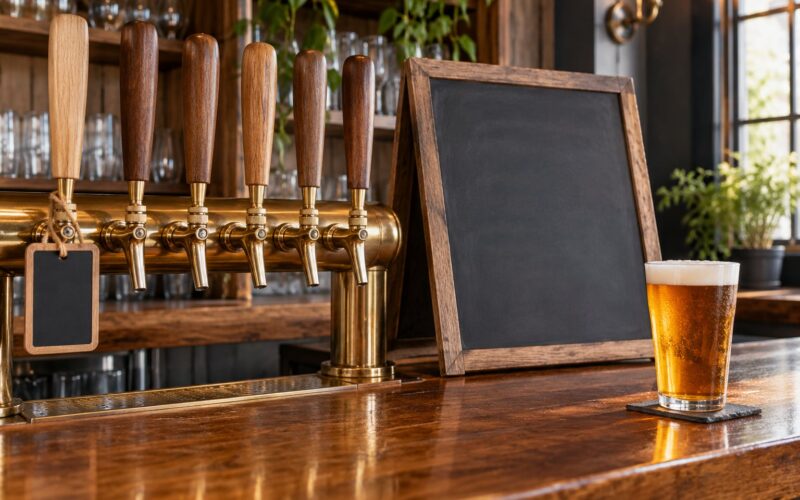
Two Utah nanobreweries profiled by Utah Stories ran batches of roughly 100 gallons, and their tap handles grew from nine to twelve as demand climbed. That is the whole growth story in miniature: more batches and more tanks, not a bigger brewery.
Why Tiny Batches Can Taste More Intense
Tiny batches concentrate and emphasize flavors because less liquid means faster heat and oxygen changes, faster yeast growth, and no chance to blend a rough batch with a smooth one. That intensity is not automatically good beer, but it is a distinct character, and it is the honest reason people notice nano beer.
Surface-to-volume ratio drives a lot of it. A small kettle heats in a few minutes, so a stray boil or a dropped temperature swings further and faster than in a 15 barrel system.
Oxygen is the other big one. Headspace in a small tank is a larger share of the total volume, and more pickups happen at each transfer, so packaging speed matters more than brewery size would suggest.
Yeast selection is also easier at this scale. A brewer can pick a different strain for a special release, or pitch a big healthy starter because a single sachet is a rounding error against a 60 gallon batch.
Hop handling gets the same kind of attention, and without blending there is no hiding of an off day. Some nano breweries say they sell about 85 percent of a run within 12 days, which is plausible for a taproom-only operation but is vendor-reported, so treat it as an example rather than a benchmark.
What Ingredients Are Used in a Nanobrewery?
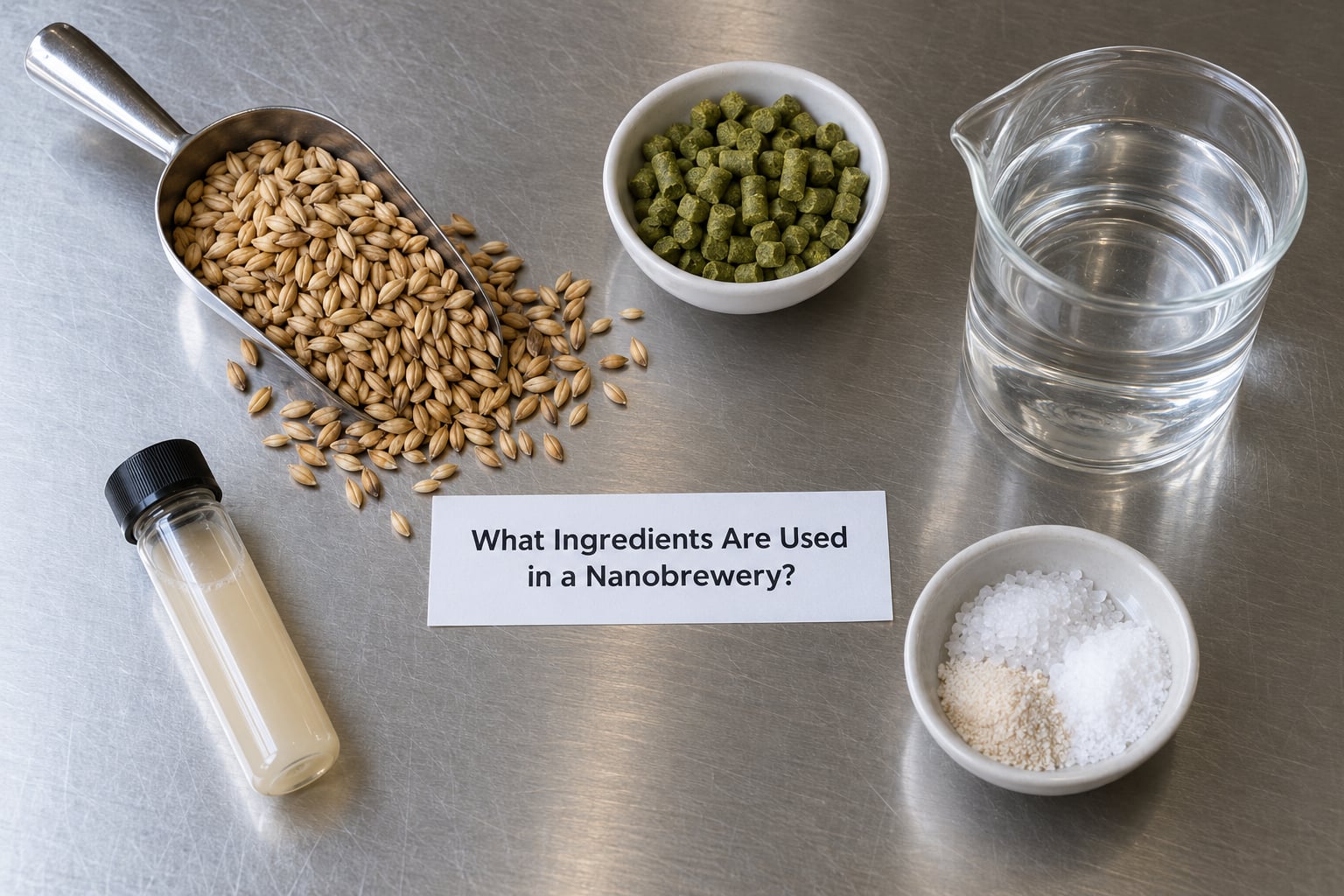
A nanobrewery uses the same ingredients as any brewery, and each one has a job: malt provides sugar and body, hops provide bitterness and aroma, yeast creates alcohol and character, and water supplies the minerals that let the yeast work.
Malt is the fermentable sugar. Base malts like pale and Pilsner sit under most styles, with darker malts adding toasty, caramel, or chocolate notes. Specialty malts such as oats, wheat, and rye change body and protein levels, and because a nano makes so little beer, the exact weights of each malt get written down and repeated.
Adjuncts like corn, rice, or sugar lighten flavor and raise alcohol in lighter styles. Fruit and coffee additions happen more often at this scale because a small batch makes experiments affordable.
Hops come as pellets or whole flower, added at different times for bitterness versus aroma, and sometimes dry hopped in the fermenter. Small brewers sometimes buy hop extracts for their efficiency and shelf stability.
Yeast is chosen for the style. Ale strains work around 66-72 F, lager strains sit near 50-55 F, and a sour might use a mixed culture or a blend of acid-producing bacteria with yeast.
Water is treated more deliberately here than at home. Brewers adjust pH and mineral content with salts, and they measure the same profile on every batch because a five-gallon homebrew tolerates water variation that turns a 90 gallon batch sour.
Small-volume sourcing is worth mentioning too. A brewery buying a 50 pound sack and using it in three weeks has less variety than one buying 500 pound sacks and holding them for months.
What Equipment Does a Nanobrewery Need?
A working nanobrewery needs a brewhouse, temperature control, tanks, a way to move beer, and a way to clean all of it. The list is shorter than most people expect, but each item has to be sized to fit and to work together.
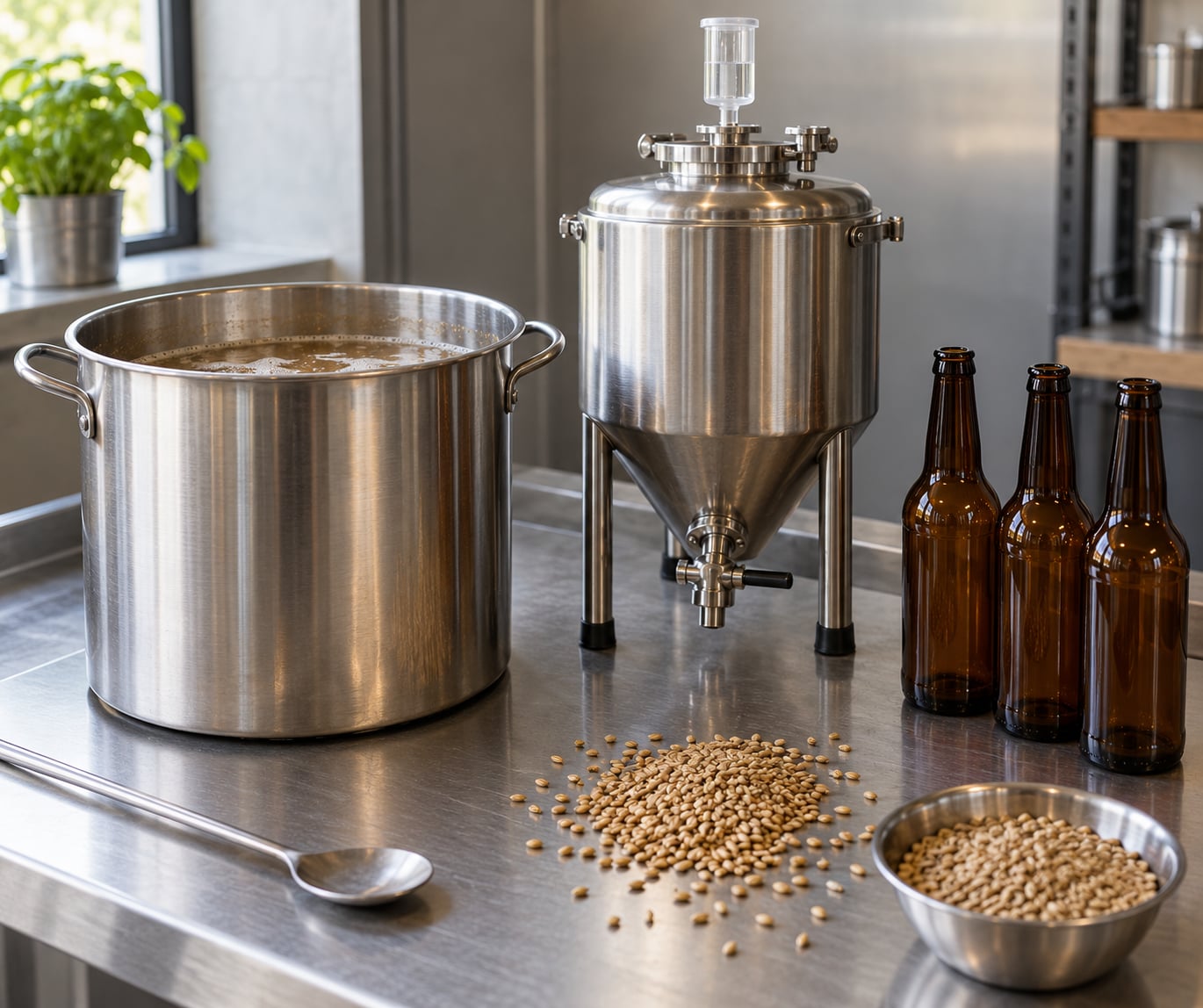
- Brewhouse: usually a two-vessel setup where one tank mashes and a jacketed kettle boils, sometimes combined into one mash/lauter vessel. Most nanos run on 1-3 barrel capacity.
- Glycol system: a chilled fluid loop circulating through jackets on fermenters and the kettle to hold temperature at a set point, sized by how much heat the vessels need to pull down.
- Conical fermenters: the core vessels, typically 1-3 barrels each, with cooling jackets, racking arms, and pressure relief valves. A brewery brewing twice a week needs at least three or four to avoid idle time.
- Brite tank: a pressurized vessel where finished beer is clarified and carbonated before service.
- Pumps and lines: a progressive cavity or centrifugal pump to move beer without crushing yeast, plus tri-clamp fittings throughout so the system can be taken apart and cleaned.
- CIP skid: a tank, heater, pump, and controls that run detergent and sanitizing cycles automatically.
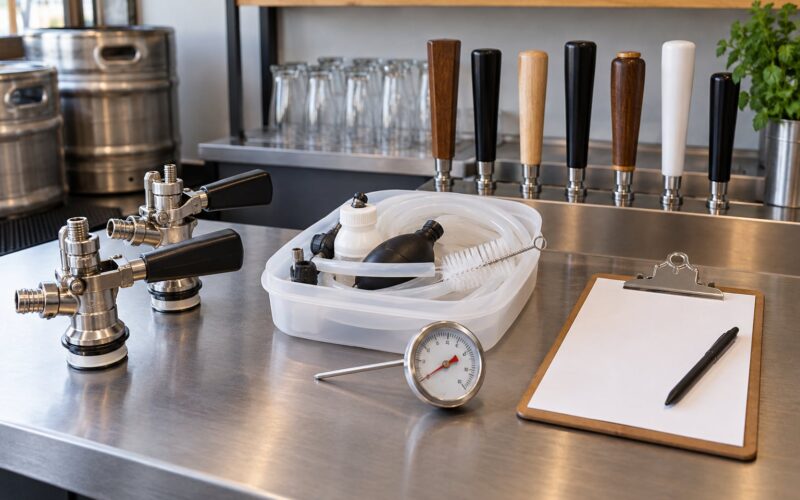
- Packaging setup: a keg coupler and lines for taproom service, or a small tabletop canner for canned releases.
- Utilities: floor drains, a properly sized water heater, electrical service for the loads, and enough cold storage. A brewery taking on wastewater through a septic system has to check capacity before anything else.
Serious operators add lab gear: a refractometer or hydrometer, pH meter, and a way to check sanitation with an ATP swab. Homebrewers often skip these, but on a 90 gallon batch a missed measurement costs the whole batch instead of one jug.
How Does Nanobrewing Stay Consistent?
Consistency at nano scale comes down to repeating the same steps in the same order with the same numbers recorded each time. Nothing here is exotic, it just has to be written down and done the same way twice.
Measure by mass rather than volume, keep a batch log, pitch enough healthy yeast, hold temperature within a degree or two, keep the system clean, limit oxygen, and check mash pH. When something does go wrong, a log is what tells you why.
| Problem | Likely cause | Control that helps |
|---|---|---|
| Cardboard or apple off-flavors | Oxygen pickup during transfer or packaging | Closed transfers, spunding valve, low dissolved oxygen at packaging |
| Batch-to-batch sourness | Unstable water profile or pH | Mash pH measurement and adjusted salt additions |
| Acidic, harsh beer | Contamination from equipment | CIP cycles verified with ATP swabs |
| Stuck or slow fermentation | Cold pitch, poor yeast, wrong temperature | Healthy starter, stepped temperature, gravity checks |
| Thin or watery beer | Poor mash conversion or fast fermentation | Proper mash rest, mash pH, slower yeast ramp |
| Flat beer | Under-carbonation or CO2 loss | Carbonation targets, seal checks, line pressure |
One operations guide reported waste dropping about 20 percent once CIP discipline tightened, and revenue climbing roughly 30 percent after a second fermenter was added. Both figures came from a vendor, so they are directionally useful rather than proof.
How Are Nanobeers Packaged and Kept?
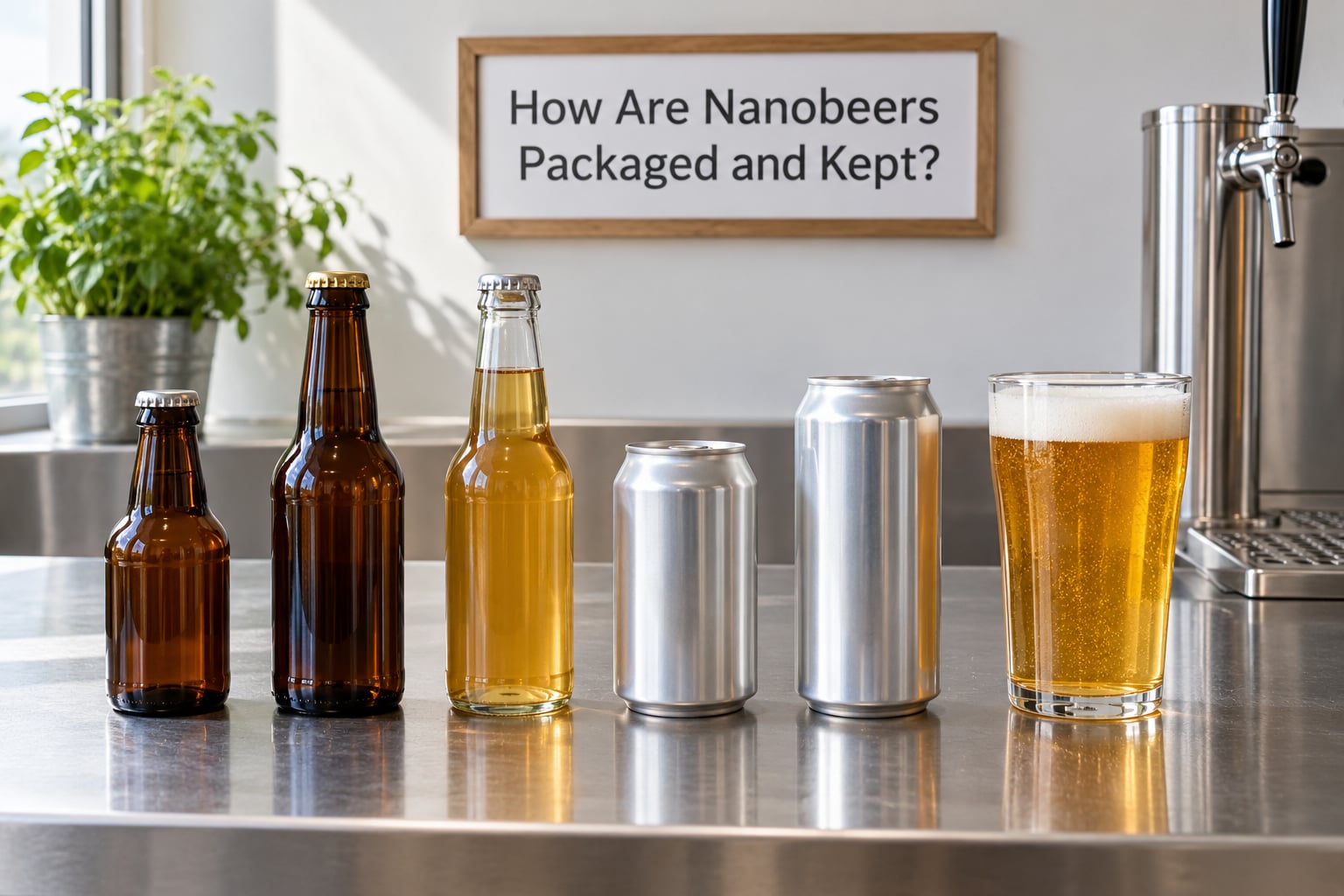
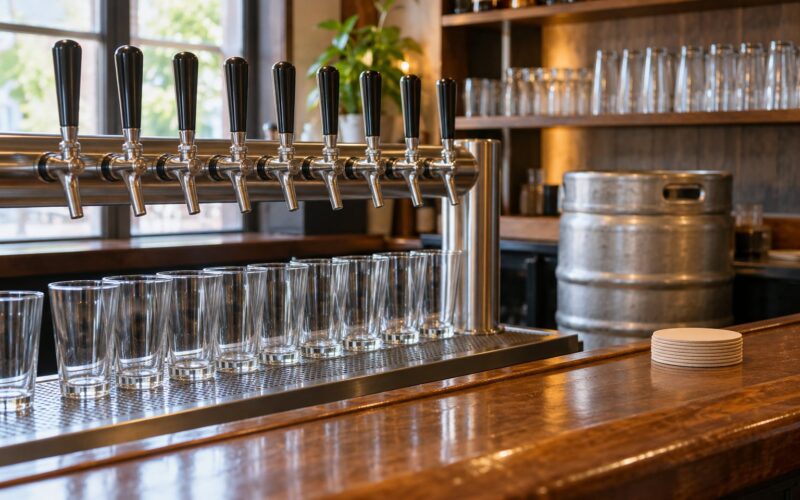
Most nanobeers never get packaged at all. Draft beer goes from the brite tank through a coupler and lines to the tap, which keeps oxygen exposure at a minimum and gives customers the freshest possible pour, usually within days of conditioning.
Bottles and cans exist for beer that leaves the building. Conditioning in the package, using yeast from the bottle to carbonate the beer, is a traditional approach that works at any scale and requires no extra equipment.
Cans win on light protection and shipping convenience, and a tabletop canner keeps a nano from renting a shared line. Direct filling from a brite tank gives more control, while blending a few tank lots together evens out differences between batches.
Whatever the format, package oxygen and fill temperature decide how long the beer stays good. Warm fills and any air drawn into the headspace accelerate oxidation, and refrigeration plus dark storage buys weeks rather than months, which is why taproom-only nanos rarely need pasteurization.
Can a Nanobrewery Scale Up Without Changing the Beer?
Scaling up usually changes the beer, and pretending otherwise is a common mistake. Larger vessels mix differently, extract more or less efficiently, and hold temperature less responsively, so a recipe that worked on 1 barrel can taste different at 7 barrels.
Hop utilization shifts with kettle size and evaporation rate. A bigger kettle sends more water off as vapor, which concentrates the wort and changes how much bitterness a fixed hop addition produces.
Mash performance changes too, since a full-size mash tun holds heat differently than a small one and can mash hotter or thinner for the same water-to-grain ratio.
Fermentation behavior and blending also matter. Bigger tanks oxygenate less on transfer but take longer to ferment and crash, and breweries that can no longer sell a single batch quickly start blending multiple lots, which flattens the very character that made the nano interesting.
The variables that must be revalidated at each jump: brewhouse and fermentation capacity, wort gravity and pH per batch, hop timing, pitching rate, temperature profile, tank turns per month, and packaging inventory. Run the same recipe on the new equipment and compare gravity readings and tasting notes before committing a production run.
Are Nanobeers Better Than Beer from Large Breweries?
No, not as a rule. A nano gives you freshness, intensity, and a rotating tap list that a large brewery will never match, and it is genuinely worth seeking out. But consistency, shelf stability, and value per ounce usually belong to the bigger operation.
Freshness is the clearest win. Beer that never travels is at its best within days of packaging, and no amount of cold chain gets a beer back to that point.
Flavor intensity runs higher too, partly from the concentration effects described earlier and partly because brewers can afford to be bolder on 1,000 servings instead of 100,000.
Consistency and availability favor larger breweries. They have more tanks, more lab controls, and more brewing days, so the tenth barrel is as good as the first. A nano working on three or four tanks and part-time staff has less room for a bad day, and its tap list changes when equipment is down.
Price per ounce is the practical tiebreaker. Nanos carry higher overhead per barrel and sell nearly everything direct, so the shelf price reflects a short distribution chain, not a quality premium. Buy what tastes good to you, and check the tap list dates to see how busy they are.
Frequently Asked Questions
Do nanobreweries make a specific style of beer?
No. Nanobrewery describes production scale, not a beer style. A nano on a 1-3 barrel system can brew lagers, ales, sours, stouts, and barrel-aged beer, and many rotate a different beer almost every batch. Some favor hop-forward ales because they can brew often and sell fresh, but scale and style are separate choices.
Can I use the same yeast for every nanobatch?
You can, and many brewers do for their bread-and-butter beers, which is one of the benefits of a small repeatable process. Style yeast does matter though: an ale strain will not behave like a lager strain at ale temperature. Keep separate cultures if you want a clean lager beside a clean IPA.
How long does beer made in a tiny batch need to ferment?
Most ales finish in 5-10 days, with a cold crash and short conditioning adding a few more. Lagers need two to three weeks at cooler temperatures because the yeast works slowly. With solid fermentation temperature control, forum posters report turning regular-strength beer around in under a week, though most commercial nanos give it more time for clean flavor.
Do nanobeers need to be bottled like traditional beer?
Most do not, and that is a real advantage. Draft beer moves from the brite tank straight to the tap, avoiding package oxygen and keeping freshness at its peak. Bottles and cans are used for beer that leaves the taproom, and a nano can condition in the bottle with yeast, fill cans on a tabletop unit, or skip both and sell on draft.
Is a nanobrewery allowed to sell beer commercially?
Yes, once it is licensed. Federal law requires a Brewer’s Notice from the TTB, and states add their own permits, label approvals, and sales rules. Selling directly from your own taproom is usually straightforward, but most states use a three-tier system that pushes beer through wholesalers and retailers to reach customers outside the door, so distribution rules shape the plan early.
Conclusion: Understand the Process Before the Batch Size
A nanobrewery runs a normal brewing cycle on a very small scale, sells nearly all of it direct, and lives or dies on temperature control, oxygen control, and clean equipment. Once you understand how nanobreweries work as a process rather than a novelty, the batch size becomes the least interesting part of the story.
Updated for 2026. Definitions and output figures reflect industry convention and vary by jurisdiction; check your state alcohol authority for licensing and distribution rules.