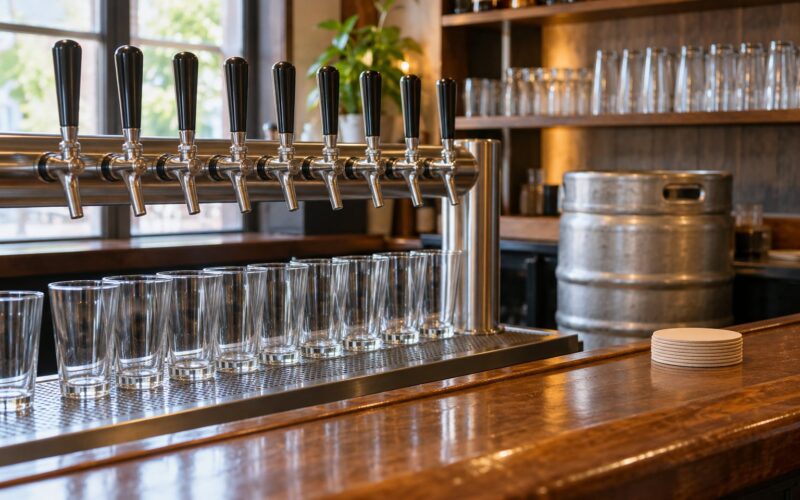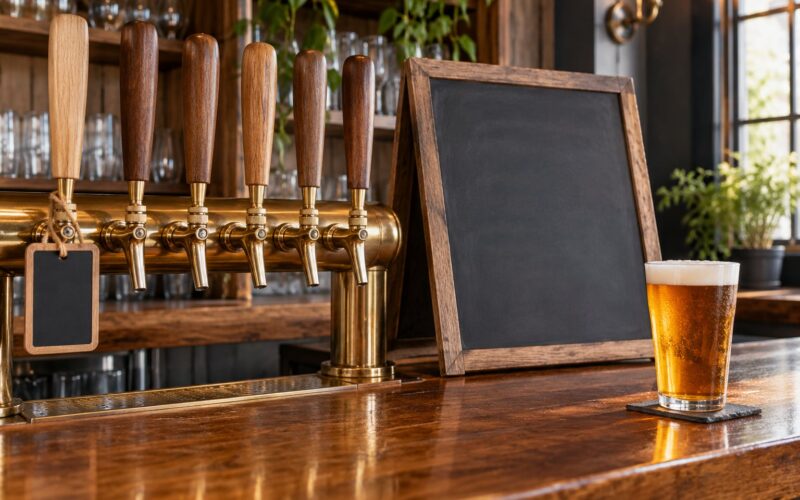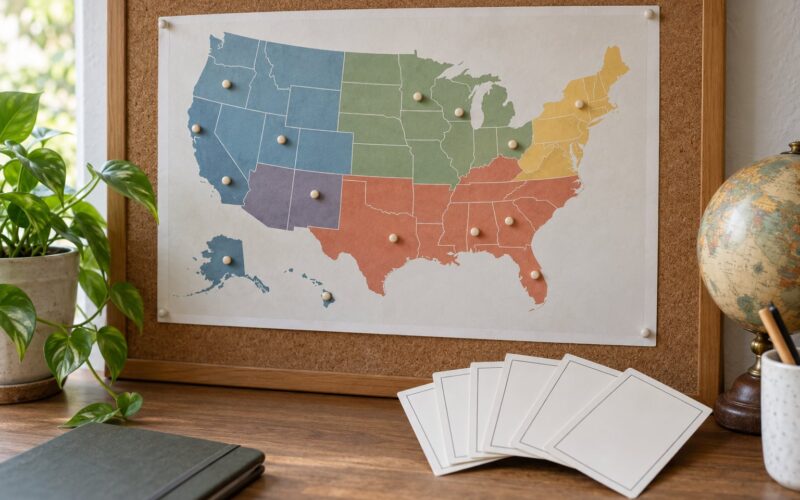
When a bar chooses its tap list, the decision usually comes down to five things: who walks through the door, what the room is built for, which styles need covering, what distributors and local breweries can reliably supply, and what margin the business needs to survive. Beer reps deliver samples, staff taste and rank them, a manager or a standing committee makes the final call, and part of the wall gets refreshed on a seasonal cadence while the rest stays dependable.
That last part is the one most customers never notice. A 40-tap board is not 40 beers the bar happened to find good. It is a working inventory with anchors, testers and experiments, and every change to it costs a fresh keg, a line cleaning and a reprint of the menu.
I’ve spent enough time reading tap lists to know the good ones have a shape you can pick out from across the room. Here is what that shape comes from.
Table of Contents
- What does it mean when a bar chooses its tap list?
- How does a bar decide which beers customers will want?
- How does a bar balance styles on its tap list?
- How a bar chooses its tap list style by style
- Why bars group beer by flavor instead of style
- Why do tap count, keg size, and pour cost matter?
- How do freshness and equipment influence the decision?
- How does a bar use local breweries and seasonal releases?
- How often should a bar change its tap list?
- What mistakes do bars make when selecting beers?
- How can readers tell whether a bar has a well-chosen tap list?
- Frequently Asked Questions
- How many beers should a bar have on tap?
- Do bars make money only by selling the most expensive beer?
- Why does a bar remove a popular beer from its taps?
- Should every tap list include local craft breweries?
- What does rotating taps mean, and how often do they change?
- How can I tell whether the beer on tap is fresh?
- Conclusion
What does it mean when a bar chooses its tap list?
A tap list is the curated selection of draft beers a bar pours from its draft system, and choosing it is a deliberate narrowing. A distributor might offer a few hundred beers. A brewery might make forty in a year. The bar takes a slice of all that and keeps it.
The narrowing is the whole point. Beer on a tap handle costs shelf space, cold cellar space, cleaning labor and menu space, and a keg that sits too long is a keg that gets poured down a drain. So a buyer is always choosing what not to pour.
It is also worth separating three things people lump together. The tap list is draft beer only. The beer menu may also include cans and bottles, which move faster, travel and carry no line cost. And the distributor’s availability list is what you could order, not what anyone has decided to order.
How does a bar decide which beers customers will want?
Start with what already sells. Point-of-sale data by pour, not by day, tells a buyer which beers clear in the first hour and which ones only move after nine. That split changes the answer completely, because a beer that needs a crowd is a different investment from one that needs a conversation.
Then look at the room. Who is the Tuesday customer and who is the Saturday customer, and are they the same people? A bar near an office park needs a fast, lower-ABV lunch option. A bar near a ballpark needs something a group can share without anyone researching it first.
Regulars are data too, just noisier. The bar that tracks the beers people ask for by name and cannot find is missing something, and the bar that tracks the beers people ask to see on the board is missing something different.
Competing bars within walking distance matter more than most buyers admit. If three taps nearby already run a hazy IPA, that customer has options. If nobody nearby stocks a German pilsner, that customer has to come to you.
None of this means stocking the five most popular beers and calling it a program. The popular beers earn the wall its traffic. Everything around them earns the wall its reputation.
How does a bar balance styles on its tap list?
Every list starts from a coverage baseline, and the baseline is boring on purpose. A bar needs a domestic lager, a pilsner or pale lager, a wheat or white beer, at least one IPA, a dark beer like a stout or porter, something acidic such as a sour or gose, and one light, easy-drinking option for the person who did not come here to be challenged.
How a bar chooses its tap list style by style
With the baseline in place, the remaining taps get allocated by category rather than by brand loyalty. A typical craft-focused bar might run 8 to 10 anchor taps, 10 to 16 rotating craft taps, 3 to 5 local taps and 2 seasonal slots. A neighborhood pub usually inverts that: more anchors, fewer experiments.
Style spread is the part buyers get wrong most often. Tap lists collapse into IPA dominance because IPA is what a rep brings, what a server recommends and what a regular orders by reflex. The correction is simple and stubborn: count the hops on the wall, and if more than a third of the taps are one hoppy style, something comes off.
Why bars group beer by flavor instead of style
Plenty of bars now organize the board by taste rather than by BJCP style: hoppy, malty, crisp and light, dark and roasty, tart and funky. Customers do not think in style families. They think I want something bitter, or something soft and dark, or something cold and sour in July.
Sorting by flavor also gives the bar a self-check. If the crisp and light section is empty, or the dark section has four beers and the sour section has none, the imbalance is visible on the board instead of hiding in a spreadsheet.
Why do tap count, keg size, and pour cost matter?
Every tap is a promise to pour beer until the keg is gone. The math behind that promise is what actually decides which beers are realistic. A keg yields a fixed number of servings, and each serving carries labor, glassware, ice and a slice of the rent whether it sells or not.
Pour cost is simply the cost of the beer divided by the servings in that keg, and cost percentage is pour cost divided by the price the customer pays. Many operators aim for cost of sales somewhere in the low-to-mid 20s, but a beer that moves fast can carry a higher cost percentage and still outperform a slow beer with a beautiful margin, because the slow one eats labor and freshness.
Tap count is a style decision disguised as a hardware decision. Here is roughly how the numbers land by concept.
| Venue concept | Typical taps | What the list optimizes for |
|---|---|---|
| Dive bar | 6 to 12 | Speed and cost. A handful of lagers plus one or two rotating taps. |
| Neighborhood pub | 10 to 20 | Balance. Familiar lagers, a couple of craft anchors, one seasonal. |
| Sports bar | 20 to 30 | Volume and clarity. Domestic lager, a light lager, a wheat, a pale ale, a stout. |
| Gastropub or restaurant | 16 to 24 | Food fit. Beer that can carry a plate and hold up to a second pour. |
| Craft beer bar | 24 to 40 | Range and novelty. Strong anchors, wide rotating craft, multiple sours. |
| Flagship beer bar | 50 and up | Depth by brewery and by region. Runs a real tasting committee to keep up. |
For a bar with 30 taps running half-barrel kegs, one beer that moves 40 kegs a year is a different proposition from one that moves four. A smaller keg format exists for exactly this: it lets a bar try a beer in one pour instead of forty.
How do freshness and equipment influence the decision?
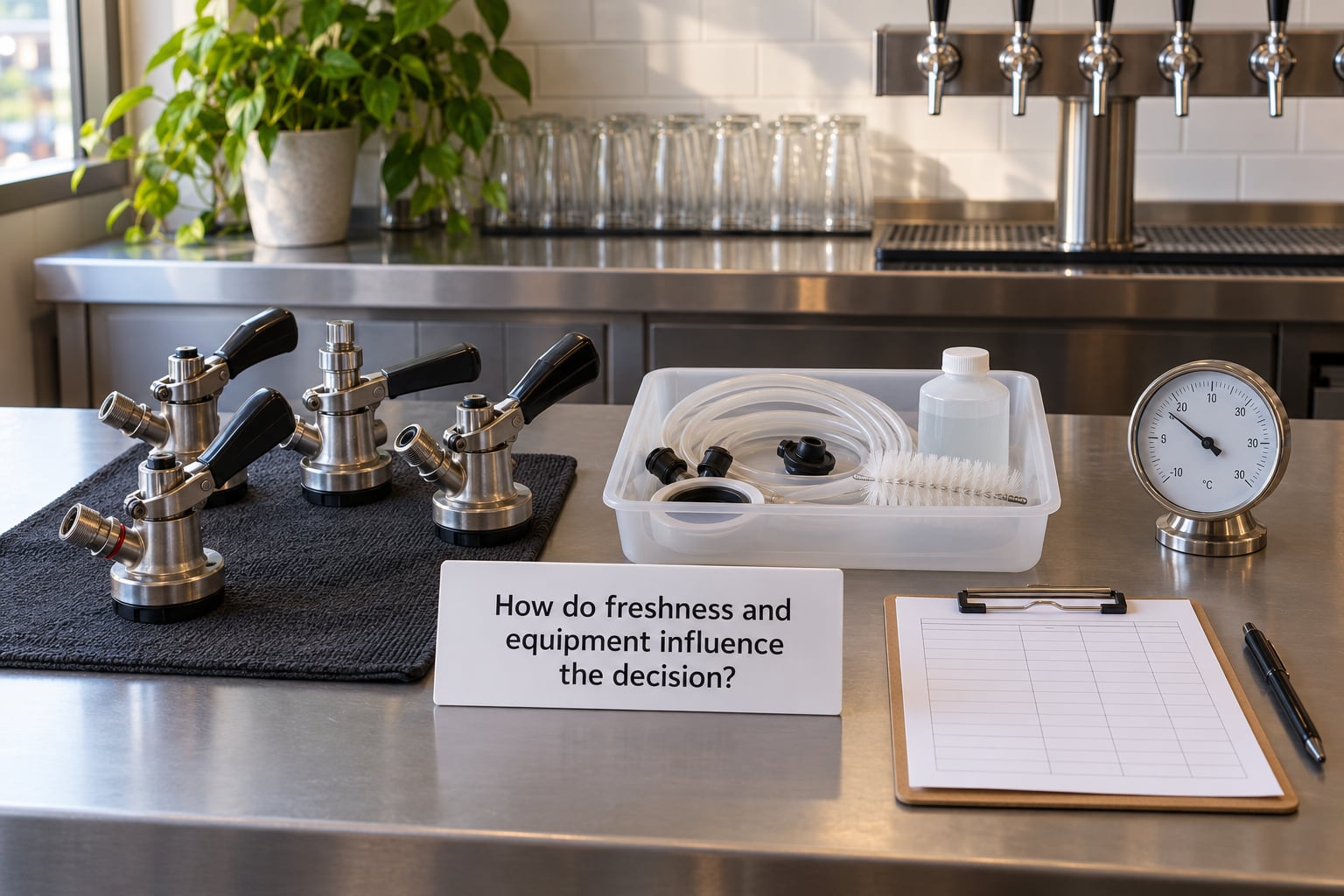
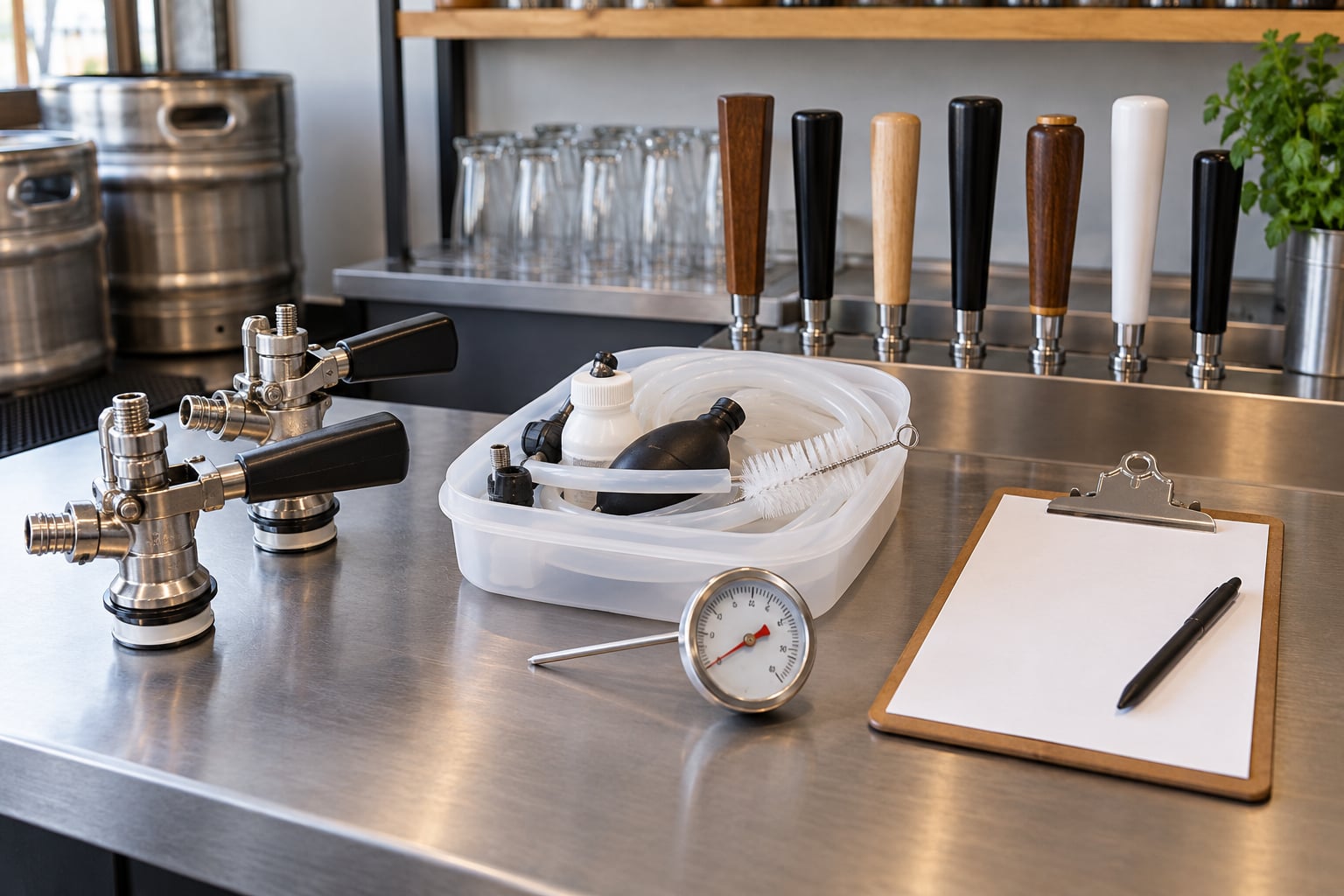
Draft beer has a freshness window that a bottle never has to worry about. Once a keg is tapped it is exposed to oxygen, and once oxygen gets in, the beer flattens and the aromatics fade. Two weeks is a common line-cleaning interval for many bars, and a beer that has been sitting on an unclean line tastes like a different beer than the one the brewer made.
Equipment narrows the options in a way buyers feel constantly. Cellar temperature has to be right for the style, and a cellar set to serve lager cold is not the same cellar that serves a saison properly. Shared lines carry flavor between beers, which is why a heavy porter and a delicate pilsner rarely share one, and why some bars run separate couplers and gas for high-alcohol styles.
Bar staff taste every keg on arrival. A batch that tastes off, or one with a fill level below what the invoice claims, gets pulled before it reaches a handle. From the customer’s side it just looks like that beer quietly disappeared.
How does a bar use local breweries and seasonal releases?
Local taps do two jobs. They give the bar an identity the chain down the street cannot copy, and they give a brewery a permanent showcase that a distributor sample never would. Local beer also travels short distances, so a fresh keg is genuinely achievable there in a way it sometimes is not for beer that crosses several states.
Seasonal programs create the urgency a static list cannot. Summer pushes gose, fruit beers, light lagers and crisp pilsners. Fall brings Oktoberfest-style lagers, amber ales and pumpkin beer. Winter makes stout, porter, barley wine and spiced ales reasonable, and spring brings lighter farmhouse and session lagers back in.
The failure mode runs both directions. Rotate a seasonal out in three weeks and you have thrown away most of a keg and made a customer feel short-changed. Hold it four months past its moment and you pour something flat into a beer nobody asked for.
How often should a bar change its tap list?
Most working lists split into three layers. Permanent anchors, usually a majority of taps, hold the bar’s identity and its labor plan. Rotating taps, a smaller block, change on a schedule such as monthly or every four to six weeks. Seasonal taps, often two, change with the calendar and get the marketing.
Reaction speed matters more than the calendar. When a rotating beer outsells everything, most bars either reorder fast or move it to a second handle. When one stalls, the practical move is to pour what is left at a discount rather than order another keg, then pull it at the next scheduled reset.
Some bars push the whole list on a quarterly review and reprint shorter lists between resets. That keeps the menu cheap to change and stops the wall from churning so often that nobody learns anything.
What mistakes do bars make when selecting beers?
Overlapping IPAs is the big one, and buyers see it clearly once they count taps by hoppy style. A wall with nine IPAs is not nine choices if all nine taste like grapefruit.
Overstocking a niche style is the mirror mistake. Two sours on a list in a neighborhood that drinks lagers means a lot of beer heading for the drain, and the cost percentage looks fine right up until the keg is empty.
Choosing on hype alone is the most common failure. A bar buys a release because a brewery shipped hard, not because anyone asked for it, and the tap sits at one pour a night for a month. Serious operators also turn down branded glassware, umbrellas and swag, because a gift is not a selection criterion.
Then there is margin-only thinking, which is where a bar commits real money to a high gross margin on a beer nobody reorders. And there is the single palate problem: one enthusiastic beer director or owner decides everything, and within a year the list is a diary instead of a menu.
How can readers tell whether a bar has a well-chosen tap list?
Look for a range that includes something for you. If the entire wall is one style, the buyer stopped thinking about the room. A list with a crisp lager, a dark beer, something tart and one genuinely wild option is a list that was built, not assembled.
Ask the bartender to describe any beer in one sentence. Staff who can do that were trained and given tasting notes. Staff who read the tap handle back to you were not.
Check the menu for ABV and a single line of description. That is cheap printing and it signals that the bar wants you to order something other than the obvious.
Watch the handles over a few months. A bar that changes one or two taps a season is curating. A bar that rebuilds the whole wall monthly is running a promotion, and your favorite is not part of the plan.
Finally, taste the beer fresh. If a beer you liked last month tastes thin now, that is a line and turnover problem, not a beer problem.
Frequently Asked Questions
How many beers should a bar have on tap?
Tap count should follow the concept, not prestige. A dive bar running 8 taps and a craft bar running 30 can both work well, because what matters is that the list fits the room and the staff can describe every beer. More taps means more kegs, more line cleaning and a menu that is harder for a first-time customer to read. Six well-chosen beers beat twenty that nobody can choose between.
Do bars make money only by selling the most expensive beer?
No. The fastest-moving beers are usually the domestic lagers, and they carry the night’s volume. Higher priced craft pours carry the margin, but they also cost more in labor and freshness because they sell slower. A bar that chases only high gross margin ends up with a wall of expensive slow beer and no traffic to drink it.
Why does a bar remove a popular beer from its taps?
Usually a contract, a seasonal window or a supply problem, not a verdict on the beer. Breweries limit how much of a seasonal they will allocate to one account, and a popular beer can get pulled when that allocation runs out. When a tap empties, the keg may be finished, the distributor may miss a delivery, or the bar may have already committed the handle to a seasonal slot.
Should every tap list include local craft breweries?
Local taps give a bar an identity its competitors cannot copy and give a brewery a permanent showcase that a distributor sample would not buy. They are not automatically better pours, though. A good local brewery with a clean system and steady delivery is worth a permanent handle. A brewery with inconsistent batches and irregular deliveries is better as a rotating tap.
What does rotating taps mean, and how often do they change?
Rotating taps are a fixed block of handles the bar deliberately refills on a schedule, often monthly or every four to six weeks, while the rest of the list stays put as dependable anchors. Rotation gives regulars a reason to come back and lets the buyer test new beer without risking the core list. Seasonal taps change on a looser calendar tied to the weather and holidays.
How can I tell whether the beer on tap is fresh?
Fresh beer tastes clean and full, with the aroma the style is known for. When a draft line goes unclean or a keg sits too long, the beer tastes flat, papery or vaguely like the last thing poured through that line. If a beer you liked last visit tastes thin now, the problem is usually turnover or line cleaning at the bar rather than the beer itself.
Conclusion
A tap list works when customer demand, style coverage, freshness, the realities of the draft system and a margin that survives labor all point at the same answer. Anything missing one of those gets cut, and that includes plenty of beer people love.
Next time you stand in front of a wall you find intimidating, look for the anchors first, find the category that matches the mood you are in, and ask the bartender for one recommendation. They are the person who tasted the whole list before you got there.