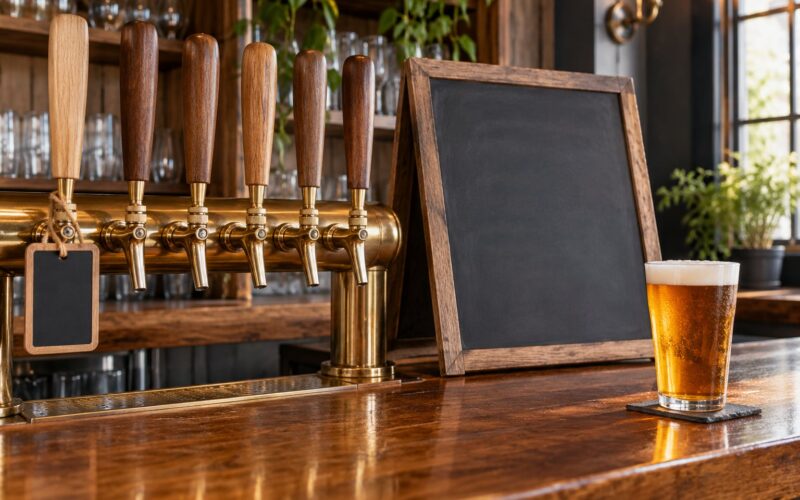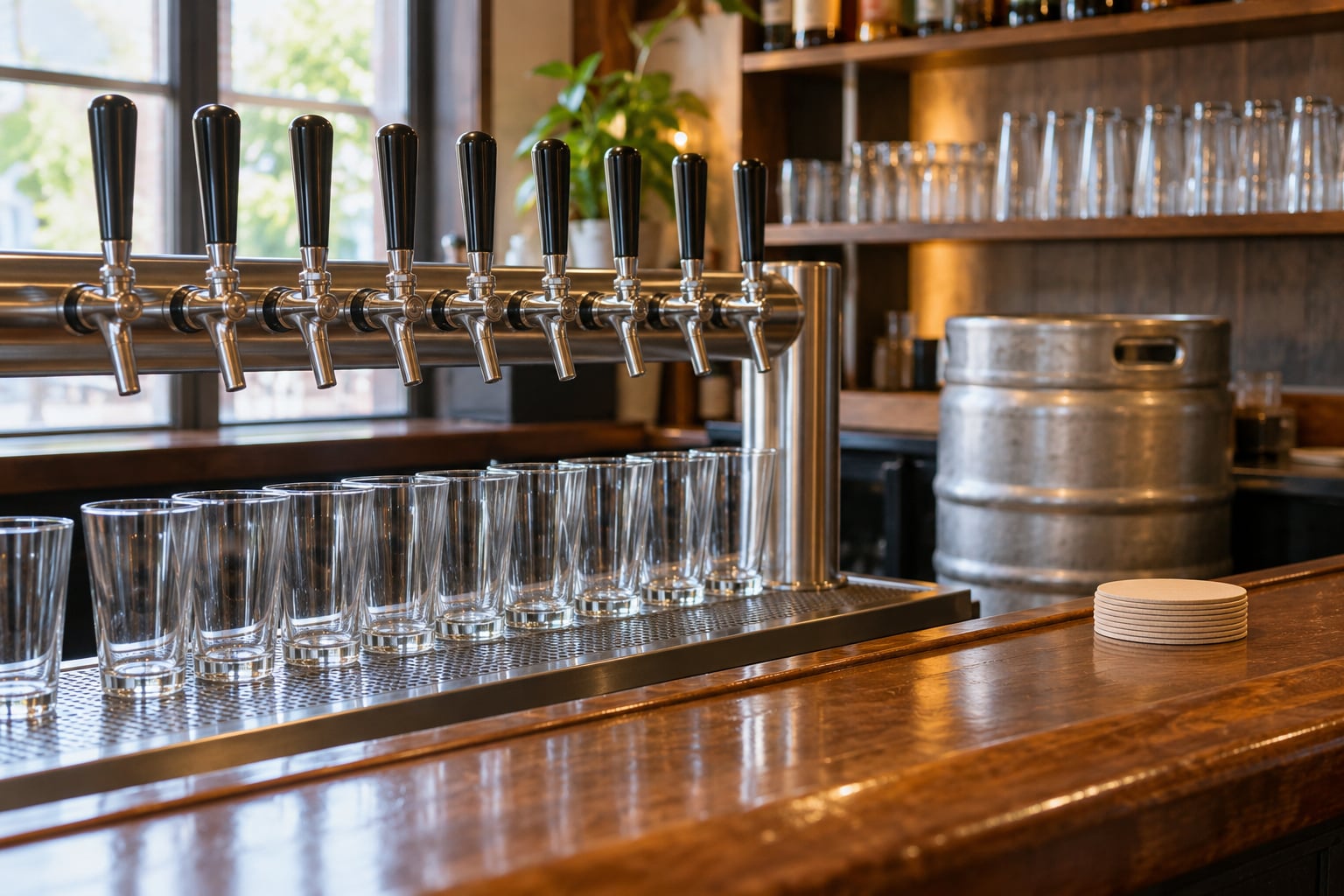
A tap takeover is one night when a brewery takes over all or part of a bar’s draft lines, so the taps carry nothing but that brewery’s beer. What happens during a tap takeover is simpler than it sounds: the kegs get tapped, the staff get trained, a brewery rep walks the room, and you get to pour through a lineup you would never find on a normal tap list.
Below is the whole thing, from the email a brewery sends six weeks out to the last pour of the night. If you have never been to one, this is the version that tells you what to expect and what to do first.
Table of Contents
- What Is a Tap Takeover?
- Why Breweries and Bars Host Tap Takeovers
- How Breweries and Bars Prepare
- What Happens During a Tap Takeover, Step by Step
- What Happens During a Tap Takeover: The Main Event
- What You Can Taste at a Typical Takeover
- How Breweries, Bars, and Beer Enthusiasts Benefit
- Is a Tap Takeover the Same as a Beer Festival?
- Frequently Asked Questions
- Do I need a ticket for a tap takeover?
- Is there usually an age requirement for a tap takeover?
- Can I choose non-beer drinks during a tap takeover?
- Should I arrive early to attend a tap takeover?
- What should I bring or wear to a tap takeover?
- What to Do First When Attending
What Is a Tap Takeover?
A tap takeover is an agreement between a brewery and a bar or restaurant: the brewery supplies the beer, and the venue dedicates several taps to that one brewery for a set window, usually a single evening or an afternoon.
A typical takeover replaces five to ten draft handles that would normally carry a rotating mix of local beers. Some venues give over their entire draft system for the night. Restaurants with a dozen handles might hand over six and keep their house beers flowing.
The distinction from a normal tap night is that a tap night is whoever shows up with a distributor relationship that week. A takeover is a specific brewery, usually with an owner or brewer physically present, sometimes with themed tap handles, a printed tasting sheet, or a food menu built to match.
The distinction from a beer festival is scale and structure, which we get into further down. Short version: a takeover is one brewery, one room, and a few hours.
Why Breweries and Bars Host Tap Takeovers
For a brewery, a takeover is one of the cheapest marketing tools available. There is no booth to build, no festival fee, no wristband inventory. The brewery loads kegs into a van and sends a rep, and in exchange it gets a room of people tasting its beer in public and saying things about it out loud.
Small breweries lean on this harder than big ones. A regional brewery with a limited distribution area cannot get its beer onto shelves across a hundred miles of grocery stores, but it can get it into one neighborhood bar for a Thursday, and word travels fast from there.
For the bar, the math is usually about slow nights. Monday and Tuesday are dead in most places, and a takeover on a Tuesday packs the room. The venue gets a reason for regulars to show up on a night it normally would not, and it gets the taps back on Thursday, which is usually enough compensation for the extra work of washing two keg lines.
For the local drinking community, it is a low-risk way to find out what a brewery actually makes. Buying a six-pack to test a new brewery is a bigger commitment than ordering one pint of whatever is on tap that night.
How Breweries and Bars Prepare
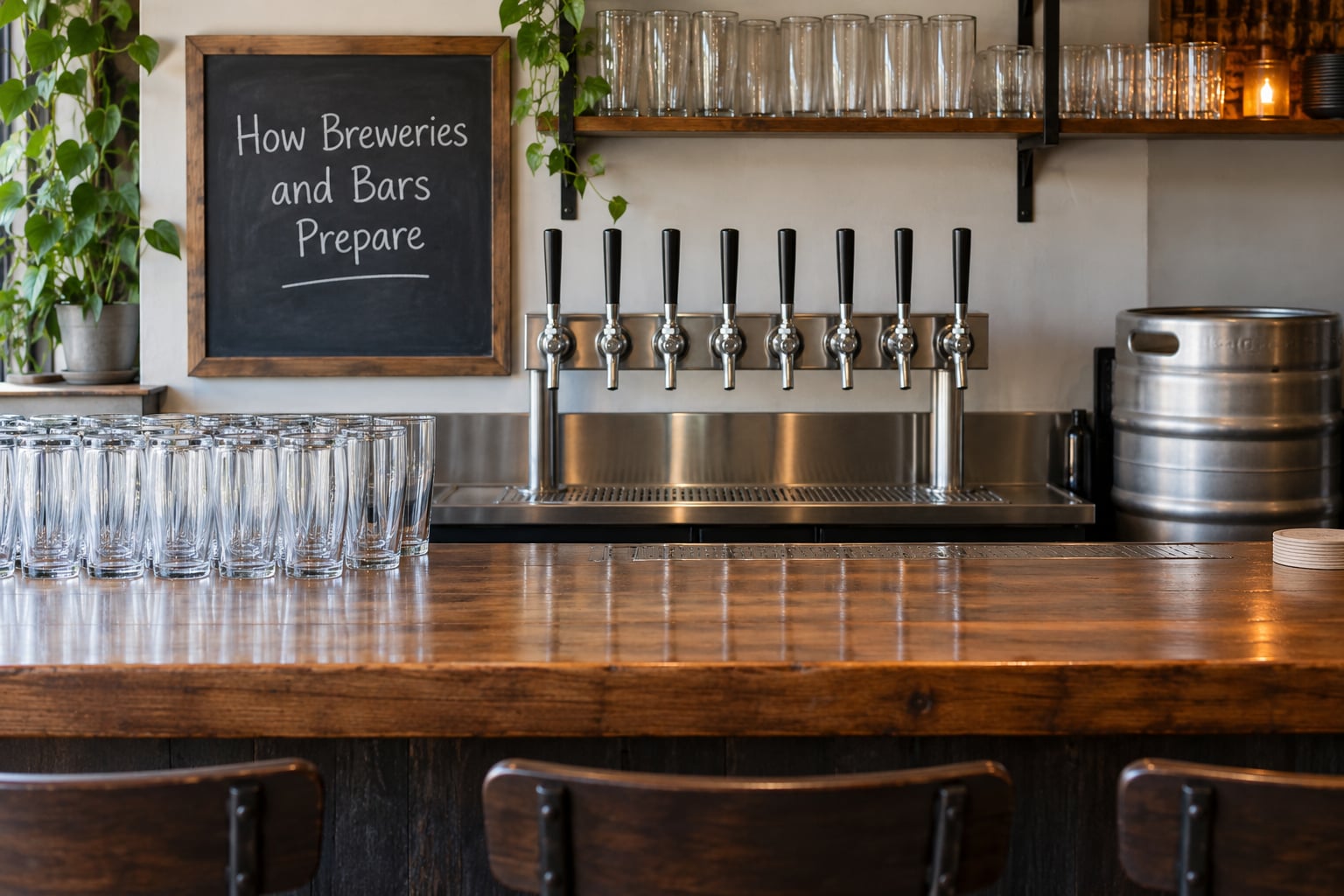
The behind-the-scenes work starts weeks ahead. The brewery’s distributor usually negotiates the deal, because that person handles the paper, the draft system inspection, and the money, and nobody wants to talk keg logistics with a stranger on a Tuesday.
Keg size matters more than people expect. A sixtel holds about 5.16 gallons, which works out to roughly 55 pints. A quarter barrel holds about 7.75 gallons, and a half barrel holds 15.5 gallons. A venue expecting 60 people through the door wants half barrels on its flagship, because running a popular beer out at 9 p.m. on a sixtel is the fastest way to disappoint a crowd that came for one specific pour.
Tap lines get cleaned and sanitized beforehand. Old lines hold yeast and carbonation residue, and a brewery that cares about its beer will often send its own staff to do the job or supervise it closely.
Then there is the tap list itself. Breweries pick the lineup weeks in advance, often six to eight beers, and name a backup for each in case something fails on the road. The bar approves the list, because some of those beers have never been on that system and the bartender needs to know what she is pouring.
Staff training is the step that gets skipped and the step that matters most. Bartenders get a tasting, usually a week before, so they can describe the beers accurately instead of guessing. Forum regulars on brewery and bar boards both point at the same gap: staff who have never tasted the beer cannot sell it, and an uninformed answer at the bar does lasting damage.
Last comes promotion. The venue posts it, the brewery posts it, the distributor sends an email list, and the brewery often buys back some of the ticket price as a taster credit. Tap handles arrive in a box the morning of the event and go up an hour or two before doors.
What Happens During a Tap Takeover, Step by Step
Here is the night in order, from when you walk in to when you leave.
You arrive and the tap list is already up. Handles are branded, the board lists every beer with its style and, often, an abbreviated tasting note. If a tap is empty, that tells you something too: the beer is popular, the keg is smaller than planned, or the line needs cleaning.
You order a pour or a flight. A full pour is a pint of one beer. A flight is a sampler, usually three to five beers in small glasses, and it is the standard way to taste through a takeover lineup without committing to five pints. Many venues price flights lower than the sum of the individual pours, and some cap them to one per person, which is worth knowing before you order the second one.
Someone from the brewery says a few words. Often it is the owner. They give a two-minute intro on the lineup, mention the beer that is hardest to find and how old it is, then hand it to the bartenders. This is the part regulars skip and first-timers should not, because the brewer is describing the exact recipe and the exact mistake they are trying to avoid.
Service runs at normal speed, not event speed. Takeovers are usually not ticketed, not timed, and not announced with a start time. The tap list goes live and stays live until the kegs are gone or the bar closes, whichever happens first.
Food specials appear, and they sell out. Most venues pair the takeover with a menu built around it. Small plates run out early, and that is not a coincidence: the venue posts a photo of the food on social media, the food disappears by 8 p.m., and the people who came for the pairing miss it.
Swag goes in a pile by the door. Bottle openers, can koozies, hats, and occasionally glassware. The giveaways are usually first-come, so if you care about the item, get there before the door opens.
What Happens During a Tap Takeover: The Main Event
The middle of the night is less structured than the beginning, and that is where the actual takeover shows up. Draft lines get swapped partway through if a beer is pouring thin or the line needs a quick clean, which is a normal thing to see and not a sign something went wrong.
Ask the bartender what to try next. On a takeover night the bartenders have usually just been through a tasting and they are the most reliable source of advice in the room, more so than the tap handle arrangement, which is sometimes aspirational rather than accurate.
The rep will make rounds. People ask what the ABV is, what the hop bill looks like, whether a beer is getting kegged locally or shipped from out of state, and whether a given one will ever be bottled. These are good questions and getting a straight answer from someone who brewed it is the main reason the format exists.
Toward the end, kegs start dying. A popular limited release gets mentioned, people race over, and thirty minutes later that tap handle comes off and goes in a box. Nobody announces it officially. You just notice the pour stopped.
What You Can Taste at a Typical Takeover
The lineup depends entirely on the visiting brewery and what it can get to the venue cold, but the shape is predictable.
Flagship beers. Two or three of the beers the brewery is known for. These exist so you can judge the whole lineup against something you can buy anywhere the brewery distributes.
Seasonal releases. What the brewery is proud of right now, often a fresh lager, a pale ale, or a fruited beer made for the season. These are the ones regulars queue for.
One or two IPAs. Nearly universal. A brewery that does not put an IPA on at least one tap at a takeover is unusual.
A lager or a pilsner. Often the sleeper of the night, because draft lagers are uncommon and drinkers who came for a hazy IPA sometimes leave talking about the pilsner.
A dark beer. A stout, porter, or brown is nearly standard, and themed takeovers push this hard. Themed events built around dark or barrel-aged beer exist specifically to give a brewery a night where the lineup tells a story.
Barrel-aged or cellar beer. The rarest slot, sometimes only a few kegs, sometimes poured in limited quantities. River North has marketed its takeovers around exactly this idea, previewing rare cellar finds and barrel-aged beers before the event.
Exclusives. Beer brewed for the event and nowhere else, including small-batch stuff that never left the brewery. If a takeover listing mentions something exclusive, that is usually the reason to go.
Some venues also offer cask, nitro, or hand pump service for one beer on the list. If you have never had a cask pour, this is a cheap place to try one.
How Breweries, Bars, and Beer Enthusiasts Benefit
The three parties get different things out of the same night, which is why the deal works at all.
The brewery gets direct feedback. Nobody is polite to a bartender, but a brewer standing behind the bar hears honest reactions to a beer within an hour of serving it. That is worth more than a social media metric, and small brewery owners know it. Big Timber’s owner is a well-known example of showing up in person at takeovers to meet customers face to face.
The bar gets a full room and trained staff. Training carries forward: a bartender who has tasted six brewery-specific beers learns how that brewery talks about its product, and that knowledge sticks after the kegs are gone. Bars that run takeovers regularly also build a mailing list, and some tie them to loyalty perks like buy-one-get-one nights, discounted appetizers, or raffle entries.
The drinker gets depth and access. Six beers from one brewery in one sitting is a cheap way to learn a brewery’s whole personality, and limited releases often appear nowhere else in the region. It is also the easiest way to find out whether you actually like a style you have only read about.
Is a Tap Takeover the Same as a Beer Festival?
No. They share a vibe and almost nothing else. A festival is a multi-brewery, multi-day, ticketed, all-ages-until-a-certain-hour event where beer is the entire point. A takeover is one brewery, one building, one evening, usually free, and usually 21-plus for the beer.
Scale is the first difference. A festival might have 80 breweries across three hours and a floor map. A takeover has one brewery, usually six to eight beers, and a chalkboard.
Access is the second. Festivals often sell tickets in advance and cap attendance, and many require a wristband. Takeovers are usually walk-in and no one counts the door, though the good ones sell out of a limited beer physically.
Range is the third. A festival is the only format where you can taste five competing breweries side by side, which is genuinely useful for comparison. At a takeover you are tasting one maker’s interpretation of a style, not the state of the style.
Length is the fourth. Festivals run over hours and days. Takeovers are typically three to four hours of extra attention on top of normal service.
An ordinary taproom visit is the opposite end of the scale: no event, no rep, no themed list. You are just drinking what the place has, which is fine and much less interesting.
Frequently Asked Questions
Do I need a ticket for a tap takeover?
Usually not. Most tap takeovers are walk-in and free to enter, and you pay only for what you drink. The exceptions are ticketed beer dinners and the larger themed events, which may sell tickets in advance and cap attendance. If the listing mentions RSVP, wristbands, or a pre-paid taster ticket, that is your clue that entry is ticketed.
Is there usually an age requirement for a tap takeover?
The beer service is 21-plus in the US, and ID is usually checked at the door or when you order. Some takeovers held during the day at restaurants and breweries allow younger patrons in the building but not served. A handful of festivals and large events are all-ages with tasting tokens for minors, but takeovers rarely are.
Can I choose non-beer drinks during a tap takeover?
Yes. The tap list is all one brewery, but the bar still sells its usual wine, cider, cocktails, and non-alcoholic options, plus whatever it has on its remaining taps. If you are driving, ask whether the venue has a zero-proof pour before the night starts, because the usual bar answer is whatever was on tap and nothing else.
Should I arrive early to attend a tap takeover?
For a casual evening, no. For a limited or barrel-aged release, yes, and the first thirty minutes matter. Exclusive beers and giveaway swag usually go to whoever is there first, and the popular taps thin out as the night goes on. Check the venue’s social media on the day of, since some post a lineup update or a sellout warning the afternoon of.
What should I bring or wear to a tap takeover?
Bring a photo ID and a way to get home that you did not plan on using. A light jacket is usually enough, since taprooms and neighborhood bars run warm with a crowd. Bring cash if you want to buy swag, since glassware and can koozies sometimes run out before the card reader does. Skip perfume, for everyone’s sake.
What to Do First When Attending
Find the event listing and confirm which brewery is visiting. A takeover of a brewery you already like is a nice evening out. A takeover of a brewery you have never heard of is a cheaper way to find out whether you want to chase their beer around town for the next two years.
Then confirm the practical details: whether entry is free or ticketed, what time the taps actually go live, whether the bar takes reservations, and whether the food pairing is worth ordering ahead of time.
Show up early if the listing mentions anything limited, exclusive, or barrel-aged. Those beers go first, and nobody announces when they are gone.
Plan your tasting order rather than drinking at random. Start with the flagship so you have a baseline, move to the seasonal and the rare stuff while your palate is still sharp, and leave the high-ABV dark beers for last.
Drink water, pace the pours, and enjoy it. A tap takeover is one of the least complicated nights out there: someone else did the planning, and your only job is to show up and taste the beer.