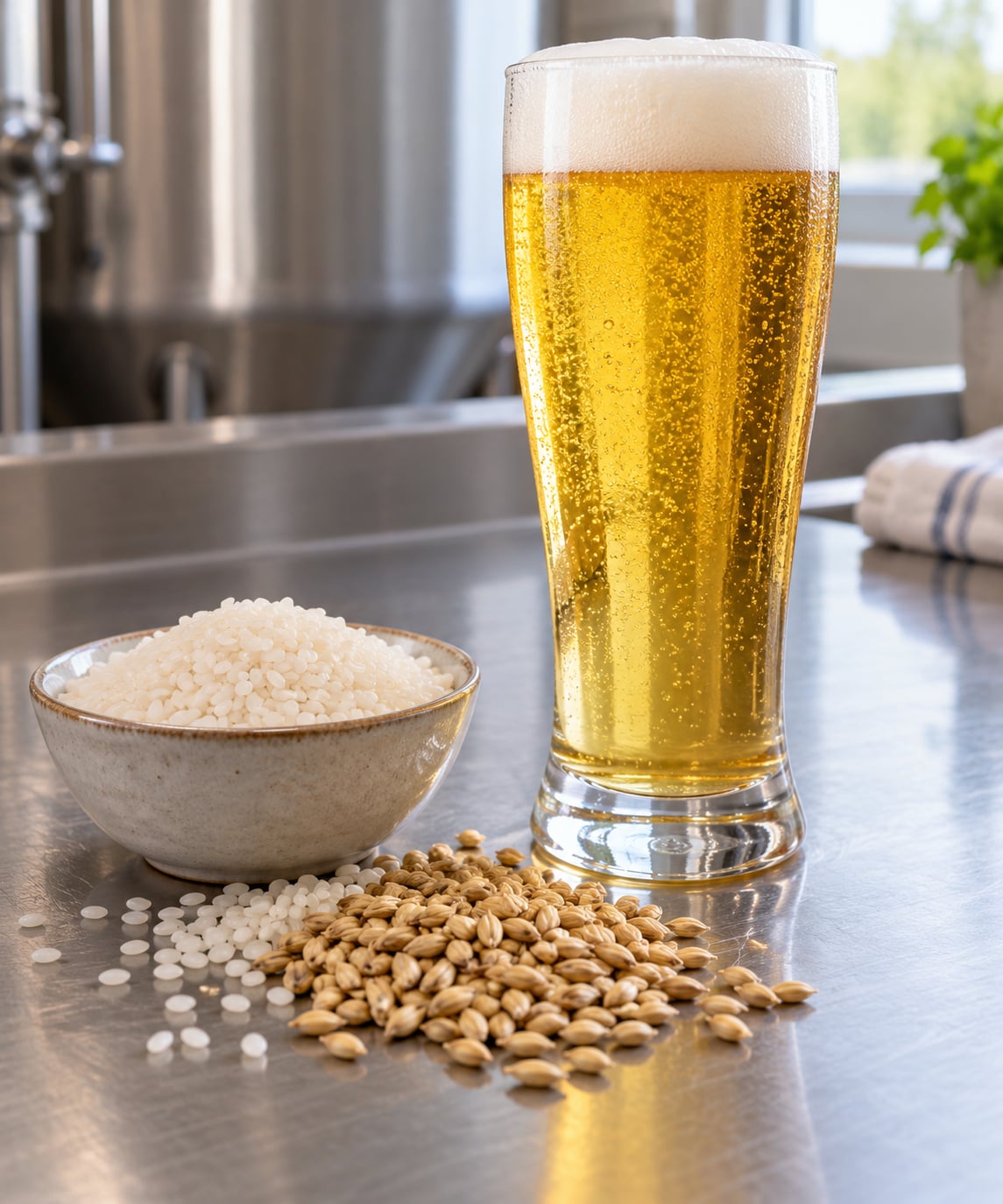
A Japanese rice lager is a pale, crisp, highly carbonated lager in which rice replaces a portion of the malted barley in the grain bill, usually somewhere between 10 and 30 percent and occasionally much more. That swap lightens the body, dries out the finish, and leaves the beer tasting cleaner than most barley-only lagers. It is a broad market and brewing category rather than a formally standardized style, so you will find real differences between one brewery’s version and the next.
Ask a bartender for one and you will get a pale straw pour, a nose that is mostly grain and faint hops, and a finish that is bone dry with almost nothing lingering. Most sit in the 3.6 to 6.5 percent ABV range with bitterness somewhere between 6 and 18 IBU.
Table of Contents
- What Is a Japanese Rice Lager?
- Rice Lager vs Japanese Lager vs Happoshu
- How Is a Japanese Rice Lager Made?
- Why Is Rice Used in Some Japanese-Style Lagers?
- What Does a Japanese Rice Lager Taste Like?
- Why Does a Japanese Rice Lager Taste So Crisp?
- Is Japanese Rice Lager the Same as a Cream Ale?
- Which Beers Qualify as Japanese Rice Lager?
- How Do You Choose a Japanese Rice Lager?
- How Should You Serve and Pair a Japanese Rice Lager?
- Frequently Asked Questions
- Does Japanese rice lager contain barley?
- Is Japanese rice lager always gluten-free?
- Is rice the same thing as rice syrup in a Japanese rice lager?
- How sweet should a Japanese rice lager taste?
- Can Japanese rice lager be hoppy or strong?
- Is Japanese rice lager a formally recognized beer style?
- Conclusion
What Is a Japanese Rice Lager?
Rice beer is the broad family. Rice lager narrows it: it is a lager fermented on a grist that includes rice as a fermentable adjunct alongside malted barley. Because rice contributes fermentable sugar without the proteins and complex grain flavors of malt, the beer comes out lighter in body, lower in residual sweetness, and more neutral in aroma. What remains is hop character, carbonation, and very little else.
Two things trip people up. First, a Japanese rice lager is not a fixed recipe, so nobody can tell you a single ABV or bitterness figure that applies to every version. Second, the label tells you less than you would hope. Large Japanese brewers print ingredients in Japanese and small craft breweries change their grist every season. If you want to know whether rice is actually in the beer, read the ingredient list or ask the person who poured it.
Rice Lager vs Japanese Lager vs Happoshu
In Japan, the legal classification runs on malt content. A beer that is at least two-thirds malt is beer, or biiru. Anything with less malt than that is happoshu, a category created by tax law, and it is where rice-heavy lagers usually live. Breweries market those with words like Super Dry, which started as a flavor claim rather than a style rule.
Outside Japan the labels loosen up. American breweries will call a beer a Japanese rice lager, a Japanese-style lager, a rice lager, or just an Asian lager, sometimes in the same taproom. Treat the names as marketing, not classification.
How Is a Japanese Rice Lager Made?
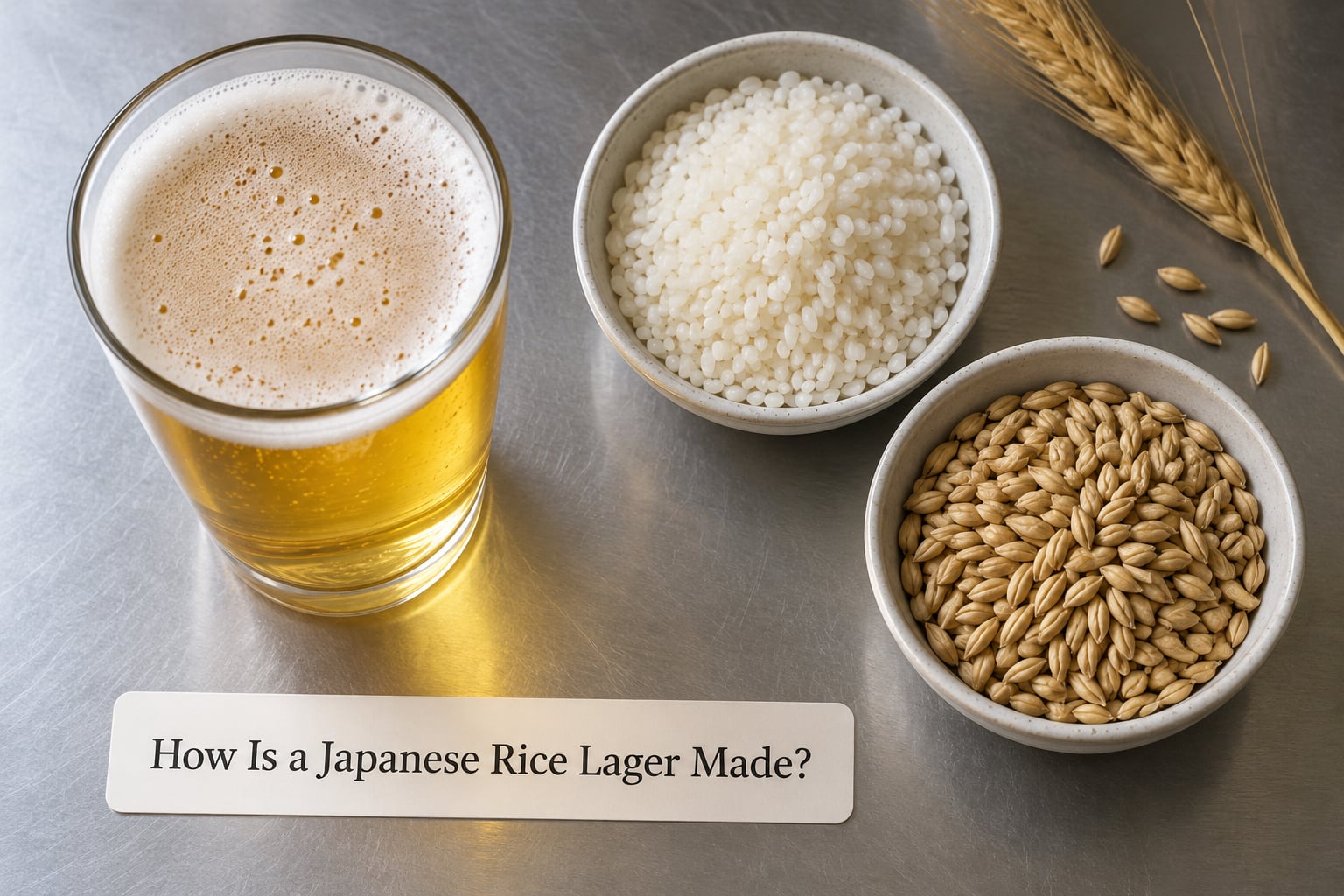
Every lager starts the same way, with a grain bill, a mash, lautering, boiling, chilling, and a long cold fermentation. Rice changes step one and adds an extra step before the mash.
The catch is that raw rice is almost pure starch, and the enzymes in malt cannot break starch down until it has been cooked. Barley malt arrives pre-gelatinized because it was kilned; rice has not been. So brewers pick one of three routes.
- Cereal mash. Rice goes in the mash tun by itself, with hot water, and is held around the gelatinization temperature of the grain until the starch turns to gel, then it is stepped up to mash temperature with the malt. This gives the most control and the most rice flavor, and it is the most work.
- Flaked or pre-gelatinized rice. The rice has been cooked and dried into flakes at the supplier, so it converts in a normal single-infusion mash. Easier and more repeatable, slightly less rice character.
- Rice syrup solids. Already a fermentable syrup, so it joins the boil with no conversion step at all. Maximum consistency, minimum rice aroma, and some drinkers find it tastes more like plain corn.
After conversion the wort is lautered as usual, then hopped. Most examples are bittered with German and Czech varieties such as Hallertau or Saaz, sometimes with Sorachi Ace added for a sharper, more aromatic edge. Then it ferments cold with a lager yeast, often W-34/70 or a Czech strain, and spends weeks conditioning before packaging.
Rice also changes how the beer is clarified. With less protein in the wort there is less to form a hot break, so some breweries skip a protein rest entirely and use centrifuge or plate filtration for a very bright pour.
Why Is Rice Used in Some Japanese-Style Lagers?
The practical reason is supply. Japan grows excellent rice and imports limited domestic malt, so rice was the economical way to stretch the grain bill. A brewery could make more beer per barrel of malt without the finished product tasting thin or watery.
But that is only half the story, because brewers liked what it did to the finished glass.
- A cleaner glass. Malt proteins and melanoidins carry toasty and bready notes. Removing most of them leaves an almost neutral base, so the beer reads as very clean.
- A lighter body. Rice is starchy and low in protein, so the finished beer has less mouthfeel than an all-barley version. On a warm afternoon that thinness is the whole point.
- A drier finish. More of the fermentable sugar comes from rice, which ferments out completely, and the perceived bitterness of the remaining malt stands out more sharply by contrast.
- Carbonation carries it. With less flavor to hold on to, higher carbonation and a sharper bite do more of the work than they would in a malt-forward beer.
Rice as an adjunct is not the same as rice syrup. Syrup is a convenient processed form of the same fermentable sugar, but it contributes even less rice character than flaked rice or a cereal mash. And none of it is the same as flavored rice beer, which is brewed with rice and often sugar, left substantially unfermented, and tastes deliberately sweet and full-bodied. If you are after something bone dry and neutral, that is the opposite end of the shelf.
What Does a Japanese Rice Lager Taste Like?
Pour one cold and the first thing you notice is how little it says. Color runs from pale straw to a light gold, with brilliant clarity and a persistent white head that leaves a lace behind as you drink. The aroma is restrained: a hint of grain, sometimes a faint sweet rice note on the nose, and a light herbal or spicy hop scent that fades fast.
On the palate the body is thin to medium, the sweetness is low, and the bitterness is easy to locate but usually gentle. The finish is the signature: short, dry, and cleaning, with the carbonation doing most of the work after the liquid is gone.
| Attribute | Typical in a Japanese rice lager |
|---|---|
| Appearance | Pale straw to light gold, brilliant clarity, lasting white head |
| Aroma | Light grain, faint rice, restrained floral or herbal hop note |
| Sweetness | Low, often bone dry, with a hint of sweetness only on entry |
| Bitterness | Low to moderate, roughly 6 to 18 IBU depending on the brewery |
| Body | Thin to medium, noticeably lighter than an all-barley lager |
| Carbonation | High and sharp, a core part of the refreshing impression |
| Finish | Very dry and short, with a faint bitter snap at the back |
| Strength | Usually sessionable, roughly 3.6 to 6.5 percent ABV |
| Overall | Clean, neutral, highly drinkable, meant for volume rather than sipping |
Where things vary is worth saying plainly. Sweetness, rice character, hop aroma, and strength all move from brewery to brewery, and the same brewery may shift between seasons. A brewery using a high rice percentage with a fuller malt bill will taste rounder and more malty than the style description suggests. One brewed with almost no malt will be nearly flavorless apart from hop and fizz.
Why Does a Japanese Rice Lager Taste So Crisp?
Rice is part of it, not all of it. Reducing the malt share lowers the protein and the melanoidin content, which lightens the body and removes the bready, grainy impression that reads as heavy. Clean cold fermentation with a lager yeast strain adds very little fruit or diacetyl, so nothing softens the edge. Cold conditioning for several weeks lets any green or rough character drop out, and low mineral content in the brewing water keeps the beer from feeling slick or bitter-edged.
Then there is the carbonation. Sharp bubbles stretch the mouthfeel thinner and dry things out further, which is why a rice lager feels crisper than its gravity would predict. If a brewer under-carbonates or skips long conditioning, the same recipe tastes dull and slightly raw instead.
Is Japanese Rice Lager the Same as a Cream Ale?
They overlap enough to cause real confusion. Both are light-bodied North American lagers, both can be crisp and highly drinkable, and both take an adjunct alongside malt. But they are brewed from different conventions.
Cream ale is a traditional American style built on a high proportion of malted barley with adjuncts added on top for lightness. Corn syrup, corn, or rice may appear, but the malt is the center of gravity and the flavor usually reads as a mild, bready American lager with a soft malt sweetness underneath. A Japanese rice lager inverts that ratio. Rice can be a substantial part of the bill, and the result is thinner, drier, and more aromatic-forward from hops.
A useful comparison: an American macro light lager such as a mainstream light-bodied domestic lager is also a barley-and-adjunct beer, and it belongs to a different family entirely from a Japanese rice lager even though shoppers sometimes lump them together. Same rough neighborhood, different streets.
Labels will not settle this for you. Read the ingredient list and ask whether rice is in the fermentable recipe rather than whether the bottle has a Japanese name or a marketing word on it.
Which Beers Qualify as Japanese Rice Lager?
Start with the well-known Japanese macro lagers, then compare them against what craft breweries are doing in the same territory.
- Asahi Super Dry. The reference point for the Super Dry style. Rice-forward, extremely pale, low bitterness, and the benchmark for what this category tastes like at its most stripped back.
- Kirin Lager. Softer and a touch more malted than Asahi, but still a light-bodied rice-supported lager with a clean dry finish. A gentler introduction.
- Sapporo Premium Lager. Worth trying next to the others because people constantly argue about where it sits. Read the ingredient list rather than trusting the reputation.
- Orion. Another Japanese macro lager in the same family, notable for a slightly more pronounced hop bitterness than some of its peers.
Then there is the American craft wave, which has taken the style further than the macros did. Craft versions from breweries in Oregon, Washington and elsewhere frequently push the rice percentage higher, use cold-fermented lager yeast carefully, and add aromatic hops to build character that a macro lager never attempted. Ask your bar which taps are Japanese rice lagers right now, because the list changes constantly and tap turnover is fast.
Two caveats about the category. Not every brewery with a Japanese name, an Asian market connection, or a rice-adjunct reputation actually brews a rice lager, so verify before you order on the name alone. And a beer that lists rice syrup among other ingredients is rice-supported, not necessarily rice-led.
How Do You Choose a Japanese Rice Lager?
Pick the glass that matches what you want to drink rather than chasing a famous bottle.
- For bone dry and neutral: go with a high rice percentage and a restrained malt bill. These taste almost like sparkling water with a bitter edge, and they are the version that pairs best with very spicy or very rich food.
- For a hint of malt: look for a lower rice share, especially anything described as having a fuller or rounder malt character. That is the better choice if you are coming from light American lagers and want something less watery.
- For hop aroma: check whether the brewery mentions Sorachi Ace or another aromatic variety. It adds lemon and herbal notes, sometimes a dill-like edge that people either love or dislike sharply. Both reactions are normal.
- For bitterness: bitterness ranges from barely there to a firm snap. Bitterness handles greasy and charred food better than a bone-dry version does.
- For strength: read the ABV on the label rather than guessing. Sessionable examples in the 3.5 to 5 percent range suit long afternoons; stronger bottles exist and are worth trying if you prefer a beer with more weight behind it.
- For freshness: buy whatever is fresest and stored cold. A stale rice lager tastes flat and papery because there is so little to hide behind.
One more practical tip. Buy a bottle of a macro example and a can of a craft example and drink them side by side in the same session. The difference in body and dryness is far easier to taste than it is to read about.
How Should You Serve and Pair a Japanese Rice Lager?
Serve it cold, around 35 to 40 degrees Fahrenheit, in a chilled pilsner or clear pint glass. A narrow glass lets you hold the stem and keep the pour cold, and it lets you see the clarity that is such a big part of the appeal. The beer is built for carbonation, so leave the glass upright and let the bubbles do their work instead of swirling it.
The pairing logic is straightforward: a light, dry, neutral beer cleanses rather than competes, which makes it excellent with anything oily, salty, charred, or heavily seasoned. Stronger or more bitter versions handle heat and char better.
- Sushi and sashimi: rice supports rice. The dryness keeps raw fish tasting clean through each bite.
- Grilled seafood: shrimp, scallops, grilled fish, and anything with a little char come through cleanly.
- Fried food: karaage, fried chicken, tempura, and fries. The carbonation cuts the grease and the rice base does not compete with the breading.
- Tacos: especially anything with lime, pork belly, or a bit of heat, since the dryness stands up to chili and oil.
- Salty snacks: edamame, chips, pretzels, and peanuts. Salt and a dry beer are a natural pair.
- Light cheeses: fresh goat cheese, mild chèvre, and young havarti all sit well without fighting the beer.
Watch the pairing when the beer is heavily hopped or brewed stronger than usual. A dry, bitter, aromatic version can overpower delicate dishes and turn sharp against very sweet desserts.
Frequently Asked Questions
Does Japanese rice lager contain barley?
Almost always, yes. Rice is an adjunct rather than a replacement for the whole grain bill, so most Japanese rice lagers are brewed on a base of malted barley with rice added on top. That is why the category is not a gluten-free category and why the body still has a light malt structure underneath. Check the ingredient list, because a few producers do market unusual all-rice or rice-forward versions.
Is Japanese rice lager always gluten-free?
No. Because the beer is still built on barley malt in most cases, it contains gluten just like any other barley-based lager. Rice contributes no gluten, but the malt does, which means a rice lager is unsuitable for anyone avoiding gluten for medical reasons. Only beers brewed from rice and a gluten-free source without barley qualify, and those are rare and clearly labelled.
Is rice the same thing as rice syrup in a Japanese rice lager?
Both supply fermentable sugar, but they are not interchangeable in flavor. Flaked rice or a cereal mash leaves a faint rice note and a slightly fuller texture, while rice syrup solids contribute clean sugar with almost no rice character and can read as a generic adjunct. Commercial breweries use whichever route suits their process, which is part of why two rice lagers can taste so different.
How sweet should a Japanese rice lager taste?
Not sweet at all. The defining impression is a dry, clean finish with only a hint of sweetness on entry, and anything that tastes sugary is usually a flavored rice beer rather than a true rice lager. Slight sweetness can come from a higher malt share, so if you want the bone-dry version, look for a higher rice percentage and a brew described as dry or super dry.
Can Japanese rice lager be hoppy or strong?
Both, within limits. The style sits around 3.6 to 6.5 percent ABV and roughly 6 to 18 IBU, but craft versions often push the hops harder for aroma and occasionally push the strength as well. Aromatic varieties can add lemon, floral, and dill-like notes. Stronger and hoppier versions change the pairing, leaning better with grilled and spicy food than with raw seafood.
Is Japanese rice lager a formally recognized beer style?
It is a market and brewing category, not a formally standardized style. No single authority defines it with fixed required ratios, and breweries use the label inconsistently for beers that differ a lot from each other. What holds the group together is the use of rice as a fermentable adjunct in a cold-fermented lager, which is why reading the ingredient list matters more than trusting the name on the bottle.
Conclusion
A Japanese rice lager is a pale, dry, cold-fermented lager where rice works as an adjunct to lighten the body and sharpen the finish, usually landing in the 3.6 to 6.5 percent ABV range. Start by finding one with rice listed in the fermentable recipe, then pour it next to an all-barley lager of similar strength and compare sweetness, bitterness, and finish side by side.