Beer distribution in the US runs through a licensed chain of three tiers: producers (breweries and importers) sell to wholesalers, wholesalers sell to retailers, and retailers sell to drinkers. Tanks to table, every keg passes through all three. State statutes decide who does what, and because each state wrote its own rules, routes, prices and availability look nothing alike from one state to the next.
That first paragraph is the short answer. The rest of this guide unpacks it: who each player is, how a keg physically travels, which permits sit behind every handoff, where the money in a tap price goes, and why the same IPA can cost noticeably more in one state than another.
Table of Contents
- How Beer Distribution Works in the US
- What Is the Three-Tier Beer Distribution System?
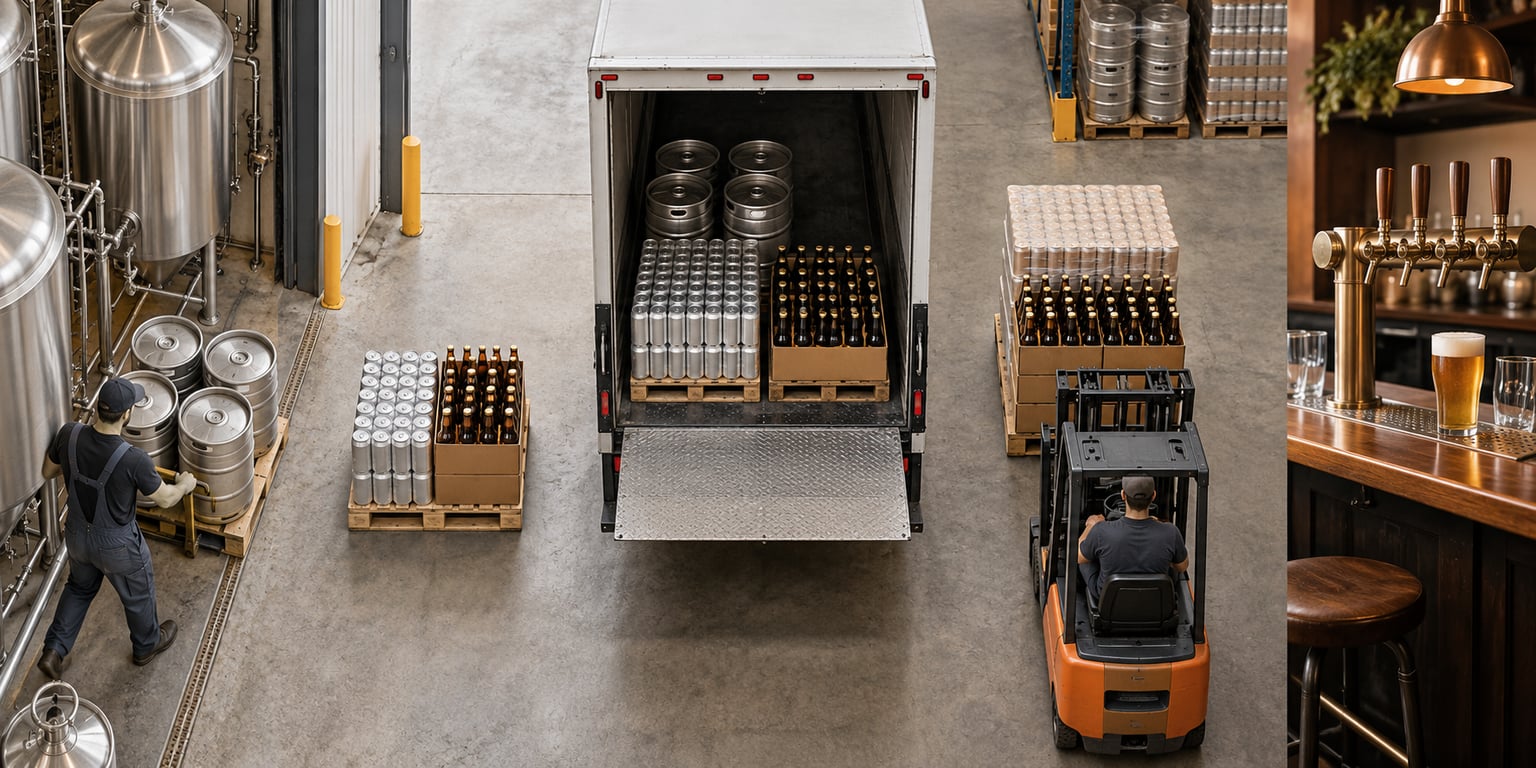
- How a Beer Gets from the Brewery to Your Glass
- What Is a Beer Distributor?
- How Breweries and Distributors Divide Their Markets
- Who Licenses and Regulates Beer Distribution?
- What Permits Are Required at Each Step?
- How Beer Taxes and Markups Work
- Can a Brewery Sell Beer Directly?
- Why Beer Routes, Prices, and Availability Differ by State
- What Happens When the Distribution Chain Breaks?
- Frequently Asked Questions
- Why do different states sell beer through different distribution systems?
- Do all craft breweries use a wholesaler to sell beer?
- Can a craft brewery ship beer directly to consumers?
- Why can the same beer cost more in one state than another?
- Does one distributor control all beer sales in a state?
- Conclusion
How Beer Distribution Works in the US
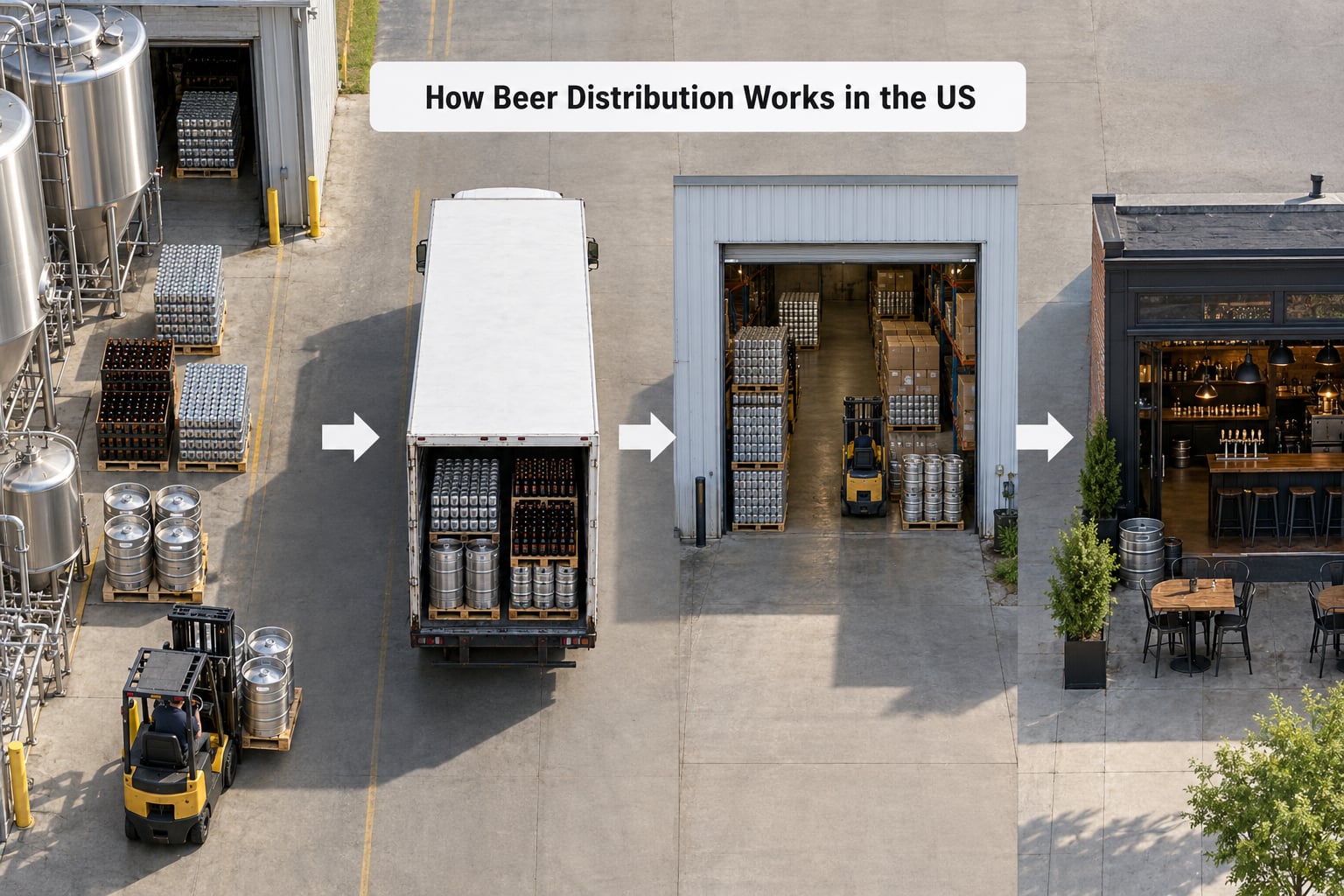
Five players sit in that chain, and each one does something different to the beer. A brewery brews and packages it. A distributor buys it in bulk, holds it and delivers it. A retailer shelves it or taps it. A taproom pours it on premises. Then it reaches you, the consumer, who has no role in the chain except paying for it.
Five roles sounds simple until you notice that no two states organize them the same way. Some states let a brewery sell straight to retailers without a middleman. Others require every drop to pass through a licensed wholesaler. A handful run their own wholesale operations outright. The structure you read about in one state simply does not exist in the next.
One more thing worth clearing up before we go further: the three-tier system is not a federal law. It is a state-level construction built after Prohibition, sitting inside a federal permitting framework. People mix it up with the federal system constantly, and it shapes how they think about every rule that follows.
What Is the Three-Tier Beer Distribution System?
The three-tier system is the legal structure that keeps production, wholesale distribution and retail sales in separate hands. A brewer makes beer but cannot sell it to a bar. A wholesaler sells to bars but does not brew. A bar sells to you but cannot buy from the brewery. Each tier holds a different license, and the separation is deliberate.
The reason is tax collection and conflict of interest. After repeal in 1933, states wanted an easy way to count beer for excise tax purposes and a way to stop brewers from pressuring the venues that sell their beer. Tied-house laws took the second problem away explicitly: a distributor or brewer is restricted from owning or controlling the bar where its own beer is poured, in most states and in most jurisdictions.
What changes at each tier is control. Producers set the recipe and the wholesale price. Distributors decide which products they carry, how much cold space they give a brand and which accounts get served first. Retailers decide what fits their cooler, what sits on a menu and whether a keg is worth the cooler space at all.
| Tier | Who they are | What they do | How they earn | Who licenses them |
|---|---|---|---|---|
| Tier 1: Producer | Breweries and importers | Brew, package, brand the beer | Sell cases and kegs to wholesalers | Federal TTB plus the state |
| Tier 2: Supplier | Distributors and wholesalers | Warehouse, merchandise and deliver beer on routes | Buy from producers, sell to retailers at a markup | The state alcohol authority |
| Tier 3: Retailer | Bars, restaurants, taprooms, grocery and liquor stores | Shelve, chill, tap and sell to the consumer | Sell at a markup over the wholesale price | State and local licensing bodies |
| Taproom and brewpub | The brewery’s own on-premises venue | Pour and sell directly to drinkers who are on site | Tier 3 margin without a wholesaler | Same as any on-premises seller |
| Consumer | The buyer | Chooses, drinks, asks questions | Pays the shelf price | Nobody |
The table is the whole system on one screen. Everything else in this article is detail hanging off those five rows.
How a Beer Gets from the Brewery to Your Glass
A barrel that is finished in a bright tank at 2 a.m. is a long way from a cold glass. Here is the actual sequence, from tank to tap.
- Conditioning and packaging. Beer finishes fermenting, gets cold-crashed for stability, and then heads to a brite tank. From there it goes to a canning or bottling line, or into a keg that gets washed, sanitized and filled.
- Release to the wholesaler. The brewery sells the beer in cases or kegs to its licensed distributor. Draft orders frequently come as full kegs rather than individual servings.
- Warehouse intake. The distributor receives it, checks seals and dates, and puts it into cold storage at roughly 35 to 40 degrees Fahrenheit so shelf life does not quietly shrink in a warm truck.
- Allocation and staging. A sales rep builds the day’s order. Product that is scarce gets allocated by account priority, which is one reason small craft brands move slower than familiar ones.
- Route delivery. A truck runs a fixed route. Packaged beer arrives in cases stacked in the walk-in; kegs arrive on a separate vehicle that is easier to load and unload.
- Retail intake. The retailer logs it in, puts bottles and cans on the shelf, and walks kegs into a cooler or a remote line system. Line cleaning and coupler changes go here too.
- Service. Draft beer goes on tap and is poured at a measured pour rate. Packaged beer is sold by the bottle or the six-pack.
Kegs and packaged beer do not travel the same road. A keg is heavy, and hauling one to a single restaurant is often not worth the fuel, so draft beer tends to move to fewer, larger accounts. Cases stack well and spread cheaply, so bottles and cans reach far more doorsteps than draft ever does.
What Is a Beer Distributor?
A beer distributor is a licensed intermediary that buys beer from producers in bulk, stores it, chooses how to merchandise it, and delivers it to licensed retail accounts. The distributor holds the state’s wholesale license and is the party that decides whether your local taproom gets a keg of that seasonal release at all.
The words get used loosely. A wholesaler and a distributor usually mean the same company. A broker does not buy or hold inventory; brokers make introductions between producers and distributors when a brewery cannot get into a large account on its own. A self-distributing brewery skips the tier entirely and sells to retailers itself, which many states permit at some volume threshold.
Distributors also handle more than driving. They install and service draft lines, run promotional programs with brewers, fund cooler placement, and provide the sales data that tells a brewery whether a market is working. A trade interview with sales staff described distributors as the people who learn merchandising best and pay on time, which is about as high a compliment as the channel gives.
How Breweries and Distributors Divide Their Markets
A distributor usually holds rights to a defined geography rather than to a state as a whole. In a typical dense market that means two houses cover most of the metro area: one aligned with Anheuser-Busch and one with Molson Coors, each carrying a broad portfolio of breweries. Regional and specialty firms cover everything else, and they are where craft brands usually land.
The unit that decides whether a beer reaches you is the route. A route is a repeating group of accounts served by the same truck on the same schedule. Route density drives economics: a truck running forty stops in one county can afford low delivery fees, while a four-drop rural run cannot. That is why distribution works well in cities and gets thin in the countryside.
Territory shapes what you find on tap far more than brewery ambition does. A brewery that ships one pallet to a market will get a distributor’s attention only if that market is not already saturated, so brewers concentrate on places where they have won taps already. Forum regulars point out that beer still moves freely between neighbouring territories, which is one reason the clean map people imagine rarely matches reality.
Who Licenses and Regulates Beer Distribution?
Regulation is layered, and the practical detail lives at the state level. The federal Alcohol and Tobacco Tax and Trade Bureau issues brewer’s permits and collects federal excise tax. State alcohol-control agencies grant wholesale and retail licences, enforce tied-house and franchise laws, and decide whether a brewery can self-distribute or sell direct. County and city governments add local licences, zoning and hours. You will not find one national rulebook that answers every question.
Different states organize the middle tier differently. In control jurisdictions, the state itself acts as the wholesaler and decides which products can be imported into the market. In licence states, private wholesalers do the work under state licence. Most readers experience a hybrid, and the categories blend into each other at the edges.
What Permits Are Required at Each Step?
Producers need a federal manufacturer or importer permit plus whatever the state requires. Wholesalers need a state wholesale licence and, in many states, a separate permit per brand category they carry. Importers add customs and tax steps on top. Retailers need an on-premises or off-premises licence, and a taproom needs both the venue licence and whatever the state requires to pour beer produced on site.
Shipping, receiving and selling each carry their own paperwork, and the same product can need different documentation depending on whether it is moving inside a state or across a border. Anyone acting on specifics should confirm current requirements with their state alcohol authority, because permit classifications change and several states moved their permit offices into separate agencies.
How Beer Taxes and Markups Work
The price on a tap handle is built from stacked layers, and each one is set by somebody different. Federal excise tax applies per barrel removed from the brewery. State taxes vary widely and sometimes apply at withdrawal rather than at sale. The distributor adds a margin to cover warehousing, trucks, labor and cold storage. The retailer adds a larger markup on drafts than on bottles because the pour is labor-heavy.
| Layer | Who sets it | What it covers |
|---|---|---|
| Federal excise tax | Federal government | Per-barrel amount, set at the brewery |
| State excise or wholesale tax | State | Can apply at withdrawal or sale |
| Distributor margin | Distributor, within trade norms | Warehouse, cold storage, trucks, sales staff |
| Retailer markup | The venue or store | Larger on draft than on packaged beer |
| Deposit | State program where it exists | Refundable container deposit |
The practical takeaway is that state choice changes the base before anyone adds a dollar. A control jurisdiction that applies tax at withdrawal, plus a longer route and a thinner competitive field, produces a different final number than a licence state where two large houses chase the same accounts. Numbers move over time, so check the current schedule rather than any figure quoted in an old article, including this one.
Draft beer carries an extra cost nobody sees. A venue pays for a cooler or remote line, for coupler changes and line cleaning, for staff who have to handle a full keg and for the empty that has to go somewhere. Retailers price all of that into the pour.
Can a Brewery Sell Beer Directly?
Sometimes. The cleanest example is the taproom: a brewery selling its own beer to people drinking it on site is doing that under a retailer licence, and most states treat it as normal and legal. Brewpubs work the same way, though several states cap how much outside beer a brewpub can pour alongside its own.
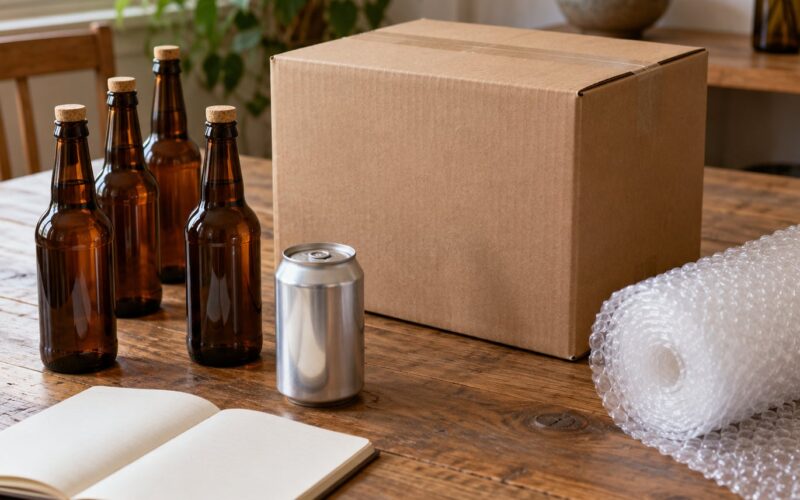
Beyond the taproom, direct options exist but come with volume limits. Many states let a small brewery sell a set number of cases directly to retailers without involving a wholesaler, and a handful let breweries ship directly to consumers. Package type changes the rules sharply: cans and bottles travel under consumer shipping allowances, while kegs almost never qualify because a half barrel will not survive a parcel carrier.
Direct sales and unauthorized distribution are different things. A brewery quietly dropping a pallet off at a bar without a wholesaler in between is breaking the rule the three tiers exist to enforce, and states treat that seriously. If a brewery cannot find a distributor, the fix is a self-distribution licence or a direct-sales allowance, not a back door.
Why Beer Routes, Prices, and Availability Differ by State
Three broad models explain most of the differences you notice as a shopper or a drinker. Which one your state uses shapes who carries beer, how much choice you have and how far a brewer has to travel to reach you.
| Model | How wholesale work is done | What it means for the drinker |
|---|---|---|
| Control jurisdiction | The state or a state agency acts as the wholesaler | Smaller portfolio, fewer new releases, higher baseline pricing |
| Self-distribution state | Breweries can sell to retailers past a volume threshold | More direct brand access, less dependence on distributor relationships |
| Franchise-law state | Private wholesalers hold territory rights protected by statute | Stable routes and steady service, harder for a new brand to break in |
Franchise laws are the quiet engine behind much of the system. They protect a distributor’s territory against termination without cause and make it costly to switch wholesalers. Supporters call that stability. Brewers call it lock-in, and there is a running thread of complaint in brewer forums about opportunistic minimums and slow payment.
Territorial boundaries add the second layer. Rights are granted by brand within a county or group of counties, so a distributor’s strength is genuinely uneven across a map. When one distributor is acquired by a large brewery group, the consolidation argument starts immediately; antitrust settlements in past mergers have imposed caps on how much of a state’s distribution a single brewer’s house may own.
Do not treat the categories as clean. States blend them, and local demand decides the rest. A region with two big metro areas can support two large houses, while a rural territory runs on one regional firm and a stack of route sales reps.
What Happens When the Distribution Chain Breaks?
Chain failures are normal and usually temporary. A brewery that batched badly sells out in three weeks and the gap lasts until the next run. A keg damaged in transit comes off the tap list. A truck breaks down and a whole route gets served late. Distributors also skip a stop rather than drive a full day for a single case of a slow-moving beer.
Seasonal releases amplify all of it. A brewery that lands a big regional run allocates the next shipment to the accounts that moved the first one fastest, which is good news if your favourite bar performs and bad news if it does not. Smaller breweries hit capacity limits and simply cannot produce more, which no distributor can fix.
There are useful ways to find beer that is hard to track. Ask the taproom whether a seasonal beer is scheduled or simply unavailable, and check whether a bar is taking allocations or open orders. Look at neighbouring taps, since a beer that failed in one place often shows up two doors down. Retail apps that track local shelves are useful too.
One thing helps you tell the difference between the two kinds of gap. A temporary shortage comes back, and distributors will quietly call an account when the next truck loads. A permanent discontinuation does not return, and it usually means the brewery changed its recipe, its can supplier or its plans rather than anything the chain did.
Frequently Asked Questions
Why do different states sell beer through different distribution systems?
Each state writes its own alcohol statute, and those statutes were built at different times for different local industries. Some created state-run wholesale operations, some let breweries self-distribute past a volume threshold, and some protected private wholesalers with franchise laws. The federal layer sets permitting and excise tax, but the map of who may sell to whom comes from state law. That is why the same beer can be widely available one state over and hard to find in the next.
Do all craft breweries use a wholesaler to sell beer?
No. Many small breweries work through a distributor simply because it is the fastest way to reach accounts they could not service themselves, but a good number operate under self-distribution licences or direct-sales allowances that let them sell to retailers directly below a set volume. Larger breweries that self-distribute have to build warehousing, a sales team and a truck fleet, which is why most of them use wholesalers instead. A taproom also sells direct, though only to people drinking on site.
Can a craft brewery ship beer directly to consumers?
Only where state law allows it. Many states permit a licensed brewery or out-of-state seller to ship packaged beer to residents, usually in exchange for a sales or licence fee, and some require a licence on file first. The rules differ for in-state breweries and for wine and spirits. Kegs are effectively never covered because a half barrel cannot travel through a parcel carrier. Checking your state alcohol authority site is the fastest way to confirm what is currently allowed.
Why can the same beer cost more in one state than another?
Taxes and channel costs differ first. Federal and state excise rates vary, and in some jurisdictions the tax applies when beer is withdrawn from the brewery rather than when it is sold. Add distributor margin, delivery distance and how dense the route is, then the retailer’s own markup, which is heavier on draft than on cans because a pour takes labor and cooler space. A control jurisdiction with a short portfolio and a licence state with two competing houses end up with different numbers.
Does one distributor control all beer sales in a state?
Rarely. Most large states have a mix of regional houses, specialty distributors and the two major brewery-affiliated networks that split the metropolitan areas between them. The closer you get to a small or rural market, the fewer firms there are, and some territories are genuinely served by a single regional company. Rights are usually held by brand within a defined territory rather than covering an entire state, so no single distributor holds everything a state sells.
Conclusion
The chain runs brewery to wholesaler to retailer to taproom to glass, with a licence and a tax at every step, and it works differently in every state because every state wrote its own version of it.
When you want to know why a beer is hard to find or oddly priced, check three things in order: what system your state uses, which distributor holds the brand’s territory there, and what permits and taxes sit in between. Those three answers explain most of what looks arbitrary about how beer distribution works in the US.