To find rare beer releases near you, sign up for alerts from the breweries, taprooms and bottle shops you care about, then track what they announce in one calendar. That combination — official email lists plus a weekly calendar check — catches far more releases than any single app, and it works in small towns as well as big cities.
The reason scarcity exists is simple arithmetic. A brewery running a single-keg release makes sixty gallons. A barrel-aged batch might be a few hundred bottles. Nothing about that is marketing trickery, but the way breweries distribute those tiny amounts creates all the frustration: a limited beer goes to the taproom, a handful of bottle-shop accounts, and maybe a mailing list, then it is gone.
Here is what that means in practice. Nobody gets a text the morning a keg is tapped. You find out days or weeks ahead, if you are already on the list. Beer geeks on r/CraftBeer describe the habit that works: put the date and the on-sale time in Google Calendar the day the brewery announces it, then set a reminder a few days out. Nine steps get you there.
Table of Contents
- What You Need
- Step-by-Step: How to Find Rare Beer Releases
- 1. Build a list of breweries and distributors you trust
- 2. Turn on release alerts from every relevant source
- 3. Check release calendars at least once a week
- 4. Search brewery websites and local beer maps to find rare beer releases near you
- 5. Call or message bottle shops before you travel
- 6. Plan your arrival around the release format
- 7. Set a backup option before a release sells out
- 8. Ask staff for factual release information
- 9. Record the release details after each hunt
- Common Mistakes and Better Alternatives
- Frequently Asked Questions
- What is the best app for tracking beer releases?
- Why do rare beer releases sell out so fast?
- Can I buy rare beer online and have it delivered to my house?
- Is it safe to buy rare beer from resale sites?
- How do I find rare beer releases in a smaller city?
- Conclusion
What You Need
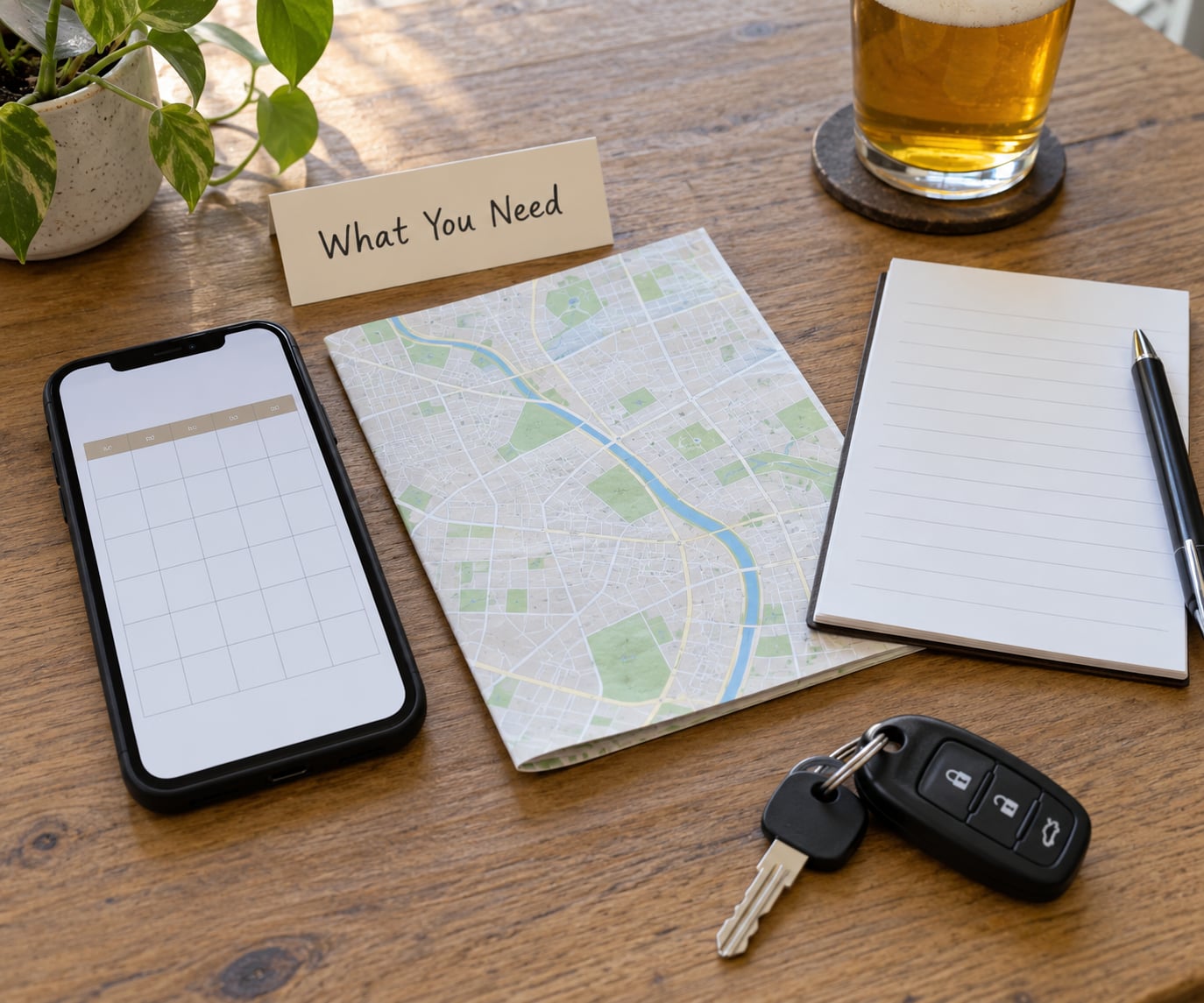
A phone with notifications on. That is the whole toolkit, plus a few habits. The phone matters more than any app because the alert has to reach you while you are doing something else.
You also need somewhere to write things down. Google Calendar, Apple Calendar, or a paper notebook in the kitchen all work. Pick one and never skip a week, because a calendar you check every Sunday will beat a perfect system you only consult when you remember.
- A phone with alerts enabled for brewery emails and social posts
- Email sign-ups for every brewery and taproom within driving distance
- A beer map app so you can see what is pouring nearby and spot new spots
- A release calendar — your own, with a weekly reminder to review it
- Cash or a card for taprooms that cannot take a payment method reliably
- A plan for getting home, plus a designated driver or rideshare account if you plan to drink
One more thing worth having: a way to send yourself a reminder the night before a drop. A calendar entry with an alert set for the evening before does more than any app notification, because it gives you time to plan the drive instead of reacting at the moment.
Step-by-Step: How to Find Rare Beer Releases
1. Build a list of breweries and distributors you trust
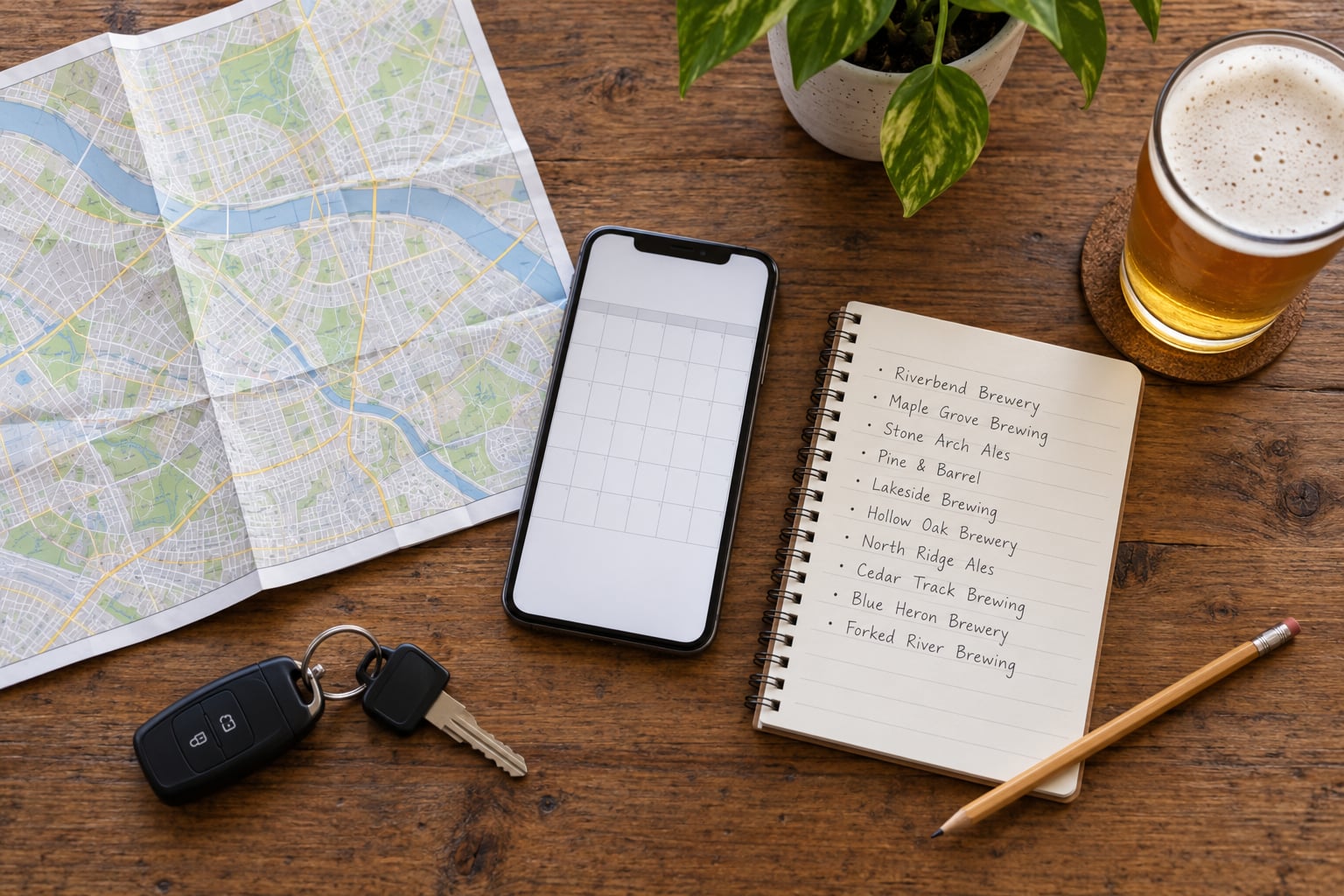
Start with what is within about an hour of your home. Search for breweries in your city and state, then look for the taprooms, brewpubs and bottle shops that carry local releases. Distributors matter too, because a brewery often sells its scarce package releases to a specific wholesaler first.
Keep the list simple: brewery name, taproom address, website, and what they are known for. A sour specialist, a barrel program, a seasonal release — each brewery has a specialty, and knowing it tells you which ones to watch closely.
Success signal: you have 15 to 25 entries and you know which five you would drive to on short notice.
2. Turn on release alerts from every relevant source
Now do the boring part that most people skip. Sign up for the email list of each brewery on your list, tap to get text alerts where offered, and follow the brewery’s social accounts. Taprooms often post separately from the brewery, so subscribe to both.
Turn off the notifications you do not need, though. A noisy alert system gets muted within a week, and then you are back to square one. Keep push alerts for taprooms and bottle shops, and let routine brewery newsletters sit in the inbox.
Success signal: you received at least one release announcement in the last month without chasing it down.
3. Check release calendars at least once a week
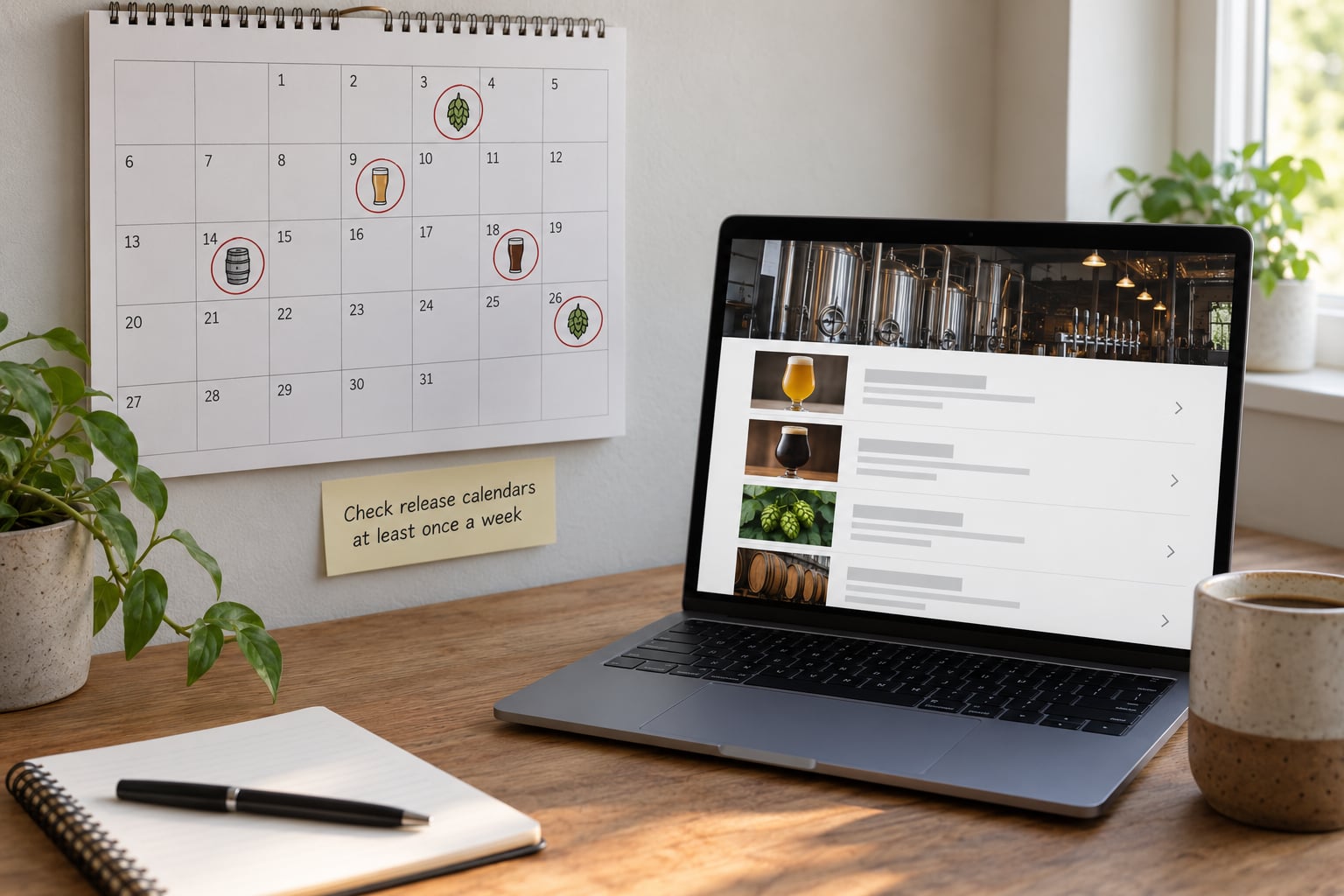
Most breweries that release regularly publish a calendar or an events page, even if it is just a list of dates. Set a recurring Sunday evening reminder to open them all. It takes fifteen minutes and it catches the dates that never made it into an email.
For every upcoming release, note five things: the date, the time taps start, the format, any purchase limit, and whether the beer is going to the taproom only or out to distribution. Those five details decide whether you need to plan an evening or a Saturday morning.
Success signal: every date in your calendar has all five details filled in.
4. Search brewery websites and local beer maps to find rare beer releases near you
Beer map apps solve the discovery half of the problem. Open the map, set your search to city and state, and browse taprooms and brewpubs in your area. Check-in data tells you what is actually pouring right now, which is more useful than a stale tap list on a website.
One caveat worth knowing: check-in lists are sometimes behind reality. A tap can rotate faster than people log it. Treat the app as a map of venues and a hint about recent pours, then confirm anything important by calling.
On the brewery side, look for a news or releases page rather than the homepage. Homepages get rewritten; release posts usually stay up with a date attached. An event listing that says “release” on a brewery calendar is exactly the format this whole system is built around.
Success signal: you found a release listing on a brewery site and confirmed the venue and format from the page itself.
5. Call or message bottle shops before you travel
Package releases rarely get any public announcement. Bottle shops receive allocations from the distributor, and the store decides whether to hold bottles for customers or sell them to whoever walks in. A short call saves a wasted drive.
Ask four things: is the beer coming in at all, how many bottles are they getting, is there a purchase limit, and on what day will it be on the shelf. Keep the call short and polite. Staff answer the same question all day, and they will remember a customer who asks something specific.
Success signal: the store gives you a day to arrive rather than a vague answer.
6. Plan your arrival around the release format
Formats behave completely differently. A draft-only pour at a taproom means you need to be there when the tap opens, and a bad queue can end your chances. A bottled package release sold at a shop can sit on a shelf. A festival release often has a set bottle limit and a ticket in advance.
For taproom-only releases, ask the brewery directly what time the line forms. Then arrive earlier than feels comfortable and make your first purchase a modest one. Queuing etiquette is real: buying a modest amount early keeps the line moving for everyone, and it puts you on the brewery’s good side for the next release.
Success signal: you know the format, the start time, and the limit before you leave the house.
7. Set a backup option before a release sells out
Decide the fallback before you are disappointed. Is there a second taproom pouring the same beer? Does the brewery distribute to a bottle shop nearby? Is there a festival or a collab release later in the season that uses similar fruit or barrel character?
Two habits help here. First, join waitlists and preorder lists the moment they open, even for beers you would only buy one of. Second, ask whether the brewery has a package release coming for the same beer, because the taproom beer and the packaged version are usually months apart.
Success signal: you have a named second source written down next to the calendar entry.
8. Ask staff for factual release information
Brewery and shop staff are the closest thing you get to a live inventory feed. Four questions get real answers: how much is left today, when is the next batch, which territories get distribution, and are other formats of this beer planned.
Keep it conversational. Staff are not hiding anything; they are working. Ask what is queued next rather than demanding a rare pour, and you will often learn about a beer that has not been announced anywhere else.
Success signal: you learn one fact you could not have gotten from any website.
9. Record the release details after each hunt
Write it down while it is fresh: brewery, beer name, format, release date, where you found it, what you paid, and how the notification arrived. That last one is the useful part, because after a year you will know which alerts actually work.
A simple note with those fields takes under a minute and turns the next hunt into a faster one. It also stops you from chasing the same brewery’s newsletter for a release date you already wrote down last summer.
Success signal: you can look back and see which sources produced actual purchases.
Common Mistakes and Better Alternatives
Relying on one repost. A screenshot shared in a group chat is usually days old and misses the venue details that matter. Go to the brewery’s own release page or event listing instead. If a social post is your only lead, treat it as a hint and verify it before driving anywhere.
Confusing a taproom event with distribution. “Release night at the brewery” usually means the beer is poured in that building that day, sometimes to a pre-sale ticket list, and never means bottles are on a shelf near you. Check whether the event is public before you plan around it.
Arriving after a release ends. Everything in this system depends on the start time, not the date. If taps open at noon and you arrive at four, you are too late. Set two reminders, one the night before and one an hour before you leave.
Buying without checking limits. Some releases cap purchases per person, and staff enforce it. Ask before you load up. Buying within a limit also means more people get a pour, which is the point of allocation in the first place.
Chasing resale listings. A bottle listed at several times its normal price from an unfamiliar seller is more likely to be a scam, a counterfeit, or a listing for something that does not exist. Community trading forums where people have history are the safer route, and even there, shipping alcohol across state lines runs into real legal limits — carriers and postal rules differ, so check yours before mailing anything.
Trying to collect every drop. The hobby turns into a scarcity arms race when every release is a target. Pick two or three breweries per season and learn them properly. You will enjoy more beer and spend less time refreshing pages.
Frequently Asked Questions
What is the best app for tracking beer releases?
There is no single app that tracks every release. Beer map apps are best for seeing what is pouring at nearby taprooms right now, Google Calendar with a weekly reminder is best for tracking announced dates, and brewery email lists are best for hearing about a drop first. Most serious hunters use all three at once, because each one covers a gap the others miss.
Why do rare beer releases sell out so fast?
Because production is tiny and demand is concentrated. A single-keg release is about sixty gallons, which might be a few hundred pours. That volume is split between the taproom, a mailing list, and a small number of bottle-shop accounts. When a popular brewery announces one, the same few hundred people compete for the same few hundred pours, often within minutes.
Can I buy rare beer online and have it delivered to my house?
Rarely, and rarely to your door. Alcohol shipping laws differ by state and county, the postal service does not handle alcohol, and the major carriers generally require licences and an adult signature with an in-person check. Many online beer shops simply will not ship a limited release at all, and those that do usually sell the beer to a licensed retailer near you instead.
Is it safe to buy rare beer from resale sites?
Treat third-party resale sites as high risk. Prices several times the normal range are the standard hook for listings that never ship, arrive as something else, or arrive empty. Community trading forums with established usernames and long posting histories are safer, and a direct trade with someone you have exchanged with before is safer still. Ask for photos of the actual bottle and its label before sending anything.
How do I find rare beer releases in a smaller city?
In a smaller city, the taproom and brewpub network replaces the apps. Follow every local brewery and every bottle shop on the same platform, sign up for their email lists, and check in at the local venues so you see their posts. Many small cities have only two or three producers, and their releases rarely get national attention, which is exactly the advantage you have.
Conclusion
Start with one action tonight: build a calendar and add every brewery and taproom within driving distance, then sign up for their email lists before you close the laptop. That is the whole setup, and it takes about twenty minutes.
From there, the habit matters more than the tools. Weekly calendar check, alerts you do not mute, a short call to bottle shops before a drive, and a written note after each hunt. You will find more rare beer releases in your own area than any feed can hand you, and you will do it without skipping limits or overdrinking.