The fastest way to keep drinks cold without a cooler is an ice-and-water bath salted with roughly a cup of salt per gallon. It pulls heat out of cans and bottles in 10 to 15 minutes. For hours rather than minutes, pre-chill everything, pack it small, keep it shaded, and wrap it in whatever insulation you already own.
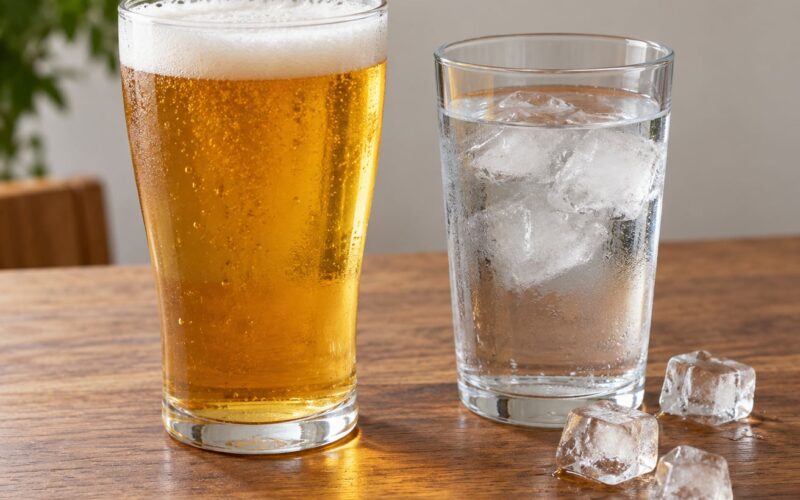
One thing worth saying up front: cold and not watered down are two separate problems. Ice sitting inside the drink solves the first and ruins the second, which is why most people end up with warm, flat beer at exactly the moment they wanted cold, clean beer. Everything below chills from the outside so you get both.
Updated for October 2026
Table of Contents
- What You Need
- Ways to Keep Drinks Cold Without Ice
- Step-by-Step: How to Keep Drinks Cold Without a Cooler
- Pre-Chill the Drinks and Containers
- Use an Ice-and-Water Bath
- Wrap Bottles and Cans in Insulating Materials
- Keep Drinks Shaded and Out of Direct Sun
- Pack Drinks in Small Batches
- Monitor and Re-Chill as Needed
- Common Mistakes
- Tips for Long Trips and Outdoor Events
- How Long Each Method Holds Cold
- Frequently Asked Questions
- What can I use if I don’t have a cooler?
- How long can drinks stay cold without a cooler?
- Does salt really make ice colder?
- How do I keep drinks cold without watering them down?
- Why does wrapping a beer can in a wet towel work?
- Is it better to put ice on top or underneath the drinks?
- Final Advice
What You Need
You need three things: a cold source, a barrier between the drinks and moving air, and shade. The container is almost irrelevant. A galvanized bucket that cost eight dollars and a picnic basket from a closet perform the same way if the contents are packed the same way.
- Ice plus water. Ice alone chills slowly because air is a poor conductor. Ice sitting in water transfers heat several times faster.
- Salt. Regular table salt is fine. Rock salt or ice cream salt works too and dissolves more slowly, so the bath holds its low temperature longer.
- A container with some depth. A bucket, a storage tote, a laundry basket, a large flower pot, a sink basin or a bathtub. Deep beats wide, because cold sinks and you want the ice underneath as well as around.
- Towels, blankets or newspapers. Damp ones for airflow cooling, dry ones for insulation.
- A cooler bag, picnic basket, duffel or insulated tote. Any of these doubles as an improvised cooler when packed with cold and wrapped in a towel.
- Shade. An umbrella, a canopy, a big tree, a tarp, or simply a vehicle trunk that is not sitting in direct afternoon sun.
- Enough water to submerge the ice by about an inch. If you have none, frozen gallon jugs or water bottles do the same job for a few hours.
Conditions matter as much as gear. Dry days beat humid ones, because humid air slows evaporation. And above about 90°F, plan on half the hold time you would get in mild weather — or carry twice the cold.
Ways to Keep Drinks Cold Without Ice
- Ice-and-salt bath. Salt drops the freezing point of the melt water, so the slurry gets colder than 32°F and drains heat fastest.
- Damp towel wrap. Evaporation carries heat away, which is why the trick needs moving air to work.
- Freeze the drink itself. A half-frozen bottle becomes its own ice mass and lasts longer than loose cubes.
- Frozen grapes or fruit cubes. Chills wine and pitchers without diluting anything.
- Reusable stainless cubes. They chill without melting, so the drink stays full-strength.
- Ice floated in a cup inside the pitcher. The whole pitcher cools while the melt water stays in the cup.
- Insulated drinkware. Vacuum insulation slows heat gain before anything touches the drink.
Step-by-Step: How to Keep Drinks Cold Without a Cooler
Pre-Chill the Drinks and Containers
Put the drinks in the refrigerator the night before, not the morning of. Starting at 40°F instead of room temperature buys you hours, and it costs nothing.
Chill the container too, if you can. A bucket or tote that spent the morning in a cool garage holds noticeably better than one that sat in a warm trunk, because you are not asking the container to absorb the initial heat.
Use an Ice-and-Water Bath
- Fill the bucket or tote about a third full of water, then add ice until it stands above the surface.
- Add roughly one cup of salt per gallon of water. Stir until it stops moving.
- Submerge cans and bottles, weighing them down with a smaller container if they float.
- Turn on a fan or set the bath somewhere with airflow, and wait 10 to 15 minutes.
Salt works because it lowers the freezing point of water, so the melt water stays liquid well below the temperature of the ice itself. The bath ends up somewhere around 20°F, and a drink sitting in it loses heat far faster than one sitting on ice. A salted bath will never freeze solid, which is why the cold lasts longer than people expect.
If you are not near a water source, freeze gallon jugs the night before. Wrapped in a towel and packed in a bag, one frozen jug holds a small batch cold through a long afternoon.
Wrap Bottles and Cans in Insulating Materials
Towels, old blankets, newspaper and bubble wrap all do the same job: they slow heat transfer. Wrap bottles individually and lay them tight together, then wrap the whole group, not each one twice. Air gaps are wasted insulation.
A damp towel in a breeze is a different trick from a dry towel in shade. Damp plus moving air cools through evaporation; dry plus still air insulates. Pick based on where you are, and never wrap a damp towel around anything electronic.
Keep Drinks Shaded and Out of Direct Sun
Sunlight lands on a dark can and warms it in minutes, and that happens on top of the heat already soaking in from the air. Shade first, cover second. An umbrella over the tub is worth more than any amount of extra ice.
For a car, the trunk beats the back seat because the cabin is mostly glass and the metal body shields contents from the sun. Park in the shade if you can, and pack the tub tight so the open air volume is small.
Pack Drinks in Small Batches
Bring what you will actually drink. Every extra can is cold you paid for and either drank or threw away, and an overstuffed tub keeps less of its own cold.
Separate opened from unopened containers so nobody opens the same warm bottle four times while a cold one sits untouched. If you have a larger chilled supply, refill small batches from it rather than exposing the whole supply at once.
Monitor and Re-Chill as Needed
Check rather than guess. Hold a can against your cheek, or watch for condensation forming on the outside — that appears well before the drink tastes warm.
When a batch starts to drift, top up with ice and water, add a splash of salt, and move the tub into deeper shade. Ten more minutes in a fresh salted bath resets it fast. Keeping a few cans back in the fridge for the second half of the day also works, provided you have the room.
Common Mistakes
- Using ice with no water. Fix: add water until the ice is mostly submerged. Dry contact transfers heat many times slower than a wet slurry.
- Leaving everything in direct sun. Fix: shade before you add more ice. Shade is free and works immediately.
- Overpacking the container. Fix: fill gaps with a towel or crumpled newspaper so the cold stays concentrated around the drinks.
- Reopening the same warm bottle. Fix: open a fresh one, and stash the remainder back in the cold water rather than on the table.
- Putting hot or damp items in with the drinks. Fix: keep food covered and separate. Damp and hot items raise the temperature of everything around them.
- Freezing glass bottles and forgetting about them. Fix: never leave bottles or cans in a freezer unattended. Liquids expand as they freeze and push the glass or seams apart, which means broken glass and a ruined shelf. Set a timer or use a bowl so an expanding bottle just pushes up.
- Leaving a salt bath behind. Fix: rinse the bucket with fresh water when you are done. Salt is corrosive and leaves a gritty film on metal and stone surfaces.
Dry ice deserves its own warning, since it turns up in more cold-chain guides than it should. It is about 109°F below freezing, so it will freeze anything it touches and can cause burns. Keep it in a vented container, never in an airtight one, never near children, and never around drinks you will actually open and drink.
Tips for Long Trips and Outdoor Events
On a road trip, freeze two gallon jugs the night before and drive with them wrapped in towels in the trunk. Refill bags at a grocery store along the way rather than buying a bag of ice, which melts in the parking lot before you get back to the car.
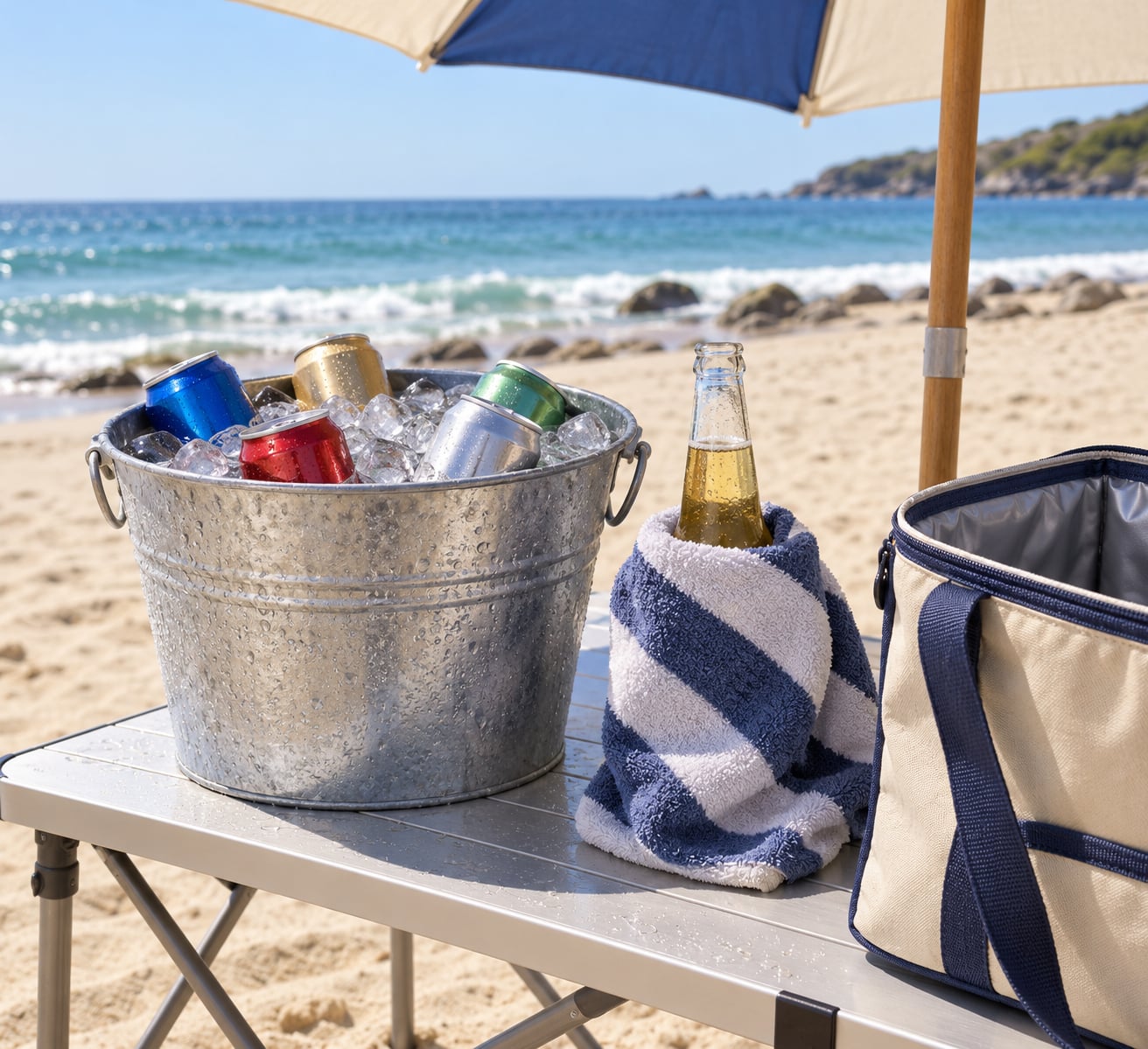
For a beach day, salt and water are the wrong choice — a salted bath will dry out and the salt ends up on the sand. Use a damp towel wrap plus shade, and keep the drinks in small quantities you can carry back and forth.
Tailgates and backyard barbecues work best with a trash can full of ice and a mix of cans and bottles, packed in tight. Keep a second round cold and unopened for later, because the first round will not survive a five-hour game.
Festivals, weddings and transit settings often ban coolers outright, so plan around what you can carry. Frozen grapes in a sealed bottle, a vacuum-insulated tumbler, and a small insulated bag will carry more usable drinks than a rigid container you are not allowed to bring through the gate.
Camping works the same way as long as you accept that cold is a consumable. Freeze your drinking water into blocks overnight and use them as your ice, so nothing has to be carried in as ice.
In a car with no fridge and no cooler, fill empty bottles with water and freeze them solid. They become the cold mass for everything else in the vehicle, and you get drinkable water as they melt.
How Long Each Method Holds Cold
| Method | Typical hold time | What you need | Mess level |
|---|---|---|---|
| Salted ice-and-water bath, shaded | 3 to 4 hours | Bucket, ice, water, salt | High — salty melt water |
| Ice and water, no salt, shaded | 2 to 3 hours | Bucket, ice, water | Medium |
| Half-frozen bottle in a towel-lined bag | 2 to 4 hours | Freezer, bag, towel | Low |
| Frozen jugs packed with cans | 4 to 6 hours | Freezer, jugs, insulated bag | Medium |
| Damp towel wrap with airflow | 20 to 40 minutes | Towel, fan or breeze | Low |
| Vacuum-insulated tumbler | 2 to 6 hours | Tumbler, frozen contents | None |
| Shaded picnic basket with newspaper liner | 1 to 2 hours | Basket, newspaper, ice packs | Low |
Treat these as ranges, not guarantees. Direct sun above 90°F roughly halves every number on that list, and a full container beats a half-empty one because there is less air to chill.
Frequently Asked Questions
What can I use if I don’t have a cooler?
A galvanized bucket, a storage tote, a laundry basket lined with a towel, or a picnic basket packed with newspaper all work. The container matters far less than the cold inside it and the barrier around it. Fill whatever you have with ice and a splash of water, pack the drinks in tightly, and cover with a damp towel. That combination will hold for a few hours without spending anything.
How long can drinks stay cold without a cooler?
Plan on two to four hours for a salted ice bath kept in the shade, and closer to six if you line the container with wet towels and keep it covered. A frozen bottle in an insulated bag holds about as long as a bag with a single ice pack. In direct sun above 90°F, expect roughly half of these figures.
Does salt really make ice colder?
Salt lowers the freezing point of water, so an ice-and-salt slurry sits well below the 32°F of plain ice, often near 20°F with a cup of salt per gallon. That colder bath absorbs heat from a can faster than ice alone, which is why salting is the fastest way to chill drinks. Too much salt turns the bath slushy and unpleasant to drink straight.
How do I keep drinks cold without watering them down?
Chill them from the outside. Put cans and bottles into an ice-and-salt bath, a tub, or a bag of frozen grapes, and leave the drink itself untouched. Inside a pitcher, drop the ice into a separate cup that floats and holds it down. Frozen fruit and reusable stainless cubes go in directly without thinning the beer or wine.
Why does wrapping a beer can in a wet towel work?
Water evaporating off the towel absorbs heat from the can, and evaporation only happens when air moves across the surface. In a breeze or near a fan, wrap a can in a damp paper towel and it drops noticeably within minutes. In still indoor air the effect is weak, so use a fan, or put the can on a plate in the freezer for 20 to 30 minutes instead.
Is it better to put ice on top or underneath the drinks?
On top, and around them. Cold sinks, so ice placed only at the bottom leaves a layer of melt water that is warmer than the ice itself. Pile ice over the cans and bottles as well as under them, add water until the ice is submerged, and salt it. Drinks surrounded on all sides pull heat out fastest.
Final Advice
Chill everything the night before, put the drinks in an ice-and-water bath with salt rather than on dry ice, wrap the group in towels or newspaper, keep it in shade, and pack only what you will drink. That order is the difference between a warm bottle at noon and a cold one at sunset.