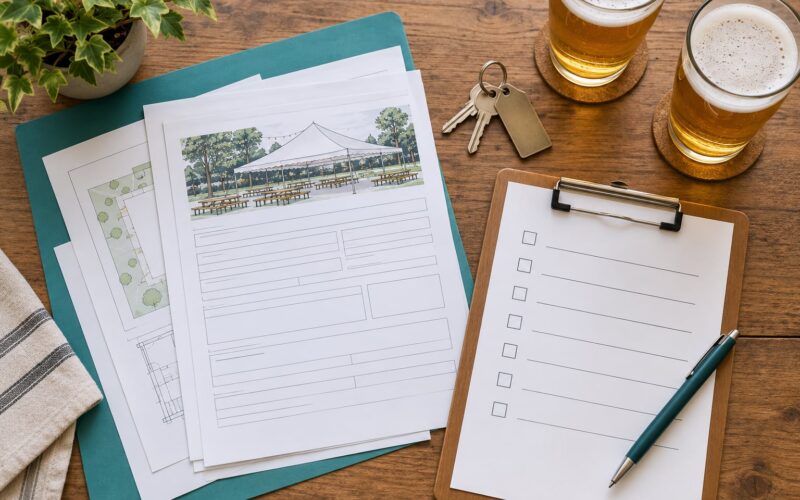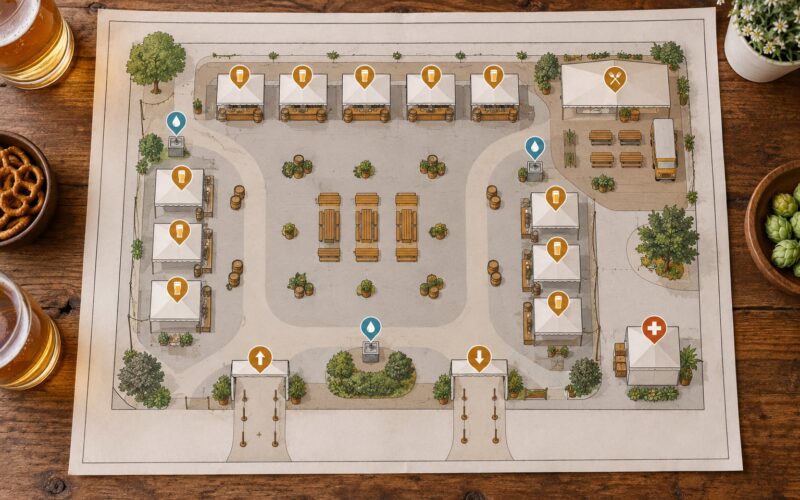
To get sponsors for a local event, you identify businesses whose customers already match your attendees, package what the event delivers for them, price it, then pitch one specific business with a clear ask. Most first-time organizers land their first two or three sponsors from personal contacts before they ever send a cold email.
Budget about 12 weeks of lead time, and treat sponsorship as a swap rather than a favor. The business owner is not funding your dream; they are buying access to a room full of their customers. If you can describe that return in three sentences, the ask gets easy.
Table of Contents
- What You Need Before You Approach Anyone
- Step-by-Step: How to Get Sponsors for a Local Event
- Step 1: Define the Event and Its Audience
- Step 2: Set a Realistic Sponsorship Budget
- Step 3: Build an Ideal Sponsor List for Your Event
- Step 4: Create Sponsor Benefits and Visibility
- Step 5: Prepare a One-Page Sponsorship Proposal
- Step 6: Pitch the Right Decision-Maker
- Step 7: Follow Up and Negotiate
- Step 8: Deliver, Document and Renew the Relationship
- Common Mistakes That Kill Local Sponsorships
- Frequently Asked Questions
- How much should a local event charge for sponsorship?
- What are the best businesses to approach for event sponsors?
- Can a small event attract sponsors, or is attendance required?
- Should sponsors receive free tickets or venue exclusivity?
- What should an event sponsorship proposal include?
- How do you follow up with a potential sponsor who has not replied?
- Conclusion
What You Need Before You Approach Anyone
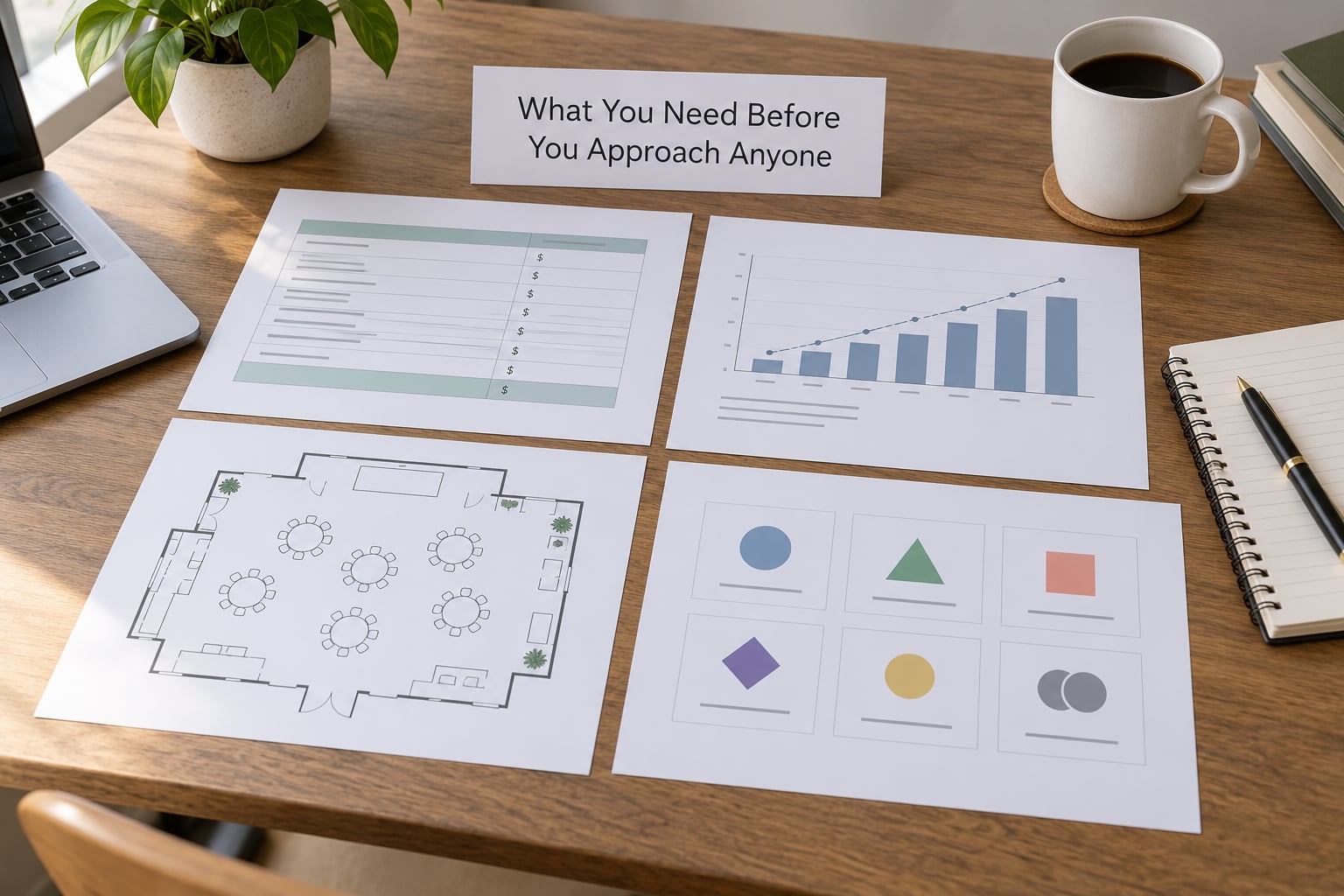
Six things, and none of them require money to produce. Most of the work is thinking and writing, not spending.
- Event basics. Date, venue, start and end times, capacity, ticket price and whether the event is free.
- An audience profile. How many people you expect, where they come from, roughly what they spend on a night out, and why that matters to a local brand.
- An attendance forecast. Best guess, worst case, and the plan for proving the real number afterward.
- A preliminary budget. What the event costs, what ticket revenue covers, and the gap sponsors must fill.
- A benefits package. What a sponsor receives in return, in plain language.
- A prospect list. 30 to 50 named businesses with a contact person at each one.
If you can fill those in, you are ready to pitch. If the budget line for sponsorship is still blank, do that math first, because it decides what you can honestly ask for.
Step-by-Step: How to Get Sponsors for a Local Event
Step 1: Define the Event and Its Audience
Write a two-sentence description of the event and a one-paragraph profile of who shows up. Be concrete. “A Saturday afternoon beer festival in a 200-person warehouse district, 60 percent within two miles, mostly 25 to 45, average spend per person on the night around fifteen dollars” tells a brewery owner far more than “a fun community event.”
Then ask what that audience means for a sponsor. A taproom wants foot traffic on a slow Tuesday. A distributor wants a room full of people who will order cases next week. A hardware shop probably wants families. Pick the framing before you pick the sponsor.
Step 2: Set a Realistic Sponsorship Budget
Build the full event budget first: venue, permits, insurance, talent, signage, staff, food and drink. Subtract ticket revenue and any money already committed. The remainder is your sponsor target, and it should be achievable within one season, not aspirational.
A useful rule for a first event: assume you will sell 60 to 70 percent of your target with cash sponsors and close the rest with in-kind contributions. Many organizers learn this the hard way by aiming for the full number and coming up short in the final month.
Step 3: Build an Ideal Sponsor List for Your Event
How to find local sponsors comes down to fit, not fame. List businesses whose products your attendees already buy, then rank them by how easily you can reach a decision maker and how likely they are to say yes.
| Sponsor category | Why they benefit | What to offer |
|---|---|---|
| Local breweries and taprooms | Direct sampling to new drinkers on a night they would normally be closed | Branded tap takeover, sampling station, mention from the stage |
| Beer and wine distributors | Direct access to retailers and bars who place orders | Logo on a backdrop, table at the vendor area, hospitality passes |
| Food trucks and restaurants | Full afternoon of trade with an audience already eating and drinking | Vendor spot at no cost, menu mention, social features |
| Bottle shops and grocery craft aisles | New retail customers, no discount to their own shelf | Ticket giveaways, coupon in the program, bag insert |
| Homebrew supply and glassware vendors | Hands-on customers for fermentation gear and equipment | Demonstration table, workshop slot, discounted ticket bundle |
| Homebrew clubs and guilds | Member recruitment and club visibility | Judging panel, club table, merchandise table |
| Local beer writers and creators | Content about the event, a ready-made story | Media credential, preview tasting, early access |
| Payment and POS vendors | Face-to-face sales with a captive audience | Demo booth, co-branded giveaway, sponsor mention |
| Transit and rideshare partners | New riders plus guaranteed return trips at the end of the night | Named shuttle, code on tickets, signage at the exit |
| Local print shops and screen printers | Visibility to a design-hungry crowd and small order sizes | Print the event shirts, credit on volunteer tees |
| Health and fitness studios | Free trial memberships handed out to a local crowd | Gym bag giveaway, booth, group class voucher |
| Chambers and downtown associations | Member visibility and proof of community investment | Host announcement, member newsletter mention, co-branding |
The useful list also comes from places you would not think of first: the chamber of commerce member directory, a downtown business association roster, the sponsor page of last year’s festival, the conference room at a local bank, and the taps you visited on your last beer crawl. Forum organizers report the same thing repeatedly: the easiest money comes from categories nobody thought to ask.
Step 4: Create Sponsor Benefits and Visibility
Benefits have to be things you can actually deliver and count. Logo placement, social mentions, tickets and signage are easy. What wins most sponsors is activation, where the sponsor does something in the room rather than sitting on a banner: a tasting station, a branded pour, a booth with staff, a branded giveaway that people queue for.
Two principles keep you out of trouble. First, name the size and location of every piece of placement. Second, cap how many sponsors share each benefit. If six companies all get a logo on the same banner, none of them get an impression worth invoicing.
Category exclusivity is the pricing lever most first-time organizers miss. If only one brewery is allowed to pour at a beer festival, that single slot is worth more than a general logo. Sell it as an exclusive, price it higher, and keep it in writing.
Step 5: Prepare a One-Page Sponsorship Proposal
One page. This is the single most requested asset among first-time organizers and the reason so many pitches stall before they start. A proposal that a busy owner can read in ninety seconds gets a reply; a twelve-page deck gets filed.
Include the event concept, date and location, attendance forecast with the basis for it, audience profile, sponsor tiers with what each one receives, a real photograph or two of the venue or last year, category exclusivity terms, a named contact, and one line on how results get reported afterward. Founders of nonprofit events also add their tax status and the exact acknowledgment wording they will use.
| Tier | Typical range | What is included | Exclusivity |
|---|---|---|---|
| Community supporter | A few hundred dollars or the in-kind equivalent | Logo on shared banner and program, social mention, two tickets | None |
| Event partner | Mid hundreds to low thousands | Everything above plus booth or table, stage mention, hospitality passes, first look at attendance report | Optional, by category |
| Presenting sponsor | Two to four thousand dollars for a first-year event | Event named in part, dominant signage, branded pour or activation, host reads, dedicated social post, yearly recap meeting | Title category, one only |
Rough ranges only, and they move with attendance, market and how much activation you can actually staff. What matters more than the number is that the sponsor gets something measurable in return.
Step 6: Pitch the Right Decision-Maker
Cold email to a generic address gets ignored, and organizers on fundraising forums call the mass-send approach out as spam for good reason. Ask for an introduction instead. Say who you know, who they know, and why this person.
Finding the actual decision maker depends on the size of the company. At a brewery or small taproom, the owner or general manager says yes. At a distributor or a regional brand, it is usually the marketing or events lead. At a bank or a payments company, it is community relations or the branch manager. Check the company website and LinkedIn for titles before you write, and if nobody fits, phone the main line and ask to be connected to whoever handles local events or community partnerships.
Keep the email short and specific to that business.
Subject: [Brand name] as a tasting partner for [Event name], [date]
Hi [Name],
I run [Event name], a [what it is] at [venue] on [date]. We had [number] people last year and expect about [number] this time, mostly from [area].
The part that fits [Brand] specifically is [one true, specific reason: their taproom is ten minutes away, their product has no presence at any local festival yet, their staff already come to these nights].
I have a one-page proposal with what a partner slot includes: [two or three concrete benefits]. It is [price range] for the presenting slot, and [smaller figure] if you would rather start with the tasting station.
Would a fifteen-minute call this week work?
[Your name], [phone], [email]
For a phone call, use the same three beats: what the event is and who attends, why this business, and the specific ask with two options. If you leave a voicemail, name the event, the date and the ask in under twenty seconds.
Step 7: Follow Up and Negotiate
Silence is a scheduling problem, not a rejection. Follow up twice: once about five business days later with a short bump, and once two weeks after that when you can attach something new, such as a ticket-sales update or a new benefit.
When someone is interested, adjust the package, not the event. A sponsor who wants the presenting slot at a lower number gets a smaller version of that slot with fewer benefits written down, not an off-the-books discount. Confirm every deliverable in writing before money changes hands, and keep enough of the benefit list that you can still deliver it with a month of planning left.
Forum organizers describe the four objections constantly. “It is too expensive” gets a smaller entry tier. “We never do events” gets an in-kind first deal. “What do we get back” gets your forecast plus the post-event report promise. “Our fiscal year has closed” gets a conversation about next quarter. Have those four answers ready and you stop improvising on every call.
Step 8: Deliver, Document and Renew the Relationship
The easiest money in year two comes from sponsors who already said yes once. Track commitments in a simple sheet: what was promised, who is responsible, whether it is delivered. Nothing damages a relationship faster than a logo that never went up or a mention that got cut.
Then send every sponsor a short report within two weeks of the event. Turnstile or ticket count, a photo from the sponsor’s own activation, how their product performed if they sold on site, and one line on next year’s date. Sponsors who get a report renew; sponsors who get silence do not.
If your event is a nonprofit, treat the acknowledgment language carefully. Sponsorship tied to a defined benefit is generally treated as a business expense for the sponsor rather than a charitable deduction, while an unrestricted donation to a 501(c)(3) is a different transaction. Confirm the wording with your own tax professional before you promise anyone anything.
Common Mistakes That Kill Local Sponsorships
Most failed local sponsorships come down to six habits, and all of them are fixable.
- Vague audience claims. “Great local turnout” tells a business nothing. Give a number, an area and a reason, and be honest when the event is new.
- Benefit packages you cannot deliver. Promising signage, mentions and activations with no one assigned to them burns the relationship and the renewal. Fix: one named owner per deliverable.
- Mass emails to generic addresses. The ask reads like spam and your name gets attached to it. Fix: warm introduction first, tailored email second, cold only as a last resort.
- Starting too late. Businesses lock in community budgets months ahead. Fix: begin twelve weeks out and treat six weeks as the absolute floor.
- Poor follow-up or none. One email and silence is the most common reason sponsor money goes unclaimed. Fix: two follow-ups with something new in the second one.
- Untracked commitments. Verbal agreements evaporate. Fix: every promise, price and deadline in writing before the event, visible to the whole team.
One more worth naming: asking everyone the same amount. Tiered pricing lets a small business in without letting it occupy the same slot as your biggest partner.
Frequently Asked Questions
How much should a local event charge for sponsorship?
For a first-year community event, most organizers land community supporters in the low hundreds, event partners in the mid hundreds to low thousands, and a presenting sponsor in the low thousands. The number follows attendance, market and how much activation you can staff. Price it from your own budget gap rather than from another event’s rate card, and always offer a smaller tier so a business can start small.
What are the best businesses to approach for event sponsors?
Start with businesses whose customers already match your attendees and who can deliver something on the day. For food and beer events that means breweries, distributors, taprooms, food trucks, bottle shops, homebrew supply vendors and clubs. For other event types, think banks, payment providers, gyms, transit operators and local print shops. Fit and a reachable decision maker matter far more than brand size.
Can a small event attract sponsors, or is attendance required?
Small events do get sponsors, but the offer has to match the size. Under a hundred people, sell in-kind contributions, ticket bundles and product rather than headline cash slots. Between a few hundred and a thousand, cash sponsorships become realistic, especially for a niche audience that is unusually valuable to one business. Give an honest forecast and say plainly that it is a first-year event.
Should sponsors receive free tickets or venue exclusivity?
Tickets, yes, and usually more than you first planned, because attendance is what sponsors remember. Venue exclusivity, only as a priced upgrade: category exclusivity where only one brewery pours or one vendor sells is a genuine lever, but confirm the venue contract permits it before promising it. Cap how many sponsors share any single placement, or none of them gets real visibility.
What should an event sponsorship proposal include?
Keep it to one page: event concept, date, venue, attendance forecast with the basis for it, audience profile, tiers with benefits and pricing, exclusivity terms, a real photo of the venue or last year, a named contact, and how results will be reported. Nonprofit events should also state tax status and the acknowledgment wording. If the owner cannot read it in ninety seconds, it is too long.
How do you follow up with a potential sponsor who has not replied?
Follow up twice. Send the first bump about five business days later, three lines long, referencing something specific from your original note. Send the second around two weeks on, attached with something new such as a ticket-sales update, a new benefit or an event poster. If both go unanswered, close the file and revisit them next season with a track record behind you.
Conclusion
Start with four actions this week. Write down the audience in numbers a stranger could check. Build the full budget so you know the gap you need sponsors to fill. List thirty local businesses that serve those people. Then send five warm, tailored notes, each with a one-page proposal and one clear ask.
Repeat that every week for twelve, follow up twice on the quiet ones, and deliver every promise before the next ask. That loop, not a clever pitch, is how to get sponsors for a local event year after year.