If you’re wondering why beer makes you need the bathroom, there are two separate causes happening at the same time. The first is sheer volume — beer is about 95% water, and a 12 oz beer is roughly 350 ml of fluid that has to go somewhere. The second is that alcohol blunts vasopressin, the hormone your body uses to tell the kidneys to hold water back instead of sending it to the bladder.
Both effects stack during a normal night out, which is why the bathroom queue at a taproom always seems long. What follows is general health information rather than medical advice — if urination changes in a way that worries you, a clinician can tell you whether it matters.
Table of Contents
- Why Beer Makes You Need the Bathroom
- How Alcohol Affects Urination
- How Beer’s Water and Carbohydrate Load Your System
- Why Carbonated Beer Can Feel Worse
- What Beer Style or Serving Size Makes the Effect Stronger?
- Why beer makes you need the bathroom more than wine or spirits
- How to Reduce Beer Bathroom Trips
- When Frequent Urination Could Be a Concern
- Frequently Asked Questions
- Why do I pee every 5 minutes when I drink beer?
- Does every beer make you urinate more than wine or spirits?
- Are stronger beers worse for bathroom trips?
- Does peeing sober you up?
- How long after drinking does the diuretic effect last?
- Why is my urine so clear after a night of beer?
- What to Do First
Why Beer Makes You Need the Bathroom
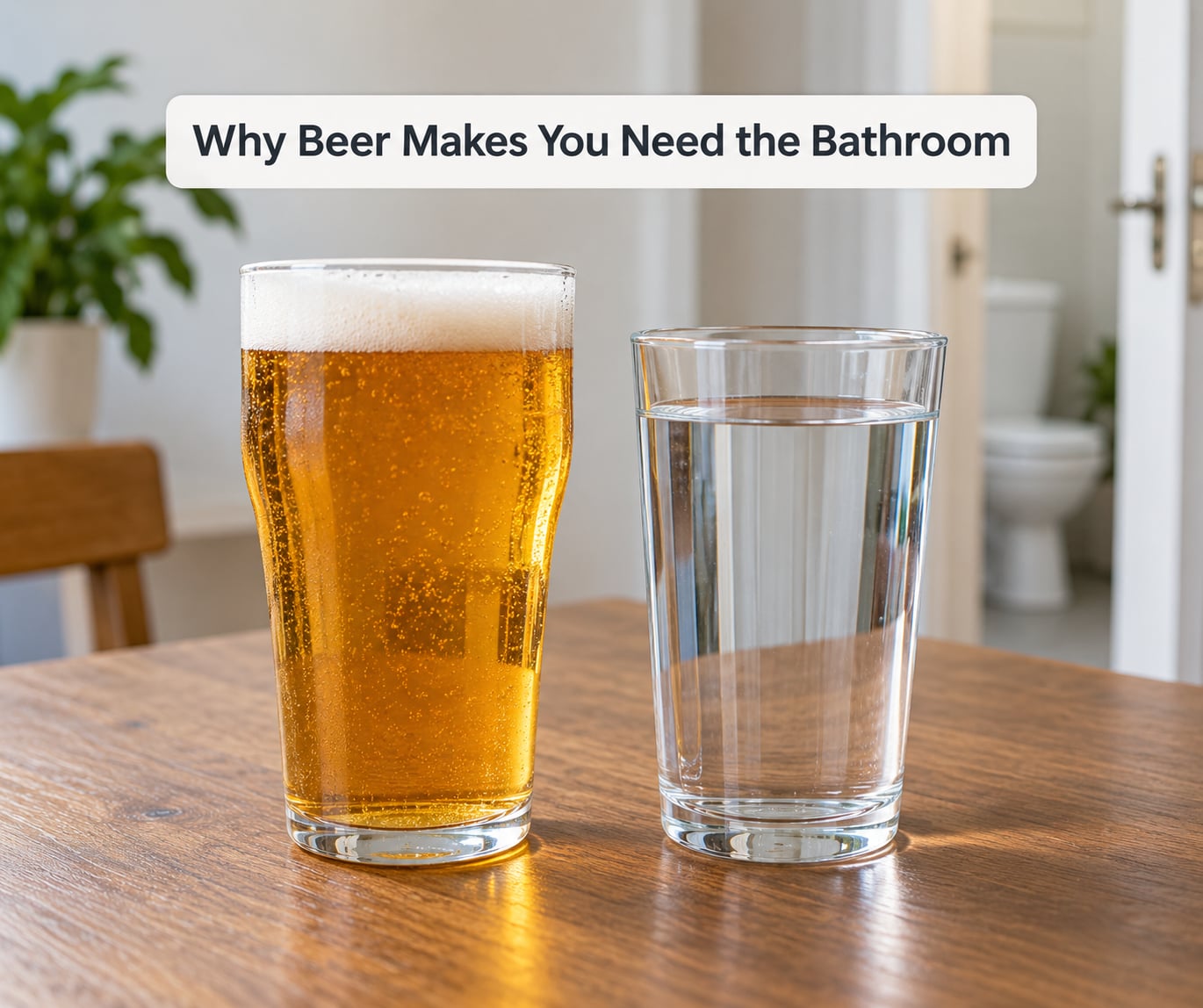
The short answer: because you’re putting a large amount of fluid into your body at the same time as removing one of your body’s signals to hold water back. Nothing mysterious is happening to your kidneys. It’s volume plus a hormonal switch.
Five things are usually going on at once:
- Volume. A 12 oz beer is roughly 350 ml. Five of them is about 1.7 litres of fluid before you count the pretzels.
- Suppressed vasopressin. Alcohol reduces the release of the hormone that concentrates your urine, so more water leaves with each trip.
- Carbonation. Dissolved gas expands in your stomach and adds pressure you notice as urgency.
- Swallowed air. Beer is poured with gas, and drinking it quickly means swallowing more of it than a glass of wine.
- Speed. A beer usually arrives faster than a poured spirit, so the bladder fills in a shorter window.
One caveat worth holding onto: the volume part is arithmetic and always true. The hormonal part is real but not the whole story for an ordinary lager, and we’ll get into that difference below.
How Alcohol Affects Urination
Your brain releases vasopressin (also called antidiuretic hormone, or ADH) when your blood is more concentrated than the fluid around it. Vasopressin tells the kidneys to pull water back out of the urine and return it to the bloodstream. That recycling is what lets you go hours between bathroom trips.
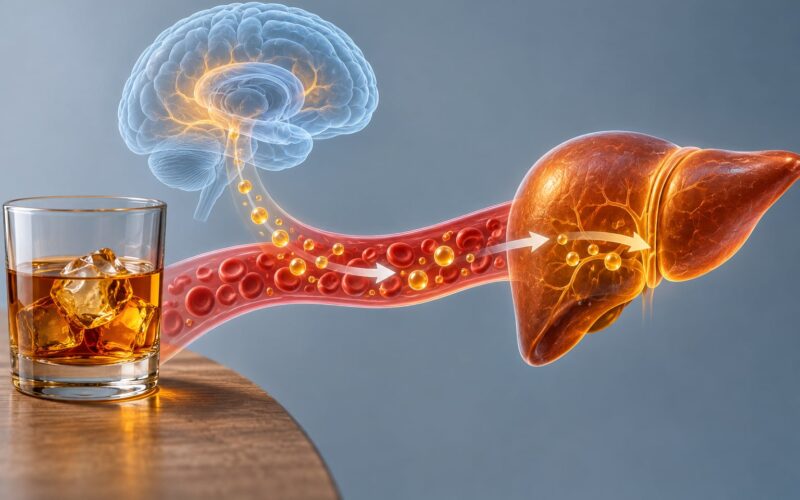
Alcohol interrupts that message. The chain runs roughly like this:
- Alcohol enters the bloodstream.
- Release of vasopressin from the brain is blunted.
- With less vasopressin circulating, the kidneys reclaim less water from the urine.
- Urine volume per trip rises, and the urine is more dilute.
- The bladder reaches its fullness threshold sooner, so you go more often.
Hobson and colleagues looked at hydration status and the diuretic action of alcohol in a 2010 paper in Alcohol and Alcoholism. Their finding is the one people find surprising: whether the diuretic effect kicks in hard depends partly on how hydrated you were when you started. Well-hydrated drinkers produced more urine overall, but in a way that looks more like the water you consumed simply passing through.
Polhuis and colleagues, writing in Nutrients in 2017, compared weak and strong alcoholic beverages and found the hormonal suppression is far more pronounced at higher alcohol concentrations. That matters, because it tells you a 4% lager and a 10% imperial IPA are not physiologically the same drink.
NIAAA describes a standard drink as 12 oz of 5% beer, 5 oz of wine, or 1.5 oz of spirits. One useful mental note: health sources often put the strongest hormonal suppression around 13% ABV, which is a strength no mainstream beer reaches.
Frequent urination after drinking is common and usually unremarkable. A sudden, extreme jump in output, or output that stays high long after you stop drinking, is a different situation and worth mentioning to a doctor.
How Beer’s Water and Carbohydrate Load Your System
Start with the part nobody argues about. A 12 oz beer is close to 350 ml of fluid. A modest session of five is around 1.7 litres — roughly three and a half soda bottles of liquid entering your body over a couple of hours, while you sit still.
That alone fills a bladder on a normal cycle. If your bladder holds around 400 ml comfortably, five beers arriving over an evening means several trips regardless of anything hormonal.
Carbohydrates add a second layer. Beer carries a meaningful carbohydrate load, and alcohol interferes with how the body handles both sugar and fluid, including the hormonal control of water balance. The result is a drink that delivers fluid quickly while making the machinery that regulates it less efficient. Some people notice this as thirst they cannot quite explain; others feel nothing at all.
This is also where the 95% water paradox resolves. Beer is watery, and the water still counts as water — it hydrates you and fills your bladder at the same time. Nobody ever answered “why does it dehydrate me” on a beer forum and got a satisfying answer, because the two facts sit awkwardly together. They are both true.
Eating beforehand matters more than most drinkers expect. Food slows the rate at which the stomach empties, which slows how quickly fluid enters your bloodstream and how fast pressure builds. A full plate of something with protein and carbohydrates before the first beer is a better lever than trying to remember to drink water between drinks.
Why Carbonated Beer Can Feel Worse
Carbonation is a real factor, though a smaller one than volume, and the evidence here is thinner than the vasopressin research. Carbon dioxide dissolved in beer comes out of solution in your stomach, and expanding gas is felt as pressure and fullness.
Some drinkers describe that pressure turning into bladder urgency, which is plausible enough that it shows up repeatedly in forum threads. The honest framing is that this is a commonly reported effect rather than a heavily studied mechanism.
Two things make it more noticeable. Cold beer goes down faster when it is cold, and gulping a pour from a tap or a cold bottle gets more gas into you per swallow than a slow glass would. A brewery tasting flight has the same problem in a smaller glass.
Slower is genuinely more comfortable for most people. Letting a glass sit, taking smaller sips, and giving carbonated drinks time to de-gas all reduce the amount of gas you swallow. Nothing about that is a health recommendation, it just feels better.
What Beer Style or Serving Size Makes the Effect Stronger?
Strength depends on four things at once: how much liquid you drink, how strong it is, how carbonated it is, and how fast you drink it. No single style wins on all four, so “best” is not the useful question here. Volume dominates for a session lager, and alcohol content starts to matter more as ABV climbs.
Why beer makes you need the bathroom more than wine or spirits
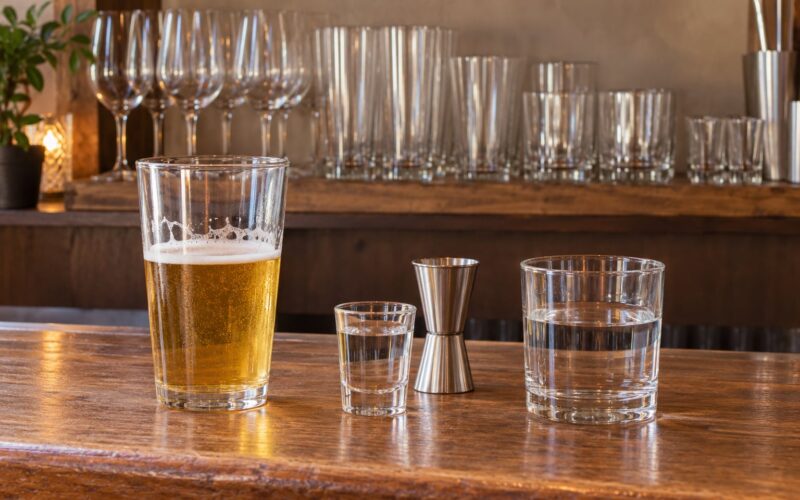
Because a beer delivers far more fluid per standard drink than anything else you would order. A 5 oz glass of wine is about 150 ml. A 1.5 oz pour of spirits is about 45 ml. A 12 oz beer is 350 ml. Even a double measures smaller.
Beer also arrives faster, because it is usually ordered in multiples of a large volume rather than poured one measure at a time. So on a normal night out, the beer column of this table is the one filling your bladder.
| Drink | Typical ABV | Fluid per standard serving | What drives the bathroom trips |
|---|---|---|---|
| Session lager | 4 to 5% | About 350 ml | Almost entirely volume, plus carbonation |
| Pale ale | 5 to 6.5% | About 350 ml | Volume, carbonation, moderate pace |
| Craft IPA | 6 to 7.5% | About 350 ml | Volume plus a bit more hormonal suppression |
| Double or imperial IPA | 8 to 12% | About 250 to 355 ml | Alcohol concentration matters more here |
| Stout or porter | 4 to 7% | About 350 ml | Volume, often lower carbonation |
| Wine | 11 to 14% | About 150 ml | Less fluid per serving, more alcohol by volume |
| Spirits | 40% and up | About 45 ml | Least fluid, strongest hormonal suppression |
A couple of things stand out. High-ABV beer is drunk in smaller volumes than a lager, so the fluid effect shrinks while the hormonal effect grows. And the reason spirits feel easier on the bladder is not that they are gentle — it is that there is so little liquid in the glass.
Pour size changes everything too. A large-format pour at a brewery taproom can be nearly double a standard serving, and doubles the fluid without changing the ABV.
How to Reduce Beer Bathroom Trips
None of this is medical advice, and none of it changes the chemistry. It just changes how much you notice it.
- Drink water between beers. Alternating is the most commonly recommended habit and the easiest to keep up.
- Eat before you start. It slows stomach emptying and the rate fluid enters your system.
- Take smaller sips. Slowing the pace lowers how much gas you swallow and how fast pressure builds.
- Space servings further apart. A beer every 45 minutes is a very different proposition from two in 20 minutes.
- Watch the mix. Caffeine and other things people call diuretics stack on top of alcohol’s effect.
- Choose the pour size deliberately. Ordering a smaller pour, or a lower-ABV option, changes fluid volume faster than anything else.
- Stop if symptoms turn concerning. Peeing constantly is one thing. Pain, blood or an inability to hold fluids is another.
On a bar crawl specifically, bathroom logistics are part of the experience. Pick venues with more than one bathroom, walk past one before you need it, and pay attention to what you are drinking rather than how many you have had.
One myth worth clearing up while we’re here: regular heavy drinking does not train the bathroom effect away. Tolerance changes how you respond to alcohol in other ways, and it does not restore vasopressin release or shrink your bladder’s response.
When Frequent Urination Could Be a Concern
Most of what this article describes is ordinary. Some patterns are not, and no web page should pretend to tell you which one you have. If you want it checked, that’s a conversation for a doctor or pharmacist, not a search result.
Signs worth raising with a healthcare professional include:
- Persistent intense thirst that doesn’t settle when you drink
- Urination that stays very frequent long after you stop drinking
- Pain or burning when you urinate
- Blood in your urine
- Fever, chills or vomiting alongside urinary symptoms
- Confusion or severe drowsiness, which can signal dehydration in a medical emergency
- An inability to keep fluids down or to stay hydrated at all
Swift and colleagues’ 1998 review of alcohol and the hangover describes the pattern most people recognise: headache, thirst, nausea and disrupted sleep. Nighttime waking to urinate, or nocturia, often fits into that picture because alcohol both increases urine output and fragments sleep.
Getting up multiple times during the night after drinking is common and generally resolves as you rehydrate and sleep normally. Persistent problems during the day, when you aren’t drinking at all, are a separate question for a clinician.
Frequently Asked Questions
Why do I pee every 5 minutes when I drink beer?
Two things stack. You are putting a large volume of fluid into your body quickly, and alcohol is blunting vasopressin so your kidneys reclaim less water and pass more of it through. If that pattern continues when you aren’t drinking, or comes with pain or thirst, it is worth raising with a doctor.
Does every beer make you urinate more than wine or spirits?
Every alcoholic drink increases urine output to some degree, but beer does it faster in practice. A 12 oz beer is about 350 ml of fluid, against roughly 150 ml for a glass of wine and 45 ml for a pour of spirits. Beer is also drunk faster, so the bladder fills in a shorter window.
Are stronger beers worse for bathroom trips?
Stronger beers are smaller pours, so the volume effect drops while the alcohol concentration effect grows. Research comparing weak and strong beverages found hormonal suppression is more pronounced at higher concentrations. In practice a session lager sends you mostly because of how much liquid you drank, not how strong it was.
Does peeing sober you up?
No. Urinating does not lower your blood alcohol concentration or speed how alcohol leaves your body. It changes fluid balance only. Feeling clearer after a bathroom trip is mostly relief from pressure and distraction, not a reduction in intoxication.
How long after drinking does the diuretic effect last?
The effect tracks roughly with how long your body is processing alcohol, so it fades as the evening ends and alcohol clears. Many people notice it most in the first two to four hours. It can still show up at night, which is one reason drinking earlier often means fewer wake-ups.
Why is my urine so clear after a night of beer?
Clear urine usually means dilute urine, which is exactly what you get when vasopressin is suppressed and your kidneys are passing water rather than reabsorbing it. Piling on plain water makes it even more dilute. Very clear urine alongside dizziness or thirst after drinking can also be a sign of dehydration.
What to Do First
If the question is why beer makes you need the bathroom, the useful answer is simpler than most explanations suggest: it is a large volume of liquid, plus one hormone being turned off for a few hours. Neither part is dangerous in itself, and neither is a sign that something is wrong with you.
Start with the easy levers. Order a smaller pour or a lower-ABV beer, alternate with water, eat before you begin, and slow the pace. Those four things change the volume and the speed, which is where most of the effect lives.
Then pay attention to what it does not do. Peeing will not sober you up, and drinking more often will not train the effect away. If urination is painful, constant when you are not drinking, or paired with blood, fever or an inability to stay hydrated, stop reading articles and talk to a healthcare professional.