Short answer to why beer makes you tired: ethanol is a central nervous system depressant. It raises GABA, the brain’s calming signal, and suppresses glutamate, the signal that keeps you alert. Beer adds three more layers on top, hops, malt carbohydrate and sheer liquid volume, which is why a pint often hits harder than the same number of standard drinks in liquor.
There are two separate things people mean by “tired” here, and mixing them up is what makes the topic confusing. There is the heavy-lidded, falling-on-the-sofa feeling within an hour or two of drinking, and there is the flat, dragged-out exhaustion the next morning. They come from different mechanisms and respond to different fixes, so this guide pulls them apart.
It also helps to say the reassuring part up front. Feeling sleepy on beer is extremely common, particularly if you drink on an empty stomach, drink quickly, or are already carrying some sleep debt. What is worth taking seriously is a reaction that is new, unusually severe, or paired with breathing trouble, confusion or vomiting.
Table of Contents
- Why Beer Makes You Tired in the First Place
- How Alcohol Affects Your Brain and Energy
- What hops add on top of the ethanol
- Why you feel it before you feel drunk
- Why Beer Can Make You Tired Faster Than Other Drinks
- Does Beer Make You Sleepy or Just Worn Out?
- Tired now versus exhausted tomorrow
- What Beer Style, Strength and Serving Size Change
- Why You May Feel Tired the Next Morning
- Dehydration and vasopressin
- Interrupted sleep
- Food and blood sugar
- Alcohol still in your system
- Why two people react differently
- How to Reduce Beer-Related Fatigue Safely
- When Tiredness After Drinking Needs Medical Attention
- Frequently Asked Questions
- How much beer should I drink to avoid feeling tired?
- Why does beer make me sleepy faster than other alcohol?
- Does beer dehydrate you more than other alcoholic drinks?
- Can beer help you sleep, or does it make sleep worse?
- Why do I feel exhausted the day after drinking beer?
- Conclusion: Start With the Serving and the Signs
Why Beer Makes You Tired in the First Place
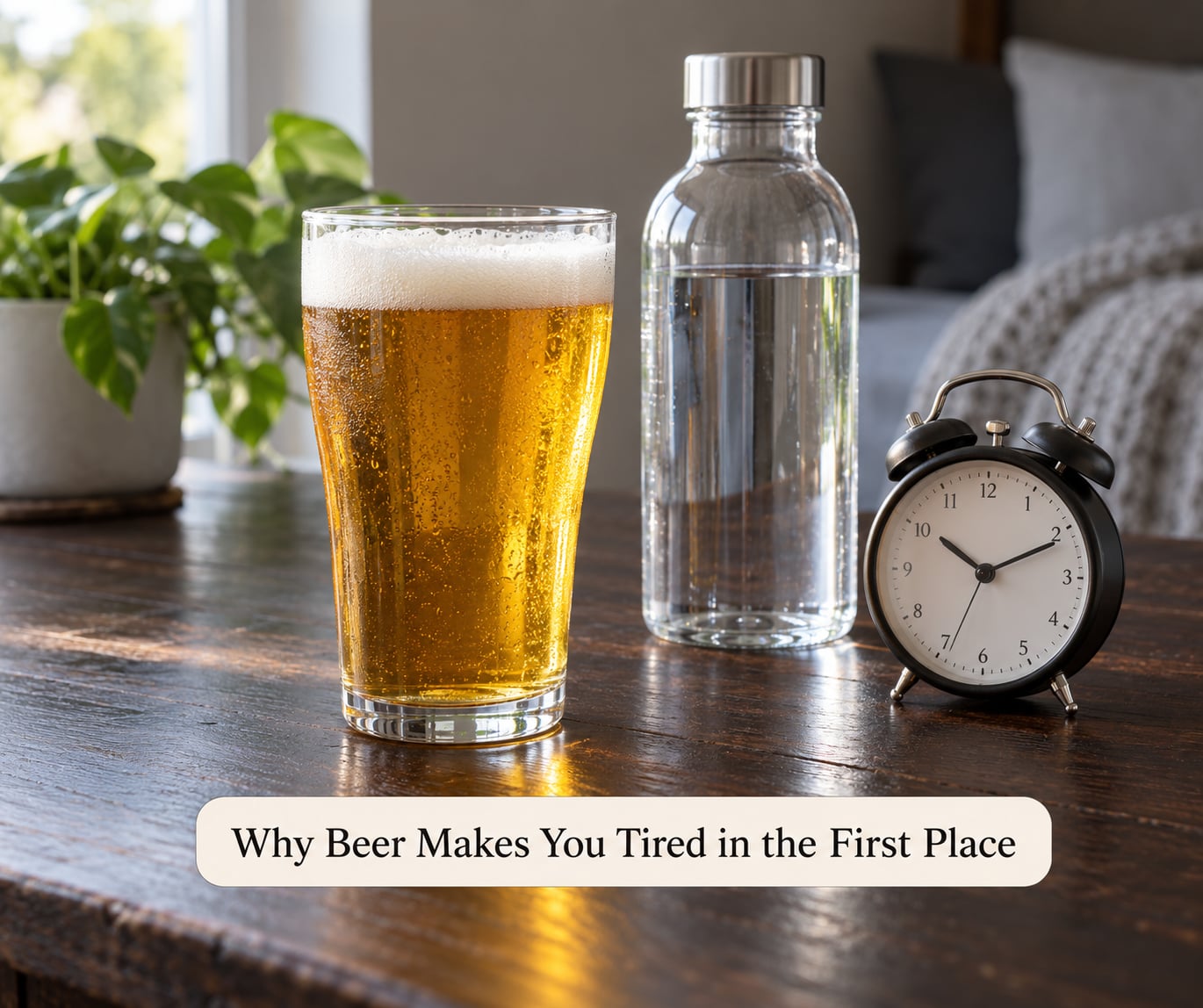
Quick answer: alcohol sedates the brain, beer adds a hop-derived sedative and a sugar load, and the liquid volume plus your liver’s handling of ethanol drains what is left. Five things stack up, and the strength of each one depends on the beer, the pace and the person.
- Brain chemical changes. Ethanol boosts GABA and dampens glutamate, so thoughts slow down and eyelids follow.
- Hops. Beer carries myrcene and related hop oils, which add a mild sedative effect that liquor does not have.
- Blood sugar dips. The liver treats alcohol as priority fuel, so blood glucose can sag while it works.
- Dehydration. Alcohol suppresses vasopressin, so you lose water and wake up dry and drained.
- Fragmented sleep. Alcohol cuts back REM sleep and wakes you up later in the night, so the rest you get is poorer.
One more thing to keep in mind while reading: a lot of people report feeling tired without feeling drunk, which is confusing because our instinct says tired means you had too much. The two are separable. Sedation comes mostly from GABA and the hop oils, intoxication comes from the overall ethanol load in your blood, so one can arrive before the other.
How Alcohol Affects Your Brain and Energy
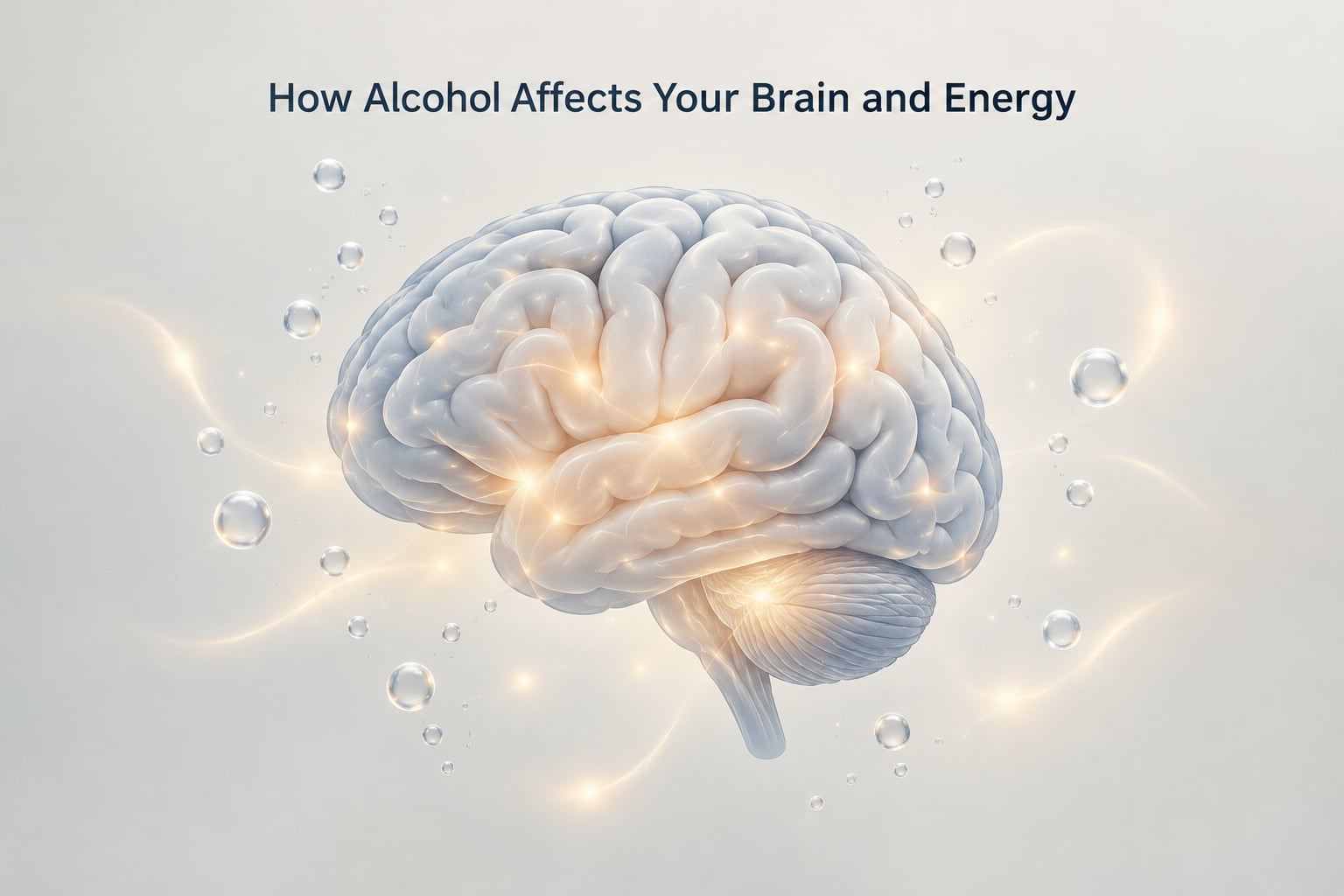
GABA is the brain’s main inhibitory neurotransmitter, the chemical that slows nerve signalling down, and ethanol makes more of it available while blocking the receptors for glutamate, which does the opposite. The result is a widespread slowdown across the brain, not a targeted relaxation.
That is also why the phrase “alcohol is a depressant” confuses people. Depressant here means it suppresses nervous system activity, not that it makes you sad. Feeling slow, heavy and ready for the sofa is the expected direction of travel.
Alcohol also builds up adenosine, the fatigue signal that accumulates while you are awake, and blocks the receptors that normally let you feel it. That is the interesting part: the reason you feel wiped out the next day is partly your brain finally registering a debt it could not feel while you were drinking.
What hops add on top of the ethanol
Hops bring myrcene, humulene and xanthohumol, compounds that have shown mild sedative activity in laboratory work. They are present nowhere else in your drink, which is a genuine beer-specific reason one beer can feel more relaxing than an equivalent shot of vodka.
Sleep researchers at Sahlgrenska University in Gothenburg also noticed that beer drinkers who drank heavily before bed reported noticeably poorer sleep quality, and their estimates put the loss at around 9 percent for low alcohol intake, 25 percent for moderate intake and 40 percent for heavy intake. The heavy drinkers also reported more early-morning wakefulness than the abstainers.
Why you feel it before you feel drunk
Being sleepy and being intoxicated are different measurements. Sedation can show up at a lower blood alcohol concentration than the subjective feeling of being drunk, particularly when food is in your stomach and absorption is slowed.
Why Beer Can Make You Tired Faster Than Other Drinks
A standard drink is roughly 14 grams of pure ethanol. In the US that works out to about 12 ounces of 5 percent beer, 5 ounces of 12 percent wine or 1.5 ounces of 40 percent spirits, so most people comparing drinks are actually comparing very different volumes of liquid.
| Factor | Beer | Wine | Spirits |
|---|---|---|---|
| Typical serving volume | 12 to 24 oz | 5 to 8 oz | 1.5 to 2 oz |
| Carbohydrate per serving | Often 10 to 30 g from malt | Low, 2 to 5 g | None |
| Drinking pace | Slow, sips over hours | Moderate | Fast |
| Additional sedatives | Hops, myrcene | Minimal | Congeners in dark spirits |
| Typical crash pattern | Gradual, then a sugar drop | Steadier rise | Sharper peak |
The volume point is the one people miss. A 16-ounce pint delivers ethanol in a form your stomach has to dilute and your gut has to absorb slowly, so it arrives over a long window while you are still drinking. Two pints spread over an evening is a slower, longer sedative exposure than two shots taken in fifteen minutes.
Carbohydrate does the opposite of what people expect. Malt sugar gives you a quick lift and then a drop, and a heavy stout can carry 25 or more grams in one serving. So you get a small blood sugar rise, a crash, and shakiness, all while the ethanol is still climbing.
Carbonation matters too. Beer arrives fizzy, and carbon dioxide in the stomach can contribute to bloating and reflux, which is uncomfortable enough on its own to make you want to lie down and stop whatever you were doing.
Mixers hide the effect in the other direction. A gin and tonic or a rum and cola can taste like two drinks while delivering less ethanol than you assumed, so people routinely underestimate how much they took in.
Does Beer Make You Sleepy or Just Worn Out?
Both, and the distinction matters. Alcohol shortens the time it takes to fall asleep, so it genuinely feels effective as a sleep aid. What it does not do is supply restorative sleep.
A night runs through light sleep, deep slow-wave sleep, and REM, the stage tied to dreaming and memory processing. Alcohol suppresses REM early in the night, then the brain rebounds partway through, which is why drinkers often wake around 3 or 4 a.m. feeling wired, restless and annoyed.
That rebound is why you can feel sleepy at 11 p.m. and wide awake at 4 a.m. It is a common report, and it is a documented pattern rather than imagination. Your core temperature also rises with alcohol, and the drop afterwards is part of what fragments the night.
Tired now versus exhausted tomorrow
Immediate drowsiness is sedation: GABA, glutamate suppression, hop oils, a warm room and the general relief of not being anywhere in particular. It fades with time and does not by itself mean poor sleep.
Next-day exhaustion is the accumulation of REM suppression, rebound alertness, dehydration and a blood sugar wobble. That one is the reason waking up tired is a separate complaint from falling asleep fast.
What Beer Style, Strength and Serving Size Change
This is where beer genuinely differs from liquor, and it is the part most general alcohol articles skip. Style sets ABV, and ABV sets the ethanol load; style also sets how much malt carbohydrate and how many calories come with each pour.
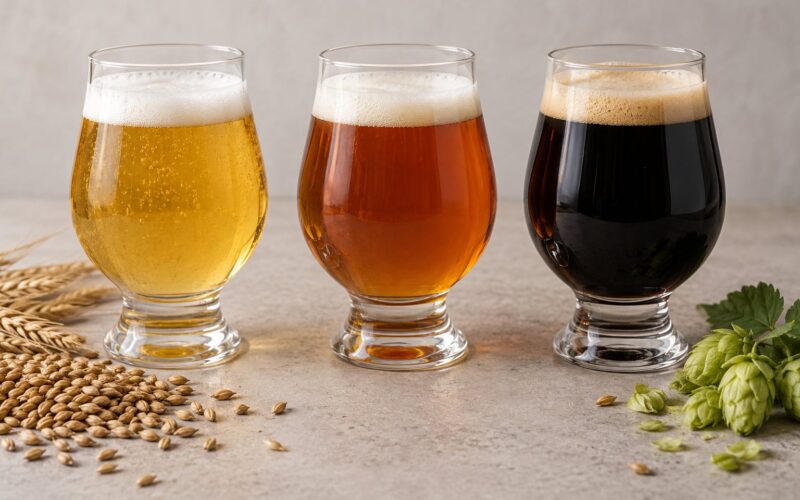
| Style | Typical ABV | Character | Likely fatigue pattern |
|---|---|---|---|
| Light lager | 4 to 4.5% | Thin body, high carbonation | Mild; mostly volume and gas |
| Pilsner | 4.5 to 5.5% | Crisp, dry, moderate body | Mild to moderate |
| Wheat beer | 4.5 to 5.5% | High carbonation, bready | Moderate; bloating adds to it |
| Amber or brown ale | 5 to 6.5% | Toasty malt | Moderate |
| Pale ale | 5 to 6.5% | Hoppy, dry | Moderate |
| IPA or double IPA | 6.5 to 10%+ | Bitter, dry, little residual sugar | High, from ethanol alone |
| Stout or porter | 4 to 8% | Dense, roasted, heavy | High; carbohydrate and fullness |
| Imperial stout | 9 to 12% | Very dense and high alcohol | Very high, from both |
| Low or no alcohol | 0.2 to 0.5% | Full body retained | Volume and sugar only |
So the stout versus IPA question has a fairly clear answer. People on beer forums consistently report stouts and heavy malty styles as the ones that put them out, and the reason is on the label: a big imperial stout can carry high ABV and a large carbohydrate load in the same glass, while a double IPA delivers a comparable ethanol hit with almost no sugar. Both hit hard, just by different routes.
Serving size is the other half. Craft pints and taproom pours are routinely larger than a standard 12-ounce serving, and festival flight sampling makes it easy to drink four or five full glasses without tracking anything. Doubling your serving doubles the ethanol, the sugar and the water.
Non-alcoholic beer sits in an odd spot. The volume, carbonation and malt carbohydrate are still there, so some people still feel tired after one, while the ethanol side of the equation is largely gone.
Why You May Feel Tired the Next Morning
Dehydration and vasopressin
Alcohol suppresses vasopressin, the hormone that tells your kidneys to hold on to water. You lose more fluid than you take in, you sleep badly as a result, and your body spends part of the night doing repair work it would rather postpone.
Interrupted sleep
The rebound alertness in the back half of the night means fewer consolidated sleep cycles. A seven-hour stretch with three wake-ups is not the same as seven unbroken hours, which is why people wake up unrefreshed even when they did sleep.
Food and blood sugar
If you drank on a relatively empty stomach, the blood sugar dip is sharper and lasts longer. Missing food also means you go into the night slightly under-fueled, which adds to the morning fog.
Alcohol still in your system
Liver metabolism runs at a fairly steady rate, roughly one standard drink per hour for many adults, so anything you drank in the last few hours is still working. Disrupted sleep plus active metabolism is a rough combination at 7 a.m.
Why two people react differently
Body weight, drinking history, sleep debt, medications and how much you ate all change the outcome. People who already sleep badly get a worse night, and adults over 50 tend to report less next-day impairment than younger drinkers, which researchers have also found.
A hangover is not the same as ordinary tiredness, though. If there is vomiting, intense headache, light sensitivity or shaking, that is a different set of symptoms and a different matter.
How to Reduce Beer-Related Fatigue Safely
- Eat before you drink. A meal with protein and carbohydrate slows absorption and softens the blood sugar drop.
- Alternate with water. One drink, one glass of water, repeat. It slows pace and replaces some of the fluid you are losing.
- Pace deliberately. Set a limit you can hold for two hours rather than a total you intend to reach by midnight.
- Choose the ABV consciously. A 4.5 percent lager and a 10 percent imperial stout in the same night are not the same decision, even at the same volume.
- Stop a few hours before bed. Giving your body time to metabolise the alcohol before sleep is one of the few changes with a clear payoff for sleep quality.
- Count standard drinks, not glasses. A big craft pour can be more than two standard drinks on its own.
- Do not drive. Fatigue and alcohol both slow reaction time, and the combination is the problem, not either one alone.
If you reach for a nightcap to fall asleep, the sleep research is fairly blunt about it: alcohol helps you drop off and damages what happens afterwards. If you are drinking most nights to get to sleep, that pattern is worth raising with a doctor rather than adjusting.
When Tiredness After Drinking Needs Medical Attention
Occasional tiredness after drinking is common and usually clears on its own. Some responses are not routine, and it is better to get help early than to assume the worst one.
- Breathing that has slowed, stopped or become irregular
- Confusion, severe agitation or you cannot be woken properly
- Repeated vomiting, or vomiting with no ability to keep fluids down
- Seizures, or skin that is clammy, pale or bluish
- Yellowing of the skin or eyes, or dark urine and severe abdominal pain
- Tiredness that builds up over weeks, or sleep that never feels restorative
Breathing trouble, seizures and confusion need emergency care rather than a phone call. Steady, worsening daytime exhaustion alongside loud snoring or waking up gasping is a different conversation, and untreated sleep apnoea interacts badly with alcohol, so a clinician should assess it.
General information like this cannot tell you what is happening in your own body. If the tiredness keeps happening or is getting worse, book a conversation with your doctor.
Frequently Asked Questions
How much beer should I drink to avoid feeling tired?
There is no number that guarantees you will stay awake, because tolerance, food and body weight all change the effect. What helps is counting standard drinks instead of glasses, aiming for a limit you can hold over a couple of hours, and eating before you start. A 5 percent beer in a 12-ounce glass is about one standard drink, so a large craft pour can be two before you have counted anything.
Why does beer make me sleepy faster than other alcohol?
Three beer-specific reasons. Hops carry myrcene and related oils with mild sedative activity, which liquor does not have. Malt adds a carbohydrate load that lifts and then drops your blood sugar. And a beer serving is far larger in volume than a shot, so ethanol arrives over a much longer window while your stomach dilutes it.
Does beer dehydrate you more than other alcoholic drinks?
Alcohol suppresses vasopressin in every kind of drink, so the diuretic effect is not unique to beer. What beer adds is volume. A few pints deliver a large quantity of fluid in one sitting, and drinks mixed with carbonated mixers add more. So the total fluid load is often higher even though the mechanism behind the water loss is the same.
Can beer help you sleep, or does it make sleep worse?
It helps you fall asleep and it damages what happens afterwards. Alcohol shortens sleep onset and suppresses REM early in the night, then the brain rebounds partway through, which is why drinkers often wake at 3 or 4 a.m. Studies of heavy drinkers estimate sleep quality losses of about 25 percent at moderate intake and 40 percent at heavy intake.
Why do I feel exhausted the day after drinking beer?
Usually four things at once: REM suppression and rebound alertness during the night, fluid loss from suppressed vasopressin, a blood sugar dip if you drank without much food, and alcohol still being metabolised in your body. Some people also notice the exhaustion without a hangover headache, which is normal. What is not normal is tiredness that keeps building over weeks.
Conclusion: Start With the Serving and the Signs
Why beer makes you tired comes down to a stack rather than a single cause: ethanol slowing the brain, hops adding a mild sedative, malt sugar and fluid volume dragging on blood sugar and hydration, and sleep that is lighter than it feels. Count standard drinks rather than glasses, eat first, alternate with water, and give the alcohol a few hours before bed.
That covers the ordinary case. If the tiredness keeps piling up, if sleep never feels restorative, or if drinking leaves you with breathing trouble, confusion or repeated vomiting, that needs a clinician rather than another explanation.