Most regular 12-ounce beers contain between 10 and 15 grams of carbohydrates. That single number hides an enormous range: a light lager can sit at 3 grams, a hazy IPA at 18, and a session beer brewed with a special yeast at under 2. This guide walks through where those carbs come from, why fermentation decides the total, and how to read a label so you can pick the number that actually matters to you.
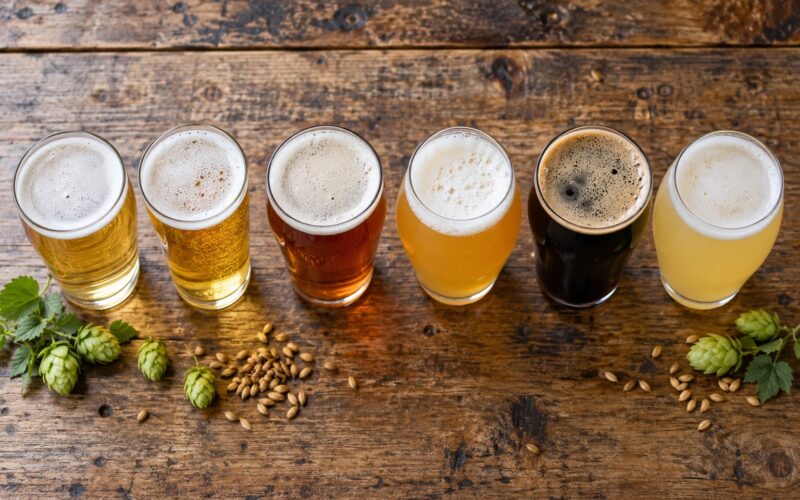
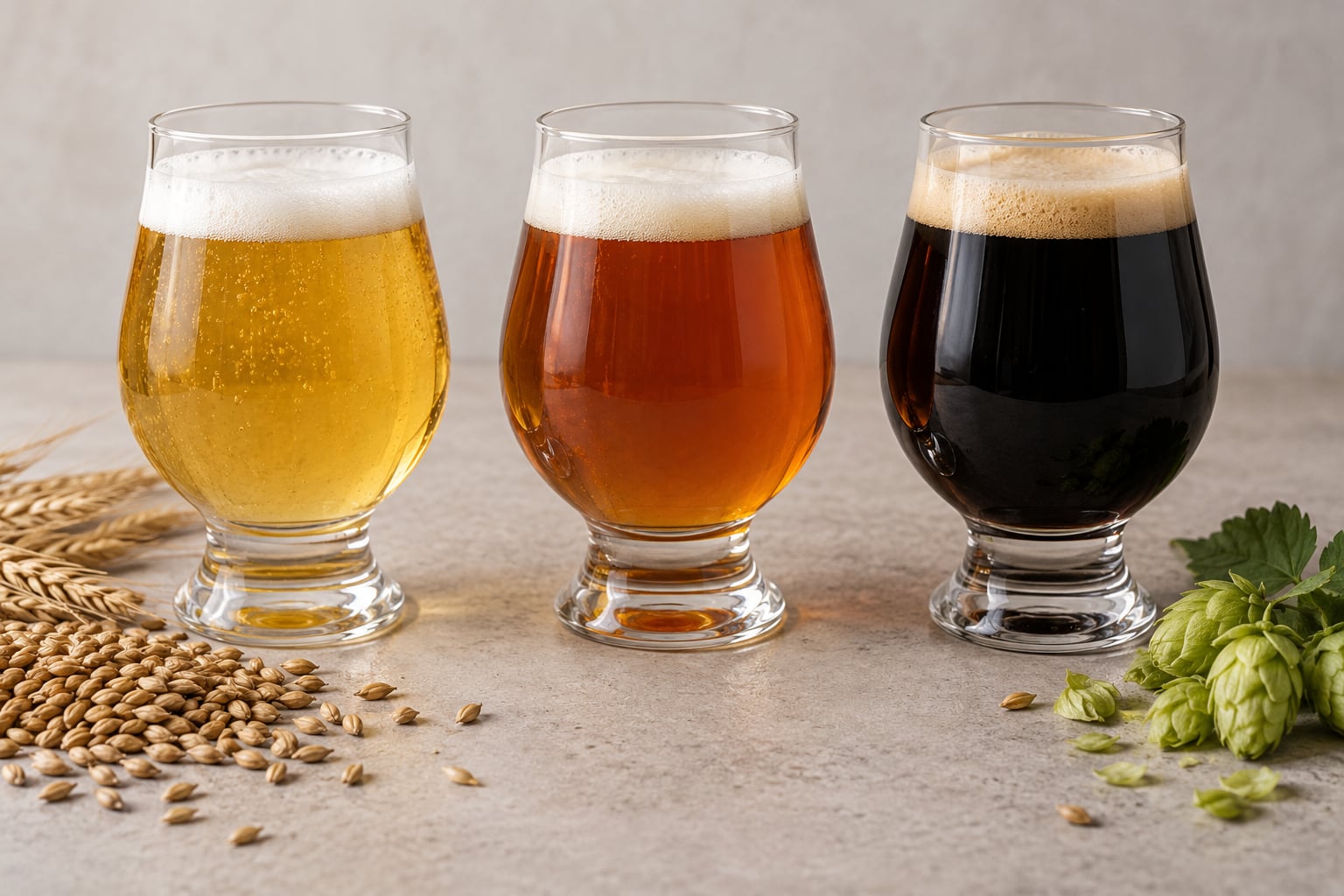
One thing to clear up early: you cannot judge carb content by looking at the beer. Color comes from roasted malt, bitterness comes from hops, and neither one tells you how much sugar is floating in the glass. A stout can be lighter on carbs than a wheat beer, and a double IPA can be drier than the pilsner next to it.
The style name is a starting point, not a specification. Two breweries can both sell a “hefeweizen” and land 8 grams apart on the label. Everything below is a range, and the only number that counts for your own tracking is the one printed for the bottle in your hand.
Table of Contents
- How Many Carbs Are in a Beer?
- What Counts as a Carb in Beer?
- Why Does Fermentation Change the Carb Total?
- Carbs in Beer Explained by Fermentation
- Carbs in Beer by Style: Which Styles Run Higher
- Do Beer Calories Mainly Come from Carbs or Alcohol?
- How Do You Tell Whether a Beer Is Actually Low in Carbs?
- Five steps for reading a beer label
- Scaling the label to your actual pour
- Watch out for unregulated marketing claims
- What beer carbs do to blood sugar and ketosis
- Frequently Asked Questions
- Does IPA beer have more carbohydrates than lager?
- Are gluten-free beers lower in carbs?
- Is there any truly carb-free beer?
- Do non-alcoholic beers have fewer carbs?
- How many carbohydrates are in a 12-ounce can of beer?
- What to Check First When Choosing a Lower-Carb Beer
How Many Carbs Are in a Beer?
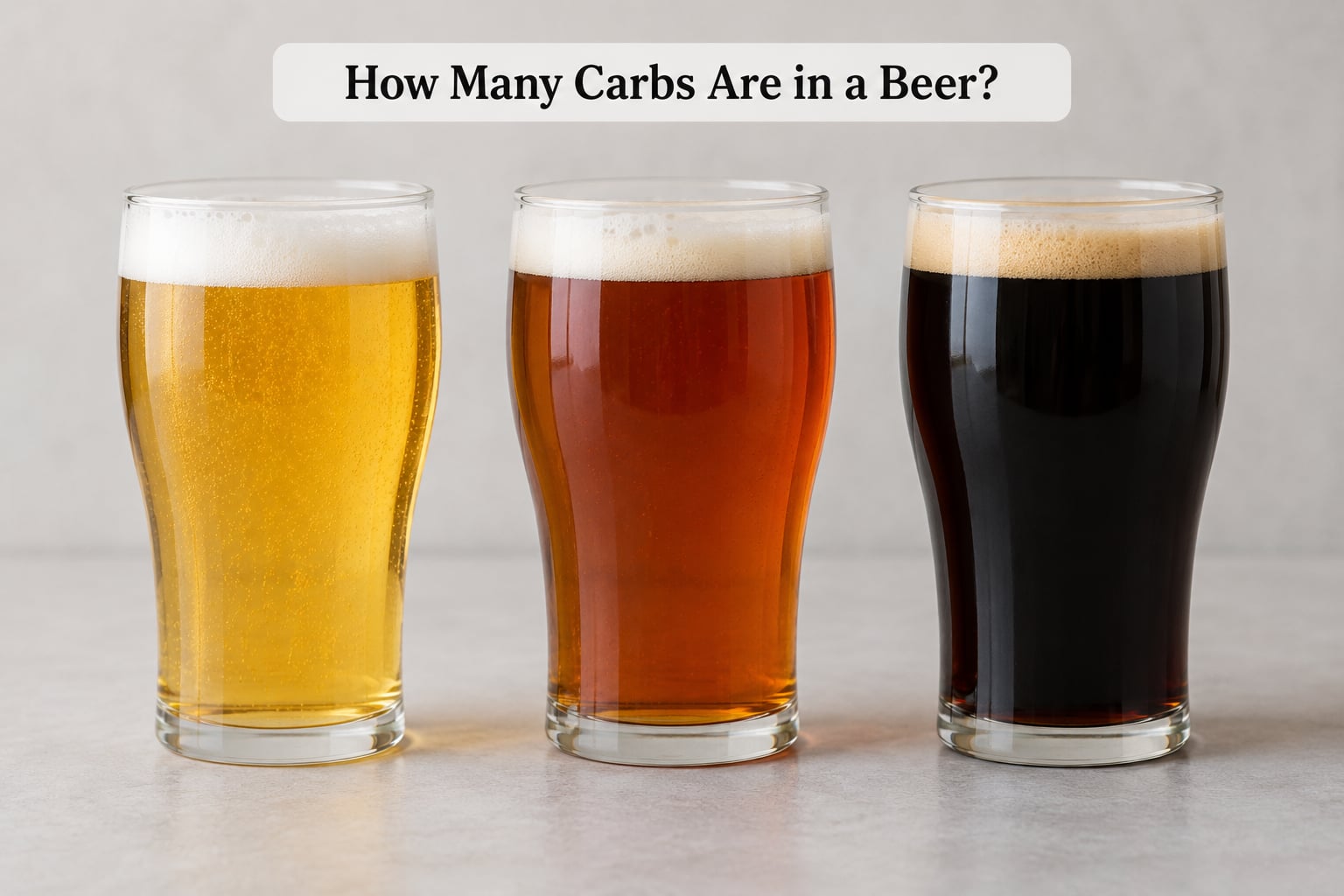
The short answer is 10 to 15 grams for a standard 12-ounce beer, with light beers running 3 to 6 grams, stouts and porters often reaching 15 to 20 or more, and dedicated low-carb beers landing between 2 and 3.5 grams.
Here is the same data the way the AI summaries on Google present it, with one named example in each bucket so you can see what a real number looks like on a real panel.
| Bucket | Carbs per 12 oz (355 ml) | Named example |
|---|---|---|
| Low-carb and zero-carb beers | 2-3.5 g | Michelob Ultra (2.6 g) |
| Light beers | 3-6 g | Miller Lite (3.2 g) |
| Regular lagers and pilsners | 10-14 g | Budweiser (10.6 g), Heineken (11.5 g) |
| Stouts and porters | 15-20+ g | Guinness (roughly 15-17 g) |
Those are planning estimates, not universal rules. Recipes change, serving sizes on nutrition panels are not always 12 ounces, and a brewery’s finished batch will differ from the last one. A peer-reviewed analysis of barley malt beers found total carbohydrate running between about 30.6 and 33.9 grams per liter, which works out to roughly 3.3 to 3.8 grams in a 12-ounce pour.
That last figure is worth sitting with, because it is much lower than the 10 to 15 gram figure most people quote. The difference comes down to what is being measured. A laboratory carbohydrate assay counts specific sugars and dextrins; a nutrition panel estimate built from the beer’s original gravity and final gravity tends to read higher. Both numbers describe the same beer. Ask a brewer which method the panel used and you will usually get a straight answer.
What Counts as a Carb in Beer?
Beer carbs are the sugars the yeast never finished eating. That includes fermentable sugars such as maltose and glucose, and unfermentable carbohydrates such as dextrins and fibers that pass straight through.
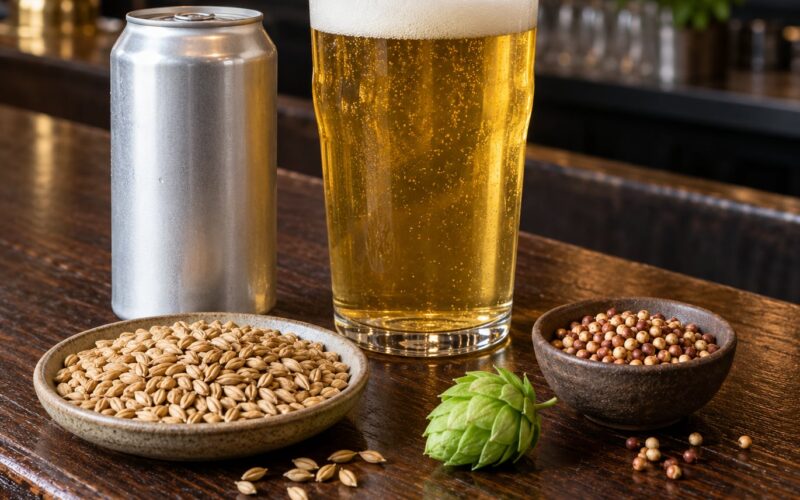
Malted barley is the usual source. During mashing, enzymes in the grain convert starch into sugar, and that sugary liquid, called wort, becomes the substrate yeast ferments. Add a wheat-heavy grist and you get more unfermentable fiber. Add a specialty malt or a touch of cane sugar and you shift the balance again.
Hop bitterness is not a carbohydrate source. Hops contribute aroma, flavor and IBU, and they contribute essentially nothing to the carb line or the calorie count. A beer dosed heavily with hops can be very low on sugar, which is exactly how dry-hopped and brut IPAs manage to be hop-heavy and carb-light at the same time.
Total versus net is the distinction that trips people up. Total carbohydrate is everything on the panel. Net carbohydrates subtract fiber, and for a normal malt beer the two numbers are close because there is not much fiber to subtract. Once a brewer adds fiber-containing adjuncts, though, the gap widens and net carbs can look dramatically better than the total.
That is a real technical fact, not a trick, but be careful with how much weight you put on it. Most fiber added to beer is added in small quantities for texture rather than as a fiber supplement, and nobody has run controlled glycemic studies on beer with glucomannan in it. A net carb number that has been adjusted by a fiber ingredient is a bookkeeping exercise, not a blood sugar guarantee.
Why Does Fermentation Change the Carb Total?
Because fermentation is the conversion of sugar into alcohol, and it is never quite finished. Yeast has to stop at some point, and everything it did not eat is still in your glass.
Carbs in Beer Explained by Fermentation
The plain-language version: a brewery dissolves 10 pounds of grain sugar into a barrel of wort, yeast eats nearly all of it, and the leftover 3 percent that yeast could not use is the carb total on the label.
Brewers measure this with two numbers. Original gravity describes the wort before fermentation, and final gravity describes the beer after. The difference between them is how much sugar got converted, and brewers express that as apparent attenuation. A lager yeast might push 78 to 82 percent attenuation, meaning roughly four fifths of the available sugar became alcohol. A Belgian ale yeast might finish at 68 to 72 percent, leaving noticeably more residual sugar behind.
That single yeast choice explains more about beer carbs than almost anything else a label will tell you. It is why a saison is bone dry, why a Belgian dubbel tastes round and sweet, and why a hefeweizen finishes fruity even though it is not brewed with fruit. In each case the yeast simply stopped short.
Two more variables matter. Temperature during fermentation changes the yeast’s pace and flavor profile, and package adjuncts like oats or wheat add unfermentable carbohydrate that raises the total without raising the alcohol. A hazy IPA’s signature thickness is a good example: the hazy look and the creamy mouthfeel come with a carb load that is usually higher than a clear IPA of the same strength.
The part that surprises people is that strength and color tell you almost nothing. A 9 percent barleywine can be drier and lower in carbs than a 4 percent cream ale, because a stronger beer starts with more fermentable sugar and higher-attenuating yeast can eat more of it. Dark color comes from roasted barley, which contributes color and flavor while adding relatively little fermentable sugar of its own.
Carbs in Beer by Style: Which Styles Run Higher
Style predicts carbs reasonably well, mostly because style is a recipe convention. Big-bodied, high-gravity and heavily adjuncted styles run high. Dry, highly attenuated and restrained styles run low.
| Style | Typical carbs per 12 oz | Why it lands there |
|---|---|---|
| Light lager | 3-6 g | Enzyme treatment and a highly attenuative lager yeast strip out most fermentable sugar |
| Pilsner | 9-13 g | Clean lager fermentation, moderate original gravity |
| Standard American lager | 10-14 g | Rice adjunct lightens the body but the wort is still moderately fermentable |
| Pale ale | 10-16 g | Caramelized malts add unfermentable dextrins for flavor |
| West Coast IPA | 6-12 g | High attenuation and a dry finish keep residual sugar low |
| Hazy IPA | 15-25 g | Wheat and oat adjuncts stay in the glass; a brewery’s pastry stout can go higher still |
| Wheat beer | 13-20 g | Wheat protein and a fruity ale yeast leave more unfermented carbohydrate |
| Porter | 13-20 g | Roasted barley for flavor plus a fuller wort |
| Stout | 15-25+ g | Roasted barley, high original gravity and often lactose or other adjuncts |
| Sour beer | 6-14 g | Acidity hides residual sweetness that is still there |
| Session and low-alcohol beer | 2-6 g | Limited fermentable sugar to begin with, so less can be left over |
| Non-alcoholic beer | 0-6 g | Varies wildly by method; arrested fermentation and dealcoholization behave differently |
The stout row deserves a warning label. A pastry stout can carry more sugar than a soda, and brewery release notes for imperial stouts routinely list 30-plus grams per 12 ounces. A bar serving of a heavy imperial pour can contain more carbohydrate than a full bagel, which is a fact that surprises people every time.
The same caution runs the other direction. Do not treat every beer sold under a style as identical. Two pale ales from adjacent taps in the same city can differ by 6 grams, and an imperial IPA in one city can be drier than a session lager in another.
Do Beer Calories Mainly Come from Carbs or Alcohol?
From both, and the alcohol half is bigger than most people assume. Carbohydrate supplies about 4 calories per gram. Alcohol supplies about 7 calories per gram, and a 5.2 percent ABV 12-ounce beer contains roughly 14 grams of pure ethanol, which is about 98 calories on its own.
Take an average 12-ounce beer with 13 grams of carbs. Those carbs account for 52 calories, the alcohol for roughly 100, and the rest is a small amount of protein and trace nutrients. The nutrition panel will show somewhere around 150 to 160 calories, which matches.
That calculation is why a higher-alcohol beer can carry fewer carbohydrates and still show more calories on the panel. It is also why calorie count is a poor stand-in for carb count. A 100-calorie beer with 9 grams of simple malt sugar does something very different to your blood sugar than a 160-calorie beer with 4 grams of more complex carbohydrate, even though the lower-calorie one looks like the healthier pick on a menu board.
Do not read the carb-versus-calorie math as a prescription for how much to drink. It is a mechanism, not advice. For anything involving your own blood sugar, your weight or a diagnosis, a doctor or a registered dietitian is the right person to make the call with you.
How Do You Tell Whether a Beer Is Actually Low in Carbs?
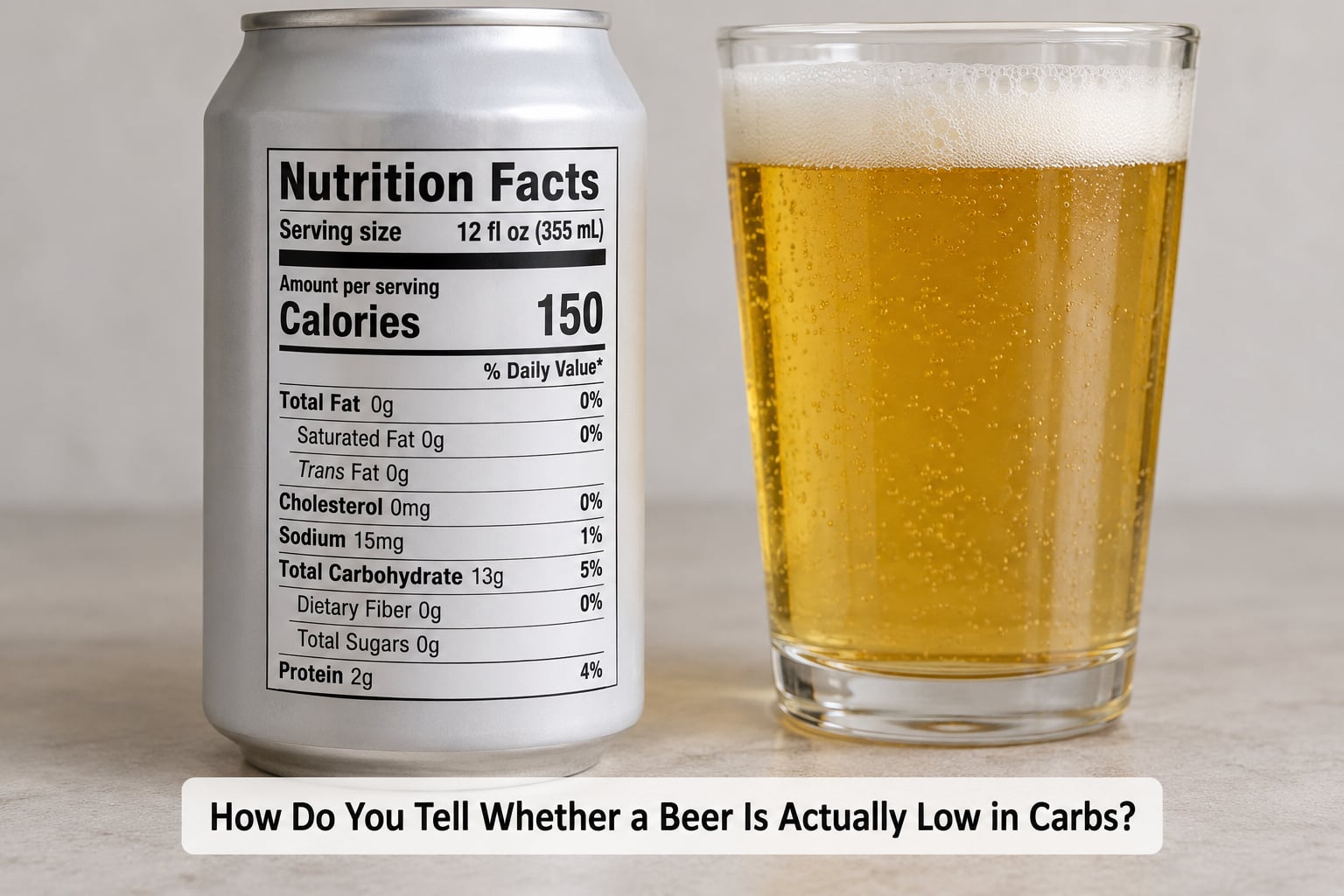
Read the nutrition facts panel, find the serving size on it, and compare the total carbohydrate listed for that exact serving. Everything else on the front of the can is marketing copy.
Five steps for reading a beer label
1. Find the serving size first. Panels often list 12 ounces, but some list 8, 10, 16 or 19.2 fluid ounces, and canned cocktails and malt beverages are frequent offenders. A 19.2-ounce panel means the gram figure is nearly double what a 12-ounce pour delivers.
2. Read total carbohydrate, not the headline. The front of the can will shout about calories. The carbohydrate line sits in the middle of the panel and is the number you actually came for.
3. Check the added sugars line. A beer with 14 grams of total carbohydrate and 0 grams of added sugars got all of it from malt, not from cane sugar. A few breweries use adjunct sugars, and those show up separately.
4. Look at the percentage Daily Value. With 275 calories as a full daily reference on US labels, 13 grams of carbohydrate is about 5 percent DV.
5. Note the rounding. FDA rules allow a manufacturer to declare 0 grams of a nutrient if the true amount is under 0.5 grams, and to round total carbohydrate to the nearest gram. A label reading “0 g” means “less than half a gram,” not “none.” A label reading 3 g could be anywhere from 2.5 to 3.4.
Scaling the label to your actual pour
A bar pour is rarely 12 ounces. Here is the same 13-gram beer at the sizes people actually order.
| Pour | Multiplication | Carbs |
|---|---|---|
| 12 oz bottle or can | 13 g as labeled | 13 g |
| 16 oz pint | 13 g x 1.33 | about 17 g |
| 22 oz bomber | 13 g x 1.83 | about 24 g |
| 24 oz large | 13 g x 2.00 | 26 g |
If a taproom lists an ABV but no carb figure, the brewery’s website or the beer database your local taprooms use will usually have the brewery’s specification sheet. That is a more reliable number than a third-party app entry, and the forum crowd has consistently said so.
Watch out for unregulated marketing claims
In the United States, “low carb” is not a regulated term for beer. A well-known counter-example from Australia: a beer marketed as lower-carb carried 1.9 grams per 100 milliliters, while a standard lager on the same shelf carried 1.4. The “low-carb” version had more carbohydrates than the regular beer it was supposed to beat.
The same goes for “low calorie” and “high protein.” None of those claims promise a low carbohydrate number, and some of them trade carbs for something else. Gluten-free is a different category entirely, and it is a question about the absence of barley, wheat and rye rather than about sugar.
Buying cold matters more with low-carb beer than with the rest of the shelf. A standard lager or stout has roasted malt character that hides degradation, and a heavily hopped beer is fairly forgiving. A stripped-down light lager has no such cushion, so it is worth asking how long that case has been sitting.
What beer carbs do to blood sugar and ketosis
The carbohydrate in beer enters your bloodstream directly. That much is simple. The more interesting part is what the alcohol does afterward, and the two effects are not the same thing.
Your liver treats alcohol as a priority. Once you start drinking, the liver stops releasing glucose into the bloodstream on its normal schedule to prioritize metabolizing ethanol. For a drinker using insulin or certain glucose-lowering medication, that combination can push blood sugar down, sometimes quickly and sometimes hours later, long after the beer itself is finished. Diabetes educators repeatedly flag this delayed-low risk as the one most people are not looking for.
For a low-carb or ketogenic eater, the arithmetic is unkind. An average beer at 13 grams uses a bit more than half of a typical 25-gram daily carbohydrate target, and the alcohol pauses fat oxidation on top of that. Whether one beer knocks someone out of ketosis depends on their own numbers, which is exactly the kind of question a dietitian can answer for you and a search engine cannot.
Alcohol also has costs that have nothing to do with carbs. It suppresses REM sleep, it interferes with muscle protein synthesis, and it adds calories even when the carb line reads zero. A zero-carb beer is not a free drink; it is a lighter drink.
One piece of practical evidence from drinkers who log their intake: the low-carb beers people actually keep buying are the 2 to 4 gram light lagers, with a session IPA around 3 grams repeatedly named as the one that still tastes like a real IPA. The same crowd is blunt about the rest. Zero-carb beers earn praise on the macro count and criticism for thin mouthfeel, and most commenters note that dropping into a low-carb diet lowers their alcohol tolerance, so a single beer can feel like two.
None of this is a reason to stop drinking beer. It is a reason to know which number you are managing and to have food before you start, since the craving for bar food that shows up a few hours into a drinking session is usually low blood sugar plus low ketones, not weak willpower.
Frequently Asked Questions
Does IPA beer have more carbohydrates than lager?
Usually yes, but not always. A West Coast IPA is often drier than a pilsner because its yeast attenuates aggressively, landing around 6-12 g per 12 oz against 9-13 g for a pilsner. A hazy IPA with wheat and oats, however, routinely runs 15-25 g, and an imperial IPA can go higher. Style alone is a rough guide, so read the label for the specific can.
Are gluten-free beers lower in carbs?
No. Gluten-free describes the grain bill, not the sugar content. A gluten-free beer can be brewed from rice, sorghum or pea protein and still start from a full-strength wort, so its carbohydrate total can be identical to a barley version of the same style. Check the carbohydrate line on the panel like you would any other beer. If a gluten-free beer is lower, it is because of the recipe, not the absence of gluten.
Is there any truly carb-free beer?
Almost nothing is exactly zero. US labeling rules let a manufacturer print 0 g when the real amount is under 0.5 g, so a 0 g panel means a trace rather than an absence. Beers in the 2-3.5 g range are sold as low-carb, and some brands reach zero by using special enzymes or non-nutritive sweeteners like monk fruit or stevia. Zero carb is not the same as zero alcohol or zero calories.
Do non-alcoholic beers have fewer carbs?
It depends entirely on the brewing method. A beer brewed from the start to be non-alcoholic never gets a full fermentation, so it can retain a substantial load of residual sugar. One brewed to completion and then dealcoholized keeps the carb level of a normal beer while removing the alcohol. A third style arrests fermentation or filters out alcohol mid-process. Read the label; the ABV tells you nothing about the carbohydrates.
How many carbohydrates are in a 12-ounce can of beer?
Most regular 12-ounce beers contain 10-15 grams of carbohydrate. Light beers land lower, around 3-6 grams, and stouts and porters run higher at 15-20 grams or more. Check the serving size on the panel first, because it is not always 12 ounces, and scale the number to whatever you are actually pouring.
What to Check First When Choosing a Lower-Carb Beer
Find the serving size on the nutrition panel, then read the total carbohydrate listed for that exact serving. That single pair of numbers tells you more than the style name, the color in the glass, and the marketing on the front of the can combined.
After that, scale it to your pour. A 13-gram beer becomes about 17 grams in a 16-ounce pint and 26 in a 24-ounce order, which is often the difference between fitting a daily target and blowing past it. If the taproom does not post a carb figure, ask the bar whether the brewery publishes a specification sheet, since that is the number the brewery itself measured.
And if you are managing blood sugar, a diagnosis or a ketogenic target specifically, take the label to your doctor or registered dietitian. They can tell you what the number means for you, and nothing on a can can do that part.