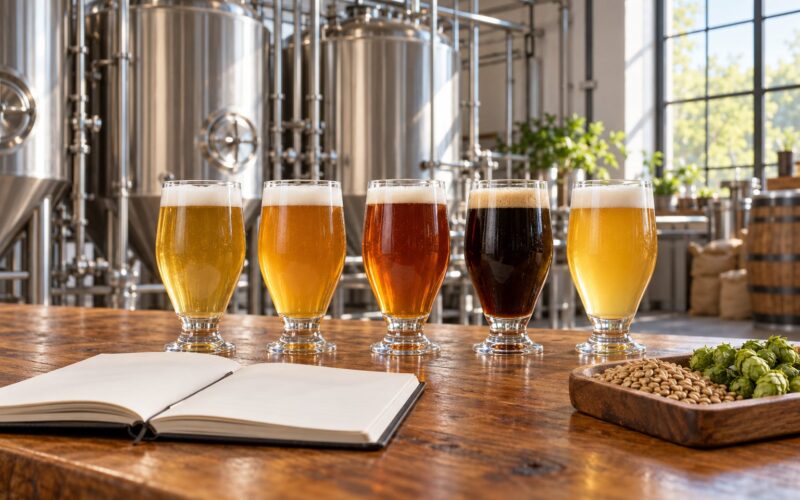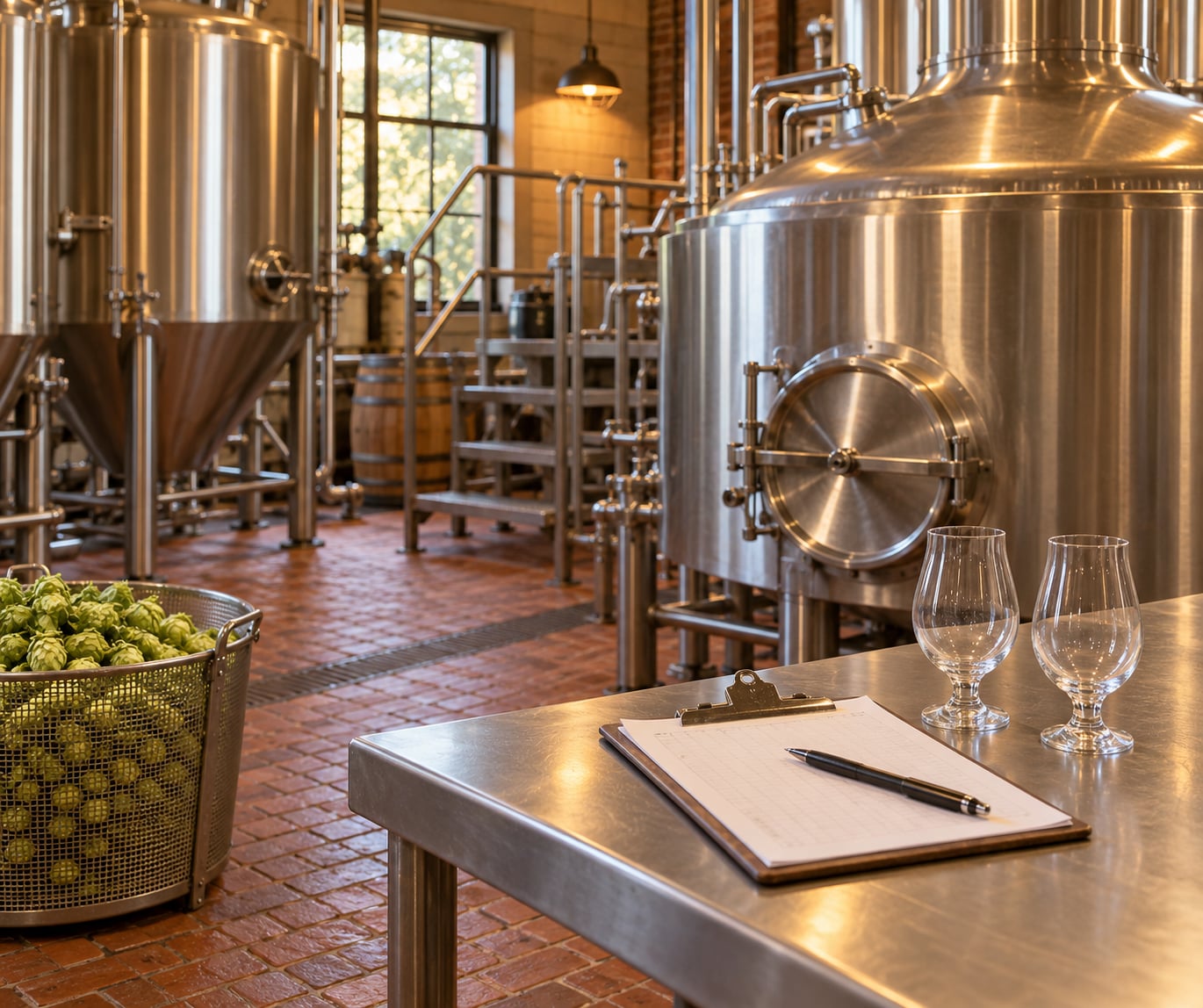
The best questions to ask a brewer on a tour are the ones tied to something you just saw or something in your glass: the tank, the hop bag, the date code on the can. Twelve specific questions, matched to the right stop on the floor, get you real answers instead of the five surface questions every visitor asks. Updated for 2026, and written for first-timers, homebrewers meeting a pro, and anyone who has stood silently at the end of a tour wondering what to say next.
A brewery tour is a walk through the production floor, usually 30 to 60 minutes, ending in the taproom. You see the mill and mash tun, the brew kettle, a wall of fermenters, the packaging line, and the cold room, then you get a few samples and someone to talk to. Most of that time is walking and listening, so the questions come at the end, or at whichever piece of equipment is directly in front of you.
Two things make a question land. The first is specificity: “What do you put in it?” gets a marketing line, while “What makes this one hazy?” gets a real answer. The second is silence afterward. Ask, then let the brewer pick the thread.
Table of Contents
- What to Ask a Brewer on a Tour: Quick Guide
- 1. What Ingredients Define the Brewery’s Signature Beer?
- 2. What Beer Style Inspired the Brewery?
- 3. How Does the Brewery Make One Beer Taste Especially Fresh?
- Two follow-ups worth asking at the packaging line
- 4. What Part of the Brewing Process Is the Most Worth Watching?
- 5. How Do Different Hop Varieties Change the Finished Beer?
- 6. How Long Does the Beer Spend in Fermentation?
- 7. What Changes Across Different Seasons?
- 8. Which Beer Is the Best Introduction to This Brewery?
- How to ask when you do not know what you like yet
- 9. Why Does This Beer Taste Better With a Particular Food?
- 10. What Is the Most Experimental Beer the Brewery Has Made?
- 11. How Does the Brewery Approach Water, Reuse, and Waste?
- 12. What Should Visitors Notice in the Taproom?
- Frequently Asked Questions
- How do I get a chance to talk to a brewer during a tour?
- Should I ask technical questions or only questions about the beer?
- What if the brewer gives a short answer?
- Can I ask about failed batches or experimental beers?
- When is the best time to ask for a beer recommendation?
- Conclusion
What to Ask a Brewer on a Tour: Quick Guide
Here is the whole set at a glance, with the moment each question works best.
| Question | What it can reveal | Best moment to ask |
|---|---|---|
| Which ingredient most strongly shapes your flagship beer? | What the brewery is actually known for, and where they are constrained | In front of the grain bins or the hop store |
| What beer style inspired you, and what did you change? | Whether the flagship is a copy of a classic or a deliberate reinterpretation | Start of the tour, walking in |
| How do you keep one beer tasting fresh? | Packaging, oxygen control, storage temperature and turnover | Packaging line or cold room |
| Which part of the process explains this beer most? | The stage the brewer is proudest of, and where the tour is worth your time | Anywhere, but best at the fermenters |
| Which hops do you use for bittering, and which for aroma? | Hop timing, varieties, and how much of the cost is aroma | Beside the fermenter or the cold room |
| How long does a batch stay in the fermenter? | Yeast strain, temperature, attenuation and conditioning time | At the fermenter bank |
| What changes with the seasons? | Local ingredients, water conditions, release planning | Taproom, over the flight |
| Which beer best introduces this brewery? | The one to order, and the reason behind it | Start of the taproom tasting |
| What food does this beer want next to it? | How the brewery thinks about intensity, acidity and sweetness | When food is mentioned or offered |
| What has been your most experimental beer? | The ideas, failures and gambles behind the brewery | Late in the tour, once rapport exists |
| What do you do with spent grain and wash water? | Real sustainability decisions, and where the costs sit | Near the grain bin or the drain |
| What should I notice about the tap lineup? | How to order, what to compare, and what the chalkboard means | At the bar, ordering a flight |
1. What Ingredients Define the Brewery’s Signature Beer?
Start with the ingredient question that gets the longest answer: “Which ingredient most strongly shapes your flagship beer?” Brewers light up on this one because it is the ingredient they had to fight hardest to get right.
Follow it up by asking about the whole grain bill, not just the hops. A brewer can tell you about a small amount of a strange malt in a 10-barrel batch, and that single detail usually explains the beer better than the hop variety ever will. Same with yeast: ask which strain is house and how many strains they run in a year.
Be careful with “local.” Plenty of breweries use the word without much behind it. Ask what local means to them, town, state or growing region, and whether the malt and hops actually come from there or just the water and the name do.
2. What Beer Style Inspired the Brewery?
Ask which classic style they adapted and what they changed about it. “We started with a saison and pulled the phenol out of the yeast” tells you the beer, the process and the house style in one sentence.
Good answers here usually have a reason attached to equipment, climate or water rather than taste alone. A brewery with a squat squat fermenter and a cool cellar tends to bend toward styles that reward patience, and one with a fast-turnover tank setup leans the other way. If the answer is a person or a beer they first drank, that is the more interesting version anyway.
3. How Does the Brewery Make One Beer Taste Especially Fresh?
Ask this in pieces rather than as one big question, because freshness never comes down to a single factor. Packaging, oxygen exposure at the moment of filling, how cold the beer is when it is packaged, how fast a tank empties, and how often the tap lines get cleaned all stack up.
Two follow-ups worth asking at the packaging line
Ask why the beer is chilled hard before it goes in, which is a detail most visitors never notice from behind glass. Then ask what changes between the day a batch is filled and the day a tap is hooked up, because the answer is usually about headspace and gas.
Breweries that can only sell what they brew in a few days will tell you the difference between beer that is fresh and beer that is fast. That is a genuinely different product decision, not a marketing trick.
4. What Part of the Brewing Process Is the Most Worth Watching?
Ask which stage explains the beer in your glass the best, then go back and look at that stage yourself. The answer is rarely milling or lautering. It is usually fermentation, the boil, or water, and each one gives you a different thing to look at.
A brewer who answers “the boil” is telling you that wort concentration and hopping time matter most to them. One who answers “water” is telling you the same, and it is a good moment to ask what their source water is and what they treat.
Visiting brewers notice the odd detail rather than the whole process. Sam Tierney of Firestone Walker has written that when he tours other breweries he looks for distinctive practices, citing an asymmetric boil heating program as the sort of thing worth finding. That is a good prompt for a visitor too: what do you do differently here that another brewery would not do?
5. How Do Different Hop Varieties Change the Finished Beer?
Split hops by job and you get an answer with structure. Ask which varieties go in early for bitterness, which go in late in the boil for flavor, and which are added after fermentation. Then ask which one is the reason people buy the beer.
Use your nose. Standing near the fermenter you can often catch raw hop aroma off a dry-hop addition, and pointing that out gives the brewer something specific to talk about instead of starting from zero.
If the group passes a barrel room or a hop store, that is the moment for a joke that lands: a brewer on r/TheBrewery described his favorite tour line as “and this is where we make beer more expensive.” Dry humor about cost is welcome. Compliments are not, and neither is asking whether the beer is worth it.
6. How Long Does the Beer Spend in Fermentation?
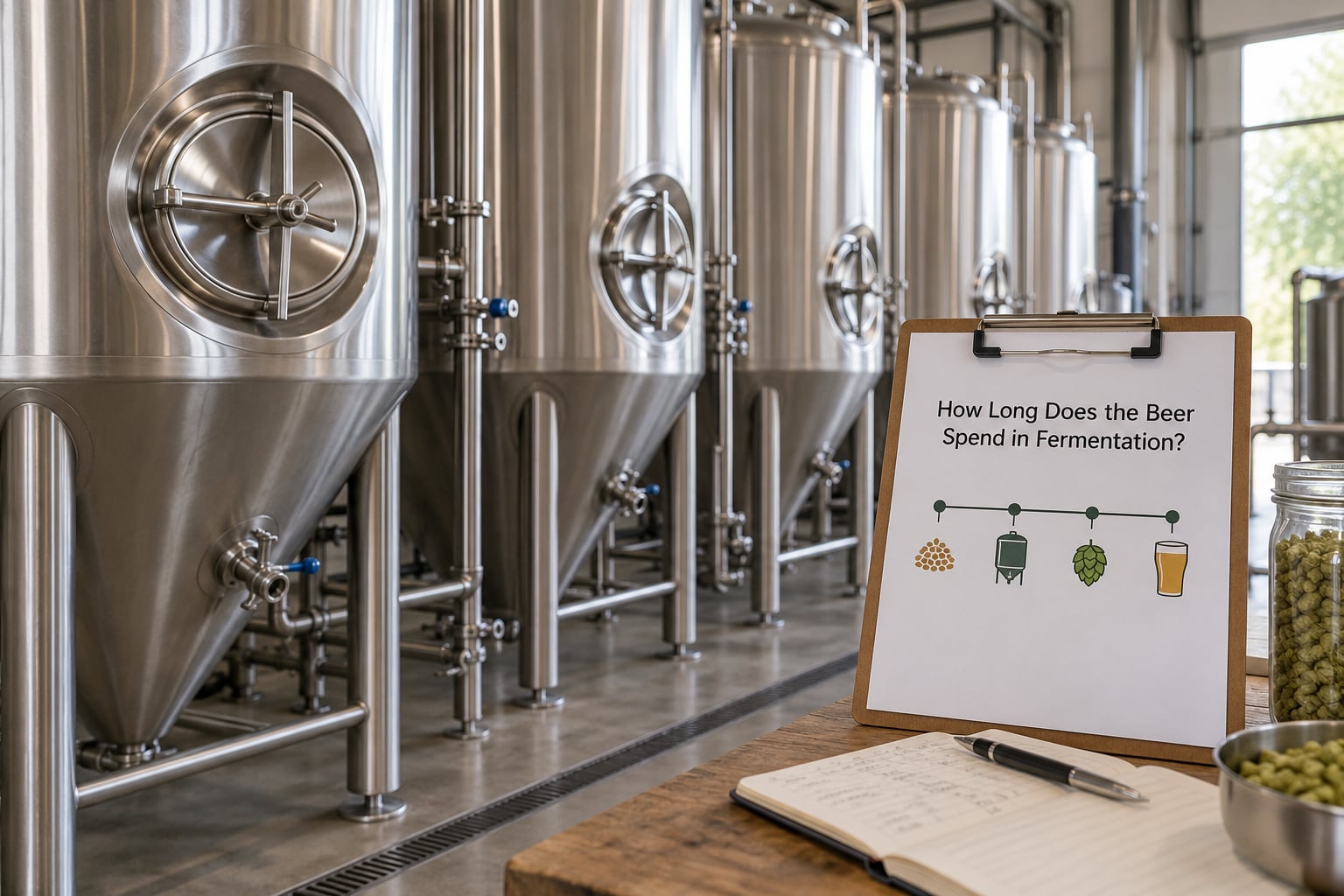
Fermentation time is a better question than it looks. Ask how many days the yeast is active, what temperature they run it at, and how long the beer conditions after primary before it is packaged.
The follow-up that gets the technical answer is why batches differ. Same recipe, different yeast health, different temperature, different length of time, different beer. Homebrewers in particular get a long answer here, because homebrewing forums are full of people collecting questions for exactly this conversation.
Add “do you do a diacetyl rest?” if the brewery makes anything pale. It separates brewers who have read the same textbooks from those who have run a lot of batches.
7. What Changes Across Different Seasons?
Ask what changes in summer and winter. You will usually get water temperature, harvest timing, a different raw material, a lighter body, and a release calendar that tightens up when the taproom gets busier.
Seasonal releases are the most common reason a brewery has something you cannot buy anywhere else, and this is the question that makes that clear. Follow it with which release the brewer is proudest of and which one just got thrown out, which is a much better story than the one on the label.
8. Which Beer Is the Best Introduction to This Brewery?
This is the question with the highest payoff for you, and it takes ten seconds. Ask it at the start of the taproom tasting, before the bartender or brewer has poured anything.
How to ask when you do not know what you like yet
Describe yourself instead of describing beer you have not tasted. Say “I usually like malt-forward lagers” or “I like hop aroma but not a burn” or “I want something warm rather than sharp,” and let them do the matching.
Advice from beer forum regulars is consistent on this: ask the bartender for a recommendation, because bartenders are trained to talk about what is on their taps and are usually happy to. Buy the beer flight first, then ask which of the four is the one to finish with.
9. Why Does This Beer Taste Better With a Particular Food?
Ask what they would eat with it and why. A good answer is not “it goes with everything,” it is a specific mechanism. Acidity cuts through fat, sweetness stands up to bitterness, roast and smoke need something creamy or sweet beside them, and a high-alcohol beer usually wants something lighter than it sounds like it does.
Ask about the pairing they are proudest of, the one they fought to put on the menu. It tells you how much attention the taproom puts into food, which is the part of a brewery visit most worth knowing before you plan the next one.
10. What Is the Most Experimental Beer the Brewery Has Made?
Late in the tour, once there is some rapport, ask what the bravest thing they have brewed was. Unusual ingredients, strange processing, a barrel program, a beer that failed twice, all of it is fair game, and a lot of brewers have a story they will tell you at length.
Ask what they learned from the failures, not just what happened. That single shift usually turns a funny anecdote into the most substantive part of the conversation.
Keep the intent in mind. An experimental beer is meant to be weird. Telling a brewer their sour smelled like nail polish remover is not a critique, it is a failure to taste on purpose.
11. How Does the Brewery Approach Water, Reuse, and Waste?
Most visitors skip this because it sounds like a homework question, and it is actually one of the more interesting things on the floor. Ask where the water comes from and what gets treated, what happens to spent grain, where the wastewater goes, and what the cleaning schedule actually costs in time and hot water.
Frame it as curiosity, not an audit. A brewer will happily walk you through a reverse osmosis setup or a grain-to-compost run, and the answer tells you how much room the brewery has to work with. Small breweries often have less flexibility here than big ones, and hearing that is more interesting than a vague answer about being environmentally friendly.
12. What Should Visitors Notice in the Taproom?
Save the last question for the bar. How many taps rotate, how often, what the chalkboard is actually telling you, and why one beer gets poured at a colder temperature than another.
Glassware counts too. A tulip concentrates aroma, a pint glass spreads it, and noticing which one the taproom hands you for a heavy imperial says something about how they want it drunk. Ask about serving order if the taproom runs a suggested flight, and then order in that order.
That is also the moment to ask the one question nobody wants to ask out loud: is there a beer club, a mailing list, or a release you need to show up early for. Ask it while the pour is happening, not at the register.
Frequently Asked Questions
How do I get a chance to talk to a brewer during a tour?
Go during a weekday if you can. Weekends are busiest, and tours are often run by a guide or bartender rather than the person who makes the beer. Booking ahead means you are on a scheduled list, which usually means a calmer group and more time with someone who can answer technical questions. If the head brewer happens to be on the floor, ask them directly; most are glad to be interrupted.
Should I ask technical questions or only questions about the beer?
Both, and one does not cancel the other. Technical questions get the animated answers, and a brewer on r/TheBrewery admitted he tends to be a little too technical on tours. A question tied to the equipment you are standing in front of is the best version of technical: point at the tank, then ask how long it stays in there.
What if the brewer gives a short answer?
That usually means timing or volume, not a closed door. If a brew day is running or the group is large, wait until the tour ends in the taproom and ask over a sample instead. You can also rephrase a yes-or-no question into a specific one: instead of asking about water, ask what their source water is and what they treat out of it.
Can I ask about failed batches or experimental beers?
Yes, and it is one of the better questions you can ask. Brewers keep the failed batches around longer than the good ones, because the lesson is the point. Just respect the intent of the beer: an experimental release is supposed to taste unusual, so describe what you get rather than judging it against a style it was never trying to hit.
When is the best time to ask for a beer recommendation?
At the start of the taproom tasting, before anything is poured. Describe what you usually enjoy in plain words, such as malt-forward or aromatic rather than bitter, and let them pick. Buy a flight to compare, ask which one they would finish, and order that one. Then tell them what you thought of it afterward, which is the part they enjoy.
Conclusion
Open with “which ingredient most strongly shapes your flagship beer?” or “which beer should I start with?” Either one buys you five minutes of a brewer’s attention, and the rest of what to ask a brewer on a tour follows from what they give back. Then follow their interests rather than running down a checklist, and thank them before you leave; the people pouring samples on a Saturday afternoon are often working the floor at the same time.