Which beers are worth aging? The short answer is high-alcohol, low-hop, full-bodied styles — barleywines, imperial stouts, lambic and gueuze, quadrupels, old ales, strong Scotch ales, and barrel-aged sour or wild ales. Alcohol, body and acidity preserve them while esters, phenols and tannins keep changing in the bottle. Pale ales, IPAs, wheizens and lagers age in the wrong direction.
I have kept a mixed cellar for years, mostly bottles I could not justify drinking young, and the pattern is boring but reliable. Strong dark beer, wild beer, and anything from a barrel. Everything else got opened while it was still singing. This guide walks through the styles that genuinely reward patience, the ones that never will, and how to store what you are holding.
Table of Contents
- Which Beers Are Worth Aging at a Glance
- 1. Barrel-Aged Stouts Keep Getting Better
- 2. Vintage Lambic Is the Longest-Lasting Beer There Is
- 3. Barrel-Aged Sour Ales Gain Complexity, Not Fizz
- 4. Old-Fashioned American Ale Turns Caramel Into Dried Fruit
- 5. Strong Belgian Dark Ales Deepen for a Decade
- 6. Barrel-Aged Wild Ales Integrate Over Several Years
- 7. Vintage Barley Wines Develop Raisin and Fig
- 8. Aged Imperial Stouts Soften Into Layered Roast
- 9. Deeper Barleywine-Style Beer Is Not Automatically Better
- 10. Traditional Scotch-Style Ales Add Dried Fruit and Wood
- 11. Bottle-Conditioned Specialty Ales Are Worth Holding
- 12. Reserve Releases and Vintage Barrel Batches Deserve Research
- How to Tell Whether a Beer Is Likely to Improve
- How to Store Beers You Plan to Age
- What temperature should a beer cellar be?
- Why does light matter so much?
- Should beer be stored upright or on its side?
- Do humidity and labels matter?
- What Drinkers Actually Report From the Cellar
- Frequently Asked Questions
- How long should most beer be aged?
- Are all high-alcohol craft beers worth aging?
- Does aging beer make it stronger?
- What is the difference between bottle conditioning and aging?
- How can I tell if an old beer has oxidized?
- Should beer be stored upright or on its side?
- Start With One Bottle, Not a Case
Which Beers Are Worth Aging at a Glance
| Style | Typical ABV | Drink fresh by | Peak window | Cellar potential | Why it ages well |
|---|---|---|---|---|---|
| Barrel-aged stout | 10-14% | 6-12 months | 1-3 years | 5-10 years | Roast softens, oak tannins integrate |
| Lambic and gueuze | 4-7% | 6 months | 1-3 years | 15-20+ years | Acidity, Brett evolution, no hop aroma |
| Barrel-aged sour ale | 5-9% | 12 months | 1-2 years | 5-15 years | Lactic acid plus wood and brett |
| Old ale / English strong ale | 7-12% | 12 months | 1-3 years | 5-10 years | Residual sugar, ester development |
| Quadrupel and abbey ale | 9-12% | 12-18 months | 1-3 years | 5-12 years | Dark fruit, alcohol warmth, bottle condition |
| Wild / mixed-culture ale | 6-10% | 6-12 months | 1-2 years | 3-8 years | Microbes keep metabolizing in bottle |
| Barleywine | 9-14% | 1 year | 1-2 years | 10-20 years | Residual sugar and huge malt-derived body |
| Imperial stout | 9-15% | 1 year | 1-3 years | 10-25 years | Alcohol, body, roast layering over time |
| Strong Scotch ale | 8-12% | 1-2 years | 2-5 years | 10-25 years | Dark malt, restrained hopping, full body |
| Bottle-conditioned pale/strong ale | 6-9% | 6 months | 6-18 months | 2-3 years | Refermentation smooths sharp edges |
| Tripel | 8-11% | 2 years | 6 months-1 year | 1-2 years | Only a narrow window before fading |
| West Coast IPA | 6-8% | 3-6 months | Already at peak | None | Hop aroma compounds degrade first |
| New England IPA | 6-8% | 30-60 days | Already at peak | None | Hazy hop flavor turns dull fast |
| Pale ale and lager | 4-5% | 2-4 months | Already at peak | None | No alcohol, no acid, no complexity to build |
| Hefeweizen and fruited sour | 4-6% | 4-8 weeks | Already at peak | None | Banana, clove and juice fade to cardboard |
That table is the whole answer in one screen. If a style is low in alcohol, high in hop aroma, or full of fresh fruit and spice, aging costs you more than it gives. The rest of this piece goes style by style.
1. Barrel-Aged Stouts Keep Getting Better
Barrel-aged stouts are usually the first bottle people lay down, and usually the right call. Oak does two things at once: it adds tannin that softens the roast, and it lets the spirit in the barrel round off over years.
What you want on the bottle: a barrel program named on the label (bourbon, wine, rye, rum), no adjuncts, and an ABV above 9%. Vanilla, cocoa, and oak notes that read as separate layers at one year collapse into a single warm, integrated sweetness around three.
What to skip: anything with added cocoa, vanilla, or caramel syrup. Those flavors fade whether or not the base beer would have improved. Adjunct-heavy stouts are a seasoning decision, not an aging candidate.
2. Vintage Lambic Is the Longest-Lasting Beer There Is
Gueuze, kriek, and fruit lambic are the outlier in every way that matters. They are low in alcohol, so most aging rules do not apply, and they are also the beers that routinely stay interesting past fifteen years.
The reason is microbiology. Lambic is a mixed fermentation of wild yeast and bacteria, and Brettanomyces keeps working in the bottle, converting character compounds into barnyard, pineapple, and grapefruit notes while the acidity holds off anything that would spoil it. Dry-hopped lambic has no aroma to lose in the first place.
For a concrete example, taste a three-year-old gueuze blend alongside a fresh bottle of the same beer. The older bottle will have lost its sharp young sourness and replaced it with something rounder and more wine-like. Fruit lambics go further still, with cherry and almond emerging where the fruit once tasted like juice.
3. Barrel-Aged Sour Ales Gain Complexity, Not Fizz
Sour ales that spent time in foeders or wine barrels behave differently from lambic. Lactic acid keeps them stable, and the wood plus resident microbes add layers that are simply not there on day one.
Two practical details matter more than style purity. Watch the fill level, because an underfilled barrel-aged bottle has more headspace and oxidizes faster, and check whether the beer is unfiltered, since sediment in the bottle is yeast and microbes still doing their job rather than a fault.
A heavily fruited or smoothie-style sour is the opposite case. Those can be finished within two months of release, and juice character flattens into nothing well before any benefit arrives.
4. Old-Fashioned American Ale Turns Caramel Into Dried Fruit
Old ale and English-style strong ale sit somewhere between a barleywine and a Belgian quadrupel: full-bodied, fermented with character yeast, and often bottle-conditioned. The fruity esters that smell like banana or pear when young turn, over two to four years, into raisin, fig and date.
These are the beers where bottle condition does real work. Live yeast and priming sugar in the bottle keep integrating sharpness for months after packaging, so an old ale at eighteen months tastes more complete than the same beer at three.
How to pick one: look for a stated bottling date, an ABV of 8% or more, and no mention of adjuncts. Buy the freshest vintage you can find. Age does not repair a bottle that spent a summer in a hot car before you bought it.
5. Strong Belgian Dark Ales Deepen for a Decade
Quadrupels, dubbels, and abbey ales are among the most age-tolerant beers in existence. A well-made quad at two years has lost the raw alcohol edge that hits the back of your throat and gained dried plum, caramel, and warm spice.
The line between good maturation and spoilage here is thinner than people expect. A gentle sherry or dried-fruit note is aging. Thin, watery, cardboard, or green-apple-sharp is not — that last one is usually acetaldehyde, an oxidation product that never goes away.
Store these upright and cold-ish. A 10%-plus abbey ale left in a warm closet will still be safe to drink; it just will not be the beer the brewer intended.
6. Barrel-Aged Wild Ales Integrate Over Several Years
Mixed-culture and spontaneous-fermentation bottles keep evolving because the culture inside them is still alive. Brettanomyces, Lactobacillus, and Pediococcus together produce acids and compounds in sequence, so the beer passes through a funk-forward phase and later settles into something balanced and wine-like.
Two to four years is where the payoff usually shows. The sharp edges and raw funk integrate with the malt instead of sitting on top of it. Brett-driven grapes and pineapple notes often intensify before they mellow.
This is the style where a vertical tasting pays off most, because the same beer at one, two and four years tells a story no single bottle can.
7. Vintage Barley Wines Develop Raisin and Fig
Barleywines are the textbook aging beer: 10% alcohol, massive original gravity, and enough residual sugar to keep the beer stable for a very long time. The caramel and toffee of a young bottle move toward raisin, fig, and dark date as it sits.
Choosing a bottle: English examples generally tolerate longer cellaring than American ones, which can pick up a stale, papery hop note after a few years. Favor the English barrel or plain-English bottle if you are planning a decade.
Pour carefully. Barleywine is notorious for leaving a sediment of yeast and hops in the glass. Either stand the bottle upright for a day before pouring, or accept a little sediment and let it settle in the glass rather than stripping every last drop.
8. Aged Imperial Stouts Soften Into Layered Roast
Imperial stouts improve for a simple reason: there is a lot to improve. The roast character that tastes sharp and burnt at six months mellows into coffee, dark chocolate, and tobacco over three to five years, and the alcohol warmth integrates rather than burns.
Storage matters here more than with most styles. Heat and light both accelerate staling in roasted malt. Keep bottles in the dark at cellar temperature, and if the beer came in a can, get it into glass or a can-shaped cellar box that blocks light, because UV hits stouts harder than it hits pale beer.
A fifteen-year-old imperial stout in good storage is a genuine trophy. A five-year-old one in a warm garage is a lesson, and the flavor will tell you which happened.
9. Deeper Barleywine-Style Beer Is Not Automatically Better
Color and alcohol are easy numbers to trust and poor guides. A very dark, very strong beer can still be built on an age-fragile hop load, and a lighter barleywine with restrained bitterness can age for a decade without trouble.
Barrel-aged versions of the style get better more often, since the wood and any wild culture in the barrel keep contributing. Read the label for barrel references and Brett indications, and treat a heavy dry-hop charge in a high-ABV American barleywine as a warning sign for anything beyond about two years.
Residual sugar is the number that actually predicts longevity. If the brewery lists it, look for something meaningful in the way a barleywine’s thick, sweet body comes from what was never fermented rather than from alcohol alone.
10. Traditional Scotch-Style Ales Add Dried Fruit and Wood
Strong Scotch ales and wee heavies are among the longest-lived beers you can buy, and they are still underrated compared to the barrels above. The combination of very dark malt, restrained hopping, and full body gives them a long, gentle arc rather than a dramatic one.
At two to five years, expect raisin, treacle, and leather with a faint woody edge from the oak cask used in maturation. Attenuated English yeast character develops too, adding raisin and sherry notes underneath the malt.
Do not expect a transformation. These are beers that grow more layered, and if you want something that visibly changes in the bottle, this is not the style.
11. Bottle-Conditioned Specialty Ales Are Worth Holding
Bottle conditioning is not the same as aging, and the difference is the most common misunderstanding in this whole topic. Conditioning is what happens in the weeks after packaging: yeast and priming sugar referment, carbonation builds, and sharp edges soften.
Aging is months or years of slow chemical change. Conditioning gets a pale ale or a strong ale through its awkward phase. Aging turns alcohol into sherry notes and moves fruit esters toward raisins. A beer can be bottle-conditioned and not worth a single extra day.
That said, strong bottle-conditioned pale ales, single-batch releases, and brewery-aged versions are worth holding, mostly because their yeast keeps working. Look for sediment in the bottle, an unfiltered label, and a stated bottling date.
12. Reserve Releases and Vintage Barrel Batches Deserve Research
Limited releases need a checklist rather than a rule, because the brewer is telling you exactly when to drink it and you are choosing to disagree. Before committing a bottle to a multi-year wait, find four things.
First, the bottle or release date, so you know how old it is today. Second, the barrel program, since a named barrel with an aging statement usually means the beer had time in wood. Third, prior tasting notes, from brewery release notes or a published review, to see whether the brewer described it as a cellaring beer. Fourth, whether the brewery itself recommends cellaring.
Watch for the trap: a reserve release can be reserve purely because it is scarce. Scarcity is not a quality signal. If the label gives no aging information and the ABV is under 6%, treat it as a beer to drink on release weekend.
How to Tell Whether a Beer Is Likely to Improve
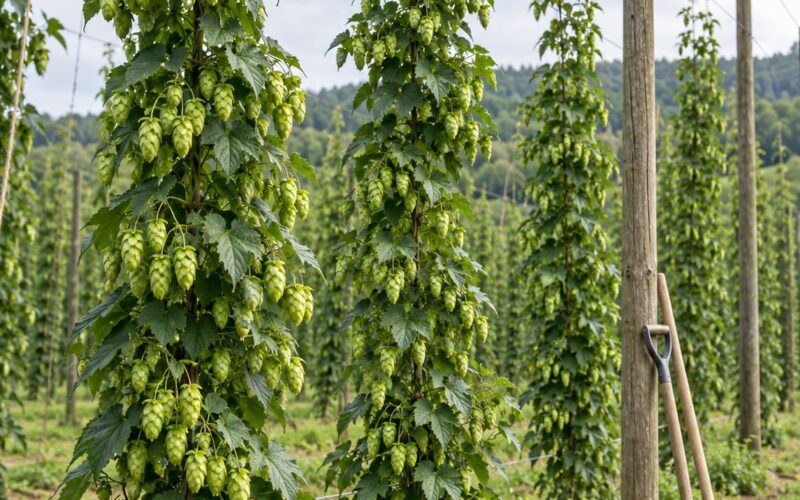
Six checks, in the order I would run them. Alcohol first: 8% or higher is the simplest predictor, though sour and smoked beers break the rule because lactic acid and smoke phenolics preserve them at lower strengths. Body second, since a thin beer has nothing to develop. Hop load third, because hop aroma compounds such as linalool, geraniol, and myrcene break down early and never come back.
Fourth, fermentation profile: Brettanomyces, a mixed culture, or a bottle-conditioned yeast keep changing the beer. Fifth, oxygen exposure at packaging, which you cannot see but can infer from heavy glass, a proper fill level, and a screw cap or cork rather than a plastic cap. Sixth, the release style, since a bottle marked for immediate drinking is a dated product, not a vintage.
One more thing worth doing: open one bottle fresh and taste it before laying down the rest of the case. Without a baseline you have nothing to compare the aged bottle against, and the whole exercise becomes guesswork.
How to Store Beers You Plan to Age
What temperature should a beer cellar be?
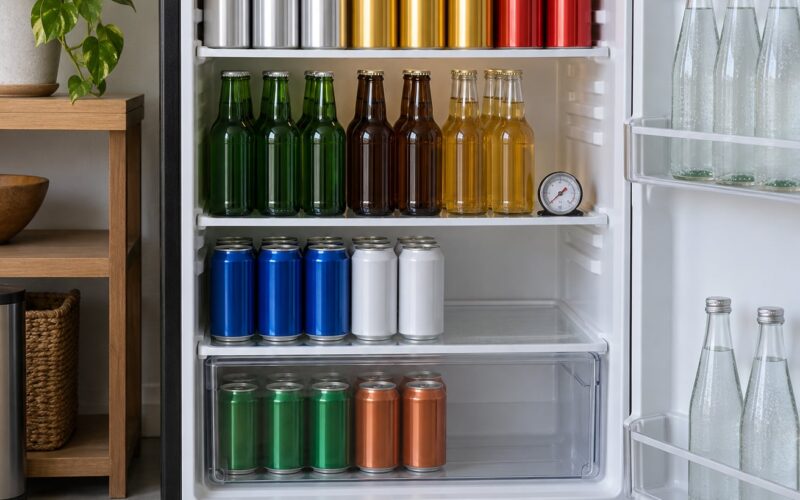
Aim for 50-60°F, or roughly 10-15°C, and hold that temperature steadily. A regular refrigerator is colder than ideal, though cold storage under 40°F is still far better than a warm shelf, and it extends every drinking window on the table above. A basement, interior closet, or unlit cabinet in the coolest part of the house works well.
Why does light matter so much?
UV light in a brown bottle still gets through. It drives riboflavin from the malt to react with isohumulone, producing skunked sulfur notes, and it fades hop aroma on top of that. Dark, opaque shelving or a closed cabinet matters more than the strength of your bulb.
Should beer be stored upright or on its side?
Upright by default. A cork matters only for beers with long secondary aging, since the cork keeps the liquid in contact with it, and a standard 750ml bottle laid on a display rack is mostly furniture. Keep bottles away from vibration, which stirs sediment into suspension and raises oxidation risk.
Do humidity and labels matter?
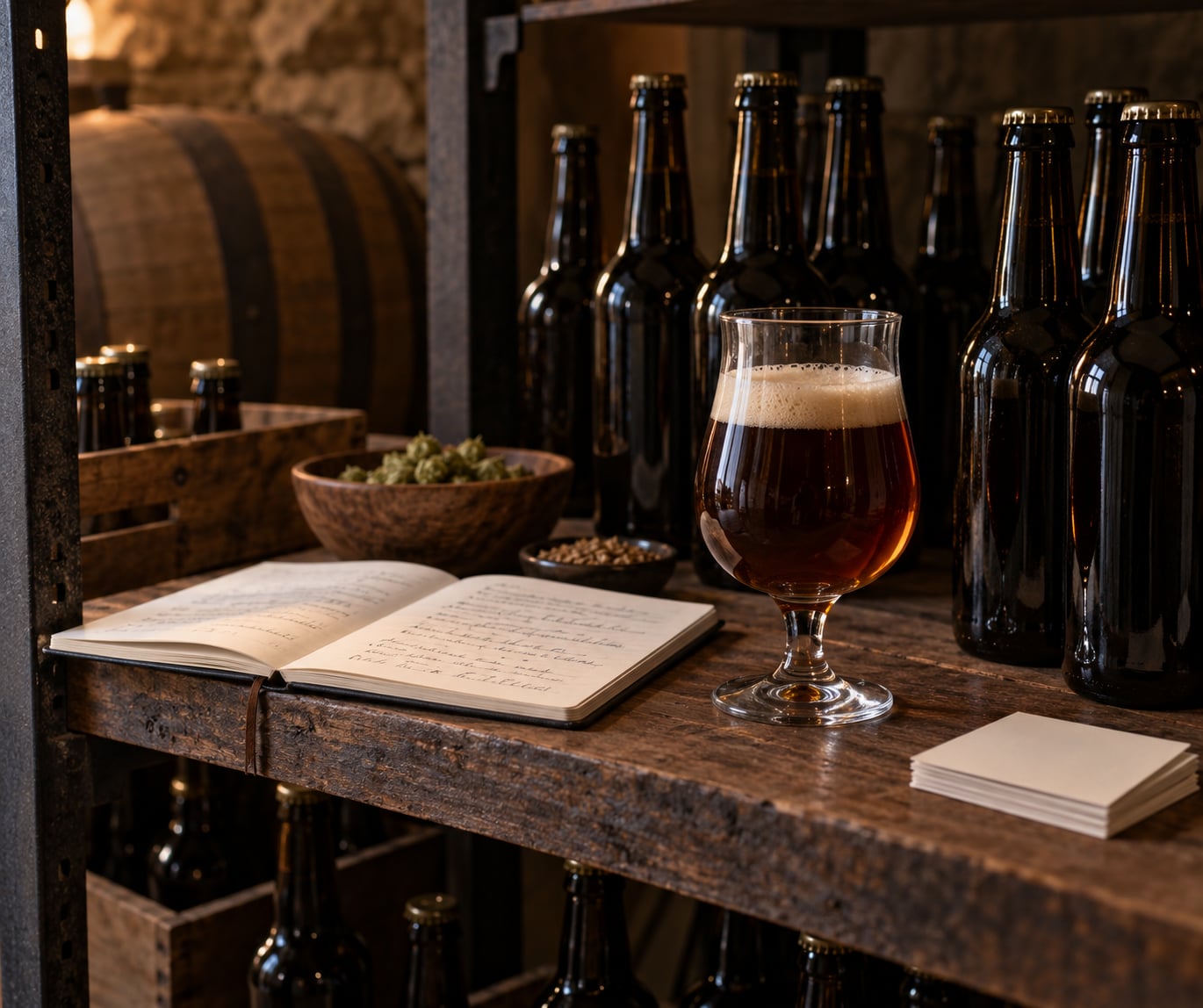
Around 50-70% relative humidity keeps corks from drying out and labels from peeling on long holds. And write on the bottle: purchase date, vintage if printed, and a target drinking date. A simple marker on the neck is enough, and it is the difference between a cellar and a junk drawer.
What Drinkers Actually Report From the Cellar
The search results for this question are almost entirely forum threads, which tells you something useful: drinkers mostly report surprises. One widely repeated example is a bottle of Boulevard’s Lolita opened about five years after release and described as genuinely transformed, but with a caveat repeated often enough to matter — the body thins and the carbonation softens even when the flavor improves. That is the shape of most cellaring wins, and nobody tells you the fizz is part of the trade.
Style mismatch comes up constantly. Pumpkin beer is the clearest example: the consensus on BeerAdvocate is that almost none is worth aging, with Jolly Pumpkin La Parcela named as the rare exception. On the Homebrewers Association forum, the advice for barrel-aging a tripel is to save the bourbon barrels for barleywines, imperial stouts, and quads instead. And on homebrewtalk, the verdict on Guinness is that a stout under 6% does not justify more than about six months, however long it is kept.
That last one is the general rule hiding inside it. Strength is the filter, and everything below it ages slowly or not at all.
Frequently Asked Questions
How long should most beer be aged?
For most age-worthy styles, taste at six months, then again every year. Barleywines and imperial stouts usually hit their peak between one and three years. Lambic and gueuze can keep evolving for fifteen to twenty years, and strong Scotch ales hold up even longer. The exception is tripel, which has a narrow window of roughly six months to two years before it fades.
Are all high-alcohol craft beers worth aging?
No. Strength is the best single predictor, not a guarantee. American barleywines and heavily hopped double IPAs can be very high in alcohol and still decline, because their hop load and relatively low residual sugar work against long cellaring. Strong low-hop beers with real body, and sour or smoked beers preserved by acid and phenolics, are the safer bets.
Does aging beer make it stronger?
No, the alcohol content never changes once a bottle is sealed. What changes is perception. As esters mature and sharp edges integrate, the raw heat of the alcohol is less obvious, so a 12% barrel-aged stout can taste calmer than the same beer at one year. The measured ABV on the label is the ABV in the glass.
What is the difference between bottle conditioning and aging?
Bottle conditioning happens in the weeks after packaging, when yeast and priming sugar referment to build carbonation and smooth sharp edges. Aging is months or years of slow chemical change that moves fruit esters toward raisin and adds sherry-like oxidative notes. A beer can be bottle-conditioned and still not be worth a single extra day in the cellar.
How can I tell if an old beer has oxidized?
Good oxidation smells like sherry, port, dried fig, or warm balsamic. Bad oxidation smells like wet cardboard, soggy paper, vinegar, or green apple. Both come from oxygen, so the aroma is the tell, not the age. A sour, thin, watery sip with that cardboard note means the bottle is deteriorating and no amount of further waiting will fix it.
Should beer be stored upright or on its side?
Upright works for almost every beer, including corked bottles aged for a few years. Laying a bottle down matters mainly for long secondary aging in corked wine-barrel or champagne-style bottles, where the liquid keeps the cork wet and sealed. Keep bottles away from vibration, and use the space you save for labels and records rather than a display rack.
Start With One Bottle, Not a Case
Pick one style from the table that you already enjoy young, buy two bottles, and drink one now so you have a baseline. Label both with the date. That single habit removes most of the guesswork that makes people either open too early or hold past the peak, and it costs you one bottle instead of a case.