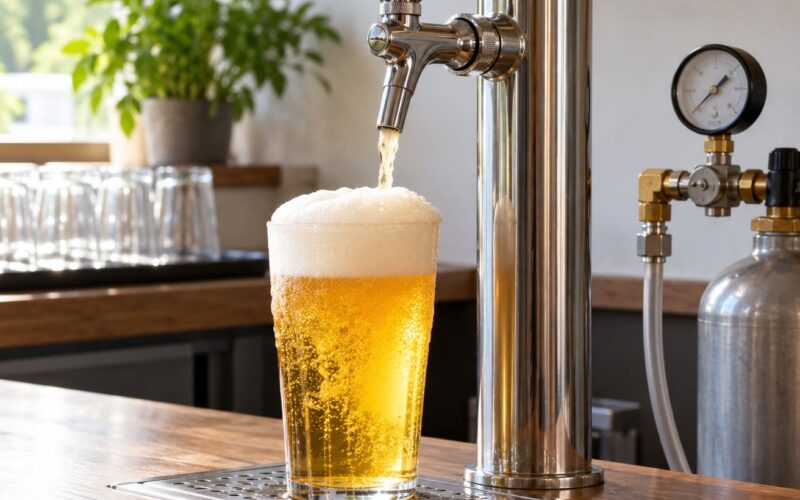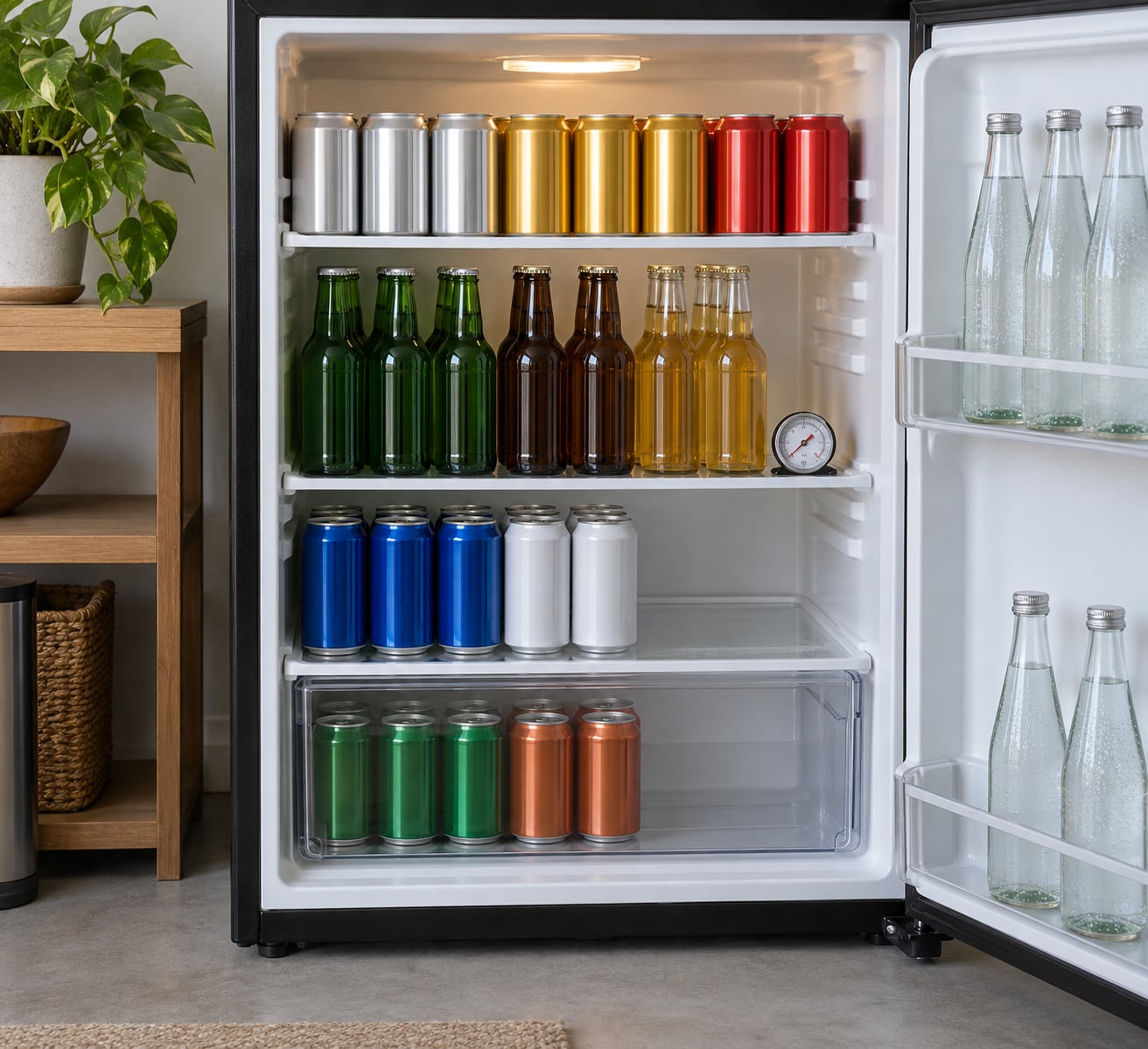
A well-stocked beer fridge is not about having the most beer in the house. It is about keeping the right styles cold, easy to see, and rotating out the older bottles first. Most home setups do fine with six core styles, a short snack list, and about 20 percent empty space at all times. This guide covers what to stock in a beer fridge for one to three people, how much of it fits, and how to keep it fresh.
Table of Contents
- What You Need
- Step-by-Step
- 1. Measure Your Fridge and Set the Temperature
- 2. Choose What to Stock in a Beer Fridge by Style
- 3. Build a Shopping Plan for Different Occasions
- 4. Check Dates, Seals, and Storage Needs
- 5. Organize, Label, and Rotate Your Stock
- Common Mistakes
- Frequently Asked Questions
- Should I store beer in cans or bottles in a home fridge?
- How many beers should I keep stocked for one person?
- How long does beer stay fresh in a refrigerator?
- What temperature should a beer fridge be set to?
- Can I use a regular kitchen refrigerator for beer?
- How should I organize mixed beer in a small fridge?
What You Need
Start with the appliance. A mini fridge, a glass-door beverage fridge, or a full-size kitchen fridge all work, as long as it holds a steady temperature and you can reach what you bought.
You also need a few basics: a refrigerator thermometer, a small marker for writing dates, and somewhere to put beer that is meant for aging rather than drinking cold. Buy in the packaging you will actually store. Cans stack and are easy to see, standard bottles stand upright, and 750 mL bottles need a shelf with real depth.
Aim for a range rather than a wall of one style. Variety is what makes the fridge worth having, and it keeps you from buying a second case of something you already have three of.
Decide where each item goes before the shopping trip, not after. The style list below tells you what to buy; the measurements tell you how much fits; the temperature tells you what stays cold. Anyone can skip straight to the styles if they already know their fridge.
| Item | One person | Two or three people | Notes |
|---|---|---|---|
| Lager or pilsner 12-packs | 1 | 2 | The easy drink everyone finishes |
| Pale ale or IPA 12-packs | 1 | 2 | Keep one of each, not two of one |
| Wheat or hazy IPA | 1 | 2 | Cloudy cans, wide appeal |
| Stout or porter | 1 | 2 | Slow drinkers, winter months |
| Sour 4-packs | 2 | 3 | Small format, high turnover |
| Seasonal or limited single bottles | 3-4 | 6-8 | Buy one at a time, rotate it out |
| Non-alcoholic beer | 1 | 2 | Sober guests drink this happily |
| Soda water or mixers | 1 two liter | 2 two liters | Highballs need both |
| Snacks | 3-4 kinds | 5-6 kinds | One salty, one fresh, one hearty |
| Glassware | 4-6 glasses | 8-12 glasses | Store in the door or top shelf |
Step-by-Step
1. Measure Your Fridge and Set the Temperature
Count your usable shelves before you buy anything. A three-shelf mini fridge typically holds somewhere around 60 to 80 cans, and a dedicated full-size fridge can take well past 150. Measure the height between shelves too, because bottles standing on a glass shelf tell you quickly whether standard 12 oz bottles fit.
Set the dial following the appliance manual, then check the result with a refrigerator thermometer rather than trusting the number on the door. Community fridge threads keep landing in the same place: about 35 to 38 degrees is the range people like for craft beer, since a standard kitchen fridge often sits colder at 38 to 40 and can mute hop aroma.
If you split a kitchen fridge with groceries, dedicate one full shelf and keep the door for drinks that tolerate movement.
Give the door a job that is not temperature-sensitive. It is the warmest spot in the appliance and it swings open constantly, so it works best for mixers, seltzer, and a few empty glasses. The interior shelves hold anything you care about drinking cold, and the coldest shelf near the back is where the hoppy beer goes.
Leave a shelf’s worth of room open on purpose. A fridge stuffed to the door shuts poorly, circulates badly, and turns every restock into a puzzle.
2. Choose What to Stock in a Beer Fridge by Style
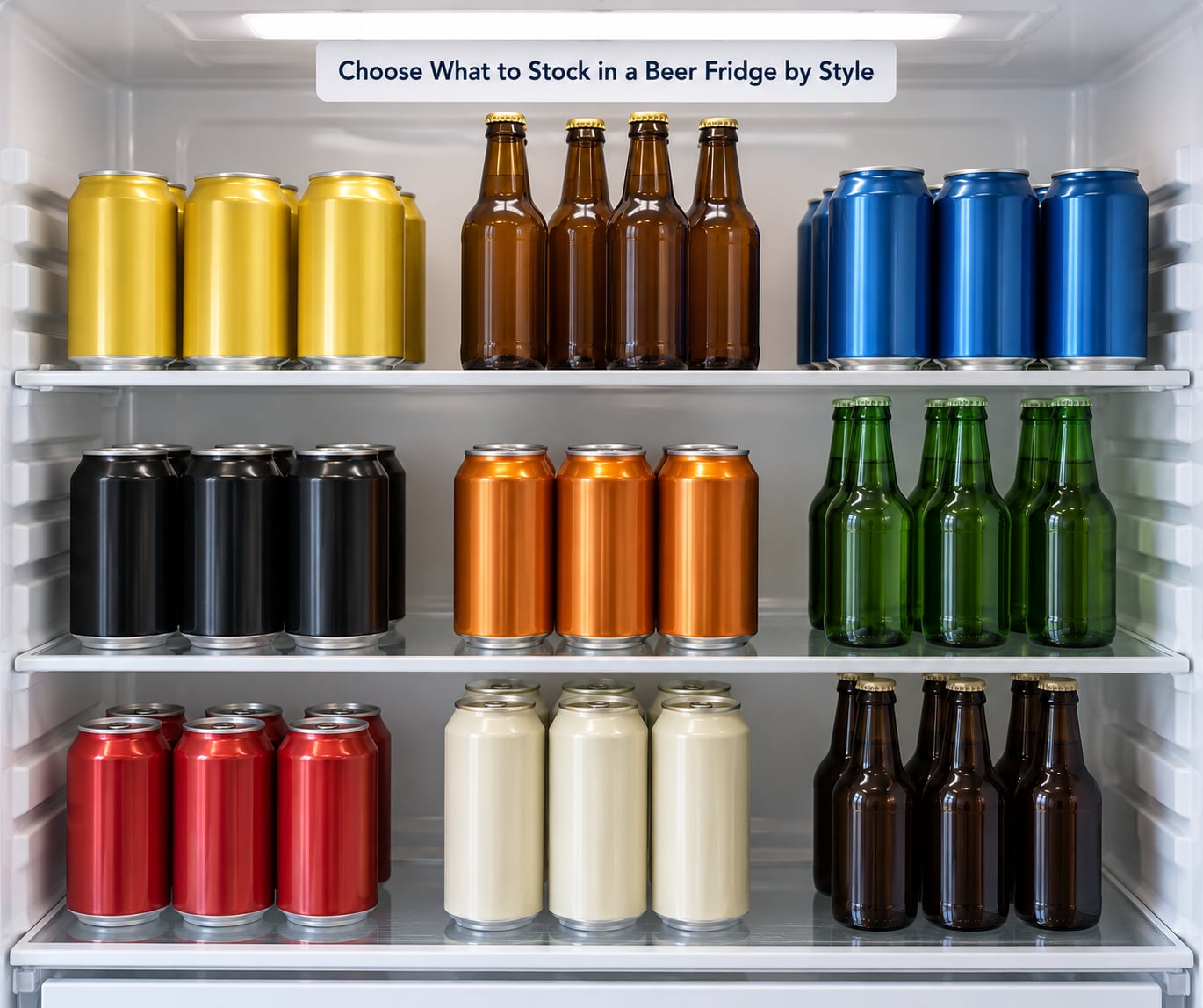
Six styles cover nearly every occasion. Here is what each one adds and how much of it to keep.
- Lager or pilsner. The crowd-pleaser and the thing you drink most often. Keep one 12-pack ready and rotate it fast.
- Pale ale. Balanced, hoppy but not aggressive, and easy to find in almost any market.
- IPA or hazy IPA. Buy these cold and drink them fresh. They are the style that suffers most from sitting.
- Wheat beer. Bright, soft, and crowd-friendly, which makes it a good second lager option.
- Stout or porter. Dark, filling, and better in a cold glass than most people expect. Excellent with food.
- Sour beer. Usually sold in 4-packs, so a couple of them add a lot of variety for very little shelf space.
Add seasonal releases and anything from a local brewery as singles. One collector on r/beerporn keeps roughly 125 beers on hand at any moment and tracks dates in a spreadsheet, then cycles the whole fridge in about a year. That level of rotation is a hobby, not a requirement.
3. Build a Shopping Plan for Different Occasions
Everyday drinking needs depth, not width. Two or three styles you actually like will disappear faster than a shelf of variety you never reach for.
For a small gathering, add a few singles rather than more cases. Guests like trying something, and one special bottle carries more conversation than a fourth identical pack.
A watch party flips the priorities. Volume matters more than range, so buy the extra depth in whatever your group already finishes, and bring one or two specials rather than a wide shelf of things nobody chose. Stock the snacks the same way: one salty option like pretzels or chips, one hearty option like a charcuterie pack or a tray of sliders, and one fresh option. Those three cover almost every group, and they sit happily next to the beer without taking up a full shelf.
Keep mixers stocked the same week as the beer. A fridge full of IPA and an empty door shelf means people drink what is easy to reach, and soda water or ginger beer turns a bottle into something a non-beer drinker will happily hold.
Before you order for a watch party, count the bottles already in the fridge rather than the bottles in your head. Half of what you planned usually covers a group of eight, and the leftovers still get drunk on Tuesday. Leave about 20 percent of the shelf free so the post-game restock has somewhere to go.
4. Check Dates, Seals, and Storage Needs
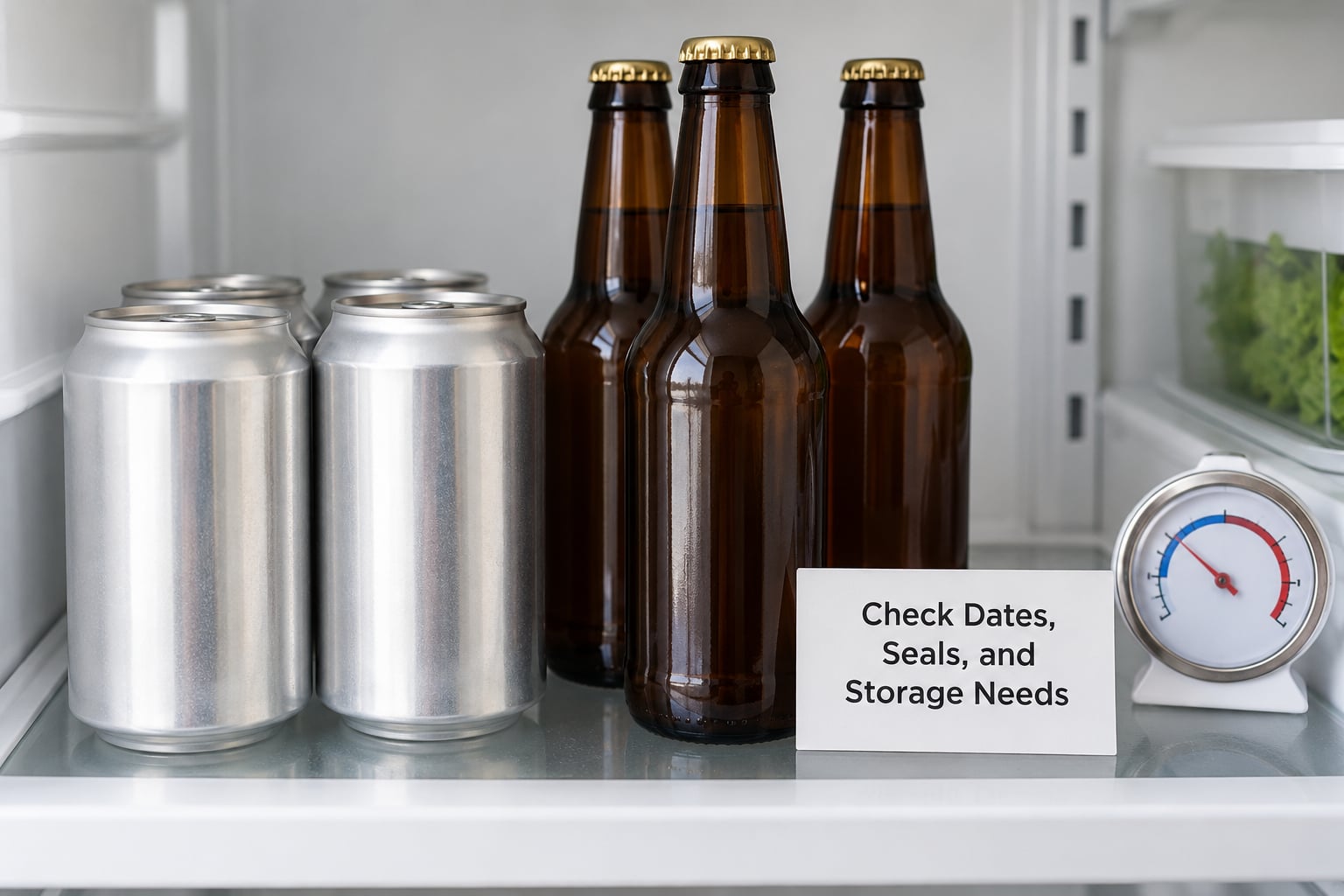
Read the package date when you bring something home, not six months later. Most beer is at its best well before its printed date, and the date is a rough guide rather than a spoilage deadline.
Reject dented cans, swollen or leaking containers, and any bottle with a broken cap or a wet ring on the neck. Storage does not rescue a bad seal, and oxygen enters through the gap long before the fridge is involved.
Store everything the way the package says. Cans and standard bottles do best upright, and keeping them upright avoids the larger surface contact that speeds oxidation in a bottle lying on its side.
Some beer wants a different home. Stouts, bakers, and higher-alcohol styles are fine in a dark cellar for months, which frees your coldest shelf for IPAs and anything you want to drink this week.
5. Organize, Label, and Rotate Your Stock
Use a simple first-in-first-out system. New purchases go to the back, older stock moves to the front, and you always reach for whatever you bought first. That single habit is what stops forgotten bottles from turning into oxidized surprises.
Write the purchase date on the cap or the neck label with a marker. If your beer came from a local brewery with a package date, write that date instead so you know how fresh it was on arrival.
Assign shelves by style the way collectors do: stouts together, hazy beers together, bombers and large bottles on the shelf with the most vertical clearance. Heavy glass goes low, and the door shelves hold mixers, seltzer, and glassware instead of bottles you want to keep cold.
A full fridge that stays usable means every can has its label visible from the door and nothing is wedged behind a taller bottle.
Can dispensers are the one accessory most worth adding, because they turn a stack into a queue and every can rolls to the front where you see it. Past that, a marker and a cheap thermometer solve most of the problems people complain about. The top of a mini fridge is wasted space if you leave it bare, so set a tray up there for empty bottles waiting to be recycled, or park the next stack of six-packs on top instead of carrying it to the kitchen cabinet.
Common Mistakes
Overfilling the fridge. Packed shelves block airflow and hide what you own. Keep 20 percent open and you will find the bottle you wanted without moving everything first.
Buying one style over and over. It is cheaper per can and boring to drink. Add one unfamiliar style with every restock and drop the one nobody finished last time.
Buying too much of a perishable batch. Buy mixed packs of two 4-packs instead of a full case, especially for sours and anything seasonal. A half-finished case is how you end up with the same shelfie twice.
Ignoring temperature swings. A fridge that cycles warm lets beer warm up and cools it again, and light through a glass door does the same kind of damage. Park the fridge out of direct sun and check the thermometer monthly.
Treating the best-by date like an expiration date. Most beer tastes fine well past it if it was sealed and stored cold. Use the date to order your drinking, not to throw beer away.
Quick tip: photograph your fridge before a restock. It takes ten seconds and tells you what you already have, which is the fastest way to stop buying duplicates.
Frequently Asked Questions
Should I store beer in cans or bottles in a home fridge?
Cans are easier to stock, stack, and see at a glance, and their sealed lids limit light exposure. Bottles, especially 750 mL bottles, are worth keeping when a style is worth sharing or aging, but they need a shelf with real vertical clearance. Store cans and standard bottles upright either way, and keep the oldest purchases at the front.
How many beers should I keep stocked for one person?
For one person, aim for roughly 30 to 50 beers across four to six styles. A three-shelf mini fridge holds far more than that, so freshness matters more than capacity. One 12-pack of a lager, one of an IPA, a wheat beer, a dark beer, a couple of sour 4-packs, and a few seasonal singles is a solid month of supply.
How long does beer stay fresh in a refrigerator?
Sealed beer stored continuously cold stays drinkable for a long time, usually six to twelve months depending on the style, and the package date is a rough guide rather than a spoilage deadline. IPAs and hop-forward beers fade fastest in aroma, while stouts, bakers, and higher-alcohol styles hold up far longer. Light exposure and oxidation matter more than the date itself.
What temperature should a beer fridge be set to?
Around 35 to 38 degrees is the range most beer people settle on, because a standard kitchen fridge often runs colder at 38 to 40 and dulls hop aroma. Check with a refrigerator thermometer instead of trusting the dial, and avoid letting the temperature swing warm and cold repeatedly. Home brewers often add a temperature controller for this reason.
Can I use a regular kitchen refrigerator for beer?
Yes, and most people start there. Give the beer a dedicated shelf so it is not pushed behind leftovers, keep it away from the door where the temperature moves most, and use the door shelves for mixers and glassware instead. If you also ferment at home, a separate mini fridge keeps a stable temperature from disturbing both jobs.
How should I organize mixed beer in a small fridge?
Group by style on single shelves, keep the oldest purchases at the front, and mark each purchase with a date. Use a can dispenser if you buy mostly cans so nothing falls to the back and gets forgotten. Large bottles go on the shelf with the most vertical space and toward the bottom for stability.
Here is what to buy first: a 12-pack of a lager you like, a 12-pack of a hoppy beer, a couple of sour 4-packs, a dark beer, and a few non-alcoholic options. Set the fridge to around 35 to 38 degrees, put new purchases at the back, and keep one shelf open for the next restock.