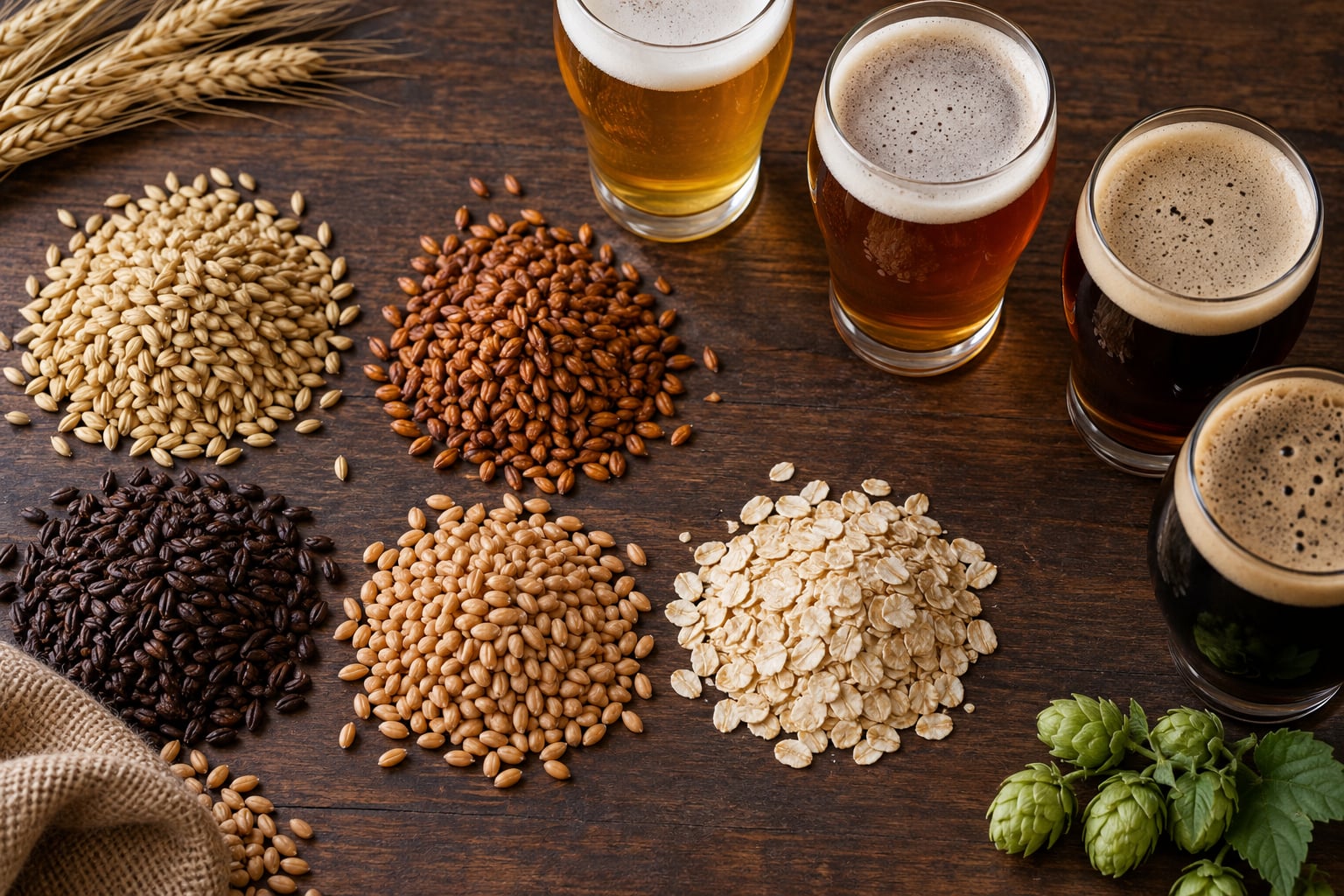
What malt does in beer flavor comes down to five jobs: supplying fermentable sugar, giving body and mouthfeel, setting color, holding up the foam, and delivering the grain-derived flavors that everything else layers on top of. In practice that means bread crust in a pilsner, biscuit in an English bitter, caramel sweetness in a helles, and coffee and chocolate in a stout.
Table of Contents
- What Malt Does in Beer Flavor?
- What malt actually is
- How Does Malt Create Beer’s Sweetness and Body?
- What Do Different Malt Colors Taste Like?
- What Flavor Does Each Type of Malt Add?
- Base malt versus specialty malt
- How Does Kilning Change Malt Flavor?
- Does More Malt Make Beer Taste Stronger?
- How Can You Taste Malt More Clearly?
- Hot steep method for tasting a single malt
- Separating malt from everything else in the glass
- Frequently Asked Questions
- Is maltiness the same as sweetness in beer?
- What type of malt makes beer taste sweet?
- Does dark malt make a beer stronger?
- Why does beer taste more bitter or grainy than expected?
- Can wheat and oats replace some barley malt?
- What malt is best for beginners making an amber ale?
- Conclusion
What Malt Does in Beer Flavor?
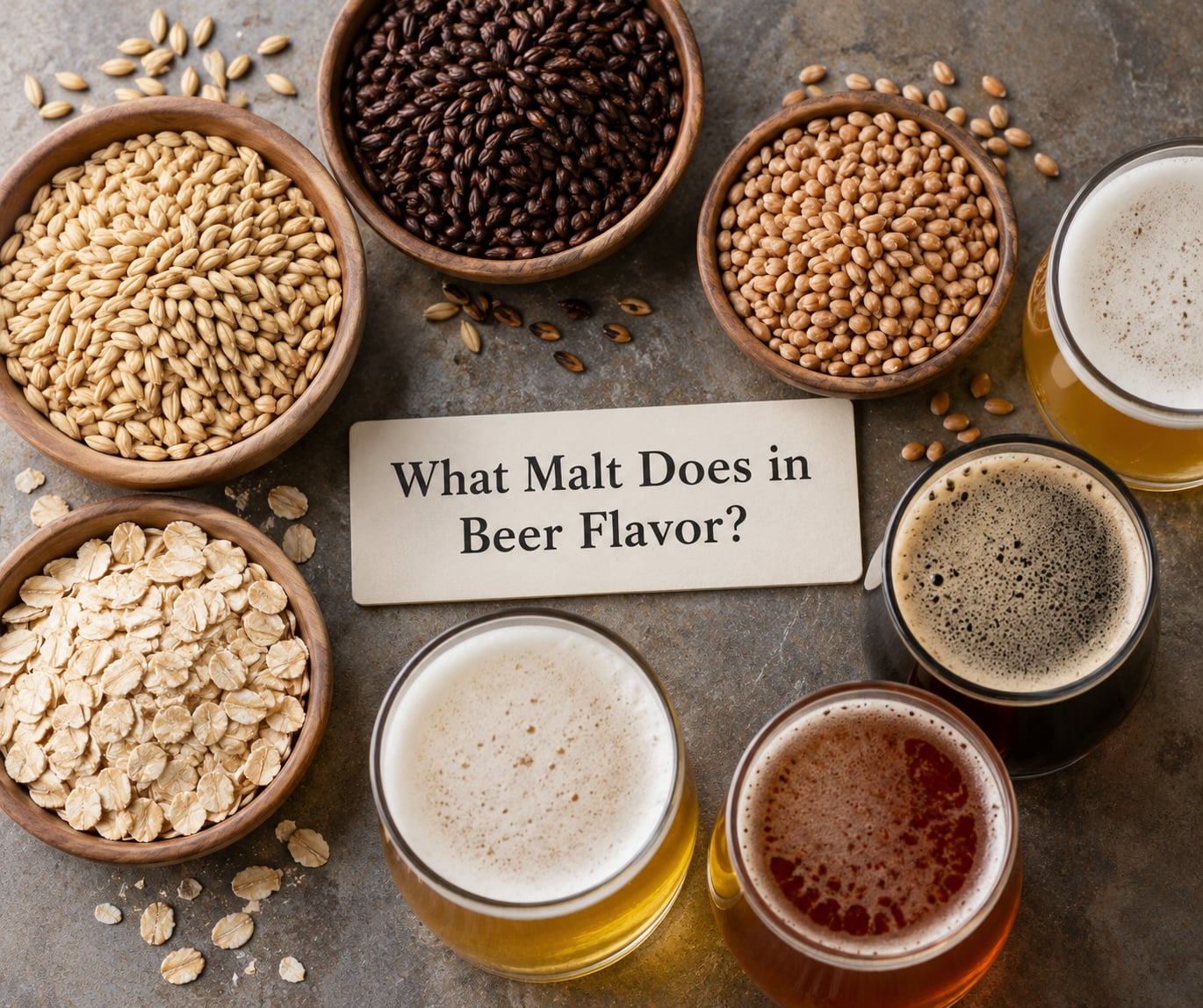
Worth saying up front: malt does not work alone. Hops add bitterness and aroma, yeast adds its own esters and character, water shifts the balance, and the way a beer is brewed changes everything. But roughly 95 percent of the fermentable sugar in beer comes from malt, which is why it is the structural backbone rather than a supporting flavor.
What malt actually is
Malt is barley or wheat that has been soaked in water, allowed to germinate, and then dried in a kiln. Germination wakes up enzymes inside the grain that convert starch into sugar, and kilning stops that process while building the bread, biscuit, caramel and roast notes you taste later.
That is the whole trick. A raw grain kernel is mostly inedible starch with no flavor worth speaking of and no sugar a yeast can use. Malting converts it into something fermentable and something flavorful at the same time.
How Does Malt Create Beer’s Sweetness and Body?
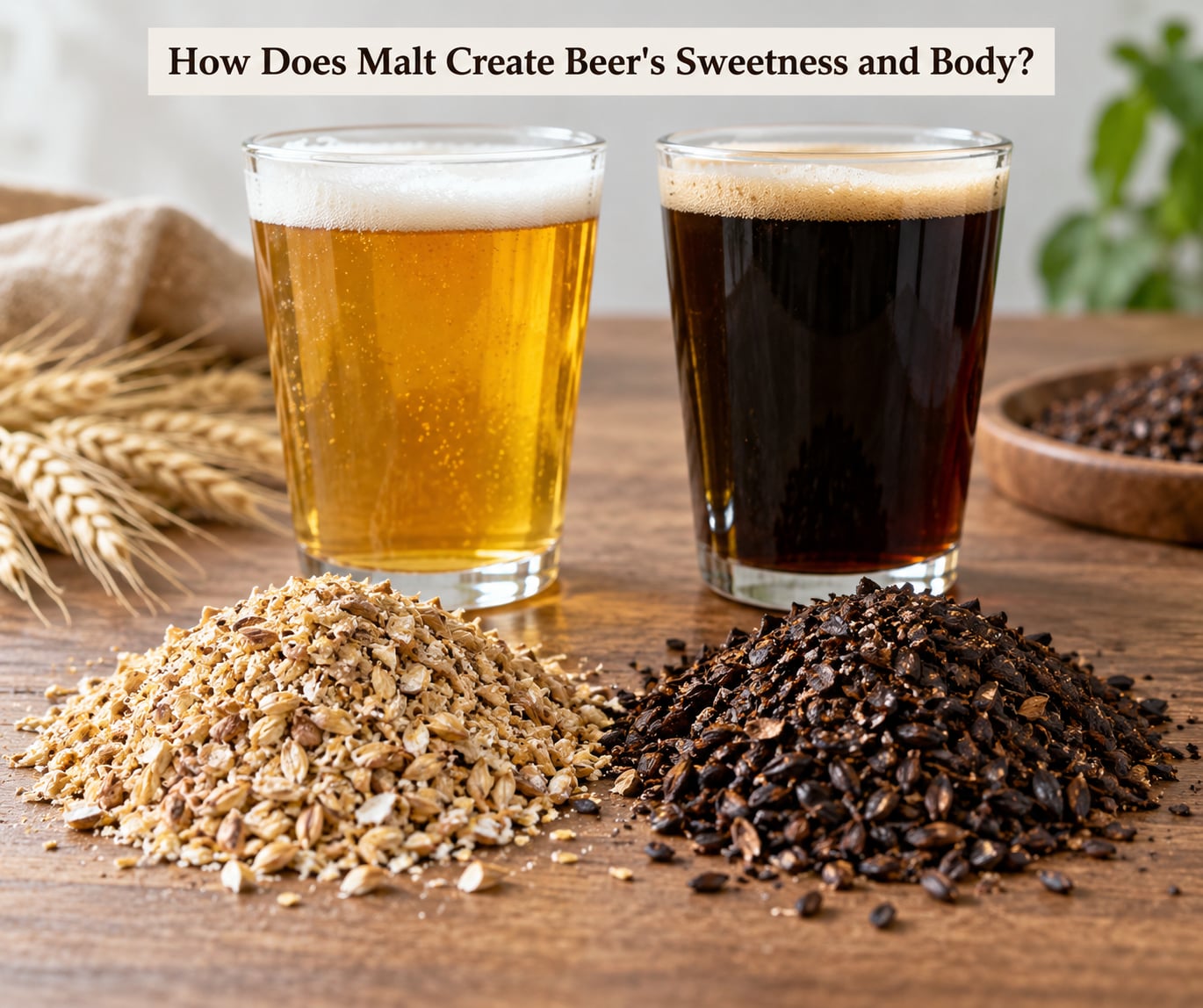
Malt supplies the sugars yeast turns into alcohol, but it also leaves behind unfermentable starch fragments called dextrins. Those dextrins are what make a beer feel thick on the tongue rather than thin, and they are the main reason body and sweetness feel linked even though they are different things.
Think of it as two separate outcomes. Sugar that gets fermented becomes alcohol and leaves no sweetness behind. Sugar and dextrin that stay behind give you a beer that tastes rounder, fuller, and sweeter to the palate. A crisp German pilsner is highly fermentable, so almost everything is converted and the finish is dry. A dunkel has a bit more unfermented character left in it, so it reads as sweet even though it is not literally loaded with sugar.
Protein matters too. Malt-derived proteins and long-chain polysaccharides are what a pint of stout holds onto, giving it that dense, creamy, clinging quality that a thin lager simply does not have.
Which is why a beer that tastes too sweet is usually not too sugary. It is too attenuative to have been, too cool on the ferment, or it got too much residual dextrin from the grain bill. Homebrewers on r/Homebrewing trace that failure back to caramel malt again and again, and cutting it is usually the first fix they try.
What Do Different Malt Colors Taste Like?
Color in beer is measured on a scale of degrees Lovibond, and the related scales SRM and EBC are conversions of the same number. One degree Lovibond is a very small amount of color in a large volume of wort, so pale malts measure in the low single digits and roasted malts run into the hundreds.
Color itself does not taste like anything. It is a byproduct of the same heat reactions that create flavor, which is why the two track each other so closely and why a darker beer is not automatically a more interesting one. A well-made dark lager and a clumsy one can be the same color and taste nothing alike.
| Color range | Color in the glass | Typical malts used |
|---|---|---|
| 1 to 4 SRM | Pale straw to gold | Pilsner, pale ale, wheat malt |
| 5 to 10 SRM | Gold to deep gold | Vienna, Munich, Cara-Pils, crystal 20L |
| 10 to 18 SRM | Amber to copper | Munich, crystal 40L to 80L, amber, biscuit |
| 20 to 35 SRM | Mahogany to deep brown | Munich plus crystal 80L to 150L, brown malt, honey malt |
| 35 SRM and up | Near-black | Roasted barley, chocolate malt, black malt |
If you want to read color as a hint rather than a promise, a good shorthand is this: the light range is where you find grain and honey, the middle is where caramel and toast live, and the dark end is where roast, coffee and smoke take over.
What Flavor Does Each Type of Malt Add?
Almost every beer is built from a base malt that provides the sugar and the bulk, plus smaller amounts of specialty malts added for color and flavor. The base is the floor; the specialty malts are the accents. Get the ratio backwards and the accents start shouting over everything else.
The single most useful thing a brewer learns is that specialty malts are strong. A few percent is plenty. The table below gives the flavor, the typical ceiling on how much of the grain bill it should occupy, and where you are most likely to taste it.
| Malt | Color (Lovibond) | Flavor notes | Typical max share of grain bill | Styles that use it |
|---|---|---|---|---|
| Pilsner malt | 1.5 to 2.5 | Clean, faintly sweet, bready | Majority of the bill | Pilsner, helles, bock, Oktoberfest |
| Maris Otter | 3 to 5 | Honey, biscuit, nutty, rich grain | Majority of the bill | English bitter, ESB, brown ale, old ale |
| Vienna malt | 3 to 5 | Toast, bread crust, light caramel | Up to 80 percent | Vienna lager, amber lager, bock |
| Munich malt | 6 to 9 | Full-bodied, sweet bread, honey, heavy toast | 20 to 80 percent | Dunkel, Oktoberfest, doppelbock, hellesbock |
| Wheat malt | 2 to 4 | Soft grain, bread, hay, slight sweetness | 30 to 70 percent | Hefeweizen, dunkelweizen, witbier |
| Cara-Pils | 2 to 6 | Honey, caramel, smooth, round body | 10 to 25 percent | Pale lager, bock, Munich-style lager |
| Caramel or crystal malt | 10L to 150L | Toffee and burnt sugar at 10L to 40L, maple and molasses at 80L to 150L | 10 to 20 percent, light varieties more | Ambers, Scottish ales, English browns, porters |
| Biscuit or Victory malt | 4 to 7 | Crusty biscuit, toasted bread, low diastatic power | 5 to 15 percent | Dunkel, Bohemian lager, English ale, Belgian dubbel |
| Amber malt | 20 to 35 | Toasted bread, nutty, dry finish | 10 to 20 percent | English brown ale, porter, bock |
| Brown malt | 60 to 100 | Intense nutty, dry toast, very dark | Under 10 percent | Old ale, Scotch ale, strong dark ales |
| Chocolate malt | 300 to 400 | Chocolate, cocoa, coffee, dark roast | Under 10 percent, 3 to 5 typical | Porter, stout, brown ale |
| Roasted barley | 400 to 500 | Coffee, charcoal, dry roast, smoky | 3 to 10 percent | Porter, dry stout, schwarzbier |
| Black malt | 500 to 800 | Heavy char, ash, burnt bitterness | Under 5 percent, 1 to 3 typical | Stout, black IPA, imperial stout |
| Smoked or peat-smoked malt | 3 to 6 | Smoke, leather, earth, campfire | 5 to 15 percent | Rauchbier, smoked porter, Bamberg rauch malt |
Base malt versus specialty malt
A base malt is kilned gently. It keeps its enzymes intact, converts well in the mash, and contributes sugar and body without much personality of its own. A specialty malt is treated harder, contributes a fraction of the sugar, and exists almost entirely for flavor and color.
That distinction explains a common surprise. You can build a Munich dunkel, a schwarzbier or a doppelbock with zero crystal malt, using mostly Pilsner and Munich, and the maltiness still comes through strongly because it is coming from the base. Several brewers on r/Homebrewing build exactly that bill for exactly that reason.
Adjuncts sit outside the malt world entirely. Flaked corn, rice, flaked oats and candi sugar change texture, gravity or crispness rather than adding grain flavor. Oatmeal, however, is the interesting exception: it adds no flavor but a lot of body, which is why an oatmeal stout tastes creamier than a stout built only from barley.
How Does Kilning Change Malt Flavor?
Flavor is a byproduct of heat applied to damp grain, and the malting process controls how much of it you get. The sequence goes: steeping, germination, kilning, cooling, storage.
Steeping soaks the grain and wakes up dormant enzymes. Germination runs for roughly three to five days, the enzymes convert starch to sugar, and the grain is left soft and modified. Kilning then does two jobs at once: it halts germination and drops moisture content, and it applies the heat that creates flavor.
Below about 160 degrees Fahrenheit you are simply drying, and a pale base malt comes out tasting of bread and honey. Push higher and the Maillard reaction kicks in, a chemical process between amino acids and sugars that produces bread crust, toast, caramel and nutty notes. Go higher still and caramelization takes over, where sugars break down into toffee, molasses and burnt sugar flavors. At the extreme, you get charred, coffee-like, almost acridine compounds from roast.
The simplest way to picture it is as a ladder:
- Bread and honey, the pale base malts
- Toast and crust, Vienna and Munich
- Biscuit, from Victory and similar kilned malts
- Caramel and toffee, the light crystal malts
- Dark molasses and raisin, high crystal and honey malts
- Coffee and chocolate, chocolate malt and roasted barley
- Charcoal, black malt, the very top of the ladder
Darker is not better. Every step up adds color and a new note, but the top of the ladder is genuinely unpleasant territory. Black malt and heavy roast also bring pyrazine compounds, which is where the harsh, burnt bitterness people associate with overdone stout comes from. Past a few percent, a roast malt stops reading as coffee and starts reading as ash.
Does More Malt Make Beer Taste Stronger?
No, not in the way most people mean it. More malt raises the original gravity, and more fermentable sugar does mean more alcohol, but that is an arithmetic relationship, not a flavor one. Strength and heft are separate axes, and plenty of strong beers taste thin while plenty of sessionable ones feel substantial.
What determines alcohol is how much of the sugar the yeast actually converts. A well-attenuating English strain at a warm fermentation temperature will chew through nearly everything, giving you a strong-looking wort that finishes bone dry. A cold-fermented lager yeast on a grist loaded with Munich and crystal can leave plenty behind, giving you a beer that tastes sweet and full at a lower number.
What determines body and sweetness is everything the yeast did not take. That is dextrins, unfermented protein, and the amount of caramel or Munich in the bill. Add malt to strengthen a beer and you also change its mouthfeel, and if the original gravity came from the wrong malts you may just be making a heavier, sweeter version of a beer you did not like.
Adjusting gravity downward is often the cleaner fix. A lighter bill of the same malts keeps the flavor you liked and lowers the alcohol, which usually makes the beer more drinkable rather than less.
How Can You Taste Malt More Clearly?
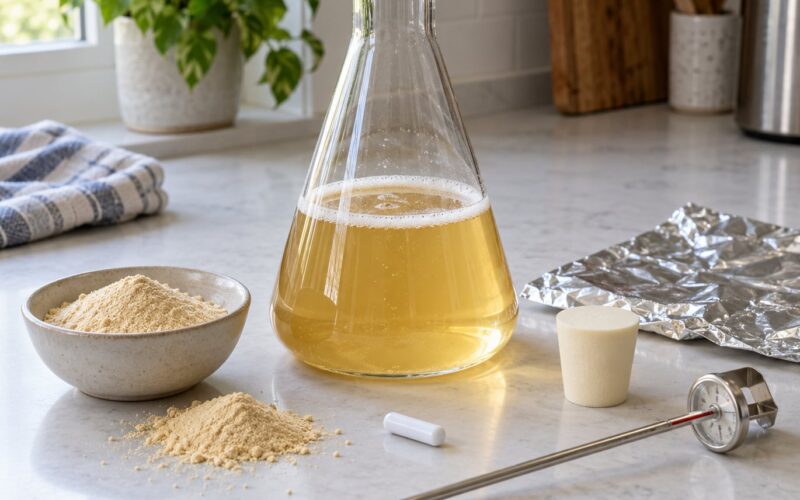
You do not need a brewery to hear what a malt sounds like. A hot steep gives you a concentrated, undiluted sample of a single malt in about half an hour, and it is the fastest way to build a flavor vocabulary you can trust.
Hot steep method for tasting a single malt
Crush roughly 100 grams of the malt you are curious about into coarse powder. Put it in a mesh bag or a clean hop bag so loose husks stay out of your cup.
Bring about a liter of water to a boil, then pour it over the grain. Keep it around 150 to 160 degrees Fahrenheit and let it sit for 20 to 30 minutes. Do not boil it after steeping; you are after the clean flavors of the grain, not a kettle caramelization.
Pour off a small amount into a cup, cool it to something you can drink, and taste. Put a plain base malt in the same setup at the same time so you have a control. The difference between them is the malt flavor you are trying to hear.
A spoon from the bag works too, if you have the patience to chew raw grain and a strong stomach for it. Chewing a roasted malt next to a pale one tells you the coffee and charcoal notes faster than any reference chart.
Separating malt from everything else in the glass
When you taste beer, isolate malt from the other variables before you decide what a grain bill needs adjusting. Start at the aroma rather than the sip, where hops and yeast are loudest, and note whether what you smell is grain, roast, citrus, floral or funk.
Sip, then move to the back of your tongue, where bitterness and roast live. That is where you find coffee and chocolate. The mid-palate and finish tell you about body: a full, syrupy middle and a drying finish point to dextrins and unfermented sugar, while a thin, watery finish means the grain bill was too fermentable or the mash too hot.
Carbonation flattens aroma and sharpens bitterness, so pour a heavy glass down the side and compare it to a straight pour of the same beer. If the flavor only shows up in one of them, the malts in that bill are probably closer to the edge of their range.
Finally, translate the note on the tap list back to the malt. Biscuit means Victory or a similar kilned malt. Caramel sweetness usually means crystal malt, and more of it than the brewer intended is a common outcome. Toasty and nutty points to Vienna, Munich or Maris Otter. Coffee and chocolate mean chocolate malt, roasted barley or black malt, and the charcoal edge is black malt specifically.
Frequently Asked Questions
Is maltiness the same as sweetness in beer?
Not quite. Maltiness is the general grain character you get from base malts: bread, biscuit, toast, and nuttiness. Sweetness is a perception created by unfermented sugars, dextrins, and alcohol warmth, which is why a doppelbock can be very malty and still fairly low in residual sugar. A dry-finishing beer can taste malty without tasting sweet at all.
What type of malt makes beer taste sweet?
Caramel and crystal malts are the usual answer, especially the darker 60L to 150L varieties that add toffee and dark caramel flavors, and honey malt for a sweeter, honeyed character. Munich malt adds a rounder, sweeter impression because it carries more unfermentable character. Light crystal malts at 10L to 40L do the same job more gently, and are the safer starting point.
Does dark malt make a beer stronger?
Only indirectly. Dark malts contribute very little fermentable sugar, so adding black malt or chocolate malt barely moves your original gravity and therefore barely changes your alcohol by volume. What they do change is flavor, color, and body, often adding a dry, heavy roast impression that people read as strength. If you want more alcohol, raise the gravity with a base malt instead.
Why does beer taste more bitter or grainy than expected?
Two different problems wearing the same coat. A harsh, acrid bitterness usually comes from too much black malt or roasted barley, which contribute sharp pyrazine compounds that read as burnt and ashy. A dull, papery graininess more often comes from a beer that stayed green or undried, or from a mash that never converted properly. Roast bitterness fades in the glass; graininess usually does not.
Can wheat and oats replace some barley malt?
Partially, and they behave differently. Wheat malt is a real malt and can carry a meaningful share of a grain bill, commonly around 30 to 70 percent, adding a soft grainy sweetness and a fuller body, which is why it dominates wheat beers. Oats are not malt at all; they contribute very little flavor or sugar, only body and a silky, creamy mouthfeel, and they can bring a mild cereal note.
What malt is best for beginners making an amber ale?
Start with a pale or Maris Otter base for the bulk, then add a light crystal malt at 60 to 80 Lovibond for color and caramel sweetness. Keep that crystal share around 10 to 15 percent of the grain bill and add a small amount of toasted malt, at 3 to 5 percent, for a little depth. That combination lands close to a classic amber without any of the common failure modes.
Conclusion
What malt does in beer flavor is more than a flavor note: it supplies the sugar, the body, the color and the foam stability, and it anchors the entire grain-derived character of the glass. Once you know that, the rest gets simple.
Start by naming the style you actually want to drink, then build a grain bill that supports it rather than treating malt as one all-purpose ingredient. A base malt for the structure, a restrained percentage of one or two specialty malts for the accent, and a hot steep in a cup before you commit the whole bag.