Yeast is the ingredient that makes beer beer. A single-celled fungus added to wort, it eats the sugar extracted from grain and converts it into alcohol, carbon dioxide gas, and a set of aroma and flavor compounds that no other ingredient produces. Everything that makes one beer taste like a hazy tropical IPA and another taste like a crisp pilsner comes down to which yeast was used and how it was handled.
For drinkers, that means the yeast explains most of what is in the glass. For new homebrewers, it matters even more: yeast choice, pitching rate, and fermentation temperature cause more failed batches than any other variable.
Table of Contents
- What Yeast Does in Beer During Fermentation
- Yeast’s Main Jobs at a Glance
- How Yeast Creates Alcohol and Carbonation
- How Yeast Changes Beer’s Flavor and Aroma
- What Yeast Does in Beer Styles
- Yeast Temperature, Pitching, and Fermentation Control
- Why More Yeast Does Not Always Make Better Beer
- How to Tell When Yeast Has Finished Fermentation
- Common Yeast Problems and What They Mean
- Frequently Asked Questions
- Is yeast alive when beer is bottled?
- Can the same yeast be used to brew beer more than once?
- Does adding more yeast make beer ferment faster?
- Why does my beer smell like vinegar or nail-polish remover?
- What is the difference between brewer’s yeast and baker’s yeast?
- Can too much yeast make beer unhealthy?
- Conclusion
What Yeast Does in Beer During Fermentation
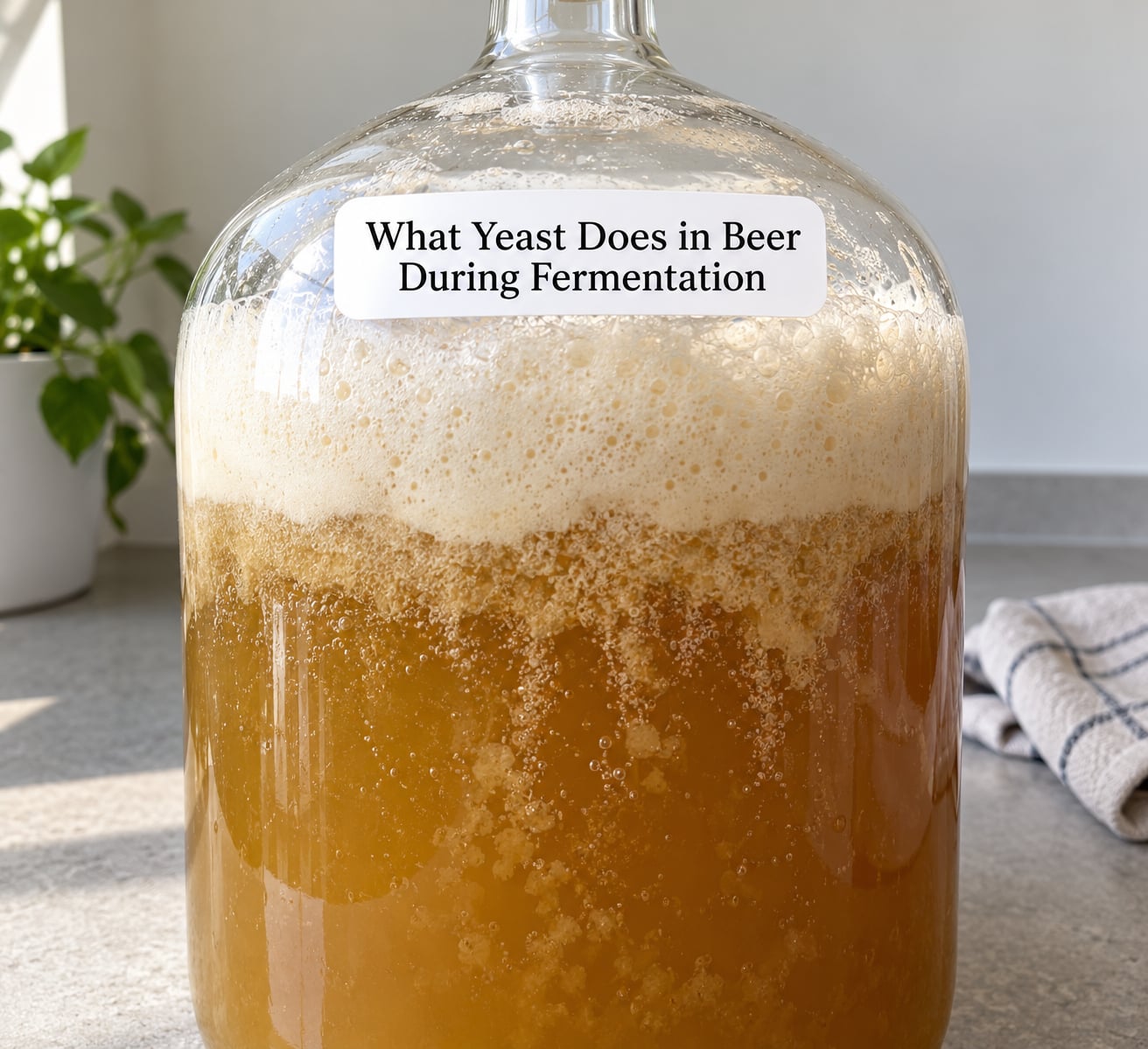
Yeast does three things at once, and doing them is the entire job. It consumes the fermentable sugars in wort, it reproduces while it works, and it excretes the byproducts that become aroma and flavor.
Timing matters, because yeast is not in the kettle. It gets added after the wort is boiled and chilled, which is the step brewers call pitching. The yeast then works for anywhere from a few days to a few months before the beer is conditioned, packaged, and ready to drink.
Two species cover almost all commercial beer. Ales use Saccharomyces cerevisiae, which ferments warm and rises. Lagers use Saccharomyces pastorianus, a hybrid that ferments cool and settles to the bottom. That single difference accounts for a large share of what people mean when they say ale versus lager.
Yeast’s Main Jobs at a Glance
Worth keeping straight before the detail: yeast is the only ingredient that creates alcohol, and the only one that creates natural carbonation. Water, malted grain, and hops all contribute, and none of them ferment anything.
| Job | What yeast does | What you notice in the glass |
|---|---|---|
| Alcohol production | Converts fermentable wort sugars into ethanol | Strength, warmth, body |
| Carbonation | Produces carbon dioxide as a byproduct | Fizz, either bottle-conditioned or force-carbonated |
| Flavor and aroma | Excretes esters, phenols, and higher alcohols | Fruit, spice, clove, banana, citrus, funk |
| Sweetness and dryness | Determines how much sugar it leaves behind | Dry finish, or a sweet, heavy body |
A quick contrast worth remembering: water makes up roughly 90 percent of beer by volume. Yeast is a tiny fraction of the glass and does the single most transformative job in it.
How Yeast Creates Alcohol and Carbonation
The chemistry is complicated; the version that matters is four steps.
- It arrives hungry. A healthy pitched yeast cell needs sterols and fatty acids that it cannot make itself, and it gets them from dissolved oxygen in the wort. This is why brewers splash wort into the fermenter or inject pure oxygen.
- It reproduces. With oxygen in place, the cell divides, building biomass and topping up its sterol reserves. This phase can last a day or two and is often mistaken for the start of fermentation.
- It switches off oxygen and starts converting sugar. Yeast is anaerobic, meaning it does not need oxygen to work. It now breaks sugar down into ethanol and carbon dioxide, and the liquid that was sweet wort becomes beer.
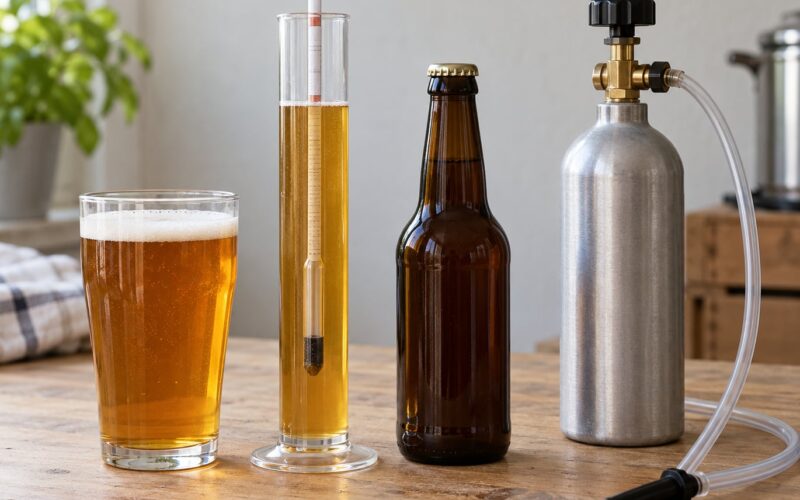
- The gas goes somewhere. In a closed fermenter, the carbon dioxide stays dissolved under pressure and is later used to force-carbonate. In a bottle with priming sugar, a little yeast wakes up, makes a small amount of gas, and the beer carbonates itself over weeks.
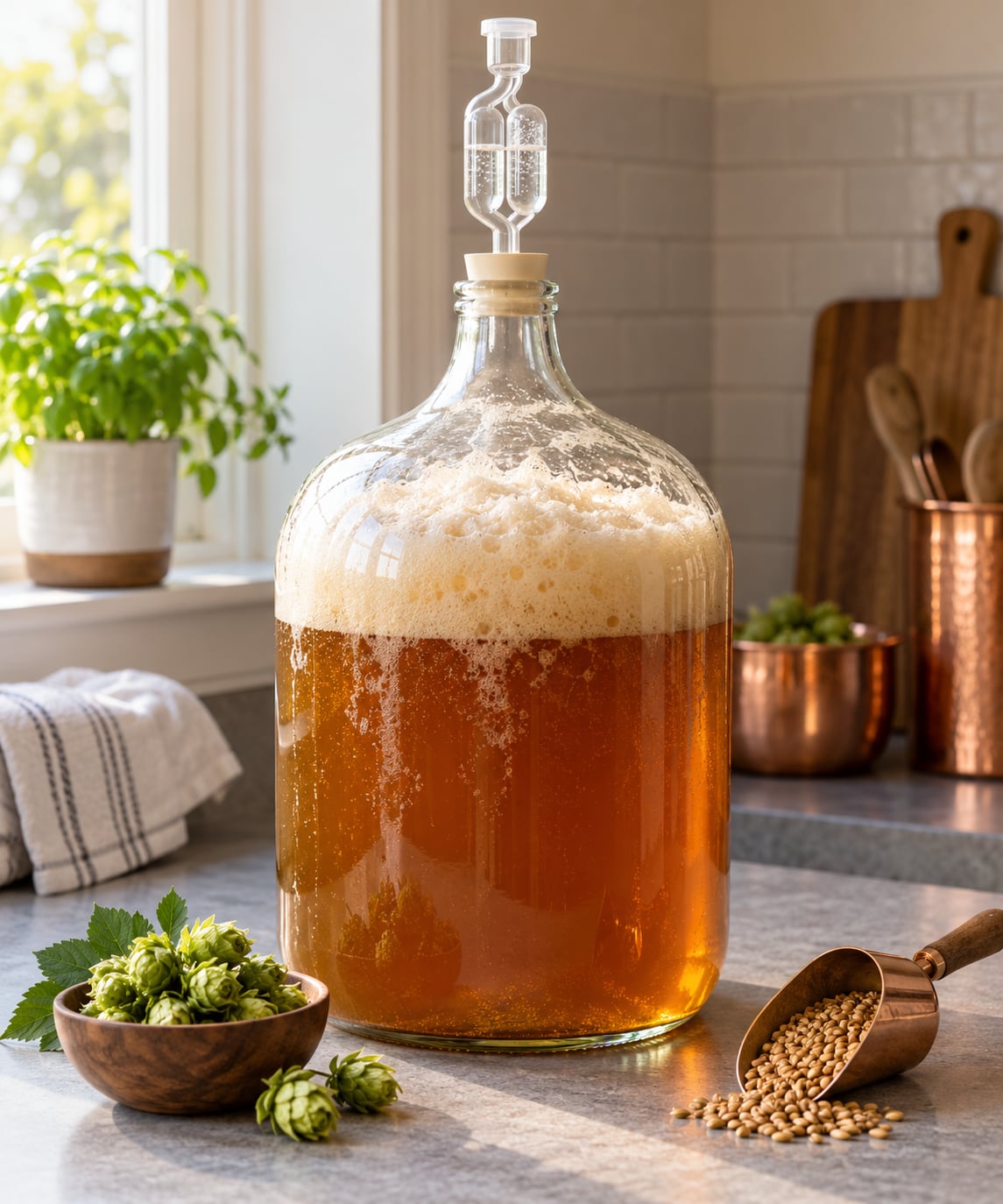
That gas has to go somewhere. Seal a fermenter too early and pressure builds up, which is why most brewers leave an airlock on the first days of fermentation.
How Yeast Changes Beer’s Flavor and Aroma
Alcohol and carbonation are the obvious outputs, but the aroma is where yeast earns its reputation. The compounds below are what a trained taster is actually smelling, and every one of them is made by the yeast rather than the grain or the hops.
| Compound | Aroma or flavor | Where you taste it |
|---|---|---|
| Isoamyl acetate | Banana, pear | Weizenbier, many Belgian ales |
| Ethyl acetate | Apple, tart berry | English ales, dry-hopped pale ales at warm temperatures |
| Ethyl hexanoate | Pineapple, tropical fruit | Hazy IPA, American ale strains |
| 4-ethylphenol | Clove, white pepper | German wheat beer, Belgian dubbel and tripel |
| Diacetyl | Butter, butterscotch | An unwanted note when fermentation is cut short |
| Acetaldehyde | Green apple, cut grass | Raw green apple in an underfermented young beer |
| Hydrogen sulfide | Rotten eggs, struck match | Early in fermentation, usually fades out |
| Higher alcohols | Solvent, heat, pepper | Present in small amounts in most beer |
Esters and phenols are the big two groups. Esters read as fruit, phenols read as spice and clove, and how much of each a yeast makes depends on its genetics and on how warm the fermentation ran.
Newer work has turned up another role: some strains release thiols, the same pungent compounds found in hops, during fermentation. Certain yeast characteristically convert hop-derived precursors into that grapefruit-and-passionfruit note, which is why a brewery can get hop aroma from a beer with barely any hops in it.
What Yeast Does in Beer Styles
Ale yeast and lager yeast are the two poles, and almost every other brewing yeast is a variation on one of them.
| Ale yeast | Lager yeast | |
|---|---|---|
| Species | Saccharomyces cerevisiae | Saccharomyces pastorianus |
| Fermentation | Top-fermenting | Bottom-fermenting |
| Temperature | About 60-75F (16-24C) | About 45-55F (7-13C) |
| Attenuation | Medium to high | High, clean, very dry |
| Typical aroma | Fruity esters, sometimes clove | Clean, faintly sweet, bready |
| Flocculation | Varies widely by strain | Usually drops bright and fast |
Below those two, specialty strains do specific jobs. Brettanomyces, a wild yeast, is used deliberately to add barnyard, leather, and overripe fruit; it is the funk in many farmhouse-style sours. Kveik strains, originally isolated from Norwegian distilleries, ferment hot, near 95F (35C), in under a day, and give a beer its character in the yeast rather than the hops.
Not all beer uses brewer’s yeast at all. Sour and mixed-culture beers ferment with wild yeasts and bacteria alongside, and the bacteria make the lactic acidity that a clean ale never has.
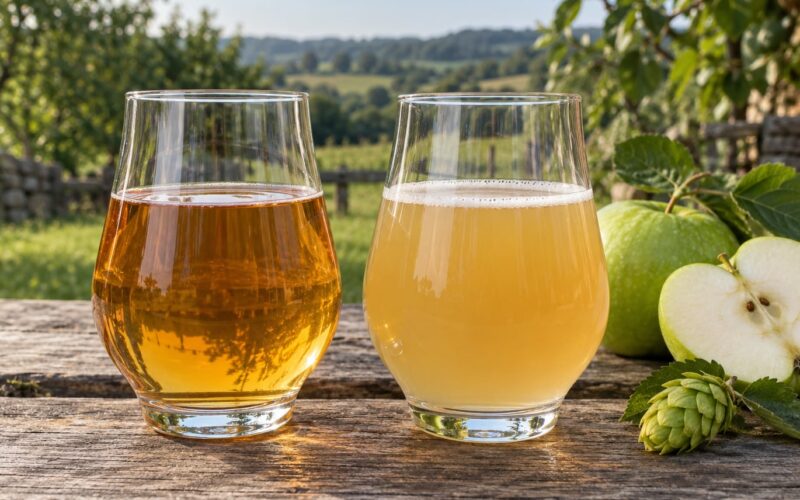
The clearest proof that yeast choice is not a detail is the split-batch experiment homebrewers run on a weekend: one wort, two yeast. Split an Altbier wort and pitch one half with an ale strain and the other with a lager strain at 18-23C (64-73F). The lager half comes out crisp, clean, and clear. The ale half is fruitier, sweeter, fuller in the mouth, and slightly hazy. Same wort, same hops, two different beers.
Yeast Temperature, Pitching, and Fermentation Control
Temperature is the dial most homebrewers get wrong, and published strain ranges are often 15F wide, which leaves plenty of room to guess. The rule of thumb: the same yeast pitched into the same wort at different temperatures makes measurably different beer.
Warm ferments push ester production up, which is a deliberate technique when someone wants more fruit in an otherwise neutral American ale. It is an accident when a pilsner spontaneously develops banana notes. Cool ferments are cleaner and slower, which suits lager and delicate styles but leaves a thin, underattenuated body if the yeast is rushed.
Pitching a vigorous, healthy sample helps for a simple reason. Yeast that has been rehydrated or grown up in a starter arrives with full sterol reserves and enough cell count to handle the sugar load, so it finishes cleanly and stays well below the flavors that come from stressed yeast. Dry yeast sprinkled straight onto hot wort is the roughest way to start, and it kills a portion of the cells on contact.
Ferment too cool and the yeast stalls before the gravity drops far enough. Too warm and it makes off-flavors along with alcohol. Too slow, often from an infection, and the beer develops a sharp, sour, solvent edge that no yeast intends.
Why More Yeast Does Not Always Make Better Beer
Homebrewers tend to worry about pitching rate in both directions, and the folklore around it is mixed. Experienced brewers on HomebrewTalk and r/Homebrewing generally argue that overpitching is not the disaster people think it is, while underpitching and a warm, slow ferment genuinely are.
What actually matters is the ratio of yeast cells to fermentable sugar, not the raw number of packets in the bucket. Double the yeast on a normal-strength batch and you usually get a faster start and little else. Double it on a high-gravity or massively hopped wort and the extra cells can help. Yeast nutrient supplements are a similar story: many experienced brewers maintain that a fresh pack already carries enough zinc for ordinary wort, and nutrients earn their place in high-gravity brewing rather than every batch.
Dry versus liquid yeast is another long forum argument with no clean winner. Dry yeast is shelf-stable, cheap, and often ferments fast and clean. Liquid yeast arrives with more character and a wider range of attenuations. Both work.
On the health angle, plenty of people ask whether beer yeast is worth taking as a supplement. Brewer’s yeast is a B-vitamin and protein source, and it is sold for that reason. Yeast that has been in finished beer is mostly inactive by the time you drink it, so a glass is not a supplement.
How to Tell When Yeast Has Finished Fermentation
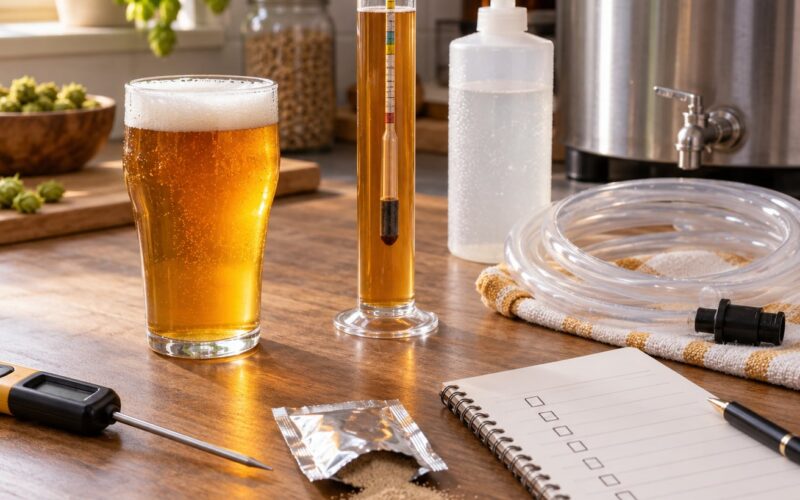
The reliable test is a stable gravity reading, taken two days apart. If the number has not moved, fermentation is done, whatever the fermenter looks like.
Three signs usually show up first. Surface activity slows, then stops, and the krausen settles. A hydrometer that used to swing wildly starts returning the same number every day. And the yeast begins to drop, either to the bottom or to the sidewall, depending on the strain’s flocculation.
Appearance alone is not proof. A stuck fermentation can look calm and tidy, and a vigorous one can look alarming. Check the gravity.
Common Yeast Problems and What They Mean
Most off-flavors get blamed on the yeast, and some deserve it. A few do not, and blaming the wrong ingredient costs a homebrewer a whole batch.
| Symptom | Usual cause | What to change |
|---|---|---|
| Buttery or butterscotch | Diacetyl from an early cut or skipped diacetyl rest | Let the beer finish fully, or raise temperature briefly at the end |
| Green apple or cut grass | Acetaldehyde from an underfermented, young beer | Give it more time; it fades as fermentation completes |
| Rotten eggs | Hydrogen sulfide early in fermentation | Usually harmless, let it ferment out; a pitch of activated charcoal fixes a stuck batch |
| Sharp vinegar, nail-polish remover | Acetic acid bacteria contamination | Discard the batch and clean the equipment |
| Papery, cardboard aroma | Oxidized hops, not the yeast | Handle hops in a closed bag after the boil |
| Savoury, bready funk | Autolysis, or Brettanomyces if intentional | Keep the fermenter full and avoid pitching on a large yeast cake |
| Stalled before terminal gravity | Under-pitched, too cold, or oxygen-starved | Warm it gradually, then consider a healthy re-pitch |
One useful habit from the forums: keep a small yeast sample from your best batch and reuse it, the way breweries keep a house strain. Over generations it adapts to your water, your temperature, and your cellar, and it becomes a strain nobody else has.
Frequently Asked Questions
Is yeast alive when beer is bottled?
Sometimes. Most commercial beer is filtered or centrifuged to remove yeast, so what you drink contains very few live cells. Bottled beer conditioned in the bottle is the exception: a small amount of yeast stays suspended and slowly produces the carbon dioxide that gives the beer its fizz. It is still mostly inactive, since alcohol and the absence of sugar slow it right down.
Can the same yeast be used to brew beer more than once?
Yes, and serious brewers do it on purpose. Saving a portion of yeast from a batch and pitching it into the next one gradually adapts the strain to your water chemistry, your house temperature, and your equipment. After a dozen or so generations it behaves differently from the commercial strain you started with, which is exactly the point of a house yeast.
Does adding more yeast make beer ferment faster?
A larger pitch usually gets fermentation started faster and makes it more reliable on a heavy or very hoppy wort. On an ordinary batch the difference is small, and past a certain point extra yeast simply sits at the bottom. What matters most is how healthy the yeast is when it goes in, so rehydrating dry yeast or building a starter is worth more than doubling the packet count.
Why does my beer smell like vinegar or nail-polish remover?
Those are the sharp smells of acetic acid, and no brewing yeast makes them at any level you would want. It is almost always a contamination, either because a previous batch was not cleaned well enough or because an open vessel sat around too long. The batch is not salvageable. Clean everything with a no-rinse brewery sanitizer and start fresh.
What is the difference between brewer’s yeast and baker’s yeast?
They are the same species, Saccharomyces cerevisiae, sold for different jobs. Baker’s yeast is bred and packaged for bread, so it is selected for gas production and rises quickly. Brewer’s yeast is selected for fermenting wort cleanly, with the flavor profile and attenuation the style needs. A homebrewtalk thread on this question reaches the same conclusion: baking yeast works, but the beer comes out thin and neutral.
Can too much yeast make beer unhealthy?
No. Yeast quantity changes the beer, not its safety, and the alcohol level is set by the amount of fermentable sugar rather than the amount of yeast. A glass of beer contains very little of the yeast that made it. Brewer’s yeast sold as a nutritional supplement is a different product, kept alive and dried on purpose, and is the one with B vitamins and protein in meaningful amounts.
Conclusion
Yeast converts the sugar in wort into alcohol and carbon dioxide, and everything else it does happens as a side effect. Those byproducts set the aroma, the dryness, the clarity, and how reliable the beer is to make. If you remember one thing, make it this: the yeast is not an ingredient you add at the end. It is the worker that transforms wort into beer, and every style difference in your glass traces back to it.
Next time you drink something that tastes distinctly fruity, spicy, or clean, you are tasting a yeast choice someone made for you.