Yes, you can absolutely use leftover beer in recipes, even when it has gone flat or picked up a cardboard taste. Flat beer that you would never drink again works well in cooking, because heat and reduction fix exactly what drinking would not. The trick is matching the beer’s flavor to the dish and adding it gradually so nothing turns bitter or boozy.
It takes about ten minutes of planning and one pot. Below is how to use leftover beer in recipes, which styles go where, and how much to pour in.
Table of Contents
- What You Need
- Step-by-Step: How to Use Leftover Beer in Recipes
- How to choose the right recipe for your leftover beer
- How to add beer without making a dish too bitter or boozy
- How to store leftover beer until you use it
- Common Mistakes
- Frequently Asked Questions
- Can you use leftover beer that has been opened for several days?
- What is the best leftover beer to use in stews, sauces, or bread?
- Does leftover beer need to be cooked to remove the alcohol?
- Can I substitute flat or oxidized beer in a recipe?
- How much leftover beer should I add to a recipe?
- What foods pair well with a small amount of leftover beer?
- Conclusion
What You Need
You need very little. A leftover bottle, a growler remnant, or the last few ounces from a homebrew batch is enough for most dishes, and a 12 oz bottle is enough for a whole pot of chili or a full loaf of beer bread.
Beyond the beer itself, you want:
- A saucepan or Dutch oven for reducing and braising.
- A wide skillet for deglazing a pan.
- A heavy pot for beer bread or chowder.
- An ice cube tray and a freezer bag or label for freezing portions.
- A tasting spoon. You will use it more than you expect.
The optional ingredients that let you steer a dish are worth keeping on hand:
- For thickness: a cornstarch slurry, flour, or a whisked egg yolk.
- For sweetness that cuts bitterness: brown sugar, honey, molasses, or a spoonful of apricot jam.
- For acidity: a squeeze of lemon, a splash of cider vinegar, or tomato paste.
- For richness: butter, cream cheese, or a little milk.
- For aroma and balance: caramelized onions, garlic, mustard, or fresh herbs.
Matching the style to the dish is the single most useful decision. Beer is not a neutral liquid. It brings malt sweetness, hop bitterness, carbonation, and a protein-and-sugar combination that browns and thickens.
| Beer style in your leftover | Best dishes | Watch out for |
|---|---|---|
| Pale lager or pilsner | Beer bread, batters, marinades for chicken or fish, light soups | Very little to be afraid of here. This is the safest style for a first attempt. |
| Pale ale or IPA | Marinades, brines for pickles, barbecue glaze, shrimp | Heavy hop bitterness survives cooking. Use it in small amounts in anything you taste before serving. |
| Wheat beer | Breads, banana or pumpkin quick breads, light stews | Slight citrus or clove spice can read as yeast in a plain sauce. |
| Porter | Braises, chili, barbecue sauce, pulled pork, mac and cheese | Roast bitterness builds if you reduce it too far. |
| Stout | Chocolate desserts, savory gravies, oatmeal, chili | Very dark styles can muddy a pale sauce. A small pour goes a long way. |
| Sour or Berliner-style | Braising pork, braised greens, glazes for fatty meat | Sharp acidity fights dairy. Skip it in cream-based dishes. |
| Brown or amber ale | Stews, caramelized onions, barbecue glaze | Under-reduced, it can taste sweet and thin. |
If you also keep homebrew on hand, be practical about it. The last half-liter from a brew session is usually too hoppy or too thin to pour again, and it makes excellent beer bread because the yeast and malt proteins give the loaf lift.
Step-by-Step: How to Use Leftover Beer in Recipes
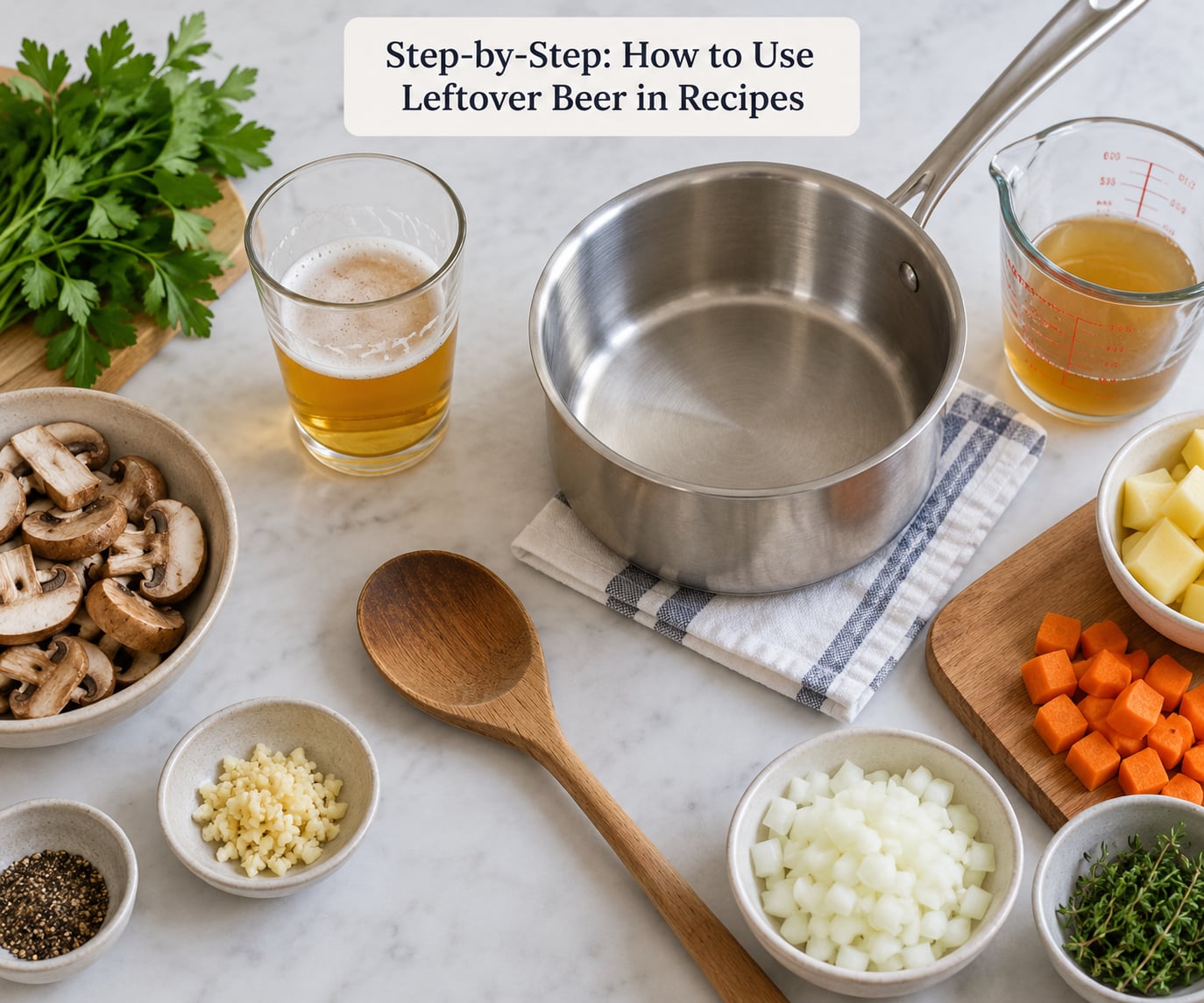
How to choose the right recipe for your leftover beer
Start by looking at the beer rather than the recipe. Color, aroma, and how much carbonation is left tell you more than the label does.
- Color: A pale beer suits light dishes and bread. A dark beer suits braises, chili, and chocolate desserts. A dark beer in a pale cream sauce turns it gray.
- Aroma: Smell it. Grassy or skunky hop notes mean it needs fat, sugar, or acid to balance. A sweet caramel or chocolate nose works almost anywhere.
- Carbonation: Fresh carbonation lifts batter and keeps fish tender in a marinade. Flat beer is a better braising liquid, since fizz in a long cook just makes the surface nervous.
- Strength: Anything above about 6 percent ABV deserves an early start in the pot so the alcohol cooks off.
- Freshness: Flat beer is fine. Oxidized beer is also fine, and its papery flavor reads as mild nuttiness once it meets heat.
Then pick a recipe that drinks a meaningful amount of liquid. Chili, stew, pulled pork, jambalaya, beer bread, and chowder all absorb close to a full bottle. A single garlic clove will not.
How to add beer without making a dish too bitter or boozy
The two usual failures are bitterness and raw alcohol, and both come down to heat and timing.
For braises and stews, deglaze the browned pan first with a cup of the beer, scraping up the fond. Then add the rest of the liquid, bring to a simmer, and hold it there uncovered. An uncovered simmer drives off alcohol and concentrates the malt.
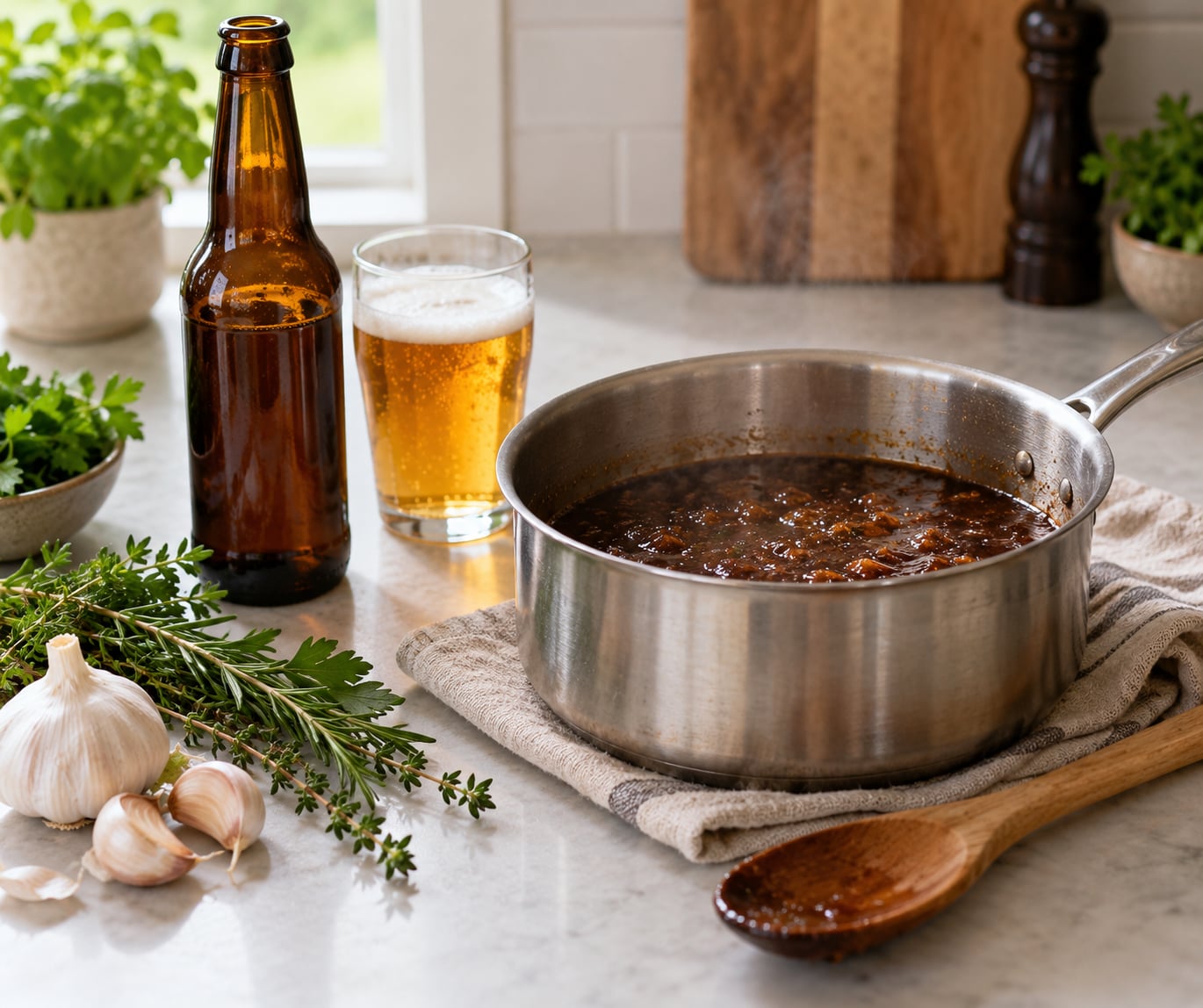
For glazes and sauces, add the beer late and reduce it fast. A barbecue glaze boiled for the last five minutes of a long cook tastes sticky and roasted. Simmer the same beer for twenty minutes and it tastes sharp and vinegary.
Start with a quarter of the total liquid as beer and the rest as stock or water, taste, then add more. Once a dish is done, you cannot take bitterness out, only dilute it, so err small.
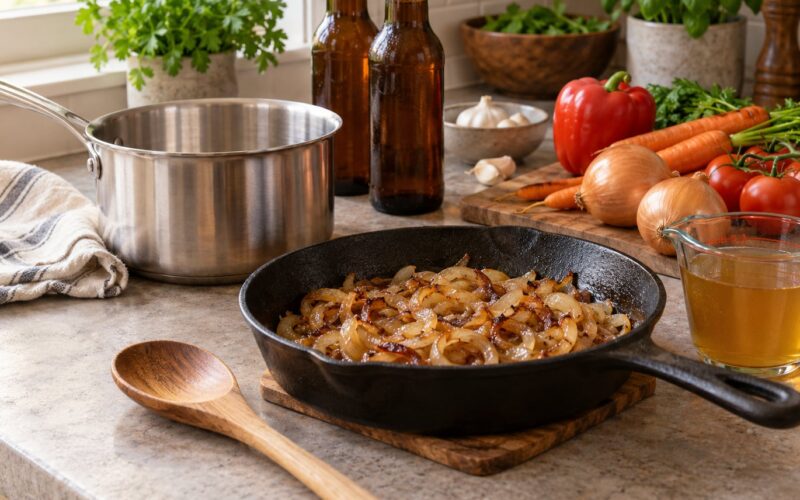
Balance works in both directions. Sugar, honey, molasses, jam, butter, cream, and mustard soften hop bitterness. Lemon juice, vinegar, and tomato paste cut perceived bitterness and lift a flat-tasting stew. Caramelized onions are the quiet fix for a stout-based sauce that feels heavy, because their sweetness sits underneath the roast notes.
In a marinade, time matters more than heat. Two to four hours is enough for chicken and fish. Leave steak, pork shoulder, or beef short ribs in it overnight, because the mild acidity of beer tenderizes as it works and the dish needs the time.
How to store leftover beer until you use it
Store opened beer sealed, cold, and used quickly. A bottle with its cap back on, or a growler with a clamp lid and a spoon of headspace squeezed out, keeps for roughly a week before it turns noticeably stale. If you cannot get to it in that window, freeze it.
Freezing in an ice cube tray is the easiest method. Pour the beer into the wells and freeze it solid, roughly two tablespoons per cube. Pop the frozen cubes into a labeled freezer bag or a sealed container and keep them frozen for up to three months. Each cube is one measured splash, which makes them easy to add to a pan sauce, a stew, or a beer bread at the exact moment you need it.
There are two different problems with old beer, and they are worth separating. Carbonation loss is mostly a drinking problem. Oxidation, the cardboard-and-nut flavor that comes from air exposure in a growler or half-full bottle, is a brewing problem. Cooking is indifferent to both, because long heat reduces away whatever has gone wrong.
Flat beer is not automatically spoiled. Beer is not a high-risk food once it is heavily cooked, since cooking drives off the alcohol and the acidity of the liquid makes an inhospitable environment for anything that could grow. Cooked dishes built on it should still follow ordinary refrigerator rules and be eaten within three to four days.
Common Mistakes
Pouring beer into a screaming-hot pan. The liquid flashes to vapor, the fond burns, and you get a bitter, acrid taste that no amount of sugar will rescue. Turn the heat down to medium, add the beer, let it calm for thirty seconds, and only then bring it back up.
Using a double IPA or a barrel-aged stout like it was a lager. Very hoppy and very dark beers need more fat, sugar, and acid than pale ones. If you only have that bottle, choose dishes that already have an offset: chili, barbecue glaze, a chocolate cake, or a stew with a lot of tomato.
Skipping the reduction. Alcohol boils off well below the 212F boiling point of water, but only with time and uncovered heat. Adding beer at the very end of a five-minute cook leaves a raw, hot taste. Give strong beer at least a twenty-minute uncovered simmer.
Treating flat beer as if it were fresh. Flat beer in a batter will not give you the lift you get from a fresh bottle. Swap in carbonated beer for frying, and save flat beer for braises, sauces, and bread, where the flavor matters more than the foam.
Adding it all at once. You cannot stir bitterness back out. Start with a quarter of the total liquid, taste the finished dish, and add the rest only if it needs it.
Pouring the whole bottle into something that barely cooks it. A vinaigrette made with a cup of strong pale ale will taste boozy all week. Dressing takes tablespoon quantities. Save the bottle for a dish that can absorb it.
A couple of extra habits help. Freeze the last two tablespoons of a good batch rather than washing it down the sink, since one ice cube later is worth more than the whole glass you skipped. And if you brew at home, bake with your flat batch the same week, because beer bread is the least demanding and most forgiving destination for it.
Frequently Asked Questions
Can you use leftover beer that has been opened for several days?
Yes. Opened beer that has been sitting in the fridge for a week or two is still fine to cook with, even if it has gone flat. Smell it first and discard anything that seems moldy, fizzy in a strange way, or off in a way that smells like vinegar. Heat handles the rest, since long cooking drives off the alcohol and the liquid itself is too acidic for anything to grow in.
What is the best leftover beer to use in stews, sauces, or bread?
Pale lager or pilsner is the safest all-rounder. For bread, a wheat or amber ale gives a sweeter crust. For stews and braises, a porter or brown ale adds body without much hop bite. Save double IPAs and imperial stouts for small amounts in chili or barbecue glaze, where sugar and acid can balance their intensity.
Does leftover beer need to be cooked to remove the alcohol?
If the dish cooks uncovered for long enough, most of the alcohol goes away. Simmering a sauce or braise with the beer in it for twenty minutes or more removes the sharp raw taste. Short cooking times, like a quick pan sauce or a five-minute glaze, leave more behind, so keep those dishes for adults or add less beer and finish with something sharp like lemon or vinegar.
Can I substitute flat or oxidized beer in a recipe?
Yes, in most dishes. Flat beer has lost its carbonation, which matters for batter and frying but barely registers in a braise, chili, sauce, or bread. Oxidized beer from a growler develops a cardboard or nutty flavor that heat and reduction turn into something pleasant. Just avoid pouring it straight into a light cream sauce, where the dark color will show.
How much leftover beer should I add to a recipe?
Most savory dishes take about a quarter of their liquid as beer, with the rest as stock or water, so a 12 oz bottle works in a pot that serves four to six. Start there, taste, and add more in small pours. Frozen beer cubes make this easy, since each one is roughly two tablespoons and you can drop them in one at a time.
What foods pair well with a small amount of leftover beer?
Anything that likes caramelized, roasted, or deeply savory flavors. Beer works well with beef stew, pulled pork, chili, bratwurst, chicken, shrimp, mushrooms, onions, potatoes, and cheddar. On the sweet side, a stout lifts chocolate cake, brownies, and cookies, while a lighter ale works in a banana or pumpkin quick bread.
Conclusion
The first step is simply to look at the bottle. Note how dark it is, how bitter it smells, and whether it still has any fizz, then pick a recipe that matches and can absorb a meaningful pour. Add the beer in stages, give it an uncovered simmer, and taste before you add more.
Do that and the bottle at the back of the fridge stops being a problem and starts being an ingredient. If you are still figuring out how to use leftover beer in recipes, that one habit is the whole trick: match the beer to the dish, then add it slowly.
Updated for October 2026.