To run a beer tasting at home, pick four to six beers, pour 2 to 4 ounces of each into a small glass per guest, and work through them in order from lightest to most intense. Allow about 60 minutes, keep water and crackers within reach, and give everyone something to write on.
That is genuinely all a tasting is. Nobody needs a certification, a locked-in cellar, or rare bottles. What changes the night is structure: small pours instead of full ones, a fixed order, and a score sheet, so people actually taste the beer instead of just drinking it. Small pours also keep total alcohol per person low — roughly one standard drink across a whole flight, which surprises most hosts.
Here is how to run a beer tasting at home without overthinking it. I’ve hosted these enough times to know the only real risks are pouring too big, serving too many beers, and letting your favorites take over the conversation.
Table of Contents
- What You Need
- The planning numbers, at a glance
- Step-by-Step: How to Run a Beer Tasting at Home
- 1. Choose a Focused Beer Flight
- 2. Chill and Prepare the Beers
- 3. Set Up a Tasting Station
- 4. Explain the Tasting Method
- 5. Pour and Taste in a Sensible Order
- 6. Score, Discuss, and Choose Favorites
- 7. Pair Snacks and End the Tasting Comfortably
- Common Mistakes
- Frequently Asked Questions
- How many ounces is a proper taster of beer?
- How many beers should I put in a flight?
- What are the best glasses for a beer tasting?
- What order should I serve the beers in?
- How long should a home beer tasting last?
- What should I do with guests who do not like beer?
- Conclusion
What You Need
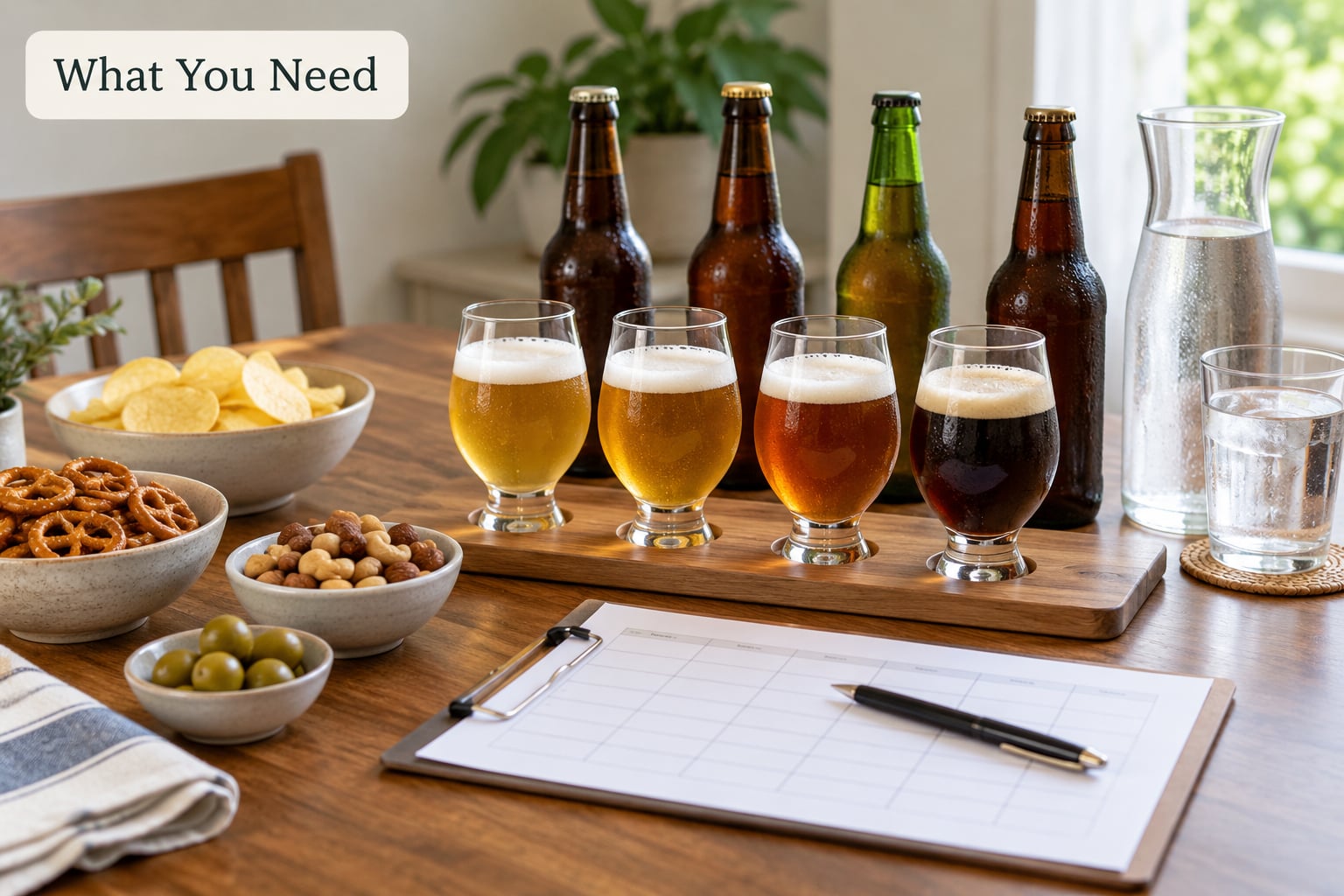
The gear list is short. Everything on it is either free, already in your kitchen, or sold in a single trip to the bottleshop.
- The beers. Four to six bottles, cans, or growlers. Three or four works well for a first flight; more than seven and palates give up before the last pour.
- Small glasses. Three to six ounces each. Plastic tasting cups, cut-off wine bottles, or short tumblers all work. Skip shaker pints — the shaker bartends the aroma away.
- A marker and small strips of painter’s tape for labeling glasses so nobody loses track of which is beer number two.
- Score sheets and pencils. One per guest, plus two spares. A printed template or a hand-drawn grid works fine.
- A water pitcher per two or three guests and a stack of plain crackers. These are your palate cleansers and they matter more than anything else on this list.
- A bottle opener and a few bottles of non-alcoholic beer or hop-water for anyone who is sitting out.
- Plain snacks. Salted crackers, pretzels, mild cheese, charcuterie, salted nuts. Avoid anything spicy or vinegary until the flight is finished.
- An ice bucket and a cooler so bottles stay cold between pours.
One host in a r/beer tasting thread swears by 4 oz plastic tasting cups because they give “enough for two sips and a gulp” without anyone trying to finish them. That is the right instinct, and cheap wine markers on plastic cups solve the labeling problem just as well as tape.
The planning numbers, at a glance
| Variable | Good range | Sweet spot for a first flight |
|---|---|---|
| Guests | 4 to 12 | 6 |
| Beers | 3 to 7 | 5 |
| Pour per beer | 2 to 4 oz | 3 oz |
| Tasting length | 45 to 90 minutes | 60 minutes |
| Water and crackers | Plenty | 1 pitcher per 3 guests |
| Spend | Wide range | Buy 2 familiar beers, 3 unfamiliar ones |
Under six guests gets awkward because one loud opinion takes over. Over twelve, people wander off mid-flight and the score sheets never get filled in.
Here is the pour math, because this is where hosts go wrong most often. Six guests tasting five beers at 3 ounces each needs 90 ounces of beer, which is about eight 12-ounce bottles. If you serve 4-ounce pours instead, budget ten bottles. Buy one extra bottle for the arrival beer and one for whatever people open when they’re waiting for the first pour.
Do the same math in a single spreadsheet line before you shop: guests multiplied by beers multiplied by ounces, divided by 12, rounded up, plus two. Write the number on your hand. It stops the “we ran out of beer at number four” moment that ruins an otherwise good night.
Step-by-Step: How to Run a Beer Tasting at Home
The sequence below runs from the beers on your counter to the last person leaving your door. Each step says what to do and what “worked” looks like.
1. Choose a Focused Beer Flight
Choose beers that differ from each other in at least one obvious way — color, bitterness, body, or origin. A flight of five pale ales looks identical and tastes identical, which tells you nothing.
Three to six beers is the workable range. Community consensus in the beer subreddits keeps landing on three or four for a blind comparison: enough to describe real differences without fatiguing anyone. Beginners often say ten is doable if pours stay at 2 to 3 ounces, but ten beers is a marathon and most hosts overestimate how much people will actually taste.
Good first themes:
- One style, five breweries. Five pilsners or five pale ales. Easiest to run because every beer is judged on the same criteria.
- Light to dark. A pilsner, a pale ale, an amber, a porter, a stout. Visually obvious and it teaches the most.
- One brewery, whole lineup. Six beers from a single local producer. Great when the brewery has a taproom nearby.
- Regional tour. Five beers from five breweries in your state or city.
- Seasonal. Summer sippers, Oktoberfest lagers and Oktoberfest Märzen, or winter stouts and barley wines.
Pick two beers you already like and three you don’t. That keeps the flight comfortable without making it a lecture.
What worked: every beer in your flight has at least one visible or obvious difference from the others.
2. Chill and Prepare the Beers
Chill everything the night before or the morning of. Serving temperature matters more than most hosts expect — a warm beer tastes flat and a cold beer tastes harsh.
Rough targets, and they’re close enough:
- Pale lagers, pilsners, wheat beers: about 38 to 45°F
- Ambers, pale ales, most ales: about 45 to 55°F
- IPAs: about 55 to 60°F, warmer than instinct suggests
- Stouts, porters, sours: about 50 to 55°F
Pull bottles out of the fridge 10 to 15 minutes before pouring so they aren’t shock cold. Freeze a wet bottle for 15 minutes and the beer is roughly 10°F colder, which is a cheap trick if a stout is lagging behind.
Line the beers up in tasting order before guests arrive. It is much easier to pour in sequence when they’re already in sequence, and nobody has to watch you dig through a cooler mid-flight.
What worked: the last beer you pour is still cold and correctly ordered.
3. Set Up a Tasting Station
Set up one station, not five. Put it on a counter where everyone can reach without standing up.
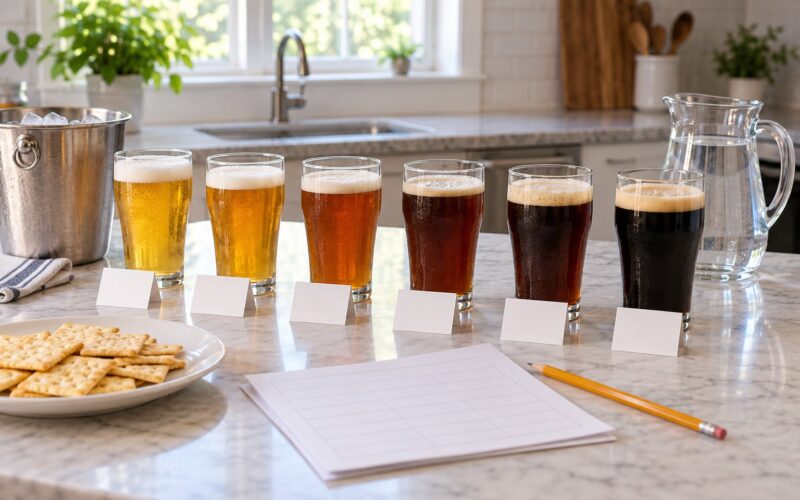
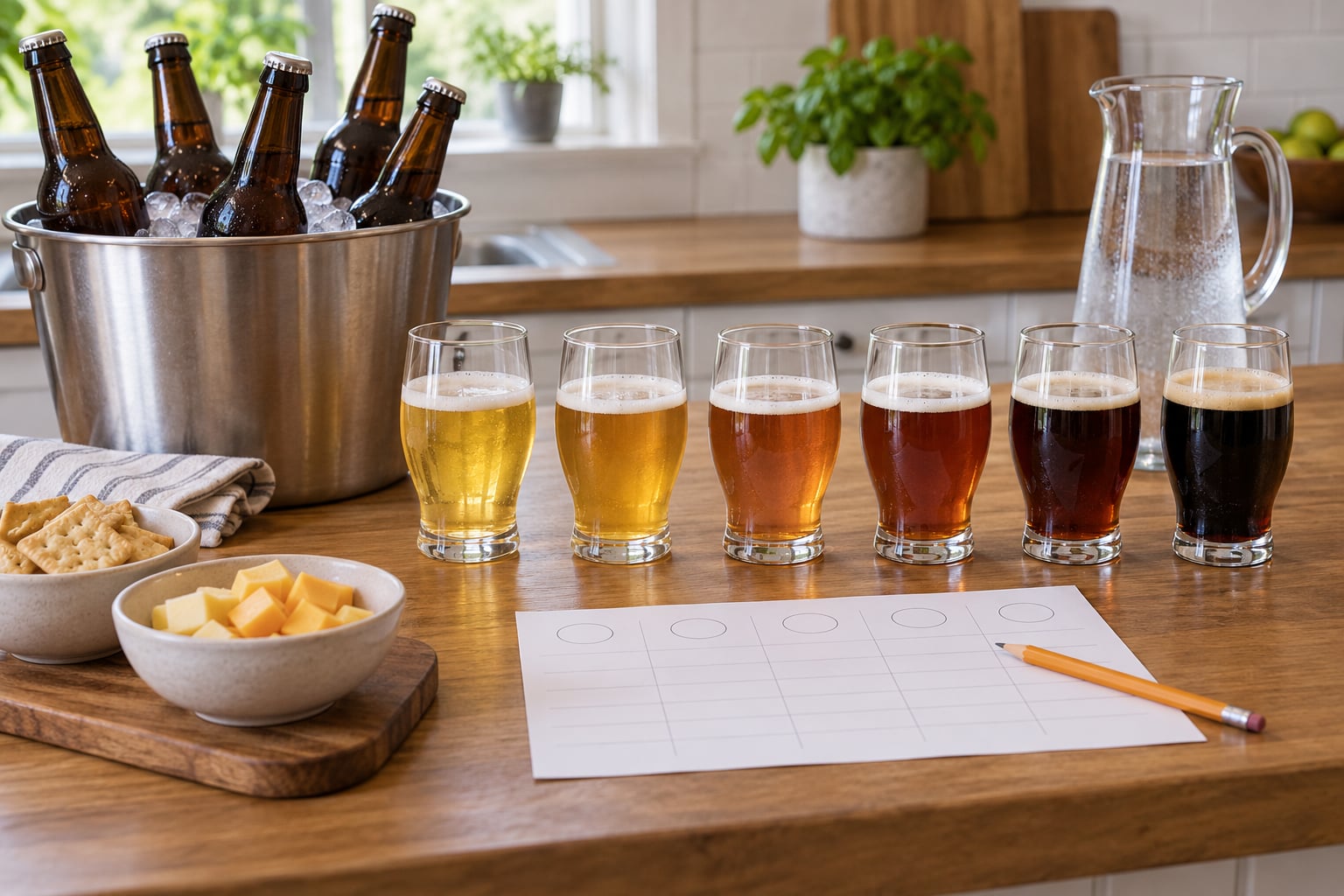
Every station needs the tasting glasses laid out in a row, one score sheet and pencil per guest, a water pitcher, a bowl of plain crackers, and a pitcher or bowl for dumping the rest of each sample. Keep the dump container next to the glasses so nobody hoards a half-finished pour.
Label each glass before you pour — number 1 through 5 if it’s open, letters if it’s blind. A strip of painter’s tape with the number written on it works better than trying to remember which shape is which.
Turn off scented candles and ask guests to skip perfume. A room that smells like vanilla wipes out your ability to smell a hop aroma, and you paid for the hops.
What worked: a guest can score beer number three without asking anyone where to find the paper.
4. Explain the Tasting Method
Teach one four-part method and use the same words all night: look, smell, taste, feel. Anything fancier turns a friendly night into homework.
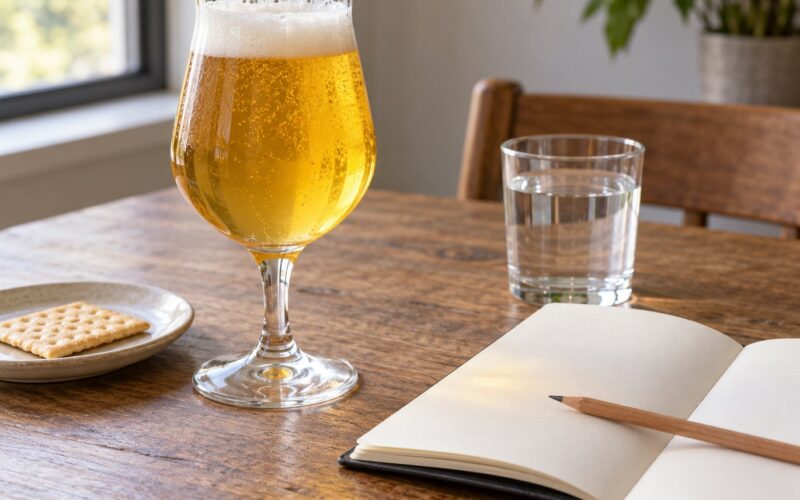
- Look. Hold the glass to the light. Note color, clarity, and how much head stays on the beer.
- Smell. Nose first without swirling, then swirl and smell again. Swirling releases the aromatics you’d otherwise miss.
- Taste. Take a small sip, let it sit on your tongue for a moment. Look for sweetness, bitterness, acidity, and malt.
- Feel. Notice body (thin, medium, thick), carbonation level, and any alcoholic warmth at the back of the throat.
Say this before the first pour and then stop talking: “Look, smell, taste, feel. Say one thing you liked and one thing you didn’t about each beer.” One sentence is enough. The most common failure at a home tasting is the host lecturing while everyone nods politely.
On scoring, keep it loose. A 1 to 5 scale where 3 means “solid, I’d drink it again” and 3.5 is the threshold for “I want to keep this” matches how most regular tasters talk about it. Nobody needs to justify a score.
What worked: a guest you don’t know well described a beer out loud without being asked twice.
5. Pour and Taste in a Sensible Order
Order matters. Go from lighter and lower-alcohol toward fuller and more intense — low ABV to high, pale to dark, dry to sweet, thin to thick. Start with a heavy imperial stout and everything after it will taste like sugar water.
Pour 2 to 4 ounces per person per beer. Hold the glass at a 45-degree angle and pour down the side to keep the head from overflowing and the aroma from being blown out.
Before each new beer: water first, then a cracker, then dump the last sip of the previous sample. Between a heavy, hoppy beer and the next pour, take a longer break and eat something with fat in it, like a piece of cheese. That’s what resets a tired palate better than water alone.
Do not rinse glasses with soap. If you’re moving from a hoppy beer to something delicate, a quick water rinse at the sink is plenty.
A run of show beats improvisation. Here’s the version that fits 60 minutes:
| Time | What happens |
|---|---|
| Before guests | Glasses numbered, sheets on the counter, beer chilled and in order |
| Arrival | Welcome beer or non-alcoholic option, no scoring yet |
| 0:00 | Explain the flight, hand out glasses and sheets, one-sentence method |
| 0:05 | Beer 1 poured, tasted, scored |
| 0:15 | Beer 2 poured, tasted, scored |
| 0:25 | Beer 3 poured, tasted, scored |
| 0:35 | Beer 4 poured, tasted, scored |
| 0:45 | Beer 5 poured, tasted, scored |
| 0:55 | Reveal if blind, announce favorites, name the winner |
| 1:00 | Open beers and snacks, hangout portion of the night |
Give each beer about eight to ten minutes. Faster than that and nobody finishes writing, and the sheet is the whole point.
What worked: the last beer got as much discussion time as the first.
6. Score, Discuss, and Choose Favorites
Collect scores by asking each person for a number before anyone speaks. Silent scoring first stops the loudest voice from anchoring the room, which is the single most common way a home tasting goes sideways.
Then go beer by beer around the table. Ask what people smelled and tasted, not whether they liked it. “What did you notice?” gets better answers than “what’s your favorite?”
Copy this score sheet grid for your own night. One row per beer, and let guests write in the margins rather than trying to squeeze words into cells.
| Beer | Appearance /1-5 | Aroma /1-5 | Flavor /1-5 | Mouthfeel /1-5 | Overall /1-5 |
|---|---|---|---|---|---|
| 1. | |||||
| 2. | |||||
| 3. | |||||
| 4. | |||||
| 5. |
For a blind tasting, reveal at the very end — after all scores are in. Write the names on a sheet, uncover them one at a time, and let the room react. The mechanic people like most: assign each guest a beer to bring, have one person pour blind, and let everyone guess before the reveal. Guests regularly rank a cheap lager above a fancy IPA, which is exactly the point.
Declare a winner by group vote or by highest average score. Either works. Just don’t run a bracket — it turns a tasting into a competition, and one guest ends up upset.
What worked: everyone had a full sheet at reveal time and no one argued about the winner.
7. Pair Snacks and End the Tasting Comfortably
Food is for resetting the palate, not for replacing it. Serve neutral things throughout and pair-specific things with the flight. Match the pairing to the beer style:
| Beer style | Works well with |
|---|---|
| Pilsner or pale lager | Salt, pretzels, mild cheddar, popcorn |
| Wheat beer or witbier | Fresh fruit, salads, goat cheese |
| Pale ale | Brie, fried chicken, mild sausage |
| Amber ale | Sausage rolls, roast chicken, cheddar |
| IPA | Cheddar or gouda, burgers, spicy wings, blue cheese |
| Sour or kettle sour | Cured meats, charcuterie, dark chocolate |
| Porter | Mushrooms, dark chocolate, smoked sausage |
| Stout | Dark chocolate, blue cheese, oysters |
Keep water pouring all night and keep crackers within arm’s reach. Most palate fatigue is really dehydration plus sugar plus residual carbonation.
Plan the close before it starts. Open a bottle or two of whatever people liked most, put out the rest of the charcuterie, and stop the structured part of the evening. If guests are staying, that becomes a hangout hour with the score sheets on the table.
On getting people home: ask about transportation in the invitation, not at the door. Naming a rideshare account, a sober driver, or a sleepover removes the hardest conversation of the night. One host habit worth copying — send the plan with the invite so nobody has to negotiate it later.
Also flag allergens before the night, not during it: dairy, gluten, and nuts show up in stouts, sours, and many porters. And always keep at least one non-alcoholic option on the table. Someone sitting out should have something to hold.
What worked: nobody had to raise the “how are you getting home” question, and there was still beer left when the hangout started.
Common Mistakes
- Serving too big. Full 12-ounce pours per beer turn a tasting into a drinking session. Pour 2 to 4 ounces instead.
- Serving too many beers. Eight or more is where people stop tasting and start just drinking. Cut to five.
- Dirty or scented glasses. A rinse under the tap is fine. Dish soap residue and candles will both kill your aroma notes.
- Skipping water. One pitcher per three guests, filled before the flight starts, not after someone asks.
- Sniffing after swallowing. Aroma is only readable while the beer is in the glass and your mouth is empty.
- Serving out of order. Light and low-alcohol first, full and high-alcohol last. Otherwise the first three taste identical.
- Letting one favorite run the table. Collect silent scores first, then discuss. The loudest voice anchors everyone else.
- Wrong temperature. Too cold flattens flavor; too warm makes beer taste harsh and foamy. Check before you pour.
- Improvising the schedule. No timer means beer number one gets 20 minutes and beer number five gets two. Write the timeline down.
Frequently Asked Questions
How many ounces is a proper taster of beer?
Pour 2 to 4 ounces per person per beer, and 3 ounces is the sweet spot for most home flights. It gives two or three real sips, enough to smell and score without leaving anyone full after five samples. A glass holding 3 to 6 ounces works well. For six guests tasting five beers at 3 ounces each, plan about eight 12-ounce bottles, plus one extra.
How many beers should I put in a flight?
Three to six. Three or four is plenty for a blind comparison and is where most hosts get the best discussion. Five is a solid all-around choice for an open tasting. More than seven and palates fatigue, scores get lazy, and the last beers go unfinished. Keep the count low and make the beers genuinely different from each other instead.
What are the best glasses for a beer tasting?
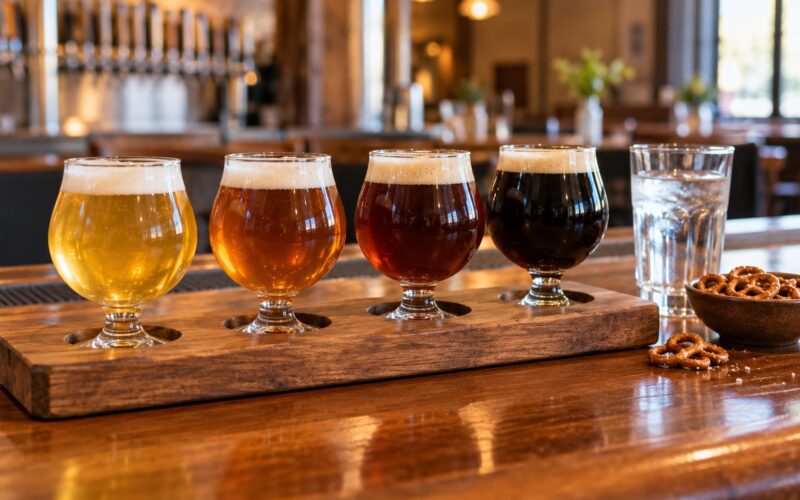
Small 3 to 6 ounce glasses: plastic tasting cups, a tulip glass, or a snifter all work well. A stemmed wine glass is fine too, and cut-off wine bottles make decent tasting vessels. Avoid shaker pints and narrow bottles, which trap and then strip the aroma. Label each glass with a marker or a strip of painter’s tape before you pour.
What order should I serve the beers in?
Pour lightest to darkest and lowest to highest ABV. Start with a pilsner or lager, move to pale ales and ambers, then IPAs, and save stouts, imperial styles, and anything barrel-aged for last. That way each beer has something to contrast against. Rinse with water and eat a cracker between pours so heavy and hoppy beers do not flatten everything that follows.
How long should a home beer tasting last?
About 60 minutes for the structured portion, giving each beer 8 to 10 minutes. Five beers at that pace runs about 55 minutes, plus a few minutes for the intro and the reveal. If you want more time than that, open good bottles afterward and let the conversation run without score sheets. The night is about tasting, not volume.
What should I do with guests who do not like beer?
Serve them anyway, but do not push. A small 2-ounce pour with clear guidance works better than a full glass they feel they must finish. Start them on a light lager or wheat beer so their first impression is a fair one, and have non-alcoholic beer and hop water on the table from the start. Letting them observe and comment without drinking usually turns them into the most useful judges in the room.
Conclusion
Start with the four numbers: six guests, five beers, 3-ounce pours, 60 minutes. Do your pour math before the shopping trip, chill everything a day ahead, and label the glasses.
Then tell your guests one thing: look, smell, taste, feel. Hand out the score sheet and let people write in silence before the talking starts.
Keep water and crackers coming, pace the flight, and sort out transportation before anyone arrives. If you do those things, how to run a beer tasting at home stops being a project and turns into the best hour of the month.