A beer cocktail is any drink where beer is the primary liquid, mixed with something else. That second ingredient can be a distilled spirit, a squeeze of citrus, a sweetener, a mixer like ginger beer or tomato juice, or even a different style of beer poured on top.
Most are lower in alcohol than a spirit-forward cocktail of the same size, which is a large part of why they show up on sunny afternoons, at cookouts, and in long pub sessions rather than only at the last call.
Table of Contents
- What Is a Beer Cocktail?
- How Does Beer Work in Cocktails?
- What Beer Style Works Best for Beer Cocktails?
- How Do You Make a Beer Cocktail Without Making It Too Foamy?
- Easy Beer Cocktail Recipes to Try
- Lager and Lemon Refresher
- Amber Ale Old Fashioned
- IPA Lime Soda
- Stout and Coffee
- Sour Beer Spritz
- Dark Beer Ginger Blend
- How Can You Adapt a Beer Cocktail to Your Taste?
- What Food Pairs Well With Beer Cocktails?
- Frequently Asked Questions
- What is a beer cocktail called?
- What is beer mixed with liquor called?
- What alcohol is best to mix with beer?
- How many beers equal a cocktail?
- Do I need a special glass for a beer cocktail?
- Which beers should I avoid using in cocktails?
- Start With a Simple Beer Cocktail
What Is a Beer Cocktail?
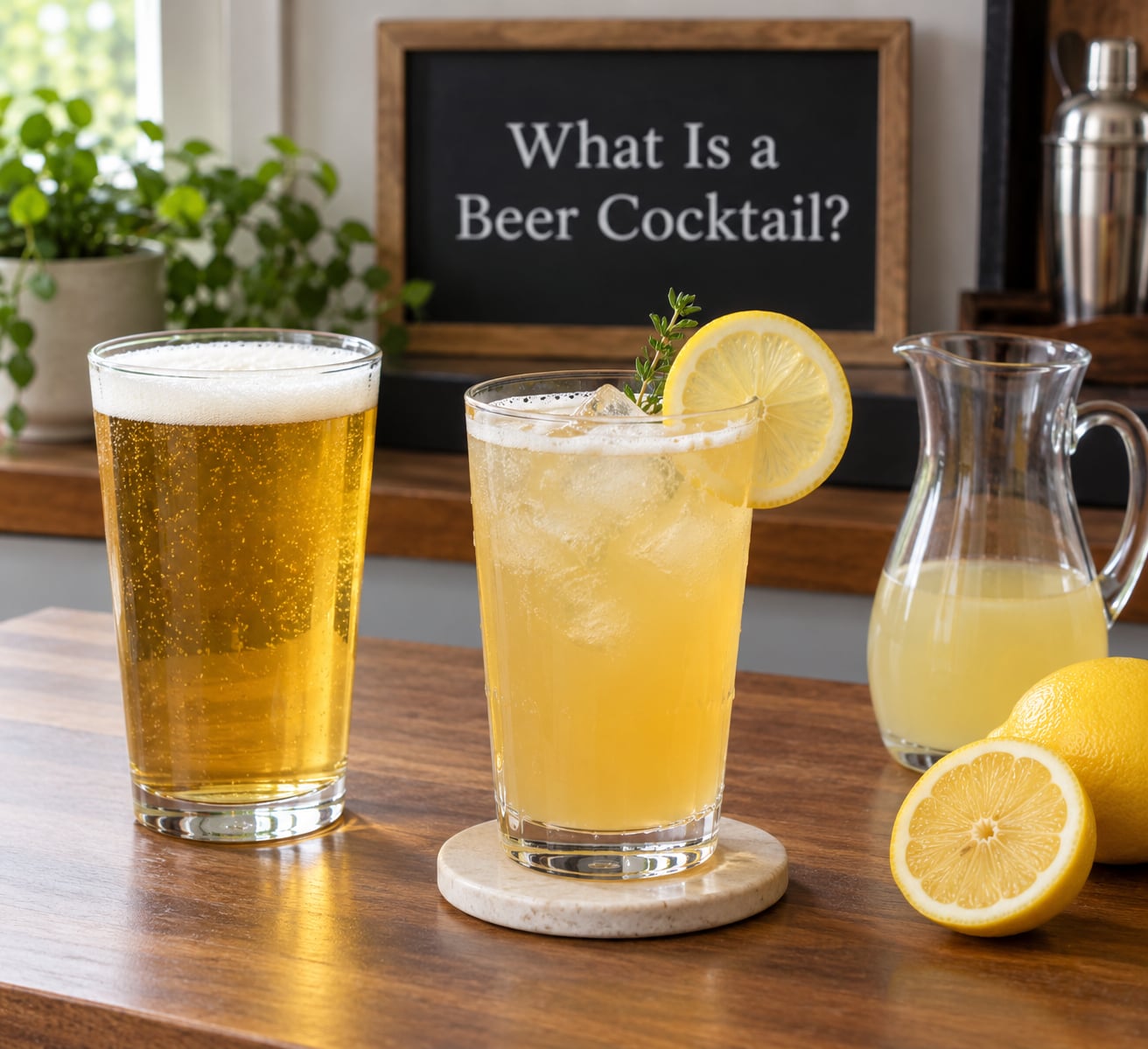
Put plainly, a beer cocktail is a drink built so beer does the job a spirit usually does, adding its own carbonation, foamy head, and grain-and-hop flavor to the glass. That sets it apart from a beer served alongside a shot, and from a beer with a splash of spirit stirred in as an afterthought: the beer is the base of the build, not a garnish.
A quick note on naming before we go further. There is no single official term for the whole category, which is exactly why crossword clue pages keep ranking for this question. People say beer cocktail, beer-tail, or just the specific name of the build, and regional labels overlap: a shandy and a radler are usually the same drink described in different places.
How Does Beer Work in Cocktails?
Beer is a harder mixer to work with than spirits, mostly because it is already busy. Spirits arrive relatively neutral and let you build flavor from scratch. Beer arrives with its own grain bill flavor, hop bitterness, yeast character, and a texture you can lose in seconds.
Four qualities decide how a beer behaves in a mixed drink.
Carbonation gives you the bubbles and the lift. It also means the drink goes flat fast once you start diluting it, which is why pouring order matters more here than in almost any other cocktail.
Bitterness arrives from hops and from roasted grain in darker styles. Citrus and malt sweetness are what balance it, and a drink can only hold so much before it turns acrid.
Body is the weight on the palate. A pilsner is thin enough that a splash of syrup barely registers, while a stout or porter can go curdled-looking with almost nothing added.
Alcohol sits in the background. A beer cocktail tastes refreshing partly because the ABV is usually lower than a spirit drink built to the same apparent strength.
Sweeteners and bitters are the levers that pull those qualities into balance. Simple syrup softens hop bitterness, a dash of aromatic bitters adds spice and depth without sweetness, and citrus juice cuts through malt the way acid cuts through fat.
Salt and savory seasonings do something else entirely. A pinch of salt in a tomato-based beer cocktail suppresses bitterness and makes the citrus taste brighter, which is why micheladas and bloody beers lean on hot sauce and Worcestershire sauce rather than sugar.
What Beer Style Works Best for Beer Cocktails?
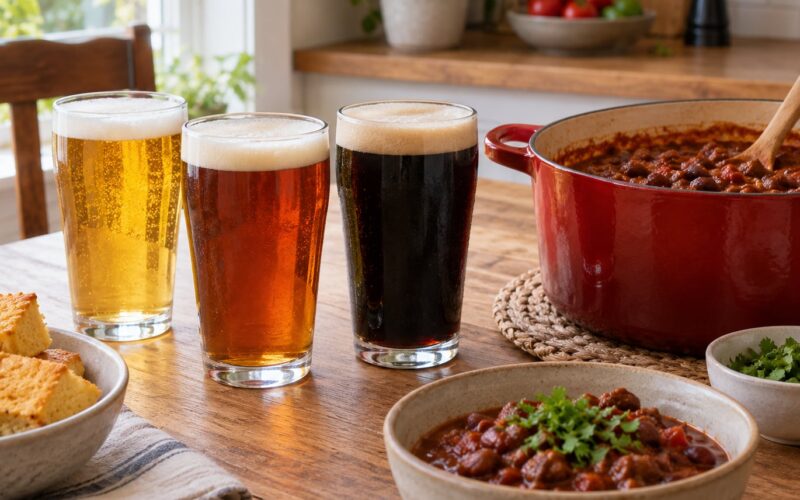
The pairing question is the one people argue about most, and the honest answer is that body and bitterness should match. Delicate beers take bold mixers. Heavy beers take almost nothing.
| Beer style | What it tastes like | Mixes well with | Named drinks |
|---|---|---|---|
| Lager | Clean, crisp, light malt | Lemonade, grapefruit soda, tomato juice, dry cider | Shandy, radler, beergarita, red eye |
| Pilsner | Grassier hop edge, drier finish | Ginger beer, lime juice, soda water | Porchcrawler, pilsner and lime spritz |
| Wheat beer | Soft, bready, citrusy | Lemonade, dry cider, fresh fruit juice | Shandy variations |
| Pale ale | Malty with moderate hop bite | Ginger beer, hard cider, bitters | Snakebite, pale ale old fashioned |
| IPA | Resinous, bitter, highly aromatic | Light mixers only: soda water, lime, simple syrup | IPA and lime soda, black velvet |
| Sour or lambic | Tart, fruity, acidic | Anything sweet or neutral: grenadine, lemonade, dry cider | Sour beer spritz |
| Stout or porter | Roast, coffee, chocolate, heavy | Cold brew, a splash of cream, or nothing at all | Stout and coffee, queen Mary, black and tan, egg in beer |
| Dark lager | Toasty, smooth, malt-forward | Ginger beer, ginger ale, bitters | Dark beer ginger blend, hangman’s blood |
Two rules fall out of that table. First, never start with a heavy IPA and then add a sugary mixer hoping to hide the hops. The result tastes like a failed shandy rather than a beer drink. Second, a sour beer already has acid in it, so anything you add should move in the opposite direction.
For spirits, keep the heat low and the character close to the beer. Tequila works with light lagers, whiskey and bourbon suit pale ales and porters, coffee liqueur belongs with stout, and clear spirits like vodka or gin do the least damage because they add aroma rather than flavor. Sake, soju, vermouth, and Aperol all turn up in published beer cocktail lists, usually in small measures.
How Do You Make a Beer Cocktail Without Making It Too Foamy?
This is the most common home mistake, and the fix is mechanical rather than complicated. Build the drink in the right order and never shake it.
Chill everything first. Cold beer holds carbonation longer and pours with less foam, and a chilled glass matters as much as a chilled bottle.
Build over ice. Put the ice in the glass first, then the mixer, juice, and syrup. Stirring or swirling with the mixer in place dissolves what you need without aerating the beer.
Add the spirit in a slow pour, then the beer last. Pouring beer down the side of the glass, or over the back of a spoon when you are layering, keeps the head from exploding. For layered drinks like a snakebite or an Irish car bomb, the order is reversed on purpose: the shot goes in fast and sinks.
Do not shake and do not blend. Agitation is what kills the foam you actually want and dulls the aromatics. If a drink is over-foamed, wait two minutes. Foam settles faster than anyone expects.
Use a tall glass. A pint glass or highball gives headroom so the head has somewhere to go, and it is the difference between a two-ounce cap and an overflowing mess.
Easy Beer Cocktail Recipes to Try
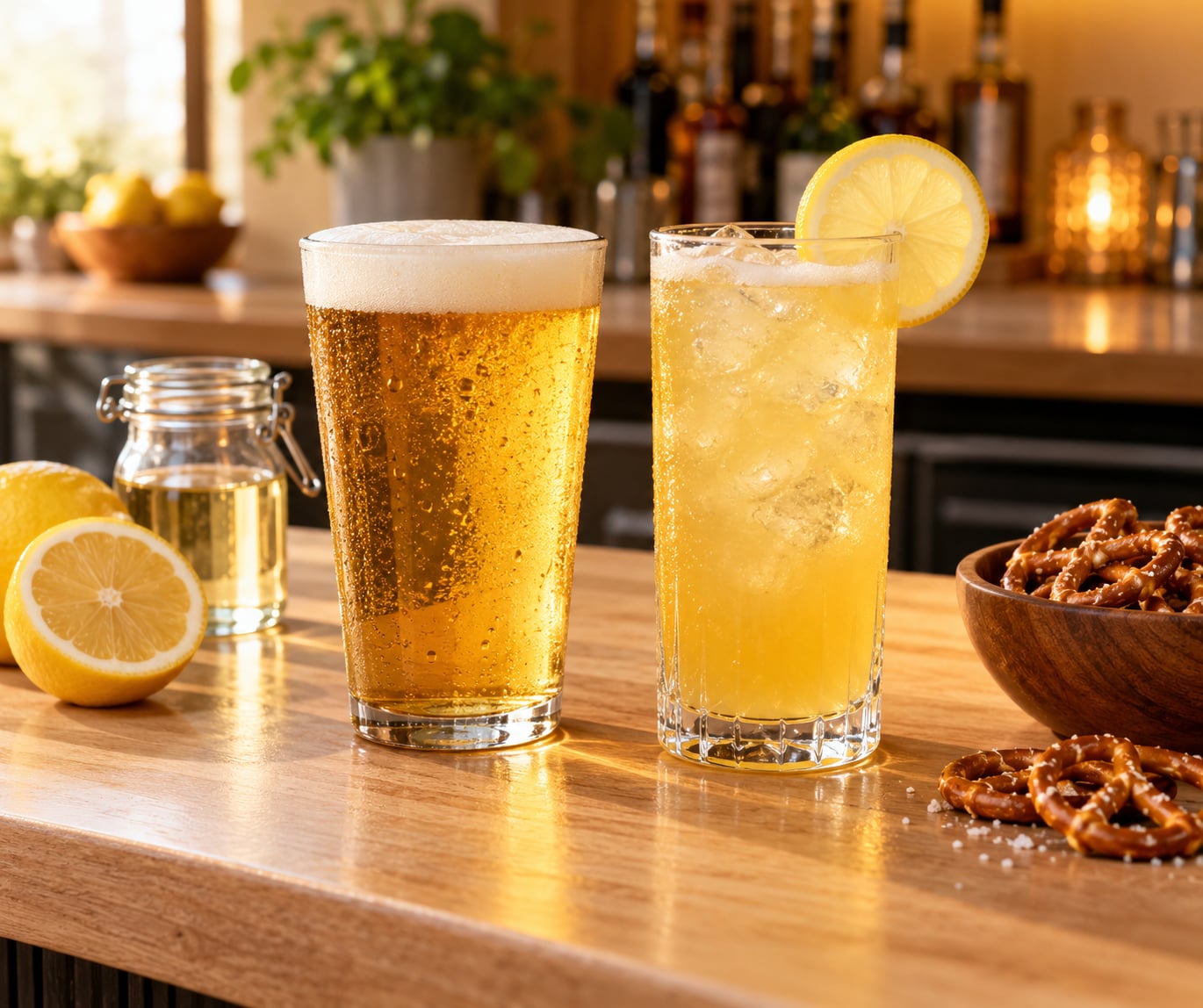
Lager and Lemon Refresher
The easiest place to start, and the one people keep coming back to.
Fill a tall glass with ice. Add 4 ounces of chilled lager, 1 ounce of fresh lemon juice, and half an ounce of simple syrup. Stir once gently and drop in a lemon wheel. Drink it fast, before the ice waters it down.
Amber Ale Old Fashioned
A beer cocktail that tastes like a proper cocktail rather than a novelty.
In a rocks glass over a large cube, combine 1 ounce of whiskey, half an ounce of rich simple syrup, and 2 dashes of aromatic bitters. Stir with the ice for 20 seconds, then top with 4 ounces of amber ale. Express an orange peel over the top and drop it in.
IPA Lime Soda
The honest way to drink a hoppy IPA without the hop flavor fighting a mixer.
Pour 4 ounces of IPA into a chilled glass over ice. Add the juice of half a lime and top with chilled soda water. Stir once. The soda water softens the hop bite and lengthens the finish.
Stout and Coffee
A short, rich drink that tastes like a dessert. Sip it slowly.
In a chilled glass, combine 1 ounce of cold brew coffee and half an ounce of coffee liqueur. Top with 5 ounces of stout. Spoon a small amount of lightly whipped cream over the back of a spoon so it floats. No ice, and no more coffee than that, or the roast of the beer disappears.
Sour Beer Spritz
Best made when the sour beer is genuinely tart, from a brewery that bottles it or a shop that keeps fresh kegs.
Fill a wine glass with ice. Pour 3 ounces of sour beer, add half an ounce of grenadine, and top with 2 ounces of dry prosecco or dry cider. Stir gently. A lemon twist, not a garnish-heavy approach, keeps the aroma clean.
Dark Beer Ginger Blend
The ginger beer version of an old fashioned, and much easier to drink at a cookout than anything with a shot in it.
In a highball over ice, add 3 ounces of ginger beer, half an ounce of honey syrup, and 1 ounce of rye whiskey. Stir to combine, then top with 3 ounces of dark lager. Lime wedge optional, and better if it is.
How Can You Adapt a Beer Cocktail to Your Taste?
Once a recipe works, the same handful of levers let you bend it without rewriting it. These are the adjustments people actually make.
For more sweetness, add sugar in small steps: a quarter ounce of syrup at a time, stirred in. For a drier drink, lengthen with soda water or a dry cider rather than adding juice, because juice brings sugar with it.
For more brightness, add citrus in half-ounce increments and taste before going further. For less bitterness with a hoppy base, drop the temperature, because cold beer tastes more bitter than the same beer served cool.
To soften a spirit, reduce it by half and let the beer carry more weight. To make a drink stronger, add spirits, never more beer, since extra beer only adds water to the glass once the carbonation goes.
For a lighter version, pick a lower-ABV lager, cut the mixer with soda water, and skip the syrup entirely. For a bolder one, move to porter, stout, or a higher-hop pale ale, and let the drink stay dry.
Garnish is not decoration here. Citrus peel, herbs, and a salted rim all change what you smell, and aroma is most of what beer gives you.
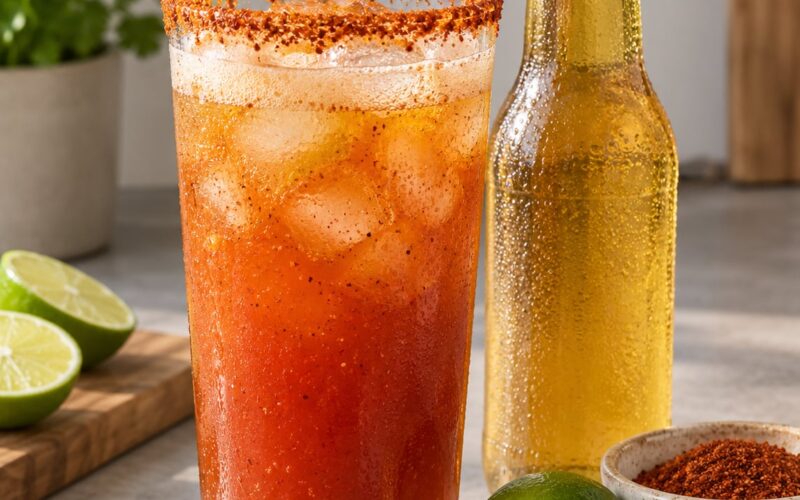
Two substitutions are worth knowing by name. A shandy and a radler are the same construction, usually a light lager plus lemonade, with radler the more common term in the United States. A cerveza preparada is a Mexican beer prepared with citrus, salt, and chili, and a michelada is the best-known version. Knowing that there is no single correct name makes ordering and recipe swapping much easier.
What Food Pairs Well With Beer Cocktails?
Pairing works best when the food and the drink share a flavor rather than fighting it, so match to the profile of the beer you used.
Light, citrusy beer cocktails want salty and fatty things: salted peanuts, pretzels with mustard, chips with a dip, or a wedge of aged cheddar.
Malty amber and porter versions handle burgers, grilled sausages, and anything with a char on it. The roast in the beer echoes the char and neither competes.
The savory, spicy Michelada family wants tacos, tostadas, or a plate of chili and lime. The heat and salt in the drink are already doing the seasoning, so keep the food simple.
Stout and coffee drinks lean sweet: chocolate cake, a slice of cheesecake, or a scoop of vanilla ice cream. Fruit-forward sour versions want melon, berries, or a simple charcuterie board with pickles.
Frequently Asked Questions
What is a beer cocktail called?
There is no single official name for the category. People use beer cocktail or the informal beer-tail, and beyond that the drink is called by the name of its specific build, such as a shandy, boilermaker, or snakebite. Regional labels overlap too, which is why a shandy and a radler usually mean the same light lager and lemonade. The specific name is more useful than the category name, both when ordering and when you want to tweak the recipe yourself.
What is beer mixed with liquor called?
It depends entirely on the build. Beer with a whiskey shot is a boilermaker, with an Irish cream liqueur dropped in it is an Irish car bomb, with sake it is a sake bomb, and with vermouth or an Italian bitter it is often a porchcrawler. Some are layered pours where the spirit sinks through the beer, and others are fully mixed drinks built over ice. If the shot is added and left undissolved, you have a pour. If it is stirred in, you have a mixed drink.
What alcohol is best to mix with beer?
Match the strength of the spirit to the body of the beer, and keep the pour small. Tequila, rum, gin, and vodka are the lightest options and pair best with lagers and wheat beers. Whiskey, bourbon, and brandy suit pale ales, porters, and stouts, where their grain character echoes the malt. Coffee liqueur belongs with a stout, and sake, soju, vermouth, or Aperol work in small measures. Avoid spirits that are much higher in alcohol than the beer, or the drink reads as a spirit with a splash of beer.
How many beers equal a cocktail?
It depends on the beer and the pour, so there is no reliable number. A 12 ounce beer at around 5% ABV is roughly one standard drink, which means a beer cocktail with a half ounce of spirit and plenty of mixer usually lands below a spirit-forward cocktail of the same apparent strength. That is the practical answer behind why beer cocktails are often described as sessionable. If you want the real figure for a specific drink, add up the alcohol in the beer and the spirit separately rather than guessing by glasses.
Do I need a special glass for a beer cocktail?
A special branded glass is not necessary, though the shape does more than decoration. A tall pint or highball leaves headroom so the foam has somewhere to go, and a small rocks glass suits spirit-forward builds stirred over ice. Reserve a wine glass for the sour beer spritz, where the aromatics benefit from a wide bowl. A mug works fine for a dark beer ginger blend, as long as there is room above the line. The only real rule is giving the head space.
Which beers should I avoid using in cocktails?
Skip very hop-heavy IPAs if you plan to add sweetness, since hops and sugar together can taste harsh, and skip aggressive sour or lambic beers when you plan to add lemon, since the extra acid flattens everything. Beers that are meant to be poured straight, like a very thick milk stout, also lose their character when mixed. Beers that are already cloudy or oxidized will show up in the glass rather than hide behind a mixer. Clean, cold, freshly poured beer of a moderate bitterness level is the safest starting point for a first attempt.
Start With a Simple Beer Cocktail
Start where the list starts. A chilled light lager, fresh lemon juice, and a splash of simple syrup over ice is a complete beer cocktail, and it takes about a minute. That drink teaches you the one thing that matters, which is how beer feels in a mixed glass, before you add spirits, bitters, or anything more complicated.
Once that one is yours, move outward. A sour or a stout opens up a completely different set of pairings, and none of them are hard once you stop treating the beer as fragile. 2026