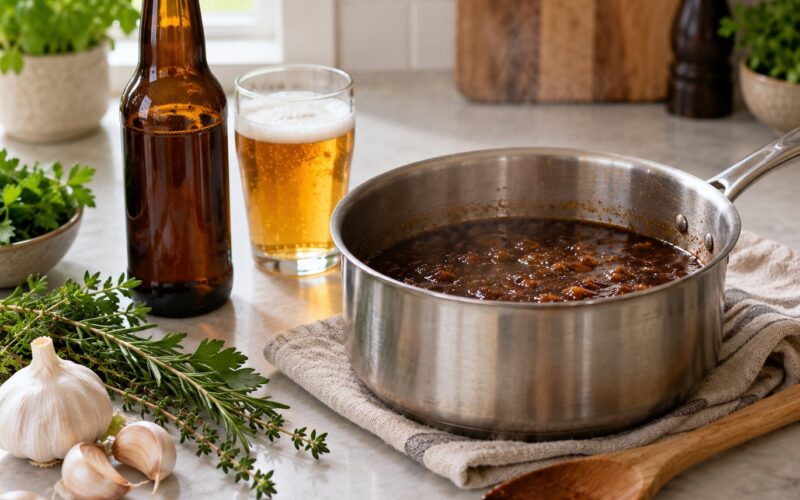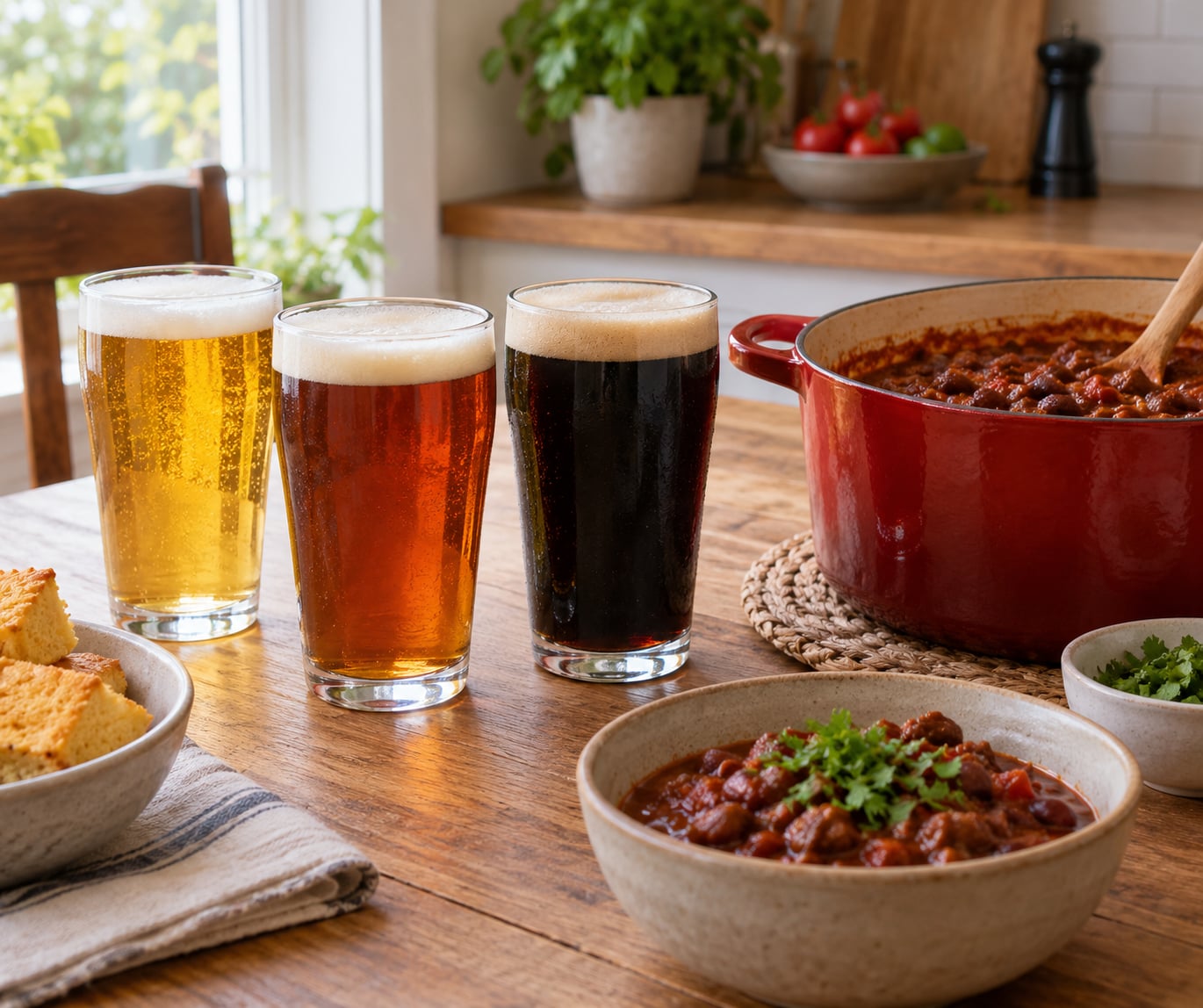
Cooking chili with beer? Use a dark, malt-forward beer — a stout, porter, brown ale, or dark lager — in place of part of the liquid you would normally add. One 12-ounce bottle for a standard pot is plenty. The malt sweetness and roast deepen the chili, and the alcohol cooks down over a long simmer.
The catch is that there is no single right bottle. A beer that makes a smoky beef chili sing can flatten a delicate white chicken chili. What beer to use for chili really comes down to matching the beer’s roast and body to the meat, beans, and heat level already in your pot.
I have cooked with everything from a cheap lager to a barrel-aged stout, and the decision rule never really changes: go darker and maltier as the chili gets heavier, and lighter and crisper as it gets brighter.
Table of Contents
- What Beer to Use for Chili?
- How Beer Changes the Flavor of Chili
- Malt sweetness and caramelization
- Roast, not just darkness
- Hop bitterness and the concentration trap
- Fermentation and carbonation
- Best Beer Styles for Different Types of Chili
- Light, Crisp Beer Choices for Bright Chili
- Malt-Rich Beer Choices for Hearty Chili
- Hoppy IPAs and Beers to Use Carefully
- How Much Beer to Add and When
- How to Choose Beer for Chili Without Making It Too Bitter
- Food Safety When Cooking Chili with Beer
- Frequently Asked Questions
- What is the best beer to put in chili?
- Can I use an IPA in chili?
- Does beer make chili taste better?
- How much beer should I add to a pot of chili?
- Can I use nonalcoholic beer in chili?
- Is it safe to cook chili with beer?
- Conclusion
What Beer to Use for Chili?
A smooth lager, amber ale, brown ale, or stout works in almost any pot. Pale lager keeps a light chili clean, a porter or stout gives beef and dark spices a roasted backbone, and a bock or amber lager sits in the middle for anyone who wants depth without heaviness.
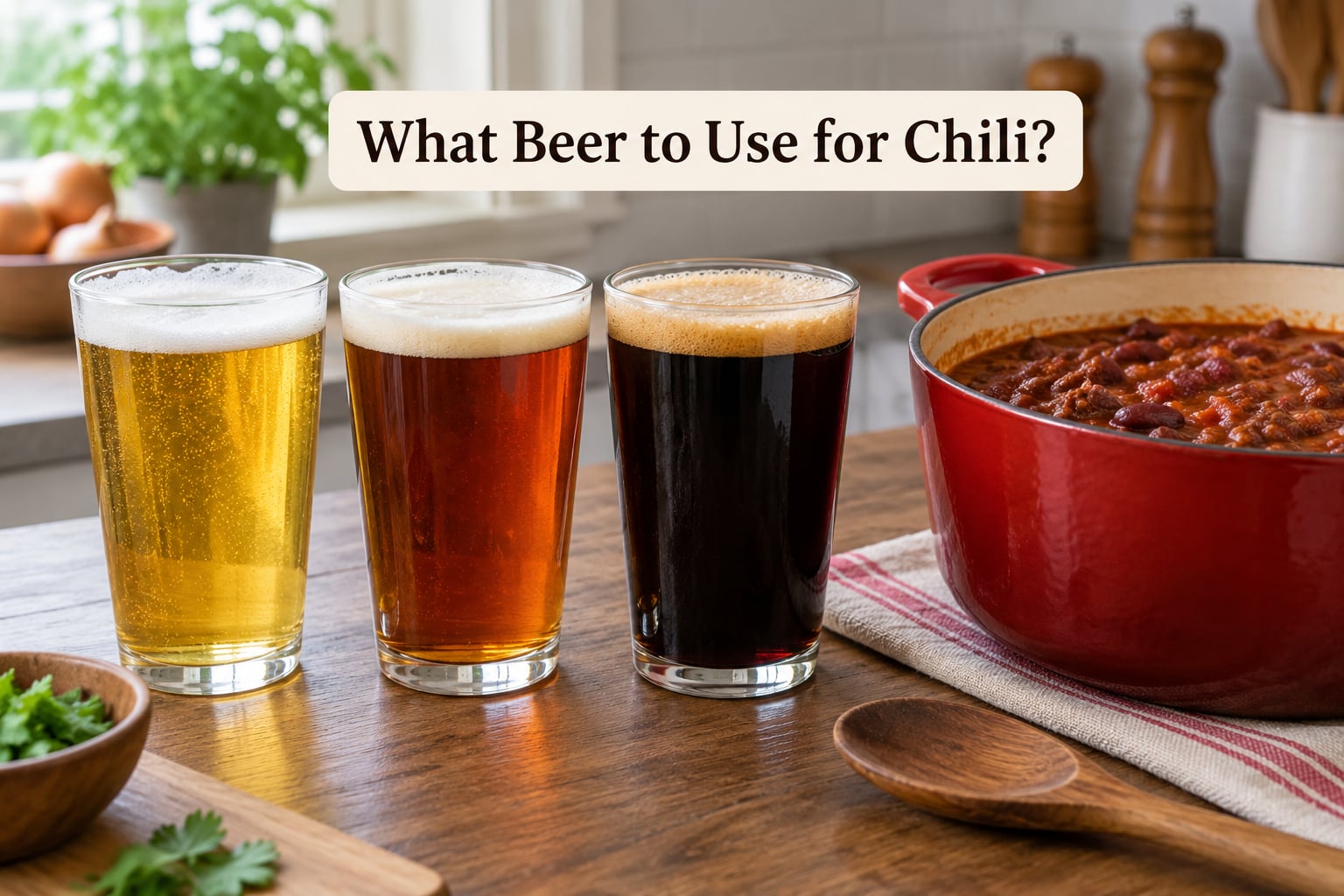
Here is the rule I use. If the chili is mostly dark meat, brown mushrooms, cocoa, smoked paprika, or black beans, pick something with roast and caramel. If it is mostly white meat, white beans, lime, or fresh chile, pick something crisp and lightly sweet. If the pot is somewhere in the middle, an amber lager or amber ale is the safe middle ground.
Home cooks in the r/chili community mostly reach for budget bottles rather than specialty ones, which tells you something useful. Shiner Bock, Dos Equis Amber, Coors Banquet and Modelo Especial all work, and the common refrain is that any decent lager will do. Spend your attention on the pot, not the bottle.
How Beer Changes the Flavor of Chili
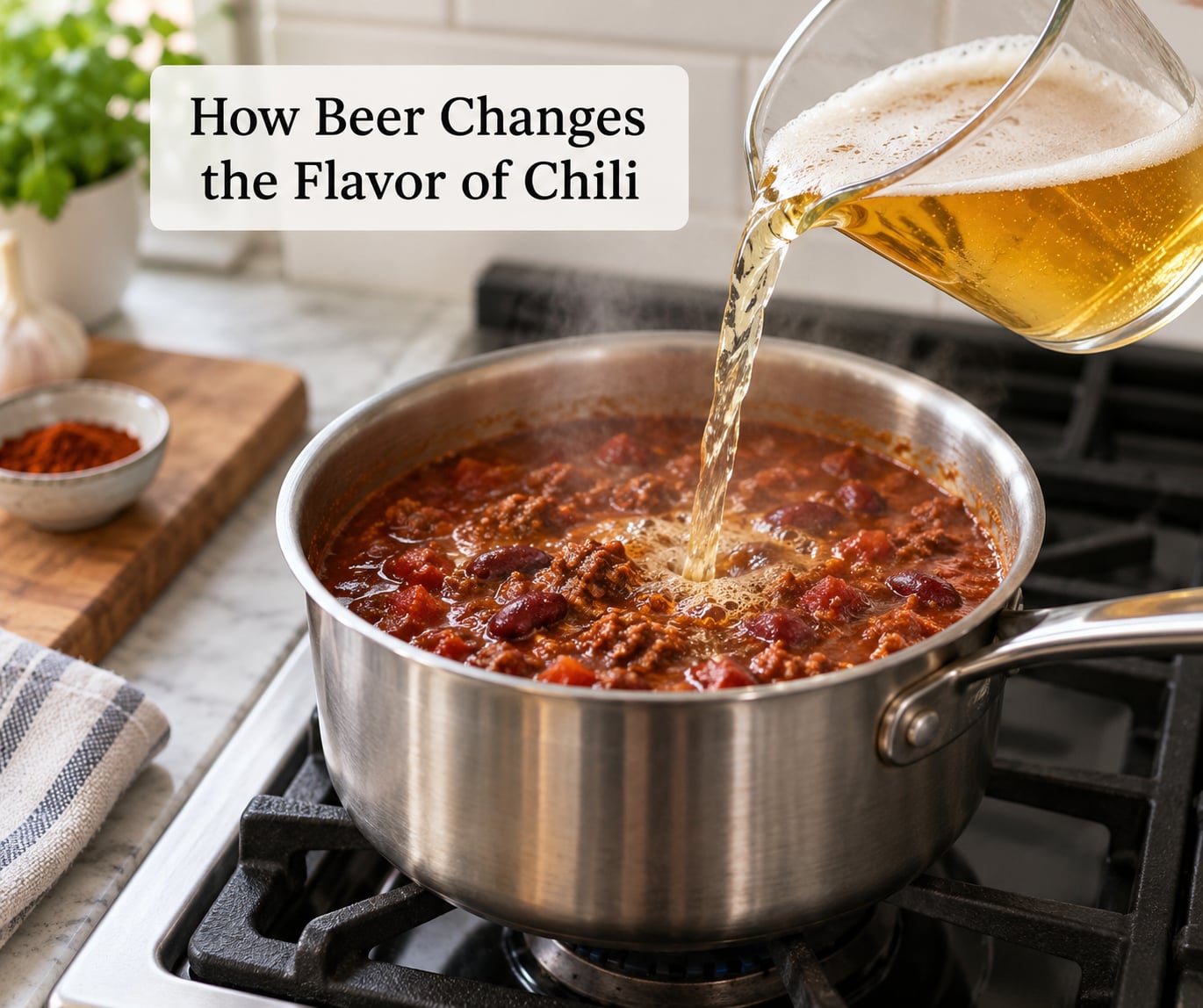
Beer is not just liquid with extra hops. It is fermented malt, which means it brings sugar that caramelizes, roasted compounds from kilned grain, and a small amount of hop bitterness that cuts through fat. Simmered into chili, those components behave like a seasoning you could never buy in a jar.
Malt sweetness and caramelization
When malt sugars heat past about 300 degrees F, they start browning into caramel and toast notes. Because chili simmers for a long time, that reaction has hours to work, which is why a beer with residual sweetness rounds out the edge of a pot that tastes flat with broth alone.
Roast, not just darkness
A dark color does not guarantee good flavor. Coffee, chocolate, and char notes come from roasted malts, and a roast-forward porter reinforces the browned beef and cumin in a meaty chili. A plain dark lager with no roast character mostly adds sweetness and body, which is a fine but different effect.
Hop bitterness and the concentration trap
Bitterness does not evaporate the way alcohol and water do. As the chili reduces over an hour or more, hop bitterness concentrates along with everything else. A 65 IBU double IPA will still taste aggressively bitter at the end, and one home cook on r/AskCulinary traced a ruined sweet potato and black bean chili back to exactly that kind of hop load.
Fermentation and carbonation
Fermented beer carries fruity and earthy notes that read as complexity rather than sweetness. The carbonation itself mostly disappears in a simmer, but it helps loosen browned bits off the bottom of the pot, which is the same job deglazing does in a restaurant kitchen.
Best Beer Styles for Different Types of Chili
This is the chart I wish I had when I started cooking. It maps each style to the flavor it contributes, the chili it flatters most, familiar bottles, and the case where it is the wrong call.
| Beer style | Flavor it adds | Best for which chili | Example beers | Skip it if |
|---|---|---|---|---|
| Pale lager | Clean malt, light body, no roast | Chicken, turkey, white bean, mild vegetarian | Coors Banquet, Yuengling Lager, Modelo Especial | You want a beef pot to taste deep |
| Pilsner | Bready, cracker-like malt, dry finish | Chicken, pork, light bean chili | Samuel Adams Boston Lager | You are chasing roasted or chocolate notes |
| Hefeweizen | Banana and clove, high carbonation | Pork and sauerkraut chili, Oktoberfest chili | Any Bavarian wheat beer | Your chili is dark and spice-heavy |
| Amber lager or bock | Toasty caramel, medium body | Turkey chili, sausage chili, mid-weight beef | Shiner Bock, Dos Equis Amber | You want a delicate flavor profile |
| Amber or red ale | Caramel and toasted bread, light fruit | Beef chili, bean chili, chicken with cumin | Fat Tire, Newcastle Brown Ale | Your pot is already very sweet |
| Brown or nut brown ale | Nutty, biscuity, caramel backbone | Beef and pinto bean chili | Samuel Adams Nut Brown | You are cooking a seafood chili |
| Porter | Roast, coffee, chocolate, dark bread | Beef, sausage, chili with cocoa or smoked paprika | Guinness Draught, Black Butte Porter, Founders Porter | You want a light, bright pot |
| Stout and oatmeal stout | Dense roast, coffee, dark chocolate, body | Smoky beef chili, chili with ancho chile | Guinness Extra Stout, Left Hand Milk Stout | The chili is delicate or heavily citrus-spiced |
| Session or pale IPA | Mild hop aroma, light bitterness | Large-batch turkey or chicken chili | Any session IPA under 5% ABV | Your pot will reduce for over an hour |
| Double or imperial IPA | Heavy bitterness, resin, citrus | Very large batches only, tiny additions | High ABV West Coast style IPAs | You are cooking a normal home pot |
Light, Crisp Beer Choices for Bright Chili
For chicken, white bean, fish, and anything finished with lime or cilantro, the beer should step back. A pale lager or pilsner adds a soft malt cushion without pulling the pot toward roast, and it will not fight delicate aromatics that a dark beer would bury.
Restrained pale ales work too, as long as the bitterness stays modest and the hops stay in the background. If you can taste grapefruit or pine resin in the glass, that is a signal the same flavor will be louder in the pot after an hour of simmering.
One caution on wheat beers. The banana and clove fermentation character is a real flavor, not a neutral liquid, and it can read as odd in a chili that is not Germanic. It is a lovely match for sausage and sauerkraut chili, though, where the fruit notes have something to work against.
Malt-Rich Beer Choices for Hearty Chili
Heavy chili wants heavy malt. An amber ale brings caramel and toast that mirror the browning on beef, while a brown ale adds a nutty, biscuity quality that is especially good with pinto or black beans and cumin-heavy seasoning.
Porters and stouts are the usual recommendations in beer forums, and the reasoning is straightforward: their roast notes stack with browned meat, coffee, and dark chile powder. BeerAdvocate community members cooking chili tend to favor dark, lower-ABV porters and stouts, naming bottles like Black Butte Porter and Edmund Fitz.
If you already love beer in your chili, home brewers report that a chocolate mole porter or another strong ale works in a stout’s place. HomebrewTalk recipes run as high as 18 ounces of beer in a large pot, which fits the ratio below for a big batch.
One practical note: stronger beers carry more alcohol, and more alcohol takes longer to cook off. A high-ABV imperial stout in a crockpot may still taste boozy when it is done.
Hoppy IPAs and Beers to Use Carefully
Yes, you can use an IPA in chili, but style matters more than usual. A session or pale IPA at under 5% ABV and modest bitterness adds a pleasant herbal note to a large pot of turkey chili. A double or imperial IPA in a home-sized pot is a different proposition entirely.
Because hop bitterness concentrates as liquid reduces, the safe move is to start small. Use half a 12-ounce bottle for a pot serving four to six, simmer it fully, then taste before deciding to add more. You cannot stir bitterness back out of a pot.
Also skip sours and fruit beers. Their acidity and fruit character clash with cumin and chile powder rather than complementing them, which is the one point nearly every cook agrees on, whether they started with a stout or a pilsner.
How Much Beer to Add and When
For a standard pot serving four to six people, one 12-ounce bottle is the right starting point. It is also about the amount for two pounds of ground meat, or roughly one cup of beer for every two cups of liquid the recipe calls for.
Add the beer where the recipe adds its water, broth, or canned tomatoes, and add it at the same stage. That means pouring it into the pot right after you brown the meat and aromatics, while the fond is still on the bottom, then letting the whole thing simmer.
Give it a long simmer. Anywhere from 45 minutes to two hours at a low bubble is the range most home cooks land on, and the reduction is what you are after: slightly thicker chili, less raw beer taste, and a malt flavor that has merged with the spices rather than sitting on top.
Finishing with a splash of beer at the end is a different technique entirely. It keeps the beer’s carbonation and fresh aroma, works nicely as a garnish over finished bowls, and is the move to make if you want a beer you can still taste.
How to Choose Beer for Chili Without Making It Too Bitter
Six things to check before you open the bottle. Look at the ABV and prefer something moderate if the chili will cook for a long time. Check the roast level and match it to the browning in the pot. Consider the sweetness, because a very sweet beer on top of sweet barbecue sauce or a sugar-based recipe can get cloying.
Then think about hops, carbonation, and heat. Strong hop presence is a risk in any pot that reduces. Carbonation matters most if you are finishing rather than simmering. And if your chili is already hot with habanero or ghost pepper, a high-IBU beer adds bitterness on top of burn, which is not a good pairing.
Taste as you go. Add the beer in stages, simmer, taste, and only then decide whether you need more. Your palate after the first stage is far more reliable than any rule about style names.
Food Safety When Cooking Chili with Beer
Beer is a normal cooking liquid, but it does not remove the usual care around meat. Follow standard USDA guidance for whatever protein is in the pot.
Cook ground meat to 160 degrees F, ground poultry and poultry pieces to 165 degrees F, and whole cuts of beef, pork, lamb, and fish to 145 degrees F with a three-minute rest. Using a thick, dark beer does not lower the required temperature.
For holding and reheating, cool the pot down quickly rather than leaving it on the stove. Move it into shallow containers, refrigerate within two hours of finishing, and reheat any remaining chili to 165 degrees F. A large deep pot cools slowly enough to sit in the danger zone for a long time.
On alcohol: most of it cooks off with sustained simmering, but not all of it, and trace amounts can remain. If the chili is for children or anyone avoiding alcohol, simmer it longer and uncovered, or add beer early rather than at the finish.
Frequently Asked Questions
What is the best beer to put in chili?
A smooth lager, amber ale, brown ale, or stout is the most versatile choice. A pale lager will not overpower a pot, while a stout adds welcome roasted depth to beef and bean chili. If you only buy one bottle for the job, reach for a porter or an amber lager from the shelf.
Can I use an IPA in chili?
Yes, but choose a pale or session IPA rather than a heavily bitter, resinous one. Hop bitterness does not evaporate; it concentrates as the chili reduces, so a double IPA can make a pot taste harsh. Start with half a 12-ounce bottle for a pot serving four to six and taste before adding more.
Does beer make chili taste better?
Beer adds malt sweetness that caramelizes during the simmer, fermentation-derived fruit and complexity, body, and a gentle bitterness that cuts the fat of the meat. Simmered into the chili, those flavors integrate into the dish. Poured on at the very end, the beer mostly still tastes like beer, which is a different effect.
How much beer should I add to a pot of chili?
For a standard pot serving four to six people, one 12-ounce bottle is the right starting point. Scale it to the meat at roughly 12 ounces per two pounds of beef, or about one cup of beer for every two cups of liquid. Cut the recipe’s other liquid by the same amount so the chili does not turn thin.
Can I use nonalcoholic beer in chili?
Yes. Nonalcoholic lager or amber-style beer supplies malt flavor and body without the alcohol, though it can taste flatter or sweeter than regular beer. Pick a fuller malt character rather than a light one. If you would rather skip beer, beef broth, a splash of red wine vinegar, or a teaspoon of molasses do similar work.
Is it safe to cook chili with beer?
It is safe to cook chili with beer, and beer is a standard ingredient in many chili recipes. Follow normal food-safety practice, especially with poultry, ground meat, or fish. Cool the pot quickly, move it into shallow containers, refrigerate within two hours, and reheat to 165 degrees Fahrenheit before serving.
Conclusion
Start with one 12-ounce bottle of a dark lager, amber, or porter and add it where your recipe adds liquid. If the pot tastes thin, add more liquid and simmer it down rather than reaching for a stronger beer. That single change solves more problems than picking the perfect style does.
That pot will still taste like a pot someone thought about for five minutes, and it costs about the same as the beer you would have poured instead.