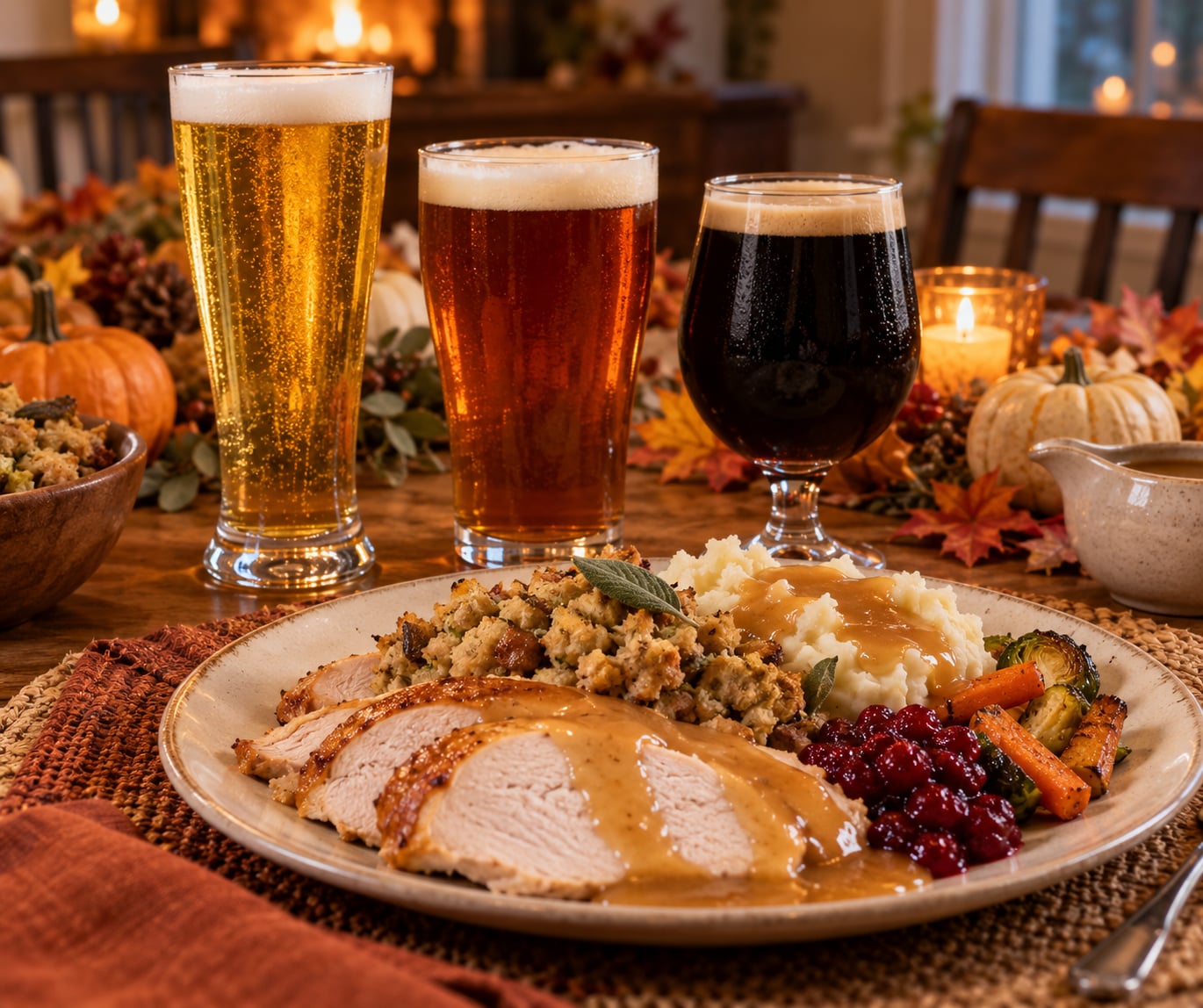
Beer goes with Thanksgiving dinner because carbonation and a clean malt finish cut straight through turkey fat and gravy while echoing the caramelized, spiced character of the meal. For most tables, the answer is a crisp pilsner or clean lager for the main course, one malty amber or brown for the sides and stuffing, and a dark stout or porter for dessert.
That is the whole rule, and it settles most of the arguments you will read about. One expert swears by hoppy IPAs, another by brown ales, and both are pairing well with something on the table. The useful move is matching the beer’s body to the richness of the dish instead of hunting for a single perfect bottle.
Table of Contents
- What Beer Goes With Thanksgiving Dinner? Quick Pairing Guide
- Which Beer Works Best with Thanksgiving Appetizers?
- What Beer Goes with Thanksgiving Dinner for Turkey and Gravy?
- Which Beer Matches Thanksgiving Sides and Stuffing?
- Sage stuffing
- Sweet potato casserole
- Green bean casserole and roasted vegetables
- Cranberry sauce
- Mashed potatoes and gravy
- Rolls and cornbread
- Should You Serve Beer with Dessert?
- How Do You Choose Beer for a Mixed Thanksgiving Menu?
- How Much Beer Should You Buy for Thanksgiving?
- How Should You Serve Beer at Thanksgiving?
- Frequently Asked Questions
- What is the best beer to drink with Thanksgiving dinner?
- Is IPA a good beer for Thanksgiving?
- What beer should I serve with turkey and stuffing?
- Should I serve beer with pumpkin pie?
- How many beer styles work for a large Thanksgiving gathering?
- What alcohol-free beer tastes best with Thanksgiving dinner?
- Start With the Main Pairing
What Beer Goes With Thanksgiving Dinner? Quick Pairing Guide
A crisp pilsner or clean lager is the safest all-purpose pick for roast turkey and gravy. Move to a malty amber ale, brown ale or saison for stuffing and sweet potatoes, then a stout or porter for pumpkin pie. Beers with carbonation and moderate acidity handle fat and gravy better than heavy, sweet, or aggressively hoppy ones.
| Thanksgiving course | What the dish is doing | Beer style to reach for | Representative beers |
|---|---|---|---|
| Cheese, crackers, sausage, dips | Salty, fatty, mild | Crisp lager, pilsner, wheat beer, light ale | Pilsner Urquell, Bell’s Amber Ale, a clean helles |
| Roast turkey with gravy | Rich, lean meat with a heavy sauce | Pilsner, helles lager, dry American IPA | Pilsner Urquell, Sierra Nevada Celebration Ale |
| Smoked turkey or ham | Salty, smoky, assertive | Brown ale, biere de garde, amber lager | Anchor-style brown, a Belgian saison |
| Sage stuffing | Savory, herby, buttery | Toasty lager, amber ale, brown ale | Oktoberfest-style marzen, nut-brown ale |
| Sweet potato casserole | Sweet, spiced, marshmallow-topped | Roasted brown ale, porter, dubbel | Nut-brown ale, Troegs Java Head |
| Green beans, glazed carrots, squash | Vegetable, sweet or tart | Wheat beer, saison, sour ale | Hefeweizen, a farmhouse ale |
| Cranberry sauce | Sharp and acidic | Dry pale ale or bitter | Extra-pale ale, a tart sour cranberry ale |
| Pumpkin or pecan pie | Sweet, spiced, rich | Stout, porter, brown ale | Founders Breakfast Stout, a milk stout |
Which Beer Works Best with Thanksgiving Appetizers?
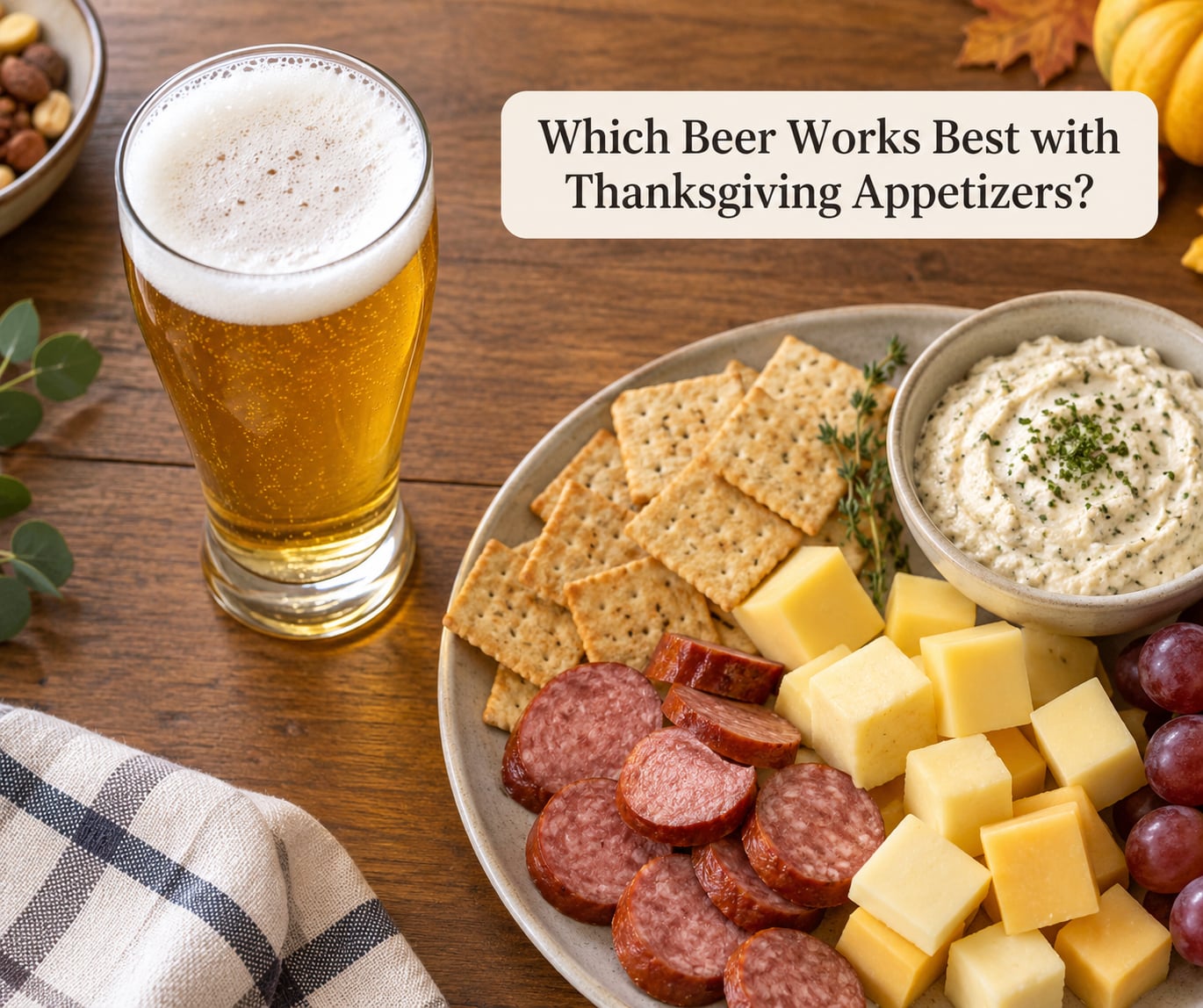
Start light. Appetizers arrive while people are still standing around the kitchen holding a plate, and the beer that works there is the one that tastes clean at room temperature. A crisp lager or pilsner is the safe answer, and a wheat beer adds a little bread-crust and citrus character that suits crackers and mild cheese.
Salty snacks raise a glass of pale beer on their own. Sausage rolls, salted nuts, chips with a sharp dip, and charcuterie all make a light ale or a pilsner taste brighter, because salt makes the malt in a heavier beer read as flat.
Skip the double IPAs and imperial stouts at the appetizer stage. Hop bitterness against a brie or a goat cheese turns sharp fast, and nobody wants to arrive at the table already tired of the night’s beer.
Serve the first round a little colder than you think, around 38 to 40 degrees Fahrenheit, and start it before anyone sits down. Pour it into whatever short glass or tumbler you have rather than saving nice stemware for a party that ends at a folding table.
What Beer Goes with Thanksgiving Dinner for Turkey and Gravy?
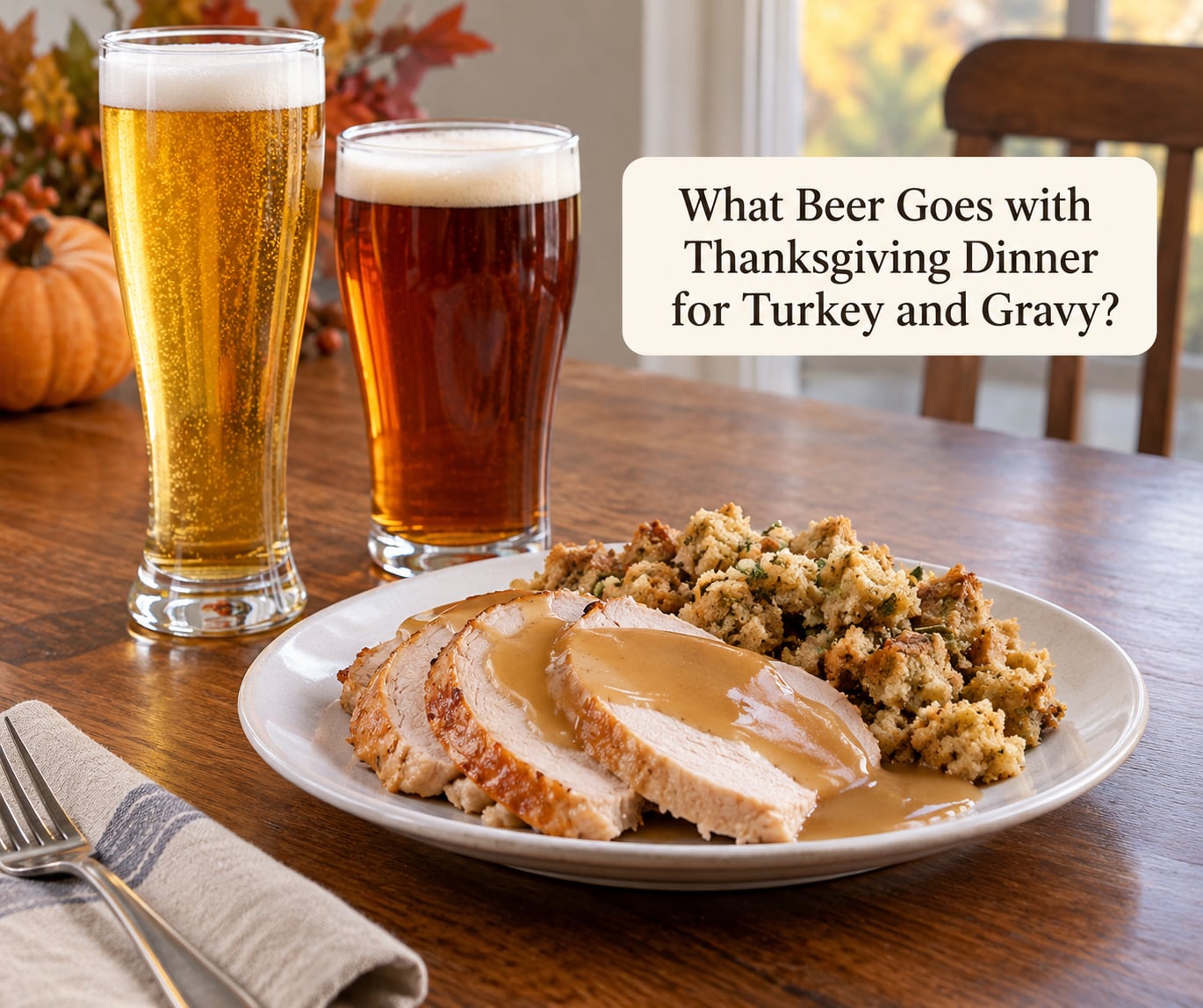
This is the pairing most of the table actually cares about, and the recommendation is a crisp pilsner or clean lager. Turkey is lean and savory, gravy coats everything in fat and salt, and a cold, highly carbonated lager resets your palate between bites. It is also the least polarizing option on the table.
A dry American IPA is the credible alternative, and hop bitterness plays well against gravy the same way it plays against fried chicken. Keep the bitterness moderate; a beer that finishes aggressively piney will make the gravy taste flat by the second plate.
Household names get further than brewery trivia. Pilsner Urquell is repeatedly named in beer forums as a host-safe pick because it has flavor without being intimidating to someone who does not think about beer, which solves a problem most hosts never admit to having.
Adjust for the bird. Smoked turkey and ham already bring salt and smoke, so a malty brown ale or a saison holds up better than a pale lager there. A vegetarian Wellington or a baked tofu main wants the same fresh, lightly hopped beer as the turkey, since there is no meat fat to cut through.
Homebrewers have long paired a simple pale ale with the whole meal, and the reason holds up: the grain character follows the sage, onion and brown sugar aromatics that come off the table all afternoon.
Which Beer Matches Thanksgiving Sides and Stuffing?
Match the beer to the side that dominates the plate rather than trying to find one bottle for the whole spread. Guests who love stuffing and ignore green beans need different bottles from those who reverse it.
Sage stuffing
Herby, buttery and slightly sweet. A toasty amber lager or a nut-brown ale matches it, and bready malt reads as an extension of the stuffing itself. This is the single most popular side to pair on purpose.
Sweet potato casserole
The sweetest item on the table, with marshmallow and brown sugar on top. A roasted brown ale or a porter covers the caramel notes without turning cloying, because the bitterness of the roast malt gives the sugar something to sit against.
Green bean casserole and roasted vegetables
Green beans, squash and carrots need something bright. A wheat beer or a saison, with its peppery yeast and citrus hop, resets the palate after the heavier casseroles.
Cranberry sauce
Acidic, which makes it the easiest side to match. A dry pale ale or a bitterness-forward beer plays well with tartness, and a sour cranberry-style ale has been praised for exactly this brightness. If you serve it, keep the rest of the lineup moderate in bitterness.
Mashed potatoes and gravy
Both are starch and fat in a bowl, which is exactly what a pilsner is built to cut. There is no reason to drink anything heavier here.
Rolls and cornbread
Drink the lager. A bottle with a toasty malt edge will make you think the bread is better than it is, which is a good outcome for the cook.
Should You Serve Beer with Dessert?
Yes, if you pick a beer with roasted and chocolate character and stay away from anything aggressively bitter. Pumpkin pie, pecan pie and apple dessert all share warm spices and brown sugar, which is the same flavor family found in a stout or a porter.
A coffee-and-chocolate stout is the unanimous dessert pick across beer communities. A milk stout softens the roasted edge and handles cheesecake or a chocolate-mousse dessert better than a dry imperial stout ever would.
Leave the imperial IPAs and the double IPAs at the other end of the table. Heavy bitterness against pumpkin pie reads as a flaw in the pie, and no host needs that conversation at the end of a long afternoon.
Pumpkin ales are the most divisive entry on the table. They get called gimmicky and candle-smelling often enough that it is worth serving one as a curiosity rather than as the main recommendation, and never alongside the pie if your guests have not asked for it.
A sour ale is the interesting counter-move with a fruit dessert, since its acidity reads as another fruit note. It splits the table, so make it an optional pour.
How Do You Choose Beer for a Mixed Thanksgiving Menu?
Count your guests, then decide how many beers you are willing to pour. A three-beer lineup covers every course without turning the evening into a tasting, and it is the number most hosts land on after one too many past attempts.
A workable three: a crisp lager for the appetizers and the turkey, a malty amber or brown for the stuffing and sweet potatoes, and a dark stout or porter for dessert. Everything else is a bonus, not a requirement.
Account for the guests who will not finish a beer, and for the person driving. Plan one alcohol-free option that is good rather than an afterthought, since non-alcoholic beer has closed most of the gap with the real thing and malt-heavy flavors like amber and brown ale translate well. Bottled hop water or sparkling water works too when a guest prefers it.
Offer people a small taste before committing the table to a full pour. A host who brings three styles and lets guests sample all three removes most of the risk, and it takes about ten seconds.
If your main is brisket, roast chicken, or a smoked ham rather than turkey, the lineup barely changes. Bolder meat wants more malt and a touch more hop, so shift from the pale lager toward a brown ale or a doppelbock.
How Much Beer Should You Buy for Thanksgiving?
Plan on three to four beers per drinking adult for an afternoon and evening that stretch from the appetizers to the football game or the second coffee. A meal this long, with food spread through most of it, slows people down considerably compared with a normal night.
Most Thanksgiving dinners run four to five hours from the first pour to the last. That length is why the sessionable option works so well: a beer under about 4.5 percent ABV at 38 degrees feels like a reasonable amount of liquid across that span, while a double IPA does not.
Add one bottle for every two to three guests who are drinking less, nursing a beer, or driving. If wine, cider, and cocktails are also on the table, cut the beer count rather than the buffer, because people drink what is in front of them.
Buy a modest buffer, maybe a dozen extra bottles on a case, and keep them cold in a cooler rather than in the fridge taking up the shelf you need for the turkey.
How Should You Serve Beer at Thanksgiving?
Temperature changes everything. Light beers want to be colder than most hosts serve them, and darker styles want to be warmer, which is the opposite of the instinct to put the whole table in one ice bath.
| Style | Serve at | Glassware | Why |
|---|---|---|---|
| Pilsner, helles, lager | 38 to 40 F | Short tumbler or pilsner glass | Keeps the malt crisp and the carbonation tight |
| Wheat beer, witbier | 40 to 42 F | Tulip or weizen glass | Slightly warmer lets the banana and clove notes show |
| Amber ale, brown ale | 45 to 50 F | Pint or tulip | Cooler temperature mutes the caramel and toasty malt |
| Saison | 45 to 48 F | Tulip | Farmshouse yeast reads better just above cellar temp |
| Porter, stout | 50 to 55 F | Nonic pint or tulip | Roast and coffee flavors need warmth to open up |
Chill the pale bottles the night before, not the morning of. Set out a cooler or an ice tub near the table so anyone can replace a warm bottle without opening the fridge mid-game, and open bottles as you need them rather than stacking empties beside the platter.
A few small pours beat one large one for the same reason. Four-ounce tasting pours let guests meet all three styles without committing to a bottle they will not finish.
One food-safety note while you are hosting. Refrigerate leftovers within two hours of taking them out, and keep them at or below 40 degrees Fahrenheit, which is the USDA guideline. Scrape the gravy and the stuffing into shallow containers so they chill quickly rather than sitting in a deep pan.
Frequently Asked Questions
What is the best beer to drink with Thanksgiving dinner?
A crisp pilsner or clean lager is the most reliable pick for roast turkey and gravy, because its carbonation cuts through the fat while its malt stays light enough not to fight the meal. Add a malty amber or brown ale for stuffing and sweet potatoes, then a stout or porter for pie. Three styles cover the whole table.
Is IPA a good beer for Thanksgiving?
A dry American IPA works well with turkey and gravy, and the hop bitterness cuts through fat much like it does fried chicken. Keep the bitterness moderate, and save the double and imperial IPAs for a different occasion. Over-hopped beer will make gravy taste flat and turns sharp next to brie.
What beer should I serve with turkey and stuffing?
Serve a crisp lager for the turkey and a malty amber or brown ale for the stuffing, since those two dishes point in different directions. Turkey is lean and savory and wants carbonation. Stuffing is herby and buttery and wants toasty malt that echoes the bread crust.
Should I serve beer with pumpkin pie?
Yes, if the beer is roasted and chocolate-forward. A stout or porter shares the pie’s warm spice and brown sugar profile, and a milk stout handles cheesecake even better. Avoid bitter double IPAs, which read as a flaw against the dessert, and treat pumpkin ale as an optional pour rather than a default.
How many beer styles work for a large Thanksgiving gathering?
Three is the sweet spot for most tables: a crisp lager for the appetizers and main, a malty amber or brown for the sides, and a dark stout or porter for dessert. Offer small tasting pours so guests can try all three, and add an alcohol-free option so nobody has to sit out a course.
What alcohol-free beer tastes best with Thanksgiving dinner?
Look for non-alcoholic versions of the same styles you are serving, rather than a single canned brand. Malt-forward amber, brown, and stout styles hold up best against gravy and sweet potatoes because their flavor comes from grain rather than alcohol. Sparkling water and hop water are good non-beer backups.
Start With the Main Pairing
Buy a case of a crisp pilsner or clean lager and let that carry the table through turkey and gravy. It is the least arguable choice, and it works for guests who do not think of themselves as beer people.
Then add one malty option, an amber or a brown ale, for whoever is eating stuffing and sweet potatoes, and one dark stout or porter to pour with the pie. Three bottles in the fridge cover the courses, keep the hosting simple, and leave room for an alcohol-free choice at the end.
Updated for 2026.