A blind beer tasting is a guided tasting where nobody sees a label, so guests rank the beers on what is actually in the glass. Knowing how to host a blind beer tasting comes down to logistics: pick four to eight beers with real contrast, hide the labels, number every glass, pour identical samples in the same order, and score before anyone finds out what they drank. Budget about 90 minutes for the tasting and 15 minutes of setup.
A blind tasting is not a quiz where you guess the brewery. It is a way to strip away label design, brewery reputation, and price so the beer has to stand on aroma, taste, and mouthfeel alone. Almost every host I have told this to says the same thing afterward: they were surprised, and they kept at least one bottle they would have skipped in the store.
The hardest part is not the beer. It is resisting the urge to name the brewery halfway through, and keeping guests from announcing their scores where everyone else can hear.
Table of Contents
- What You Need
- How to Host a Blind Beer Tasting Step by Step
- Choose the Beer Lineup
- Prepare the Glasses and Score Sheets
- Chill and Pour the Beers
- Run the Tasting Without Giving Away Answers
- Score and Discuss Each Beer
- Reveal the Results and Choose a Winner
- Common Mistakes
- Frequently Asked Questions
- How many beers should I use for a blind beer tasting?
- Should all the beers be the same style?
- What temperature should beer be served at for tasting?
- Do I need special glasses to host a blind beer tasting?
- How do I score beers without knowing their names?
- When should I reveal the beers during a blind tasting?
- Conclusion
What You Need
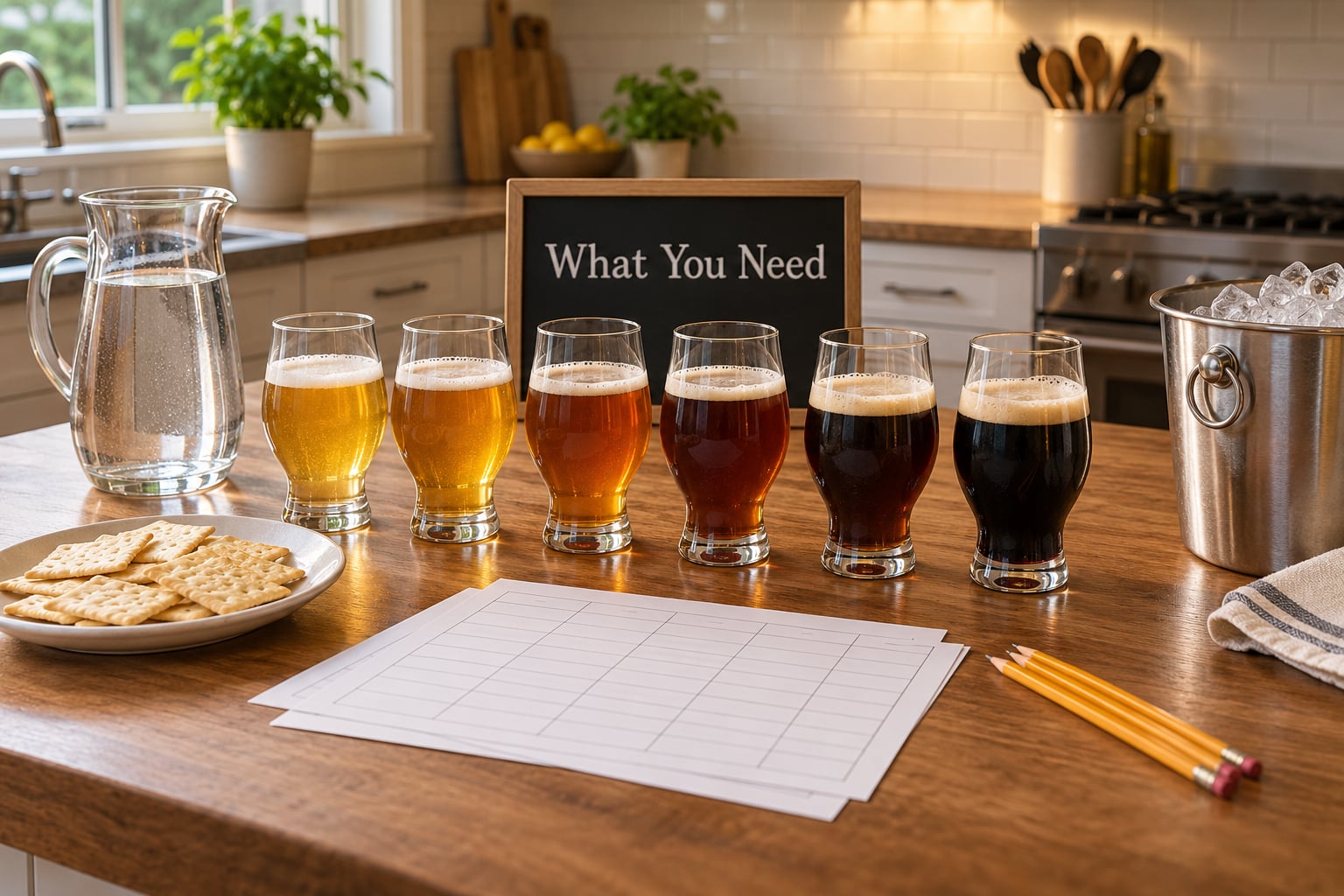
You need four things: the beer, identical glassware, a blinding method, and a scoring sheet. Everything else is optional. That is what makes this the easiest tasting format to run at home, because the supplies are ordinary and the technique is short.
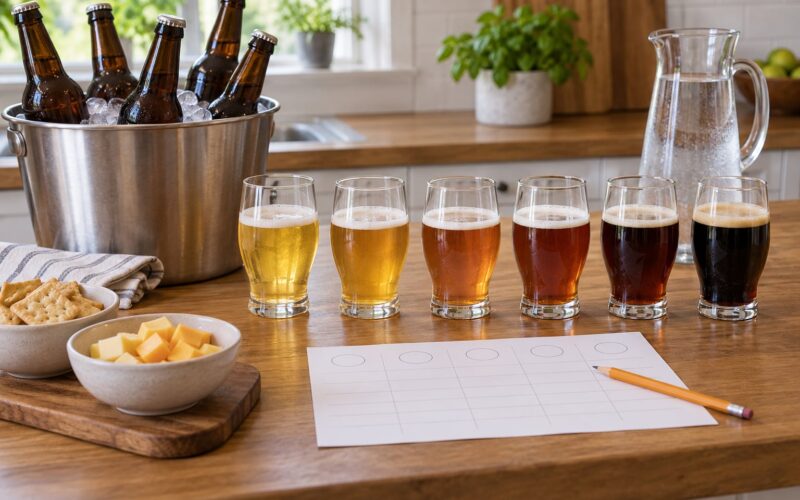
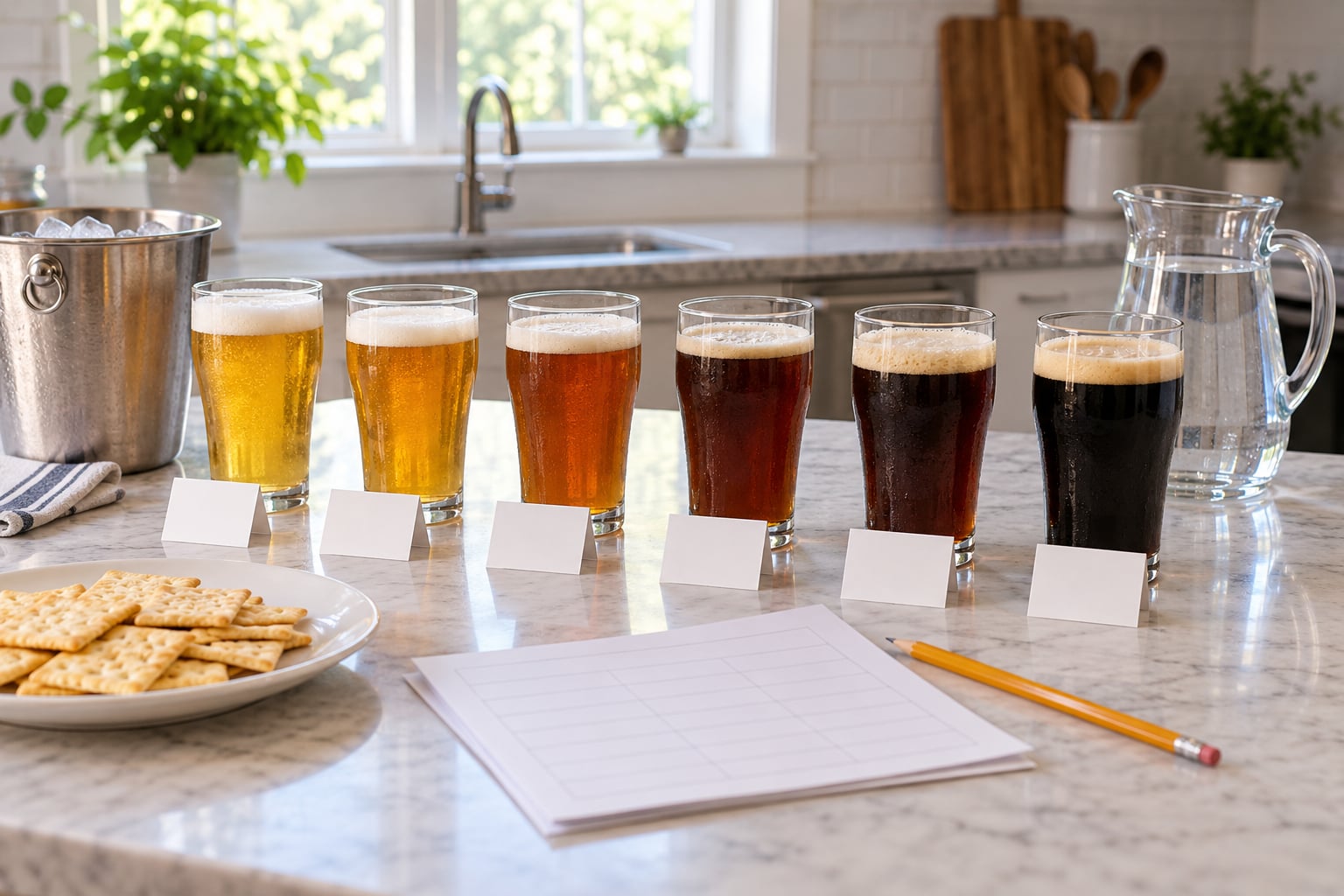
- The lineup. Four to eight beers. Six is the sweet spot because it gives you real contrast without dragging the evening past two hours.
- Glassware. One identical glass per guest per beer if you have them (six guests times six beers is 36, which most people do not). Otherwise one glass per guest plus a rinse glass, rinsed and dried between pours.
- Blinding supplies. Opaque bags, brown paper bags, or plain label sleeves, plus a roll of tape and a marker.
- Score sheets. One per guest, printed or drawn by hand, with a row per number and columns for the tasting categories.
- Number cards. Small tent cards or slips of paper numbered one through six, one set per guest.
- Water and crackers. Plain water crackers, unsalted bread, and still or sparkling water for palate cleansers between samples.
- A pour line. Either a marked glass or a jigger or measuring cup so every pour is the same size.
- A spittoon or pour-out tub. A large pitcher, bucket, or sink you do not mind sacrificing. Tasting is not drinking.
Here is the pre-tasting checklist I run through the morning of: lineup chosen and cold, bags and tape out, sheets printed one per guest plus two spare, glasses washed and dried, numbers written, food plated, ride plan confirmed.
Each of those items protects fairness. Identical glasses stop the shape of the glass from hinting at the style. Even pours stop a bigger sample from tasting stronger. Neutral food and water stop the third beer from inheriting the flavor of the second.
How to Host a Blind Beer Tasting Step by Step
Six steps, in order. The sequence matters more than the beer you pick, because every step after the lineup exists to stop a clue leaking.
Choose the Beer Lineup
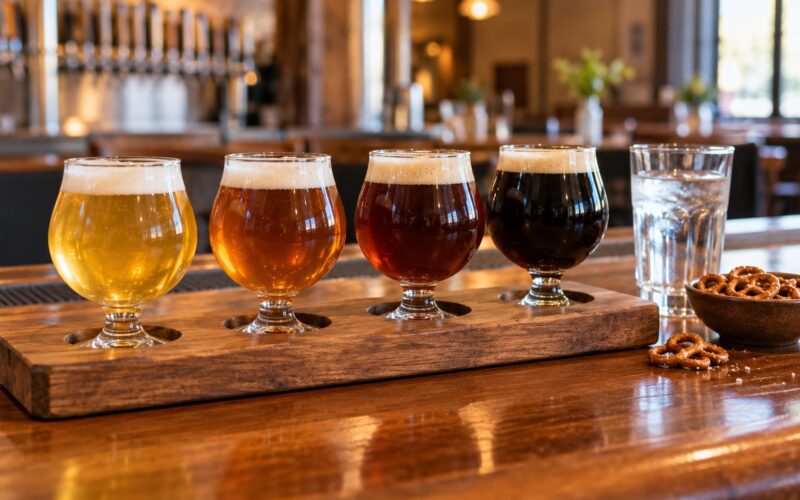
Pick four to eight beers with genuine contrast in color, body, and hop character. A lineup where every bottle is a pale, hoppy ale teaches guests almost nothing, because they have nothing to compare.
Keep the beers in similar condition. Comparing a can to a year-old bottle is not a fair test, and neither is comparing a hazy, freshly dropped IPA to a lager that has been in the fridge for months. Age everything to the same stage, or leave the freshness factor out of it entirely.
Also skip beers that only taste right to experienced drinkers. A heavily sour or wild ale with no obvious reference point can register as simply bad to a guest who does not know what they are drinking, and the scoring becomes a referendum on confidence rather than on the beer. A six-beer example lineup that works well:
- A clean, pale lager or pilsner as the neutral baseline.
- A pale ale with a bit of malt and a bit of hop.
- A bold, hop-forward ale, served without ceremony.
- A dark roasty porter or stout.
- A peppery farmhouse ale or a hazy wheat beer.
- A tart or barrel-aged beer for contrast, with an explanation of what they are tasting.
Aim for a lineup a friend who “just drinks lager” can still engage with. One challenging beer at the end of six is curiosity; three in a row is homework.
Prepare the Glasses and Score Sheets
Put every beer into an opaque bag or cover its label with a plain sleeve, then write a number on the bag. Write that number down on a master key sheet, fold it, and put it somewhere guests will not read it. That sheet is the whole secret.
Number the glasses to match. If each guest has their own set, use one identical glass per number per guest. If you are short on glassware, give each guest a single glass plus a rinse glass and pour the rinse glass out between samples.
Every score sheet needs a row per beer and these columns:
| Sample | Appearance | Aroma | Taste | Mouthfeel | Finish | Overall | Notes | |
|---|---|---|---|---|---|---|---|---|
| 1 | ||||||||
| 2 | ||||||||
| 3 | ||||||||
| 4 | ||||||||
| 5 | ||||||||
| 6 |
Score each column from one to five and leave notes for anything you cannot put a number on. That format borrows from competition judging sheets used by the Beer Judge Certification Program, where appearance, aroma, flavor, mouthfeel, and overall impression are scored separately. You do not need the vocabulary of a judge to use it, though.
Chill and Pour the Beers
Chill everything in advance and pour identical samples. Standard practice is a two-ounce to three-ounce pour per sample, served in similar glassware, at a temperature matched to the style.
Cold lagers and pilsners taste their best around 38 to 45 degrees Fahrenheit. Most ales, from pale ales to stouts, land around 45 to 55. Imperial and barrel-aged styles often taste better warmer, up near 60, because the higher alcohol and complexity need warmth to open up.
Pour down the side of a tilted glass to control foam, fill to the same line every time, and stop before the head gets so thick it hides the color. If you overpour the first glass, you have quietly changed the test, because that sample now has more liquid and more alcohol than the rest.
For a group of six tasting six beers at three ounces per pour, you need roughly 1.1 liters of beer total, which is four 12-ounce bottles opened per six samples, plus one spare bottle in case a pour goes wrong or a guest wants a taste of something that scored well. Two-ounce pours for high-alcohol styles bring that down; four-ounce pours for a casual format with no scoring double it.
Run the Tasting Without Giving Away Answers
Pour every beer for every guest before anyone tastes anything. Number one first, then two, and so on, and always in the same order for every person in the room.
Serve light to dark and low-alcohol to high-alcohol. Beer two that is pale and light will make beer three, a darker and stronger sample, look heavier than it is. A hoppy aroma will numb the next sample’s aroma if you go back to something subtle.
At the start, say something like: “There are six beers. You will not see or hear any names tonight. Taste each one, score it on your sheet, and hold your guesses until the reveal. Water and crackers are on the table between samples. Take your time with the first sip of each.”
Then let the room go quiet. Discussion of beer one while beer two is being poured changes how people score beer two, and by beer four you are measuring the group dynamic as much as the beer.
On refills, pour the same numbered sample again from the same bag, top everyone up at once, and never tell a guest how much they may have. If somebody pours their own and goes heavy on the stout, note it, and keep serving the same portions to everyone else.
Score and Discuss Each Beer
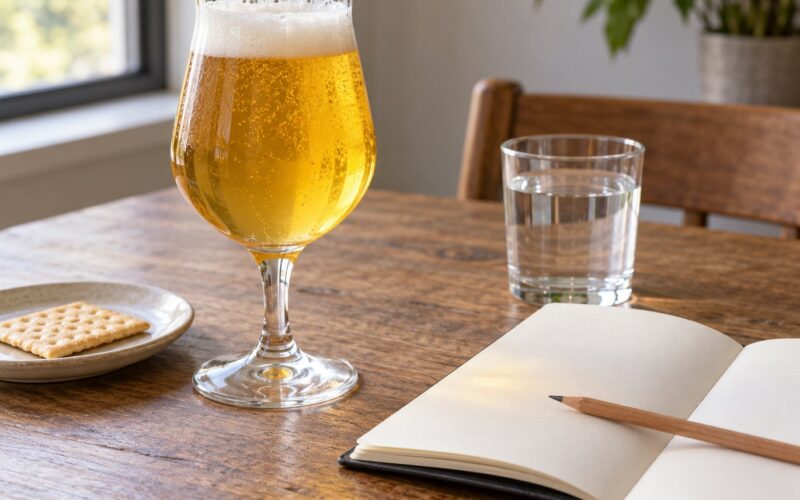
Taste in a fixed order: look at it in the glass, smell it, take a small sip, let it sit, then swallow and note the finish. Judges call this see, smell, sip, savor, swallow, which is the beer version of the wine tasting ritual most people already know.
Score each beer as you finish it, not at the end. Memories of sample three blend into sample five fast, and a score written twenty minutes later is really a score of the evening.
A simple five-point scale works: one is not for me, three is fine, five is exceptional. Score the beer you are drinking, not the beer you wish it were. A sentence like “three for taste, thin body, finishes dry” tells the group far more than a number alone, and it keeps the conversation about the liquid in the glass.
If someone asks what style they think it is, take the guess but tell them to write it on the back of the sheet. Guessing mid-flight anchors the next sample, and once a guest is hunting for “the IPA” they stop tasting what is in front of them.
Reveal the Results and Choose a Winner
Unfold the master key, then announce the numbers one at a time in the order they were served. Write each name on the board next to its number so everyone sees the mapping at once, rather than calling out reveals one by one and letting the room argue.
Total the overall scores, highest wins. If two beers tie, break it on the taste column, and say that you decided the tiebreaker in advance so it is not a judgement call in front of a room of tired, slightly opinionated friends.
One honest caveat before you crown a winner: a blind tasting tells you what your group preferred that night, in that order, at that temperature. Order matters, and later samples suffer from palate fatigue while earlier ones set the standard. That is why the reveal conversation is worth more than the score sheet. Ask what surprised people, not who won.
Common Mistakes
Almost every disappointing blind tasting traces back to one of a handful of fixable errors. Here they are with the correction.
- Different glass sizes. A taller glass changes how much aroma you get. Use one identical glass for every sample, or one identical set per guest.
- Inconsistent temperatures. A warm lager next to a cold ale is not a fair comparison. Chill everything together and match temperature to style.
- Pouring too much. Three ounces per sample across six beers is plenty, and heavy pours end the evening early. Pour to a line, not to a feeling.
- Leaking clues. Bottle silhouette, can versus bottle, pour color, and glass shape all give a beer away before anyone smells it. Bag the bottles, cover the labels, and use consistent glassware.
- One guest running the room. Let the loudest voice set the pace and you lose the data. Have everyone score before anyone speaks.
- Scoring at the end. Guests who fill in one sheet after sample six are scoring their memory. Score each sample as it finishes.
- Heavy or spicy food. Strong cheese, chili, and smoked meat flatten the next several samples. Plain crackers and bread keep the palate neutral.
- Overloaded sheets. A page of twenty questions kills a casual group. Six columns and a notes box is enough.
A few hosting habits that keep the night pleasant: decide the winner rule before anyone scores, keep the reveal under five minutes, have non-alcoholic options poured from the same numbered bags so nobody is watching from the sidelines, and set up a ride plan before the first pour rather than after.
Frequently Asked Questions
How many beers should I use for a blind beer tasting?
Four to eight beers, with six as the sweet spot for a home flight. Six gives you enough contrast in color and style for the results to surprise people, while staying short enough to finish in about 90 minutes before palate fatigue muddies the scoring. Eight is the practical ceiling. Past that, guests stop tasting carefully and start guessing.
Should all the beers be the same style?
No. Mixing styles is the point, because guests can only compare what is different. A lineup of six identical pale ales teaches nobody anything. Aim for a neutral lager, a balanced pale ale, a bold hoppy beer, a dark roasty beer, something spicy or floral, and one tart or barrel-aged sample. Contrast is what makes a blind tasting worth running.
What temperature should beer be served at for tasting?
Match the temperature to the style. Lagers and pilsners taste cleanest around 38 to 45 degrees Fahrenheit. Most ales, from pale ale to stout, sit well between 45 and 55. Imperial and barrel-aged styles benefit from warmer service, near 60, because alcohol and complexity need warmth to open up. Chill everything together first so nobody’s sample is served warmer than the rest.
Do I need special glasses to host a blind beer tasting?
No. One identical glass per guest is enough, plus a rinse glass you use between samples so every guest tastes from the same shape each time. If you have tulips or snifters, six sets numbered one through six make it smoother. What matters is that the glass does not hint at the beer, so avoid serving a tall flute for one sample and a tumbler for the next.
How do I score beers without knowing their names?
Score what you taste, not what you assume. Give each column, from appearance through overall impression, a one-to-five rating, and write short notes as you go. Keep guesses on the back of the sheet so a hunch about an IPA does not steer your next sample. This is the same column format competition judges use, simplified so guests who have never scored a beer can fill it in.
When should I reveal the beers during a blind tasting?
Reveal at the end, after every sample has been poured, tasted, and scored. Announce the numbers in the order they were served and write each name beside its number so everyone sees the full mapping at once. Revealing earlier ruins the tasting for everyone still to come, and it turns the second half of the night into an argument about the IPA nobody finished.
Conclusion
Start smaller than you think. Pick six beers, chill them together, bag the labels, number the glasses, and print one sheet per guest before anyone arrives. Pour three ounces in a fixed light-to-dark order, let the room taste in silence, and reveal the key at the end.
Once that format is comfortable, you can swap in themed flights, a pairs challenge, or a scored homebrew round using the same sheet. But the first run should stay simple: six samples, six numbers, one honest conversation about what people actually tasted.