Pairing beer with barbecue comes down to one idea: match the beer’s intensity to the food, then decide whether you want it to mirror the dish or cut against it. Smoky, fatty, low-and-slow cuts like brisket and ribs want something malty and substantial, while delicate grilled chicken, shrimp, and vegetables want a lighter, crisper, more carbonated style. Get that right and every bite of food tastes like you planned it, instead of like you just opened a cooler.
Most people get pairing wrong by bringing one beer for the whole cookout. The better approach takes about five minutes of thought before the grill fires, and it changes the entire afternoon. Below is the process I use, cut by cut, plus the temperature mistakes that flatten an otherwise good pairing.
Last updated October 2026
Table of Contents
- What You Need to Pair Beer With Barbecue
- Step-by-Step: Match Beer Styles to Every Cut
- Identify the Main Barbecue Flavor
- Choose a Beer Style That Contrasts or Complements
- How to Pair Beer With Barbecue Foods Cut by Cut
- Serve the Beer at the Right Temperature
- Taste in Small Bites and Sips of Beer
- Build a Simple Barbecue Beer Flight
- Common Mistakes When Pairing Beer With Barbecue
- Frequently Asked Questions
- What beer goes best with barbecue?
- Is beer better than wine with barbecue?
- What beer pairs with brisket?
- Should you serve beer cold with barbecue?
- Can IPA be paired with barbecue?
- How do you taste beer with barbecue?
What You Need to Pair Beer With Barbecue
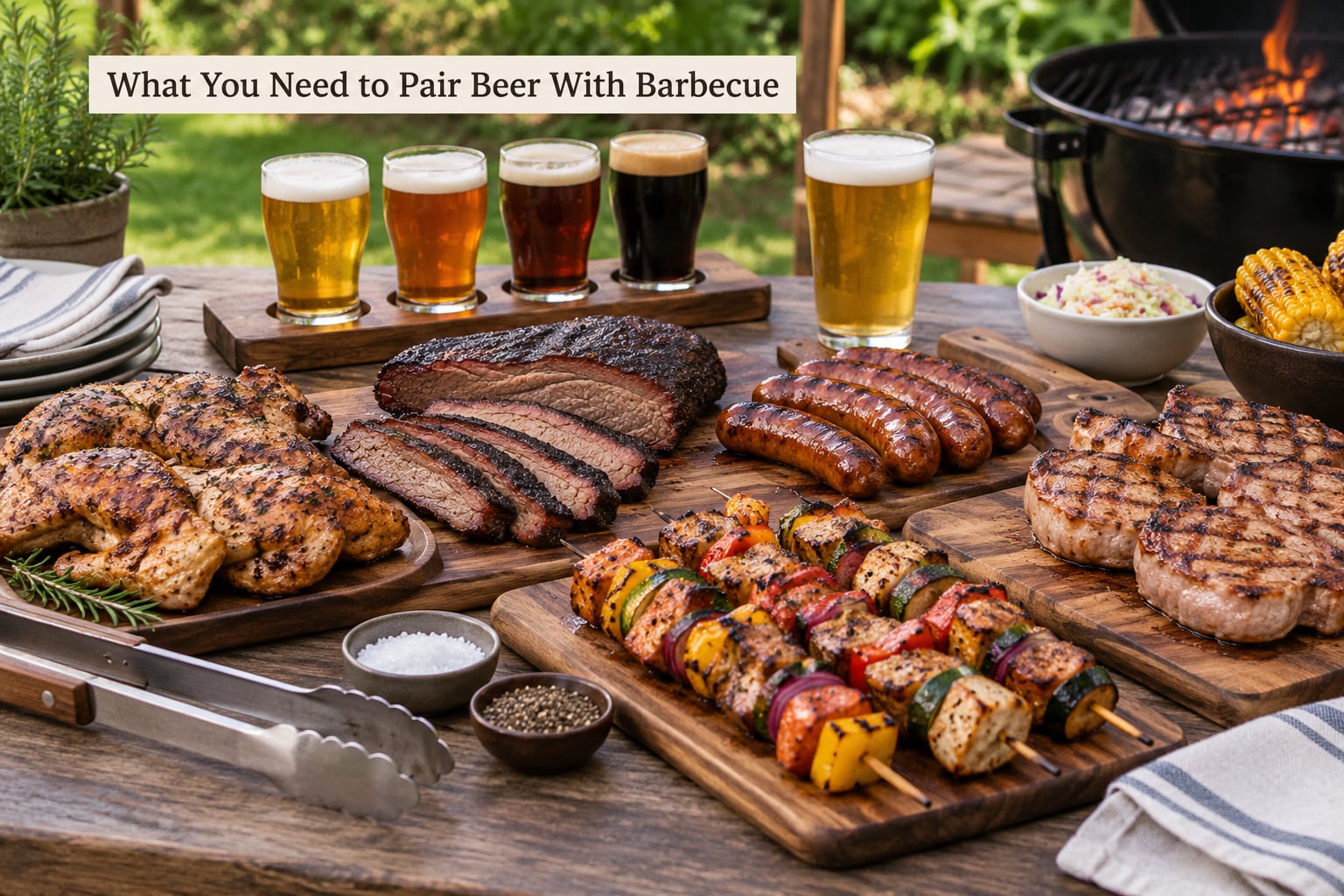
You need far less than a sommelier’s setup. A cooler, a few glasses, and a plan for what is hitting the grill first is enough.
The food, sorted by flavor. Group what you’re cooking into smoky, sweet, tangy, spicy, rich, and charred. Most cookouts run three or four of those at once, which is why one beer rarely works for the whole menu.
One style from each family. A crisp lager or pilsner, a malty amber or brown ale, and one hoppy or dark option covers nearly every barbecue spread. If you can only bring one kind, bring a malty amber ale. It is the most forgiving pairing on the table and works with sauce, with rub, and with char.
Two or three glasses, not one. Reusing the same glass kills carbonation and muddies comparisons. A small tasting tray, or just three different glasses, tells you far more than pouring everything into a bucket cup.
An ice bucket and a shaded spot. Full-strength beer and sun do not get along. Keep bottles in a cooler, out of direct light, and pour into a glass rather than back into the bottle.
Step-by-Step: Match Beer Styles to Every Cut
Here is the short version, five rules you can apply before the coals are ready.
- Classify the dish first. Is it smoky, sweet, tangy, spicy, rich, or charred? The dominant flavor decides everything after that.
- Match intensity to intensity. A delicate lager beside a twelve-hour brisket tastes like nothing at all. Go as heavy as the meat, or one step lighter.
- Cut rich food with bitterness and carbonation. Hop bitterness and bubbles strip fat and reset the palate between bites.
- Mirror sweet food with malt, not sugar. Caramel and toffee notes in a brown ale echo BBQ sauce without adding more sweetness on top of it.
- Let the beer stay in its lane. If you taste the beer more than the food after two sips, it is too strong, too bitter, or too cold for that dish.
Identify the Main Barbecue Flavor
Before choosing a beer, name the flavor that dominates the plate. Most barbecue falls into seven buckets, and each one points to a different corner of the beer world.
Smoky comes from the cook itself, usually over hours. Sweet comes from a wet rub, glaze, or bottle sauce. Tangy shows up in vinegar-pepper sauce, pickles, and slaw. Spicy is capsaicin from chiles, hot sauce, or a chile-heavy rub. Rich is fat and collagen from a slow cook. Charred is the blackened outside from high heat. Savory is the baseline of lightly seasoned, unsauced grilled food.
Ask which of those would survive if you removed everything else from the plate. A rib with a heavy sweet glaze is a sweet pairing first and a smoky one second. That distinction changes the pour, and it is the single most useful thing you can work out before the smoker comes up to temperature.
Choose a Beer Style That Contrasts or Complements
A contrasting beer pushes against the food, and a complementary beer echoes it. Both work. What does not work is a beer so loud that the food disappears.
Bitterness cuts through fat. Fat coats the tongue and blunts flavor. Hop bitterness and carbonation do the opposite, which is why a dry bitter cuts a fatty brisket far better than a sweet stout. This is also why many barbecue pairings lean hoppy without tasting hoppy in isolation.
Carbonation is a palate cleanser. The bubbles physically move food and reset your taste receptors. That is why a crisp pilsner makes a third bite of a rich meal taste as good as the first.
Malt sweetness stands up to smoke. Smoke is a dry, dusty flavor, and caramel, toast, and biscuit notes give it something to sit next to. Caramelization on the outside of a grilled steak works the same way, which is why amber and brown ales pair so well with anything char-marked.
Strength follows the food. A light lager next to a rich, fatty cut is the most common mistake I see. A heavy stout next to grilled shrimp or a delicate vegetable is the other one. Match the weight to the richness of the meal, then adjust one notch.
Body matters more than hops here. On r/smoking, cooks keep naming hazy New England IPAs as their default with smoke, largely because the low bitterness and soft mouthfeel never fight the meat. That instinct is sound, and it is a good template: soft, juicy, low-bitterness beer with anything heavily smoked.
How to Pair Beer With Barbecue Foods Cut by Cut
Here is the reference most people are after. For each cut I list the style to reach for, why it works, and a fallback if that style is hard to find on the shelf.
Brisket. Reach for a robust amber ale, a doppelbock, or a rich brown ale. Brisket is fatty, smoky, and heavily barked, and a malty body matches the bark’s roasted crust while enough alcohol and bitterness stand up to the render. Fallback: any bock, doppelbock, or malty English-style ale.
Pulled pork. Pulled pork is usually served with a sweet, tangy sauce, so a brown ale or a caramel-forward amber ale is the natural match. The malt mirrors the sauce instead of adding to it, and a moderate bitterness keeps the shredded texture from feeling heavy. Fallback: a caramel-heavy pale ale or a nut-brown ale.
Spare ribs. Glazed ribs want a beer with some backbone and a dry finish: an English bitter, a brown ale, or a doppelbock. The dry finish matters because sweet ribs plus a sweet beer is a long, flat mouthful. Fallback: a dry stout or a porter.
Grilled or smoked chicken. Chicken takes almost anything, which makes it the safe pour. A crisp pilsner, a Kölsch, or a light lager handles unsauced thighs and halves, and a citrus IPA works well with a chile-rubbed bird. Fallback: a pale ale or a blonde ale.
Chicken wings. For Buffalo or hot-sauce wings, go low on bitterness and high on refreshing acidity: a saison, a witbier, or a kettle sour. Heat needs contrast, and a dry, acidic beer cools the capsaicin better than a heavy IPA. Fallback: a pilsner or a light-bodied pale ale.
Grilled sausage and hot dogs. A German pilsner, a Vienna lager, or a bock is the classic answer. Sausage is fatty and peppery, and carbonation with a mild hop bite cleans it up between bites. Fallback: a standard pilsner or a light amber lager.
Cheeseburgers. Amber ale or pale ale. A slice of cheddar plus char plus a toasted bun is a rich, malty, bready plate, and a caramel-forward ale mirrors the toasted bun while bitterness handles the grease. Fallback: a porter or a brown ale.
Grilled shrimp and salmon. Light body, high carbonation, and a clean finish: a pilsner, a Kölsch, or a saison. Delicate seafood gets overwhelmed by anything malty, dark, or heavily hopped. Fallback: a light lager or a dry wheat beer.
Corn on the cob. Butter corn is sweet, so pick something dry and slightly bitter to cut it: a pilsner, a pale ale, or a bitter. A roasted or smoky malt beer also pairs nicely if the corn went on the grill with the ears. Fallback: a blonde ale or a session lager.
Grilled vegetable skewers. A saison, a Kölsch, or a crisp pilsner. Vegetables have no fat to cut through, so what you want is a dry, carbonated, slightly bitter beer that refreshes rather than covers. Fallback: a dry white ale or a light lager.
Rich sides. Potato salad, mac and cheese, and coleslaw lean the other way. Potato salad and mac need a hoppy, bitter beer such as an IPA or a bitter, since their richness is more about dairy and mayo than smoke. Coleslaw is sharp and acidic, so a sour ale or a kriek is the better call. Fallback: a dry bitter for the creamy sides, a saison for the slaw.
Serve the Beer at the Right Temperature
Temperature changes the pairing more than most people expect, and a badly served beer can wreck a good style match.
Lagers, pilsners, and Kölsch want to be cold, roughly 35 to 40°F. A straight-from-the-fridge pour is right for these, and the reason people get them wrong is chilling them much further below that and flattening the aroma.
Wheat beers, pale ales, and hoppy ales want 45 to 55°F. This is cellar temperature, or a few minutes out of the cooler. Serve an IPA ice cold and the bitterness and hop aroma read as harsh rather than clean, which is exactly what pitmasters mean when they say hoppy beers taste thin in the heat.
Amber ales, brown ales, and porters want 50 to 60°F. Cold beer mutes the caramel and toast character that is doing all the pairing work.
Stouts and barleywines want 55 to 65°F. These are not room-temperature-for-no-reason beers. They are cold compared to a dark beer served at 70°F, which is where people usually ruin them.
Glassware matters less than most guides claim, but a wide-rimmed nonic or a tulip glass does let you smell the beer, and smelling is half of tasting. A narrow pint glass for an amber ale is fine, just pour it a little shallower.
On a hot afternoon the real problem is storage, not serving. Homebrewers talk about the 3:30-300 rule, which says beer left in direct sun or a hot car can spoil in about five minutes and lose its flavor within an hour. A cooler that stays shaded does more for your pairing than any glass you own.
Taste in Small Bites and Sips of Beer
Taste the beer on its own first, before it touches food. That gives you a baseline, and without one you cannot tell whether a flavor came from the food or the glass.
Then take a small bite, chew it a few times, and let it sit on your tongue before you sip. The order matters. Sipping first and eating after tends to make the beer taste thin, because your palate is already coated in fat. Bite first, sip second, and the beer has something to cut through.
Practical routine: two or three bites, one sip, pause. If the food fades halfway through the bite, the beer is too light, too cold, or not bitter enough. If you notice the beer more than the food after the second sip, it is too strong or too bitter for that plate.
Sauce changes everything, so taste the unsauced version first when you can. A wing drenched in sweet sauce and a dry wing are two different pairings, and the sauce is usually the bigger variable. If a table is divided, pour two styles rather than arguing about one.
Build a Simple Barbecue Beer Flight
Two or three beers is plenty, and more than three gets tiring by the time the ribs come off. Pick styles that contrast with each other rather than three versions of the same idea.
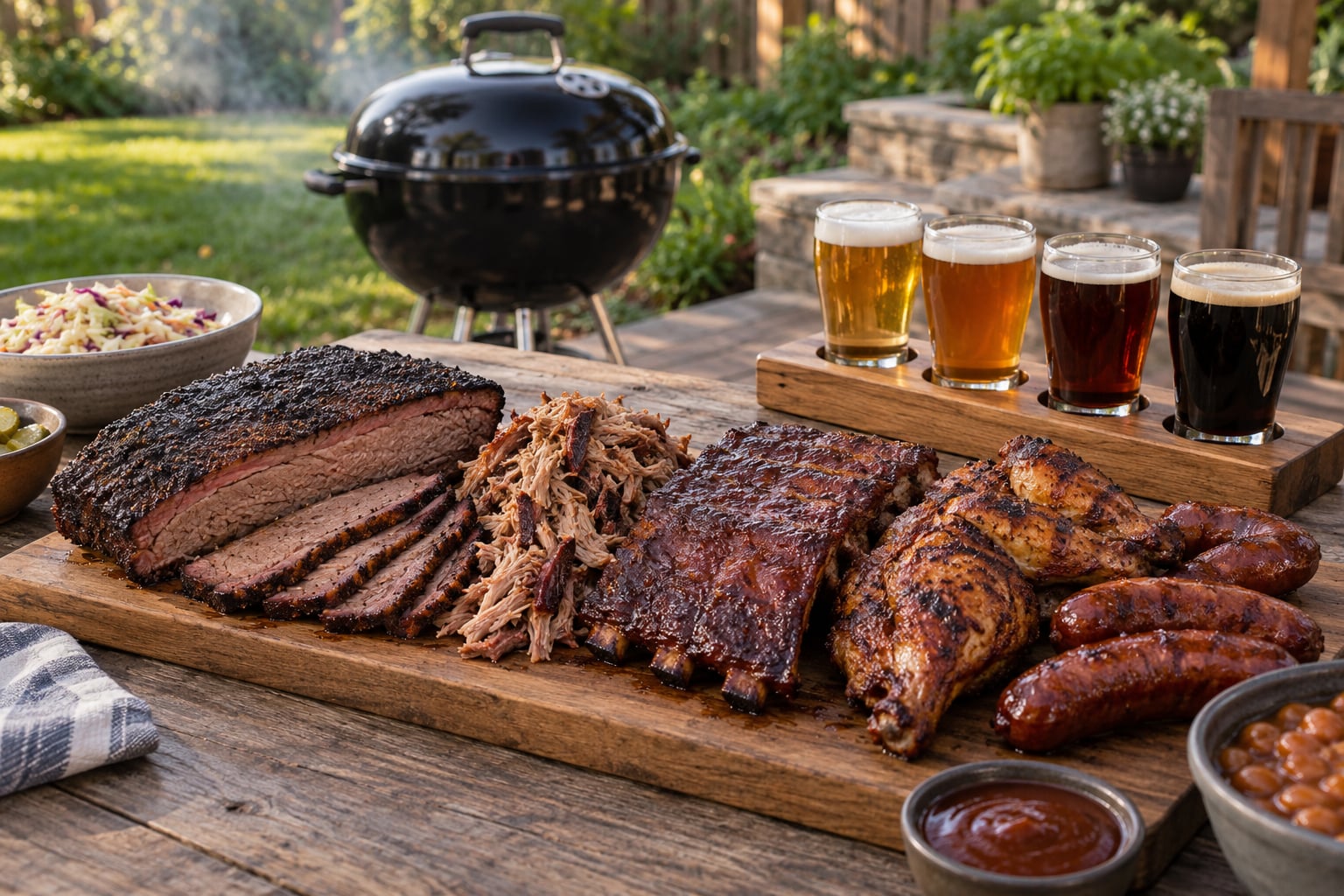
A reliable three-pour sequence runs from light to full. Start with a pilsner or Kölsch for the appetizers and anything grilled early. Move to a pale ale or saison for chicken, sausage, and vegetables. Finish with an amber ale, brown ale, or stout for the brisket, ribs, and burnt ends. Each pour arrives with a heavier dish than the last, so nothing feels heavy until the food does.
Plan roughly one pour per person per hour as a starting point for a four-hour cookout, and build in air. People drink more slowly than they estimate at the start, and the person who decided they wanted three has usually changed their mind by the second hour. In heat, a sessionable lager, a radler, or a low-alcohol beer keeps people steady, which matters more than any single pairing decision.
For guests who are not drinking beer, keep cider, hard seltzer, and non-alcoholic beer in the same cooler. Cider handles pork and sausages well, a dry hard seltzer works with anything spicy, and a non-alcoholic lager or pale ale slots into the flight without anyone needing a separate cooler.
Common Mistakes When Pairing Beer With Barbecue
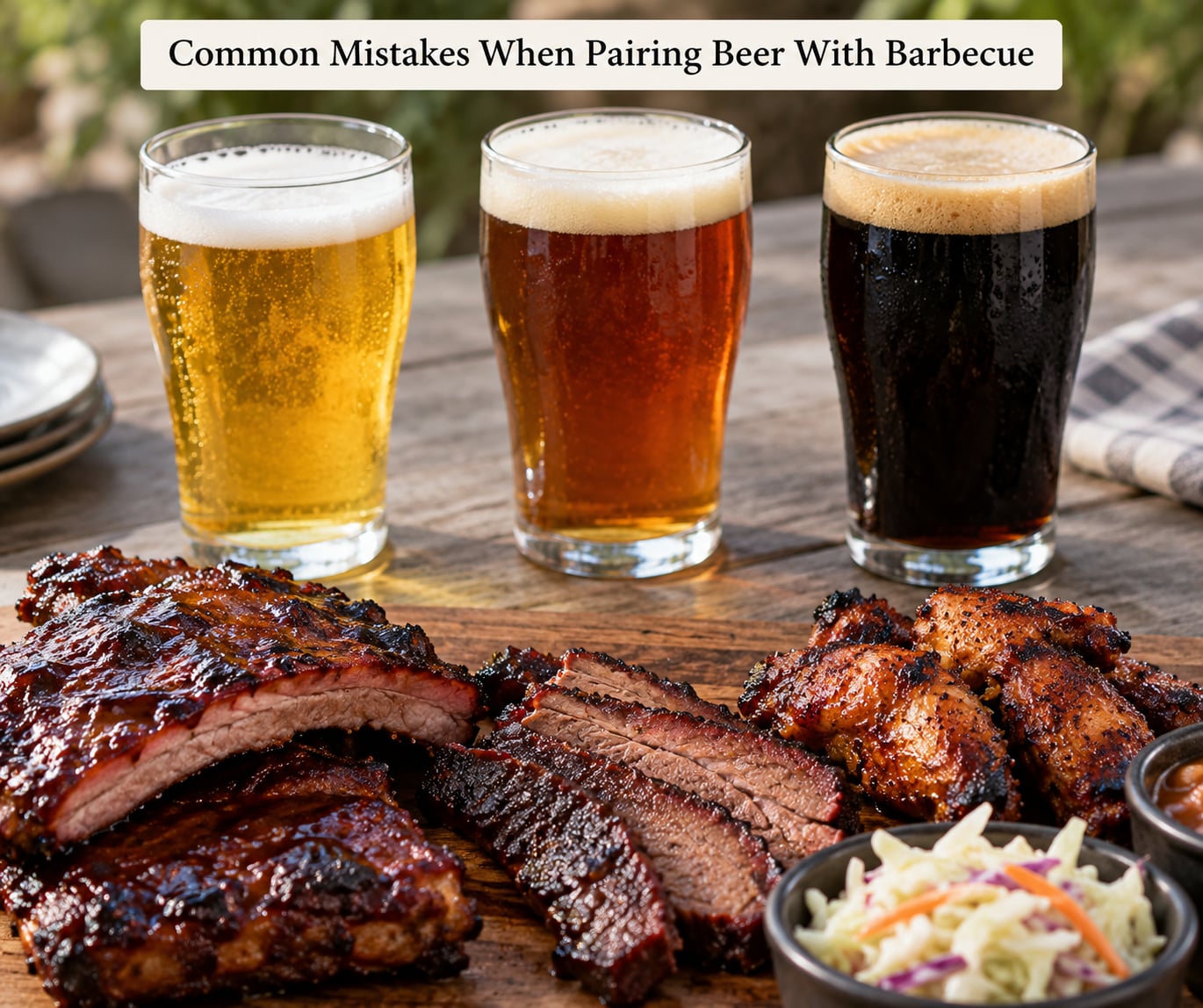
Bringing only a very bitter IPA. Bitterness cuts fat beautifully and tastes great on its own, but a double IPA beside a heavily sauced rack of ribs turns the whole plate bitter. Keep the bitterness moderate and let malt handle anything with a sweet glaze.
Serving everything ice cold. Cold flattens aroma in every style, and it is fatal for stouts and brown ales. Put pale ales and hoppy beers out for a few minutes before pouring, and save the ice for pilsners.
Ignoring the sauce. The sauce, not the meat, is the dominant flavor on a dressed plate. If the ribs are swimming in sweet glaze, a dry, bitter, higher-alcohol beer is the right counterweight. Taste the unsauced bite first when you get the chance.
Pairing a sweet beer with a sugary meat. Sweet plus sweet reads as cloying after two bites. Pick a dry finish, or drop the beer body a step and lean on carbonation instead.
Serving the wrong weight for the food. A light lager with brisket and a heavy stout with grilled shrimp are mirror-image mistakes. Line the body of the beer up with the richness of the cut, then move one step from there.
Pairing by brand loyalty instead of style. Forum users are consistent about this one: style-level advice is far more useful than a specific label, because a named import is often impossible to find locally while the style is available on any shelf. Ask for the style, not the brand.
Two more practical ones. Do not leave beer sitting in direct sun or a hot car, since heat strips aroma within about an hour and flattens everything you just paired. And do not skip food safety because the beer is interesting. Pull poultry at 165°F, ground meat at 160°F, and whole cuts of beef, pork, and fish at 145°F, measured in the thickest part with a thermometer rather than by guesswork.
Pouring beer into the cook counts as well. A beer brine or basting sauce adds malt and caramel depth to pork and chicken, and beer-butter basted corn on the grill takes on a sweetness that pairs naturally with a pilsner. It is not a substitute for good pairing, but it is a good reason to open an extra bottle early.
Frequently Asked Questions
What beer goes best with barbecue?
A malty amber ale is the single best all-purpose answer. It has enough body for rich, fatty cuts like brisket and ribs, enough caramel character to sit under a sweet BBQ sauce, and enough moderate bitterness to cut through the fat. Bring a pilsner alongside it for lighter foods and a stout or porter for burnt ends and the last of the sauce.
Is beer better than wine with barbecue?
For most cookouts, yes, and the reason is structural. Smoke clings to wine, while carbonation and bitterness actively scrub smoke and fat off your palate between bites. Beer also handles high-heat grilling better. That said, if your group drinks more wine than beer, a crisp, high-acid white or a light red works fine with poultry and grilled vegetables.
What beer pairs with brisket?
A robust amber ale, a doppelbock, or a rich brown ale. Brisket is fatty, smoky, and heavily barked, and a malty body matches the roasted crust of the bark while enough alcohol and moderate bitterness stand up to the rendered fat. A dry stout also works. Avoid very hoppy or very sweet beers, which fight the salt and bark.
Should you serve beer cold with barbecue?
It depends entirely on the style. Lagers and pilsners want to be genuinely cold, around 35 to 40°F. Pale ales and hoppy ales taste best around 45 to 55°F, and amber ales, porters, and stouts belong nearer 50 to 65°F. Serving a stout or brown ale ice cold mutes the exact caramel and toast character doing the pairing work.
Can IPA be paired with barbecue?
Yes, with care. IPA works well with spicy and chile-rubbed food because hop bitterness balances capsaicin, and a low-bitterness hazy New England IPA is an easy match with heavy smoke. The failure mode is a double IPA beside heavily sauced ribs, where the plate turns bitter. Keep bitterness moderate and choose a pilsner or amber ale for sweet glazes.
How do you taste beer with barbecue?
Taste the beer on its own first, then take a small bite of food, chew it, and sip the beer after the bite rather than before. That order lets carbonation and bitterness cut through fat instead of landing on an already coated palate. Pause between bites, and taste the unsauced version of a dish when you can, since sauce is often the dominant flavor.
Start by deciding what is on the grill first and matching that dish’s dominant flavor, not the whole menu at once. If you only bring one kind, bring a malty amber ale and a pilsner, pour the pilsner early and the amber ale with the heavy cuts, and keep everything in a shaded cooler. From there, the pairings get much easier.