Wort is the sweet, sugary liquid extracted from malted grains during brewing, collected after the mash and before yeast is added. In other words, wort is beer in its raw, unfermented state. Every drop of alcohol in your glass started as wort sugar in a kettle, and understanding that liquid is the fastest way to understand beer itself.
If you have ever pulled wort out of a boil kettle with a spoon and licked it off, you already know more than most drinkers. That syrupy, malty, faintly bitter liquid is the whole recipe, concentrated before yeast ever touches it.
Table of Contents
- What Is Wort in Brewing?
- How Is Wort Made?
- 1. Malting and milling
- 2. Mashing
- 3. Lautering and sparging
- 4. Boiling
- 5. Chilling and pitching
- Do Extract Brewers Make Wort?
- What Is Wort Made Of?
- How Adjunct Grains Change the Wort
- What Does Wort Taste Like?
- Why Does Wort Matter in Beer Brewing?
- Is Wort the Same as Beer?
- How Wort Changes During Brewing
- Sweet Wort vs Hopped Wort
- Frequently Asked Questions
- What is wort made of?
- What is the difference between beer and wort?
- How long does wort take to ferment?
- How long does wort last before you add yeast?
- Should wort taste good right after the boil?
- Can you drink wort before adding yeast?
- Conclusion
What Is Wort in Brewing?
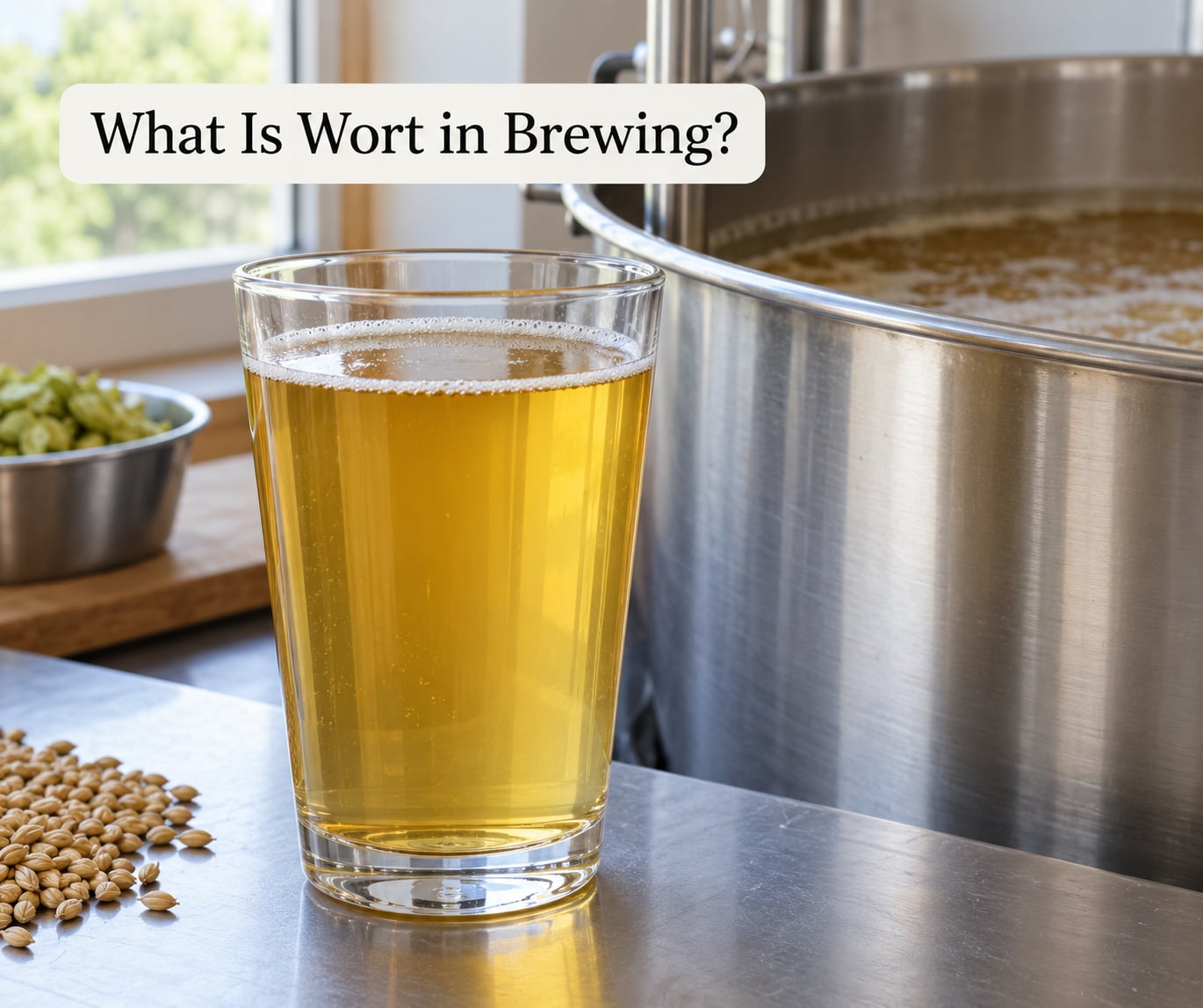
Wort is the sugary liquid you get when you steep crushed malt in hot water, drain it, and boil it. The word is pronounced “wurt,” and it comes out of the mashing and lautering steps of the brewing process. It carries the fermentable sugars that yeast will later convert into alcohol and carbon dioxide.
The word comes from Old English wyrt, meaning a plant or herb, which tells you something about how old this term is. For most of that history it meant whatever plant liquid was being boiled, and eventually narrowed down to the grain liquid in a brewery.
Three other things get confused with wort constantly, so here is the clean split:
- Grist is the dry, milled grain itself. Weigh it into the mash vessel and it is still just powder.
- The mash is grain plus water held at temperature while enzymes work. Wort has not been separated from the husks yet.
- Wort is the drained liquid after lautering, whether it is still sweet or already hopped.
- Beer is what that wort becomes once yeast has fermented it out.
If you want the one-line version to quote at a taproom: wort is the sweet, hop-containing liquid that gets made from grain and water, and beer is that same liquid after yeast has eaten the sugar.
How Is Wort Made?
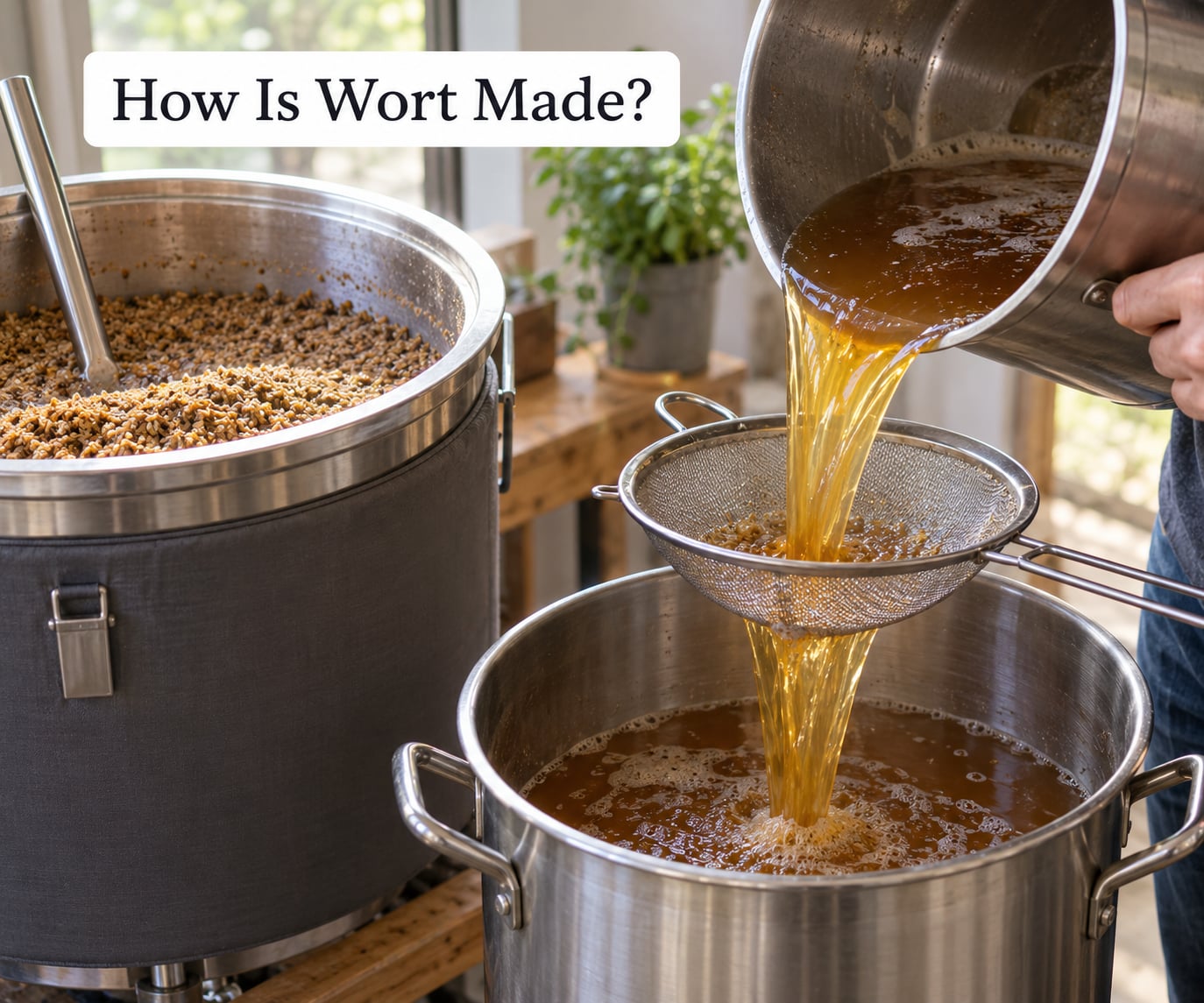
Wort is made in four main stages, and each one changes the liquid in a way you can actually observe. The sequence is always mashing, lautering, boiling, then chilling and pitching.
1. Malting and milling
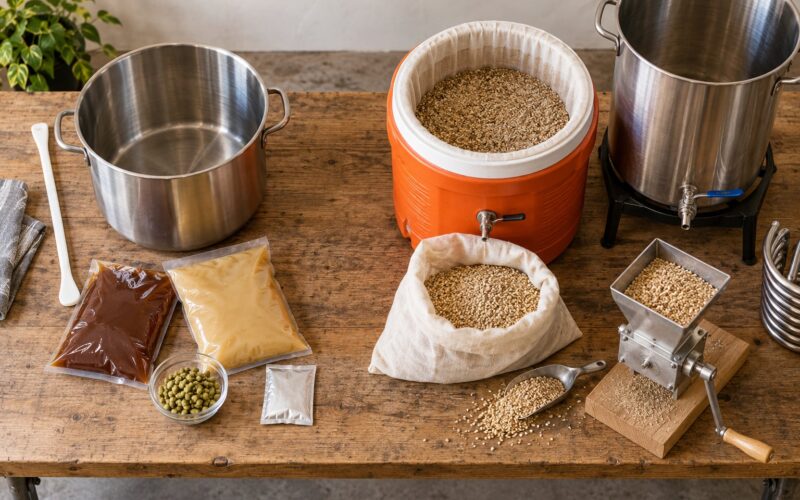
Barley or another grain is soaked, germinated, and kiln-dried so its starches turn into sugar and develop enzymes. Nobody malts grain at home; you buy malt already malted and crushed. A mill breaks the kernels into a coarse powder called grist, and a finer grind means more surface area for enzymes to work on.
2. Mashing
Grist goes into a mash tun with hot water and rests there for about an hour. Typical mash temperatures run from 140 to 158 degrees Fahrenheit, depending on the beer style and the enzymes the brewer wants active. The enzymes in the malt break the grain’s long starch chains into fermentable sugars, mostly maltose and maltotriose, plus a family of less fermentable sugars called dextrins.
The wort that forms here is thick, sweet, and tastes like warm liquid bread.
3. Lautering and sparging
The mash tun drains by gravity, and that first liquid is called vorlauf, a German word meaning “before-run.” Vorlauf is cloudy with protein and grain particles, so brewers discard it or recycle it. Then sparge water, usually near 168 degrees Fahrenheit, is rinsed through the grain bed to pull out the sugar trapped in the husks.
That sparge step is why wort volume matters so much. A homebrew kettle typically yields five or six gallons, and a mash with a lot of wheat, rye, or oats holds back liquid badly because those husks do not form a filterable bed.
4. Boiling
Wort is boiled in a kettle for 60 to 90 minutes, usually alongside hops. Boiling does about seven things at once: it sterilizes the wort, stops the enzymes so they do not digest more sugars, extracts bitter compounds from the hops, drives off excess volume, and creates the hot break, a foamy layer of proteins and hop resins that rises to the surface. That foam gets skimmed off.
Hops usually go in at three moments. Bittering hops go in at the start of the boil, roughly 60 to 90 minutes before the end, for bitterness. Flavoring hops go in with about 15 minutes remaining. Aroma hops go in at the very end of the boil or in the whirlpool after the flame is killed, where the hot wort extracts their essential oils without boiling them away.
5. Chilling and pitching
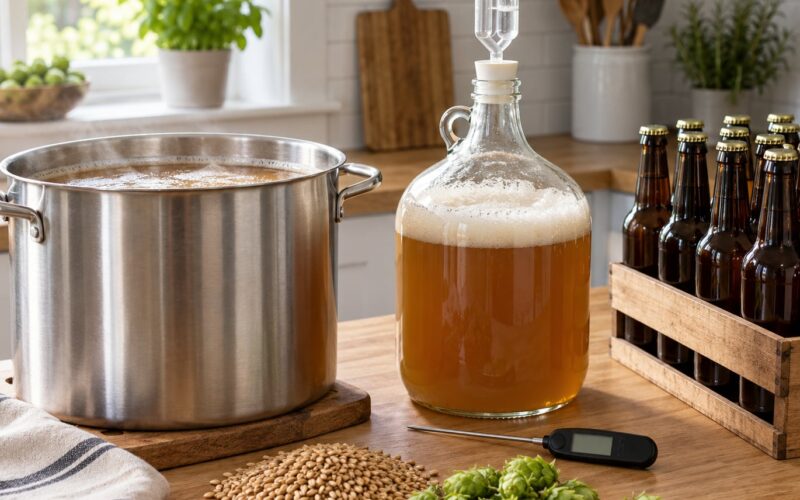
Fresh wort left sitting warm invites bacteria, mold, and wild yeast. Most brewers drop it to somewhere between 65 and 75 degrees Fahrenheit, either through a coil or plate heat exchanger in line or an immersion changer in the kettle. Then yeast is pitched into it, and the definition game changes: the sweet liquid you have been holding is now wort that is about to become beer.
Here is the whole run summarized:
| Stage | What happens | Typical duration | What it adds |
|---|---|---|---|
| Mashing | Hot water and grist held warm while enzymes convert starch to sugar | 60 to 90 minutes | Fermentable sugars, dextrins, proteins |
| Lautering | Liquid drains through the grain bed, then is sparged | 30 to 60 minutes | Volume, clarity, washout of residual sugars |
| Boiling | Vigorous boil with hops, foam skimmed | 60 to 90 minutes | Bitterness, aroma, sterilization, concentration |
| Chilling | Wort dropped to pitching temperature | Under 30 minutes active | A clean window to pitch yeast safely |
| Fermentation | Yeast consumes sugar, producing alcohol and CO2 | 4 to 14 days for most ales | Beer, plus the flavors of the finished drink |
Do Extract Brewers Make Wort?
They do, just by a shortcut. In extract brewing you skip the mash and stir concentrated malt syrup into water in the boil kettle, then boil it with hops. That produces a wort chemically very close to an all-grain wort, which is why the two methods can be swapped in most recipes.
What Is Wort Made Of?
Wort is made of four things: malted grain, water, the enzymes that live in the malt, and hops added later in the process. Water is by far the largest component, making up roughly 90 percent of the finished beer by volume, and the mineral profile of that water shapes flavor more than beginners expect.
The grain supplies the fermentable sugars that become alcohol. It also supplies amino acids and proteins, which yeast feeds on during fermentation and which help form the stable foam you see on a well-built head. Malted barley is the workhorse in roughly ninety percent of world beer production, with wheat, rye, oats, corn, and rice used as adjuncts to shift flavor and body.
Hops contribute nothing nutritional. They contribute bitterness, herbal and resinous flavor, and the aromatic oils that smell like citrus, pine, or flowers depending on the variety.
How Adjunct Grains Change the Wort
Corn and rice add starch and fermentable sugar without the flavor or protein of malt, which keeps a light lager tasting clean. Wheat, rye, and oats add body and a soft, bready haze, but their husks shred into a paste during the mash and slow lautering badly. Rye in particular can gum a mash tight enough to stall a sparge.
One common homebrew complaint is a low final volume of four gallons instead of five. It usually traces back to a grist heavy in wheat or oats absorbing liquid, or simply to a boil that ran long and cooked off more volume than expected.
What Does Wort Taste Like?
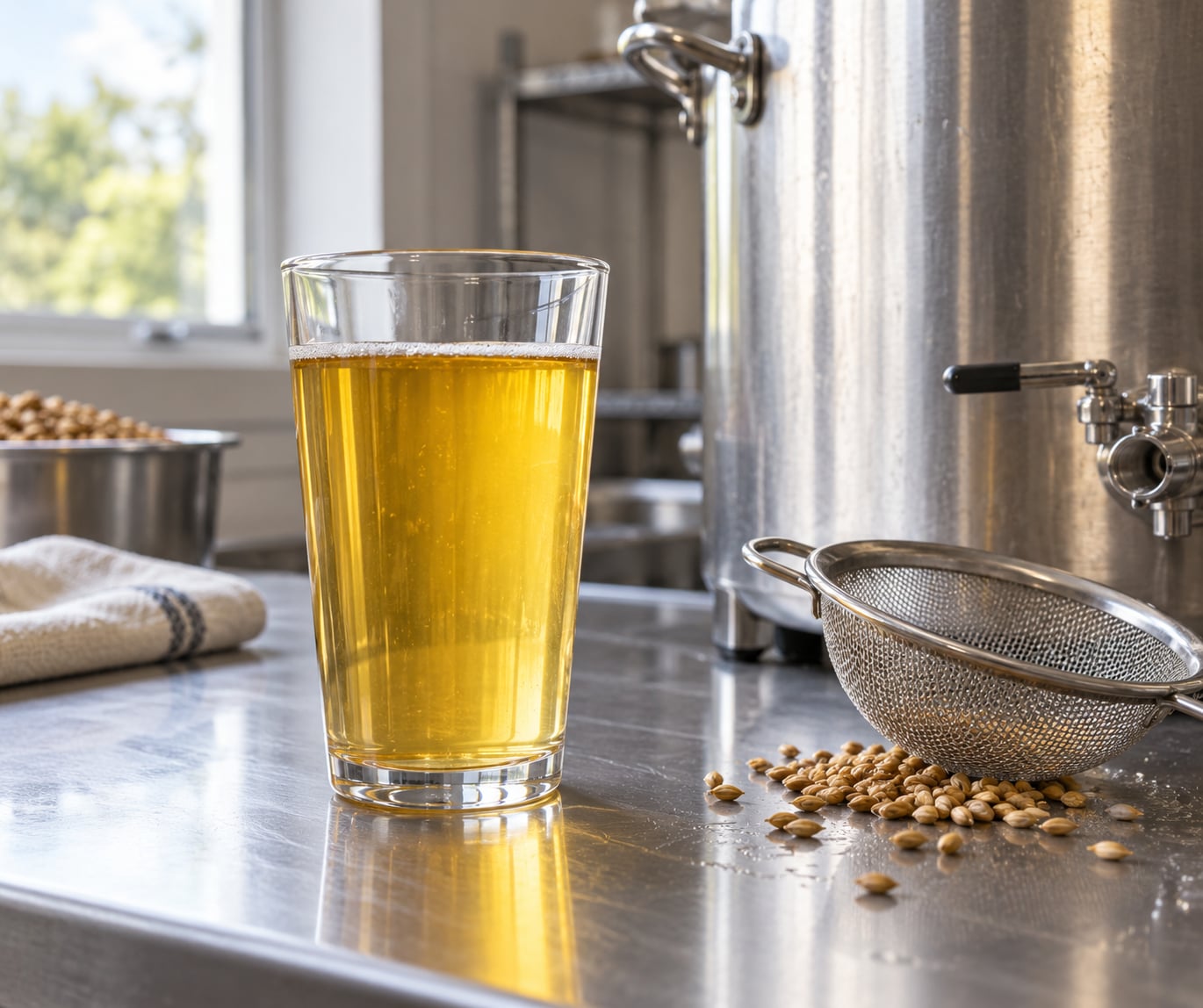
Fresh sweet wort tastes like very sweet liquid bread, or like the concentrated wort of a ginger beer. It is full-bodied, faintly cereal, faintly honeyed, and finishes with a lingering warmth. It should not taste sour, fizzy, or solvent-like at any point.
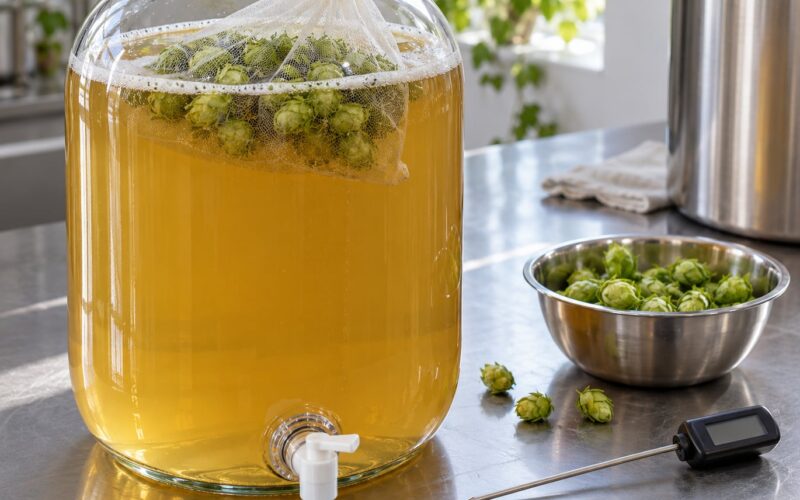
After hops have been in there, the picture changes. Hopped wort still leads with sweetness but now has a clear bitter edge, and late-hop additions add pine, citrus, or grassy notes on the nose. English pale ale wort, with its restrained bitterness and earthy hops, tastes completely different from a West Coast IPA wort that smells like grapefruit peel.
Mash temperature shapes it too. A low mash around 145 degrees produces a wort heavy on maltose, which ferments out and dries the finished beer. A high mash around 158 degrees leaves more dextrins, which yeast leaves behind, so the finished beer is fuller bodied and sweeter.
Young wort also has a smell worth recognizing. Tasters report it starting pleasantly yeasty and fruity, then shifting toward rancid, sour, or tart over the following days as wild organisms take over. That change is the clearest signal the liquid has been left to itself too long.
Why Does Wort Matter in Beer Brewing?
Wort carries every attribute the finished beer will display, which makes it the single most important variable in the brewery. A brewer who understands wort can predict the beer before yeast is pitched; one who does not is guessing.
- Alcohol comes only from fermentable sugar. More fermentable wort, more alcohol by volume.
- Body comes from the sugars yeast cannot fully process. More dextrins, more heft.
- Color is locked in early, from Maillard browning during the boil. There is no adding color later.
- Head retention depends on the proteins and dissolved dextrins that come from the mash.
- Fermentability decides whether a beer drinks dry and crisp or sweet and heavy, and it directly affects attenuation.
- Bitterness is measured in International Bitterness Units, and it is entirely a function of how much hop material sat in that boil.
Original gravity, the specific gravity of wort before fermentation, is the number brewers use to connect all of this. A wort at 1.050 in a five gallon batch has a reasonable chance of landing near five and a half percent alcohol if the yeast attenuates normally. Measure it, because a short sparge quietly changes it.
Two wort-related details bite beginners most often. Oxidized wort, from splashing hot wort around during transfer, tastes like sherry or wet cardboard and there is no fixing it later. And hot-side aeration matters more than people think, so keep the boil covered and the transfer from kettle to fermenter as quiet as possible.
Is Wort the Same as Beer?
No. Wort and beer are the same liquid at different moments, and the practical difference is whether yeast has been added and has eaten the sugar. Wort is unfermented and still sterile-sweet, while beer is fermented, carbonated, and contains alcohol.
| Wort | Beer | |
|---|---|---|
| Yeast | Not yet added | Added and worked |
| Sugar | All of it still present | Mostly converted to alcohol and carbon dioxide |
| Taste | Very sweet, bread-like | Balanced, bitter, malt and hop character |
| Carbonation | None | Natural or forced |
| Shelf life once made | Hours unboiled, up to about three days boiled | Months, depending on style and packaging |
| Best use | Tasting, brewing, distilling | Drinking |
Homebrewers argue about the naming, and the argument is genuinely interesting. On HomebrewTalk, the common position is that once yeast is pitched, technically the liquid in your fermenter is still called wort until fermentation is complete, because it has not finished becoming beer. Somewhere in the middle, where the sweetness drops and the character emerges, it is a beer in progress.
The forum consensus on timing is practical rather than philosophical. Unboiled wort survives roughly twelve hours before wild organisms take over, while boiled and hopped wort holds about three days. So the practical line between the two states is a short window you either use or lose.
Wort has one life outside beer, and distillers have used it for centuries as the base for whisky. Same grain, same conversion of starch to sugar, different destination for the sugar.
How Wort Changes During Brewing
Wort changes more in the first sixty minutes of a brew than at any point afterwards. Watching it change tells you more than any recipe sheet. Right after lautering it is cloudy, pale straw, and tastes of nothing but sweet cereal. It clears as the hot break forms in the first fifteen minutes of the boil, going from cloudy to bright in front of you.
Color deepens gradually through the boil, from pale straw toward amber and then brown, driven by Maillard reactions between sugars and amino acids at high heat. Gravity rises slightly over a long boil as water evaporates. Temperature falls sharply at the end, and that drop from a rolling boil to pitching temperature is the moment the wort becomes vulnerable.
From there it changes again during fermentation: specific gravity drops as yeast converts sugar to alcohol, and clarity changes as yeast drops out of suspension. For what a brewer should watch for, the timeline breaks down like this.
Sweet Wort vs Hopped Wort
Sweet wort is wort taken before any hops are added. Breweries hold it in a separate bright tank when they brew multiple styles from one mash, and it is also what distillers and cider makers buy.
Hopped wort, sometimes called bitter wort, is wort that has been boiled with hops. Bittering variety and timing set the bitterness, flavor variety and timing set the aroma, and everything between them decides whether the finished beer tastes crisp, herbal, or resinous.
The name explains why British drinkers once called their pale ale bitter, a category where hopping was so restrained that it stood in for the beer.
Frequently Asked Questions
What is wort made of?
Wort is made from four things: malted grain, water, the enzymes carried inside the malt, and hops added during the boil. The grain supplies fermentable sugars such as maltose and maltotriose, plus dextrins and proteins. Water makes up roughly 90 percent of the finished beer and its minerals shape flavor. Hops add bitterness, herbal character, and aroma but no fermentable sugar.
What is the difference between beer and wort?
Wort is beer before fermentation. It contains the full load of fermentable sugar and no alcohol, because yeast has not been added yet. Beer is what results once yeast consumes those sugars, producing alcohol and carbon dioxide while the hop bitterness balances what is left. Homebrewers usually keep calling the liquid wort until fermentation finishes, then call it beer.
How long does wort take to ferment?
Most homebrew ales ferment in four to seven days and are ready to package around two weeks. Lagers run longer, commonly four to six weeks, and higher-alcohol styles or strong ales can take a month or more. A fermentation is finished when gravity stops moving for two or three days in a row, not when the clock says so.
How long does wort last before you add yeast?
Unboiled wort lasts about twelve hours before wild organisms take over and it starts to smell sour or funky. Boiled and hopped wort keeps roughly three days, because the boil sterilizes it and the hops add antimicrobial compounds. Keep it covered and as cool as you can, and if you must wait, keep it in a sealed, sanitized vessel.
Should wort taste good right after the boil?
Yes. A healthy post-boil wort should be pleasantly sweet, bread-like, and clean, with a clear bitterness that matches the hops you added. Sharp acidity, solvent notes, or a thin vinegar smell mean contamination. Watch the smell over the following days: wort that starts yeasty and fruity, then turns rancid or tart, has been sitting too long.
Can you drink wort before adding yeast?
Yes, and it is a tradition in some breweries, though it is intensely sweet and uncarbonated. Boiled wort is safe to taste from a sanitized ladle. Tasting straight from an unboiled mash is a different story, since raw wort can carry wild organisms that your stomach handles better than your brewing vessel does. Treat sparge and mash liquid as equipment, not a drink.
Conclusion
Wort is simply beer before it is beer: sweet, hop-laden liquid pulled from grain and water, carrying the sugars, proteins, and color that define the finished drink. Everything a brewer decides about alcohol, body, bitterness, and style is decided in the mash and the kettle, before a single yeast cell is added.
If you are brewing, start with three numbers and two senses: measure your original gravity, measure your final volume, note your pre-boil and post-boil gravity, then smell and taste the wort straight after the kettle. Most wort problems, from a thin body to a harsh bitterness to a batch that smells off in the fermenter, announce themselves early and clearly. Catch them there and you save the batch. Miss them and you are stuck with the beer.