If you want the short version of co2 vs nitro taps explained: a CO2 tap pushes beer with carbon dioxide at fairly low pressure and gives you lively, sharp bubbles, while a nitro tap pushes the same beer with a nitrogen-rich gas at much higher pressure for a creamy, cascading pour. Most beer programs need both. Almost every style wants CO2, and a focused lineup of stout or porter wants nitro.
The confusing part is that both systems deliver beer from the same kind of keg. What changes is the gas pushing it, the hardware metering that gas, and the way the gas behaves once it hits liquid. Nitrogen barely dissolves, so it stays in tiny bubbles clinging to the glass. Carbon dioxide dissolves readily, so it produces the sharp carbonic bite that drinkers call fizz.
Choose wrong and the beer tells you immediately: a nitro stout poured on a plain CO2 line at standard pressure tastes flat and thin, and an over-carbonated keg pushed with extra CO2 foams over the glass before you finish pouring.
Table of Contents
- co2 vs nitro taps explained at a glance
- How CO2 and Nitro Taps Work
- What Changes in the Beer?
- Carbonation and mouthfeel
- Aroma, head and clarity
- Pouring, Pressure, and Equipment Differences
- Where co2 vs nitro taps diverge on pressure
- Faucets, lines and pour length
- Which Beer Styles Work Best with Each System?
- CO2 Taps vs. Nitro Taps: Which Should You Choose?
- Frequently Asked Questions
- Can you pour a nitro keg on a CO2 tap?
- What is beer gas, and what blend should I buy?
- What PSI should a nitro tap run at?
- Do I need a nitrogen regulator to serve nitro beer?
- Why does my nitro stout pour flat?
- Which beer styles should never go on nitro?
- Choose the System That Matches the Beer
co2 vs nitro taps explained at a glance
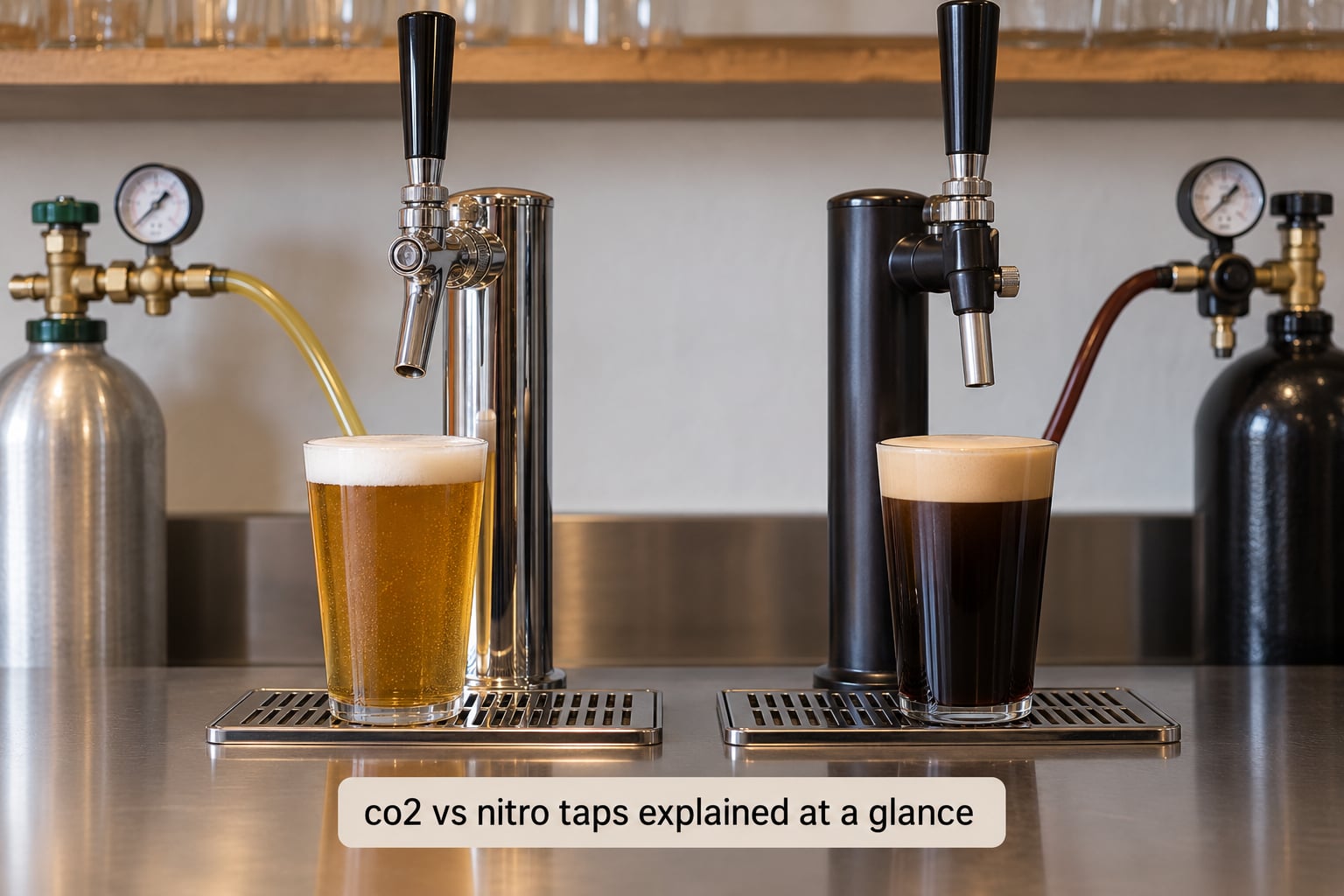
| Factor | CO2 tap | Nitro tap |
|---|---|---|
| Gas used | Pure carbon dioxide | Beer gas blend, usually about 70 percent nitrogen to 30 percent CO2, or pure nitrogen |
| Serving pressure | Roughly 12 to 15 psi at 38F for most ales and lagers | Roughly 25 to 35 psi at 38F |
| Carbonation inside the keg | Usually 2.2 to 2.6 volumes of CO2 | Usually 1.0 to 1.5 volumes, plus nitrogen at serving time |
| Faucet | Standard beer faucet | Stout faucet with a restrictor plate, or a stout tip on a flow-control faucet |
| Regulator | Standard CO2 regulator | Nitrogen-capable regulator rated for higher working pressure |
| Mouthfeel | Light, crisp, lively, with a carbonic bite | Silky, dense, creamy, low carbonation |
| Appearance | Bright, clear, streams of medium bubbles | Tight cascading stream, dense creamy head |
| Pour style | Straight down the glass | Tilted at roughly 45 degrees, then straightened |
| Line behaviour | Balanced by line length and restrictors | Balance is critical because flow runs far faster at higher pressure |
| Best for | Lagers, pale ales, IPAs, sours, wheats, cream ales, and most standard releases | Stouts, porters, milk stouts, and occasionally cream ales or cold brew coffee |
Two rows in that table drive most of the confusion. Carbonation and pressure are set at different stages, and a nitro keg is deliberately under-carbed compared to a standard keg, so the same gas you would normally use on that beer will not carry it.
How CO2 and Nitro Taps Work
A conventional draught system is a simple chain: a gas cylinder, a regulator set to a target pressure, a beverage line, and a faucet that meters the flow. The regulator is the only part that decides how hard the beer is being pushed.
With CO2, pressure does two jobs at once. It pushes the beer and it holds carbonation in solution, which is why a keg sits at a specific pressure and stays lively for weeks. Carbon dioxide is fairly soluble in cold beer, so when the pressure drops on the way to the glass, the excess comes out of solution as visible bubbles and you get the sensation the drinker calls carbonation.
Nitrogen behaves differently. It is far less soluble, so it barely contributes to carbonation at all. What it does instead is travel with the beer in suspension as microscopic bubbles. Homebrew forum consensus is blunt about this: the creaminess and the foam come from CO2, and nitrogen is what stops the CO2 bubbles from rising quickly.
That is why a nitro keg is force-carbonated lightly, often only to about 1.0 to 1.5 volumes of CO2, and then served at a much higher pressure. The high pressure exists to push the nitrogen through the restrictor plate fast enough to keep those tiny bubbles in suspension for the length of the pour. Without that pressure the nitrogen separates, the head collapses, and the beer tastes thin.
What Changes in the Beer?
Carbonation and mouthfeel
This is the biggest difference and the one drinkers notice first. A CO2 pour feels light and prickly, and higher hop bitterness and sharp bitterness both land harder because CO2 amplifies the bite. Nitrogen softens that edge, which makes the same beer taste rounder and sweeter without anything being added to it.
Nitro also suppresses perceived bitterness somewhat, so brewers and drinkers often describe a stout as sweeter and more drinkable. Whether that is a benefit depends entirely on the style. A dry, bitter-leaning stout can lose the sharpness that made it worth drinking.
Aroma, head and clarity
Hop aroma is delicate and nitrogen does not carry it off the beer the way CO2 strips it, so an IPA served on nitro tends to taste smoother but blander. That is why nitrogen is rarely the right call for hop-forward beer even when the equipment is available.
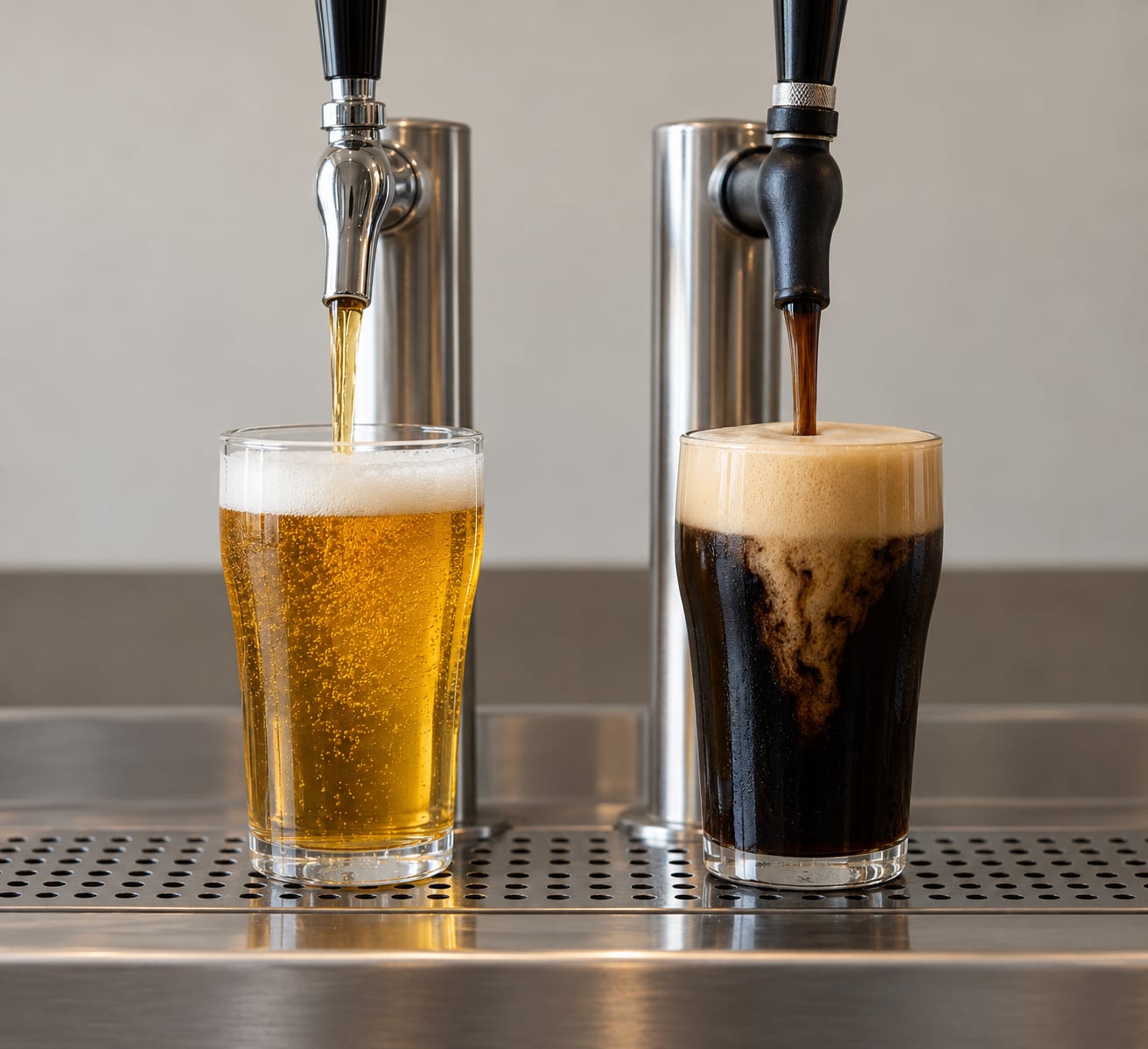
The head is the visual payoff. Nitrogen pours produce a dense, tight, creamy head that clings to the glass wall and settles slowly, and the cascade forms as the gas comes out of solution through the faucet at an angle. A CO2 pour gives you a lighter foam that dissipates faster and a glass that stays clearer.
Colour reads differently too. A nitro stout often looks almost opaque at the bottom of the glass, because the tiny suspended bubbles scatter light. Same beer, same recipe, noticeably different appearance.
Pouring, Pressure, and Equipment Differences
Where co2 vs nitro taps diverge on pressure
Standard CO2 service sits around 12 to 15 psi at cellar temperature for most ales and lagers. Nitro service typically runs 25 to 35 psi, and many brewery guides quote 30 to 35 psi for stouts poured through a stout faucet. Pressure has to rise because the faucet and line are restricting flow far more heavily than on a standard setup.
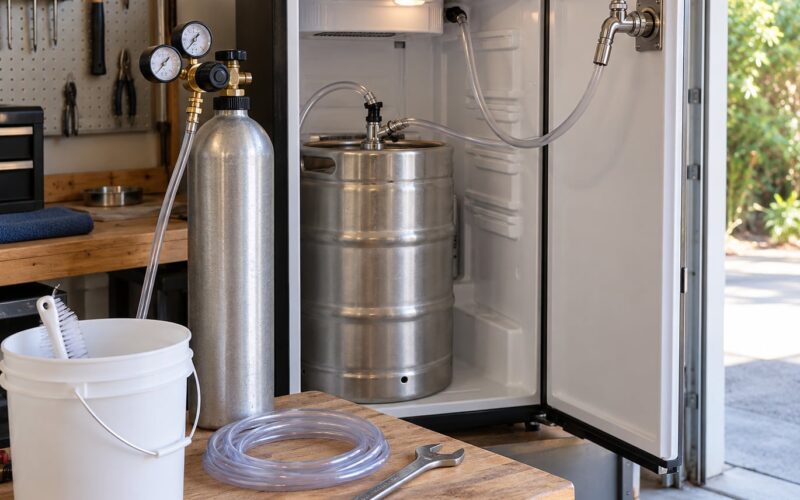
Those higher numbers are why a nitrogen system needs its own hardware. A CO2 regulator is not rated to handle nitrogen working pressures reliably, and the fittings on a nitrogen cylinder differ. The gas itself also comes out of the cylinder under far more pressure, so the regulator is the part that has to change, not just the tank.
Beer gas is the cylinder most home setups actually use. It is a premixed blend, commonly 70 percent nitrogen and 30 percent carbon dioxide or a 75/25 variant, which means one tank handles both the pushing pressure and a little carbonation. Pure nitrogen is cheaper by volume and used more often in commercial taprooms and breweries that carbonate separately.
Faucets, lines and pour length
The stout faucet is the piece that makes a nitro system work. Inside it, a restrictor plate with very small holes replaces the standard restrictor setup, cutting the flow down enough that the beer can move at high pressure without gushing. Intertap-style flow-control faucets with a stout tip do the same job and are a common cheaper alternative to a dedicated nitro faucet.
Lines behave differently too. Because nitro runs at roughly double the pressure, flow through the same line is far higher, and balance is much harder to dial in. Beer that pours like water from a stout faucet usually means the pressure is too high, the line is too short, or the faucet is not a true stout faucet. It is a genuine balancing act rather than a set-and-forget system.
Pour technique differs as well. A nitro pour is tilted at about 45 degrees so the cascade forms as the beer runs down the inside of the glass, then straightened to build the head. Pour a nitro beer straight down into a cold glass and you will get foam and no cascade.
Which Beer Styles Work Best with Each System?
Route most beer to CO2 without hesitation. Stouts and porters are the styles that genuinely benefit from nitrogen, and even then the brewery may have already force-carbonated to a level that lets the beer hold up on a standard tap.
- Dry stout and imperial stout: nitrogen is the classic pairing. The creamy texture softens the roast and the dense head is the presentation drinkers expect.
- Milk stout and oatmeal stout: nitrogen amplifies what the style is already doing, adding body without adding carbonation.
- Porter: nitro works well, though a well-carbonated porter on CO2 is also perfectly drinkable.
- Cream ale and nitro pale ales: regular nitro releases exist and drinkers enjoy them, though they are a niche request rather than a default.
- Lager, pilsner, amber lager: CO2, always. Nitrogen flattens the crispness these styles are built on.
- Pale ale and amber ale: CO2. Standard service keeps the carbonation level the brewery forced.
- IPA and hop-forward pale ales: CO2, strongly. Nitrogen mutes hop aroma and softens bitterness, which is the wrong direction for these beers.
- Sour beer: CO2. Sharp acidity and effervescence are the point of lambics, saisons and sour ales.
- Wheat beer and session pale ales: CO2. The soft, fizzy bite suits them, and nitro offers nothing to gain.
- Cold brew coffee and kegged cocktails: nitrogen, for the same texture reason as stout, with no carbonation wanted.
CO2 Taps vs. Nitro Taps: Which Should You Choose?

For homebrewers: start with CO2 and stay there until you are regularly bottling or force-carbonating a beer that genuinely wants nitrogen. Most people discover this after pouring their own dry stout and wondering why it does not look like the stout in the brewery. When that day comes, the practical route is a stout faucet with a stout tip on the faucet you already own, plus a small nitrogen cylinder and a nitrogen-capable regulator.
For taprooms and bars: run both. The practical compromise is one CO2 cylinder feeding every standard line, plus a second small nitrogen or beer gas cylinder dedicated to one or two stout taps. Nobody wants to swap a regulator between tanks on a busy Friday, and the two gases run at pressures that a single regulator cannot serve well.
For events and pop-ups: nitro is a nice-to-have rather than a requirement. If the beer list is mostly lagers, ales and IPAs, save the budget for a proper CO2 setup with cold lines and correct balance. If the event is built around a stout release or an Irish pub theme, one nitro line and one stout faucet is enough to sell the effect.
If you want nitro texture without any equipment: a widget nitro can, or a crowler filled from a nitrogen system at a taproom, gives you the creamy pour and cascade in a glass without installing anything. It is the fastest way to decide whether you like nitro before spending money on hardware.
Frequently Asked Questions
Can you pour a nitro keg on a CO2 tap?
Technically yes, but the result is usually disappointing. A nitro keg is force-carbonated to only about 1.0 to 1.5 volumes of CO2 and relies on serving pressure to keep nitrogen bubbles in suspension. Served at standard CO2 pressure through a normal faucet, the gas separates, the head collapses, and the beer pours flat and thin. Expect the same beer to taste like a different brew entirely.
What is beer gas, and what blend should I buy?
Beer gas is a premixed cylinder of nitrogen and carbon dioxide, most commonly 70 percent nitrogen to 30 percent CO2, with 75/25 also widely available. It exists so one tank can supply both the higher pushing pressure and a small amount of carbonation. Pure nitrogen is cheaper by volume and works fine when the beer is force-carbonated separately. Most home setups start with the blend.
What PSI should a nitro tap run at?
Most brewery and equipment guides put nitro serving pressure at 25 to 35 psi, with many quoting 30 to 35 psi for stouts poured through a stout faucet at cellar temperature. The high number exists because a stout faucet restrictor plate cuts flow dramatically, and without that pressure the nitrogen separates and the pour goes flat. Start at the low end and raise it if the beer pours too slowly.
Do I need a nitrogen regulator to serve nitro beer?
Yes. Nitrogen regulators are built to handle the higher working pressure of nitrogen service, and the cylinder fittings differ from standard CO2. Trying to run a nitrogen tank through a CO2 regulator is one of the most common first-time mistakes and it is a safety issue, not just a performance one. Buy a nitrogen-capable regulator rated for the pressure you intend to run.
Why does my nitro stout pour flat?
Work through the causes in order. Pressure first: it should be 25 to 35 psi, not the 12 to 15 psi you use for regular beer. Then check temperature, since cold beer holds carbonation better. Then check carbonation levels on the keg, and confirm the faucet actually has a stout restrictor plate. Finally check line length, because nitro lines are far more sensitive to balance than standard beer lines.
Which beer styles should never go on nitro?
Hop-forward beers are the clearest no. IPA, double IPA and heavily hopped pale ales depend on aroma and bitterness, and nitrogen mutes both. Nitro also flattens the sharpness that makes dry stouts interesting, and it removes the effervescence that defines lagers and sour beer. If a beer was designed to be crisp, bright and bitter, keep it on CO2.
Choose the System That Matches the Beer
Start with the beer list, not the equipment. If you are pouring lagers, ales, IPAs, sours or wheats, you need a CO2 system and nothing else, and a well-balanced CO2 setup will out-perform a badly configured nitro setup every time.
Add nitrogen when a meaningful share of your lineup is stout, porter or milk stout and you want the cascade and creamy head that drinkers recognise. Check what the brewery says the beer was force-carbonated to, and check the pressure specification on the system you are buying, because both determine whether the pour comes out flat.
One last practical note: whatever you choose, serve cold. Temperature is the cheapest lever you have on carbonation perception, head retention and how long a keg lasts on tap.