Yes, you can drink beer on a diet. The honest answer to how to drink beer on a diet is simple: budget the calories, do not ban the beer. A 12 oz light beer lands near 100 calories, a regular lager sits around 150, and a craft or high-ABV pour can run 170 to 350 or more. Most of the damage to a calorie plan comes from what happens around the drink, not the drink itself.
I have watched the same pattern play out at bar crawls and taprooms for years. The beer is the easy part to measure. The basket of fries, the four-ounce cocktail, the 11 pm snack run on the way home — those are what quietly undo a week of good eating.
So this is a practical guide, not a lecture. If you follow the steps below, you can go to the event, enjoy the beer, and stay on plan. The whole routine takes about two minutes of preparation before you leave the house.
Table of Contents
- What You Need
- Step-by-Step: How to Drink Beer on a Diet
- Step 1: Set a Personal Limit Before the Event
- Step 2: Compare Beer Styles and Serving Sizes
- Step 3: Build a Beer-and-Food Pairing
- Step 4: Pace Yourself and Hydrate
- Common Mistakes When You Drink Beer on a Diet
- Frequently Asked Questions
- Can I drink beer if I am on a diet?
- Which type of beer has the fewest calories?
- Is light beer healthier than regular beer?
- How many beers can I drink while dieting?
- Does skipping meals help save calories when drinking beer?
- What should I eat before drinking beer at a bar or festival?
- Conclusion
What You Need
Before the first pour, sort out these six things. None of them takes more than a few minutes, and doing them ahead of time is the difference between drinking on plan and drifting.
- A real calorie number. Know your own daily target or, more usefully, your weekly total. A beer that fits a 2,400 day is a very different decision on a 1,500 day.
- Serving size literacy. A 12 oz pour, a 16 oz pint and a 22 oz bomber are not the same drink. Assume nothing about what the glass in your hand holds.
- A place to check numbers. Most beer labels list calories, carbohydrates and ABV per serving. Brewery websites and menu boards at taprooms usually do too. If a beer does not post its numbers, assume it is not the light one.
- A food plan. Decide what you are eating before the first drink, not after the third.
- A lower or no-alcohol option. Most taprooms now carry non-alcoholic beer, and it is a genuinely good stand-in for the first round when you want to pace yourself.
- A plan for getting home. This one is not optional, and it is not a diet question.
Step-by-Step: How to Drink Beer on a Diet
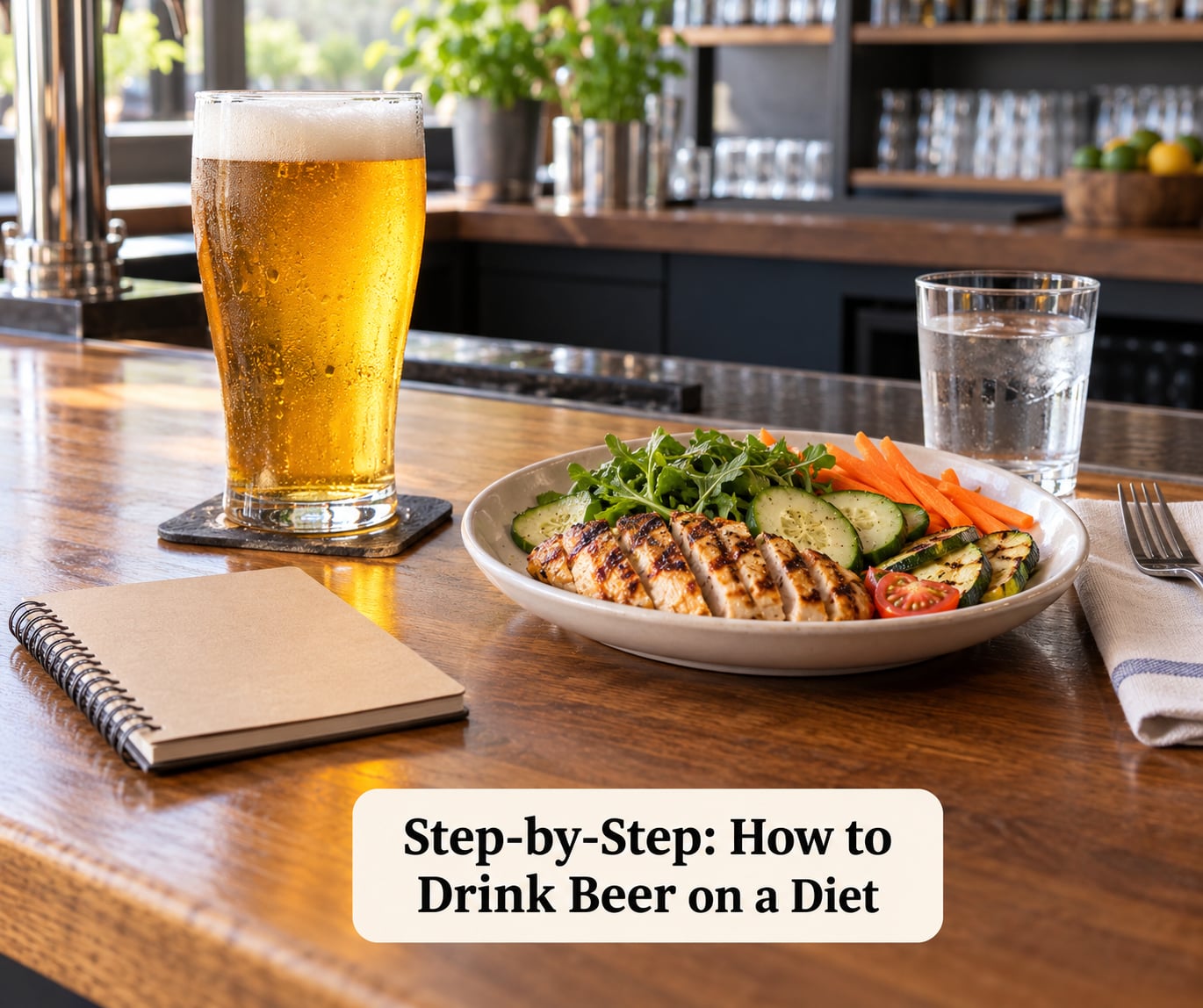
Step 1: Set a Personal Limit Before the Event
Decide the number before you arrive, out loud or in writing, and treat it as a ceiling rather than a target. Most people do better reserving drinking nights for occasions that actually matter than spreading a few beers across every weeknight. One r/loseit user put it plainly: the shift that worked was moving from five to nine light beers a day to weekends only, not quitting.
For a sense of scale, the CDC frames moderate drinking as up to two standard drinks a day for men and one for women, on days when alcohol is consumed. That is a reference point for what a standard drink is, not a target for a deficit. Your own plan, or advice from your doctor or a registered dietitian, should set the number that actually applies to you.
Some people should not drink at all, including anyone pregnant or trying to become pregnant, anyone taking medication that interacts with alcohol, anyone with a history of disordered eating, and anyone whose clinician has told them to avoid it. That is not a diet opinion. It is the short version of the guidance those clinicians give.
Step 2: Compare Beer Styles and Serving Sizes
Here are the calories in a beer by style, per 12 oz serving: light beer about 100 calories, regular beer about 150 calories, craft or high-ABV beer 170 to 350 or more, and non-alcoholic beer about 5 to 20. Higher ABV means more calories, so check the alcohol percentage before you assume a craft pour is a heavy one.
| Beer style | Calories per 12 oz | Carbohydrates | Typical ABV |
|---|---|---|---|
| Extra light lager | About 70-90 | About 1-3 g | About 2.8-4.2% |
| Light lager | About 90-110 | About 3-5 g | About 4.1-4.7% |
| Regular lager or ale | About 140-170 | About 10-14 g | About 4.5-5.5% |
| Amber, red or brown ale | About 180-250 | About 15-25 g | About 5-6.5% |
| Double or imperial IPA | About 250-350+ | About 15-30 g | About 8-12% |
| Non-alcoholic beer | About 5-20 | About 1-5 g | 0.0-0.5% |
Two label rules are worth knowing. First, there is no federal legal definition of light or lite on a beer label, so that word tells you very little on its own; the ABV number is the honest signal. Second, low carbohydrate is defined, and it means 7 grams or fewer per serving. If a can says low carb, that number is regulated.
Alcohol itself carries 7 calories per gram, which is why a higher-ABV beer costs you more even when the serving is the same. A useful correction to a common belief: those alcohol calories are not pure fat. The liver treats alcohol as the priority fuel and pauses fat oxidation while it works through it, and a portion of the calories gets burned as a thermic effect during processing. The carbohydrates in the beer are the part that stores more directly.
Honesty beats optimism here. A California-style IPA can genuinely blow a deficit on its own, and people who drink them regularly have told forum threads that they gave up beer entirely over it. If that is the beer you love, that is a budgeting conversation, not a willpower one.
Step 3: Build a Beer-and-Food Pairing
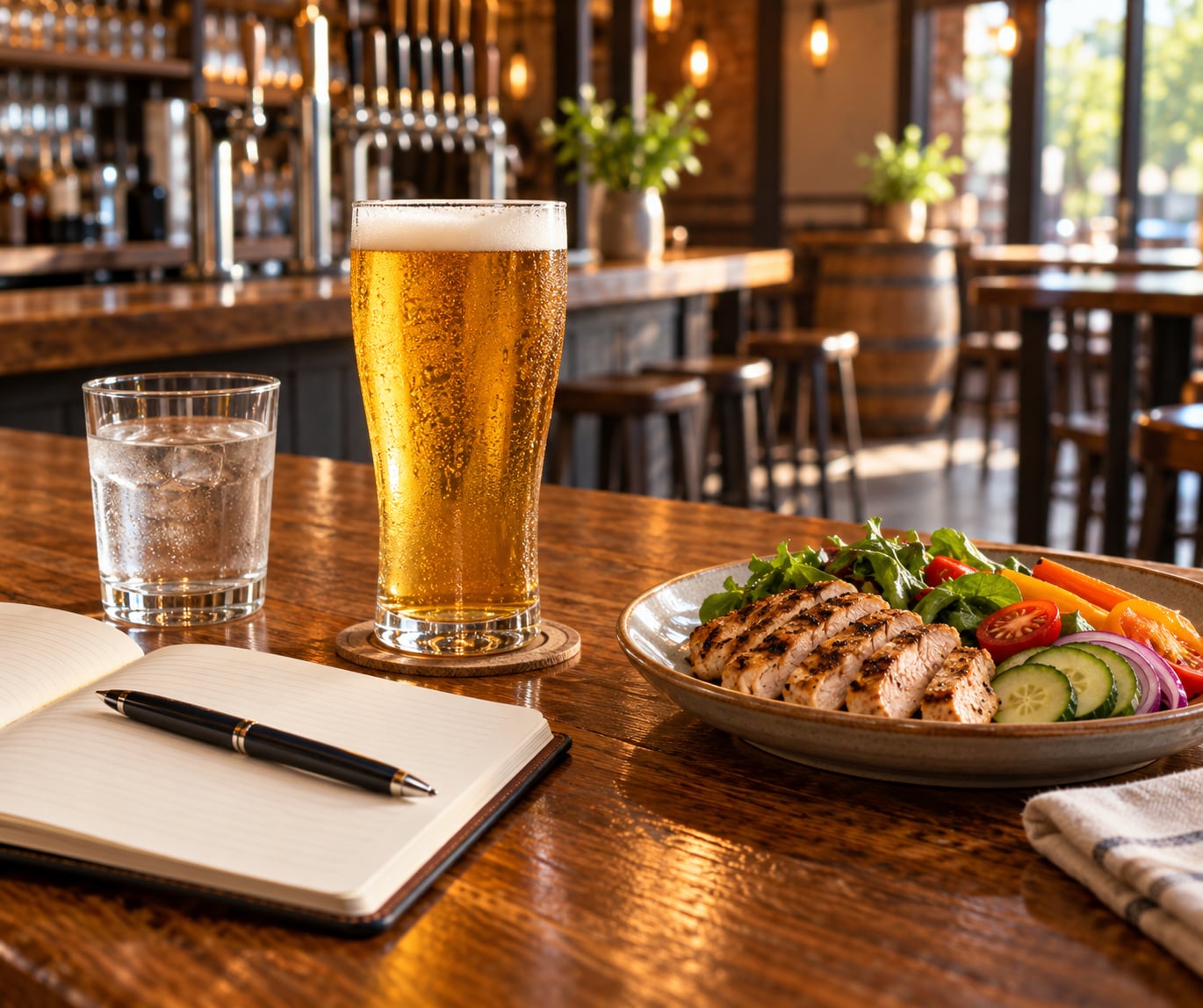
Eat before the first drink, with protein and fiber in it. Grilled chicken, a plate of vegetables, a bean-based dip, a bowl of chili, even a handful of nuts — anything that takes the edge off hunger and slows you down later. People who drink on an empty stomach reach for takeout two hours later, and that second meal is usually larger than the first one.
Then order your food deliberately rather than by what lands in front of you. A burger with a side of fries can quietly double the calories of the beer you came for. Share a pitcher instead of ordering your own, which cuts the volume and slows the pace at the same time. And skip the salty bowls — peanuts, chips and salted crackers are engineered to make you order a second round, and cheddar-and-peanut appetizers can add more calories than three beers combined.
Sweet mixers deserve the same scrutiny if you ever order spirits. Soda water with lime is close to zero. Lemonade, sweet tea and most juice-based mixers are not, and that single swap can move a drink by more than 100 calories.
Step 4: Pace Yourself and Hydrate
Put a glass of water between every beer and actually drink it. Alternating works for two reasons: it slows your consumption, and it reduces the hangover that has you eating a breakfast burrito at 10 am the next morning. Sip rather than gulp, and keep your phone or your hands busy — the first hour decides most of the night.
Where it lands in your week matters too. A couple of beers after a heavy lifting session are not the same as the same two beers the night before, because alcohol disrupts sleep quality, and poor sleep makes you hungrier the next day and less likely to train well. If you can choose, put drinking on the evening after a workout, never the night before one, and do not count a session as a cardio substitute.
Finish with a plan for the morning: water, protein, and no compensatory fasting. The urge to eat clean and skip food the day after a drinking night is a well-worn trap, and it usually just moves the calories around instead of removing them.
Common Mistakes When You Drink Beer on a Diet
- Treating light beer as unlimited. It is lower calorie, not free. The fix is the same as for any beer: a number, decided before you get there.
- Skipping meals to save calories. You save the meal and lose it to late-night takeout. Eat the food, drink the beer, and let both fit the plan.
- Comparing calories and nothing else. ABV drives calories, and high ABV also means the night is more likely to involve drunchies. Look at all three numbers.
- Forgetting the serving size. A 16 oz pour is a third more than 12 oz, and a bomber is nearly double. Ask what you are being poured.
- Ignoring medications or health conditions. If you take anything at all and are unsure, ask your pharmacist or your doctor. This is a five-minute conversation, not a diet decision to guess at.
One more habit worth borrowing from the people who actually keep this up on a long timeline: they log the drinking night. MyFitnessPal community members describe skipping the log entirely on drinking nights, then wondering where the week went. Thirty seconds of logging tells you what the number really was, which is usually less frightening than the estimate.
Frequently Asked Questions
Can I drink beer if I am on a diet?
Yes, if you budget it. A 12 oz light beer is roughly 100 calories, a regular beer about 150, and a craft or high-ABV beer 170 to 350 or more. Weight loss depends on your overall calorie balance, so plan the rest of the day around the drink, eat some protein and fiber first, and alternate with water.
Which type of beer has the fewest calories?
Extra light lagers usually come in around 70 to 90 calories per 12 oz, and regular light lagers around 90 to 110. Non-alcoholic beer is lower still, often 5 to 20 calories. Read the ABV rather than trusting the word light on the can, because light and lite have no legal definition on a beer label.
Is light beer healthier than regular beer?
Light beer is lower in calories and usually lower in carbohydrates, but it is not a health food and it still contains alcohol. Health effects come mostly from the amount you drink, not the style. If you are avoiding alcohol for pregnancy, medication interactions, recovery or an alcohol use disorder, light beer is not a substitute.
How many beers can I drink while dieting?
There is no universal number, because your calorie target, your medication and your health all matter. A useful approach is to pick a drink count and calorie ceiling before the event, keep it to occasional planned occasions rather than weeknights, and check with your doctor or a registered dietitian if you want a number tailored to you.
Does skipping meals help save calories when drinking beer?
Usually not. Skipping food to offset a drink tends to backfire, because hunger plus alcohol leads to late-night takeout that costs more than the meal you skipped. A better move is to eat a protein and fiber rich meal before drinking and treat the beer as part of the day’s total instead of an add-on.
What should I eat before drinking beer at a bar or festival?
Something with protein and fiber that takes the edge off hunger: grilled chicken, vegetables, chili, a bean dip or a bowl of nuts. Then skip the salty appetizers, which are designed to prompt a second round, and share a pitcher rather than ordering your own so you pace yourself automatically.
Conclusion
Start with the serving, not the brand. Check what is actually in the glass, set a personal limit before you leave the house, eat something with protein and fiber first, and put a water glass between every pour. If a no-alcohol beer fits your goals better on a given night, order it without treating it as a compromise. Get how to drink beer on a diet right once and the bar becomes a place you plan for rather than avoid. And if you are managing a medical condition or taking medication, ask your doctor or pharmacist what actually applies to you before the next event.