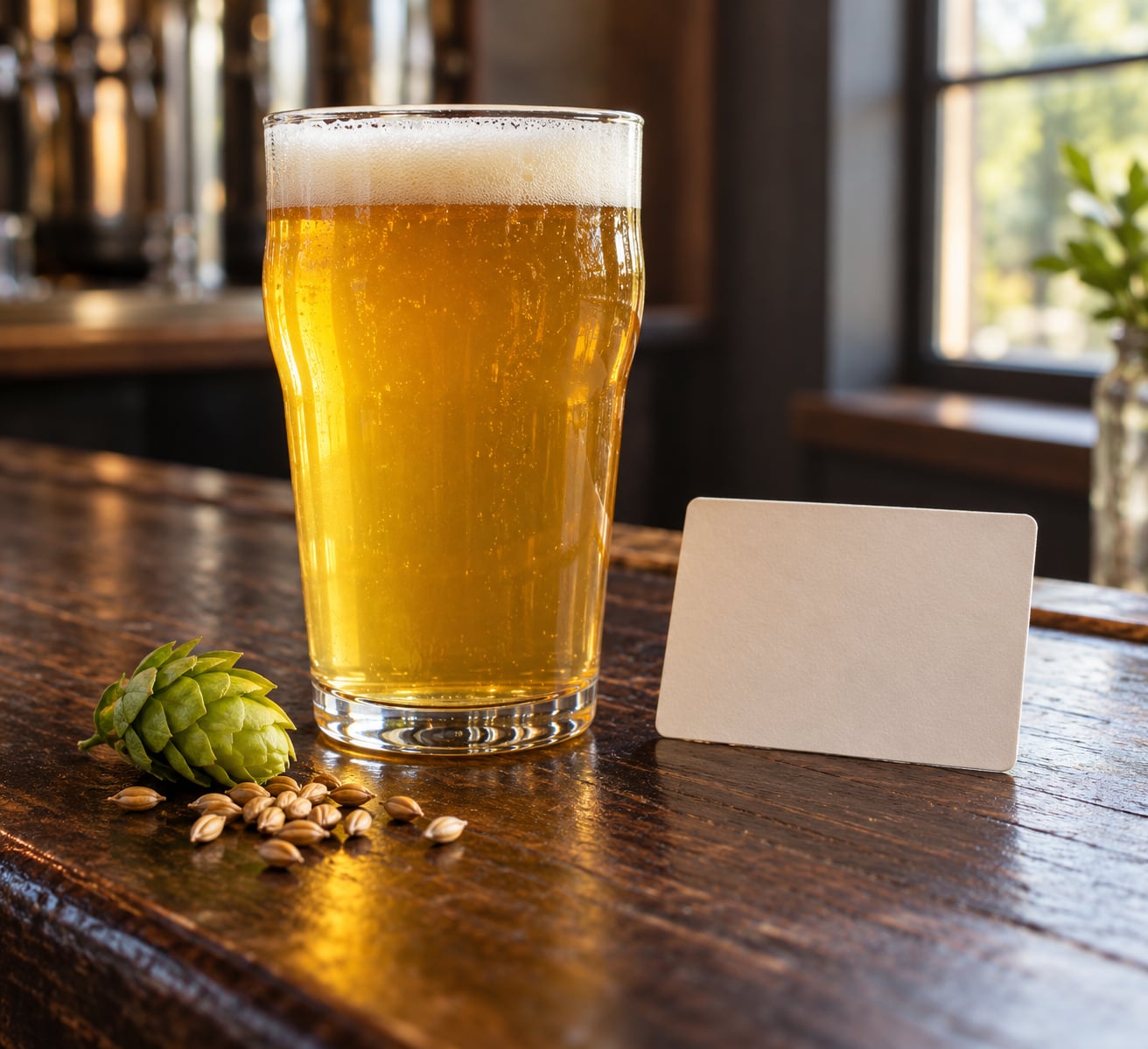
A session IPA is a hop-forward India Pale Ale brewed to roughly 3-5% ABV, keeping the citrus, pine, and tropical hop character of a full-strength IPA while cutting the alcohol so you can drink it for hours. The word “session” comes straight from British pub culture, where a session was an afternoon or evening of drinking that outlasted normal closing time.
It sits between a macro lager and a 6.5% American IPA: more aroma and bitterness than a light lager, meaningfully less alcohol than the standard craft IPA. That makes it the default order at beer festivals, all-day events, and bar crawls, where you still want hops in every glass but you also want to remember the walk home.
Table of Contents
- What Is a Session IPA?
- How Does a Session IPA Taste?
- What Makes a Session IPA Different From a Regular IPA?
- How Is a Session IPA Brewed?
- Is Session IPA the Same as Light IPA?
- What Should You Expect When Ordering One?
- Frequently Asked Questions
- What does session mean in a session IPA?
- How strong is a session IPA usually?
- Is a session IPA hoppier than a pale ale?
- Is session IPA an official beer style?
- What food pairs well with a session IPA?
- Can session IPA be stronger than 5% ABV?
- Conclusion
What Is a Session IPA?
The short answer: it is an IPA built at session strength, which means the alcohol comes down and the hops stay up. Most commercial examples land between 3.7% and 4.7% ABV, with 4% and 5% as the outer markers most drinkers recognize.
There is no single rule that makes a beer sessionable, and readers tend to be suspicious of pages that pretend there is. Beer writer Lew Bryson’s Session Beer Project drew the line at 4.5% ABV. WSET judge Melissa Cole argues for 4% and below. Others cluster around 3%. Meanwhile plenty of breweries have marketed 6.2% beers as session beer, because “sessionable” is relative to the person drinking and how long the afternoon runs.
Here is what the style actually looks like at the glass:
- Alcohol content (ABV): roughly 3-5%, with most commercial examples between 3.7% and 4.7%
- Flavor profile: distinct hop aroma and flavor, usually citrus, pine, tropical fruit, floral, or resin depending on the varieties used
- Bitterness: clearly present but balanced against a lean malt bill, never harsh or astringent
- Body: light to medium, crisp, and highly carbonated, with no heavy alcoholic warmth on the finish
- Drinkability: the entire point; a beer you can stay with across several pours
One caution before you order anything labeled this way. Session IPA is not a codified style in the way India Pale Ale is, which means any brewery can put the name on a beer that is not really hop-forward at all. Check the ABV, then look for hop words on the tap badge or can.
How Does a Session IPA Taste?
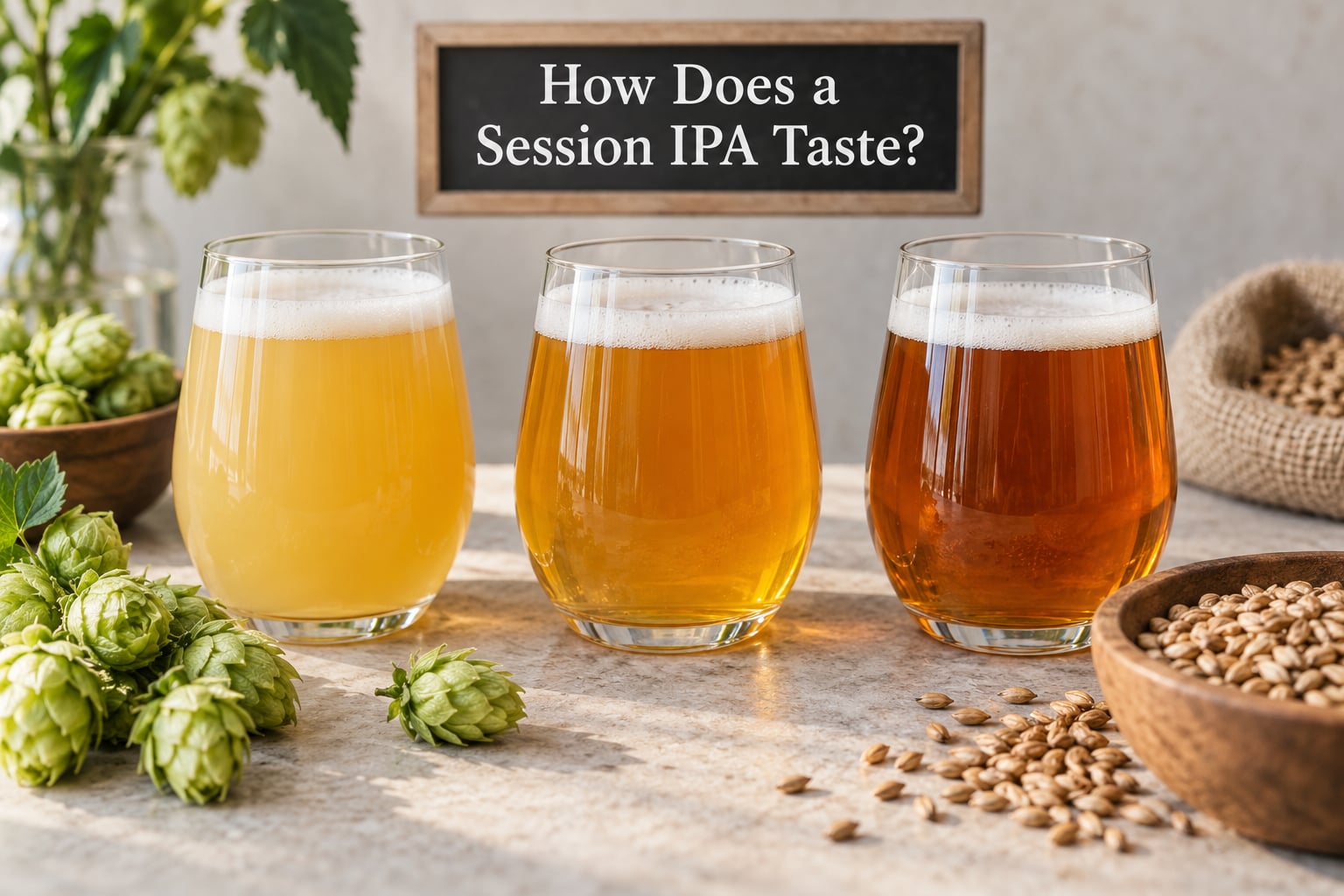
The aroma hits first and it should be obvious. If you lift the glass and smell nothing but malt, it is not really doing the job. Beneath that, the sip is hop flavor and bitterness carried by a light body that finishes clean, dry, and almost weightless.
What separates one from another is mostly the hop bill. West Coast-leaning versions use varieties like Cascade and Centennial for grapefruit and floral notes, or Chinook and Northern Brewer for pine and resin. Modern tropical-leaning breweries reach for Citra, Mosaic, Strata, or Amarillo and get mango, peach, and ripe citrus. Noble hops like Saaz bring a spicy, herbal edge that reads almost farmhouse, though that is a deliberate choice rather than a style requirement.
Appearance varies honestly. Some are bright straw-gold and brilliantly clear, some are hazy and pale, and a few push toward a deeper amber. Color tells you very little here, which is one reason drinkers get frustrated with the category.
The most common complaint about this style is thinness. A 4.2% beer simply carries less dissolved material than a 6.5% one, so it can feel stripped back next to a heavier IPA. Untappd ratings for individual session IPAs tend to cluster in the low-to-mid 3s, and forum threads about the style keep circling the same grievance: brewers cut the alcohol and cut the malt with it, and the result reads as watery.
Three quick checks separate a well-made one from a thin one. Look for lacing on the glass as you drink, which signals remaining soluble wort and a fuller malt bill. Notice whether the aroma holds up as the glass empties, since aroma that vanishes in five minutes means the hops were under-delivered. And check the finish: clean and dry is right, but papery or astringent means the bitterness outran the malt.
What Makes a Session IPA Different From a Regular IPA?
The short version: alcohol is the main difference, and everything else follows from it. A regular American IPA sits at roughly 5.5-7.5% ABV, so a session IPA trades body, warmth, and a chunk of malt sweetness for the ability to keep drinking. Bitterness, oddly, often does not come down as much as you would expect.
| Attribute | Session IPA | Standard American IPA | Hazy or New England IPA | Double or Imperial IPA |
|---|---|---|---|---|
| Typical ABV | 3-5% | 5.5-7.5% | 6-8% | 8%+ |
| Bitterness (IBU) | 20-45, medium-forward | 40-70 | 25-50, softened by haze | 60-100+ |
| Body | Light to medium, crisp | Medium to full | Medium, soft and pillowy | Full, sometimes slick |
| Alcohol warmth | Barely noticeable | Noticeable by the second pint | Noticeable | Obvious from the first sip |
| Malt presence | Lean, cracker-dry backbone | Noticeable caramel or biscuit | Minimal, sweetness from oats | Restrained but present |
| Best occasion | Festivals, crawls, all-day events | A focused evening pour | Slow sipping, spicy food | A single celebratory glass |
On the alcohol math, because this comes up constantly: a 12 ounce pour at 5.0% ABV carries about 0.6 fluid ounces of pure alcohol, while the same pour at 6.5% carries about 0.78. That is roughly 23% less per pint, and roughly 30% less per four-pint afternoon. One will not impair most people. Five will, at either strength, and nobody is under the impression otherwise.
Where the styles overlap is haze. Several breweries release session-strength hazy IPAs, and those read as a different experience from a clear session IPA: softer, juicier, less sharp on the bitterness, with a rounder mouthfeel.
How Is a Session IPA Brewed?
You cannot make an IPA simply weak, because the alcohol in an IPA comes from the fermentable sugars in the wort. Cut the gravity and you cut the alcohol, but you also remove the malt backbone that gives hops something to sit on. Nearly every decision that defines this style is about solving that trade.
Gravity and grain bill. Homebrewers typically land an original gravity around 1.038-1.048, with commercial examples generally sitting toward the middle of that band. The grain bill is kept lean: pale malt for a clean base, a touch of Munich or Vienna for a hint of toast, and small amounts of specialty malt for color and a dry finish. Too much caramel malt and the low gravity betrays you, leaving a beer that tastes boozy despite being 4%.
Hopping rate and timing. This is the craft side of it. Because there is less alcohol to carry flavor, brewers load up on late-kettle additions and dry hops to recover aroma that a low-gravity beer otherwise loses. Bitterness-to-gravity ratios matter more than ever; a hopping rate that tastes right in a 7% beer can taste sharp and resinous in a 4% one, so brewers often pull the kettle charge back and let dry hopping do the aromatic work.
Yeast and fermentation. A clean, attenuative American strain finishes dry and neutral, which keeps the hop character forward. Under-attenuated or higher-alcohol yeast is generally avoided here, since residual sweetness and fusel character work against the light, crisp target.
Water. A sulfate-leaning profile is common for American IPAs because sulfate sharpens perceived hop bitterness, though brewers working at session strength often moderate it to avoid drawing attention to the thinness. Chloride shows up more in the maltier interpretations.
Dry hopping. Typically a few days to a week at cellar temperature, sometimes with a portion of the hops added late in the boil for a cleaner bitterness floor. The forum consensus among homebrewers, from Homebrew Talk recipe threads onward, is that dry hopping is where the aroma lives in a beer this light.
Is Session IPA the Same as Light IPA?
No, and the two get confused because brewers use the words loosely. “Light IPA” usually means a lower-ABV beer that follows standard American IPA conventions: the same hop-forward recipe, simply brewed smaller. Session IPA focuses equally on drinkability, which pushes brewers toward a leaner grain bill and lighter body rather than just less alcohol.
“Sessionable” is looser again. It is a marketing-adjacent word with no fixed threshold, applied by some breweries to beers well above 5%. A commenter in an r/beer thread on Lagunitas IPA made the point cleanly: sessionable is relative to the drinker, and plenty of people treat a 6-6.5% IPA as perfectly sessionable because they intend to have two, not six.
When you read a label, work in this order. Start with the style statement, then the ABV, then IBU if the brewery lists it, then the tasting notes. A beer that says “session IPA,” sits at 4.2%, and describes grapefruit and pine hops is telling you everything. A beer that says only “session” with no supporting detail is a guess.
Worth knowing: there is no dedicated BJCP category for session IPA. The BJCP codifies American IPA, American Pale Ale, and specialty IPA as separate categories, and a session-strength beer would be judged against one of those or entered as a variant. The same goes for the word session beer generally, which has style codifications used mainly for judging but no single accepted definition.
What Should You Expect When Ordering One?
Serve it cold, around 38-45 degrees Fahrenheit, the way you would any American IPA. Too cold and the aroma closes up, which is the last thing a hop-forward beer needs. A straight pint or a tulip both work, and a tulip is better when you want to smell what you are drinking.
The order of events in the glass is usually the same: aroma first, hop flavor on the first sip, bitterness through the middle, and a short dry finish with a faint bitterness or citrus residue. If the finish turns hot or boozy, the beer is stronger than its label suggests or was fermented warm.
On food, session IPAs handle heat better than heavier IPAs because there is less alcohol fighting the spice. Grilled or smoked meat, burgers, hot wings, barbecue, and Vietnamese or Thai dishes with lime and chili all work. For less obvious pairings, try a sharp aged cheddar, a margherita pizza, or a Greek salad with a salty feta and olive oil. Very sweet food is the pairing to avoid.
If the tap list is unfamiliar, ask the bartender what session beers they have on and whether they lean hop-forward or malt-forward. That single question tells you more than the name, and bartenders usually enjoy being asked. At a festival, the same logic applies: read the ABV off the badge before you commit to a full pour.
Frequently Asked Questions
What does session mean in a session IPA?
Session comes from British pub culture, where a session was a drinking gathering that ran well past normal hours. Applied to beer, it means a beer low enough in alcohol to stay drinkable across several hours. The word is a description of drinking occasion rather than a regulated category, so the practical meaning is simply: a hoppy beer at roughly 3-5% ABV instead of 6-7.5%.
How strong is a session IPA usually?
Most session IPAs sit between 3.7% and 4.7% ABV, with 3% and 5% marking the outer edges of the style. Popular commercial examples include Bell’s Light Hearted Ale at 3.7%, Dogfish Head Slightly Mighty at 4.0%, Lagunitas DayTime at about 4.6%, and Founders All Day IPA at 4.7%. Compare that to a standard American IPA at 5.5-7.5% ABV.
Is a session IPA hoppier than a pale ale?
Generally yes, and the difference is mostly in hop variety and hopping rate rather than perceived bitterness. A pale ale leans on American hops for moderate citrus and pine at a moderate bitterness. A session IPA usually adds late-kettle and dry hop additions to recover aroma at low gravity, which pushes aroma and flavor forward even though the bitterness numbers may sit in a similar range.
Is session IPA an official beer style?
No dedicated category exists. The BJCP codifies American IPA, American Pale Ale, and specialty IPA, but session IPA has no category of its own, so it is judged against those styles or entered as a variant. Session beer has codifications used mainly for judging purposes, but no single accepted definition, which is why published thresholds range from 3% to 4.5% depending on who is doing the defining.
What food pairs well with a session IPA?
Anything spicy or grilled works well, because the beer has less alcohol competing with heat than a standard IPA would. Grilled and smoked meats, burgers, barbecue, hot wings, and Thai or Vietnamese dishes with lime and chili are reliable picks. For a less obvious match, try a sharp aged cheddar, a margherita pizza, or a salty feta and olive oil salad. Very sweet food is the pairing to avoid.
Can session IPA be stronger than 5% ABV?
It can, and plenty of breweries do it, though the label stops being descriptive at that point. Lagunitas, for example, marketed its 6.2% IPA as a session beer on the grounds that sessionable is relative to the drinker. Beer writer Lew Bryson set 4.5% as his floor, and WSET judge Melissa Cole argues for 4% and below. Above 5%, read the tasting notes rather than trusting the name.
Conclusion
So: what is a session IPA? It is an India Pale Ale brewed to roughly 3-5% ABV that keeps the hop aroma and bitterness of the style while cutting the alcohol, so you can stay with it across a long afternoon. The honest caveat is that there is no official definition, so read the ABV and the tasting notes rather than trusting the name alone.
Easy first step: find a brewery’s version under 5% ABV, check the listed IBU or hop notes, and pour it next to a standard 6.5% IPA on the same night. The contrast is immediate, and it is the fastest way to understand what “session” is actually doing to the beer.