Gluten reduced beer is beer brewed from barley or wheat that still contains gluten, with an enzyme added during fermentation to break those gluten proteins into smaller peptides. That process pushes the beer below the 20 parts per million level used for US gluten-free labeling, but it never makes the beer gluten-free from the start. Reduced is not the same as removed, and that distinction decides who can safely drink it.
Here is the short version most readers came for. Gluten reduced beer explained is mostly four facts. Gluten-reduced beer keeps barley for body and flavor. Gluten-free beer starts from sorghum, rice, millet, buckwheat or corn. A 20 parts per million result is a labeling threshold, not a proven safety threshold. And a label that says gluten reduced is not a label you should trust if you have celiac disease.
Table of Contents
- What Is Gluten Reduced Beer?
- How Is Gluten Reduced Beer Made?
- What Does Gluten Reduced Beer Taste Like?
- Gluten Reduced Beer vs. Gluten-Free Beer
- How to Read a Gluten Reduced Beer Label
- Is Gluten Reduced Beer Safe for People With Celiac Disease?
- How to Choose and Serve Gluten Reduced Beer
- Frequently Asked Questions
- Is gluten-removed beer safe for people with celiac disease?
- Is Blue Moon beer gluten-free?
- Does Coors make a gluten-free beer?
- What are the symptoms of gluten intolerance after drinking beer?
- Does gluten-free beer have less carbs?
- What popular beer is gluten-free?
- What to Do First
What Is Gluten Reduced Beer?
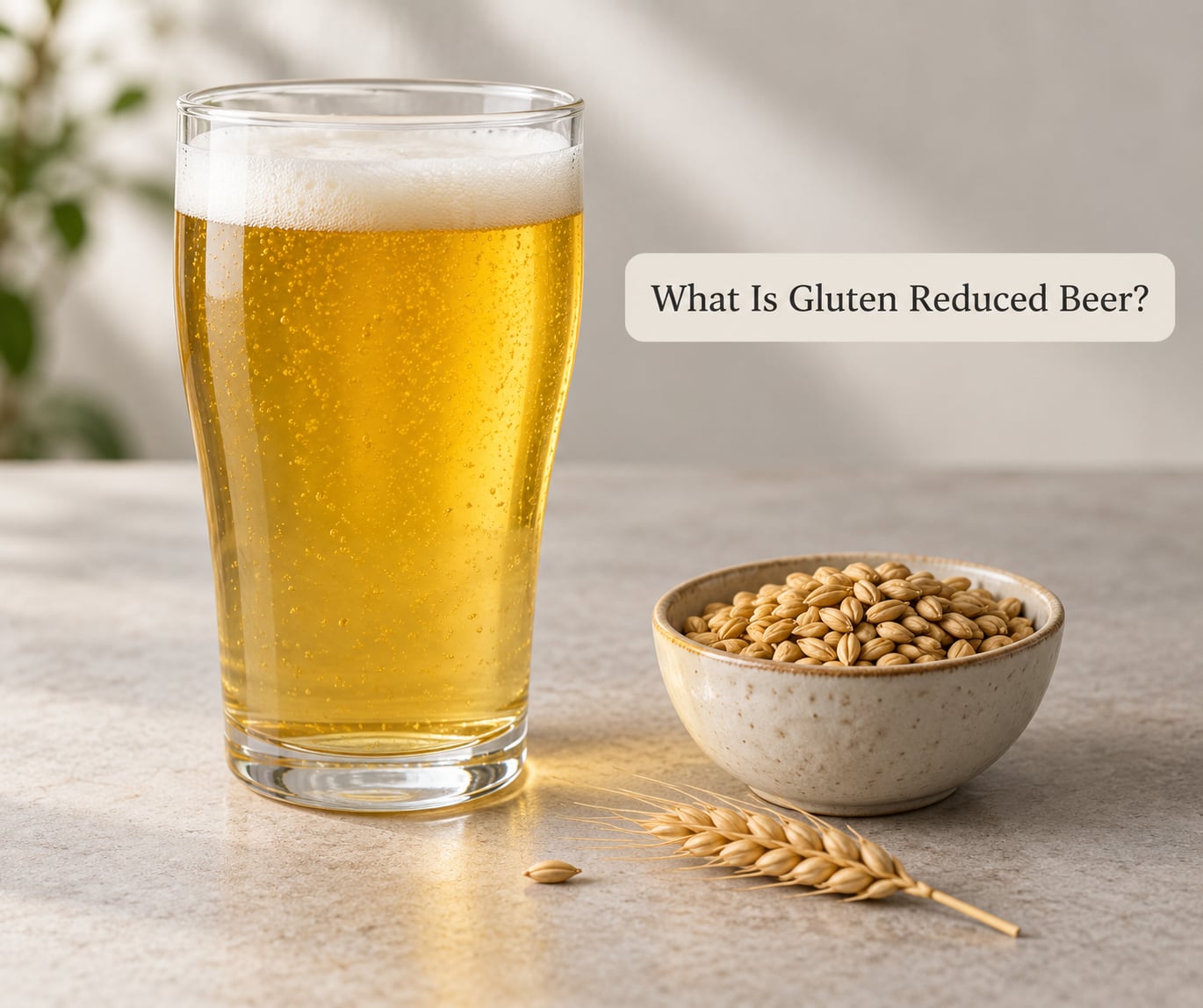
Gluten reduced beer is beer made from traditional gluten-containing grains where the gluten has been broken down during brewing rather than left intact or kept out of the kettle in the first place.
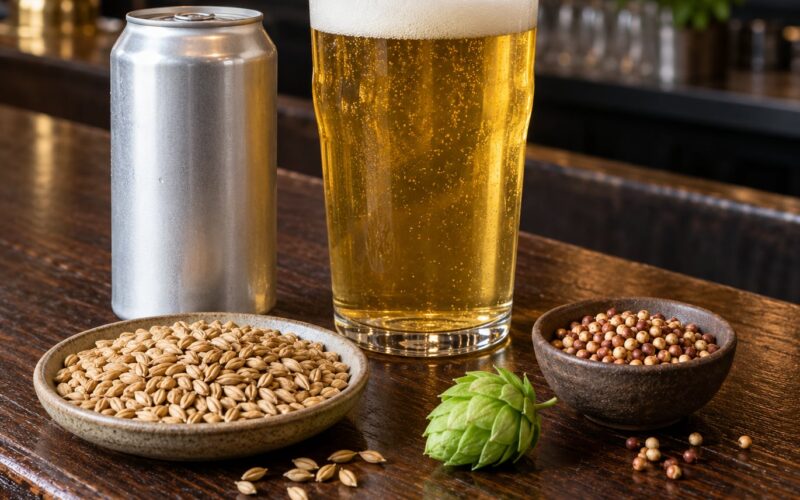
Ordinary beer contains gluten because it is brewed from malted barley, wheat or rye. In barley the main gluten proteins are called hordeins, in wheat they are gliadins and glutenins. Malted barley is what gives beer its color, its bready aroma and most of its calorie load, so nobody brews beer from it by accident.
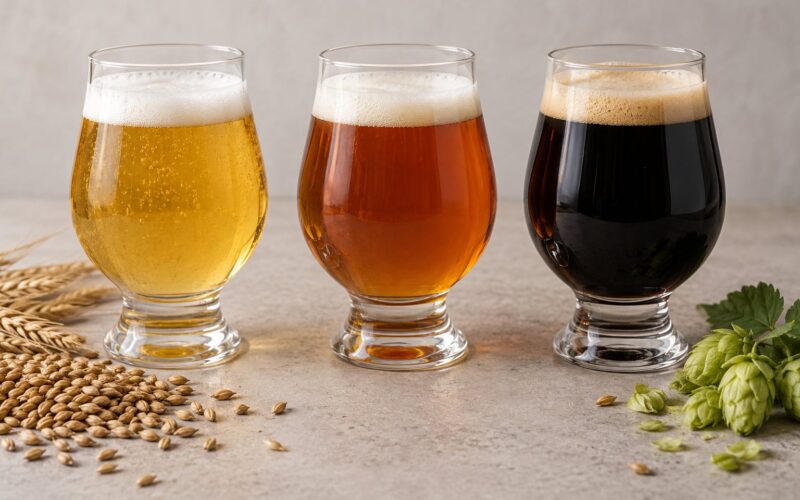
That puts most beer into one of three buckets. Conventional beer is brewed from barley or wheat with nothing done about the gluten. Gluten-reduced beer is brewed the same way and then treated so the gluten proteins are chopped into pieces too short to trip standard testing. Gluten-free beer is brewed from grains that never contained gluten, or from a base that is diluted heavily enough to test low.
The terminology gets muddy because different breweries describe the same approach differently. You will see gluten reduced, gluten removed, gluten-light, gluten-lite and crafted to remove gluten. None of those phrases means the beer was made without gluten.
How Is Gluten Reduced Beer Made?
The process usually runs in four moves, and the middle one is the whole trick.
- Choose the grain bill. The brewer starts with the same barley or wheat a conventional beer would use, so the finished beer can taste conventional.
- Clarify the wort. Unfermented wort is filtered and sometimes heat treated, which knocks back protein haze and gives enzymes a cleaner surface to work on.
- Treat it with enzymes. A proteolytic enzyme, usually an amyloglucosidase sold under trade names such as Clarex, is added during fermentation. It cleaves gluten proteins into short peptides. The celiac immune system responds to particular long sequences within those proteins, and chopping them up is what drops the measured level.
- Clarify the finished beer. Filtration and fining agents pull out remaining haze and protein, which smooths the mouthfeel and stabilizes the beer.
Enzymes are the common route, but they are not the only one. Some breweries dilute the malt bill with rice, corn or sorghum so the finished glass simply contains less gluten. Others lean on wild organisms: the bacteria and Brettanomyces yeasts that sour a beer also break down gluten over time, which is why the boundary between sour and gluten-free is blurrier than the marketing suggests.
What no method does is remove every fragment. Barley-based beer stays a barley-based beer, and the pieces left behind are exactly the pieces that current testing methods are worst at measuring.
What Does Gluten Reduced Beer Taste Like?
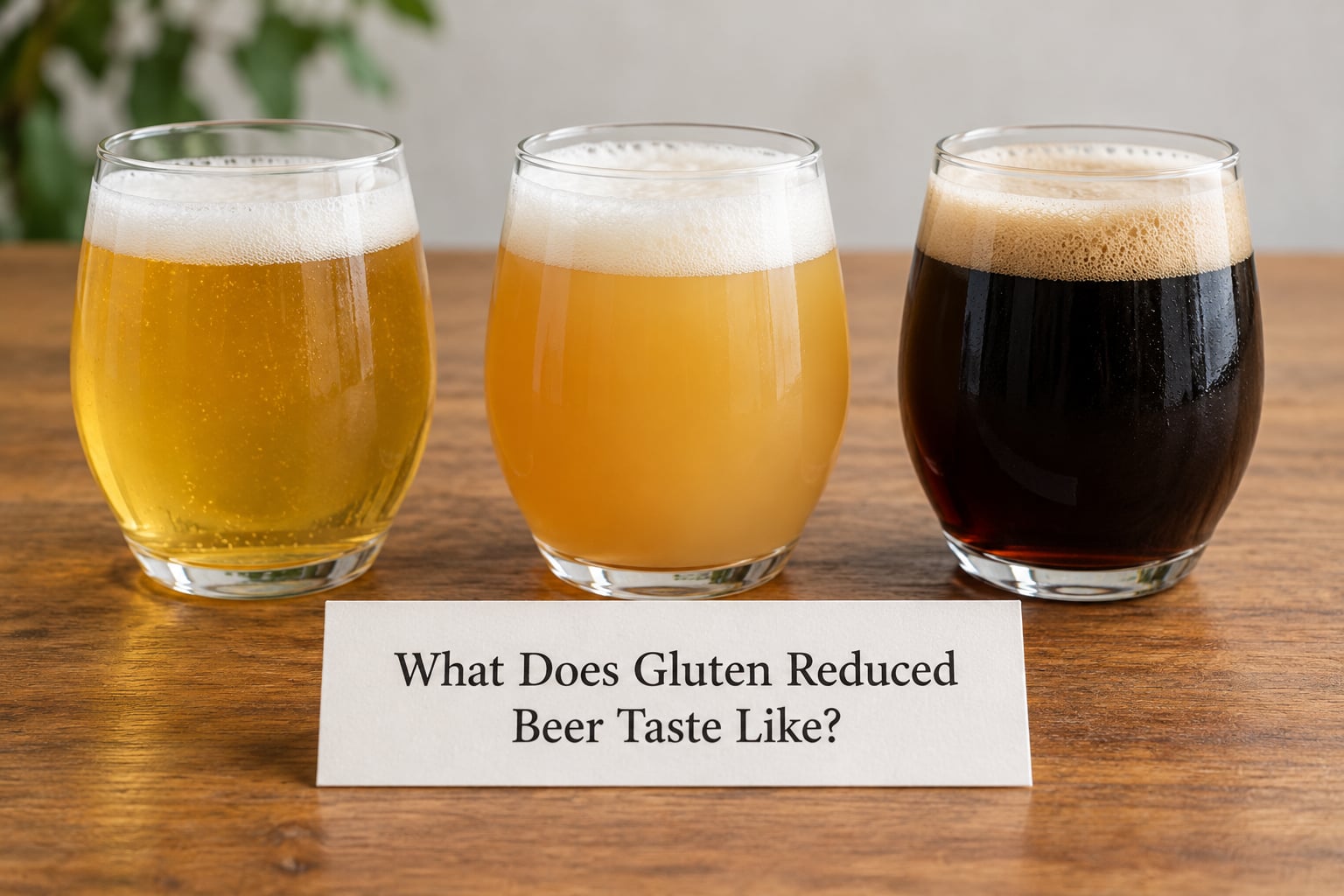
Good gluten-reduced beer is meant to taste like beer first and like a compromise second. If it tastes like a vegetable, the process went wrong.
Compared with the same style brewed without enzymes, you will usually notice a thinner body, a less persistent head and a little less grain aroma. Enzyme treatment also trims some of the polyphenol-driven grip that gives an unfiltered IPA its slight bite, so hop flavor reads cleaner and sharper.
A few words worth knowing when you taste it. Body is the weight and chewiness on the palate. Head is the foam. Astringency is that drying, chalky feeling at the back of the tongue, which in hoppy beer comes from polyphenols. A clean finish means the beer stops rather than hanging around sour or papery.
On calories and carbs, assume a barley-based gluten-reduced beer behaves like the barley beer it is. Removing gluten does not remove sugar. Some styles finished with rice or sorghum adjuncts do carry fewer carbohydrates, but that is a recipe decision, not a gluten decision.
Gluten Reduced Beer vs. Gluten-Free Beer
The short comparison: gluten-reduced beer is barley beer with its gluten chopped up, and gluten-free beer is beer made from a grain that had no gluten to begin with.
| What to check | Conventional beer | Gluten reduced beer | Gluten-free beer |
|---|---|---|---|
| Base grain | Barley, wheat or rye | Barley or wheat, plus enzymes | Sorghum, rice, millet, buckwheat or corn |
| Where the gluten went | Never addressed | Broken into peptides during fermentation | Never present |
| Typical gluten level | Thousands of ppm | Often under 20 ppm by testing | Under 20 ppm, often under 10 |
| Third-party certification | Not applicable | Generally not available | GFCO or equivalent marks are common |
| Suitability for celiac disease | No | Discuss with your clinician first | The category most celiacs are pointed toward |
| Flavor | Full malt body | Close to conventional, slightly thinner | Varies widely by brewery and style |
Wheat beers and Belgian-style ales sit awkwardly here, since both depend on wheat for their character, not just as an adjunct. Rye and spelt beers bring their own problems. If a brewery keeps the gluten-bearing grain in the recipe, the beer belongs in the reduced column no matter what the can says.
How to Read a Gluten Reduced Beer Label
Read the phrase on the can, not the mood of the packaging. These labels say very different things.
- Gluten-free. In the US this is a regulated claim below 20 parts per million, and a dedicated gluten-free brewery should be able to tell you how they test. Beer labels here run through the Alcohol and Tobacco Tax and Trade Bureau.
- Certified gluten-free. A third-party mark such as GFCO means the whole product, equipment and process were audited. This is the strongest signal on the shelf.
- Gluten-removed or gluten-reduced. Marketing language for the enzyme process. There is no certification behind it.
- Low-gluten or crafted to remove gluten. A weaker promise than gluten-free. Treat these as ordinary beer with a footnote.
- Brewed with wheat, barley or malted barley. This is an allergen disclosure, and it tells you gluten is in the glass regardless of any other claim on the label.
- Naturally gluten-free. Usually means a base of sorghum, rice or similar, not a barley beer that was treated afterwards.
One regional wrinkle: some European countries use a 10 parts per million standard for beers labelled very low gluten, which is a stricter bar than the 20 parts per million US figure. If you travel, the label language changes with the market.
Is Gluten Reduced Beer Safe for People With Celiac Disease?
Not automatically. Beer labelled gluten reduced is brewed from barley and has been shown to trigger a measurable immune response in some people with celiac disease, so the mainstream medical guidance is to treat it as a gluten-containing beer.
The research behind that guidance is specific. The University of Chicago Celiac Research Center ran a study, later published in the Journal of AOAC International, in which people with celiac disease drank a series of gluten-free and gluten-removed beers. Blood samples taken afterward showed markers of gluten exposure in some participants, meaning gluten proteins had been absorbed and the immune system had responded.
The Celiac Disease Foundation has been blunt about why that happens even when a label claims low gluten. The standard laboratory tests were built to detect intact gluten in grain products. When enzymes chop gluten into short peptides, those tests under-report what is actually in the bottle.
That single fact explains the certification story. GFCO does not certify the gluten-removed category, because a beer that starts with malted barley cannot be verified by the methods available today. Peer-reviewed work on barley-based gluten-reduced beer has also found that heat treatment sharply reduces the polypeptides that provoke an immune response, which points toward processing as a future path rather than a current guarantee.
What drinkers report matches the research loosely, but with more variety than people expect. On celiac.com forums and r/Celiac, the most common descriptions are not the dramatic stomach upset everyone imagines. They are a day or two later of poor sleep, flat mood, fatigue and achy joints. Bloating, cramping and urgency do get mentioned, often after more than one beer in a sitting. Several people describe one bottle as fine and the second as a mistake, which is the dose-dependence question nobody can answer for you in advance.
Individual tolerance varies widely, and forum reports are stories rather than evidence. If you have celiac disease or a diagnosed sensitivity, talk to your gastroenterologist or a registered dietitian before changing what you drink. Nothing here is medical advice.
How to Choose and Serve Gluten Reduced Beer
If you avoid gluten for medical reasons, start with a certified beer from a dedicated gluten-free brewery and treat everything else as an experiment, not a substitute.
Then work through the practical details. Check whether the brewery publishes its testing method, because a claim without a method is decoration. Ask about shared equipment if you are buying from a taproom that also runs a gluten-containing line. Watch for malted barley, wheat or rye in the ingredient list even on cans that carry a gluten claim.
For taste, pick the style first and the label second. A gluten-reduced pale ale or amber ale is usually the least noticeable swap, while wheat-heavy styles and aggressively hopped IPAs show the process most.
Serve it colder than you would a full-strength pale ale, around 38 to 42 degrees Fahrenheit, in a clean glass with no detergent residue or shared glassware. A rinse and a fresh glass matter more than most drinkers expect.
Pairing works best with foods that have their own fat and salt: grilled chicken, a sharp cheddar and apple bowl, shrimp tacos, a cheeseburger. Very spicy food competes with the hop character that reduced beer tends to lose first.
Finding certified beer takes a little hunting. It is thin in most taprooms and restaurants, so check your grocer’s cold case, look at what the brewery sells direct, and ask your local bottle shop. Many gluten-free breweries are small and ship their own beer rather than going through distribution.
Frequently Asked Questions
Is gluten-removed beer safe for people with celiac disease?
No. Gluten-removed beer is brewed from barley and has triggered a measurable immune response in people with celiac disease in studies published in the Journal of AOAC International. Standard gluten tests under-report fragmented proteins in treated beer, which is why the GFCO does not certify the category. Treat it as gluten-containing and ask your clinician.
Is Blue Moon beer gluten-free?
No. Blue Moon is brewed with malted barley and wheat, and the label discloses both. It is an ordinary wheat beer that has not been treated to reduce gluten, so anyone avoiding gluten for medical reasons should skip it and look for a certified gluten-free alternative instead.
Does Coors make a gluten-free beer?
Coors has sold gluten-free versions made from a base that meets the US gluten-free standard, and they are separate from its core light lager. The regular light lager is brewed from barley and carries no gluten-free claim, even though independent testing of some mainstream lagers has come in under 20 parts per million. Under the threshold is not the same claim.
What are the symptoms of gluten intolerance after drinking beer?
Two patterns get reported. Acute reactions show up within hours as bloating, cramping, urgency or diarrhea. The subtler pattern shows up a day or two later as fatigue, brain fog, poor sleep, joint aches and reflux. Many drinkers say one beer is fine and a second is not, so dose matters as much as the label.
Does gluten-free beer have less carbs?
Sometimes, but for reasons unrelated to gluten. Carbs come from fermentable sugars, so a light beer made with rice or sorghum adjuncts will be lower calorie and lower carb than a full-strength barley beer. Gluten-free and gluten-reduced barley beers can be just as high in carbs as the conventional version they replace.
What popular beer is gluten-free?
The answer is the less famous brands. Certified gluten-free beers come mainly from dedicated breweries such as Bard’s, New Planet and Glutenberg, plus a few large makers who run separate gluten-free lines. Mainstream barley lagers are not gluten-free, even when testing puts them under 20 parts per million. Check for a certification mark on the can.
What to Do First
Find the exact phrase on the can and decide what it promises. Gluten-free from a certified brewery and gluten-reduced from a barley brewery are not the same purchase, and no amount of reading past the front label closes that gap.
Next, check the ingredient list for malted barley, wheat or rye, and look for how the brewery tests its beer. If you are avoiding gluten because of a diagnosis, take that conversation to a gastroenterologist or registered dietitian before you change anything. 2026