Short answer: the saying is wrong, and both halves of it are wrong. Whether you drink beer or spirits first does not change how drunk you get or how bad the morning is, because your blood alcohol concentration responds to the total ethanol you consume and how fast you consume it, not to the order of the drinks. Two people drinking the same alcohol at the same pace finish at the same place regardless of what was in the glass.
Why does the saying feel true to so many people? Because the two halves of it are describing two different things and letting them blur together, and because craft beer serving sizes quietly deliver far more alcohol per glass than the sayings ever accounted for. Here is what actually happens, and what to do instead at a tasting or a bar crawl.
Last updated: October 2026
Table of Contents
- Why Beer Before Liquor Advice Is Wrong
- What Does Beer Before Liquor Actually Mean?
- Does Drinking Beer First Reduce Intoxication?
- How Your Body Processes Beer and Liquor
- Why the Order Does Not Change How Fast You Sober Up
- Does Beer Protect You from a Bad Hangover?
- How to Drink Responsibly at a Craft Beer Event
- Frequently Asked Questions
- Is it safer to drink beer before liquor?
- Does starting with beer make you less drunk?
- Are beers safer than hard liquor?
- Does eating food stop you from getting drunk?
- How can I sober up faster at a beer event?
- Conclusion: Judge the Total, Not the Order
Why Beer Before Liquor Advice Is Wrong
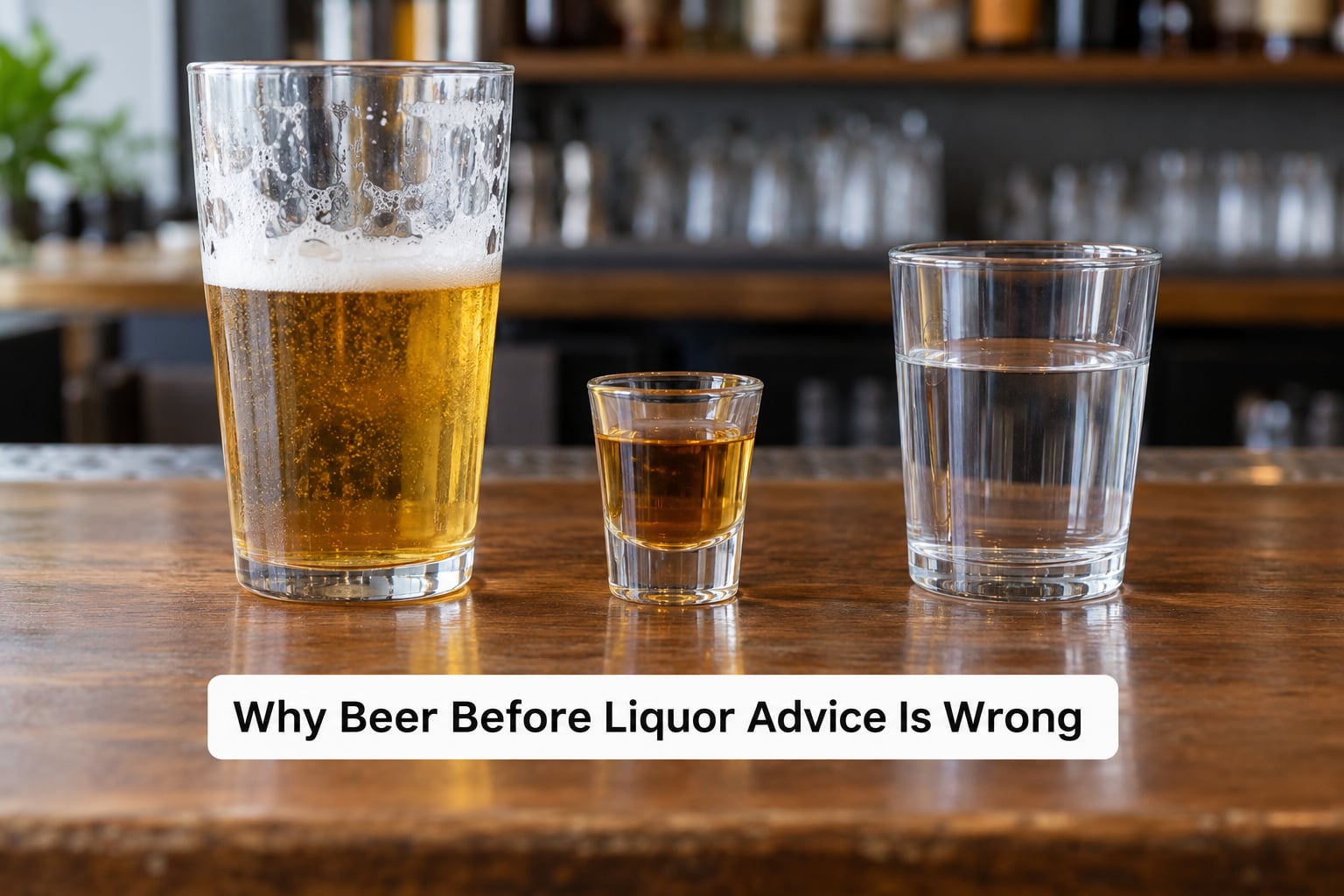
Two claims hide inside the saying. The first is that beer before liquor leaves you sicker. The second is that liquor before beer keeps you safe. Neither survives contact with the evidence, because both assume a rule nobody tested until 2019.
What the 2019 work actually showed was that the order of consumption had no measurable effect on hangover intensity. Researchers led by Dr. Kai O. Hensel at Helios University Hospital Wuppertal ran 90 students through three drinking groups in a cross-over design, scoring the morning after on a zero-to-seven scale covering thirst, nausea, tiredness and dizziness. Hit 0.05% BAC first, or 0.11% first, or drink beer before spirits versus spirits before beer. The hangovers landed in the same range.
What did track with hangover severity was how much alcohol went in and how quickly. A 12-ounce craft IPA at 7% carries about twice the alcohol of a 12-ounce 5% lager, so a night of “just beer” can be a heavier night than a night of cocktails. The order is a story we tell about the night. The total is the night.
What Does Beer Before Liquor Actually Mean?
The full version of the saying is: beer before liquor, never been sicker. Liquor before beer, you’re in the clear. It shows up in bar signage, in fraternity lore and in the kind of advice a bartender gives a nervous birthday-party guest. As a rule of thumb, it is a drinking-order rule: it tells you which beverage to pour first and implies the sequence changes the outcome.
That is worth separating carefully from the advice that does hold up. Eating a real meal before you start slows absorption, because food in the stomach and small intestine keeps alcohol from passing into the bloodstream as fast. Interleaving water gives your body time to clear ethanol. Pacing sets the single biggest lever you control, since the liver metabolizes alcohol at a near-constant rate and everything above that rate accumulates in your blood.
None of those are about order. They are about timing, quantity and food. Switching from beer to a shot at the tenth drink changes what you are drinking, not how much alcohol your body is trying to process, so it does not move you closer to safety. The people who report that the saying “worked” for them are usually describing a night where they happened to drink less.
Does Drinking Beer First Reduce Intoxication?
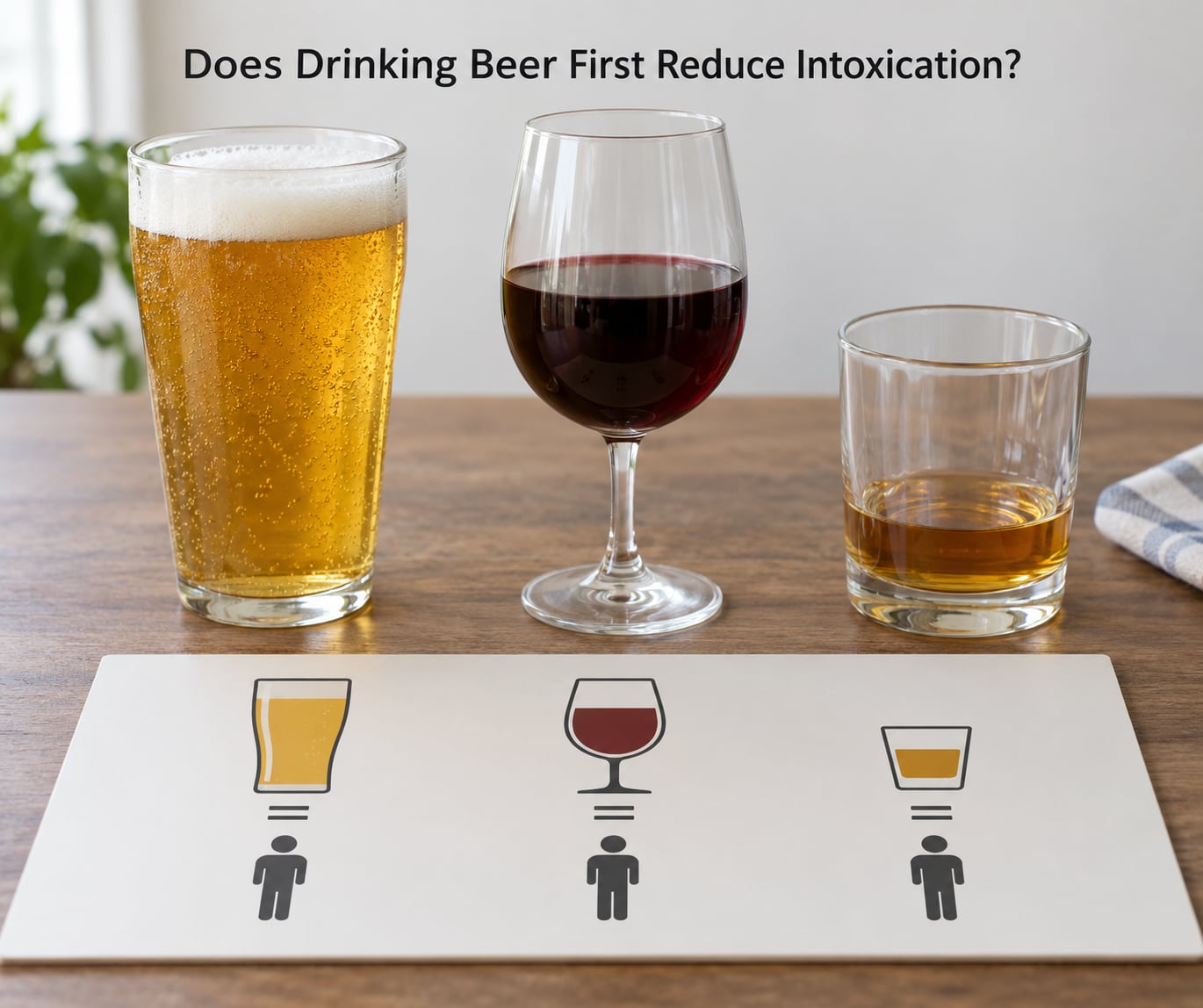
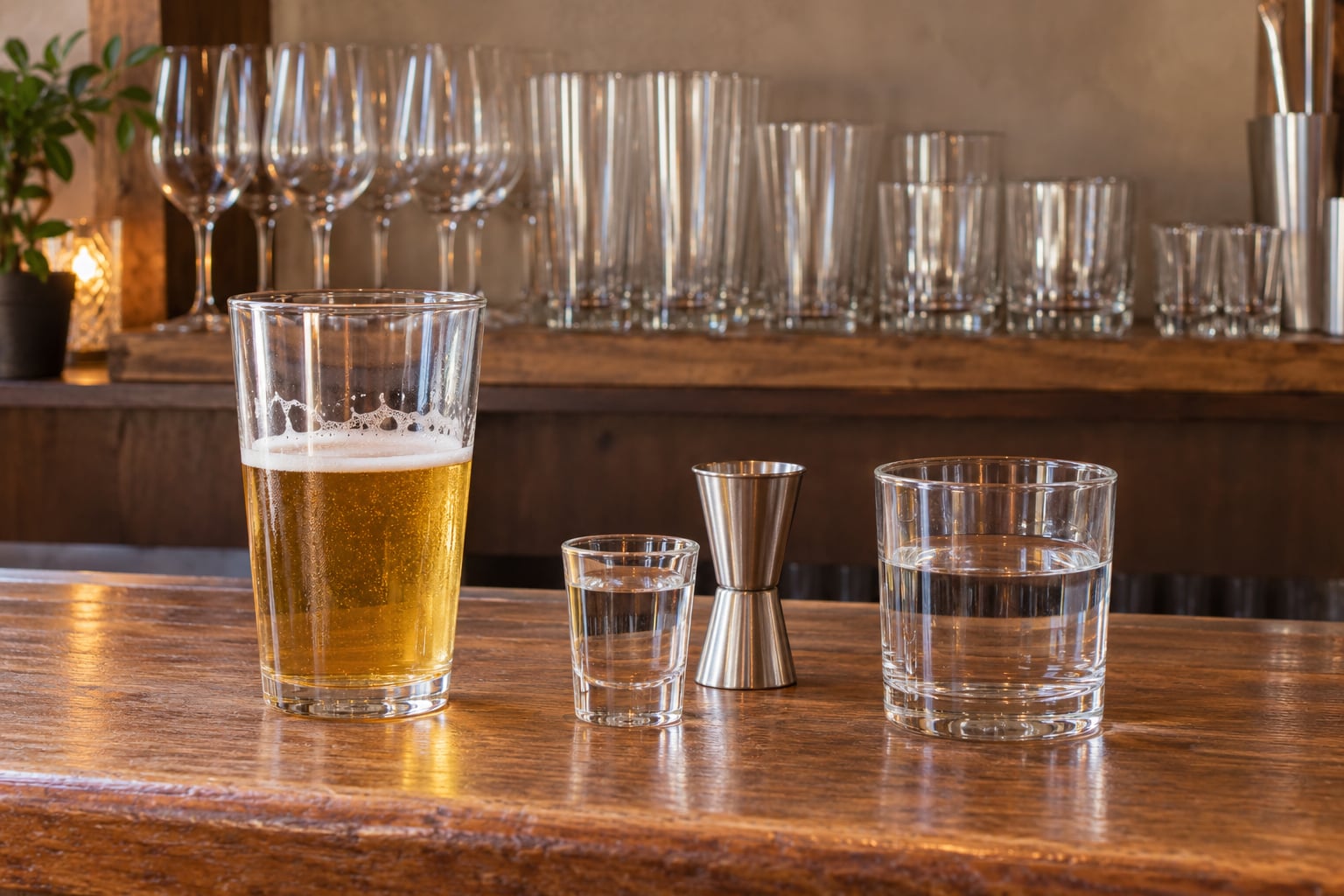
No. A standard drink is defined as about 0.6 ounces of pure alcohol, roughly 14 grams, no matter what it arrived in. Put the common servings side by side and the slogan has nowhere to hide.
| Drink | ABV | Serving volume | Pure alcohol | Standard drinks |
|---|---|---|---|---|
| Lager | 5% | 12 oz | 0.60 oz | 1 |
| Pale ale | 5.3% | 12 oz | 0.64 oz | about 1 |
| IPA | 7% | 12 oz | 0.84 oz | about 1.4 |
| IPA in a large can | 7% | 16 oz | 1.12 oz | about 1.9 |
| Double IPA | 8% | 16 oz | 1.28 oz | about 2.1 |
| Red wine | 12% | 5 oz | 0.60 oz | 1 |
| Standard spirit | 40% | 1.5 oz | 0.60 oz | 1 |
| Craft flight, four 5 oz pours | 7% | 20 oz total | 1.40 oz | about 2.3 |
A 16-ounce can of 7% IPA is close to two standard drinks. A four-pour flight at the same strength is closer to two and a quarter. Start a tasting with those in front of you and believe you are pacing yourself, and you can reach a blood alcohol level that a 1.5-ounce pour could never have produced in the same hour.
One twist deserves a mention because it is genuinely useful. A 2007 study found that carbonated water speeds up absorption of vodka when the two are mixed. Beer is carbonated, so a fizzy beer can raise blood alcohol concentration a little faster than an equivalent flat drink, which is a small, real difference tied to a specific drink, not to beer as a category and not to ordering. It is the closest thing to a mechanism behind the saying, and it is far too small to make sequencing protective.
How Your Body Processes Beer and Liquor
Alcohol arrives through the stomach and small intestine, and roughly a fifth of what you drink is absorbed before it gets there. The stomach lining slows that route, which is why food matters: a full stomach simply keeps the drink in the queue longer. From there, ethanol enters the bloodstream and the liver works on it at a fairly constant rate, around 7 to 10 grams an hour for most adults, converting it to acetaldehyde and then to acetate.
Everything else that changes your blood alcohol concentration sits outside the liver’s control. Body size and lean muscle mass change how it is distributed. Genetics, sex and liver enzyme activity change how fast it is cleared. Drinking speed decides how much piles up before clearance catches up. Sleep disruption and medications add friction, and mixing alcohol with sedatives or opioids is a genuinely dangerous combination worth discussing with a doctor or pharmacist rather than a forum.
Why the Order Does Not Change How Fast You Sober Up
Sobering up is a processing problem, not a sequencing problem. The liver does not work faster because you switched to a different kind of drink, and it certainly does not work faster because you started with a beer, which is the logic the saying assumes. What changes the curve is anything that alters the rate at which ethanol enters your blood: how fast you drink, how much you have eaten, the strength of the drink and the size of the person drinking it.
Order only changes one variable indirectly. Spirits are usually served in smaller volumes and drunk faster than beer, so a night that opens with shots often reaches a high blood alcohol concentration before anyone’s judgment catches up. That is a pace effect wearing an order costume, which is why people who swear by “liquor first” are often describing feeling sober enough at the start to slow down later. That is the opposite of what the saying tells you to do, and it points at the same real rule: pace governs the night.
Does Beer Protect You from a Bad Hangover?
It does not, and the list of hangover causes is short enough to be worth knowing. The dominant driver is the total alcohol consumed, with the peak blood alcohol concentration and the speed of drinking close behind. After that come sleep disruption, dehydration and low blood sugar, plus direct gastrointestinal irritation and inflammation from acetaldehyde.
Then there are congeners, which are the by-product compounds formed during distillation and aging. They are the reason some mixed nights feel qualitatively worse than others at equal ethanol, and the effect is measurable. Dark spirits such as bourbon, brandy and aged whiskey carry more of them than vodka or gin, which are more heavily distilled and carry less. Light beers tend to sit at the cleaner end, which is one reason a beer-only night often feels easier than a mixed one.
Forums like r/alcohol and r/cocktails land on the same three explanations independently: dark spirits carry more congeners, cocktails add sugar, and shots are consumed in seconds rather than sips. Add the 16-ounce IPA math from the table above and the picture gets complete. Mixed nights feel worse because they often carry more total alcohol, more congeners and faster delivery, not because the beer came first.
It is also worth saying that hangover severity varies between people regardless of what they drank. A meaningful share of people who drink to intoxication report no hangover at all. There is no ordering strategy that will give you a reliable answer, and any advice promising one is selling something.
How to Drink Responsibly at a Craft Beer Event
Since the order does not matter, spend the attention on the things that do. These steps are built for tasting rooms, festivals and bar crawls, where the default pace is faster than anyone intends.
- Eat before the first pour, not after the third. Food in the stomach slows absorption measurably, and a festival where you are tasting on an empty stomach is the classic setup for a rougher night than you planned.
- Read the ABV on the pour, not on the menu headline. A 5% session lager and a 9% imperial stout in the same glass shape are not the same drink. Ask the server when the ABV is not on the board.
- Count servings, not rounds. At 7% to 8%, a 16-ounce can or a four-pour flight is two or more standard drinks. Two of those in an hour is already a substantial night.
- Set a time limit and a drink limit at the door. Decide before the first taste, when judgment is unimpaired. “Three pours, ninety minutes” is a better plan than “I’ll stop when I feel it.”
- Interleave water and food, and finish the pour. Pouring a small drink, finishing it, then sitting for a few minutes keeps your rate of consumption under the liver’s clearance rate, which is the only threshold that matters.
- Watch the top-ups. A refill that arrives without a full pause in between is how an hour becomes four hours. A visible gap is the simplest guard against it.
- Plan the ride before you start. Rideshare, a designated driver, the metro, or a walking route home. Never drive after drinking, however much you feel able to.
If someone shows signs that worry you at a tasting, contact emergency services rather than trying to fix it with coffee, cold air or another drink. The National Institute on Alcohol Abuse and Alcoholism publishes plain-language resources on alcohol consumption and on getting help, and for personal medical questions a doctor or pharmacist is the right call.
Frequently Asked Questions
Is it safer to drink beer before liquor?
No. Order of consumption does not affect how drunk you get or how bad a hangover feels, and no ordering sequence is safer than another. A 2019 cross-over study of 90 students found no difference in hangover scores between beer-first and liquor-first groups. What changes outcomes is the total alcohol consumed and the speed of drinking.
Does starting with beer make you less drunk?
Only if you drink less overall, which is a quantity effect, not an order effect. Beer often arrives in larger, higher-alcohol servings than spirits, so a craft night can deliver more ethanol than a cocktail night. If starting with beer reliably leaves you feeling more sober, that is a signal about your intake and pace, not proof the sequence protects you.
Are beers safer than hard liquor?
Neither is safer at equal total alcohol; a standard drink is about 0.6 ounces of pure ethanol whichever vessel it arrives in. Spirits may carry more congeners, the compounds formed during distillation that are linked to harsher hangovers, while beer adds carbonation, which can slightly speed absorption. Compare the numbers in the glass rather than the category.
Does eating food stop you from getting drunk?
Food slows absorption rather than blocking it, and it has to be in your stomach before you start. A real meal keeps alcohol queued in the stomach and small intestine, so blood alcohol rises more slowly. It does not reduce the total you end up drinking, and on an empty stomach even a slow drink can hit harder than you expect.
How can I sober up faster at a beer event?
You cannot speed up sobering by changing drinks, and nothing you drink reverses it. Only time works, because the liver clears alcohol at a fixed rate for each person. Coffee, cold showers and fresh air may make you feel more alert without changing your blood alcohol. If someone is hard to wake, breathing slowly or vomiting, call emergency services right away.
Conclusion: Judge the Total, Not the Order
The beer before liquor advice is wrong because the body answers to the total ethanol and the pace, and neither depends on sequence. Judge your night by those two numbers, eat first, keep water coming, count servings rather than rounds, and stop when you hit the limit you set at the door. If warning signs show up in you or someone else, call emergency services instead of reaching for another strategy.