The fastest way to find beer festivals near you is to run the same search in a few different shapes: the phrase plus your city, the phrase plus a date, and the phrase plus a synonym like beer week or brew fest. Then confirm everything on the organizer’s own page before you commit to a drive.
Seven methods get you there, and they take about fifteen minutes total. The trick most guides skip is verification — a search result can be a year out of date, and festival dates move more often than people expect.
This guide walks through each step in order, then gives you a checklist for confirming what you found. I’ve checked the methods against 2026 listings for US metros, so the search terms and the websites still return what you’d expect.
Table of Contents
- What You Need
- Step-by-Step: How to Find Beer Festivals Near You
- 1. Search for beer festivals near you
- 2. Use a map or events calendar to expand your search
- 3. Check brewery, taproom, and beer-shop websites
- 4. Verify the date, location, and ticket details
- 5. Look for local social and community recommendations
- 6. Compare travel time, cost, and festival format
- 7. Save the event and check for last-minute updates
- Common Mistakes
- Quick tips for finding a better match
- Frequently Asked Questions
- What is the easiest way to find beer festivals near me?
- How far in advance should I look for a beer festival?
- Are beer festivals usually free or do I need tickets?
- Can I find smaller beer events that are not called festivals?
- What should I check before attending a beer festival?
- How do I find beer festivals in another city?
- Conclusion
What You Need
Four things, and you can do it all from a phone:
- A device with internet access — a phone is better than a laptop here, because map search and location sharing work the way most people actually use them.
- Your approximate location or a target city — a ZIP code or neighborhood name narrows results far more than “near me” alone.
- A date range — even a rough one. A weekend, a month, or the whole season each return a very different set.
- A budget range and a transportation idea — optional, but it saves you chasing events you can’t reach or afford.
One more thing helps more than people expect: knowing whether you care more about a big annual event with rare beers or a small neighborhood fest where you can actually talk to the brewer. It changes which sources you trust later.
Step-by-Step: How to Find Beer Festivals Near You
1. Search for beer festivals near you
The default query returns the same five aggregator pages every time. Add qualifiers to break that up.
Start with the phrase plus your city: beer festival plus Richmond, or craft beer events plus Denver. Then swap the noun for a synonym the organizers themselves use — beer week, brew fest, taproom takeover, beer crawl, or tasting.
Add a season or a date when you have one. Searching fall beer festivals near me returns a different and much smaller set than the generic phrase, and that smaller set is usually more useful. Do the same with a style: sour beer festival, stout festival, cask ale festival. Style-specific searches surface events that general listings skip entirely.
How you know it worked: the results include at least one named event with a specific date, not a roundup post from a few years back.
2. Use a map or events calendar to expand your search
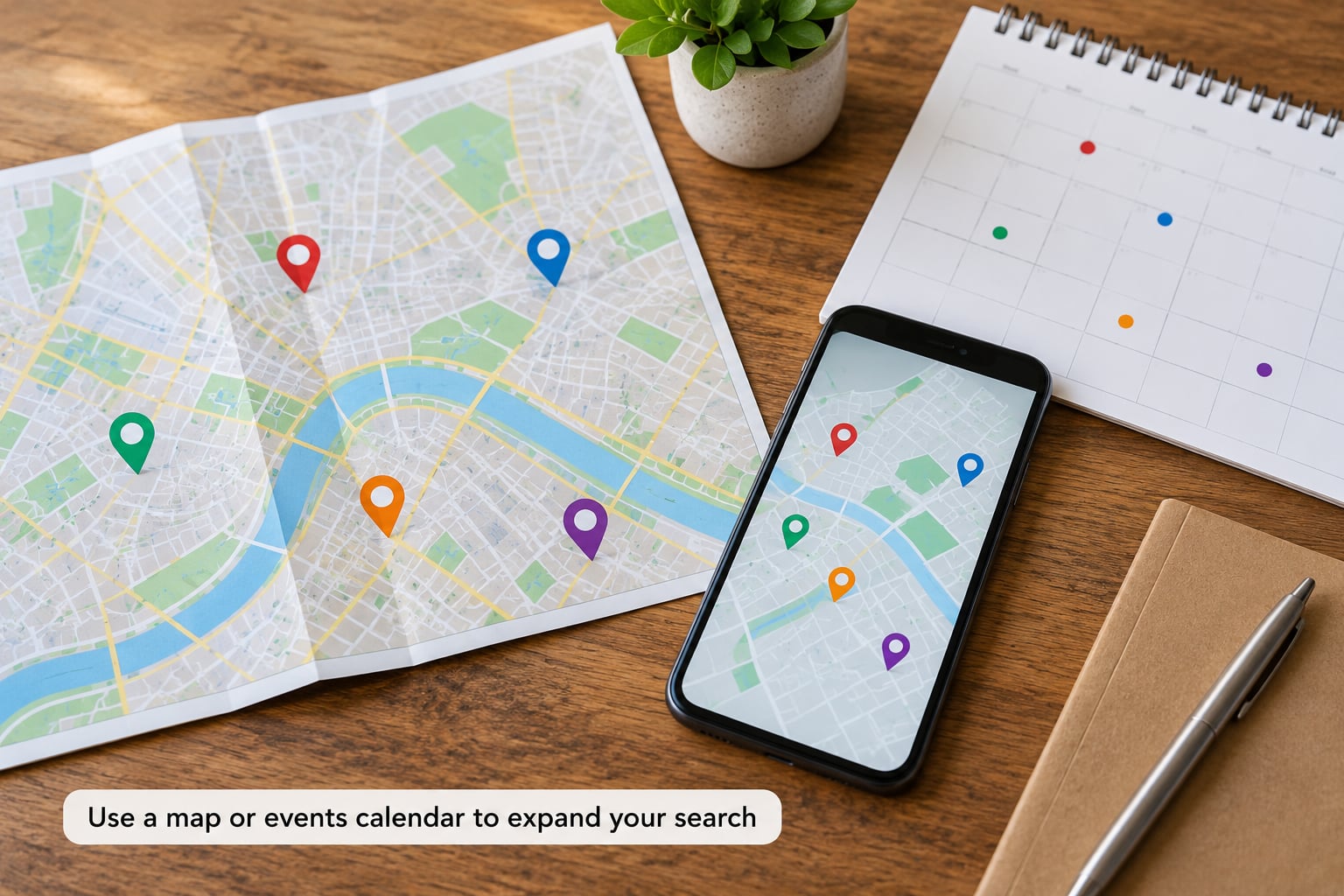
Map search finds the events a normal web search buries. Searching within a 25-mile radius shows you festivals in suburbs you would never type into a query, plus the permanent ones at breweries that happen every month.
Three calendars are worth more than ten searches:
- Your city’s official event calendar — many cities publish parks and recreation programming, which is exactly where outdoor festivals land.
- The local tourism bureau site — often lists festivals the city’s own calendar treats as too small, plus food and drink events that include beer.
- Regional media calendars — a beer or food writer who covers your metro will usually keep a running list, and it’ll be current because they’re using it.
Check the actual venue on the map pin rather than trusting the address in the title. Regional festivals frequently sit in a fairground, park, or brewery campus twenty minutes outside the city named in the event title.
3. Check brewery, taproom, and beer-shop websites
This is the step that finds the good stuff, and almost nobody does it.
Local breweries run their own calendar pages, and a brewery hosting an anniversary festival or a release party will post it there first. Taprooms post overnight events — barrel-aged releases, cask pours, collab nights — that rarely show up on any aggregator. Bottle shops and distributors list small festivals they’re part of, often with ticket codes.
State and regional brewers guilds are the other quiet source. Their calendars are usually accurate, dated, and free of sponsored filler, which makes them a better baseline than anything a search engine surfaces.
How you know it worked: you find a listing that names the organizer and a ticket or RSVP link. If a page has no contact name and no way to buy a ticket, treat it as a rumor.
4. Verify the date, location, and ticket details
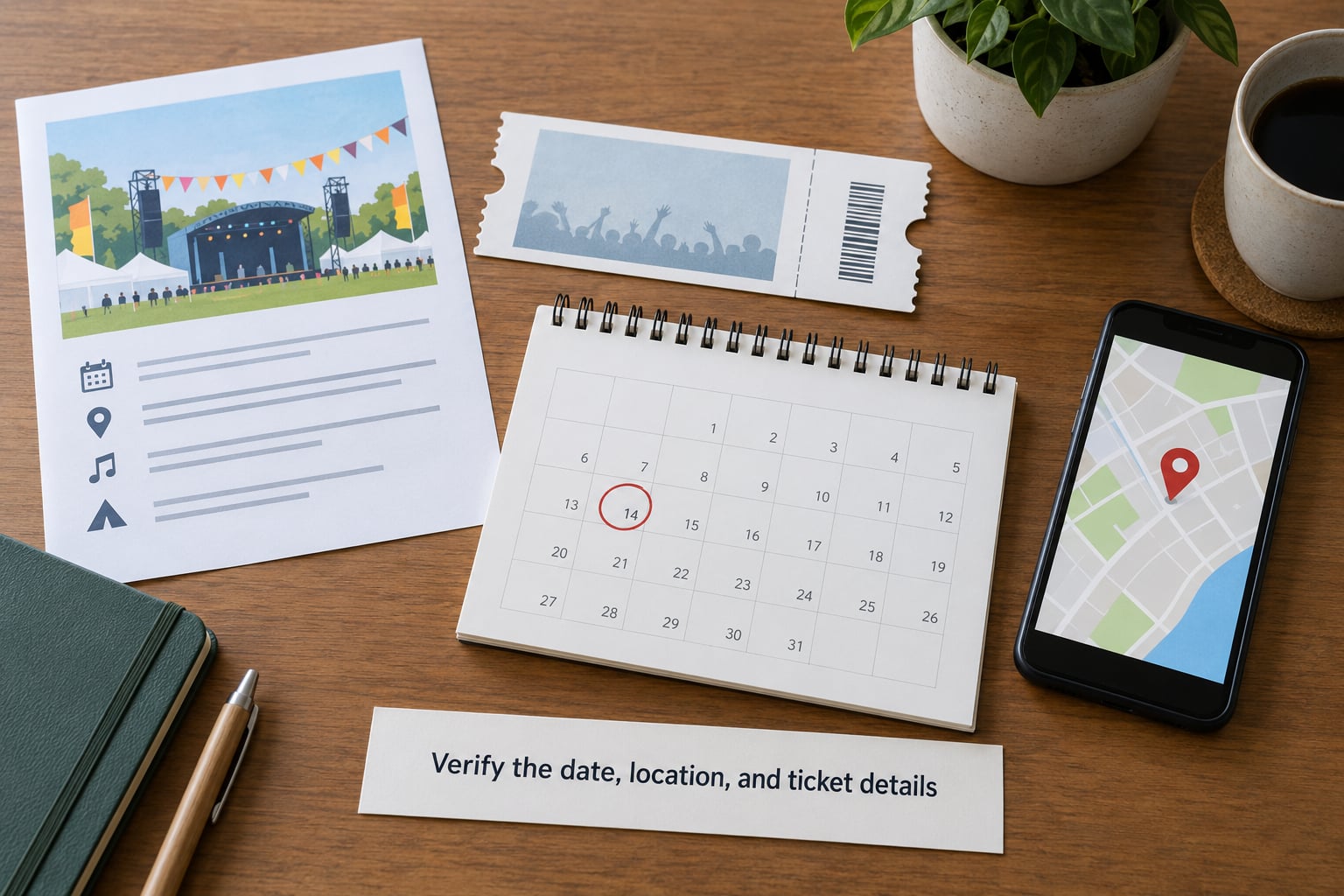
This is where most people get burned. Run through this list on the organizer’s own page before you commit to anything:
- The year. A stale page from last summer still reads like a live listing. Check the copyright line and whether ticket sales are actually open.
- The venue and full street address. Many events move between years.
- Opening hours and session times. Multi-day festivals often split into timed sessions, which changes your whole plan.
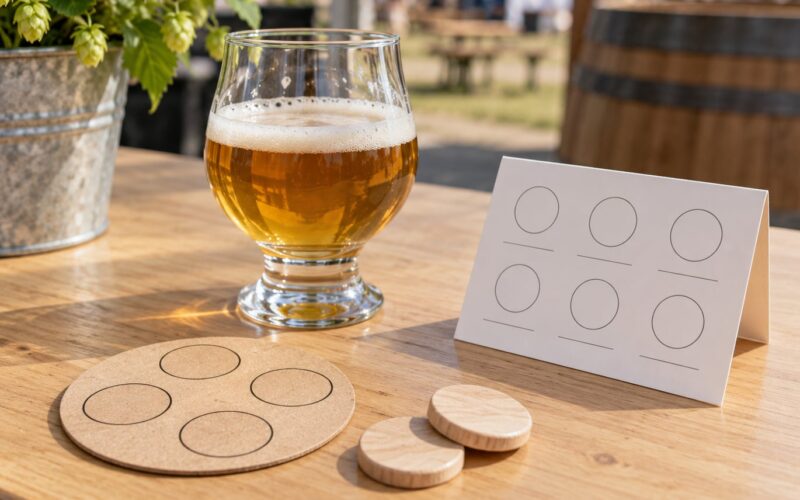
- What admission includes. Some festivals include unlimited pours from participating breweries. Others hand you a commemorative glass and sell tokens separately, where each token buys one small pour. These two models feel completely different and cost very different amounts.
- Age rules. Most are 21 and over with photo ID at the gate, and some require the ID to match the name on the ticket.
- Rain and weather policy. Outdoor festivals cancel or relocate more often than indoor ones.
- Refund terms. Worth knowing before you buy, because organizers do cancel events.
Forums are a useful cross-check on those details. Readers on r/desmoines raised the exact concern most first-timers have — hours of standing in line in the sun — which is a reason to pick a weekday session or a smaller event rather than a reason to skip festivals altogether.
5. Look for local social and community recommendations
Search engines index old pages. Local beer communities post about the event three weeks before it happens.
Look for a subreddit or Facebook group for your metro or state — names vary, but the pattern is the same. Local moderators keep threads pinned with links, and regulars will tell you things no event page will, like whether the queue situation is real or whether a festival has become so large it’s lost its character.
Filter by date before reading opinions. An old thread about a festival may describe a lineup that no longer exists. What still holds up is structural: crowd size tends to track the same way year over year, and session format rarely changes.
A good recurring signal: on r/chicagobeer, people consistently favor the smaller regional festivals over the large annual ones, describing them as less crowded and better paced. That preference shows up in beer communities almost everywhere, and it’s usually correct.
6. Compare travel time, cost, and festival format
Two events can both be “near you” and be completely different trips. Compare them on a few axes:
- Door to door time, not straight-line distance. Add parking or transit time to the actual drive.
- Admission model — unlimited sampling versus glass plus tokens. The token model lets you pace yourself and cap your spending; the unlimited model removes that ceiling entirely.
- Indoor versus outdoor. In the South and Southwest, a July outdoor festival is brutal. An indoor taproom takeover may be the better afternoon.
- Size. Mega-fests pour from hundreds of breweries and run long lines. Regional events pour from 30 or 60 and give you room to circle back.
- Session format. If tickets are sold in timed blocks, a weekday block is usually quieter and often cheaper.
- Accessibility. Check whether the venue is step-free and whether restrooms and seating are available. Good organizers state this plainly.
Also weigh lineup curation. Festivals where a beer director selects the breweries tend to pour better beer than events where any brewery can buy a booth. If you care about quality rather than quantity, that distinction matters more than size.
7. Save the event and check for last-minute updates
Once a listing checks out, do three things:
- Add it to your calendar immediately, including the session time. Festival dates shift, and a calendar alert gives you the change faster than a weekly check.
- Bookmark the organizer’s official page, not the aggregator listing. Aggregators lag; organizer pages get corrected.
- Find the organizer’s mailing list or social account and join it. Lineup announcements and schedule changes land there first.
In the final week, check for three things: a weather update if the event is outdoors, a sell-out or waitlist notice, and any change to session times. People organize festival trips well in advance precisely because these notices come with little warning.
Common Mistakes
Treating an old listing as current. A page that ranks well can be three seasons stale. Fix: confirm the year on the page and confirm that ticket sales are live on the organizer’s own site.
Confusing a beer crawl with a festival. A crawl is a route through existing bars, usually on a ticketed or pay-as-you-go basis. A festival has breweries pouring on one site, usually with a commemorative glass and a token or wristband system. Different format, different day. Fix: check whether there’s a single venue address.
Ignoring age rules. Most festivals are strictly 21+, require photo ID, and frequently will not admit anyone without it. Fix: bring a government-issued photo ID and check the ticket name policy.
Assuming every pour is included. Unlimited sampling is not universal. Plenty of events sell a glass and tokens separately, and some limit how many tokens a vendor will honor. Fix: read the admission description line by line before you go.
Skipping the venue check. “Downtown” often means a fairground outside downtown. Fix: put the street address into a map app and look at the actual building before leaving.
Only searching in summer. The biggest festivals get indexed hardest, so summer is what surfaces. Fall and winter have strong regional events, and spring has brewery anniversaries and small guild festivals. Fix: search by season as its own query.
Quick tips for finding a better match
Four habits that consistently turn up more than the base search:
- Search neighboring cities. A metro of a few hundred thousand people may have no big festival, but a city 40 minutes away may host one monthly. State “within an hour’s drive” as your boundary and decide what’s real for you.
- Widen the date range before you lower the quality bar. A month of results beats a weekend of results almost every time.
- Look for beer weeks. A beer week is a series of events across a whole city rather than one big day, and it’s usually cheaper, more spread out, and easier to attend casually.
- Ask a brewery directly. If you have a favorite local taproom, its staff hear about upcoming events before anything gets published. One email or phone call can replace an hour of searching.
Frequently Asked Questions
What is the easiest way to find beer festivals near me?
Start with a map search inside a 25-mile radius and filter by category, then check your state brewers guild calendar. Maps surface suburban and brewery-hosted events that text searches miss, while guild calendars confirm dates and organizers. Cross-check anything you find with the organizer’s own page before you plan a trip.
How far in advance should I look for a beer festival?
Start checking two to three months out for large annual festivals, since the best sessions can sell out earlier. Smaller regional events and taproom takeovers usually appear a few weeks ahead, and brewery release parties can be announced days in advance. Setting alerts on guild calendars and brewery mailing lists takes about five minutes and covers most of the window.
Are beer festivals usually free or do I need tickets?
Most festivals charge admission, often in the range of roughly 10 to 30 dollars, and many sell timed sessions. Smaller brewery takeovers, taproom events, and guild gatherings are more likely to be free with no ticket. Check whether admission includes unlimited pours or whether you need a glass and separate tasting tokens.
Can I find smaller beer events that are not called festivals?
Yes, and they are usually better value. Search for taproom takeovers, release parties, beer crawls, cask ale nights, barrel-aged releases, and brewery anniversary events. These often need no ticket, have shorter lines, and let you talk to the people who made the beer. Brewery websites and local beer community groups list them first.
What should I check before attending a beer festival?
Confirm the year, venue address, session times, what admission includes, age requirements, and the rain policy. Find out whether pours are unlimited or sold by tasting token, and whether ID must match the ticket name. If you are driving, check for a designated driver program or on-site camping before you go.
How do I find beer festivals in another city?
Search the destination city plus beer week or beer festival, then check that city’s tourism bureau and its brewers guild calendar. Travel festivals are often announced earlier than local ones, so booking lodging a few months ahead gives you better choices. Once you pick dates, confirm the venue before you buy non-refundable travel.
Conclusion
Finding beer festivals near you comes down to running one keyword several different ways, then verifying what comes back. Search, maps, guild calendars, brewery pages, and local community groups each catch events the others miss, and fifteen minutes across all five gives you a full season’s worth.
Start with the exact phrase plus your city and your target dates, check your state brewers guild calendar, and confirm the date, venue, and admission details on the organizer’s own page before you buy anything. That last step is the one that saves you a wasted drive.