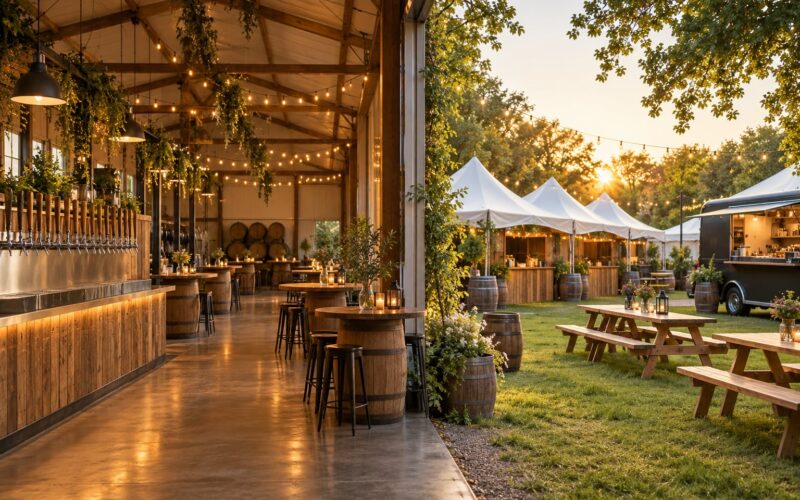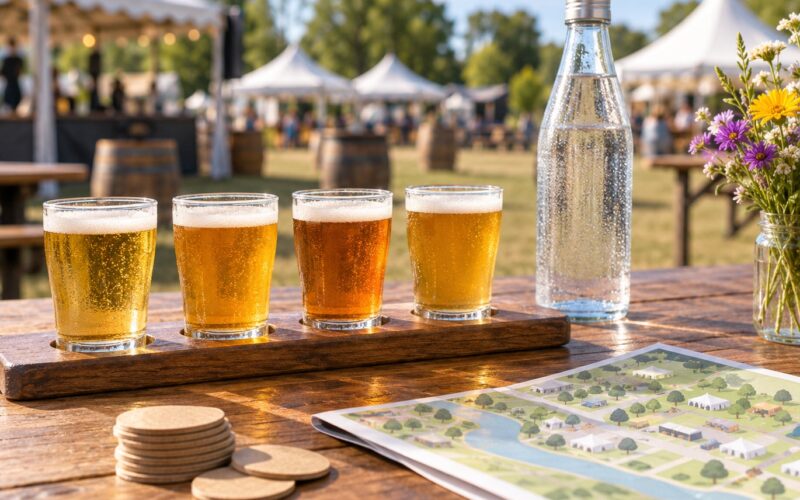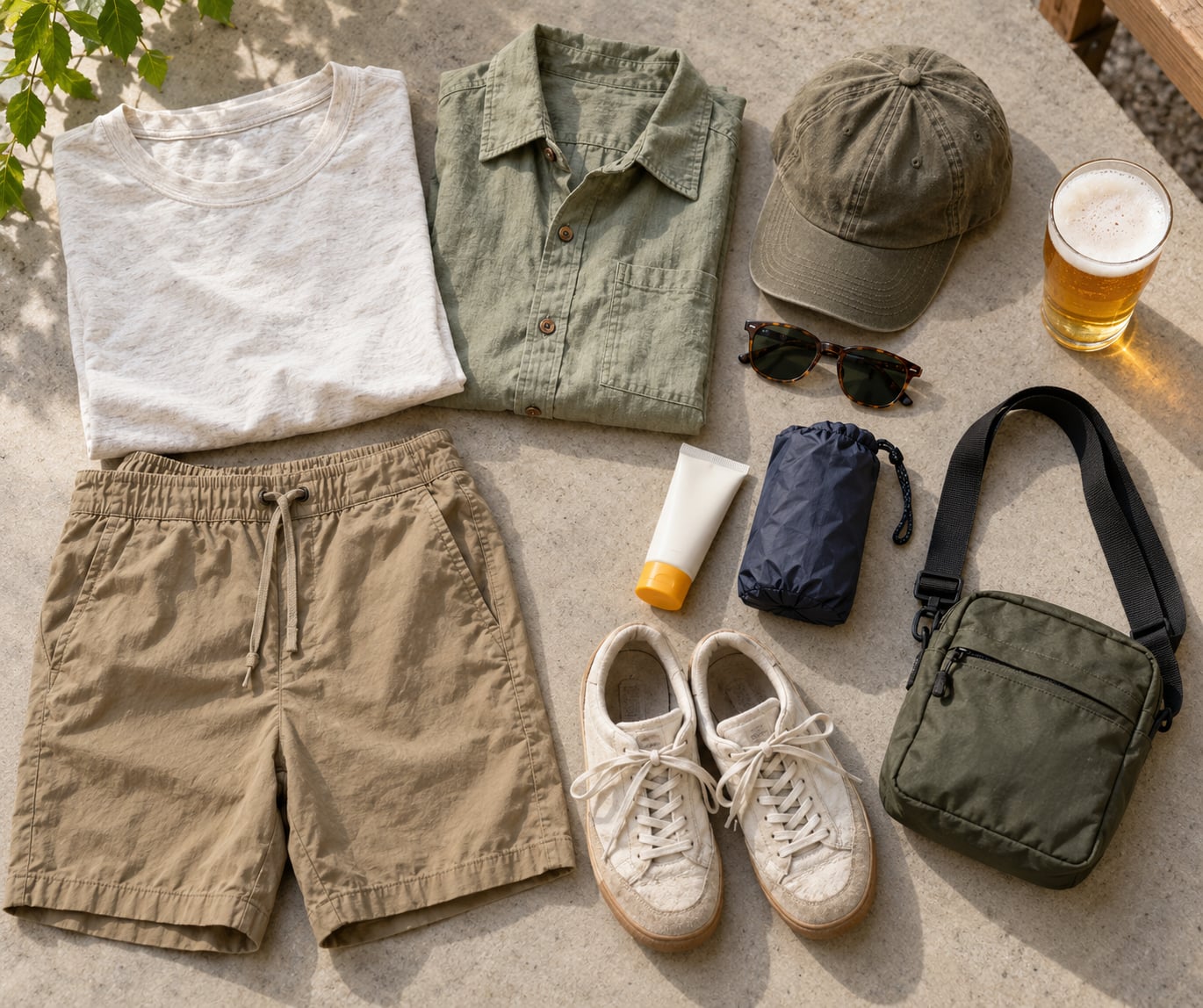
Knowing how to dress for an outdoor beer festival comes down to four things: breathable layers, shoes you have already broken in, sun and rain protection, and a small bag you can carry without fighting it. You will walk on grass and gravel and stand in line for tasting pours for hours, so the outfit has to handle heat, spilled beer and an evening temperature drop.
The day is not a picnic. Between gate queues, tasting tents, and the walk between them, most attendees are upright for the better part of four to six hours, and the ground under your feet changes from dry grass to trampled mud to sticky poured concrete depending on the hour.
One Reddit thread on r/beer puts it bluntly: five hours of standing and walking is a lot easier with comfortable shoes and light clothes. That is the whole guide in a sentence, and the rest of this article just fills in the details.
Table of Contents
- What You Need
- How to Dress for an Outdoor Beer Festival: Step-by-Step
- 1. Start With the Forecast and Festival Rules
- 2. Choose a Loose, Breathable Base Layer
- 3. Pick Shorts, Pants, or a Weather-Ready Skirt
- 4. Wear Broken-In, Supportive Footwear
- 5. Add Sun, Rain, and Cooling Protection
- 6. Finish With a Small, Secure Bag
- Common Mistakes
- Frequently Asked Questions
- What should I wear to an outdoor beer festival in hot weather?
- What should I wear if the outdoor beer festival is wet or muddy?
- Are sandals a good choice for an outdoor beer festival?
- Can I bring a backpack to an outdoor beer festival?
- How should I adjust my outfit if the weather changes during the festival?
- Conclusion
What You Need
Gather seven things before you pick an outfit: a breathable base layer, bottoms you can move in, broken-in closed-toe shoes, headwear, one layer you can remove, sun protection, and one small secure bag. Optional extras are a cooling towel and a spare pair of socks.
- A breathable base layer. A lightweight shirt or technical top that wicks sweat and dries fast once you stop moving.
- Bottoms with a relaxed fit. Walking shorts, loose trousers, or a weather-ready skirt in a quick-drying fabric.
- Broken-in closed-toe shoes. Cushioned walking sneakers or trail shoes with a grippy sole, already worn a few times.
- Headwear. A cap for sunny afternoons or a wide-brimmed hat if you burn easily.
- One removable layer. A light overshirt, windbreaker, or thin fleece for the evening drop.
- Sun and rain protection. Sunscreen, sunglasses, and either a light rain shell or a compact poncho.
- A small secure bag. A crossbody, belt bag, or small backpack that meets the festival’s bag rules.
Before you assemble anything, check three things. Look at the hourly forecast, not the daily high, because most festivals run from midday into evening and the temperature drops once the sun goes down. Read the festival’s own rules, since bag size, outside glass, and sometimes dress guidance vary widely. And find out what you will be standing on, because a grass field in Oregon behaves nothing like the paved floors of a Chicago convention hall.
Budget the hours honestly before you go. Most attendees are on their feet for the better part of four to six hours, and knowing that number in advance is what stops you from showing up in shoes you would only wear for an hour.
How to Dress for an Outdoor Beer Festival: Step-by-Step
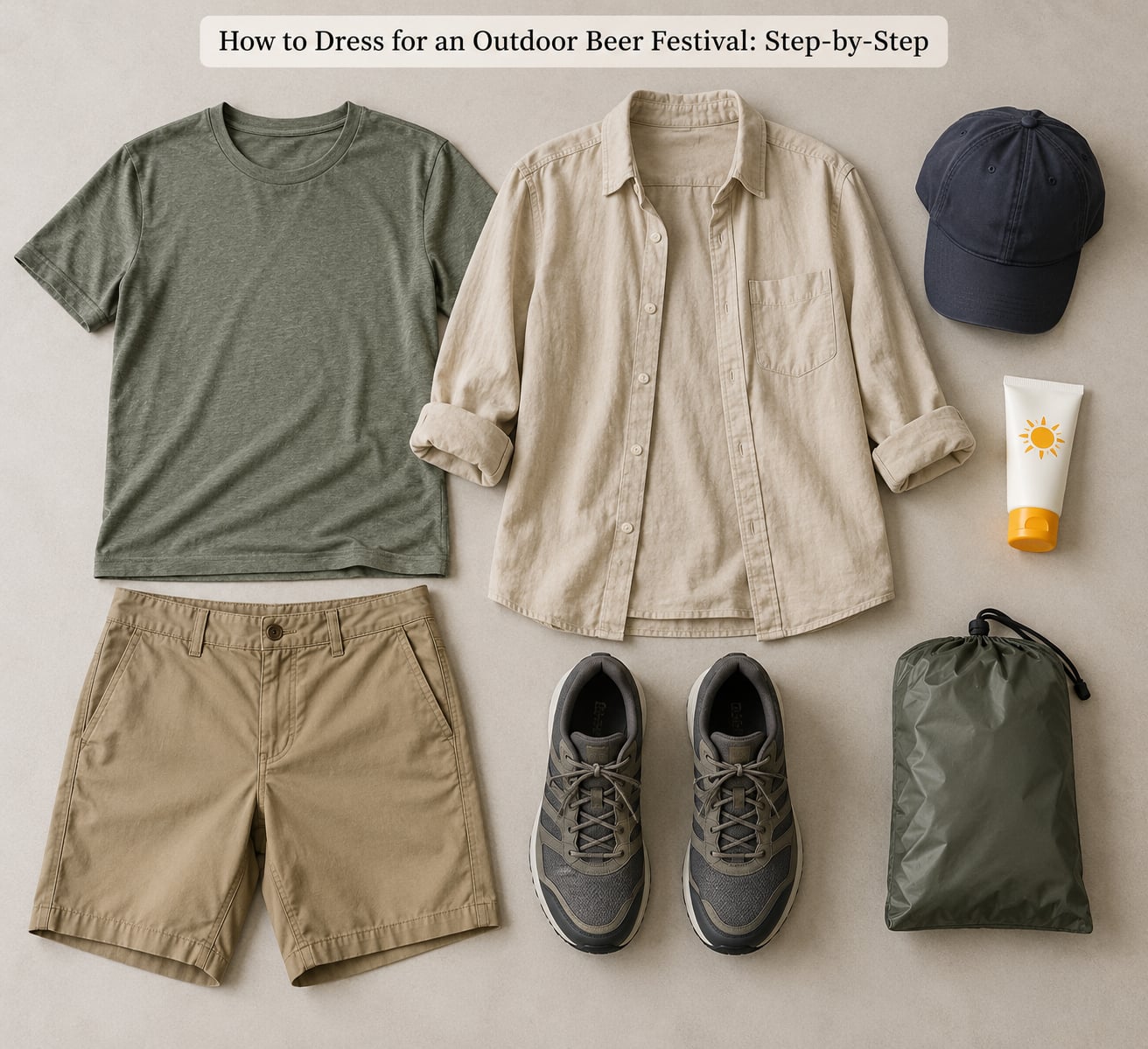
Building the outfit takes about ten minutes once you know the forecast. Work through these six steps in order and you will have something that survives heat, rain, mud, and a long day on your feet.
1. Start With the Forecast and Festival Rules
Open the hourly forecast the night before and the morning of. You want four numbers: the high, the overnight low, the chance of precipitation during your session hours, and the wind forecast. Add the heat index if you are heading somewhere like Phoenix in July, because the number on your phone is not what you will feel standing in the sun with no breeze.
Then read the festival’s own site. Bag rules are the detail people miss. Many large festivals limit bag size, ban outside glass, or restrict what you can carry past the security gate, and a 20-liter backpack that works at a local beer garden can get you turned away at a larger event. If the festival publishes a dress code or a “what to bring” page, that page beats anything written here.
You have the full picture when you can answer three questions: what is the surface underfoot, what happens to the temperature at closing time, and how much am I allowed to carry in.
2. Choose a Loose, Breathable Base Layer
A lightweight shirt that wicks moisture and dries quickly is the single most useful thing you will wear. Look for polyester or a cotton-poly blend labelled moisture-wicking or quick-dry, and pick a cut with a little room around the shoulders and chest.
Skip heavy 100 percent cotton. It soaks sweat, dries slowly, and ends the day clinging and cold once the sun drops. Also skip anything brand new, because a stiff collar or a new seam rubbing for six hours is a distraction you cannot afford.
You will know the top works if you can raise your arms, reach overhead for a glass, and walk for twenty minutes in it without thinking about the fabric at all.
3. Pick Shorts, Pants, or a Weather-Ready Skirt
Match the bottoms to the ground and the weather, not to the photos. On dry grass in warm weather, walking shorts or loose cropped trousers in a quick-dry fabric are the easiest option. Over muddy ground or gravel, longer trousers with a drawstring waist keep the mess off your lower legs and survive a sudden shower better.
For cooler events, a pair of relaxed chinos or soft joggers works, as long as you skip anything stiff or dark that will show every splash. A weather-ready skirt is fine over leggings if that is what you wear normally; add pockets, because a phone in a deep pocket beats a phone in your hand around a crowded tent.
Avoid denim if the forecast shows rain, since wet denim stays cold for hours. For anyone learning how to dress for an outdoor beer festival, the rule is simple: pick the bottom that keeps you comfortable standing still in the sun for three hours.
4. Wear Broken-In, Supportive Footwear
Closed-toe, cushioned shoes with a grippy outsole are the safest choice, and they must already be broken in. New sneakers on a six-hour day means blisters that end your festival early, and flip-flops on wet grass or spilled beer mean a twisted ankle or a soaked foot.
Test the pair before the trip. Wear them for a long walk on the same kind of surface you will cover at the festival, and swap to a different pair if your toes or heels complain. If you are picking between two shoes you already own, choose the one you would be willing to trash, because something will get on it.
Forum advice on r/femalefashionadvice is consistent on this point: avoid open-toed shoes and take comfortable sneakers you do not mind ruining. Protect against wet feet with a spare pair of socks sealed in a plastic bag inside your bag, and skip the leather dress shoes entirely.
5. Add Sun, Rain, and Cooling Protection
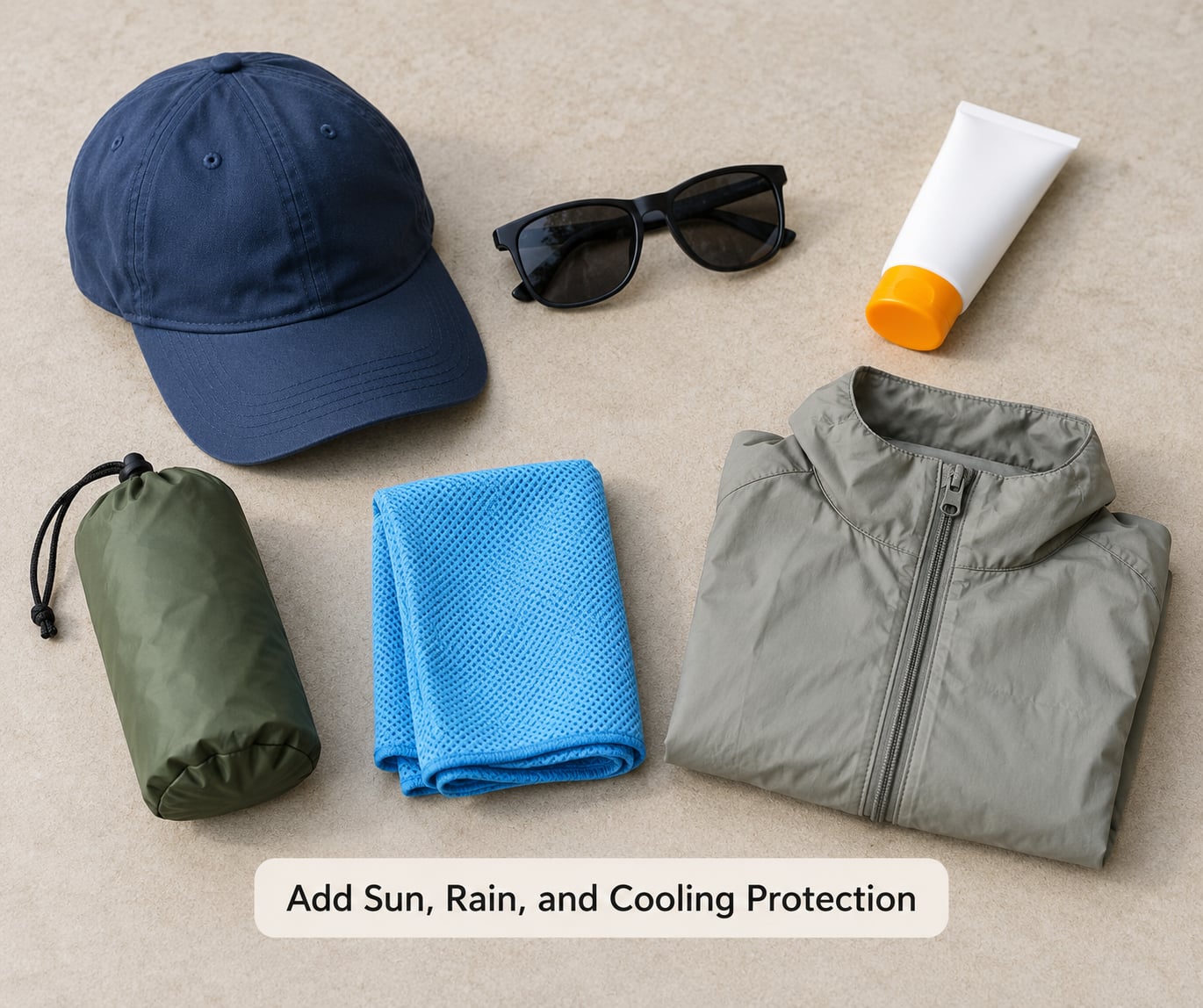
Some of this you wear and some of this you pack, and the split matters. Wear the hat, the sunglasses, and a layer of sunscreen. Pack the compact poncho or light rain shell, the cooling towel, and a second sunscreen if you will be out past the afternoon.
Prioritise differently depending on conditions. In serious heat, sun protection comes first, followed by the cooling towel and hydration. If storms are in the forecast, the rain shell moves to the top of the list, and a packable poncho weighs less than a jacket and covers more ground when you need it.
Do not put sunscreen on in the morning and forget it. Reapply at midday, especially on your neck and the backs of your hands, which are the first places to burn when you are holding a glass up at eye level in a crowd.
6. Finish With a Small, Secure Bag
A crossbody bag or belt bag keeps everything within reach and in front of you in a crowd, which is exactly where festivals get pickpocketed. Choose one with a zippered valuables pocket and an adjustable strap you can tighten across your body rather than loose on one shoulder.
Pack for a single session: water bottle or hydration pack, phone, keys, card or cash, sunscreen, earplugs, the poncho, a portable charger if you will be taking photos all day, and hand sanitizer. Forum regulars add electrolyte packets and a spare pair of socks to that list more often than any other accessory.
Overpacking is the usual mistake. A bag you have to keep adjusting, or one that bounces when you walk, will make the day longer before it starts. If you cannot zip it comfortably at the start of the day, take something out.
Common Mistakes
Nearly every bad festival outfit traces back to one of six avoidable choices. Each has a simple fix, and all six can be handled the night before you leave.
- Wearing new shoes. Fix: pick a pair you have already logged five hours in. If you must wear something new, test it on two long walks first.
- Choosing heavy cotton. Fix: swap to a moisture-wicking or cotton-poly blend that dries between tents.
- Ignoring the rain forecast. Fix: pack a packable poncho or light shell even when the morning looks clear. Afternoon storms arrive without warning in summer.
- Carrying a bulky bag. Fix: check the festival’s bag size limit first, then downsize to a crossbody that zips shut.
- Skipping sun protection. Fix: cap plus sunglasses plus sunscreen applied before you leave and reapplied at midday.
- Ignoring the venue surface. Fix: check whether you will be on grass, gravel, or pavement. Each one changes your shoe and bottom choice.
A few final tips before the gates open. Drink water on a schedule rather than when you feel thirsty, since alcohol works against you there. Take a break every hour or so; ten minutes of shade saves your feet and your patience. Re-check the forecast the morning of, because festival grounds change quickly. And keep your spare socks sealed and dry, because the walk back to the car is the longest part of the night.
Frequently Asked Questions
What should I wear to an outdoor beer festival in hot weather?
Wear a loose, moisture-wicking shirt in a light color, quick-dry bottoms, a cap with a structured brim, and closed-toe breathable sneakers you have already broken in. Skip heavy cotton, which holds sweat and chills you after sunset. Add sunglasses, apply sunscreen before you leave, and pack a cooling towel in a small crossbody bag.
What should I wear if the outdoor beer festival is wet or muddy?
Choose quick-drying bottoms above the knee or trousers with a drawstring waist, and closed-toe shoes with a grippy outsole rather than sandals. Pack a compact rain poncho or light shell, seal a spare pair of socks in a plastic bag, and avoid denim, which stays cold and heavy once wet. Skip white fabric that shows every splash.
Are sandals a good choice for an outdoor beer festival?
They work only in dry, short-sessions conditions on firm ground. Most festivals mean hours on grass, gravel, and poured concrete where spilled beer makes surfaces slick, and an open toe is unprotected there. Forum advice consistently recommends closed-toe sneakers you do not mind ruining instead. If you prefer sandals, bring them for the ride home, not for the day.
Can I bring a backpack to an outdoor beer festival?
Sometimes, but check the festival’s published bag rules first, because many large events limit backpack size and ban outside glass. A small crossbody or belt bag with a zippered pocket is the safer default and easier to manage in a crowd. Whatever you carry should hold water, phone, keys, card, sunscreen, earplugs, and a poncho, and nothing more.
How should I adjust my outfit if the weather changes during the festival?
Heat: add the cooling towel, reapply sunscreen, and loosen layers. Cold: put the overshirt or fleece back on before you feel chilled, since fabric choices trap heat briefly then lose it fast. Rain: pull the poncho from your bag and seek a tent or vehicle rather than waiting it out in soaked clothing. Re-check the radar between sessions.
Conclusion
Start tonight rather than Saturday morning: check the hourly forecast, read the festival’s bag rules, and confirm what you will be standing on. Then build the outfit from the bottom up, with broken-in closed-toe shoes and a breathable base layer doing most of the work, and add the hat, sunscreen, poncho, and small bag last. Get the layers and the footwear right and everything else is easy to adjust on the day.