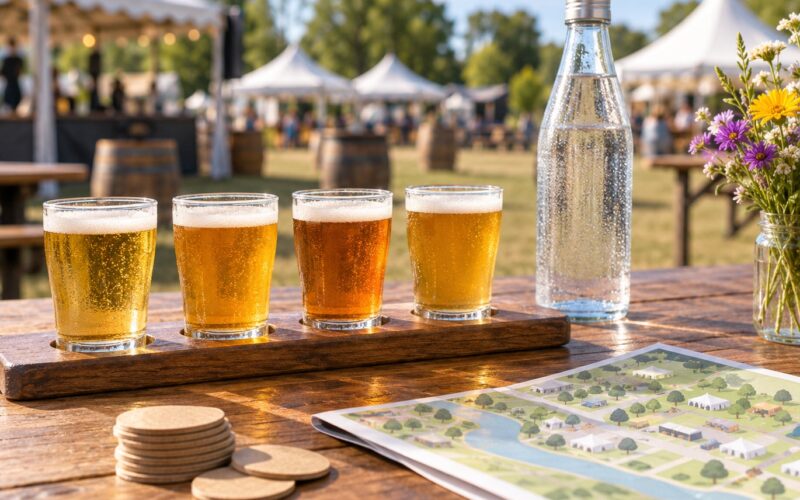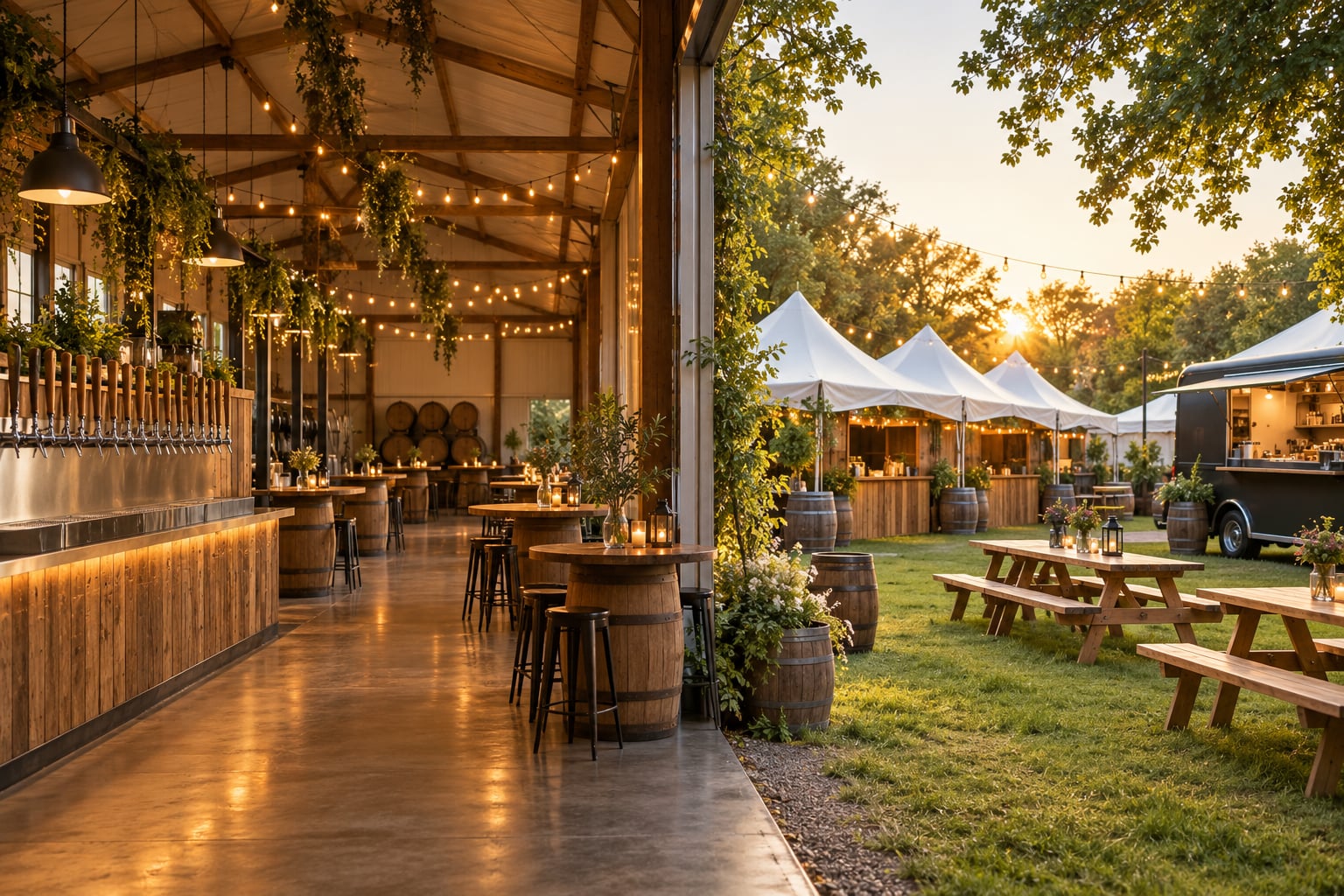
Indoor beer festivals win on comfort, pacing and predictability: a taproom, warehouse or hotel ballroom keeps the temperature steady, gives you somewhere to sit, and stays open when the forecast turns. Outdoor beer festivals win on atmosphere, space and scale: fresh air, food trucks, longer lines to rare-release booths and the feeling of a full day outside.
Neither format is better in general. Pick the one that matches who you’re going with, what month it is, and how hard you’re trying to chase specific beers.
Table of Contents
- Indoor vs Outdoor Beer Festivals at a Glance
- Where the indoor vs outdoor beer festivals line gets blurry
- How Weather Affects Your Beer Festival Experience
- Indoor Beer Festival Comfort and Atmosphere
- Outdoor Beer Festival Variety and Energy
- Beer Selection, Food, and Festival Size
- Which Should You Choose?
- Choose an indoor festival if
- Choose an outdoor festival if
- Match the format to the month
- Frequently Asked Questions
- What happens if it rains at an outdoor beer festival?
- Are indoor or outdoor beer festivals better for families?
- How many beers should I drink at a beer festival?
- What should I bring to an outdoor beer festival?
- Are indoor beer festivals too loud to enjoy?
- Do I need a designated driver after a beer festival?
- Final Verdict
Indoor vs Outdoor Beer Festivals at a Glance
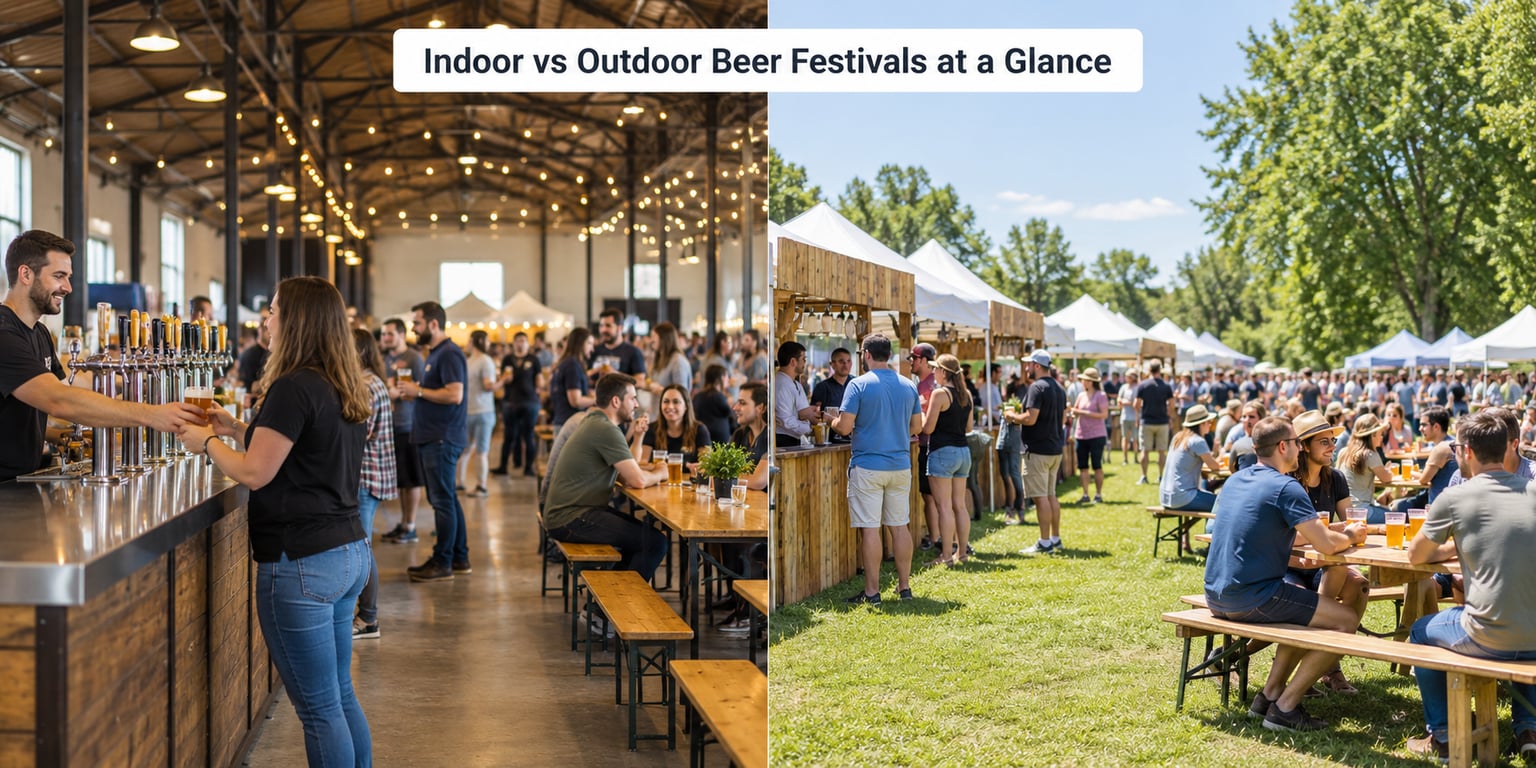
| Factor | Indoor festival | Outdoor festival |
|---|---|---|
| Rain and wind | Non-issue; the event runs as scheduled | Rain-or-shine is normal, so plan for wet feet and a poncho |
| Temperature | Climate controlled, often around 68-72F in a hall | Whatever the day gives you, including a heat index above 95F |
| Seating | Tables, benches and lounge areas, though early arrivals grab them | Picnic tables, lawn seating, or nothing but a low wall |
| Noise | Loud. Multiple sound systems overlap and conversations get hard | Music carries across the grounds and you can step away to talk |
| Beer selection | Often more limited releases, since delicate styles keep their character | More breweries spread over more ground, better for volume sampling |
| Food | Indoor caterers or food trucks parked at a loading door | Full food truck row and more room to eat between pours |
| Crowd flow | Tighter, more concentrated, harder to walk through | Spreads out; booths can be hundreds of yards apart |
| Cost per sample | Often bundled into the ticket, sometimes token-based | Usually ticket plus tokens for premium pours |
| Family friendly | Strong: climate control, restrooms, a place to sit | Fine in the morning and evening, hard in midday heat |
| Getting there | Often downtown, walkable, near transit and garages | Usually a park or brewery campus with limited parking |
| Drink temperature | Easy to hold; cold air keeps glasses cold longer | Warm sun warms a pour fast, so pace matters more |
The two columns above are tendencies, not rules. A 20,000-square-foot brewery taproom with hangar doors rolled up is a completely different experience from a hotel ballroom, and a park festival with permanent covered pavilions is not the same as a field of pop-up tents.
Where the indoor vs outdoor beer festivals line gets blurry
Plenty of festivals hedge. Hangar doors stay open at an aviation museum so you can walk in and out, a taproom pours onto a covered patio, or a brewery campus splits between an indoor room and an outdoor lawn.
For those events, ask one question before you buy: how much of the festival is actually under cover, and how far is the farthest beer station from it? The 500-foot walk from a covered tap list to a single tent in a parking lot is the detail that decides your day.
How Weather Affects Your Beer Festival Experience
Weather is the single biggest practical difference between the two formats. Indoor festivals hand you temperature control, a roof and a floor, which means the event runs on schedule in any season and you can wear whatever you want.
Outdoor festivals are at the mercy of the forecast, and the promise most of them make is rain or shine. That’s rarely a cancellation threat; it’s a wet-foot and wind problem. Organizers keep pouring because a festival that shuts down at the first shower loses more than it saves.
Heat is the sharper edge. In July and August in the Mid-Atlantic, a shaded tent is worth more than most people expect, and a beer that warms to a cloudy, foamy mess by the time you reach the end of the line tastes worse than it did at the tap.
Forum regulars put it plainly: heat plus strong beer will knock you down fast, and pre-hydrating matters more than any gear list. Outdoors, your plan should include free water stations or a bottle you refill, food before you start pouring, and more time sitting than you think you need.
Cold works in the other direction. An indoor festival in January means coat check, warm clothes indoors and cold walks to the car, which is one reason winter events tend to run inside. Summer events flip that: a hall in July needs air conditioning to be tolerable at all, which is why organizers book generators and ice by the ton.
Roughly 30 to 50 pounds of ice per beer type per four hours is the planning rule organizers work from, so think of a hot outdoor festival as a cold-chain problem the event has to solve for you. It’s also why a well-run outdoor fest leans hard on cold-water kegs, shaded tents and quick sample sizes rather than trying to keep a warm lager cold in an open field.
Indoor Beer Festival Comfort and Atmosphere
An indoor beer festival is the safer pick: climate controlled, seated, and finished when the organizer says it’s finished. That predictability is why hall and taproom events tend to draw the serious tasters, the folks who plan their route through the tap list before they arrive.
Delicate styles also hold up better indoors. Barrel-aged sour, unfiltered lager, anything a brewer poured at cellar temperature benefits from a stable room, and cold air keeps a tasting glass cold without you thinking about it.
The real drawback is acoustics, and it’s the one most festival marketing never mentions. In a packed hall with a stage, a PA system and fifty breweries all talking at once, you’ll strain to hear a brewer describe their beer and give up on holding a conversation with the people you came with.
A widely cited comment in an r/beer thread on what makes a festival worth attending called indoor events overwhelmingly loud, and ranked indoor or outdoor well below rare beer availability, the breweries attending and the ticket price. In other words, fans already treat format as a real but secondary factor, and the acoustics complaint is the most common one aimed specifically at indoor events.
Layout is the second indoor drawback. Bottles, small groups, restrooms and exits all compete for the same square footage, so crowds compress around popular booths and walking across the venue can take longer than the walk looks like it should.
Outdoor Beer Festival Variety and Energy
An outdoor beer festival feels like a day out rather than an event you’re enduring. Fresh air, room to move, a food truck row, live music you can walk away from, and enough spread that a group can split up and meet back up without arguing about it.
That space is also why outdoor events can book more breweries. A park or brewery campus can absorb thirty exhibitors and their queues in a way a ballroom cannot, and attendees regularly praise festivals that are big but not so big that you spend the whole day walking.
Being able to stand outside and just hold your beer ranks high with regulars, and it is the thing a hall simply cannot offer. Outdoors you can also pace yourself socially: step away from the tent, cool down, decide whether you actually want the next pour.
Fruited IPAs, sours and anything served cold and consumed quickly thrive under open sky. Styles you want to linger over are harder, because you are standing in the sun holding a warm glass unless you find shade.
The operational challenges are real and worth knowing about. Organizers budget for tents, generators, ice and ground protection, and every one of those costs shows up in the ticket. Lines also stretch differently outside: a single slow booth on a wide path creates a snaking queue that blocks everything behind it, which is the queue behavior attendees complain about most.
Beer Selection, Food, and Festival Size
Venue size decides how much you can actually taste. Hall events cap exhibitor counts and stack tables close together, so you might see 40 breweries in a space an outdoor festival would spread across a full city block. Outdoor events trade sampling density for variety.
For rare release hunters, ask the organizer how tokens work before you go. Many festivals hand out tokens or stamp cards per sample, and popular limited releases are usually capped at two ounces or one pour per attendee. Knowing the system in advance keeps you from burning your afternoon in a queue for a beer you already had earlier.
Food follows the format too. Outdoor festivals pair with food trucks and have room to sit down and eat between rounds, which genuinely slows your pace. Indoor events rely on in-house catering or trucks parked at one door, which is faster but often means eating standing up.
Parking is the quiet indoor advantage. Downtown halls sit near transit and garages, while park festivals and brewery campuses usually offer a lot that fills before the first session ends. The r/beer crowd puts parking at festival venues near the bottom of the list for a reason.
Which Should You Choose?
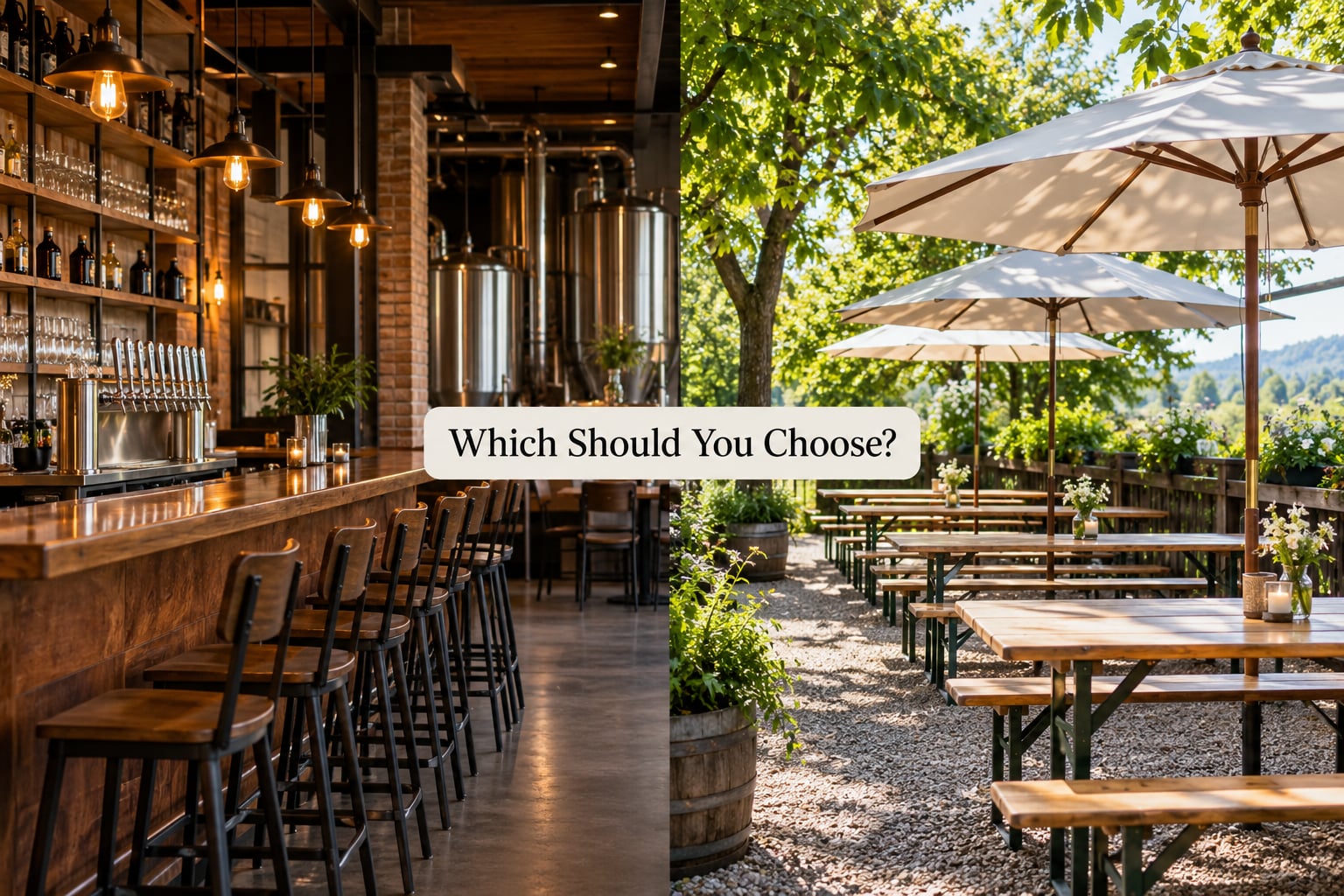
Choose an indoor festival if
You are bringing someone who does not drink, a family, or a relative who tires easily. You are going in a cold or wet month, or you simply do not want to check the forecast the morning of. You care about hearing brewers talk and having a chair, and you would rather sample slowly through a compact tap list than walk a mile between booths.
Choose an outdoor festival if
You want the day to feel like an outing: live music, food trucks, groups of friends wandering, and the freedom to step out of the crowd for five minutes. It is early in the season or late in the evening, the forecast is clear, and you’re with people who are happy to stand for a while.
Match the format to the month
January through March is indoor season in most regions, because organizers will not put a paid crowd in a freezing field. April, May and October are the sweet spot for outdoor events in the Mid-Atlantic and the mid-Atlantic-adjacent states, with mild days and cool evenings.
June is workable but sunny and humid, and it is still indoors more often than not. July and August push most festivals into halls, taprooms and covered patios, or push them to the evening slot. September brings a wave of outdoor harvest events back. November is split: holiday markets and winter fests go inside, while regional festivals stay outside until the weather closes them.
Do the same check for any weekend you are tempted by. A 70F cloudy afternoon in May beats a 92F humid Saturday in July, even though the May event has fewer breweries.
Frequently Asked Questions
What happens if it rains at an outdoor beer festival?
Most outdoor beer festivals are rain or shine, so they keep pouring. Covered tents and taprooms take the brunt of the crowd, and the organizers who do cancel usually say so on their ticket page and social channels by mid-morning. Check the event page a few days ahead and again the morning of, and buy tickets from organizers who publish a clear policy.
Are indoor or outdoor beer festivals better for families?
Indoor, in most cases. Climate control, nearby restrooms, seating and an early finish make a three-hour session far easier with kids or non-drinkers in the group. Outdoor festivals work well in the morning and early evening, when temperatures are reasonable, but midday heat and long walking distances wear people down fast.
How many beers should I drink at a beer festival?
Treat samples as tastes rather than servings, and keep water and food coming all day. Most festival pours are small, often two to three ounces, so ten to fifteen samples across a session is plenty for anyone who wants to remember the day. The widely shared pacing advice is to take a few early while your palate is fresh, then slow down to roughly one every half hour.
What should I bring to an outdoor beer festival?
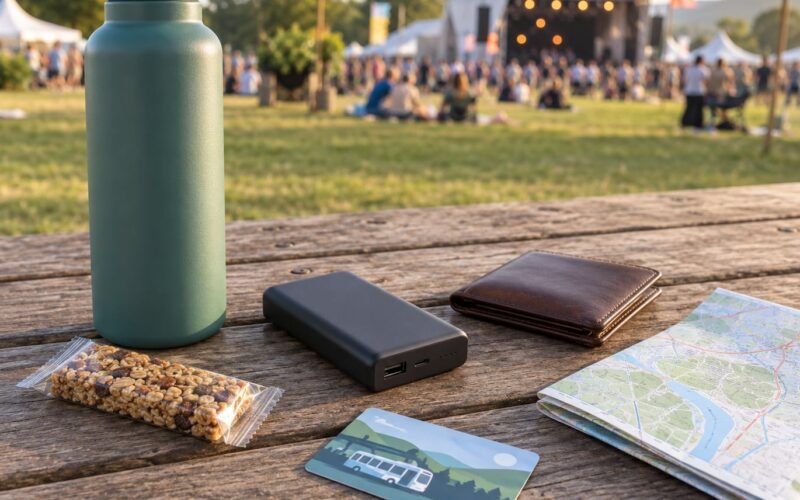
A hat, sunscreen, an empty reusable water bottle, a light rain jacket or poncho, and cash or a card for the food trucks. Wear shoes you can stand in for three hours on grass or gravel. Small items belong in a zip bag in case the table gets bumped.
Are indoor beer festivals too loud to enjoy?
They can be. A packed hall with a stage, a PA system and dozens of exhibitors talking at once makes conversation genuinely difficult, and that noise is the most common complaint aimed at indoor events in beer forums. It helps to arrive early, pick booths near the edges of the room, and plan to step outside or into a lobby for conversations.
Do I need a designated driver after a beer festival?
Plan one. Sampling adds up faster than most people expect, because festival pours are small enough that you lose track of them, and both formats end in the same place: a parking lot at the end of the day. Many festivals run free water stations, shuttle service or ride-share codes, so check the ticket page before you drive yourself.
Final Verdict
Choose indoor when comfort and predictability matter more than atmosphere: cold or wet weather, family members, long tasting sessions, or a preference for sitting down and hearing what the brewer has to say. Choose outdoor when the day itself is the point, the forecast is friendly, and your group wants music, food trucks and room to wander.
Before you buy either ticket, check the hourly forecast for the session hours, the venue map to see how much is under cover, the tap list for the limited releases you actually came for, accessibility and restroom notes, and the rain policy. If the outdoor event has one main tent and thirty booths spread across a parking lot in July, it is functionally an indoor festival with worse weather.