What permits a beer event needs comes down to four things: whether the beer is free or sold, whether the venue already holds an alcohol license, whether you are indoors or outdoors, and which city, county, and state you are standing in. Most events need three approvals, not ten. A beer night inside a licensed taproom usually needs none of its own, while a public festival on a park lawn can pull in six different agencies.
That last variable is the one that trips people up. Alcohol rules are not federal in the way many people assume, and there is no single national permit for serving beer at an event. Licensing sits with state alcohol beverage control boards and their county partners, while site use, sound, food, and fire approvals come from offices that have never heard of a tap takeover.
This guide is general information about how U.S. permit systems typically work. It is not legal advice. Confirm your own requirements with your state ABC board, county licensing office, and city departments before you commit to a date.
Table of Contents
- What permits a beer event needs depends on where and how you serve beer
- Which permits might your beer event require?
- Special event and venue permits
- Alcohol service and sales permissions
- Food, health, and temporary-service approvals
- Tent, generator, fire, and other site permits
- Entertainment, noise, and neighborhood permissions
- Insurance, payment, and tax requirements
- A permit-planning timeline for organizers
- How far in advance to apply for a beer festival permit
- What permits a beer event needs by location and event format
- How to confirm requirements before you spend money
- Frequently Asked Questions
- Do I need a permit to host a beer tasting or tap takeover?
- Can my beer event use the venue’s existing alcohol license?
- How far in advance should I apply for a beer festival permit?
- Does a multi-venue bar crawl need one permit or several?
- What permits are required for an outdoor beer event with food trucks?
- Do I need insurance before applying for an event permit?
- Start with the venue and the beer question
What permits a beer event needs depends on where and how you serve beer
The single most useful question to ask any venue before you sign anything is: does your license cover an outside organizer running a one-night event? For most licensed premises, the answer is yes for on-premises consumption by their own operation, which is the shortcut that collapses most of the permit burden. The answer flips quickly if you are charging admission, bringing in outside alcohol, or operating a differently-named event on a schedule that puts a different operator behind the bar.
Which permits might your beer event require?
Requirements and terminology change from city to county to state, so treat the table below as a map of what exists rather than a list of what you owe. The issuing authority column matters most: it tells you which office to call first.
| Permit category | What triggers it | Who usually issues it | Who files it |
|---|---|---|---|
| Special event permit | Public event, temporary use of public land, or unusually large occupancy | City or county special events office, sometimes the city manager’s office | Organizer |
| Alcohol service permit or license | Any beer offered, sampled, or sold at your event | State ABC board or county liquor licensing office | Organizer, venue, or caterer, depending on the license type |
| Park, venue, or site use permit | Holding the event on public land or in a public building | City parks and recreation department or venue management | Organizer |
| Food service or temporary food permit | Serving food to the public, including by food trucks | Local health department or environmental health division | Caterer, each food vendor, or organizer |
| Sound, entertainment, or noise permit | Amplified music, live bands, or hours past a local curfew | City police, noise control, or parks department | Organizer |
| Temporary structure, fire, or occupancy permit | Tents over a size threshold, generators, cooking fuel, flame effects | Fire marshal, building department, or code enforcement | Organizer, or the tent and generator vendors |
| Business, sales, and excise tax registration | Selling beer or food, charging admission, or accepting donations | State revenue department, city business licensing, tax administration | Organizer and vendors |
Homebrew clubs sit in their own category again. Members sharing beer among themselves is generally treated differently from inviting the public or charging money, and that line is exactly where club events get into trouble.
Special event and venue permits
A special event permit is the umbrella approval many cities require before anything else happens. Typically it covers street closures, crowd size, emergency access, sanitation, and the right to operate on a schedule the city considers unusual. Festivals and public ticketed events almost always need one. A ticketed crawl may need one even with no beer involved, because ticket sales and street use are what trigger it.
Private events are simpler, but not permit-free. A tap takeover inside a bar usually needs written owner approval on file, sometimes a short-term lease addendum, and often proof of insurance naming the venue as an additional insured. A crawl that moves between licensed venues adds a wrinkle: each stop is governed by its own license and its own crowd, and the organizer usually needs permission to advertise a multi-stop route from each address.
Two failure modes show up repeatedly on event forums. The first is organizers assuming participating breweries handle their own paperwork and discovering, months later, that breweries want a coordinated organizer permit instead. The second is advertising before approval, which in some counties, Fairfax County among them, is itself a violation. Get approvals in hand before you post a ticket link.
Alcohol service and sales permissions
Alcohol permission is the layer people mean when they ask for an event liquor license. The confusing part is that several different documents do similar-sounding jobs, and eligibility differs by state.
Temporary or per diem licenses usually cover a single day or a defined multi-day event and are often limited to specific hours and a specific address. Banquet licenses in a number of states can be held by an individual and permit charging a fee for service. Mixed beverage special events licenses, in states such as Virginia, tend to be nonprofit-only and may cover spirits as well as beer. A separate per diem license may be required for each day of a multi-day festival under some state codes. Promotional or tasting permits cover limited sampling in some jurisdictions.
Where the event sits changes the rule. Many local codes treat outdoor service more strictly than indoor service, and parks departments sometimes refuse alcohol outright regardless of what the state has approved. That is a genuine trap: a temporary liquor license can be valid and still be useless if the land underneath it will not allow it.
Three compliance duties ride along with the license. You generally need ID checks on every attendee, licensed service staff behind the bar, and the permit displayed where staff and inspectors can see it. Organizers commonly add 21+ wristbands, which speed up entry and reduce disputes at the door. Do not assume free beer is exempt — giveaway and no-charge service still falls under alcohol codes in many places, so confirm it directly with the licensing office rather than inferring from the word free.
One more thing to be honest about with vendors: a brewery’s own license covers its taproom, not your event. Ask who is holding the permit for the day in writing, in an email you can forward to the next brewery that asks.
Food, health, and temporary-service approvals
If your event serves food to the public, a health department is now in the conversation. A licensed caterer preparing and serving meals from a permitted kitchen is the simplest route, because that kitchen is already inspected and your event inherits the coverage. A food truck operating at your event usually needs its own mobile food unit permit and its own inspection, valid at the location where it parks.
Temporary food events carry their own requirements: handwashing stations, potable water, waste disposal, temperature control for hot and cold holding, and sometimes a commissary arrangement so the unit can service itself. Small freebie giveaways, bottled water, and packaged snacks usually fall outside the requirement, while cut fruit, hot food, and anything prepared on site almost always falls inside it. Staff handling food frequently need current food handler cards, which are cheap and quick to obtain.
When you contract vendors, put the permit obligation in writing. The standard line is that each vendor maintains its own permits and provides proof before load-in, which keeps an argument about liability out of your event week.
Tent, generator, fire, and other site permits
Outdoor events collect fire and building approvals that have nothing to do with beer. Tents and canopies often trigger a permit once they cross a size threshold or when flame-retardant certification is not on file. Fire marshal offices also regulate generators, cooking equipment, and fuel storage, and they may want a site plan showing extinguisher placement and clearances.
Temporary seating and stages can trigger occupancy limits, and restrooms are a code requirement tied to guest count rather than to beverage service. A generator with a fuel line running under a seating area, or a cooking tent with an open flame near a canopy, is the kind of detail that gets an event shut down. Ask your tent and generator vendors what permits they already hold; a professional rental outfit usually files them as part of the package.
Entertainment, noise, and neighborhood permissions
Amplified sound is regulated locally and often more tightly than people expect. Noise ordinances set decibel limits, permitted hours, and distances from residential property, and parks departments usually impose their own curfew that closes earlier than the ordinance allows. Outdoor entertainment permits may also apply when you have a live band, a DJ, or a stage. If you plan to serve alcohol, expect permitted hours and closing times to be constrained by your alcohol approval too, so the sound curfew and the service curfew need to agree.
Street closures, temporary parking, and traffic control for a crawl or festival bring in the city traffic or public works department, usually with a lead time measured in weeks and a fee schedule of its own. Waste and recycling requirements come along with large public events, as does sanitation for the crowd size.
Neighborhood notice is not a permit, but it prevents problems. House associations and neighborhood commissions in some cities hold advisory or quasi-vetting roles over events near them, and word travels faster than a permit application moves. Tell the neighbors before you advertise, not after.
Insurance, payment, and tax requirements
Nearly every venue and licensing authority will ask for a certificate of insurance showing general liability coverage, and many will name the venue, the city, or the permit holder as an additional insured. If you have no policy, a short-term event liability policy can usually be bound in a few days, which is why this belongs in your early checklist rather than the week-of list. Vendors should each carry their own coverage and hand you a certificate before load-in.
Payment and tax questions are where free events get complicated. Selling beer by the glass, charging admission, and accepting donations can each pull in different obligations. A business or activity license may trigger from charging fees or collecting donations, not just from selling a product. Sales tax registration on food and alcohol, and state excise tax on beer, sit with whichever party is actually the seller, so clarify in contracts whether the brewer or the organizer is the vendor of record.
Treat this as a place to get the structure right and confirm the specifics with the tax authority. Rates change and the treatment of donated goods is genuinely inconsistent between jurisdictions.
A permit-planning timeline for organizers
Work backward from your event date rather than forward from today. These are ranges, not deadlines; nothing here is universal, and a first-time organizer in a strict city should assume the long end of every range.
Four to six months out. Confirm the venue and get a written answer about their license covering your event. Decide whether beer is free, sampled, or sold, because that choice drives everything else. Start the insurance conversation. Register to do business in the host city if you have never filed there.
Eight to twelve weeks out. File the special event permit, the alcohol permit or license, and the site or park use permit. These are the three with the longest review clocks, and the alcohol application is usually the one that stalls when it is incomplete. Start pulling ID-checking procedures and staffing plans into shape.
Four to six weeks out. File food and temporary food permits, sound and entertainment permits, and fire or temporary structure permits. Confirm your vendors have submitted their own permits and certificates of insurance. Publish your insurance certificate to anyone who asked for it.
Two to three weeks out. Confirm street closures and traffic control, post notices required for temporary structures and permits, and finalize your tax registration for beer and food sales.
Event week. Carry printed approvals and insurance certificates, verify posted permit hours, brief every volunteer on ID checking and wristband rules, and confirm the fire extinguishers and handwashing stations are where the plan says they are.
How far in advance to apply for a beer festival permit
Most alcohol applications want a minimum of 30 days, and most special event permits want more like 60 to 90. City review bodies that must post public notice, hold a hearing, or secure insurance approval can stretch that further. If your date is fixed and the permit is not approved, you may not legally advertise or charge for the event yet, so treat the approval date as the gate on your marketing timeline rather than a formality at the end.
What permits a beer event needs by location and event format
Match your event format to the approvals most likely to apply. The list below is a starting point for a call, not a final determination.
Private event inside a licensed bar or taproom. Owner approval, proof of insurance, and confirmation that outside alcohol and outside promoters are allowed. Alcohol and food permits are usually the venue’s to hold.
Tap takeover or beer dinner in a taproom. The same, plus a written agreement on whether the brewery holds the service permit for the evening or the venue does. Beer brand exclusivity and glassware often come into the same conversation.
Beer tasting for a members-only club. Confirm with the licensing office whether sampling at a private club needs a permit. Charging non-members or opening the event to the public changes the answer.
Multi-venue bar crawl. Permission from each participating venue, a street use or special event permit depending on the route, an advertising approval from each address, and one clear answer on who holds the alcohol authorization. Several stops means several conversations.
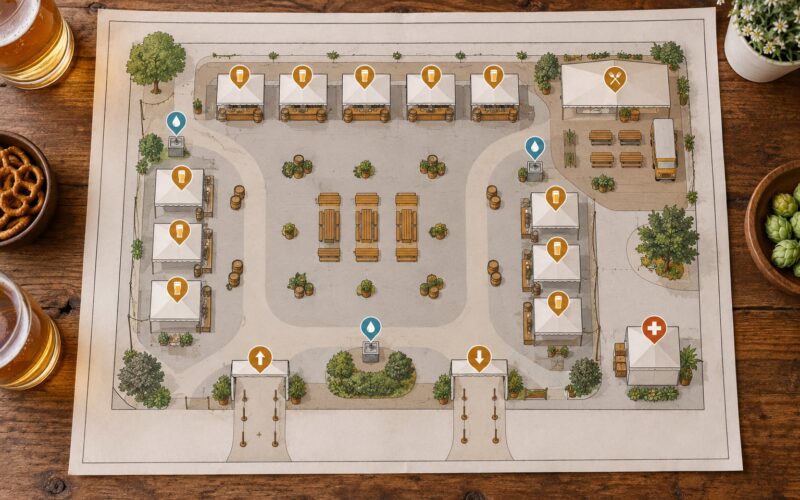
Outdoor festival with food trucks. The full set: special event permit, park or site use, alcohol license, food permits for each truck, sound permit, fire review for any cooking and generators, occupancy and restroom compliance, insurance, and tax registration for both beer and food sales.
Charity beer fundraiser. Nonprofit status often changes eligibility for special event alcohol licenses, but it does not remove the permit requirement. Confirm how donations and any beer sales are handled for tax purposes separately.
How to confirm requirements before you spend money
The fastest way to a real answer is a short list of specific questions sent to named offices, followed by a request for the answer in writing. Ask your county licensing office or state ABC board what license covers a one-day beer event at a named address, whether it is sold or free, and who is eligible to hold it. Ask the city special events office what a special event permit triggers and what the lead time is. Ask the health department whether food trucks need individual permits or can operate under the organizer.
Have these details ready before you call: the exact address, indoor or outdoor, date and hours, expected attendance, whether beer is free, sampled, or sold, whether you charge admission, whether there is amplified sound, and whether you serve food. Vague questions get vague answers, and a verbal answer nobody wrote down is hard to rely on when a date slips.
Before you finish, ask which of these apply to you, and get the answer in writing: the permit or license name, the issuing office, the deadline, the fee schedule, the approved hours, whether the permit must be posted, who provides proof of insurance, and whether approval is required before you may advertise.
Frequently Asked Questions
Do I need a permit to host a beer tasting or tap takeover?
Usually yes for a tap takeover, sometimes yes for a tasting. A tap takeover changes who is behind the bar and often who supplies the beer, so it commonly needs written owner approval plus a temporary or per diem alcohol permit from the state or county licensing office. A members-only club tasting may fall outside the requirement, but charging guests or opening the event to the public usually triggers it. Ask the licensing office directly with your address, date, and whether beer is free or sold.
Can my beer event use the venue’s existing alcohol license?
Often yes, and that is the single biggest shortcut available to an organizer. A licensed bar or taproom generally already holds the on-premises alcohol authorization needed to serve its own beer, so hosting a private event inside usually requires nothing from you beyond owner approval and proof of insurance. That shortcut fails when you charge admission, bring in alcohol the venue did not license, change the operator behind the bar, or extend hours. Get the venue’s answer in writing before you promote anything.
How far in advance should I apply for a beer festival permit?
Plan on eight to twelve weeks for a special event permit and a festival alcohol license, and treat that as a floor rather than a promise. Many state alcohol applications set a 30-day minimum, and cities that require a public notice period or a hearing run longer. Add four to six weeks for food, sound, and fire approvals once the site is fixed. If your date is fixed, work backward from the longest review and confirm each office’s current deadline in writing.
Does a multi-venue bar crawl need one permit or several?
Several. Each participating venue operates under its own license, so you need written permission from every address, and the organizer should be able to name who holds the alcohol authorization for each stop. If the route crosses public sidewalks or streets, a street use or special event permit may also apply, and some cities require advertising approval from each location before tickets go on sale. Ticketed crawls usually carry more requirements than untimed ones.
What permits are required for an outdoor beer event with food trucks?
Expect a special event permit, a site or park use permit, an alcohol license or permit, a temporary food event permit, individual mobile food unit permits for each truck, a sound permit if you are amplified, fire review for cooking and generators, occupancy and restroom compliance, insurance, and tax registration. Some jurisdictions let the organizer hold one food permit covering all vendors, but many require each truck to carry its own. Ask the health department before you sign vendor contracts.
Do I need insurance before applying for an event permit?
Often yes. Most venues, parks departments, and licensing offices want a certificate of insurance before they will approve an application, and many require the venue or the city named as an additional insured. Short-term event liability policies can usually be bound within a few days, so talk to an insurer early rather than at the deadline. Ask each agency the exact coverage limit it wants and whether it must name your organization specifically, then collect certificates from every vendor before load-in.
Start with the venue and the beer question
Ask the venue whether their license already covers an outside organizer, and decide whether the beer is free, sampled, or sold. Those two answers will tell you which of the seven permit categories apply to you, and most organizers find the list is much shorter than they feared. Then call the county licensing office and the city special events office before you spend anything on marketing, because approval is often the gate on when you are allowed to advertise.