Going to your first beer festival mostly means one thing: you will taste far more beer in five hours than most people drink in a week, and you will not finish a single glass of it. Dozens of breweries set up booths, hand you a small tasting glass, and pour two or three ounces at a time so you can try dozens of styles without getting wrecked. This guide covers what your ticket actually gets you, how the day runs, how to pace yourself, and what to bring.
Table of Contents
- What Is a Beer Festival?
- How to Prepare Before You Go
- First Beer Festival: What to Expect at Your First Event
- How the Day Unfolds Hour by Hour
- How Beer Tastings Work
- Tickets, Samples, and Food: What the Price May Include
- How to Pace Yourself at the Festival
- When to Dump a Beer, and How
- What to Bring and What to Leave Behind
- How to Dress for a Beer Festival
- Beer Festival Etiquette
- Food, Water, and Getting Home Safely
- A Simple First-Festival Checklist
- Frequently Asked Questions
- How many beers should I taste at my first beer festival?
- Do beer festivals provide full glasses or small samples?
- Can I bring my own water bottle or snacks to a beer festival?
- Are beer festivals suitable for someone who does not drink alcohol?
- What should I eat before and during a beer festival?
- How do I get home safely after drinking at a beer festival?
What Is a Beer Festival?
A beer festival is a ticketed event where breweries gather in one venue and pour small samples of their beer for visitors to try. The sample is typically two to three ounces, poured into a small tasting glass you carry with you all day, and you are meant to taste it rather than drink it. Most festivals run a single long session or split the crowd into timed sessions.
It is different from the three things people usually confuse it with. A brewery tour takes you through one brewery’s equipment and usually ends in a few full glasses with the people who made the beer. A taproom takeover is a single pub hosting visiting breweries for an evening, so the crowd is small and the pours can be full size. A bar crawl is a pub crawl with beer involved. A festival is scale plus self-service sampling, and nobody is pouring for you.
The formats vary a lot in size and rule set, which is why prep matters more than you’d think.
| Festival format | Typical setup | Sample size | Good for a first-timer? |
|---|---|---|---|
| Large national festival | Hundreds of breweries across several halls, multi-day | 2 to 3 oz, often token-controlled | Only if you arrive early and plan hard. The scale is overwhelming. |
| Regional or city brewfest | 40 to 100 breweries, one hall, one session | 2 to 3 oz, usually unlimited | Yes. This is the format most first-timers actually attend. |
| Taproom takeover | One bar, six to twelve visiting breweries | Often 4 to 6 oz, closer to a real drink | Yes, and the best choice if you want to actually talk to brewers. |
| Oktoberfest-style fest | Large tent, one or two breweries, communal tables | One-litre steins, not samples | Not really. It is a day of full drinks, not tasting. |
| Beer week in a city | Dozens of bars across several days, no single venue | Varies, usually full pours | Fine for a group that wants to pace out over a weekend. |
How to Prepare Before You Go
Preparation is mostly reading the event website carefully, because every festival has its own rules and they are not negotiable on the day. Check doors-open and last-pour times, whether the day is split into sessions, what your ticket includes, and how payment works inside the venue.
The details worth confirming before you leave the house:
- Sessions and hours. Some festivals sell timed entry and cap attendance per session. Others are open for a fixed window with a last call an hour before close.
- What the ticket includes. Entry only, or entry plus a tasting glass, plus a set number of samples, plus unlimited samples, or plus a sampler pack of bottle or can takeaways.
- Pour limits. Festivals that control samples use tokens, stamp cards, or a wristband count. Know which system you are on, because it changes your whole plan.
- Payment inside the venue. Many are cashless, with a wristband you load at the entrance. Bring a card and load enough for samples and food before you go in.
- Identification. Almost every festival requires a photo ID at the door, and some require it at every booth for controlled pours.
- Outside food and water. Rules vary wildly. Some allow sealed water bottles, some allow nothing, some run free water stations. Check before you buy a sandwich on the way in.
- Bags, chairs and glass. Large bags, coolers and outside glass are often refused at the gate. A small cross-body bag usually passes.
- Weather policy. Many festivals run rain or shine, which is exactly how an afternoon storm catches you in an open tent.
- Getting there and back. Parking near festival grounds fills up early and the walk back can be long. Book the ride before you go, not after your last sample.
One more thing worth doing: look at the brewery list a week ahead and pick ten breweries you actually want to see. Walking the whole floor in order is how first-timers end up sampling forty pale ales by hour two.
First Beer Festival: What to Expect at Your First Event
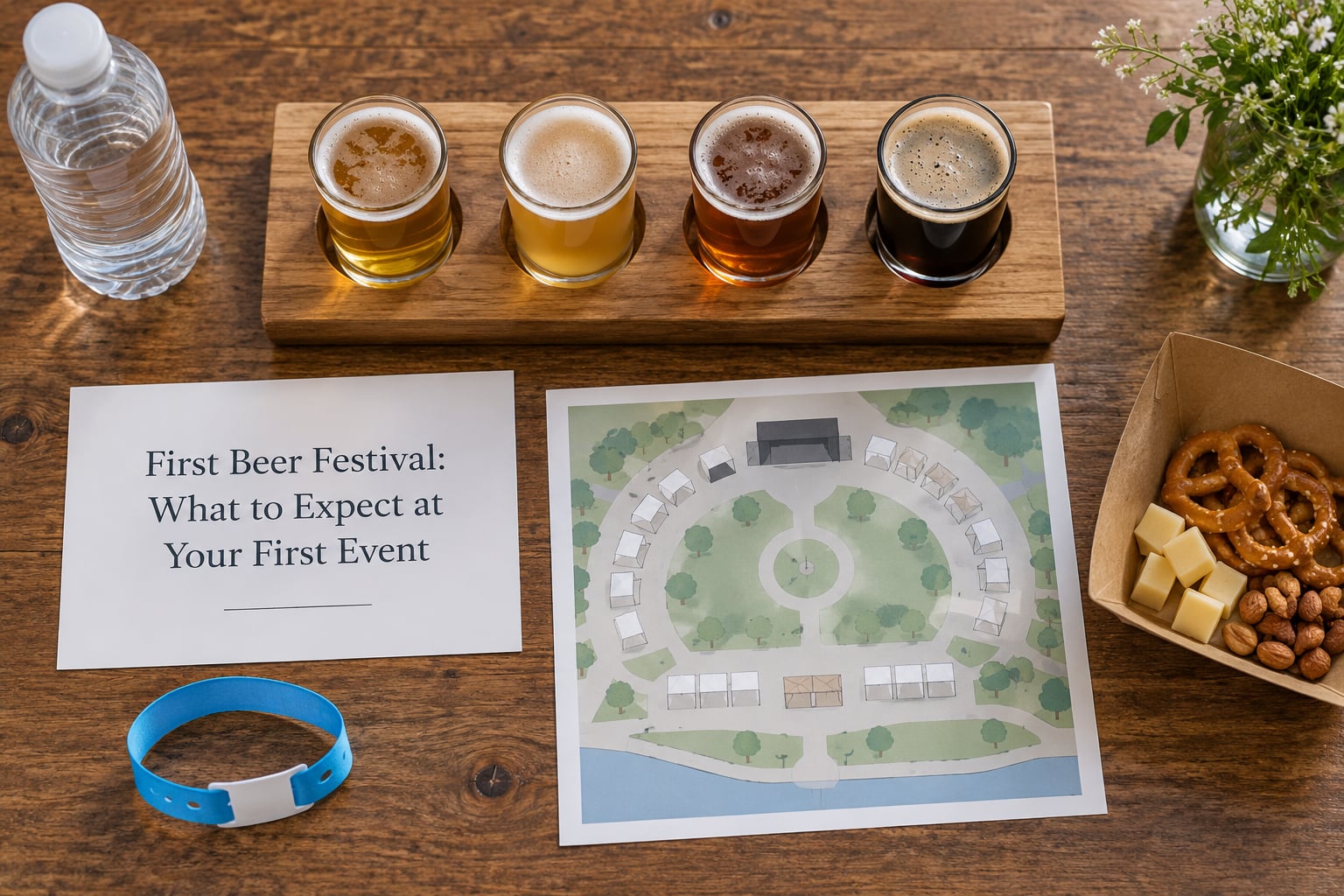
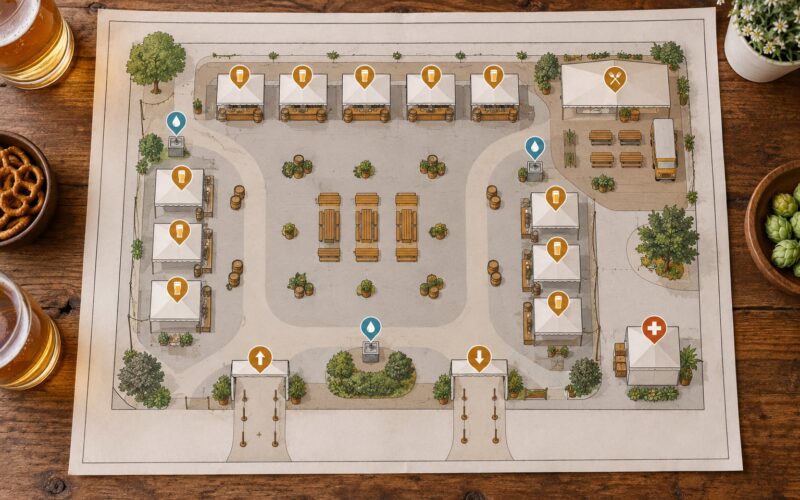
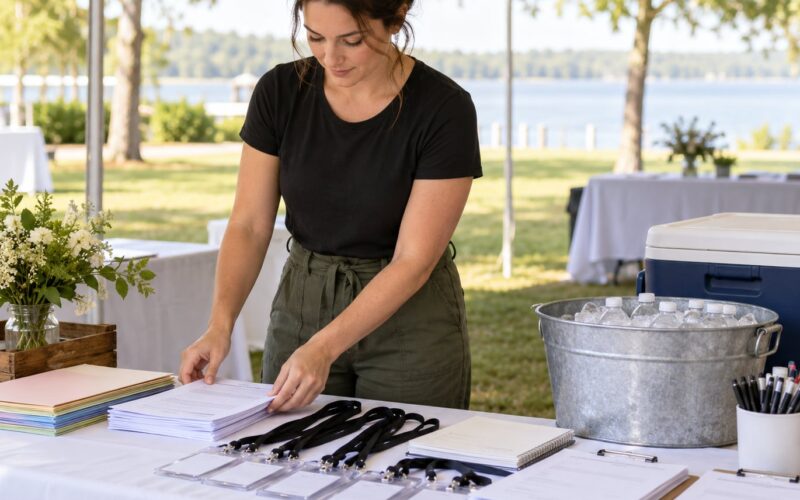
Expect a long check-in line, a wristband or stamped hand, a map, and then a floor of booths where the servers pour and you walk. Samples are two or three ounces, the queues get long near popular breweries, food comes from trucks or booths, and the noise rises fast once the first hour is over. Nobody is watching how much you drink, and nobody is waiting to hand you a full glass.
You hand your empty glass to the person pouring, they fill it, you step aside so the next person in line can reach the keg, and you walk. That is the whole loop. Some booths have a volunteer server, some pour themselves from a tap, and the friendliest ones will ask what you have had so far and point you at something different.
The thing nobody tells you is how social it is. You will stand next to strangers comparing pours, overhear a brewer explaining a hop schedule, and spend twenty minutes talking to someone about whether a saison is supposed to taste like lemon. That is the part worth showing up for.
How the Day Unfolds Hour by Hour
The first hour is the best hour. Lines are short, the rare kegs are still full, and the booths are relaxed. Do your most important tasting here.
Midday is peak crowd. The floor is packed, popular breweries have 20 to 40 person lines, and restrooms queue up. This is the moment to eat something and drink water, not to push harder.
The late session is the comedown. Lines thin out, volunteers relax, and brewers start pouring whatever remains in the keg. If you saved your palate, this is where the barrel-aged and limited stuff shows up.
The last thirty minutes are for finishing, not starting. A lot of booths run their taps dry before the official end, so do not save your favorite brewery for last.
How Beer Tastings Work
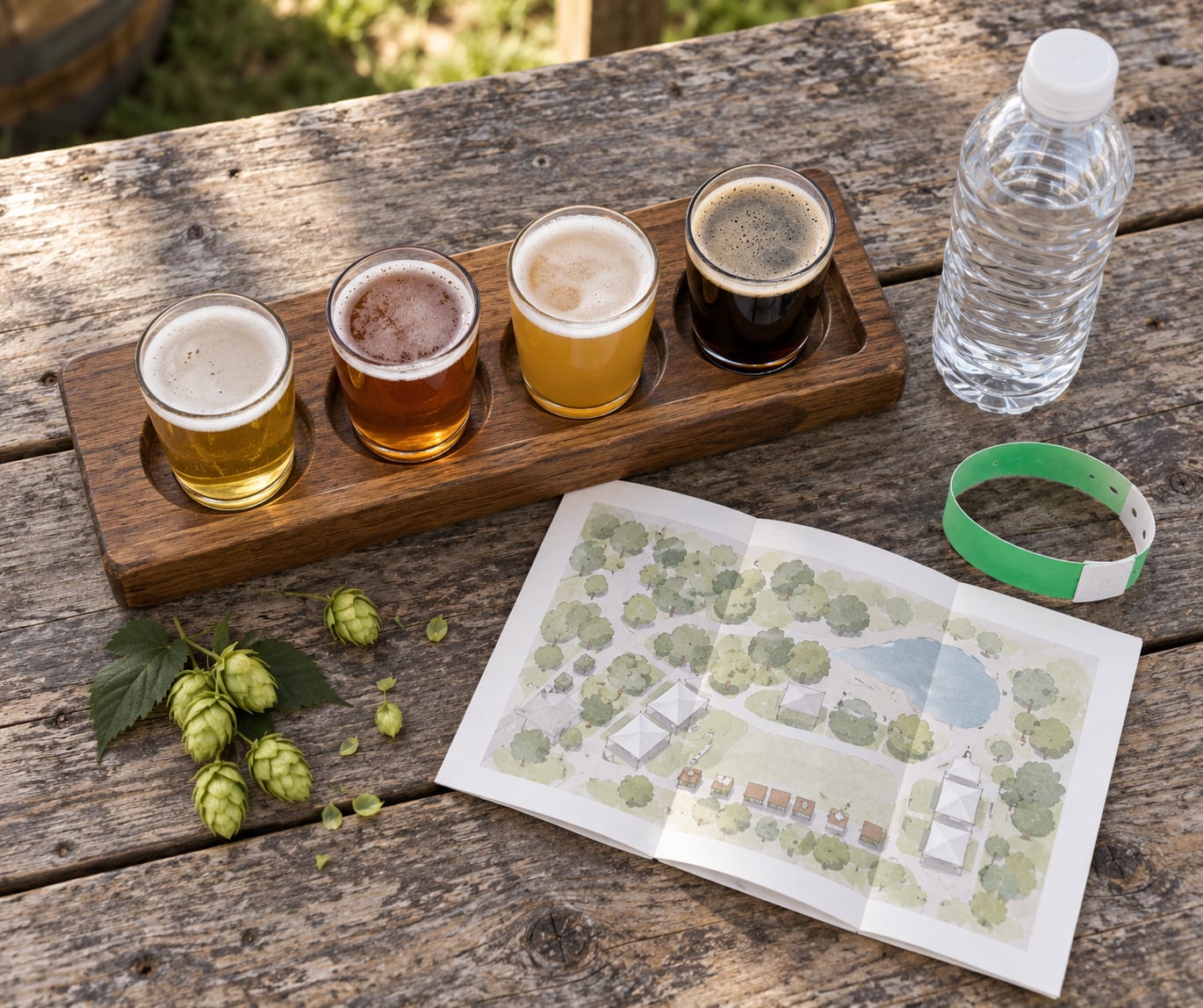
A festival sample is not a mini beer. It is a small pour meant to be smelled, sipped and judged, and a 3 oz pour from a strong barrel-aged stout carries more alcohol than a 3 oz taste of a session lager. Sample sizes are also where the jargon lives, so a quick translation helps: the small glass itself is called a tasting glass, sampler, taster or flight glass, and the paper or cardboard chits that control how many you get are called sampling tickets, drink tickets or tokens.
There are three ways beer is served to you at these events, and they are not interchangeable. A tasting flight is a set of small pours of one brewery’s beer, usually poured side by side for comparison, and it is the most useful thing on the floor when you want to understand a single brewer. A festival sample is one 2 to 3 oz pour from one booth, taken, smelled, tasted and moved on from. A full beer is a 12 oz or larger pour, which you will mostly find at taproom takeovers and Oktoberfest-style tents rather than at a sampling festival. Knowing which one you are holding saves you from accidentally drinking a pint of an imperial stout in twenty minutes.
Most samples do need to be finished at the booth, or at least held close by, because glassware is rarely allowed to leave the tent. There is no rule about finishing them, though, and dumping is normal.
The tasting method itself takes about thirty seconds:
- Look. Hold it up to the light. Note the color, whether it is hazy or clear, and how much head it holds.
- Smell. Before you sip, always. Citrus and pine in an IPA, banana and clove in a wheat beer, roast and chocolate in a stout.
- Sip, do not swallow. A small sip, let it sit on your tongue for a second so you can feel the body and the carbonation, then swallow.
- Finish. Notice what stays after the swallow. That is the finish, and it is often more informative than the first taste.
Rinse your glass with water when you jump between very different styles, especially from a hoppy IPA to a heavy imperial stout. Going lager to lager does not need a rinse. And cut the brewers some slack: festival beer comes from kegs sitting in ice all day, so it is not always as good as the same beer at the brewery.
Here is the style primer. Nobody expects you to know these names going in, and every booth is happy to explain what you are drinking.
| Style | What it tastes like | You will probably like it if you like |
|---|---|---|
| American IPA | Pine, grapefruit, resin, firm bitterness | Hoppy ales and bitter drinks |
| Hazy or New England IPA | Soft, juicy, tropical, almost no bitterness | Sweet fruit flavors and no hop bite |
| Pilsner | Clean, crisp, cracker, floral | Light lagers and anything simple and refreshing |
| Hefeweizen or wheat | Bread dough, banana, clove, cloudy | Soft, fruity, easy-drinking beers |
| Sour or gose | Sharp acidity, lemon, sometimes salt or funk | Wine, kombucha, anything tart |
| Saison | Dry, peppery, fruity, highly carbonated | Belgian ales and anything spicy or dry |
| Porter | Toast, coffee, chocolate, moderate strength | Dark beers and malt drinks |
| Stout, including imperial | Roast, cocoa, sometimes boozy warmth; imperials are 8% ABV and up | Very dark, strong coffee flavors |
| Wild or aged sour | Vinegar, funk, barnyard, complex | Really sour things. Start with one and decide. |
Tickets, Samples, and Food: What the Price May Include
Ticket models vary, and what you get for it varies more. The table below is the honest comparison of the common formats, without any specific figures, because festival pricing changes every year and every city.
| Ticket type | What you get | Watch for |
|---|---|---|
| General admission | Entry, a tasting glass, samples on a free-pour basis | Free pours can still be limited per brewery by a one-at-a-time rule |
| Timed entry | Entry within a specific session window, glass, free pours | Popular sessions sell out weeks ahead, and the session length is often 3 to 4 hours |
| Early access or VIP | Early entry with fewer people, sometimes a separate tasting area and a few exclusive pours | Costs noticeably more, and the exclusives are limited in number |
| Sampler pack add-on | A bottle, can or mixed pack of festival beer to take home | Best value for a non-drinker in your group and worth adding before the line forms |
| Pay-per-sample or token pack | Entry only, with tokens or a wristband count for a set number of pours | You have to choose where to spend them, so research the brewery list first |
| Food or drink credit | Pre-loaded value on the wristband for trucks and non-sample items | Sample pours are rarely covered by this; it is for everything else |
Two things are almost always separate from the ticket. Food is extra at nearly every festival, either bought by the slice or loaded onto the same wristband. And extra pours, if a festival sells them, are charged per token rather than included. Check the event page for its policy on outside food, because a venue that bans it is usually running water stations and food trucks for a reason.
How to Pace Yourself at the Festival
Pacing is the single thing that separates a good first beer festival from a ruined one, and it comes down to arithmetic that most people never do. Forty samples at 3 oz each is 120 ounces of beer, which is ten 12 oz beers. A festival with 70 breweries and four pours each gives you 280 possible samples, and trying to work through those is not a plan, it is a medical event. You cannot taste everything, and the people who figure that out early have far better afternoons.
A realistic target for a first-timer is 15 to 20 samples spread across four or five hours, with a glass of water between each one. If you also drink beer instead of water, you are behind before the second booth.
- Eat a real meal before you go. Not a bag of chips in line. Food slows absorption and gives you something in your stomach when the first strong pour lands.
- Drink water before the first sample, not after the third. One glass of water per sample is the standard ratio experienced attendees use.
- Take your time at each booth. Smell it, sip it, finish it. Standing in a line for ten minutes is not wasted time, it is a built-in break.
- Ask for a half pour. Every festival volunteer has done this a thousand times. Nobody will be offended.
- Save the heavy stuff for late. Imperial stouts, barley wines and anything above 9% ABV hit hard in the first hour when your palate is fresh and your judgment is not.
- Use long lines deliberately. When a brewery you want is at 30 people, sit down and eat something. Your timing problem usually solves itself.
- Stop when you stop enjoying it. Tasting fatigue is real, and pushing through it is how people end the day unable to remember what they liked.
If you go with friends, split booths two ways and compare. Two people taste eight beers an hour between them instead of four, and nobody misses anything.
When to Dump a Beer, and How
Dumping a beer is completely normal and nobody at any festival will think less of you for it. Spill buckets and water jugs exist for exactly this, and they are usually right at the end of each booth line. Ask for a half pour if you are unsure, taste it, and if it is not for you, move a few steps away and pour it out. Never dump a beer directly in front of the brewer. That reads as an insult to the person who made it, and it is the one move that will follow you around a festival.
Thank them anyway. The beer might be poorly served from a warm keg, or it might just not be your style, and both are fine reasons to move on.
What to Bring and What to Leave Behind
Bring less than you think, because most festivals do not allow much and you will be standing in the sun holding a full glass. The useful list is short, and every item on it has a reason.
- Photo ID. Required at the door, sometimes at every booth. This is the one thing you cannot improvise.
- Closed-toe shoes you have already broken in. Beer gets spilled on feet and the floor gets crowded. New shoes on festival day is a mistake you will feel by hour three.
- A small cross-body bag or fanny pack. Both hands are already full with a glass and your water bottle, and a small bag gets through the gate check.
- Water bottle, if the venue allows sealed bottles. If it does not, fill up at the water stations on entry and refill often. Check the rules first.
- Sunscreen, sunglasses and a hat. Most festival grounds are open fields or half-covered tents with no shade.
- A light layer. Tents heat up in the afternoon and cool off fast once the sun drops.
- A fully charged phone plus a portable battery. You need it for the map, the ride home and the photos, and you need it charged.
- Hand sanitizer and a pack of tissues. Tasting glass after tasting glass, all day.
- A card or cash for the wristband top-up and food. Load it before you go in, since the line at the ATM is worse than the line at the door.
Leave the following at home: outside food if the rules ban it, coolers, folding chairs, large backpacks, glass bottles, and anything breakable. Also leave the idea of drinking beer for hydration, and the idea of driving yourself home.
How to Dress for a Beer Festival
Wear the least valuable outfit you own. Closed-toe shoes that are already broken in, jeans or shorts you do not mind staining, a t-shirt from a brewery if you have one, and a hat. Add a layer for the evening and sunscreen for the afternoon. Skip white shirts, new sneakers, and anything you would be upset to see stained with a spilled pale ale, because at a festival something will be.
Beer Festival Etiquette
Beer festivals are crowded shared spaces, and the etiquette is mostly about not being an obstacle to other people. A few habits make the day smoother for everyone, including you.
- Step out of the line after you are poured. Standing in front of a booth with your glass is the fastest way to make a volunteer hate you.
- Ask before taking a second sample of anything. Some breweries are happy to pour again, some are not.
- Talk to brewers. A simple “what is this one” or “what would you point a beginner at” gets you a better answer than anything printed on the tap handle. This is not gatekept, and volunteers generally like being asked.
- Tip if tipping is offered. Some festivals run tip jars for volunteers.
- Share. A taste of something unusual is a normal thing to offer the person next to you. Just ask first.
- Never pressure anyone to drink. “Just try it” is not a joke when the other person has said no.
- Do not chug. Chugging a 3 oz sample wastes it, and doing it in a crowd is how people end up on the floor.
- Do not swish and spit in a queue. A single discreet spit into a bucket when a beer is not for you is fine. Loud spitting next to strangers is not.
- Never dump in front of a brewer or say anything about the beer that the brewer can hear. Move away, or say nothing.
- Watch the glass. Dropping a festival tasting glass is a rite of passage nobody chooses. Hold it low, and do not try to catch it.
One contradiction worth settling: the pretzel necklace. Most advice tells first-timers to wear one, and the reasoning is practical, not silly. Salt resets the palate between samples, the pretzels are carbs, and it gets food past the entrance rule at festivals that ban outside food. It works. The contrarian take floating around is that it looks like a costume. Both are describing the same necklace, and it works.
Food, Water, and Getting Home Safely
Eat before you arrive, keep eating during, and do not treat food trucks as a garnish. Something with protein or carbs every hour or so is the difference between a good afternoon and one you cannot remember. Most festivals have food trucks and booths on site, and the good ones queue by the time you are ready for lunch.
Water matters as much as the beer does. Fill your bottle or cup at the stations on entry, refill it every hour, and keep drinking even when you do not feel thirsty. A useful ratio from people who work these events: one glass of water for every sample.
Arrange the ride before you go. That means booking a car in advance, checking whether the venue runs a shuttle, or confirming the last train and bus times. Parking near festival grounds is the trap, because the walk back to your car after five hours is where plans fall apart. Pick a meeting point if you are with a group, and agree to check in at set times, because cell service in a hall with several thousand people inside is unreliable and not something you can fix on site.
Secure your belongings rather than trusting a festival bag area. Keep your phone in a front pocket and your cards in a zipped compartment.
Leave early if someone is getting uncomfortable or visibly intoxicated. That is not a fun police, it is just a good plan. If a person stops responding or cannot be woken, tell event staff or security immediately rather than trying to move them yourself.
If you are the sober person in your group, you have a genuinely good day ahead of you. You scout the food trucks early, hold a place in a line, carry the merch, take the photos, and keep everyone on schedule. Plenty of people at festivals are there mostly for that. The beer is the side quest.
A Simple First-Festival Checklist
The day itself, in order, is short enough to memorize.
- Two days out: read the festival rules, find the brewery list, choose ten breweries you want to see, and book the ride.
- Day before: hydrate, get a decent sleep, download the festival app or the map, and charge everything.
- Morning of: eat a real breakfast, set your meeting point and time, and do not pregame. Pregaming is the one thing nearly every experienced attendee tells first-timers to skip.
- Arrival: arrive early, get in the door before the line builds, load your wristband, and grab a festival map.
- First hour: hit your must-see breweries while the queues are short and the rare kegs are full.
- Midday: eat, drink water, sit down somewhere and rest your feet.
- Afternoon: pick up the styles you skipped, and only then the heavy high-ABV pours.
- Before you leave: dump what you did not enjoy, thank the brewers you liked, log your favorite beers somewhere so you can find them again, and get your ride.
- After: water, real food, sleep. Decide tomorrow is not a drinking day.
Frequently Asked Questions
How many beers should I taste at my first beer festival?
Aim for 15 to 20 samples spread across four or five hours, with a glass of water between each one. Remember the arithmetic: 40 samples at 3 oz each equals 120 ounces, which is ten full 12 oz beers. Most festivals also cap samples per brewery, so pace yourself by booth rather than by clock, and leave before tasting fatigue turns the last hour into a blur.
Do beer festivals provide full glasses or small samples?
Almost always small samples. The standard pour is 2 to 3 ounces into a small tasting glass, sampler, taster or flight glass, and you carry that one glass around all day. Full 12 oz pours show up at taproom takeovers and Oktoberfest-style tents. Festivals that limit sampling use paper drink tickets, sample tokens or a wristband count instead of letting you pour freely.
Can I bring my own water bottle or snacks to a beer festival?
It depends entirely on the event, so check the festival rules before you leave the house. Many venues allow sealed water bottles and ban outside food, which is why water stations and food trucks exist on site. Some festivals permit soft-sided bags and coolers with no glass, and some allow nothing at all. A small cross-body bag is the safest container to bring.
Are beer festivals suitable for someone who does not drink alcohol?
They genuinely are. The atmosphere, the food trucks and the conversation with brewers are the point, and plenty of attendees are there for the sampler packs, the merch and the company. A non-drinker can still ask brewers about their beer, taste a shared sample if they want, and enjoy the day without drinking anything. In a group, the sober person often becomes the one everyone relies on.
What should I eat before and during a beer festival?
Eat a real meal with protein and carbs before you arrive, not a snack in the entry line. During the day, something substantial every hour or so, because food slows alcohol absorption and settles your stomach. Most festivals have food trucks and booths, and the lines get long near peak midday, so use the busy period to eat rather than to push through more booths. Keep water going throughout.
How do I get home safely after drinking at a beer festival?
Plan the ride before you go, not when you are trying to book it. That means a car booked in advance, a shuttle from the venue, or confirming the last train and bus times. Parking near festival grounds fills early and the walk back is long, so driving yourself is the riskiest option. If you are with a group, set a meeting point and check in at set times, since cell service inside a crowded hall is unreliable.
Go, go early, and treat the first hour as the best hour. Eat before you arrive, drink water between every sample, dump what you do not enjoy, and spend a few minutes talking to the people who made the beer. That is the whole first beer festival, and it is a good time.