To plan a birthday pub night, fix the date, headcount and per-head budget first, then build a route of four to six walkable pubs with 30 to 60 minutes at each and a clear final stop for the birthday moment. Share the itinerary in the group chat two weeks out and confirm every table by phone the week before.
A pub night works because it gives a birthday a shape. Without a plan, a group of ten ends up in one pub until closing, or splits into three groups that never meet again. The planning takes about three hours spread over four to six weeks, and most of that time is spent on the phone with venues.
Here is the whole plan on one screen. The sections underneath explain each step in detail.
- Choose the format: relaxed dinner and drinks, a focused tasting, a neighborhood crawl, or one reserved venue.
- Lock the date, area and guest list, with an RSVP deadline 10 days ahead.
- Build a route of four to six pubs within about 10 minutes walk of each other, and pick the final stop in advance.
- Work out the budget per head for drinks, food and transport, then decide who is paying what.
- Call every venue for table policy, cover charge, minimum spend, last entry and closing time.
- Send one message with the route, times, dress code and a contact name.
- Add one birthday touch: a toast, a shared drink, a card read out, or a small cake at the last stop.
- Plan the finish, including a designated driver or booked rides for the whole group.
Table of Contents
- What You Need
- The date
- The headcount
- The budget
- The area
- Transport
- Food expectations
- A venue shortlist
- How to Plan a Birthday Pub Night (Step-by-Step)
- 1. Choose the Pub-Night Format
- 2. Set the Date, Area, and Guest List
- 3. Create a Route With a Clear Ending Point
- 4. Estimate the Budget and Payment Plan
- 5. Make Reservations and Send the Details
- 6. Add a Birthday Touch and Plan the End
- Common Mistakes
- Planning too many stops
- Leaving transport to the end
- Not calling ahead about group size
- Skipping the food plan
- Overcommitting the budget on venues
- No clear ending point
- No plan for dropouts and non-drinkers
- Frequently Asked Questions
- How many pubs should you go to in one night?
- How long should a birthday pub night last?
- How far in advance should I plan a birthday pub night?
- What is a reasonable budget per person for a pub night?
- How do you handle a cake, cards and presents at a pub?
- What should people wear to a birthday pub night?
- Conclusion
What You Need
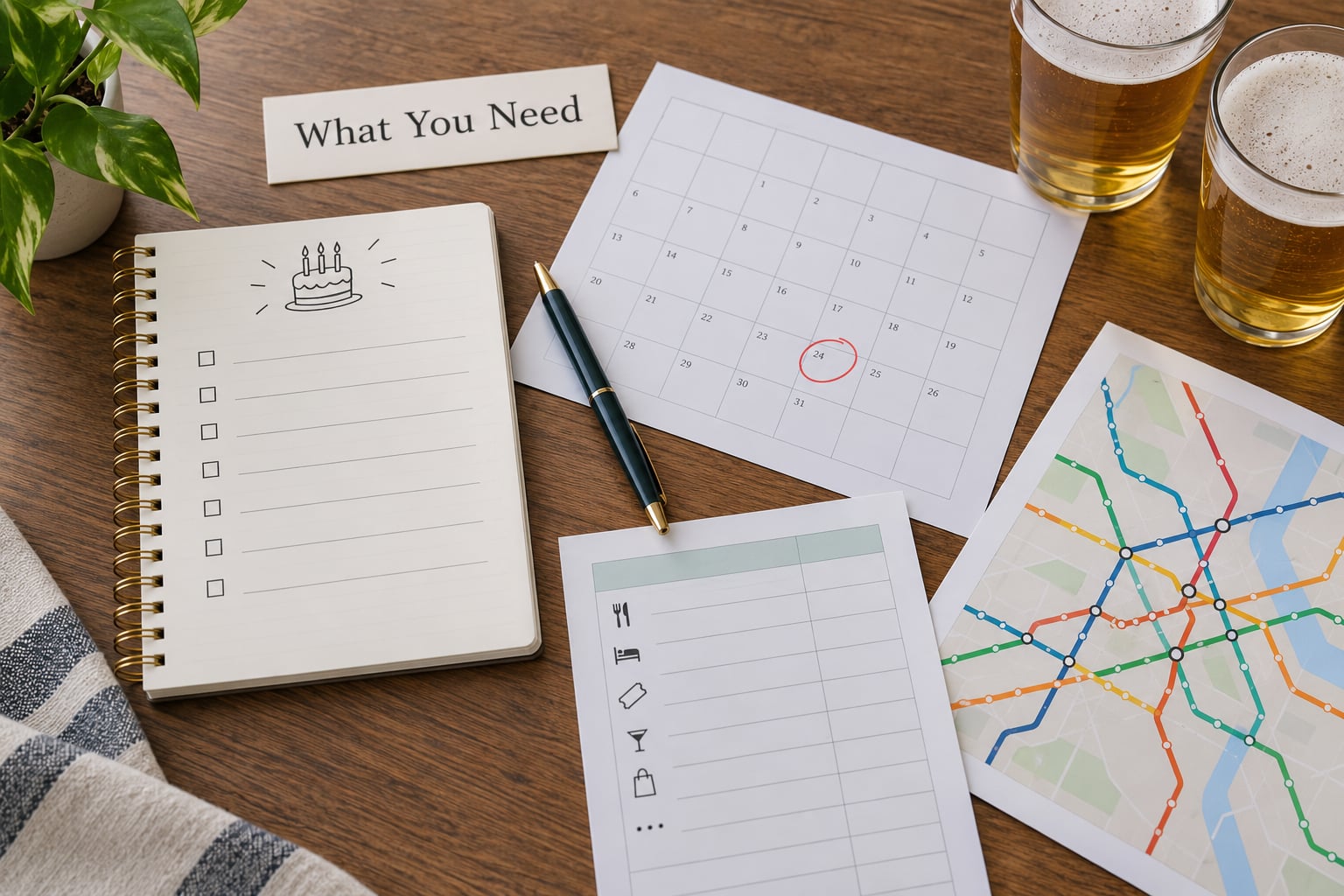
Start with the parts that cannot change later. A date, a number and a ceiling. Everything else, including the theme, the games and whether anyone wears a costume, is decoration on top of those three things.
The date
Pick two possible dates and check them against the birthday person’s own diary before anyone else. For a surprise, use a shared calendar or ask one trusted friend what weeks already have plans in them. Friday and Saturday are the easy nights to fill and the hardest to get a table for eight or more.
The headcount
Work out two numbers: who you invite, and who will realistically turn up. For a friends pub night, eight to fifteen people is the sweet spot. Above about twenty-five, a pub crawl stops working well because the group cannot move between venues as one unit and door staff start asking about table policy.
The budget
Set the per-head figure before you look at any venue. For a typical city pub night, a reasonable range is three to five drinks plus one proper meal per person, with a little set aside for a shared drink or a cake. A group of twelve at that level is a mid-range budget, and it is more than enough for a memorable night. Travel adds a few dollars per person if nobody is driving.
The area
Choose one neighborhood, not a chain of them. A route works when every stop is within a ten-minute walk, or on one short bus or train ride. If the birthday person has a favourite pub, build the route around that one and work outwards in both directions.
Transport
Decide how the group gets home before the night starts, because it shapes the whole plan. The last stop should sit near a late-night transit hub, a taxi rank or a place two designated drivers can leave from. Save the app-based rides for the end; fares spike when the bars empty out.
Food expectations
Ask the group chat in advance, without making it a form: any allergies, anyone not drinking alcohol, anyone who needs step-free access or a seat that is not on a bar stool. Pubs change menus, so a table with real food matters more than a bar that serves only drinks.
A venue shortlist
Six to ten candidate pubs, with opening hours, closing time, cover charge and whether they take group bookings. Three hours of research here saves an evening of walking.
How to Plan a Birthday Pub Night (Step-by-Step)
1. Choose the Pub-Night Format
Decide what kind of night this is before you look at a single venue, because the format decides everything after it. There are four that work well.
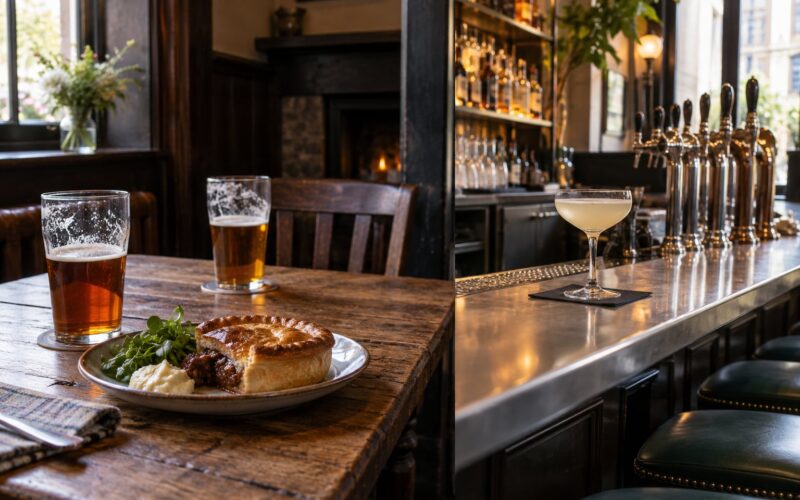
- One reserved venue. A long table, a fixed menu, a good evening for a partner, a parent or a milestone birthday where conversation matters more than movement. Nobody queues, nobody splits up, and the birthday person gets the attention you actually wanted.
- Dinner and drinks at two or three places. A relaxed version. You eat properly at the first stop, move once or twice, and the group is small enough to travel together.
- A neighborhood pub crawl. Four to six walkable stops with a game, a shared theme and a birthday moment at the end. The most involved option and the one most people are actually picturing when they say pub night.
- A focused tasting stop. One taproom or brewpub with a flight, plus a second stop for food afterwards. Works well for someone who cares about what they are drinking rather than how many stops they hit.
Say the format out loud in the group chat before you plan around it. I have watched a crawl turn into a sit-down dinner because nobody said when the food was happening, and the whole evening then moved an hour later than planned.
2. Set the Date, Area, and Guest List
Offer two dates rather than one. If the birthday person is choosing, you will find out about a clash in a minute instead of a week. If the birthday is a surprise, pick the date and tell everyone else only that it is a Friday evening in the city.
Then set a headcount deadline. Ask for replies in the group chat, give a date ten days out, and plan the final table for the number who confirmed plus two. That margin absorbs the person who always says yes and never turns up, and it is the difference between a comfortable table and a cramped one.
Choose a meeting point that is a landmark rather than an address people have to text back and forth about. A well-known station exit, a market square or the front door of the first pub. Tell everyone the meeting time and give it a fifteen-minute window for stragglers before the first stop fills up.
3. Create a Route With a Clear Ending Point
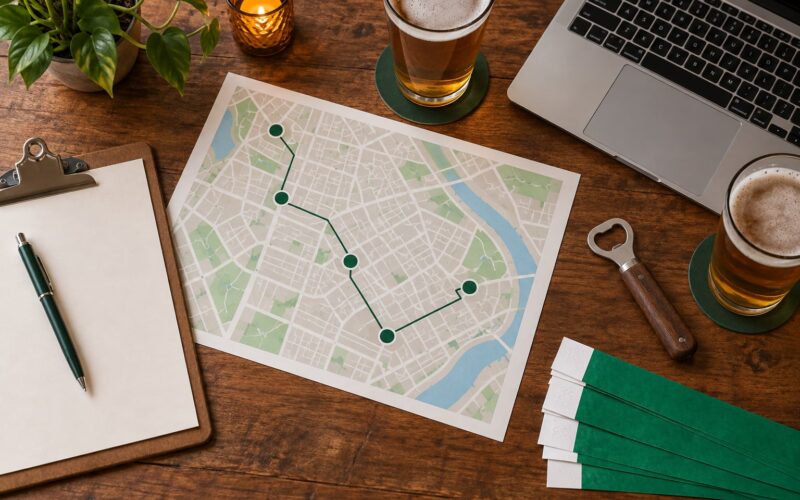
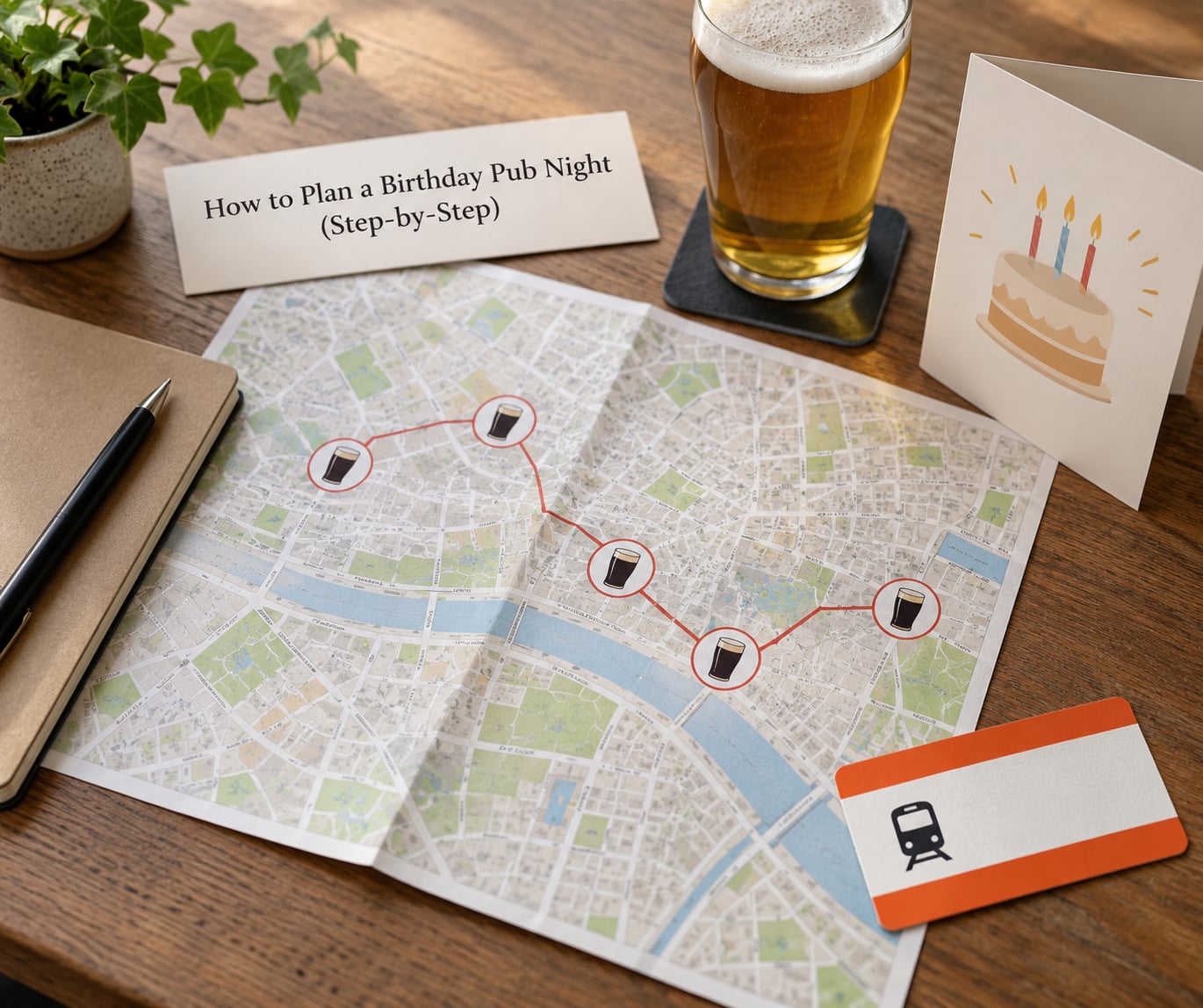
Four to six stops is the range that works. Under four and the evening feels thin, over six and the group arrives at stop five as three tired stragglers. The order matters more than the count.
Put the birthday moment at the end, not the start. Nobody wants to be sang at at eight in the evening, and a venue that is a bit quieter and closer to transit makes a far better finale. Work backwards from that final stop and fill the middle with places that are genuinely on the way.
For each stop, check four things: opening and closing time, last entry, cover charge, and whether they take a group of your size without a booking. A cover charge is a flat fee at the door, sometimes with a drink credit against it, and it varies hugely between venues. A minimum spend is different: the venue holds a section of the bar or the whole room for you on the condition that the group spends a set amount. Bartenders are consistent on one point, and it comes up constantly in their forums: both need to be agreed in advance, and neither is a surprise a host should discover on the door.
Keep walking time short. Ten minutes is comfortable, fifteen is fine on a dry night, and anything over twenty turns a route into a relocation. Avoid venues with a long queue or a strict door policy for a group of ten; you will lose people on the pavement and the rest of the evening starts late.
Build a wet weather version at the same time. At least one stop should be indoors and close to the others, and one backup pub within a few minutes of the route. Weather is the single most common reason an outdoor-heavy crawl collapses.
4. Estimate the Budget and Payment Plan
Budget by category, then divide by head. Most hosts do this in their head and get it wrong in one direction: they forget food, or they forget that a birthday round is separate from the drinks everyone buys themselves.
- Drinks. Three to five per person across the night, depending on the format. A tasting stop uses fewer drinks but higher spend per drink.
- Food. One real meal early, and something small and salty at the last stop. This is not optional; it is what keeps a group coherent and gives everyone a reason to sit down for ten minutes.
- Cover charges and reservation fees. Only if the venues you picked have them. Ask, because it changes the total.
- Shared extras. A cake, a round the group buys for the birthday person, a small prize for a game, a card and a present. This is the birthday spend, and it is separate from what guests pay for themselves.
- Transport. Rides home for anyone not driving, and any party bus if you booked one.
To split money without awkwardness, decide in advance who is hosting the birthday. The usual arrangement is that the birthday person does not pay, the group chips in a fixed amount, and the host covers the shared extras from that. Collect it in the group chat with a payment link rather than in cash at the door. Nobody enjoys being the person holding a card terminal in a pub queue.
5. Make Reservations and Send the Details
Call rather than message where you can. Phone gets you an answer about table policy in one call, and it is the fastest way to find out whether a venue will hold a space for a group of twelve without a minimum spend.
When you call, ask the same five questions everywhere, so your answers are comparable: how far ahead do you need a booking, is there a cover charge, is there a minimum spend or deposit, what time is last entry, and what time does the kitchen stop. If a venue cannot hold a table for a walk-in group of ten, do not gamble on it. Put a phone number in the itinerary for the fallback stop.
Send the details as one message, not a series. It needs the meeting point and time, each stop in order with the walking time, the final stop marked clearly, the dress expectation, who is paying what, and one contact name and number for the whole night. People check that message three or four times on the night, so make it readable rather than clever.
Send it two weeks out for a relaxed evening, and the day before for a crawl with a game or a surprise element. Confirm the headcount with each venue 48 hours ahead so a table that was promised is still there on the day.
6. Add a Birthday Touch and Plan the End
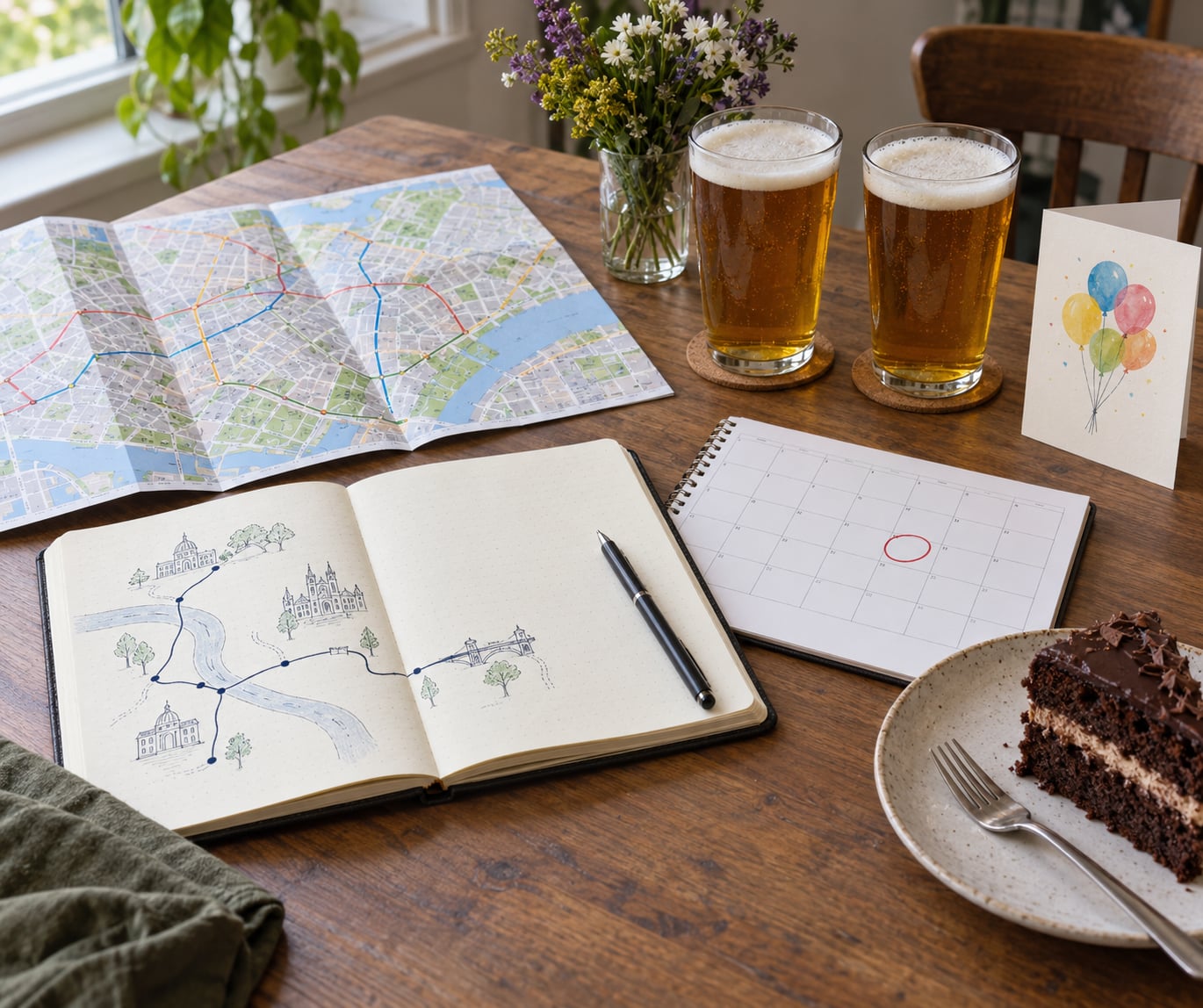
One good touch beats four small ones. A toast the whole group can hear, a round the bar buys for the birthday person, or a card everyone has written something in before the night starts. The card works best read out at the last stop, when the group is loud enough to be a moment and quiet enough to listen.
Cake and presents are the fiddly part. Most pubs are fine with a small cake brought in and cut at a table, but ask first, and check whether they charge for cutting or plating it. Anything large, anything that needs refrigeration, or anything that needs candles near a ceiling fan needs a different plan. A cake at a reserved venue is easy; a cake at a small bar on a walk route is the one to sort in advance.
Plan the finish deliberately. Last call times vary by venue and by licensing rules, so check the closing time for the final stop and work backwards. Aim to be there for the birthday moment with 45 minutes to spare, not ten. If the group is drinking heavily, bring the end forward rather than pushing it out, and decide in advance that the host is not driving.
Afterwards, put one photo in the group chat before anyone goes home, and mention a proper breakfast or a fry-up stop for the morning. The next-day recovery plan is what turns one good night into a birthday that lasts.
Common Mistakes
Planning too many stops
Seven or eight pubs sounds generous and ends with four people. Four to six stops keeps the whole group in one piece, and the last stop still feels like an event.
Leaving transport to the end
Fares spike at closing time, and the person most in need of a ride is the one who planned to leave early. Decide the homeward plan before the night and put the final stop near a transit hub, a taxi rank or two sober drivers.
Not calling ahead about group size
This is the mistake that derails the evening. Venues need to know a group is coming, what size, and whether there is a cover charge or minimum spend. A call takes two minutes and removes the worst failure mode: a group of ten standing outside a bar that was never going to seat them.
Skipping the food plan
A group that starts drinking at eight without eating splits up by stop four. Plan one real meal early and something small at the end, and treat both as fixed points in the itinerary.
Overcommitting the budget on venues
Spending heavily on one reserved room and nothing on the shared birthday touch feels flat. The cake, the round, the card and the game are what people remember, and they cost very little.
No clear ending point
Groups that end at an arbitrary bar finish tired and split. Name the final stop in the itinerary, put the birthday moment there, and set the time everyone should be heading home.
No plan for dropouts and non-drinkers
Assume the group will shrink by the third stop, so choose venues where a small group is still welcome, and build a game that works with four people. Check in advance what non-alcoholic options are on the menu and make sure the birthday person’s glass of something nice is part of the plan, not an afterthought.
Frequently Asked Questions
How many pubs should you go to in one night?
Four to six stops is the range that works best. Fewer than four and the evening feels thin, more than six and people arrive at the last bar as three tired stragglers. Give each stop 30 to 60 minutes, keep the walking time between venues under ten minutes, and make sure the final stop is near transit so the group can finish together.
How long should a birthday pub night last?
Plan for three to four hours. That gives 45 minutes per stop across four venues with travel and time for the birthday moment at the end. Longer than that and the group thins out; shorter and it does not feel like an occasion. Start around 7pm for most dates so nobody is on the last train home.
How far in advance should I plan a birthday pub night?
Start roughly four to six weeks out. Use the first week for the shortlist, the second for phone calls and table policy, and the third for confirmations. Send the itinerary to guests two weeks ahead, or the day before for a crawl with a game. Confirm final headcounts with each venue 48 hours in advance.
What is a reasonable budget per person for a pub night?
Three to five drinks plus one proper meal per person covers a typical city pub night, with a little extra for a shared birthday round or a cake. Groups often forget food or forget that the birthday spend is separate from what guests pay themselves. Budget both lines before the night so nobody is surprised at the end.
How do you handle a cake, cards and presents at a pub?
A small cake is usually fine if you ask the venue first, since some charge for cutting or plating. Anything large, or anything needing refrigeration, is easier in a reserved room than on a walk route. Have everyone write something in the card beforehand and read it out at the last stop, when the group is loud but still listening.
What should people wear to a birthday pub night?
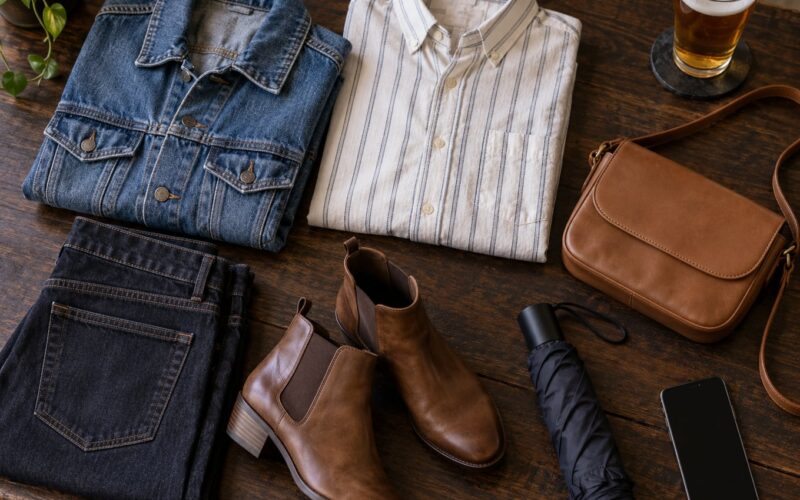
Smart casual works for almost every venue, and it survives a change of plan if a bar turns out to be dressier than expected. Comfortable shoes matter more than anything else since you will cover four or six walking stops. If you are running a theme, nostalgic eras work far better than novelty costumes, and a joke costume is optional.
Conclusion
Five things to do this week: confirm the date with the birthday person, set the per-head budget, shortlist six walkable venues, phone each one for group policy, and choose the final stop. Once those are settled, write one message with the route and the times, then let the evening happen.
A pub night is not complicated to plan. It is just a short list of decisions made early, so the night itself can stay loose.