How breweries pick their names and labels is less about inspiration than most people assume. A brewery lands on a name first, often drawn from a place, a person or an ingredient, then runs it past trademark and domain checks before anyone opens a design file. The label follows that name, not the other way round.
From the outside it looks like the artwork and the pun are the fun part. In practice the order of operations is quite fixed: story, name, legal clearance, brief, artwork, compliance check, print proof. Understanding that order explains most of what you see on a shelf in 2026, and it is useful whether you are decoding labels at a taproom or naming your own first beer.
Table of Contents
- What Do Breweries Consider When Choosing a Name?
- The questions behind how breweries pick their names and labels
- How Do Breweries Create a Memorable Brewery Identity?
- What a consistent voice sounds like
- What Makes a Beer Label Easy to Recognize?
- How Do Breweries Choose Colors, Fonts, and Symbols?
- How Much Information Should a Beer Label Include?
- How Do Breweries Check That a Name or Label Is Usable?
- What Is the Difference Between a Brewery Name and a Beer Name?
- Frequently Asked Questions
- What has to be on a beer label in the US?
- Who approves beer labels?
- What is COLA label approval?
- Do I need a lawyer to trademark a brewery name?
- How do I design a beer label that reads on a shelf?
- What should I put in a brief for a designer or illustrator?
- Conclusion
What Do Breweries Consider When Choosing a Name?
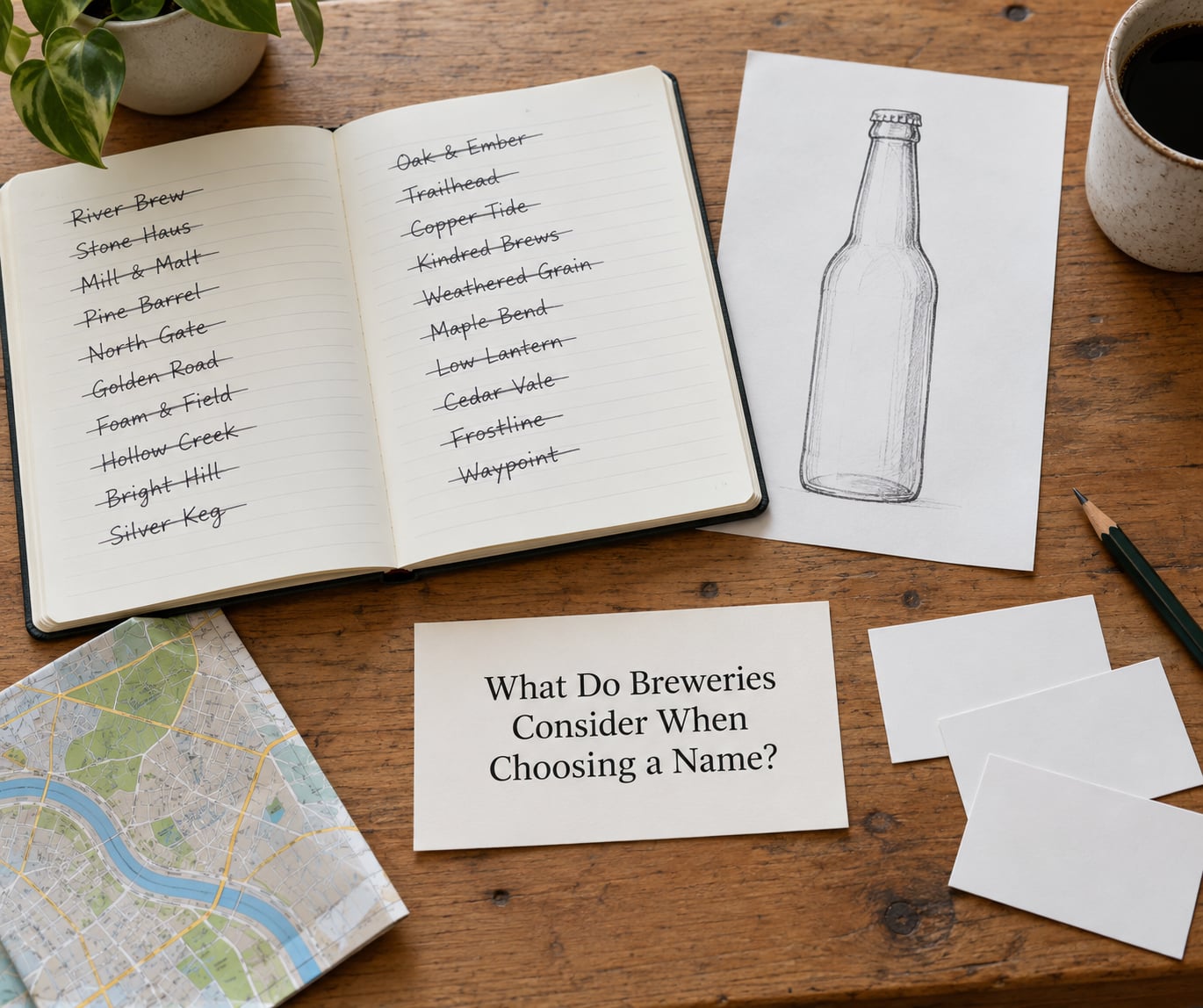
A brewery tests a name against roughly six things before it commits. Which ones matter most depends on the brewery, but almost none of them are about whether the name sounds clever.
- Recall. Can a customer repeat it back after hearing it once? Names that need spelling out lose to names that survive a loud taproom.
- Pronunciation. If a bartender has to guess, the tap list will quietly misreport it. Anything ambiguous gets flattened into the closest word already on the menu.
- Meaning. The reference has to survive a stranger asking. If the joke needs a paragraph of setup, only the founder gets it.
- Local relevance. A street, a river, a former industry or a neighbourhood gives the name a reason to exist in that town specifically.
- Trademark risk. Someone else owning the mark in a related class can block a launch, and renaming after cans are printed is expensive.
- Range flexibility. Can the name hold twenty beers, or does it describe exactly one? Names pinned to a single style age badly.
Those criteria sit underneath five naming approaches that show up again and again in brewery naming conversations, including the most-upvoted thread on the BeerSmith home brewing forum, where naming is treated as part of the brewing rather than packaging decoration.
| Approach | What it signals | Where it comes from | What to watch |
|---|---|---|---|
| Place or local reference | Rooted, civic, easy to explain | A street, river, hill, building or local industry | Ties the brewery to one town forever |
| Person or founder story | Personal, hard to copy | A family name, a nickname, an inherited job | Hard to hand to a second generation |
| Ingredient or process | Craft credibility, flavour-forward | Single hop, a recipe decision, a brewing step | Reads as a style, not a brand |
| Style or technique | Clear to beer drinkers instantly | The beer style itself or how it is brewed | Reduces the brewery to one style |
| Wordplay and homage | Memorable, funny, shareable | Puns, pop culture, an older recipe or band | Rights in the reference, and dates fast |
The questions behind how breweries pick their names and labels
Most founders arrive with a place name or a family name and a long list of puns, then discover the list does most of the work for them. The decisions that survive are usually the ones that pass the pronunciation and trademark tests without needing a compromise.
One practical habit shows up in founder forums: shortlist three or four, not thirty. A long list cannot be tested, and testing is the part that matters.
How Do Breweries Create a Memorable Brewery Identity?
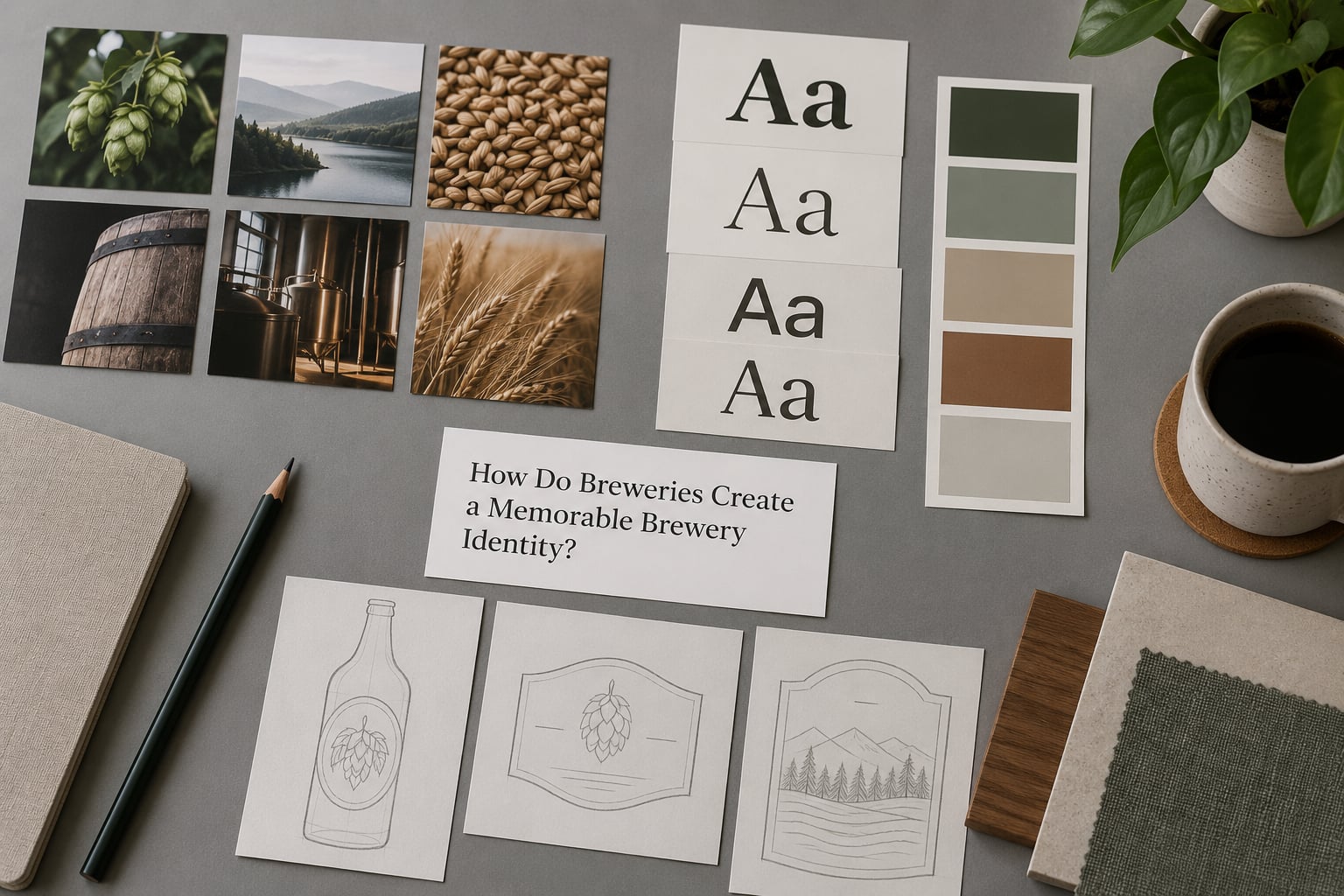
An identity is the set of decisions a brewery repeats: a tone of voice, a colour palette, a lettering style, a recurring illustration approach, and the promise the brewery makes to whoever buys the beer. A name is the label on that identity, not the identity itself.
Rooster’s Brewing in the UK is a clear example of an identity with a naming engine. Illustrator David Bailey was commissioned to hand-draw six labels for the brewery’s Assassin range, and the range grew from the flagship Baby-Faced Assassin into names like Hazy-Faced Assassin, Little Hazy, Easy Going, Mango and Peculiar. Once one name sets the pattern, later releases extend it instead of starting over.
A Beer52 feature on that collaboration reported a second effect. After supermarket buyers saw a single illustrated label, the response was effectively a demand for the rest of the range, which tells you label quality is a sales tool, not just decoration.
What a consistent voice sounds like
Tone is the easiest thing to lose when a brewery grows from one person to a team. The breweries that hold together write down three or four sentences about how they speak, who they are speaking to, and what they refuse to say. A brewery that only makes sessionable lager and a brewery that only makes aggressively hopped IPAs should not share a voice.
What Makes a Beer Label Easy to Recognize?
A label has about three seconds to work. Drinkers decode it in a fixed order, and design that ignores that order gets skipped.
- The beer name. Largest element, readable first, ideally without the shopper leaning in.
- The brewery mark. The logo or wordmark that tells you who made it, usually top or centre.
- Style cues. Colour, imagery and typography that signal the beer style before the words are parsed.
- Illustration. The single image that makes the label reproducible in a thumbnail or a tap handle.
- Detail. ABV, tasting notes and the small print, read last and only when someone has already decided.
Shelf-read distance is the real test. A label has to work from about six feet, which is roughly the length of your arm plus the depth of a cooler. That distance kills small tasting notes, low-contrast type and a crowded front panel, no matter how good the artwork is underneath.
The greyscale check catches most of the rest. Designers on the HomebrewTalk forums routinely critique labels by imagining them printed in black and white, because that’s how they look in a phone photo, in a dark taproom, and in any reproduction the brewery doesn’t control. If the beer name disappears in greyscale, it will disappear in a lot of real conditions.
Contrast is the underlying rule behind all of it. Dark lettering on a light field, light on dark, and never a mid-tone name over a busy mid-tone illustration.
How Do Breweries Choose Colors, Fonts, and Symbols?
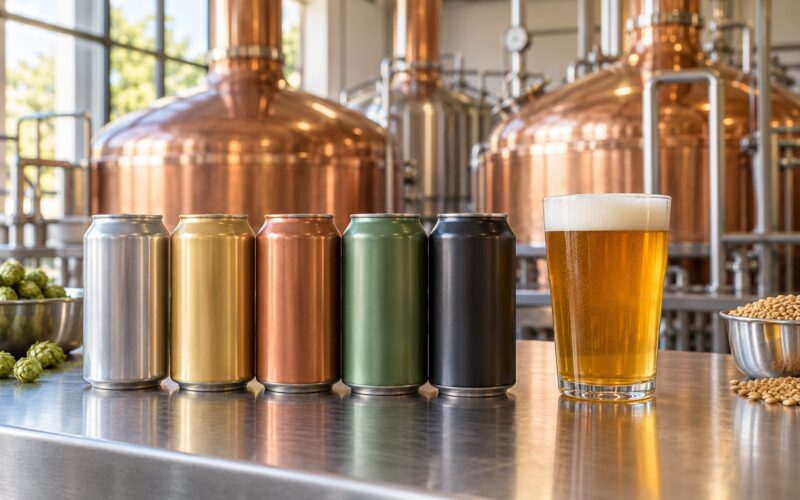
Colour is usually chosen for the range rather than the beer. A brewery picks a small palette it can hold across a core range, a seasonal line and a limited edition, and each beer takes one dominant colour from it. That is why you can spot a brewery’s shelf presence across a cooler even when the labels look nothing alike at close range.
Type does the practical work. Most labels use one decorative face for the beer name and a plain sans or slab for everything else, because a second decorative face turns a shelf full of products into visual static. Lettering and typography also carry an implicit claim: hand-lettered or hand-drawn says small-batch, geometric and sparse says engineered.
Symbols, badges and borders are the connective tissue of a range. A recurring badge, rule line or shield shape lets a drinker recognise a brewery before reading a single word, which matters once you have more than a handful of beers.
How Much Information Should a Beer Label Include?
There is a fixed list of required information, and then there is everything else you want to say. Conflating the two is how labels end up unreadable. Per ttb.gov, malt beverage labels must carry a brand name, a class and type designation, the name and address of the brewer, net contents, and alcohol content information, with additional state-level rules on top.
| Element | Required? | Where it usually sits | Note |
|---|---|---|---|
| Brand name | Required | Front, most prominent | Must match what you applied for |
| Class and type designation | Required | Front or back | The recognised style name for the beer |
| Alcohol content declaration | Required for most modern craft beer | Back or side | Thresholds and formats differ by strength and state, check ttb.gov |
| Net contents | Required | Back or side | Volume declaration |
| Brewer name and address | Required | Back | The address of the brewing premises |
| Government warning | State dependent | Back | Wording varies by state and is not optional where required |
| Tasting notes | Optional | Side or back | Set it at a size people can actually read |
| Barcode or QR code | Optional | Back or side | Needs clear quiet space around it |
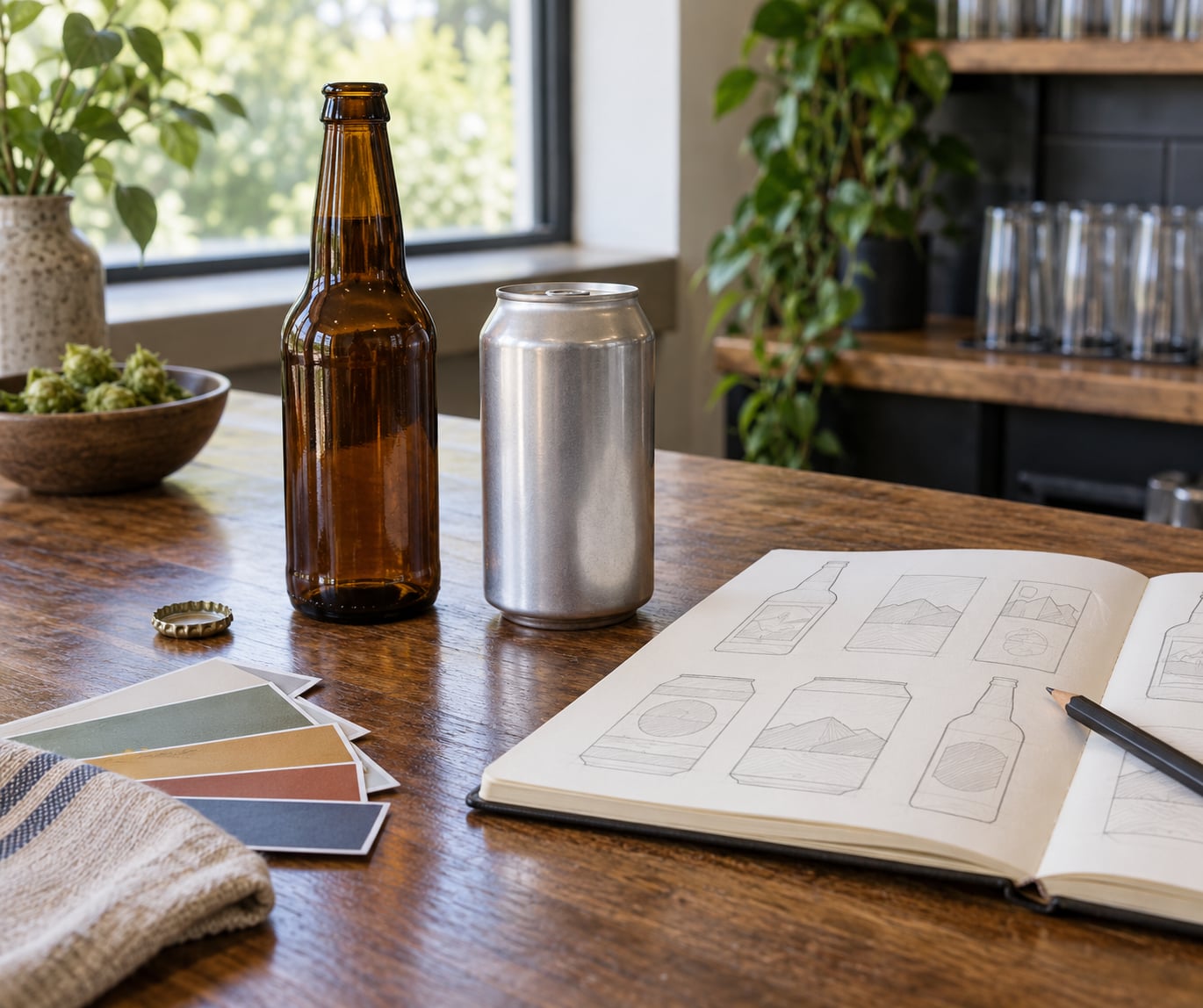
Format changes the layout more than you’d expect. A can is read in a hand, often in a fridge or in bright light, so the name sits large and high. A bottle label is flatter and wider, so it carries more detail without crushing the type. A draught handle or taproom badge has almost no room at all, which is why serious breweries design a simplified mark for it rather than shrinking the full label.
The practical rule is to treat required text as fixed furniture and design the personality around it, not on top of it.
How Do Breweries Check That a Name or Label Is Usable?
Breweries check names before they fall in love with them, and they check labels at actual size before anyone commits to a print run. The order matters, because reprints are the expensive mistake.
- Search the trademark databases. Look in the class covering alcoholic beverages, not just the general register, and check phonetic variants of the name rather than the exact spelling.
- Check the domain and handles. A brewery name without a matching handle means every social post starts with a workaround.
- Ask the state. State alcohol agencies maintain their own rules and approvals, including required warning text and label registration, and they change.
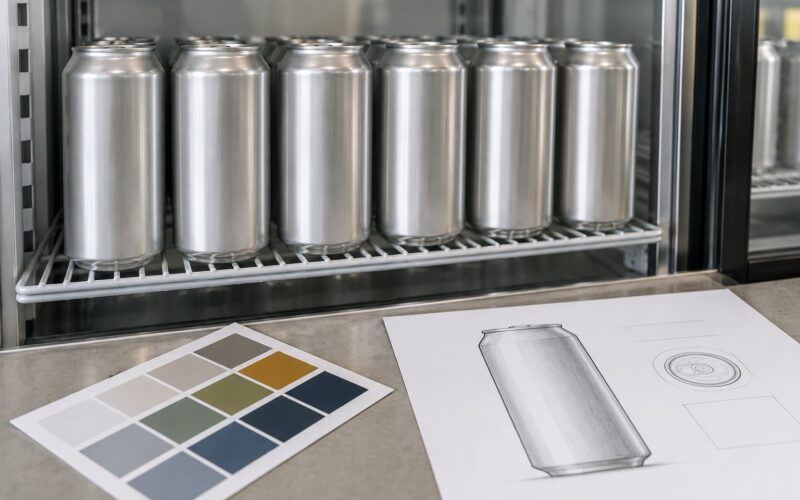
- Run the size test. Print the design at the actual dimensions and view it from arm’s length, then shrink it to thumbnail size and check it survives.
- Run the greyscale test. Confirm the beer name and brewery mark still read without colour.
- Proof the production version. Proof from the printer, not from a laptop. Ink, stock and scale all shift what you get.
- Check it across everything. Can, bottle, tap badge, taproom menu and online listing should all use the same hierarchy, with the same name spelled the same way.
Professional trademark advice is worth it for a brewery name and often not worth it for a single seasonal beer, because the stakes scale with how long you plan to use the name. Founders ask constantly whether they need a lawyer; the honest answer is that a search you can do yourself will not tell you whether you can safely launch, but it will tell you whether to stop arguing about your favourite option.
What Is the Difference Between a Brewery Name and a Beer Name?
A brewery name is a permanent asset you build over years. A beer name is a perishable one you use to sell a specific batch, and it sits underneath the brewery name on the shelf. Getting the order wrong is what produces taprooms full of beers that all compete with each other and none of them with the brewery.
Good brewery names stay out of the way. San Diego’s Beardless Brewers took its name from the Clutch rock band, which gives the brewery a clear personality without describing what is in the glass. Beer names then do the work of describing or characterising the beer.
The useful split is this: the brewery name earns recognition, the beer name earns the trial. When a range is planned as a family, as the Assassin range shows, the beer name follows a rule the brewery can apply again, which saves naming from being a fresh argument for every release.
Frequently Asked Questions
What has to be on a beer label in the US?
Per ttb.gov, a malt beverage label must carry the brand name, a class and type designation, the alcohol content declaration, the net contents, and the name and address of the brewer. States add their own requirements, including a government warning statement with state-specific wording and sometimes health warnings. Check ttb.gov and your state alcohol agency before printing, because both sets of rules change.
Who approves beer labels?
Two layers do. Federally, brewers get a Certificate of Label Approval, or COLA, from the TTB, which reviews the mandatory label content rather than the artwork. Separately, most states require their own approval or registration of labels through the state alcohol agency, and the government warning text is set at that level. Both need to be settled before a print run, not after.
What is COLA label approval?
A Certificate of Label Approval is the TTB review that checks a beer label against federal requirements such as brand name, class and type designation, net contents and alcohol content. It is about compliance, not taste or appearance, so an unusual illustration will never be rejected as artwork. Approval also limits what you can change afterwards without reapplying.
Do I need a lawyer to trademark a brewery name?
For a brewery name you intend to build a business on, yes, worth paying for. A lawyer searches beyond the exact wording, checks the class that covers alcoholic beverages, and tells you whether you can use the name you actually want. For one seasonal release, a self-serve search is usually enough to weed out obvious conflicts, then you file the mark yourself later.
How do I design a beer label that reads on a shelf?
Put the beer name largest and highest, give it hard contrast against whatever sits behind it, and keep one illustration doing the visual work. Then check the design three ways: printed at real size and read from six feet, shrunk to thumbnail size, and converted to greyscale. If the name survives all three, the rest is decoration. Everything smaller, including tasting notes, is read by people who already picked the beer up.
What should I put in a brief for a designer or illustrator?
Give them the story in two sentences, the beer style, the required label elements with exact wording, the palette and typefaces you already use, the sizes the artwork has to work at, and a deadline. Rooster’s Brewing’s approach was specific about scope, commissioning a named illustrator to hand-draw six labels for the range rather than one-off art per beer. Tell the illustrator what cannot change, and let them own everything else.
Conclusion
Start with the personality, not the pun. Write down what the brewery is about in three sentences, shortlist three or four names instead of thirty, and run those through a trademark and domain check before anyone falls in love with one. Then build the label around a single hierarchy: beer name first, brewery mark second, required text placed where the rules say, everything else supporting. Check the design at real size, in greyscale and as a thumbnail, and the rest of the work gets much easier.