If you have been wondering what is a Baltic porter, the short answer is this: it is a strong, dark, malty lager, usually between 6.5% and 9.5% ABV, with a smooth caramel-to-dark-chocolate malt character and a light roast that never tips into burnt territory. It drinks like a porter, ferments like a lager, and it is the only major beer style that keeps both of those facts at once.
I have been drinking the style off and on for years and the thing that still surprises me is how rarely it gets asked for by name. It shows up on a handful of DC-area tap lists, it hides behind words like stout or dark lager, and almost nobody orders two in a row to compare them.
This guide covers what the style actually is, where it came from, how it tastes, how it stacks up against English porter and Russian imperial stout, how strong it really is, how it is brewed, what to pour it next to, and how to serve it so the beer actually tastes like it does in the glass.
Table of Contents
- What Is a Baltic Porter?
- Where Did Baltic Porter Come From?
- Beer from England, shipped north
- The import pipeline breaks
- Fermentation moves from warm to cold
- How Does Baltic Porter Taste?
- What Does a Baltic Porter Look Like?
- Aroma
- Flavor
- Mouthfeel
- What Makes a Baltic Porter Different From Other Porters?
- Baltic porter vs Russian imperial stout
- Which is stronger, porter or stout?
- How Strong Is a Baltic Porter?
- How Is Baltic Porter Brewed?
- The grain bill
- Hops and bitterness
- Cold fermentation and long lagering
- How to spot a faulted example
- What Beer Styles Are Related to Baltic Porter?
- Dunkel and Schwarzbier
- Doppelbock and bock
- Imperial stout and old ale
- Strong dark lager
- How Should You Serve and Taste Baltic Porter?
- Glass and temperature
- Pairings
- A simple tasting sequence
- Frequently Asked Questions
- Is Baltic porter a lager or a porter?
- Is Baltic porter the same as a Russian imperial stout?
- Should Baltic porter taste sweet or roasted?
- How strong is a Baltic porter?
- What food pairs well with Baltic porter?
- Can I brew a Baltic porter at home?
- A Baltic Porter Is a Strong, Flavorful Dark Lager
What Is a Baltic Porter?
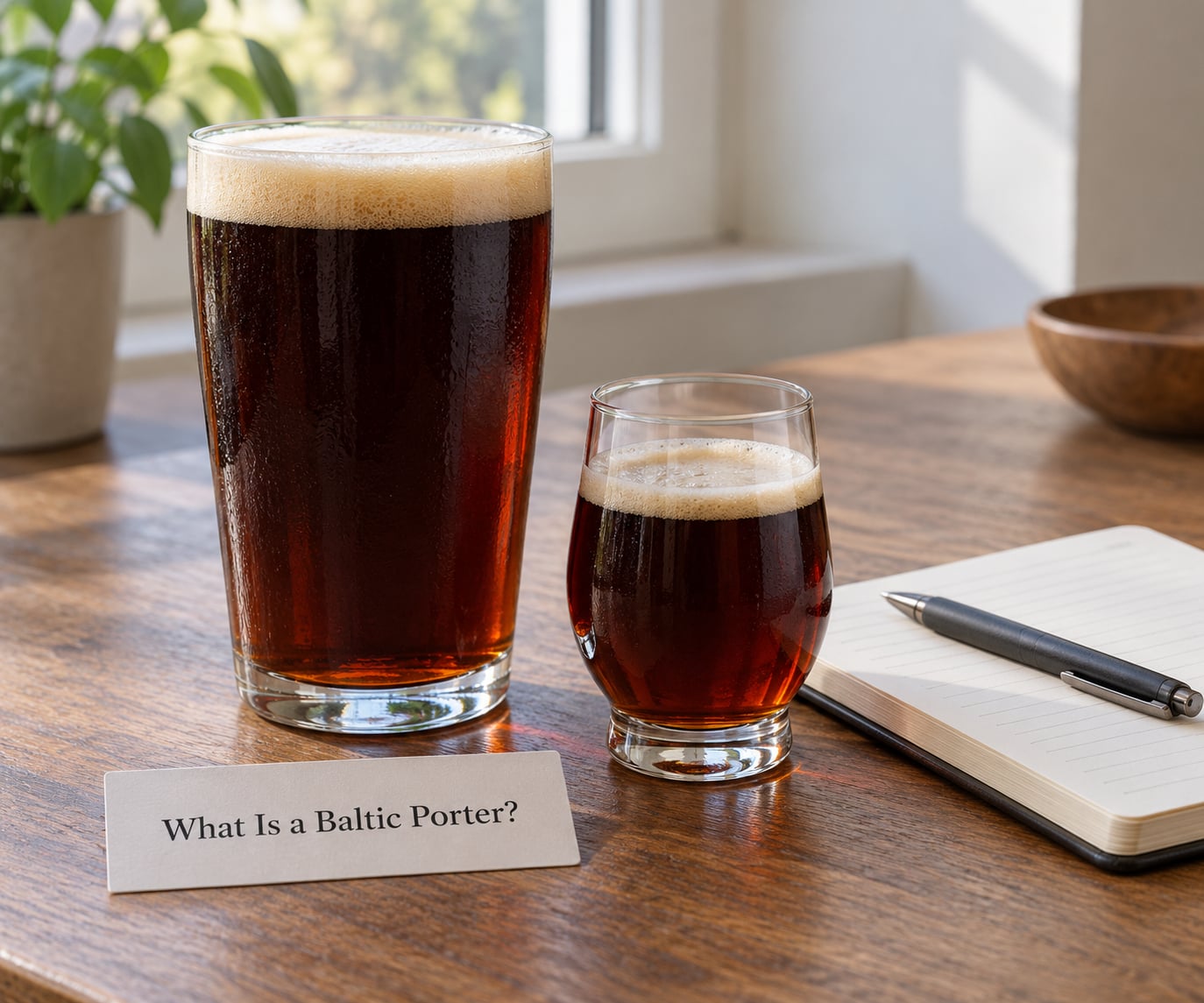
A Baltic porter is a strong, dark, smooth lager with a rich malt center and a restrained roast edge. The Beer Judge Certification Program lists it as style 9C under Strong European Beer, described in its 2021 guidelines as a strong, dark, malty beer with different interpretations within the Baltic region, smooth, warming and richly malty.
Three details do most of the work in that definition, and they are what separate this beer from every other dark beer on the shelf.
- It is a lager. It is fermented cool with bottom-fermenting lager yeast, then cold-conditioned. Not an ale in any sense.
- It is strong. 6.5% to 9.5% ABV, with a body that carries the alcohol instead of hiding it.
- It is malt-first. Caramel, toffee, molasses, licorice, dark chocolate and dried fruit sit in front. The hops are present and balancing, never the story.
Here are the BJCP 2021 vital statistics for the style, straight from the guidelines that every other reference page on this topic is ultimately paraphrasing.
| Specification | Baltic Porter (BJCP 2021, style 9C) |
|---|---|
| Alcohol by volume | 6.5% to 9.5% |
| Bitterness | 20 to 40 IBU |
| Color | 17 to 30 SRM, deep reddish-copper to opaque dark brown |
| Original gravity | 1.060 to 1.090 |
| Final gravity | 1.016 to 1.024 |
| Body | Medium to full, smooth |
| Carbonation | Medium to medium-low |
One more thing worth knowing, because it explains a lot of the confusion people run into: the name Baltic porter is recent. BJCP notes it has been used since the 1990s as an umbrella for a family of regional beers that do not agree with each other on much. Polish, Latvian, Lithuanian, Estonian, Finnish, Russian and Swedish breweries all made their own version of this dark strong lager for well over a century, and each guarded its own recipe.
So when someone tells you a Baltic porter tastes like nothing else they have had, they are usually not being strange. They are probably drinking a genuinely different beer than you would be.
Where Did Baltic Porter Come From?
The history runs in three beats, and the third one is the reason the beer exists.
Beer from England, shipped north
In the 1700s, English porters and the strong dark beers then called stout were exported across the North Sea to Russia and other northern markets. Russia was the big one. The style arrived in Riga, Tallinn, Vilnius and St Petersburg through Baltic ports, and drinkers there wanted it strong, dark and warming enough to matter through a northern winter.
The import pipeline breaks
That trade did not stay open. War and trade interruptions in the early 1800s cut off the English supply, and Baltic breweries had to make their own. This is the hinge of the whole story: a beer that was originally an English ale became, out of necessity, a locally made beer, and then a locally adapted one. What came out was a little lighter in body, a little smoother, and closer in spirit to a stout than to a London porter.
Fermentation moves from warm to cold
Through the mid-1800s, as lagering spread across Central and Northern Europe, Baltic breweries moved from warm ale fermentation to cold lager fermentation. That single change rewrote the beer. Clean fermentation took away the fruity, vinous edge of the ale version and replaced it with a smoother, rounder malt character. The Baltic porter that exists today is the beer that came out the other side of that switch.
This also answers a question that comes up a lot: why did British porter fade as a distinct style in its home market? Porter and stout were largely absorbed into the pale ale boom in London, so the style largely stopped being drunk as a standalone everyday beer. It did not stop being brewed. It moved east, took a lager yeast, and kept going while Britain forgot about it.
How Does Baltic Porter Taste?
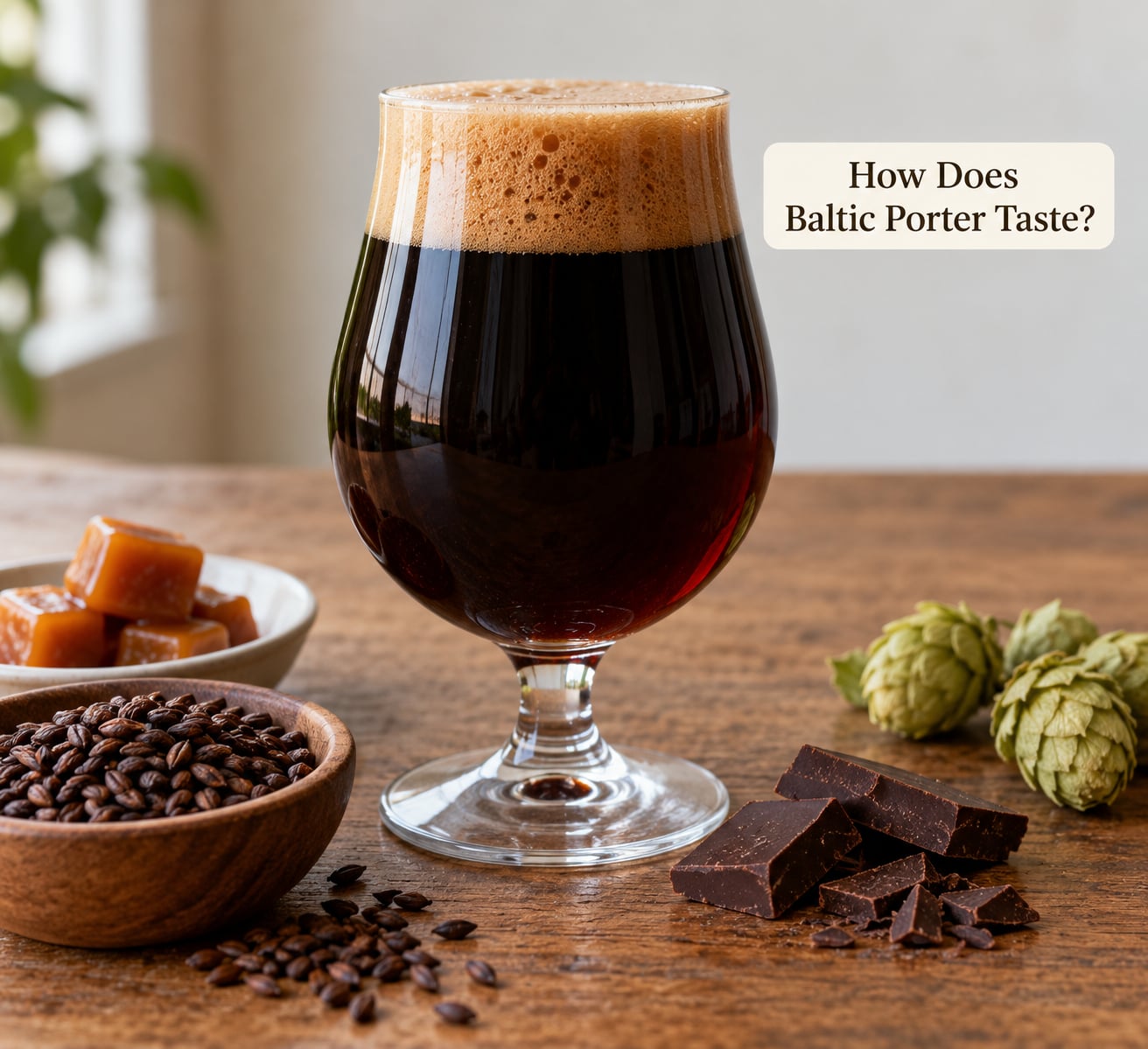
Expect richness first and roast second. People who order it expecting stout-level char are usually disappointed, and people who expect thin brown lager are usually surprised. Here is how it breaks down by attribute.
What Does a Baltic Porter Look Like?
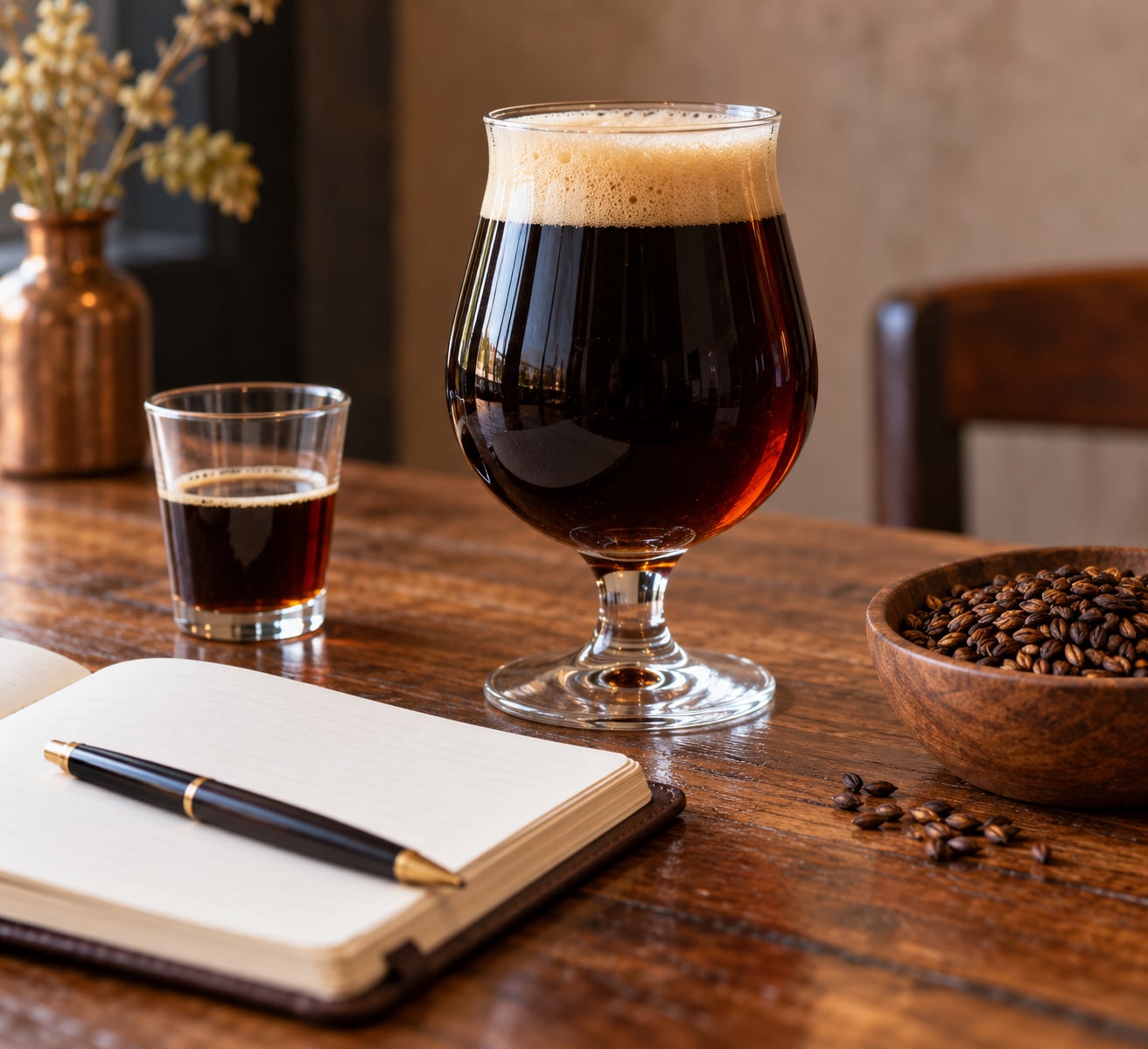
Deep reddish-copper through opaque dark brown, per the BJCP color range, usually with a tan to off-white head that leaves a lace on the glass. It should pour with noticeable body. A watery pour is a sign the beer did not ferment all the way out, which is one of the ways you can tell a bad example from a good one.
Aroma
Sweet malt dominates: caramel, toffee, bread crust, molasses, and a dark dried-fruit character that reads as prunes, raisins or plums. Depending on the brewery you may get licorice, dark chocolate or roast coffee underneath it. Low hop aroma is the norm, with noble hops like Saaz or Tettnang sometimes detectable as a faint herbal or spicy edge.
Flavor
The center is rich, sweet and malty. Caramel and toffee usually lead, then chocolate, then dried fruit. A vinous, Port-like quality shows up in stronger examples. The roast character sits deliberately below the malt, and BJCP is specific about this: roasted flavors should be present without burnt notes. Anything acrid or ashy is not the style.
Mouthfeel
Medium to full body, smooth, with well-aged alcohol warmth that arrives in the middle of the sip rather than as a burn. Carbonation is medium to medium-low, so the beer sits heavy on the palate. The finish is dryish and clean if it is well made.
Regional versions diverge more here than anywhere else. Some are sweet and almost syrupy, some are bone dry and coffee-driven, some are boozy and vinous. That spread is real and it is why drinkers who like the style often keep a mental shortlist of breweries rather than trusting the label.
What Makes a Baltic Porter Different From Other Porters?
The honest answer is that a Baltic porter shares its name with a style it does not belong to. English porter is a brown ale, top-fermented, normally 4% to 5.5% ABV, and much lighter and hoppier. Baltic porter is a dark lager that is stronger, darker and maltier. Same word on the label, different beer in the glass.
| Baltic Porter | English Porter | Russian Imperial Stout | Schwarzbier | Doppelbock | |
|---|---|---|---|---|---|
| Yeast | Lager (bottom-fermenting) | Ale (top-fermenting) | Ale (top-fermenting) | Lager | Lager |
| ABV | 6.5% to 9.5% | 4% to 5.5% | 8% to 12% | 5.2% to 6% | 7% to 13% |
| Roast intensity | Low to moderate | None to low | Low to moderate | Moderate to high | Very low |
| Body | Medium to full | Medium | Full | Medium | Full |
| Bitterness | 20 to 40 IBU | 25 to 55 IBU | 25 to 60 IBU | 20 to 30 IBU | 15 to 25 IBU |
| Signature note | Caramel and dried fruit | Nutty brown malt, earthy hops | Dark fruit, vinous, warming | Roasted bread crust | Bready, sweet, no roast |
BJCP sums the relationship up in a single sentence that is worth keeping in your head: a Baltic porter combines the body of a doppelbock, the malt character of an English porter, the roast of a Schwarzbier and the alcohol and fruitiness of an old ale, but is less roasted and usually less alcoholic than an imperial stout.
Baltic porter vs Russian imperial stout
These two get confused constantly because they are cousins. A Russian imperial stout is a top-fermented ale with the same dark malt intensity and similar strength range, but it carries more roast, more hop bitterness and more of that fruity, vinous character from ale yeast at temperature.
A Baltic porter is the lager version of the same idea: cleaner, smoother, less roasted, usually a touch less bitter, and finished with the crispness that long cold conditioning gives you. If you love Russian imperial stout you will probably like Baltic porter. If you want the roast bite of a stout you will find it thin, and you should reach for a Schwarzbier instead.
Which is stronger, porter or stout?
Stout, generally. Imperial stout and Russian imperial stout start where Baltic porter ends. Against an English porter the gap is stark, closer to double. Baltic porter sits deliberately in the middle, strong enough to feel warming and substantial but short of the dessert-beer territory that imperial stouts occupy.
How Strong Is a Baltic Porter?
The BJCP range is 6.5% to 9.5% ABV, which is wide, and the original gravity range of 1.060 to 1.090 explains why. There is room in the style for a drinkable strong lager and for something closer to a small-batch sipping beer.
The part that catches people out is not the number on the label, it is how the alcohol presents. The style is described as having well-aged alcohol warmth, and drinkers regularly talk about being caught out by it. Because the finish is dryish and the malt is heavy, the warmth shows up mid-sip and then fades, so the beer can read as lighter than it is. Two 9% Baltic porters is an evening, not a round.
Color tells you nothing at all about strength here. A near-opaque 6.5% version and a thin-looking 9.5% version both exist in the wild, which is why it is worth asking for the ABV rather than guessing from the pour.
Modern versions run higher than the historical ones. Barrel-aged and mixed-fermentation releases in particular tend to land well above the top of the BJCP range, and a few modern interpretations use English ale yeast or nitro to push in different directions. Those are legitimate and widely enjoyed, but they are extensions, not the base style.
How Is Baltic Porter Brewed?
You do not need a recipe to understand the style, but the brewing choices are what explain the flavor completely.
The grain bill
The base is a continental pale malt, usually Munich and often with Vienna for a bit more bread crust, layered under a debittered dark malt such as melanoidin or Caramunich. That debittered malt is the important choice. Ordinary roasted barley would push this beer into stout territory, and the style specifically asks you not to go there. Specialty malts that add caramel, toasted bread and a little coffee note work better than hard roast.
Hops and bitterness
Bitterness lands between 20 and 40 IBU, which is restrained for a beer this dark and strong, and that restraint is deliberate. Continental and noble hops do the work, with noble varieties like Saaz and Tettnang used often enough to give a faint herbal note behind the malt.
Cold fermentation and long lagering
Lager yeast ferments cool, commonly in the 50-55F range, then the beer cold-conditions for an extended period. That cold resting time is what smooths out the alcohol and lets the malt read as caramel and toffee instead of raw grain. Skim the lagering and you get something harsher and greener that falls apart next to a properly conditioned example.
Water matters more here than in pale lagers. A sulfate-forward profile pushes the perceived roast and dries the finish, which is useful if you are brewing a drier version; a balanced profile keeps it smooth. Getting it wrong is the quickest route to an astringent, drying beer.
How to spot a faulted example
Nobody lists bad Baltic porter on a tap list, but you will meet one eventually. A buttery or popcorn note means diacetyl, usually from a rushed fermentation or a contaminated culture. Hot apple and nail polish means fruity esters from warm fermentation. A hard, drying, tea-like astringency is usually over-attenuated or over-roasted grain. And burnt, acrid coffee is not the style, it is a fault no matter whose beer it is.
What Beer Styles Are Related to Baltic Porter?
Knowing the neighbors makes it much easier to order the right thing at a bar, because these are the styles people confuse it with most.
Dunkel and Schwarzbier
The dark German lagers. A dunkel is a dark bock, sweet, bready, low in hop aroma and medium strength. A Schwarzbier is the black lager, darker, roastier and drier, with the roasted bread crust note that Baltic porter deliberately pulls back from. If you want a dark lager that leans toward roast, this is the one.
Doppelbock and bock
Doppelbock is strong, dark, sweet and almost entirely malt with no roast at all. BJCP uses doppelbock as the body reference for Baltic porter, and they genuinely feel like family. A bock is the same idea at lower strength. Order these if you want sweetness without roast and without much bitterness.
Imperial stout and old ale
The ale-side relatives. Imperial stout brings the roast, the fruit and the higher alcohol. Old ale brings the vinous, aged quality that BJCP points to when it says Baltic porter carries the alcohol and fruitiness of an old ale. Baltic porter sits between them, lagered and cleaned up.
Strong dark lager
This is the family name rather than a single beer, but it is the honest way to describe the style at a bar when you are not sure what you are looking at. If the bartender says strong dark lager and it is dark, strong, malty and clean, you are probably in the right neighborhood.
On a tap list, BJCP 2021 names these commercial examples for the style: Aldaris Mežpils Porteris, Baltika #6, Devils Backbone Danzig, Okocim Mistrzowski Porter, Sinebrychoff Porter and Zywiec Porter. You will not find all of them easily in the US, and that is the other thing worth knowing about this style. It is genuinely scarce on tap lists, which is why people who like it tend to ask their favorite brewery to brew it or to keep an eye on bottle releases from the Baltic region.
How Should You Serve and Taste Baltic Porter?
Glass and temperature
A snifter or a tulip glass is right, and a nonic pint glass is perfectly fine. The goal is a glass that holds aroma and shows you the head, which is what a tulip or snifter does better than a straight pint.
Serve it cool, not cold. Around 50 to 55F is the range that works, which is barely cooler than a dark beer should feel in your hand. Too cold and you will miss the caramel and the dried fruit. Too warm and the alcohol pushes forward. Pour it, leave it a minute, and smell it before you drink.
Pairings
This is a food-friendly beer. It has enough body to hold up to heavy flavors and enough dryness on the finish to reset your palate.
- Roasted and smoked meats. Sausages, brisket, pork shoulder, anything with char on it.
- Smoked and aged cheeses. Gouda, smoked cheddar, a hard alpine. The salt and the roast meet the roast.
- Rich stews and sausages. Any braise with a dark sauce, goulash, chili, beef stew.
- Desserts. Chocolate cake, bread pudding, anything with molasses or dried fruit. This is the style people drink with dessert.
- Grilled or roasted vegetables. Eggplant, mushrooms, caramelized onions, and anything with balsamic.
- Cold-weather drinking. This is a winter and holiday beer by nature, not by marketing.
A simple tasting sequence
If you want to actually learn the style instead of just drinking it, do it in this order.
- Pour an example at 50-55F and smell it before sipping. Note whether you get caramel, chocolate, or fruit first.
- Sip slowly and separate the parts: malt center, roast level, bitterness, body. Score each one.
- Compare it against a Russian imperial stout from the same brewery if they make one. The roast and fruit gap becomes obvious immediately.
- Compare it against a Schwarzbier. The roast gap becomes obvious immediately there too.
- Then try a plain English porter. That is where most people discover they have been conflating two different beers for years.
Do not skip step five. It is the one that changes how you order at the bar.
Frequently Asked Questions
Is Baltic porter a lager or a porter?
It is a lager, entirely. Baltic porter is fermented cool with bottom-fermenting lager yeast and cold-conditioned after fermentation, which is the opposite of how an English porter is made. English porter is a brown ale fermented warm with top-fermenting yeast at around 4% to 5.5% ABV. Baltic porter is stronger, darker and maltier at 6.5% to 9.5% ABV. The shared name is a bit of a historical accident.
Is Baltic porter the same as a Russian imperial stout?
No, but they are close cousins. Both are strong, dark, malt-forward beers. A Russian imperial stout is a top-fermented ale with more roast, more bitterness and more fruity, vinous character, usually 8% to 12% ABV. A Baltic porter uses lager yeast, so it is cleaner and smoother with less roast and a dryish finish. Think of it as the lager-fermented version of the same idea.
Should Baltic porter taste sweet or roasted?
Sweet and malty first, roasted second, and never burnt. Caramel, toffee, molasses and dark dried fruit usually lead, with chocolate or coffee underneath and a light blackened bread crust character. The BJCP 2021 guidelines specifically ask for roasted flavors without burnt notes, which is the line between this style and a stout. Acrid, ashy, char-heavy flavors mean something went wrong, not that you found a different style.
How strong is a Baltic porter?
The BJCP 2021 guidelines put it at 6.5% to 9.5% ABV, which is a wide range for one style. The deceptive part is that well-aged alcohol warmth shows up mid-sip and fades, so it can read as lighter than it actually is. Modern barrel-aged and mixed-fermentation versions often land above that top figure. Check the label rather than guessing from the color, since the style has no consistent relationship between darkness and strength.
What food pairs well with Baltic porter?
Roasted and smoked meats are the strongest match, along with sausages, brisket and anything with char on it. Smoked or aged cheeses like gouda and smoked cheddar work well because the salt and roast reinforce each other. It also handles rich stews, caramelized vegetables and desserts such as chocolate cake or bread pudding, where the caramel and cocoa flavors double up. It is a natural winter and holiday beer.
Can I brew a Baltic porter at home?
Yes, though it is one of the harder lagers to get right. The usual approach is a Munich or Vienna base with a debittered dark malt such as melanoidin, continental or noble hops, and a clean lager strain pitched in the 50-55F range. Use a step mash for body and cold-condition it long. Rushing the fermentation or the lagering is the main reason homebrew attempts come out green and harsh instead of smooth and caramel-like.
A Baltic Porter Is a Strong, Flavorful Dark Lager
So what is a Baltic porter, in one line: a 6.5% to 9.5% ABV dark lager with a caramel and dark-fruit malt center, a restrained roast edge and a clean, dryish finish, built on lager yeast rather than ale yeast. If you take one thing away, take this: it is not a stout, it is not an English porter, and judging it against either one will mislead you.
Find one example to start with, ideally one of the BJCP commercial examples or a local brewery that actually makes the style. Pour it at 50-55F in a tulip or snifter, smell it before you sip, and score the malt, roast, bitterness and strength separately. Then put a Russian imperial stout and a Schwarzbier next to it. The differences stop being an argument and start being obvious.