A winter warmer beer is a strong, malt-forward seasonal beer, usually an English strong ale or a spiced Wassail-style ale, brewed to be enjoyed in cold weather. They generally land between 5.5% and 8% ABV, with flavors of caramel, toffee, dark fruit, and spices like cinnamon, nutmeg, ginger, and clove.
Here is the part most pages skip: winter warmer is not an official beer style. There is no BJCP style guideline for it, which means two breweries can put the same words on bottles that taste nothing alike. Knowing the traits that define the category helps you read any label.
Table of Contents
- What Is a Winter Warmer Beer?
- Where the term comes from
- What Makes a Beer Taste Like a Winter Warmer?
- A dark malt backbone
- Low hop bitterness
- Spice as a supporting actor
- Alcohol warmth in a winter warmer beer
- Body and carbonation
- Serving temperature
- Common Winter Warmer Beer Styles
- English strong ale
- American winter ale and holiday ale
- Spiced ale
- Stout and porter interpretations
- Barleywine and imperial stout
- Belgian-style dark ales
- How to Choose a Winter Warmer for Your Taste
- How to Serve and Pair a Winter Warmer
- Winter Warmer Beer and Homebrewing
- Frequently Asked Questions
- Is winter warmer an official beer style?
- What flavors are commonly found in a winter warmer beer?
- Should winter warmer beer be served cold or warm?
- Are winter warmers usually strong or high in alcohol?
- What is the difference between a winter ale and a barleywine?
- What food pairs well with winter warmer beer?
- A Cozy Pour Starts with Your Favorite Flavor
What Is a Winter Warmer Beer?
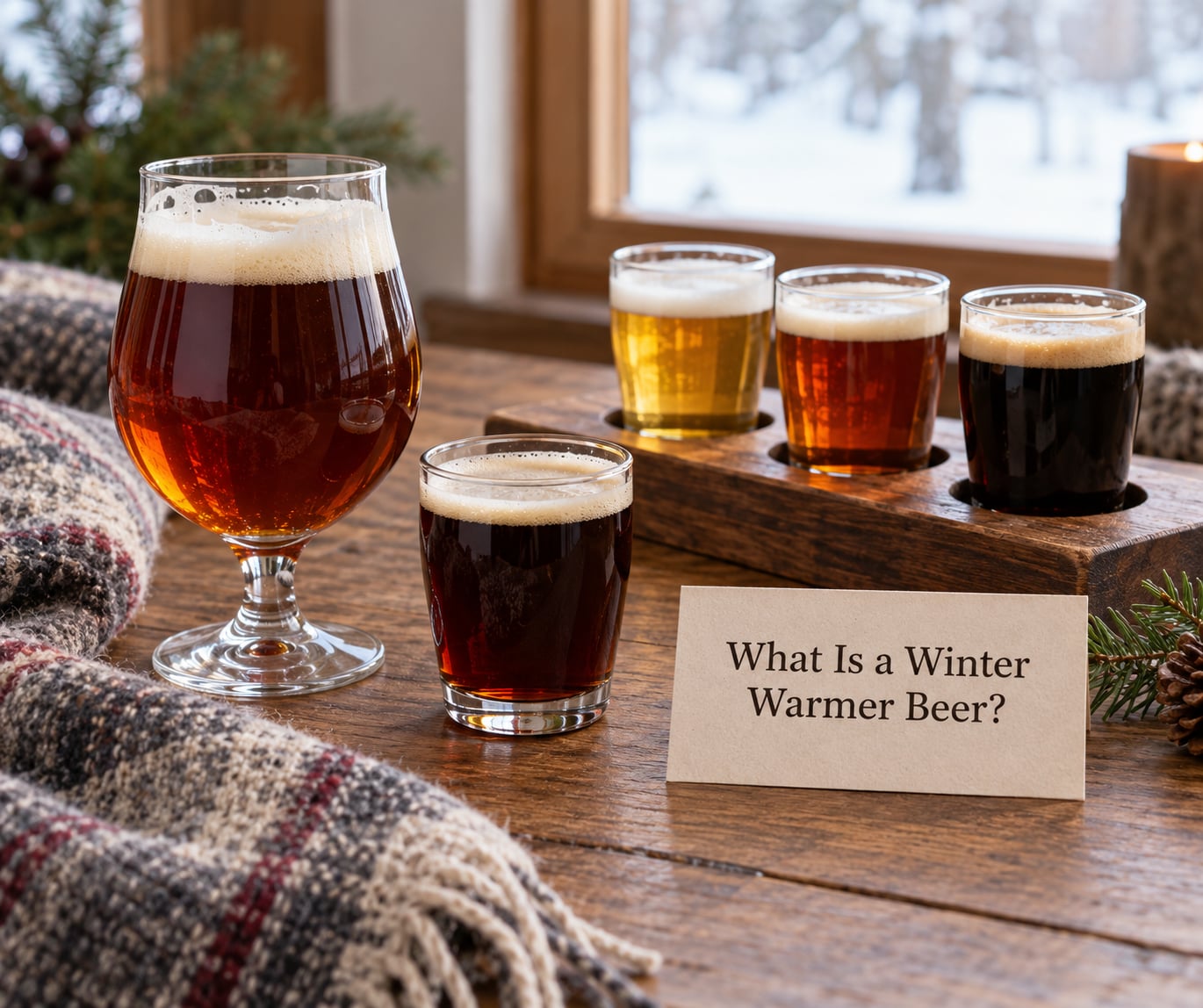
Winter warmer describes a flavor and serving idea more than a recipe. The label points to a beer brewed for the darkest months, usually strong enough to feel warming, dark enough to look right in a glass near a fire, and usually built on malt rather than hops.
The category has two main branches, and knowing which one you are drinking explains most of the surprise you get. One branch is the English strong ale: essentially a barleywine or old ale poured for winter, unspiced, all malt. The other is the Wassail branch, which starts from a lighter spiced ale and adds baking spices, and sometimes spruce tips, juniper, or citrus peel.
Anything can wear the name. A big American barleywine, an imperial stout with cinnamon, a brown ale with orange peel, and a spiced red ale in the holiday aisle have all been sold as winter warmers. That looseness frustrates people who want a precise definition, but it is also why the term stays useful: it tells you the intent, the season, and the general flavor direction, nothing more.
Winter warmers are seasonal releases. Most hit shelves in late October and run until the New Year, then disappear until the following autumn.
Where the term comes from
Beer was once stored and shipped unhopped, and warm ales were brewed through the cold part of the year partly because the hops available in winter were poor. Brewing logs from the seventeenth century already describe rich winter ales kept back for the season. The craft revival of the 1970s brought that idea back with stronger English ales, and modern breweries layered on the American habit of spicing a beer up for the holidays.
The word warmer, though, is misleading. It describes the alcohol warmth in the glass, not the temperature you serve it at.
What Makes a Beer Taste Like a Winter Warmer?
Most of the character comes from the malt bill and the alcohol level, not from the spice. Get those two right and a beer already reads as a winter warmer, with or without a cinnamon stick in the kettle.
A dark malt backbone
Caramel malts, crystal malt, and specialty malts such as Munich, chocolate malt, and roasted barley give the caramel, toffee, bread crust, and molasses flavors that dominate the category. Color runs from dark amber to brown, and a few push toward near-black.
Low hop bitterness
Winter warmers are brewed so the malt stays loud. Bitterness is usually present but mild, sitting underneath the caramel rather than cutting across it. If a holiday beer tastes sharp and resinous first, the hops are doing the talking, and that is not typical of the category.
Spice as a supporting actor
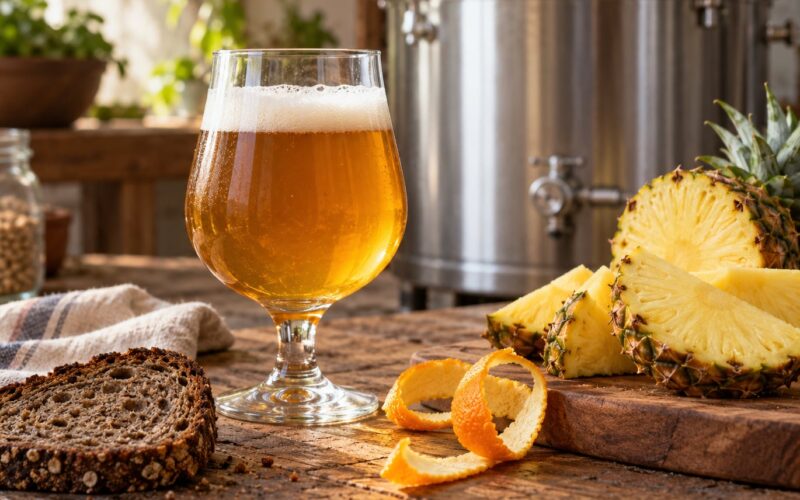
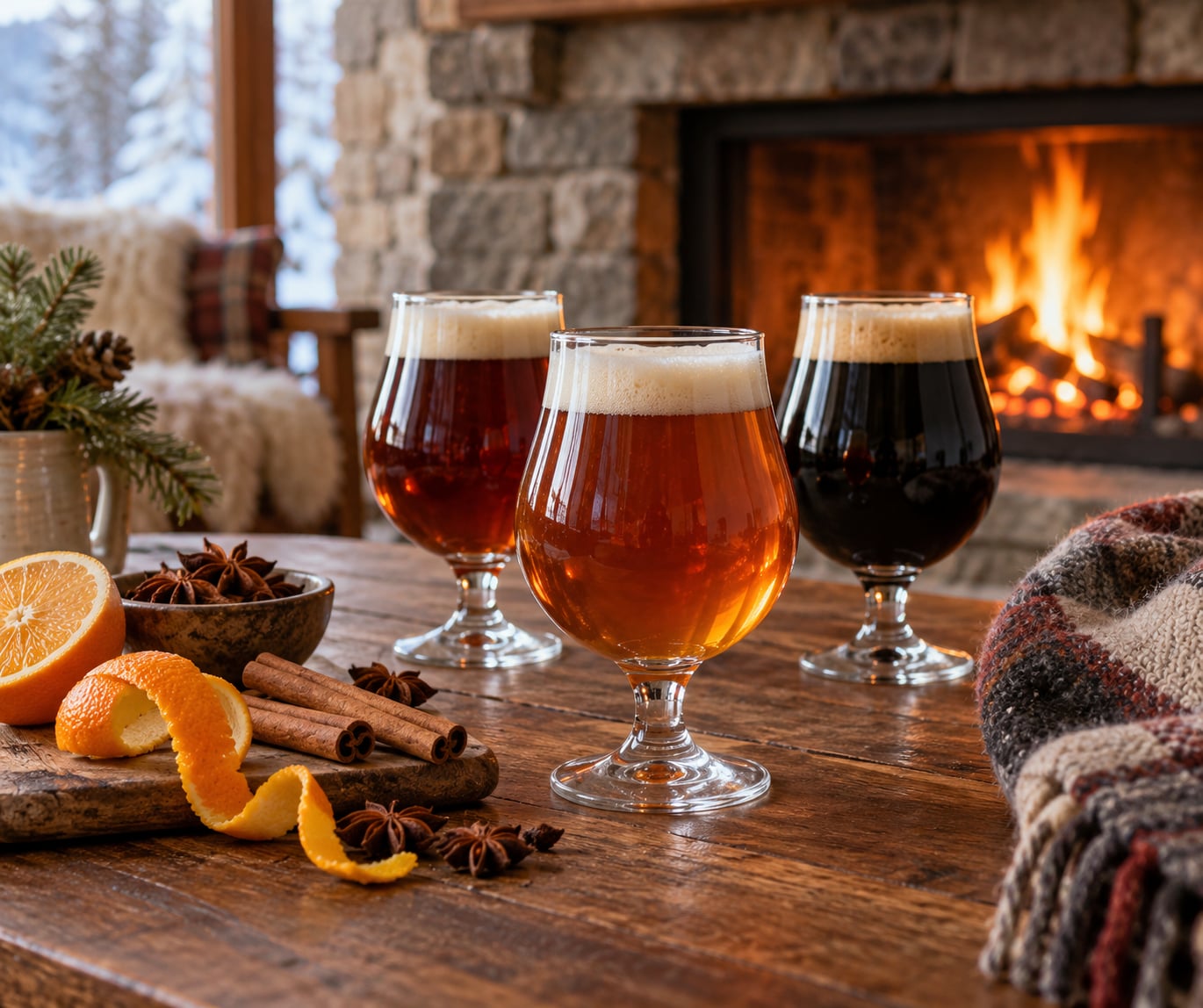
When spices appear, cinnamon, nutmeg, ginger, clove, vanilla, orange peel, and star anise are the usual ones. They are often added late in fermentation or after it, in a bag or a piece of a vanilla bean, so the beer tastes spiced rather than perfumed. When a spice overwhelms the malt, the beer reads as a novelty.
Alcohol warmth in a winter warmer beer
Alcohol is the warming element. It contributes a pleasant heat that spreads as the beer sits in the stomach, and it makes the malt flavors feel rounder and fuller. That warmth is a flavor sensation, not a serving temperature. Higher ABV examples like imperial stouts and barleywines can feel hot in a bad way, which is why balance matters.
Body and carbonation
Most winter warmers are medium to full bodied with moderate carbonation, so they coat the palate instead of skating off it. Very crisp, very fizzy versions exist, especially spiced lagers, but they read as refreshing rather than cozy.
Serving temperature
Temperature changes perception more than people expect. A beer drunk too cold suppresses the aroma and mutes the spice; a beer drunk hot releases too many volatiles at once and the hops turn sharp and unpleasant. The aromatic middle ground shows every flavor at once.
Common Winter Warmer Beer Styles
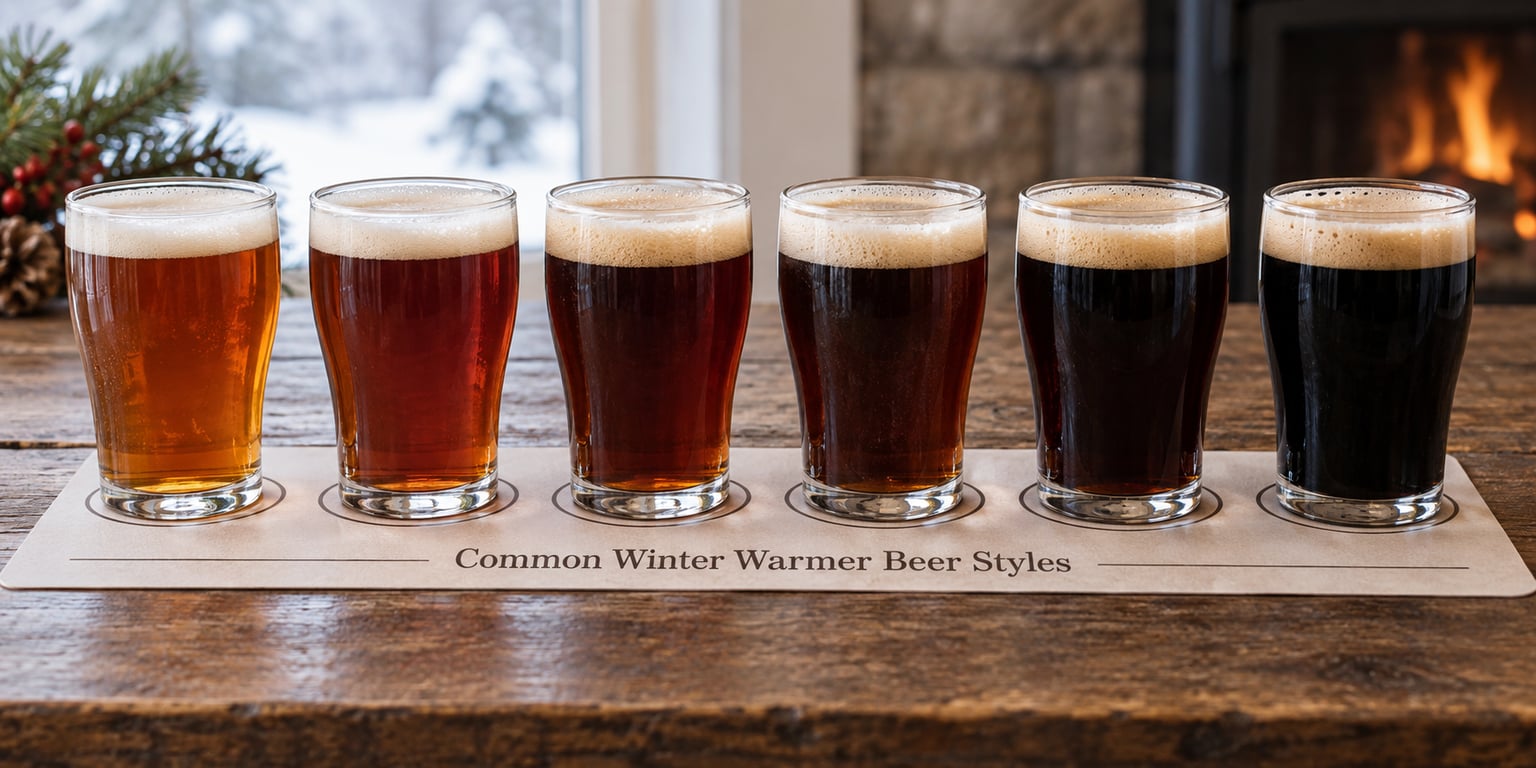
Because there is no official style, these are the families winter warmers get drafted into. Knowing the family tells you what to expect before you take the first sip.
English strong ale
This is the old-fashioned answer. Think barleywine or old ale: rich, dark, unspiced, and often north of 8% ABV. Flavors lean toward fig, raisin, toffee, and oak. This is the branch Samuel Smith built their Winter Welcome Ale on, and drinkers who like beer to taste purely of malt tend to land here.
American winter ale and holiday ale
Broadly malt-forward seasonal ales in the 5.5% to 7.5% range, with the holiday branding rather than a strict recipe. Great Lakes Christmas Ale is widely treated as the benchmark of this American version, and people who want the style without heavy spice look for the same malt structure with fewer additions.
Spiced ale
A lighter, often amber ale dosed with dried fruit, spices, and citrus peel, the American answer to British wassail. Harpoon Winter Warmer is the version most people have met first. These tend to be softer in body, which makes them an easy entry point for drinkers who find barleywines exhausting.
Stout and porter interpretations
Roasted barley and dark chocolate push the category into stout territory. Nutmeg and orange peel turn up often here, and barrel-aged versions exist for people who want cocoa, coffee, and vanilla on top of the spice.
Barleywine and imperial stout
The heavyweight end of the spectrum. These are sipping beers by volume and by clock, and the alcohol warmth is unmistakable. Southern Tier Old Man Winter, a barleywine brewed for the winter months, sits squarely in this group. Boulevard Nutcracker, on the other hand, is a much lighter holiday offering built on a lighter base, which is worth remembering when you assume the name means the same thing.
Belgian-style dark ales
Dark Belgian ales bring dried fruit, pepper, and a drier finish, sometimes brewed with spruce. They share the season but not the sweetness, so people who find holiday ales syrupy often do better here.
How to Choose a Winter Warmer for Your Taste
Pick the dominant flavor you actually enjoy first, then find the style that delivers it. Shoppers who ignore this end up with a bottle that is technically a winter warmer but not their kind of winter warmer.
If you like sweetness, look for a spiced ale or a caramel-heavy American holiday ale with obvious fruit and spice. Watch the finish rather than the aroma: a long syrupy tail is a sign you will want something drier.
If sweet beers make you tired, go unspiced. An English strong ale or a barrel-aged barleywine gives you all the warmth and none of the candy-shop aroma, and dry Belgian dark ales are another good escape route.
If you want smoke and roast, a stout or porter with coffee, cocoa, and toasted bread is the right shelf. Hold the spice expectations low, because roast and clove together get muddy fast.
If you want dark fruit, you want raisin, fig, and prune notes. That is barleywine and old ale territory, usually at the stronger end of the range.
If bitterness is a dealbreaker for you, stay away from anything aggressively hopped. Many holiday IPAs exist, and they are genuinely good, but they are spiced hop beers rather than winter warmers.
On strength, read the ABV before you buy. Most sit between 5.5% and 8%. Drinkers moderating their intake can still stay in the category by choosing the lighter spiced ales at the bottom of the range, or by pouring a smaller glass and taking the rest of the evening slowly.
How to Serve and Pair a Winter Warmer
Serve winter warmers cool to cellar temperature, not ice cold and definitely not hot. Straight from a fridge they taste flat and muted; heated up they taste sharp and alcoholic in an unpleasant way. A short rest outside the fridge before pouring fixes most of it.
Glassware matters less than people think, but shape does concentrate aroma. A tulip glass or a snifter works well for the strong, aromatic versions. A simple pint glass is completely fine for a spiced ale.
Pour smaller than you think you need. Barleywines and imperial stouts are built for a 6 to 8 ounce pour, and the difference between a 4 ounce taste and a 12 ounce serving is the difference between savoring and finishing.
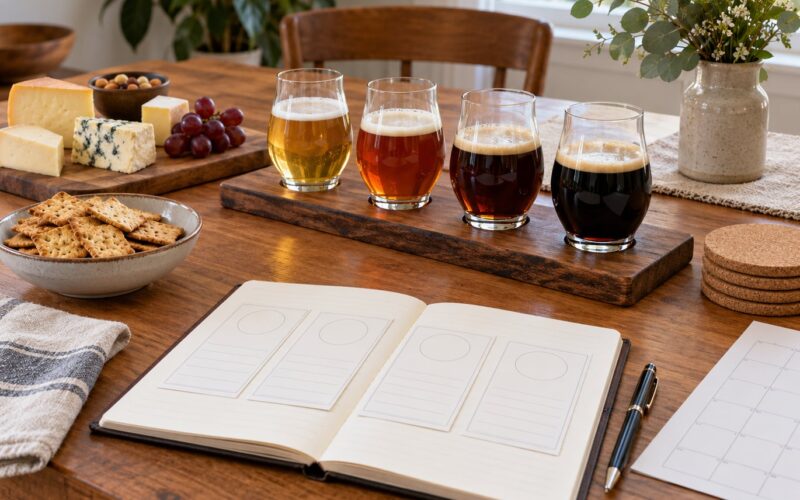
Taste strong examples in a sensible order. Start with the lightest spiced ales, move into porters and stouts, and save the barrel-aged barleywines for last. Sweetness flattens your palate after a few glasses, so ordering that way means the heavy beer still tastes like something at the end of the evening.
For food, match strength to strength. Hearty stews, braised short ribs, roast pork, and chili all handle the alcohol and roast in these beers well. Aged cheddar, Gouda, and smoked cheeses cut the sweetness nicely. A starchy side such as mashed potato or crusty bread keeps a rich beer from feeling too heavy.
For dessert pairings, the obvious move is a coffee-flavored stout with chocolate cake or pumpkin pie. For gingerbread cookies, pick a beer with real ginger in it rather than one that is merely cinnamon-forward.
One note on the word warm: beer left sitting warm for days loses its carbonation, and warmth speeds oxidation, which flattens aroma and turns a caramel note into wet cardboard. Drink it fresh from the bottle or a short time after opening.
Winter Warmer Beer and Homebrewing
Winter warmers are among the more approachable recipes to build at home because the flavor comes from a handful of obvious ingredients. Homebrewers tend to describe the style in wildly different ways, which is a fair signal of how loose the category really is.
The malt bill usually starts from a pale or amber base and leans heavily on crystal and caramel malts for body and sweetness. A small amount of roasted barley or chocolate malt darkens the color and adds coffee or cocoa, though it turns harsh fast if you overshoot. Biscuit and toasted malts are the safe way to add bread-crust character.
Spices go in late. Adding them at the boil drives off the volatile aromatics and leaves a background bitterness of cinnamon bark instead of cinnamon. Toss a cloth bag of spices into the wort as it cools, or add them during fermentation, then pull the bag before packaging.
Fermentation temperature decides the character. A clean English ale strain run cool gives a smooth, sweet, fruity beer. Running warm pushes esters toward pepper and fruit, which suits a Belgian-influenced version and turns a plain ale strange. Conditioning time matters as much as fermentation time; a big ale usually needs several months before the edges settle.
Carbonation should be moderate rather than high, since the body is carrying the beer. Scale a proven recipe rather than improvising, and if you add strength to a batch, remember that extra alcohol raises both the warmth and the risk of a rough edge that takes longer to fade.
Frequently Asked Questions
Is winter warmer an official beer style?
No. Winter warmer is an unofficial seasonal category, and there is no BJCP style guideline for it. The BJCP style guide does cover related official styles such as English barleywine, old ale, and specialty ale. In practice winter warmer covers strong malt-forward ales brewed for winter, usually with optional spices. That is why two beers with the same label can taste very different.
What flavors are commonly found in a winter warmer beer?
Malt leads the list: caramel, toffee, bread crust, molasses, and dark fruit such as raisin and fig. Many versions add baking spices, typically cinnamon, nutmeg, ginger, clove, and vanilla, sometimes with orange peel, spruce tips, or juniper. Roast-forward versions bring coffee, cocoa, and toasted grain. The malt should still be the loudest thing in the glass.
Should winter warmer beer be served cold or warm?
Serve it cool, around 45 to 55 degrees Fahrenheit, which is cellar temperature rather than fridge temperature. Too cold mutes the aroma and hides the spice. Warm beer, by contrast, pushes volatiles out fast and makes hops taste harsh, which is why drinkers often say beer tastes bad once it gets warm. Let it sit out of the fridge for 15 minutes before pouring.
Are winter warmers usually strong or high in alcohol?
Most land between 5.5% and 8% ABV, with barleywines and imperial stouts reaching higher. The alcohol is part of the warming effect, which is the source of the name. If you want to stay lower in the range, choose spiced ales and lighter holiday ales rather than the strong English styles, and pour a smaller glass.
What is the difference between a winter ale and a barleywine?
A winter ale is a seasonal, often spiced beer that can sit anywhere from medium strength to strong. A barleywine is an official style defined by a very high original gravity, usually well above 10% ABV, with a full body and concentrated malt and alcohol warmth. A barleywine can be brewed as a winter warmer, but the term winter ale is much broader and covers lighter, sweeter, spiced versions.
What food pairs well with winter warmer beer?
Match the strength of the beer to the strength of the food. Braised meats, roast pork, chili, and hearty stews work with strong versions. Aged cheddar and smoked cheese cut through sweetness. Coffee-flavored stouts pair with chocolate cake and pumpkin pie, and beers with real ginger in them pair well with gingerbread cookies. Serve dessert at the end of the meal rather than with the main course.
A Cozy Pour Starts with Your Favorite Flavor
Start with one decision: pick the dominant flavor you actually enjoy, then choose the style that delivers it. Sweet and spice-forward means a spiced holiday ale. Pure malt warmth with no candy notes means an English strong ale. Roast and coffee mean a stout or porter.
Look for a dark malt backbone, mild bitterness, and a clear malt flavor under any spice. Whatever you choose, serve it cool rather than hot, pour it smaller than feels right, and drink it fresh.