Some beers sell out because the brewery made a few hundred of them and a few hundred people showed up. It is rarely a demand accident.
I have watched a brewery announce a Saturday drop on a Tuesday and have the whole run gone before the first person reaches the parking lot. The other half of the story is less romantic: a tight supply chain, a distribution layer most drinkers never see, and release rules designed by the brewery on purpose.
Table of Contents
- Why Some Beers Sell Out Instantly?
- Limited Production and Small Batch Sizes
- Fan Hype and Brewery Reputation
- Scarcity, Allocations, and Release Tactics
- Freshness and Release-Day Timing
- Concentrated Local Demand
- How Beer Community Behavior Fuels a Sellout
- How Hype Creates a Beer Rush
- What Does a Sellout Tell You About the Beer?
- Frequently Asked Questions
- What does it mean when a beer sells out instantly?
- Does a beer selling out mean it is better than other beers?
- Why do breweries limit the amount of beer they release?
- How can I find limited craft beer releases?
- Why does a beer sell out in one city but stay available elsewhere?
- Is buying beer to resell a good idea?
- Conclusion: Start With the Release Details
Why Some Beers Sell Out Instantly?
Some beers sell out instantly because breweries make them in deliberately small batches, then split a limited run between the taproom, a handful of distributors, and a few bottle shops. Add a brewery with a strong reputation, a release calendar people watch, and per-customer purchase limits, and the supply is gone in an afternoon.
- The batch is small — often a few hundred twelve-ounce bottles, split across several states
- Only part of the run leaves the brewery; the rest is poured in the taproom
- Three-tier distribution means your bottle shop may get three cases, not three pallets
- The brewery knows its fans and caps production at what those fans will buy
- A brewer with a track record lowers the hesitation to buy on sight
- Release-day timing piles a weekend’s worth of demand onto one morning
- Purchase limits, lotteries and resale chatter concentrate every remaining bottle
The useful thing to know is that a sellout is a supply signal. It tells you the run was small and the interest was real. It does not tell you the beer is the best thing you will drink this year.
Limited Production and Small Batch Sizes
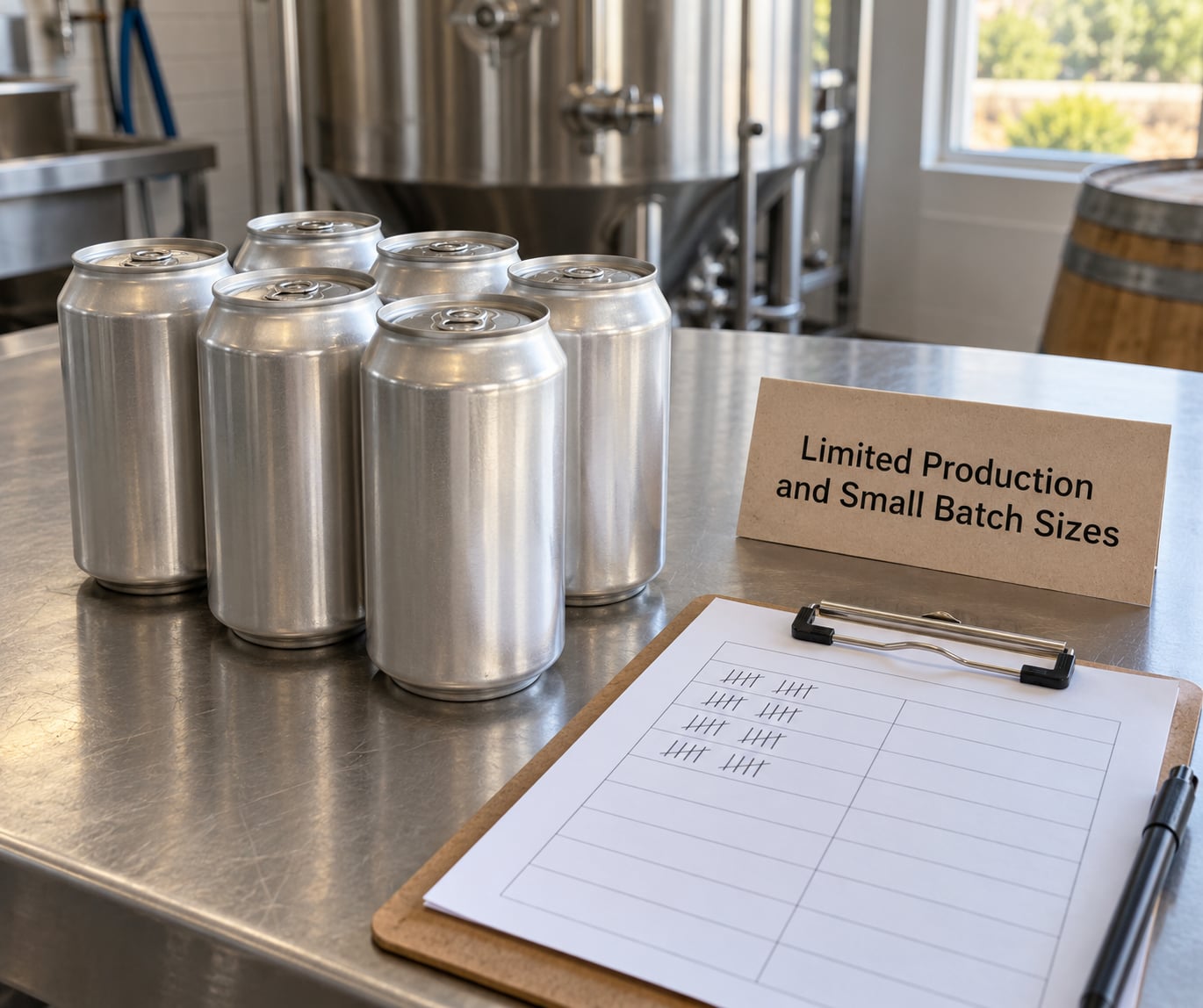
Start with the arithmetic, because it explains most sellouts on its own. A single brewery barrel holds 31 gallons. Drawn off into twelve-ounce bottles, that is roughly 330 bottles per barrel, or about 26 cases.
A brewery brewing two barrels for a specialty release is talking about 660 bottles. If that run goes to one distributor in a market of 100,000 people, each bottle shop receiving a single case gets 24 bottles. At one bottle per customer, one case is gone in 24 transactions.
That is the whole game. A number that looks impressive on a brewery’s website is tiny once it is divided by states, distributors, accounts and purchase limits.
Small batch sizes come from real constraints, not just marketing. Barrel-aged and wood-aged beers need months or years of conditioning, so the size is set by the barrel count a brewer owns. Wild and sour beers blend the contents of barrels rather than mixing a consistent recipe, which makes each run different and hard to repeat.
Equipment sets limits too. A brewery with one packaging line and a Friday production window cannot put out three times that volume just because demand spiked. And hop-forward and high-alcohol beers often get one batch a year because the recipe needs a specific harvest or a specific barrel.
Fan Hype and Brewery Reputation
A brewery with a track record sells out faster than an identical beer from a name nobody knows. People buy on the brewery’s past performance, because past performance is the only evidence they have.
Cigar City’s Hunahpu’s Day is the clearest example. It is an annual imperial stout, and demand for it reliably exceeds what most breweries can produce. When a beer draws that level of interest without explanation, a brewer can predict the sellout and plan around it rather than fight it.
There is a real difference between earned attention and manufactured attention. Earned attention comes from a brewery that has shipped a good beer consistently for years. Manufactured attention comes from unannounced drops, cryptic countdown graphics and one-bottle-per-customer rules that create panic rather than demand.
Both look identical on release day: a line, a countdown, an empty shelf. The difference shows up afterward, in how drinkers describe the beer and whether the brewery has other people still buying its year-round beers six months later.
Scarcity, Allocations, and Release Tactics
This is the part most drinkers never see. Under the three-tier system, a beer legally passes from the brewery to a wholesaler to a retailer before you buy it. Every hop is a decision point where volume can shrink, and distributors add a markup of roughly 30 to 35 percent on the way.
When a brewery sends a limited release into that system, allocation becomes the real limit. One common rule of thumb, reported by Sierra Nevada, is that a market which buys about 10 percent of a brewery’s year-round volume gets about 10 percent of the special release. The rest stays closer to the brewery, where demand is dense and immediate.
The result is lopsided. On r/beer, drinkers described a distributor receiving a three-case allocation and capping customers at one bottle, so about 36 people could absorb everything. A national run can sell out while the beer is still sitting on a shelf somewhere the buzz never reached.
Release tactics amplify whatever supply exists:
- Purchase limits. One per customer slows a rush and spreads beer across more fans. Buyers accept a posted limit; they do not accept a hidden one.
- Lotteries. Random selection beats a queue in fairness, and it removes the incentive to camp outside.
- Pre-sales. Online sales pull the rush forward into a window, then leave release day sample-only. Bottle Logic Stasis runs this way, pre-sold through Eventbrite with no bottles to take home on the day.
- Staggered drops. Separate dates by region or by account type so no single morning absorbs the whole run.
- Queues and apps. Sixpoint built an app so customers could skip lining up entirely and just get a pickup window.
Where the bottles actually go matters as much as how many exist:
| Destination | What it typically gets | How fast it goes |
|---|---|---|
| Brewery taproom | The largest single share of a small run, often poured on draft only | Minutes, on a busy Saturday |
| Distributor accounts | A few cases each, split further among the accounts they serve | Hours to a few days |
| Off-premise bottle shop | Whatever the distributor chose to send, capped per customer | Often same day |
| Bar or restaurant pour | A limited keg or a few bottles under a hand-sell policy | Across the service, not the whole stock |
That last row is the piece people get wrong. A bar will happily limit you to a pint or two of a scarce beer so that forty people get to taste it. A liquor store has no such brake, so two customers walking in with intention can empty a shop’s allocation before lunch.
Freshness and Release-Day Timing
Some styles are worth chasing on the day they land and not much later. Hop-forward and hazy beers turn quickly once they leave the cold chain, and beer drinkers know it.
That expectation concentrates demand. If a beer is only fresh for a few weeks, waiting has a cost, so people show up now. Friday also has a cultural pull that a Tuesday does not, and holiday weekends put more people in bars with money and free time.
Tap takeovers add to it. When a brewer pours a limited beer at a bar that already has an event planned, the audience is assembled and waiting rather than scattered. Two breweries dropping beer on the same afternoon splits the crowd; one brewery on a festival weekend gets the whole thing.
Local availability ends up mattering more than online fame. If the beer was never distributed outside your city, global chatter does not help you, and if it was never sent to a distributor at all, no clever strategy gets you a bottle.
Concentrated Local Demand
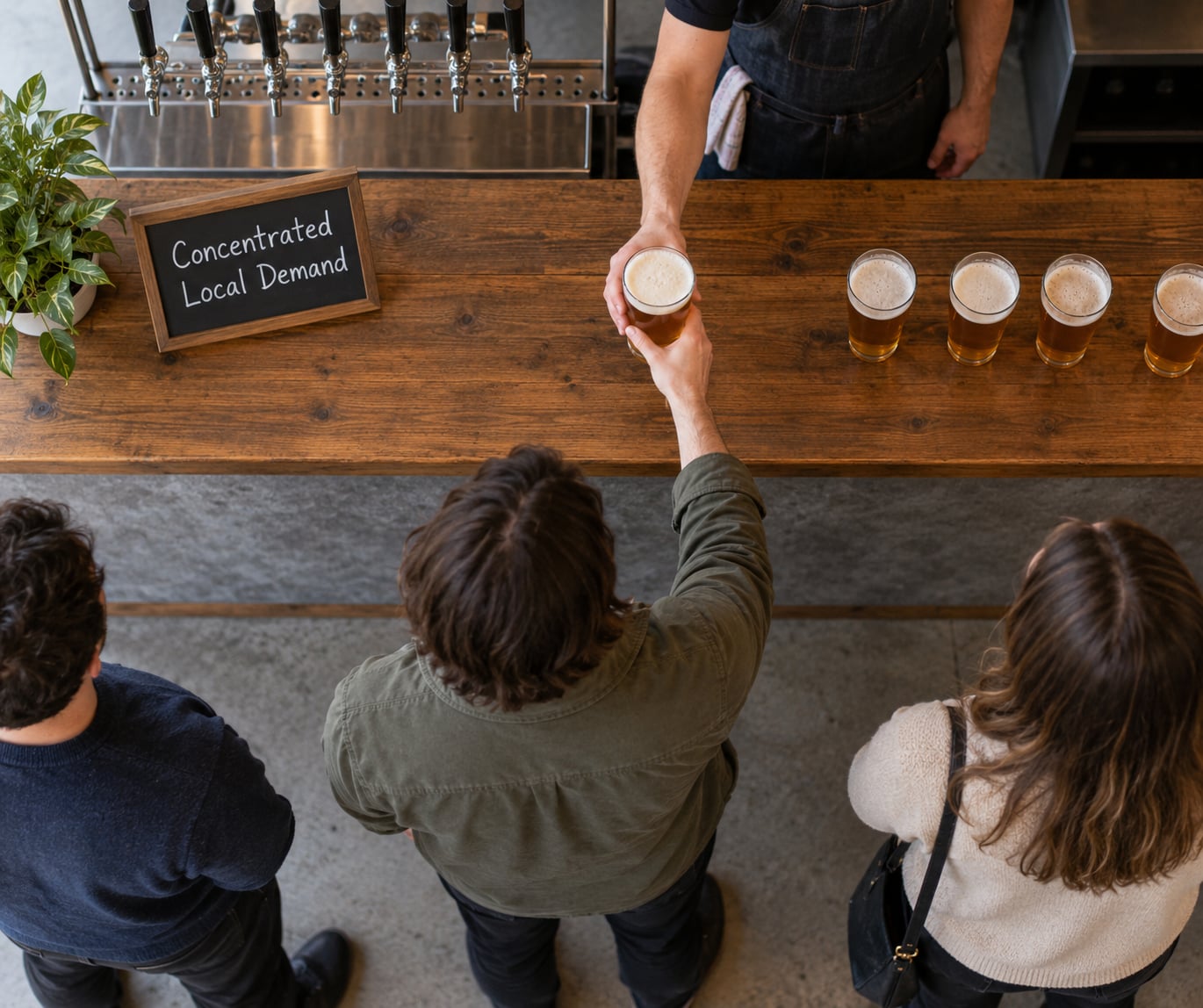
A beer can be gone by noon in one market and sitting on a shelf forty miles away. That is not a contradiction. It usually means the beer was distributed locally, and the people who could reach it outnumbered the people who could not.
Compare three cases. A taproom-only release is available to whoever shows up that Saturday, and local regulars know the door time. A regional release travels to a distributor who knows every account in the territory. A widely distributed beer reaches dozens of markets, and even if each one sells through, no single bottle shop runs out quickly.
Washington DC makes this easy to see. DC Brau has historically sold roughly 60 barrels a week to about 100 accounts, all inside the District. When a brewery’s volume is that concentrated and that local, a single well-known release can clear a room in one afternoon, because the pool of interested drinkers is small and dense.
Distribution being local also explains why the same beer feels different two states over. A beer whispered about in one market may be completely unremarkable three states away, because nobody there has a reason to care.
How Beer Community Behavior Fuels a Sellout
Community is the multiplier on everything above it. Group chats, local beer clubs and release calendars turn individual interest into coordinated action, and coordination is what empties a shelf.
Most of that coordination is just information. A brewery posts a date, a shop posts a reminder, and a dozen people forward it. Notification alerts mean nobody has to be awake at 8 a.m. on a Wednesday for a Thursday drop. The information problem mostly solved itself, and that alone changed how fast releases clear.
The second part is social proof. When a beer is visibly hard to get, wanting it goes up, not down. Friends buying a spare bottle for each other multiplies demand by the size of the group, and collectors who intend to trade rather than drink add another layer on top.
Fairness matters more than speed to most people. Readers on r/beer were blunt that a visible rule, even a strict one, beats a lucky position in a queue. Posted limits, posted allocation and clear announcements are what people ask for.
How Hype Creates a Beer Rush
The sequence is predictable once you have seen it twice. A brewer posts a teaser with no date, the guessing starts, and attention builds for weeks. A release date appears and a pre-sale opens, so the easy purchases happen early and the remainder feels urgent.
On release day the line forms before the doors open, purchase limits slow the pace, and the visible countdown of remaining stock pushes people who were indifferent into buying. Then the resale and trade conversation starts, which advertises the beer to people who had not heard of it, and those people start looking for the next one.
That is the whole loop behind why some beers sell out instantly. Teaser builds attention, small supply narrows the window, scarcity creates urgency, and the post-sellout chatter recruits the next round of buyers.
None of this is fake, but it is also not a quality signal. Enthusiasm spreads just as efficiently as reputation, and a beer can be talked about for years without anyone describing what it tastes like.
What Does a Sellout Tell You About the Beer?
A sellout tells you the supply was small and the interest was real. That is genuinely useful information, and it is not the same as knowing the beer is good.
The skepticism has a fair basis. Sellers control batch size, release timing, purchase limits and how much of the run goes to distributors. That is a lot of levers, and a brewery pulling all of them is staging the outcome. On r/CraftBeer, drinkers were openly cynical when acquired breweries kept announcing annual barrel-aged releases, reading the scarcity as a corporate move rather than a brewing constraint.
A simple way to tell the difference: real scarcity comes with information. The brewery explains the batch size, the barrel count and why the beer will not return. Manufactured scarcity comes with rules but never with reasons.
Before chasing a beer, check four things:
- Batch size. If the brewery publishes a barrel or case count, the scarcity is measurable.
- Distribution. Find out whether it is national, regional or taproom-only before you plan a trip.
- Release rules. A posted limit, lottery date or pre-sale window tells you how to get one.
- Independent notes. Read tasting notes from people with no stake in the resale, and ignore the “whale” label entirely.
Styles differ, too. Imperial stouts, barrel-aged beers and wild or sour releases sell out on reputation and cellaring demand. Hazy IPAs cooled off once they became easy to find. A well-made pilsner from a regional brewery may sell out of a single taproom for weeks without anyone outside town hearing about it.
If you miss a drop, wait. Breweries that repeat a release usually give you a second chance, and the ones that never repeat anything are the ones where the batch size explained the whole thing from the start.
Frequently Asked Questions
What does it mean when a beer sells out instantly?
It usually means the run was small and demand was real at the same time. Breweries release specialty batches in sizes set by barrel count, aging time and packaging capacity, then split that run between the taproom and a handful of distributors. When a few hundred bottles meet a few hundred buyers, the beer is gone the same morning. A sellout is a supply signal, not a flavor verdict.
Does a beer selling out mean it is better than other beers?
No. A sellout reflects batch size, allocation, release timing and the brewer’s reputation, and breweries control all four. What you can say is that people with an established record keep buying. What you cannot say is that the beer is objectively better, because the people who loved it mostly bought one bottle and never wrote anything down.
Why do breweries limit the amount of beer they release?
Sometimes the limit is physical. Barrel-aged and wood-aged beer needs months or conditioning time, so the barrel count sets the size. Other times it is commercial: a small run sells out fully, which keeps every bottle at the full price and builds demand for the next one. Breweries also carry fixed costs on taproom staff and equipment, so a small release protects steady taproom sales.
How can I find limited craft beer releases?
Follow the brewery’s own channels first, since distributors and shops get release dates directly from the brewery. Then watch the taproom and shop accounts that serve your area, and turn on notifications for those specific posts rather than general beer news. Release calendars are useful only for beers with announced dates, and the best releases are often the ones with no date at all.
Why does a beer sell out in one city but stay available elsewhere?
Because most limited releases are regional or local, not national. Under the three-tier system the beer passes brewery to wholesaler to retailer, and each distributor decides which accounts get how many cases. A market buying about 10 percent of a brewery’s year-round volume might receive about 10 percent of a special release, so the interesting half stays close to the brewery.
Is buying beer to resell a good idea?
It depends on what you do with it. Trading for beers you could not get locally is a normal part of collecting and can get a regional beer into cities it never shipped to. Reselling to people standing in line at the same brewery is a different thing, and drinkers on r/beer described it as locking out the locals who supported the brewery. Posting the source and price keeps you on the right side of it.
Conclusion: Start With the Release Details
Why some beers sell out instantly comes down to four things: a small run, a name people already trust, an access point most people cannot reach, and a crowd ready on the same morning. None of those is a flavor claim.
Before you queue, check the batch size, where it is distributed, what the purchase rules are, and what independent drinkers actually said about it. That takes ten minutes and tells you more than any sell-out sticker.
This guide was written for 2026 release season. Brewery plans change, so confirm dates directly with the brewery or your local shop before making plans around one.