Mexican lager explained in one line: it is a light-bodied, crisp, dry-finishing lager built on pale malt with corn, rice or another adjunct, descended from the Vienna-style beers that German and Austrian brewers built in Mexico during the nineteenth century. What sits behind that label is not a single recipe but a family of beers, and the distance between a beach cooler bottle and a medal-winning craft version is enormous.
This guide covers what the style actually is, how it tastes, how it is brewed, and how to pick a bottle when several are in front of you. It also clears up two myths that do more damage than most: that lime and salt are a Mexican tradition, and that every beer sold with a Mexican name is brewed in Mexico.
Table of Contents
- What Is Mexican Lager?
- Is Mexican lager a beer style or a marketing category?
- Where the style came from
- Mexican Lager Flavor and Characteristics
- What it tastes like
- Mouthfeel and strength
- Which traits are common and which are the brewer’s choice
- How Mexican Lager Differs From Other Lager Styles
- How Mexican Lager Is Brewed
- The grain bill
- Hops
- Yeast and temperature
- Lagering, filtration and carbonation
- Mexican Lager vs. Other Popular Beers
- Why Some Mexican Lagers Taste Different
- Brewery and geography
- Malt and adjunct choices
- Yeast, water and fermentation
- Filtration, carbonation and freshness
- The skunky question
- Lime and salt
- How to Taste and Serve Mexican Lager
- A simple tasting sequence
- How to serve it
- Pairings that work
- Spotting a flawed bottle
- Frequently Asked Questions
- What does Mexican lager taste like?
- Is Mexican lager the same as a pilsner?
- Why is Mexican lager so light and crisp?
- Does Mexican lager contain corn?
- Is Mexican lager always a Mexican beer?
- What food pairs well with Mexican lager?
- Conclusion
What Is Mexican Lager?
Mexican lager is a light-bodied, crisp, dry-finishing lager made from pale barley malt with a starch adjunct such as corn or rice, fermented cool with lager yeast and conditioned cold. It usually lands between 4.5% and 5.5% ABV with roughly 10 to 20 IBU of bitterness, golden to amber in color, and it was created by nineteenth-century German and Austrian immigrant brewers working in Mexico.
That definition covers the family, not every bottle. Some brewers lean on corn for a light body and a faint corny sweetness. Others use rice for extra crispness. A few, including well-known craft breweries, deliberately brew with no adjunct at all and let Vienna and Munich malts carry the flavor.
Is Mexican lager a beer style or a marketing category?
Both, honestly. American competition guidelines group most of it under International Pale Lager, which captures the light body, low bitterness and adjunct-forward grain bill. Mexican brewers use their own vocabulary, and the style ranges from pale and honeyed through amber and toasted all the way to dark.
The name also gets stretched in marketing. Modelo Especial, Corona, Dos Equis, Victoria, Pacifico, Tecate, Bohemia, Carta Blanca, Sol and Negra Modelo are all widely recognized internationally. Their recipes differ from each other, and several are brewed outside Mexico for export markets.
Where the style came from
Mexico had fermented drinks long before lager arrived, most famously pulque made from agave sap. Attempts to grow European barley and wheat in the highlands largely failed, and brewed beer remained mostly an import until the mid-1800s.
German, Austrian and Swiss immigrants brought lager yeast, malt kilning know-how and copper-clad fermentation vessels with them. Breweries founded in Toluca and then Monterrey in the 1890s built a domestic industry on the Vienna lager model, largely displacing pulque as the everyday fermented drink. Brand stories about an Austrian archduke single-handedly inventing the style have been thoroughly debunked by researchers; several immigrant brewers were already at work before any royal involvement.
Manufacturing scale followed quickly, and so did export. By the 2020s Mexican-style lager had become the fastest-growing beer category in the United States, and Modelo Especial now sits at the top of the sales charts there.
Mexican Lager Flavor and Characteristics
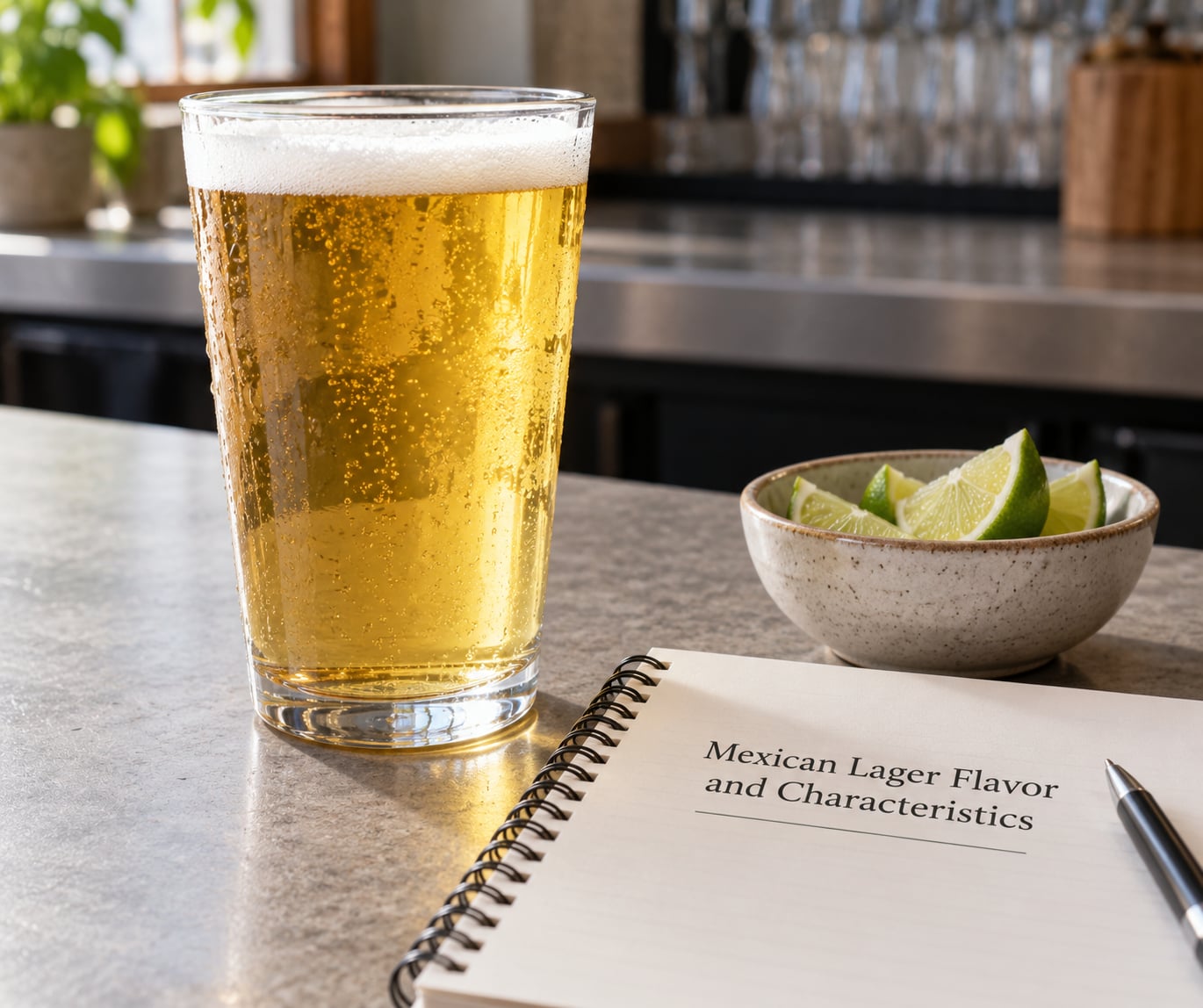
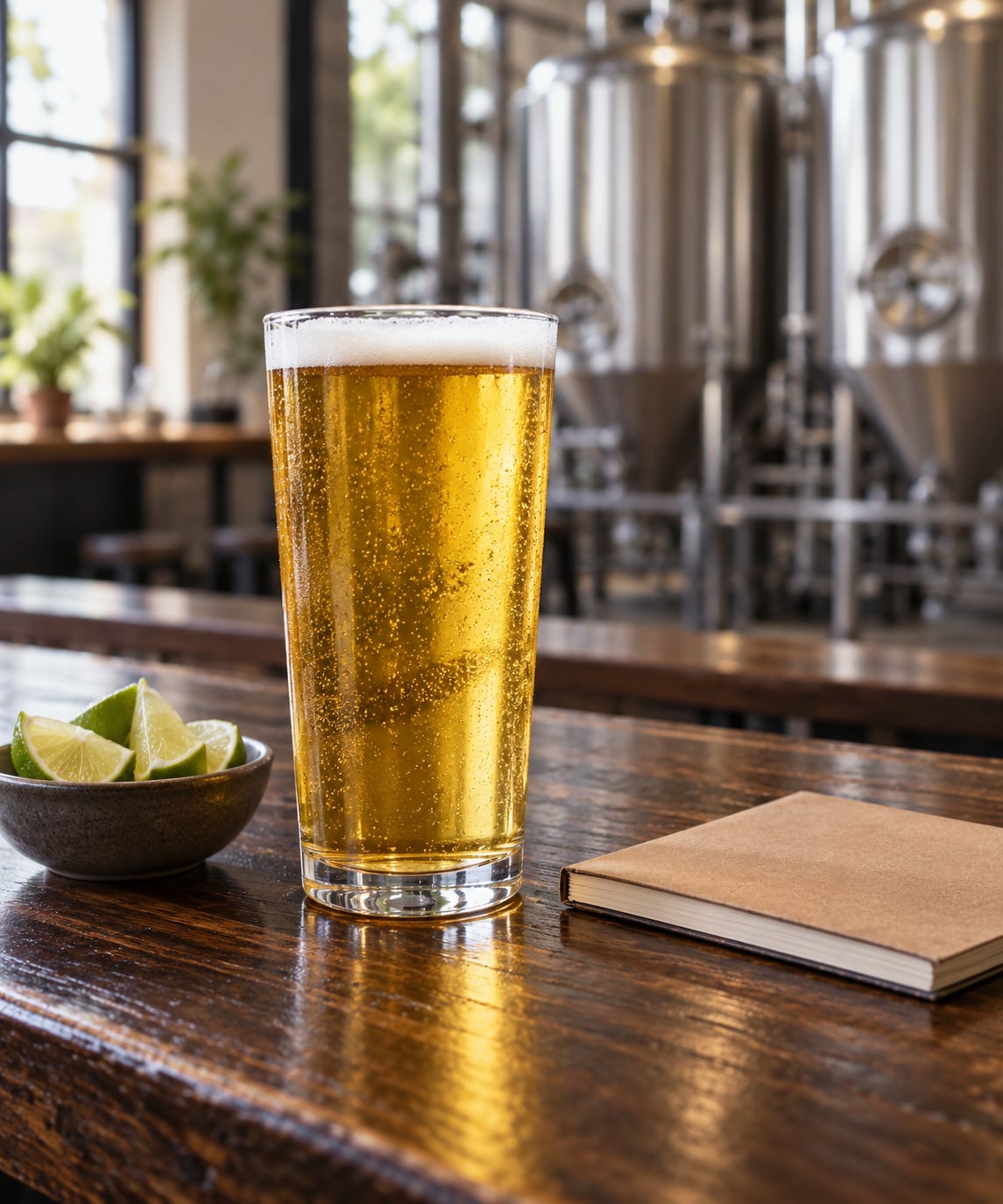
Typical Mexican lager is pale gold to light amber, clear, and topped with a thin white head that fades fast. Clarity is a point of pride, and a hazy pour usually means something other than careful lagering.
What it tastes like
The dominant impression is clean, light malt with a soft, grainy sweetness underneath. Corn adds a faint sweetness that some people read as corny and others read as neutral. Hops sit low, usually noble varieties used more for bitterness than aroma, so you get little more than a whisper of floral or herbal spice on the finish.
Bitterness lands in the low range, generally 10 to 20 IBU. The finish is dry and short rather than bitter, which is what makes the style drinkable over a long afternoon.
Mouthfeel and strength
Body is light, carbonation is high, and the texture is closer to sparkling water than to a rich bock. Strength sits mostly between 4.5% and 5.5% ABV, with craft versions and imported specialties sometimes going higher.
Which traits are common and which are the brewer’s choice
Light body, crisp finish, low bitterness and high carbonation are common to the style. Color, malt flavor, adjunct percentage and any hop aroma are entirely the brewer’s decision, which is why two beers both called Mexican lager can taste like different products.
How Mexican Lager Differs From Other Lager Styles
Mexican lager sits in the same family as several other pale lagers, and the label overlaps with more than one of them. This table lines up the closest comparisons by flavor, body, bitterness and typical use.
| Style | Color and malt | Adjunct use | Bitterness | Body and ABV | Best for |
|---|---|---|---|---|---|
| Mexican lager | Pale gold to amber, pale and Vienna-style malts | Corn or rice common, some breweries use none | Low, roughly 10-20 IBU | Light, 4.5-5.5% ABV | Warm-weather drinking and spicy food |
| International Pale Lager | Pale straw, adjunct-driven light character | Rice, corn or sugar common | Very low, 8-20 IBU | Very light, 4.2-5.4% ABV | Competition entry for pale Mexican-style lager |
| American light lager | Pale straw, rice or corn | Rice and corn standard | Very low, 4-10 IBU | Very light, 4.2-5.0% ABV | Maximum drinkability, minimal flavor |
| Vienna lager | Amber to copper, bread crust and toast | Usually none | Low to moderate, 18-25 IBU | Medium, 4.8-6.0% ABV | Beer drinkers who want more malt than a pale lager |
| Pilsner | Pale gold, cracker and spicy malt | Usually none | Moderate, 25-40 IBU | Medium, 4.4-5.2% ABV | Drinkers who want assertive hops and malt |
The takeaway is that Mexican lager trades flavor intensity for refreshment. If you want to taste the malt and the hops clearly, a Vienna lager or a pilsner gives you more to work with.
How Mexican Lager Is Brewed
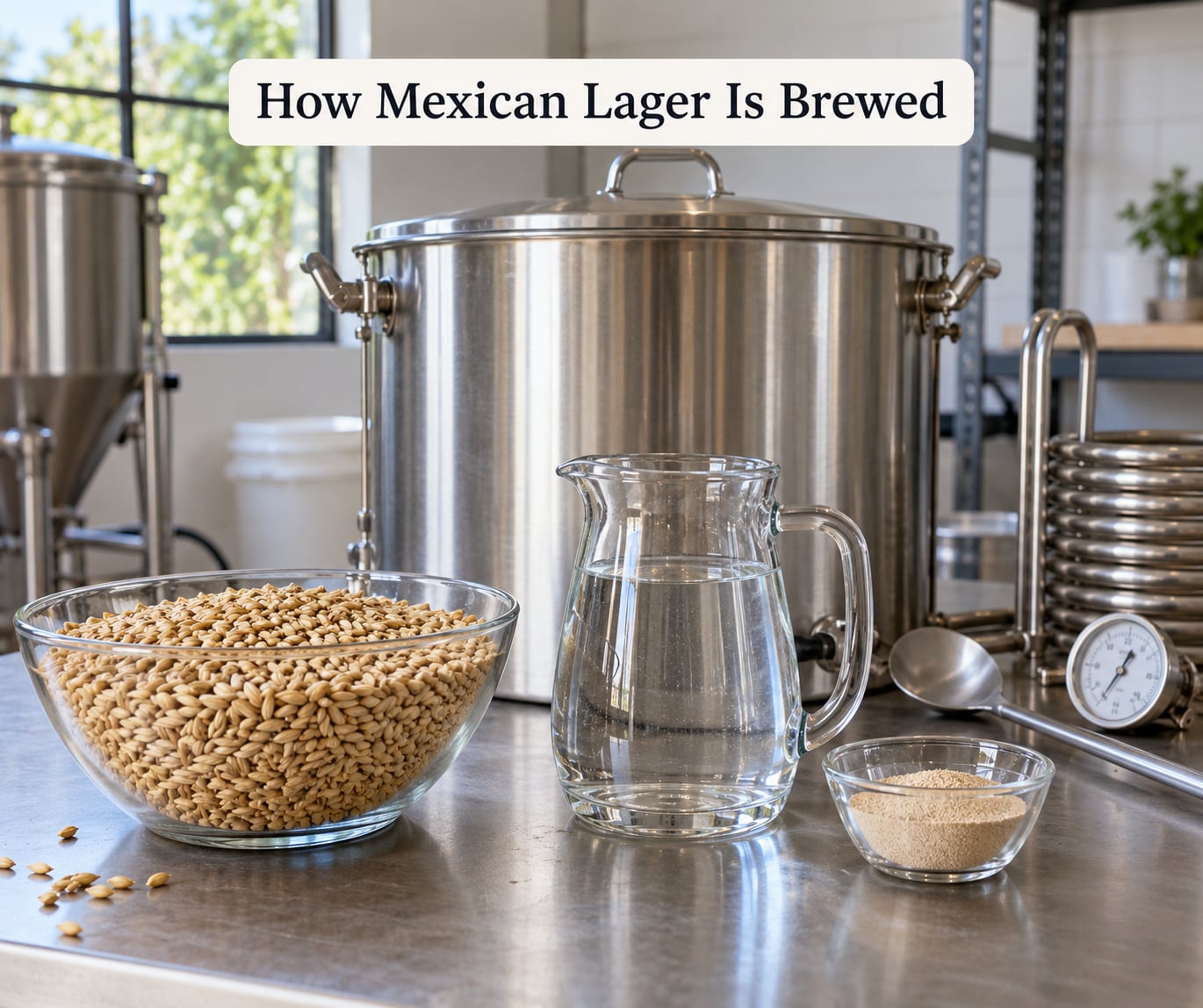
Brewing Mexican lager follows the lager process, but the grain bill and fermentation choices push it toward thin, clean and fast-drinking.
The grain bill
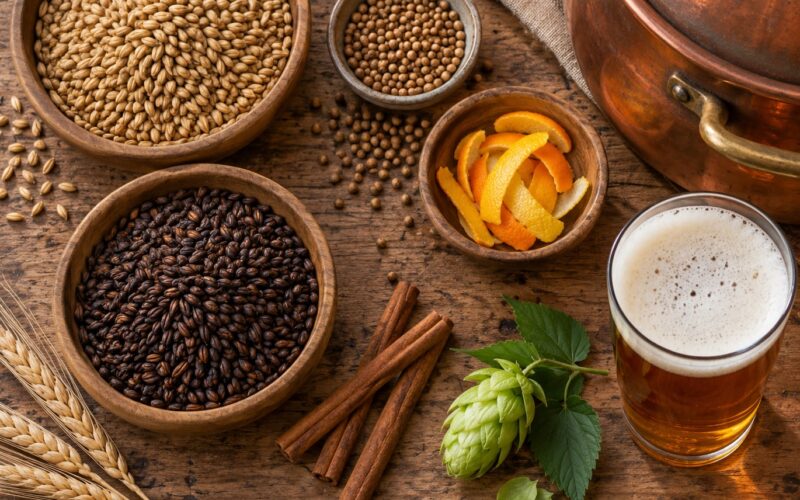
Six-row barley is the traditional base because it carries more enzyme activity and lighter color than two-row. Pale malt supplies the fermentable sugars, and brewers add flaked maize, corn grits or rice to lighten the body and lift fermentability.
Adjuncts need a separate mash step. Corn and rice have no enzymes of their own, so a cereal mash of the adjunct alone is run alongside the main mash, and the wort is combined before boiling.
For more malt character, brewers add Vienna, Munich or a small amount of carafoam and crystal. Some go the other way and skip the adjunct entirely, betting on a Vienna malt base for flavor rather than bulk.
Hops
Noble and noble-adjacent varieties dominate: Hallertauer, Mittelfrüh, Perle and, in modern versions, Motueka. Low-alpha noble hops at a single early addition give clean bitterness without the herbal or spicy aroma an American pale lager is known for.
Yeast and temperature
Mexican lager yeast, sold widely by homebrew suppliers as a Mexican lager strain, ferments cool and slow. Typical fermentation sits near 50 to 55°F, and homebrewers report that pushing much warmer produces esters and a fruitiness that reads as a fault in this style. Diacetyl rests and cold crashes are used to keep diacetyl and sulfur in check.
Lagering, filtration and carbonation
After primary fermentation the beer is conditioned cold for several weeks, which drops yeast out and clarifies the beer. Filtration removes remaining haze, and carbonation is pushed relatively high, around 2.6 to 3.0 volumes, for that sharp snap in the glass.
Mexican Lager vs. Other Popular Beers
Picking between Mexican lager, pilsner, Vienna lager and Mexican-style pale ale comes down to how much flavor you want alongside the refreshment.
- Choose Mexican lager for the lightest body, the driest finish and the cleanest profile. It handles fried food, tacos, grilled fish and anything spicy without competing with it.
- Choose pilsner when you want more character: visible hop aroma, a snappier bitter bite and a slightly fuller malt middle. Pilsners pair well with richer dishes and with sausages and charcuterie.
- Choose Vienna or amber lager when the pale body feels too thin. Toasted bread, caramel and a fuller body pair better with burgers, roasts and aged cheese.
- Choose Mexican-style pale ale when you want hop aroma and spice over malt. It drinks well with hot wings, tacos al pastor and heavily seasoned grilled meats, but it is a different category entirely.
One practical note: Mexican-style pale ales and Mexican lagers are unrelated in style. A pale ale labeled Mexican is the hoppy end of the range, and a lager labeled Mexican sits at the light, dry end.
Why Some Mexican Lagers Taste Different
Two beers can share a label and share almost nothing else. These are the variables that account for most of the difference.
Brewery and geography
Large Mexican breweries make light, consistent, export-oriented lagers engineered for wide distribution. Regional brewing traditions still differ, with northern breweries leaning toward pale, highly carbonated lagers, central breweries carrying more Vienna and amber heritage, and southern breweries producing the darker, maltier end of the range.
Malt and adjunct choices
A Vienna or Munich base gives you toast and honey. A heavy corn addition lightens the body and adds a faint sweetness. More crystal malt pushes caramel. This single decision moves a beer further than almost anything else.
Yeast, water and fermentation
Strain choice controls how clean the fermentation reads, and temperature controls how fruity it gets. Sulfate-heavy water sharpens bitterness while chloride-heavy water rounds it out. Ferment warm or rush the cycle and you get sulfur, fruitiness or diacetyl.
Filtration, carbonation and freshness
Poorly filtered beer tastes dull and bready. Light filtration, low carbonation and stale packaging make a clean lager taste like nothing at all. Age matters more here than in a hop-forward beer, because there is no hop aroma to hide behind.
The skunky question
Skunkiness is not a Mexican flavor. It comes from sunlight hitting hop compounds in clear or lightly tinted bottles. Green and amber glass limit the damage, which is one reason clear-bottle imports and clear-bottle craft lagers are widely considered poor choices. If a bottle smells like a cat behind an alley, that is packaging, not style.
Lime and salt
The salt rim and lime wedge are largely a twentieth-century American marketing tradition built around beach and bar drinking, not a fixture of Mexican brewing culture. Plenty of drinkers enjoy them, and they genuinely help with fried and fatty food. Homebrewers and drinkers often point out that they also cover up flaws, so a lager worth tasting is worth tasting clean first.
How to Taste and Serve Mexican Lager
A five-minute routine tells you more than a label ever will.
A simple tasting sequence
- Look at it. Clarity, color and head. Expect a bright, clean pour with a thin white head.
- Smell it. Light grain, faint corn or rice, and very little hop aroma. A strong skunk note means light exposure, not style.
- Taste it. Note the malt sweetness, the level of carbonation and the bitterness, which should sit well under pilsner levels.
- Let the finish sit. Dry and brief is the target. A lingering sour or sulfurous note is a fermentation issue.
- Compare side by side. Pour it next to a pilsner or a Vienna lager. The differences in body and hop aroma show up instantly.
How to serve it
Chill it properly cold, roughly 33 to 40°F, so the style reads as intended. A pilsner glass works well because the shape supports the head and shows the color; a simple pint glass is fine too. Pour for about an inch of head and leave the rest of the bottle in the fridge.
Pairings that work
This style is built for food that needs refreshing rather than matching. Tacos, tortas, burritos, chips with guacamole, fried fish, shrimp, hot dogs, grilled chicken and light pasta all work. It also handles barbecue, Buffalo wings and other fried foods better than most wines do.
For cheese, try a mild aged cheddar, a salty cotija or a soft, buttery cheese served warm. Rich, aged and blue cheeses are too assertive for such a light body.
Spotting a flawed bottle
Oxidized cardboard or bruised apple, sour or vinegary off-flavors, harsh solvent-like sulfur, and skunk aroma all point to a problem rather than a style. A bottle that simply tastes flat and watery is more likely to be old or badly stored.
Frequently Asked Questions
What does Mexican lager taste like?
It tastes like clean, light malt with a soft grainy sweetness, very low bitterness and a short dry finish, with little hop aroma. Color runs from pale gold to amber, carbonation is high, and most examples land between 4.5% and 5.5% ABV. Corn or rice adds faint sweetness and lightness; Vienna-style malts add toast and honey. Overall it is designed for refreshment and repeat drinking rather than complexity.
Is Mexican lager the same as a pilsner?
No. A pilsner is brewed without adjuncts, carries noticeably more bitterness in the range of 25 to 40 IBU, and shows clear hop aroma. Mexican lager is adjunct-assisted, lighter in body and much lower in bitterness. Some pilsner-adjacent Mexican beers exist, so the label is not always reliable, but the two styles taste and brew differently in a glass.
Why is Mexican lager so light and crisp?
Two brewing choices do most of the work. Adjuncts such as flaked corn or rice lighten the body and raise fermentability, and cold lager fermentation with a clean yeast strain strips out most fruitiness. Conditioning cold for several weeks then drops the yeast out for clarity, and high carbonation finishes the sharp, quenching feel that makes the style drinkable over a long afternoon.
Does Mexican lager contain corn?
Very often, yes, though not always. Corn or maize, along with rice, is common in Mexican-style pale lagers and many imported versions, and a cereal mash is used to convert it because it has no enzymes of its own. Several craft breweries deliberately brew with no adjunct at all, using Vienna and Munich malts for flavor instead, so an ingredient list is the only reliable way to know what is in your bottle.
Is Mexican lager always a Mexican beer?
No. Many brands with Mexican names and imagery are brewed in other countries, including the United States, to export standards, and the recipe can differ from the version sold in Mexico. Ownership is also international, with large brewing companies holding stakes in most major labels. What is reliably Mexican is the style lineage: nineteenth-century immigrant brewers working in Mexico, using the Vienna lager model.
What food pairs well with Mexican lager?
Anything that needs refreshing more than matching. Tacos, tortas, burritos, chips with guacamole, fried fish, shrimp, hot dogs, grilled chicken, barbecue and Buffalo wings all sit well with a light, dry lager. For cheese, pick mild aged cheddar, salty cotija or a soft warm cheese, since the beer cannot carry anything assertive. Avoid very sweet or heavily roasted dishes, which flatten the finish.
Conclusion
Mexican lager is a light, adjunct-assisted, cool-fermented lager built on the Vienna model that immigrant brewers brought to Mexico in the 1800s. Its signature is restraint: pale malt, low bitterness, high carbonation and a dry finish that works across heat, spice and fried food.
The practical first step is simple. Pour one cold, taste it before the lime, and pay attention to three things: the malt sweetness underneath, how dry the finish is, and how much cleaner it tastes than a pilsner sitting next to it. Then pour a Vienna lager alongside it and the whole style becomes obvious.