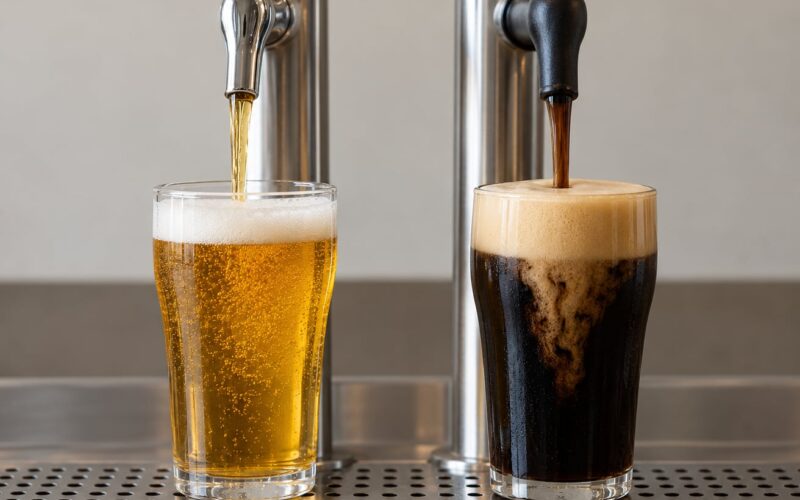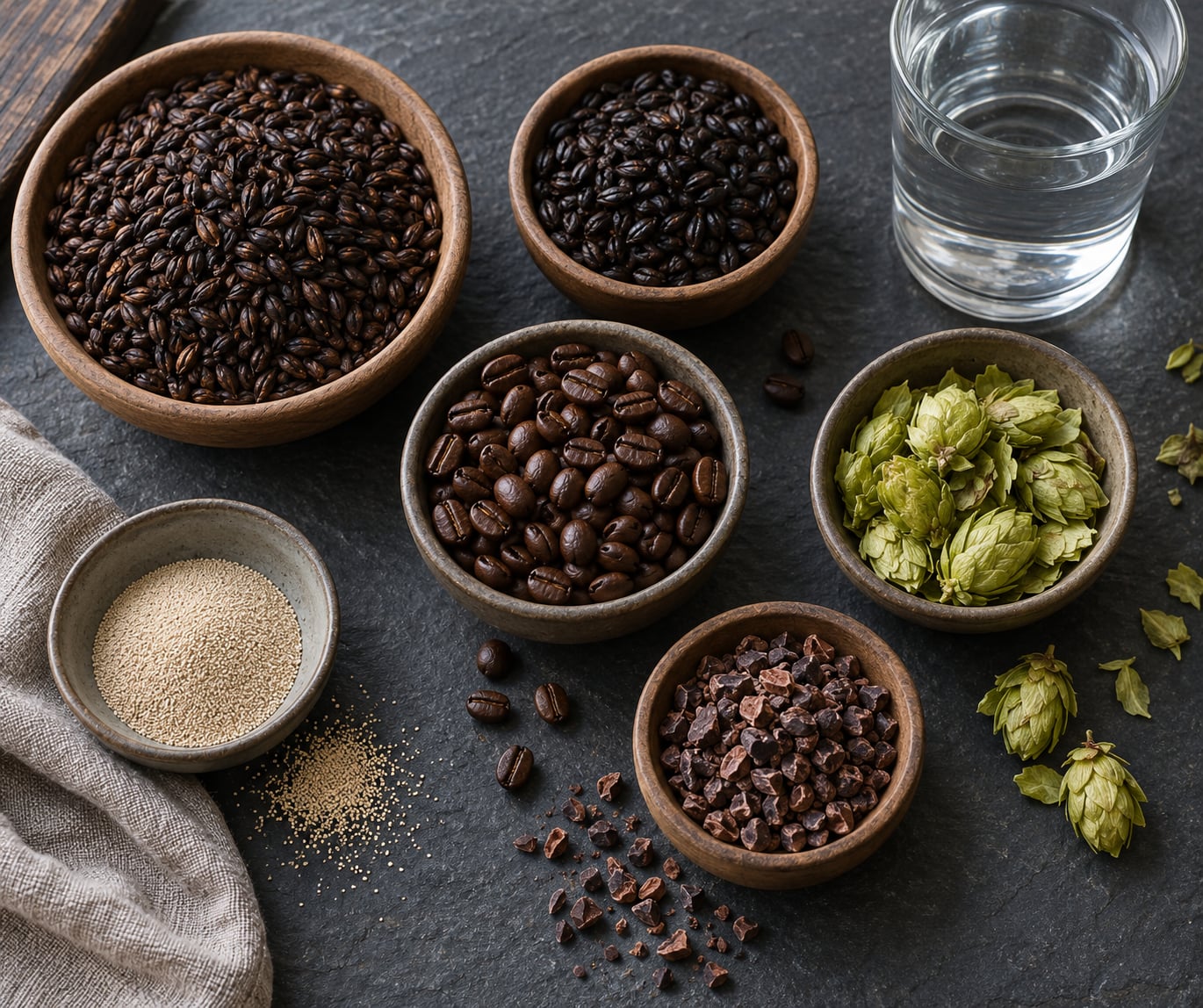
A coffee stout is a dark ale built from roasted barley and other dark malts, water, hops and yeast, brewed exactly like any other stout and then dosed with real coffee. The coffee goes in late, cold-brewed, steeped or dry-beaned after fermentation and before packaging, so it never gets boiled with the wort.
That late addition is the whole trick. It is why the glass smells like a fresh pot rather than a stale roast, and why the flavor sits next to the malt instead of bulldozing it. The question gets asked by two different groups of people, so this guide covers both: what actually lands in the glass, and what a brewer puts in the kettle.
Table of Contents
- What Is a Coffee Stout Made With?
- The Essential Ingredients in a Coffee Stout
- How Does Each Ingredient Shape the Beer?
- What Types of Coffee Can You Use in a Stout?
- Which Malts Make a Coffee Stout Dark and Flavorful?
- How Much Coffee Should You Add?
- What Other Ingredients Are Sometimes Used?
- How Do Hops, Yeast, and Water Change the Result?
- How to Brew a Balanced Coffee Stout
- Frequently Asked Questions
- Is a coffee stout the same as a beer with coffee added after brewing?
- What is the best coffee for brewing a coffee stout?
- Does adding more coffee make a stout better?
- Is coffee stout supposed to taste bitter?
- Can I use espresso grounds instead of regular coffee?
- What grain bill is commonly used for a coffee stout?
- Conclusion
What Is a Coffee Stout Made With?
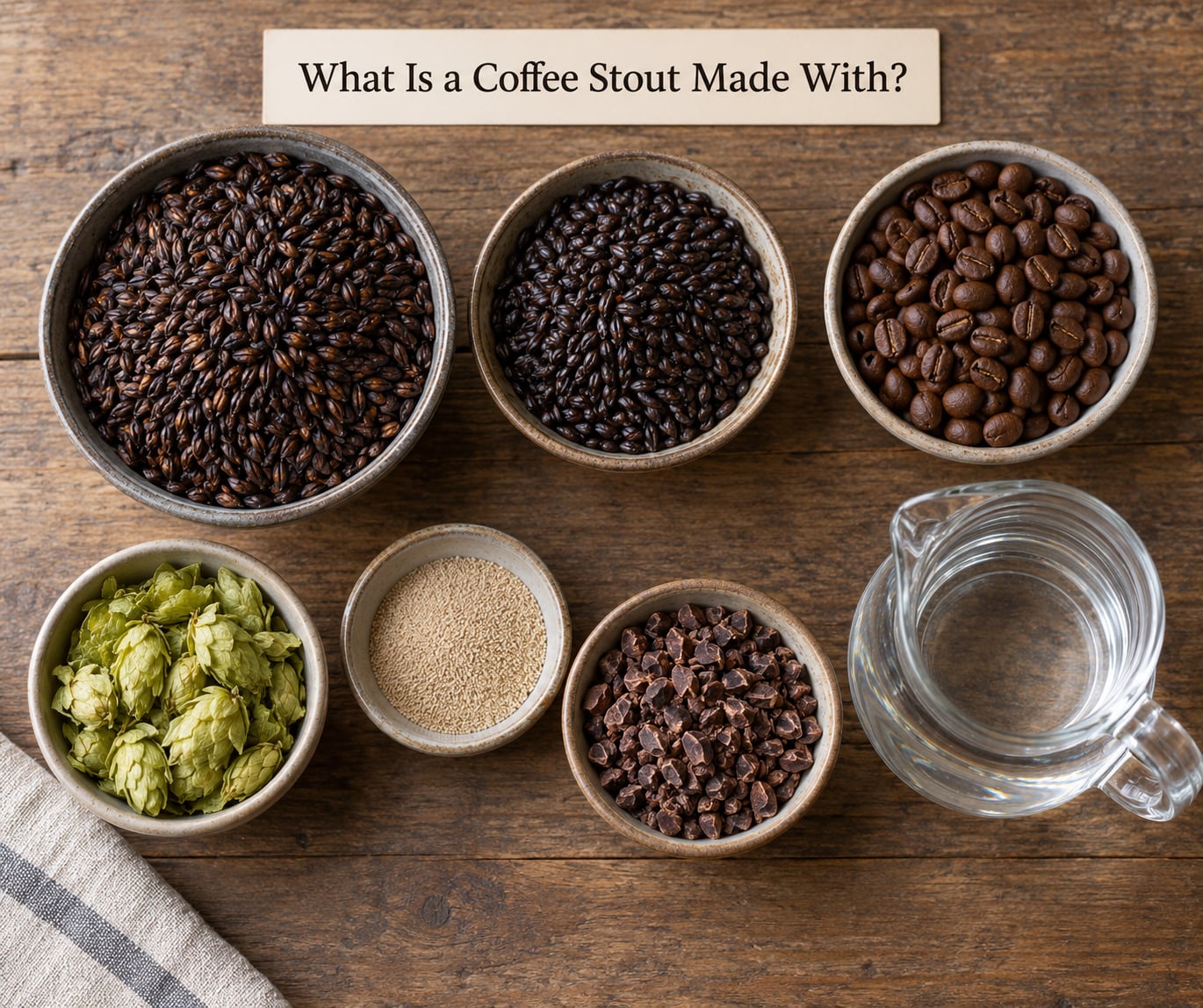
A coffee stout is made with six core ingredients: dark roasted malt, coffee, hops, yeast, water and a small amount of brewing salt. The malt builds the dark color, body and roast character, the coffee adds aroma and a bittersweet mocha note, and the hops and yeast do the same work they would in any other beer.
- Dark and roasted malts including pale malt, chocolate malt, crystal malt and roasted barley
- Real coffee, coarsely ground, cold-brewed or steeped, added after fermentation
- Hops for bitterness and a little grassy or citrus aroma
- Ale yeast to ferment the wort
- Water, adjusted with brewing salts
- Optional adjuncts such as lactose, vanilla, cacao nibs, chocolate or oats
Everything after that first five is decoration. The core recipe of a coffee stout is a roast-forward stout brewed normally, with coffee added late and in a restrained dose. Some breweries go imperial or nitro, others add lactose or barrel-age the result, and plenty of mass-market products use natural coffee flavours rather than coffee at all, which is a different conversation from brewing one.
The Essential Ingredients in a Coffee Stout
Strip away the styling and six things do the work. Water sets the stage, fermentable sugars give strength and body, roasted malt creates the color and the roast, coffee supplies the aroma, hops supply the bitterness and yeast finishes the job.
A brewer usually also works with brewing salts, because the mineral content of the water decides whether a roast-heavy beer tastes sharp or tastes round. Here is what each piece does on its own.
How Does Each Ingredient Shape the Beer?
Water. Almost every water supply is a decent starting point. Adjustments come later: calcium sulfate, sold as gypsum, sharpens the perceived bitterness and emphasizes the dry roast edge, while calcium chloride softens it and pushes the beer toward caramel and chocolate. Too much of either and a coffee stout turns harsh, because coffee bitterness and roast bitterness stack in the same direction.
Fermentable sugars. The pale malt base supplies most of the sugar, and specialty malts like crystal and chocolate malt add unfermentable sweetness and weight. That residual sweetness matters more here than in a pale ale. It is what keeps coffee bitterness from tasting like straight tannin, and a coffee stout that tastes drying usually means too little residual sweetness, not too much coffee.
Pale and dark malts, plus roasted barley. A base of pale malt, whether Maris Otter, two-row or a pale ale malt, carries the fermentable sugar. Chocolate malt and roasted barley are the roast engines, contributing color, coffee-like and cocoa notes, and a dry finish. Roasted barley is closer to coffee in the glass than anything else in the grain bill, which is exactly why coffee works here rather than clashing.
Coffee. Green or roasted coffee contributes two distinct things: volatile aromatics that rise off the beer, and roasted bitter compounds that combine with the roast from the malt. Because those bitter compounds are what turns harsh when over-extracted, coffee is nearly always added cold and late.
Hops. Hops are flowers, not a source of yeast, and they earn their place by balancing the roast. Coffee stouts usually land somewhere in the 30 to 60 IBU range depending on how sweet and how strong the beer is meant to be. Too few hops and the coffee floats loose on top of the malt; too many and the finish turns hard.
Yeast and salt. A clean English ale strain ferments cool and leaves the malt character in front of you, which suits a coffee-forward recipe. An assertive American or Belgian strain adds fruit and spice that competes with the coffee. Brewing salts and a pinch of adjunct sugar are finishing tools, not flavorings in their own right.
What Types of Coffee Can You Use in a Stout?
Roast level is the dial that matters, and it decides whether the coffee reads as fruit, as chocolate or as a scorched edge. No roast level is universally right, because it depends on how much residual sweetness and how much hop bitterness the base beer already has.
| Coffee type | What it contributes | Watch for |
|---|---|---|
| Light roast, single origin | Bright fruit, florals, spice; the least roast overlap with the malt | Can taste thin or grassy in a dark beer; needs a slightly sweeter base |
| Medium roast | Balanced nuttiness and cocoa that sits between the malt and the hops | The safest starting point when a recipe is untested |
| Dark roast, French roast style | Deep chocolate, espresso and smoke; overlaps heavily with roasted barley | Smoke turns to ash quickly at higher doses |
| Espresso blend | Concentrated, syrupy body and the classic mocha note | Blend quality varies wildly; the roasted bitterness arrives fast |
| Decaffeinated | All the aroma and roast flavor, little or no caffeine | Fewer aroma volatiles survive the decaffeination process, so expect a quieter nose |
One practical habit: brew a cup of the candidate coffee with the same ratio you plan to use in the beer and taste it black first. Coffee that tastes flat as a drink rarely improves once it is fighting 1,000 calories of wort.
Real coffee does contain caffeine, so a coffee stout brewed with regular beans will keep most drinkers awake. Decaf beans remove nearly all of it while leaving the roasted character, and plenty of brewers now offer one. Also read the label carefully: several widely sold products list coffee and natural coffee flavours rather than coffee itself, which is a flavoring approach rather than a brewing one.
Which Malts Make a Coffee Stout Dark and Flavorful?
Color in a stout comes almost entirely from roasted grain, and each malt does a slightly different job. The classic combination leans on chocolate malt for cocoa and roasted barley for dryness, with pale malt underneath doing the fermenting.
| Malt | Share of a typical bill | What it does |
|---|---|---|
| Pale malt (Maris Otter or two-row) | 75 to 85 percent | The sugar source and most of the body; keeps the bill fermentable |
| Roasted barley | 8 to 12 percent | Deepest color, dry roasty finish, the most coffee-like grain character |
| Chocolate malt | 6 to 10 percent | Cocoa, coffee and burnt sugar without the dryness |
| Caramel or crystal malt | 3 to 6 percent | Residual sweetness and a silky mouthfeel that softens the roast |
| Flaked oats | 0 to 8 percent | Thick, creamy body and better head retention |
A familiar 5-gallon profile looks like this: 9 pounds pale malt, 1 pound flaked oats, 10 ounces chocolate malt, 8 ounces roasted barley and 4 ounces crystal malt. That lands near a 6 percent beer with a full body and enough sweetness to carry the coffee. Scale the specialty malts up for an imperial version and the coffee has a much larger job.
How Much Coffee Should You Add?
Coffee works at two strengths at once. A small amount adds aroma and a sweet-ish impression on the palate; a larger amount adds bitterness that compounds with the roast. That is why the useful rule is to start low, taste, and only add more if the aroma is thin.
- Light or single origin: roughly 6 to 10 ounces coarsely ground per 5 gallons
- Medium roast: roughly 8 to 12 ounces per 5 gallons
- Dark roast or espresso blend: roughly 12 to 16 ounces per 5 gallons, added cold
That range matches what homebrewers repeatedly report, generally mixing 8 to 16 ounces of coffee per 5-gallon batch using a ratio of about one part coffee to two parts water, added at packaging. A widely copied approach from a chocolate coffee stout adds roughly 2.6 ounces of coarsely ground coffee with about 3.9 ounces of cacao nibs, cold steeped after the beer is cold-crashed and racked off the yeast.
Grind coarsely. Fines are the number one complaint in homebrew forums, because they never filter out of the finished beer and leave a gritty, astringent film across the palate.
What Other Ingredients Are Sometimes Used?
None of the following is required to make a coffee stout. Each belongs to a particular style or a particular brewery, and adding all of them at once usually buries the coffee instead of highlighting it.
- Lactose makes a milk stout creamy and sweet; combined with coffee it becomes a dessert beer
- Vanilla beans push the dessert note and soften perceived bitterness
- Cacao nibs add chocolate aroma with far less bitterness than coffee, and are steeped cold alongside it
- Dark chocolate or malted chocolate syrup thickens the body and deepens the cocoa character
- Flaked oats are the classic body and silkiness tool rather than a flavoring
- Maple syrup or brown sugar round out sharp imperial stouts that need more residual sweetness
- Spices such as cinnamon, cardamom or chili appear in spiced and chili coffee stouts
How Do Hops, Yeast, and Water Change the Result?
A coffee stout is not defined by dark malt and coffee alone. Those two set the stage, and hops, yeast and water decide whether the beer lands on mellow mocha or on a dry, tannic finish that pulls the face.
Hops set the bitterness ceiling. Bitterness from hops and bitterness from coffee roast compounds behave similarly in the finish, so cutting hops gives a brewer direct control over how bitter the coffee can safely be. A common target is 40 to 55 IBUs, which reads as solid rather than punishing next to a coffee dose in the middle of that range above.
Yeast determines whether the coffee is the star. A clean, low-fruit English ale strain at cellar temperature leaves the roast and the coffee in front. Anything phenolic, spicy or heavily fruity will be read as a coffee origin note, which some brewers want deliberately.
Water is the quiet lever. Sulfate-forward water accentuates roast, dryness and bitterness, which sharpens the coffee. Chloride-forward water mutes roast and pushes malt sweetness and body, which softens it. On a coffee stout, that single adjustment can be the difference between a beer that tastes integrated and one that tastes like coffee was poured into it.
How to Brew a Balanced Coffee Stout
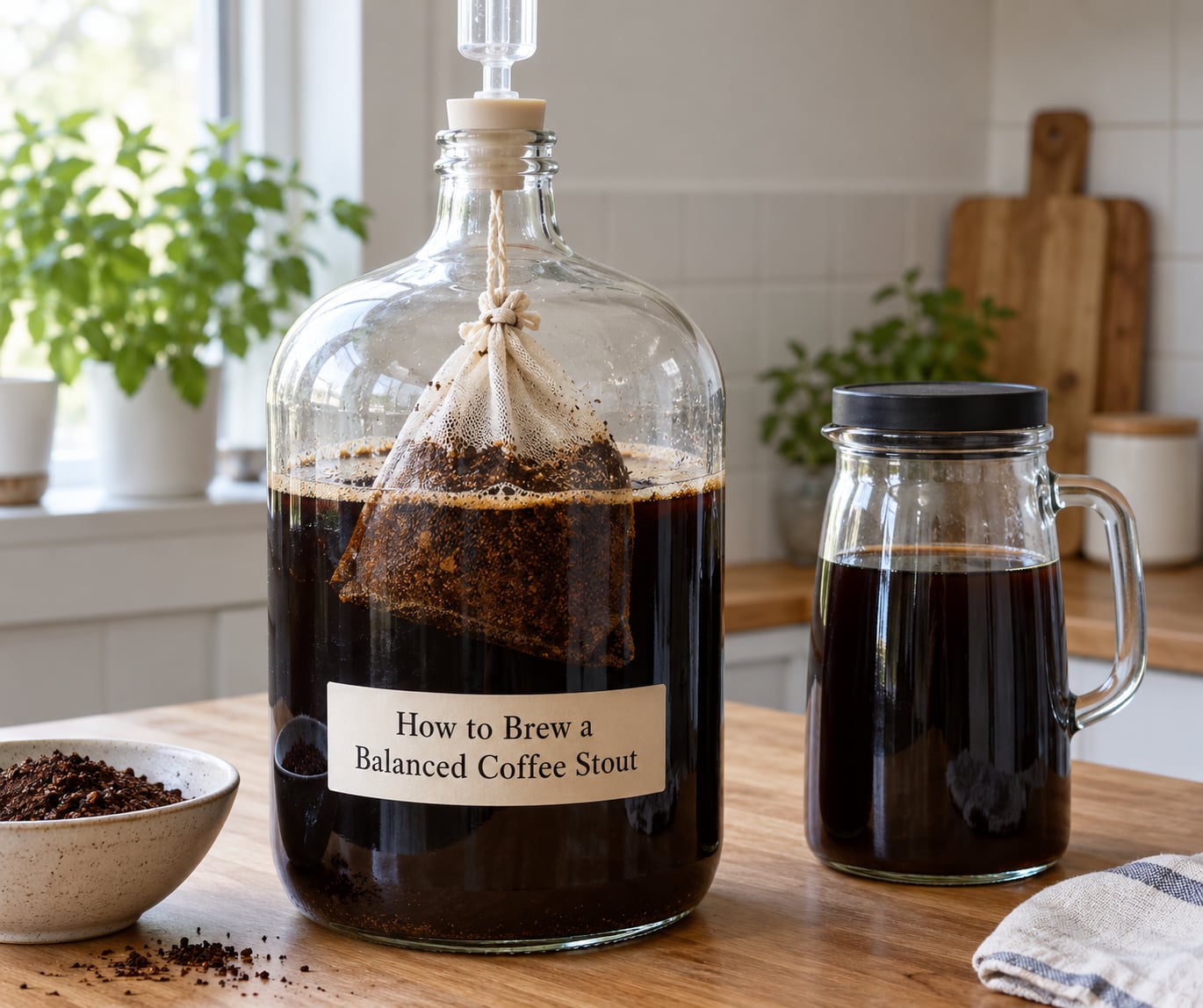
- Pick the roast target first. Decide whether you want mocha and chocolate, or something fruitier and coffee-adjacent. The grain bill and the coffee dose follow from that choice.
- Build the bill around pale malt. Keep it near 80 percent, add roasted barley and chocolate malt for the roast, and include crystal malt or oats so there is residual sweetness and body.
- Set bitterness before you worry about coffee. Aim for a middle-range bitterness and adjust the roast down a touch if the coffee dose is going to sit high.
- Ferment the beer clean and cool. Get it fully fermented, then cold crash and rack off the yeast so nothing is fighting the coffee aroma.
- Add the coffee cold. Steep coarsely ground coffee in cold water first and add the liquid, or bag the grounds directly into the beer. Either way, keep it away from heat.
- Let it sit, then taste. Steep for a day or two before packaging, taste the beer on day three, and decide whether you need more coffee or more sweetness.
Frequently Asked Questions
Is a coffee stout the same as a beer with coffee added after brewing?
Yes, and that is exactly the point. A coffee stout is brewed as a normal stout from mash through fermentation, then coffee is added cold once the beer has finished fermenting. The coffee never gets boiled with the wort, which protects its aromatics and prevents the bitter, tannic compounds from turning harsh.
What is the best coffee for brewing a coffee stout?
There is no single best answer, because the right coffee depends on the roast target. A medium roast is the safest starting point because its nuttiness sits between the malt and the hops. Espresso blends give the strongest mocha character, single origins add fruit and spice, and decaffeinated beans deliver the roast flavor with little or no caffeine.
Does adding more coffee make a stout better?
Rarely. Coffee contributes aroma at small doses and bitterness at large ones, and its bitter compounds stack with roast and hop bitterness. Homebrew forum consensus lands around 8 to 16 ounces of coffee per 5-gallon batch, depending on roast. Start at the low end, taste, and only add more if the aroma is thin.
Is coffee stout supposed to taste bitter?
Some bitterness is expected and correct, since roast, hops and coffee all contribute to it. What should not be there is a drying, astringent finish that makes the mouthfeel like raw tea. That flavor usually means over-extracted coffee, too many fines in the grind, or too little residual sweetness in the grain bill to carry the roast.
Can I use espresso grounds instead of regular coffee?
You can, and many brewers do. Just grind the espresso beans coarsely yourself rather than using pre-ground espresso powder, whose fine particles will not settle out and will leave grit in the finished beer. Espresso blends also tend to be more heavily roasted, so start at the lower end of the dosage range and taste before increasing it.
What grain bill is commonly used for a coffee stout?
A typical 5-gallon coffee stout bill runs roughly 75 to 85 percent pale malt for sugar and body, 8 to 12 percent roasted barley for color and dry roast, 6 to 10 percent chocolate malt for cocoa, and 3 to 6 percent crystal malt for residual sweetness. Flaked oats are a common addition when a thicker, silkier body is wanted.
Conclusion
A coffee stout is a dark roasted malt base, plus hops, yeast, water and real coffee added cold after fermentation. Adjuncts like lactose, cacao nibs and vanilla belong to particular styles rather than the recipe. Choose your roast target first, build a sweet enough and balanced enough stout to carry it, then start with a restrained coffee dose and taste before adding more.