Understanding how bourbon barrels change beer flavor comes down to five things happening at once: the wood dissolves into the beer, oxygen seeps in through the staves, acids from fermentation react to form new esters, wood tannins soften with age, and whatever spirits are left in the wood blends with the finished beer. One rule explains most of it: a barrel cannot give a beer more wood character than its toast and char levels were built for, and time only decides how much of that character shows up.
That last point matters more than people expect. Buy two bourbon-barrel-aged beers that spent the same eight months in wood, and one will taste like vanilla and toffee while the other tastes mostly like bourbon with a beer chaser. Same barrel type, same duration, wildly different result.
Here is what is actually happening inside the barrel, where each flavor comes from, and how to judge a barrel-aged beer instead of guessing at it.
Table of Contents
- How Do Bourbon Barrels Change Beer Flavor?
- Where Do the Flavors in a Bourbon Barrel Come From?
- Vanilla, Caramel, Toast, Spice, and Char
- Where each recognizable note comes from
- How Barrel Age and Char Level Shape the Result
- Does the Beer Style Matter?
- Does Bourbon Barrel Aging Make Beer Stronger?
- Oxidation: When Barrel Flavor Becomes a Defect
- How to Taste a Bourbon-Barrel-Aged Beer
- How to Choose or Use a Bourbon Barrel
- An aging timeline month by month
- Frequently Asked Questions
- Why does bourbon-barrel-aged beer taste like vanilla?
- Are bourbon barrels better than wine barrels for beer?
- How long should beer age in a bourbon barrel?
- Does a charred bourbon barrel add more flavor?
- Why does my barrel-aged beer taste like cardboard?
- Does beer in a bourbon barrel get stronger over time?
- Conclusion: Start with the Wood and Drink with the Finish
How Do Bourbon Barrels Change Beer Flavor?
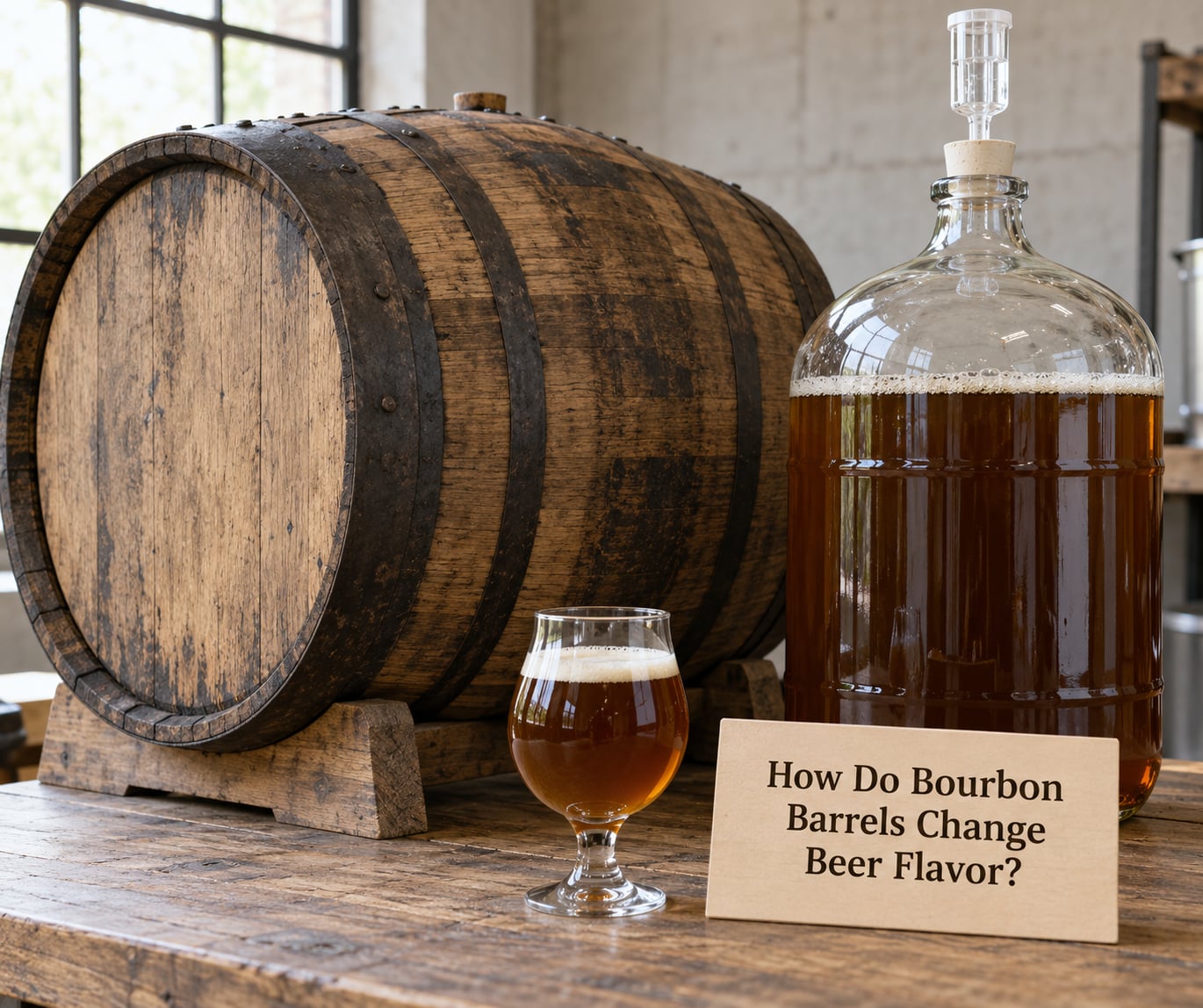
Barrels do not add flavor the way a hop does. They change the beer slowly, from the inside out, by moving water, oxygen and wood compounds across a boundary that is porous but not open.
Five mechanisms run at the same time, and every flavor in the glass traces back to at least one of them.
- Extraction. Beer is mostly water, so it acts as a solvent on the oak. Heat, alcohol and time pull compounds out of the wood, and they move from the stave into the liquid.
- Micro-oxygenation. Oak is not airtight. Tiny amounts of oxygen pass through the staves and through the joints, which softens harsh edges and drives slow chemical changes.
- Transesterification. Acids produced during fermentation swap groups with alcohols in the beer, forming new esters. These are the fruit and floral notes that barrel-aged stout or barleywine picks up.
- Tannin polymerization. Wood tannins grab onto proteins and yeast cells and settle out or link into larger molecules. That takes harsh, grippy tannin off the beer and gives it the silky, drying grip of oak.
- Spirit integration. Spirits soaked into the wood early on do not simply rinse out. They are bound inside the lignin, and they emerge slowly into the beer.
The word that brewing writers use for the slow, low-volume oxygen movement is micro-oxygenation, and it is the mechanism people underestimate. A little oxygen is what turns a young, sharp imperial stout into something soft and layered, because it slows the reactions that create stale cardboard off-notes just as much as the ones that create depth.
What never happens is a new flavor appearing out of nowhere. Every note is already in the wood, in the whiskey, in the yeast, or made by a reaction between them.
Where Do the Flavors in a Bourbon Barrel Come From?
It helps to split the sources apart, because people blame the barrel for flavors that were in the beer before it ever got there.
| Source | What it contributes |
|---|---|
| Charred layer | Smoke, char, wood tannin, dark color, the sharpest oak edge |
| Toasted layer beneath the char | Vanilla, coconut, toast, caramel, crème brûlée |
| Wood structure | Silky texture, drying grip, structural tannins |
| Residual spirits | Rounding, caramel sweetness, warmth, sometimes visible bourbon character |
| Ash and minerals | Buffering of acidity, slight pH shift, catalysis of ester reactions |
| Micro-oxygenation | Bitterness mellowing, color stability, dried-fruit and raisin notes |
| Microbes if the barrel was reused | Wild yeast and bacteria, which can turn a stout into a sour ale |
The middle of the barrel is the part drinkers notice first, because the toast layer is where the familiar vanilla and coconut live. Char sits on the inside surface, is burned onto the wood during barrel making, and is what gives bourbon barrels their reputation for aggressive oak.
Ash is an underrated ingredient. When a charred layer burns, potassium and calcium salts end up in the surface wood, and those salts buffer the acidity of the beer while nudging ester reactions forward. Barrels with heavier char often carry more of these salts.
Residual spirits are worth separating from whiskey flavor in the finished beer. Spirits soak into the first fraction of an inch of wood and bind there, so a barrel that held bourbon for four years carries more than one that held it for a few months. Homebrewers on barrel exchange programs see this immediately, which is why forum regulars always ask about prior fill and distillate type before anything else.
Vanilla, Caramel, Toast, Spice, and Char
These are the notes people expect from a bourbon barrel, and each one has a reasonably specific origin.
Where each recognizable note comes from
- Vanilla. Vanillin, released when lignin breaks down under heat and alcohol. Vanillin is also boosted by syringaldehyde and ferulic acid, both wood breakdown products that convert into more vanillin with time.
- Coconut. Oak lactones, sometimes called whiskey lactones. They are oak-derived compounds with a coconut and stone-fruit aroma, and no amount of aging removes them entirely, which is why heavy barrels get tiring.
- Caramel, butterscotch, toffee. A mix of wood sugars extracted from toasted wood, plus slow oxidation that dries the beer toward fig and raisin.
- Toasted marshmallow, crème brûlée. Toasted wood aromatics, usually from an American white oak barrel with a medium-to-heavy toast rather than a light one.
- Clove, cinnamon, nutmeg. Lignin-derived volatile phenols, especially eugenol and guaiacol, which read as clove when sweet and as smoke when dry.
- Char and smoke. The charred inner layer itself, which contributes phenolic, sometimes tarry compounds.
- Drying tannic grip. Hydrolyzable tannins from the oak. Useful in balance, unpleasant in quantity, because they linger as a dry, tongue-sticky finish.
One note is not oak at all: dark fruit. Raisin, plum and fig notes in a barrel-aged stout usually come from slow oxidation and ester formation rather than the barrel, which means they get stronger in barrels that also let in the most oxygen.
How Barrel Age and Char Level Shape the Result
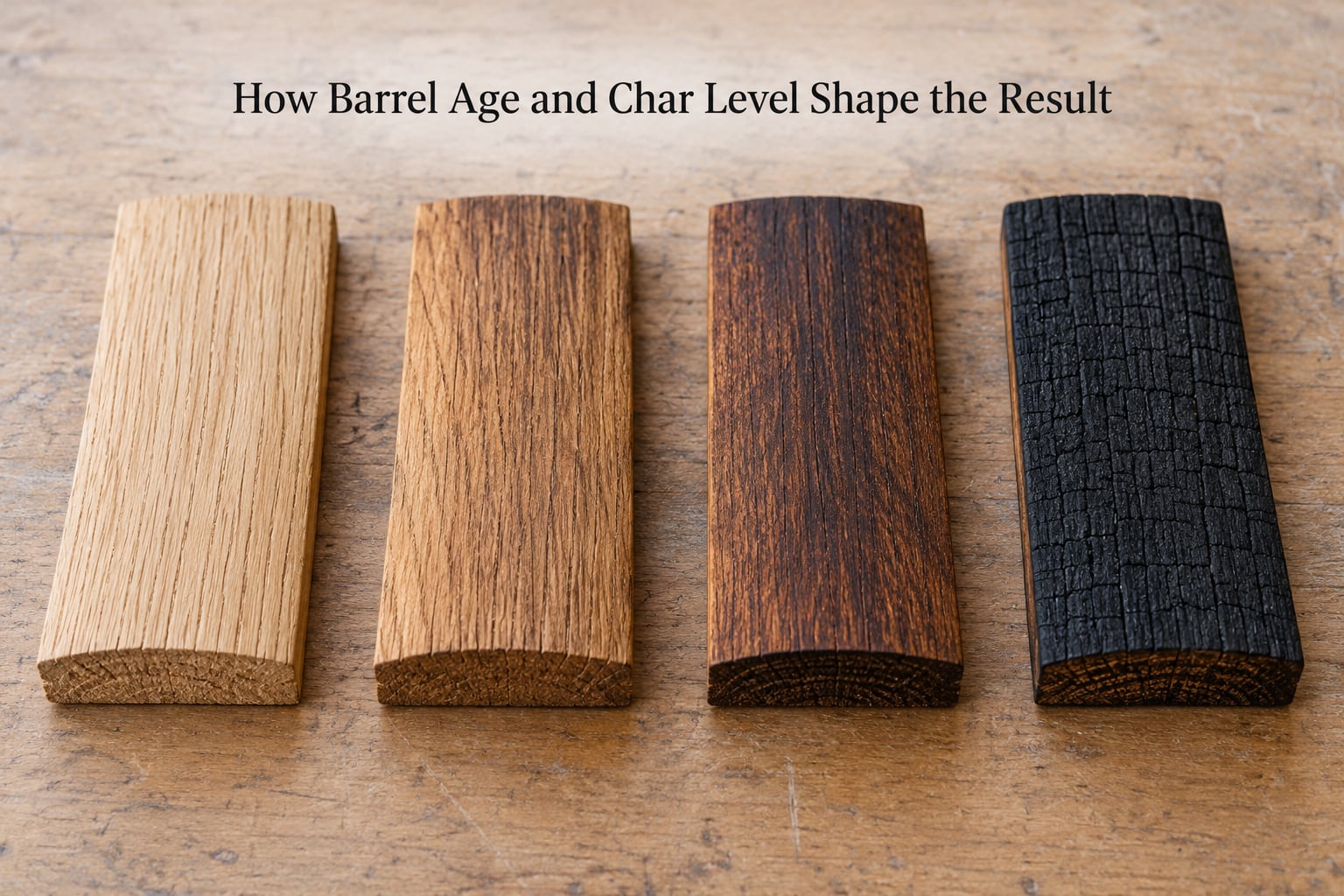
Toast and char are set when the barrel is made, and they set the ceiling on everything else. Aging cannot push a lightly toasted barrel toward heavy smoke; it can only pull more of what the wood already offers.
| Barrel preparation | What comes through | Best suited to |
|---|---|---|
| Light toast, light char | Subtle structure, tannin, a little vanilla | Brown ale, pale ale, lager, long aging |
| Medium toast, medium char | Vanilla, coconut, caramel, soft tannin | Porter, stout, barleywine, most barrel programs |
| Heavy toast, medium char | Coconut, marshmallow, crème brûlée | Rich ales, imperial stout |
| Heavy toast, heavy char | Char, smoke, aggressive tannin, dark color | Imperial stout and barleywine, short contact times |
Time is the other half of the equation. A 59-gallon bourbon barrel in a warm warehouse moves slowly, and a 5-gallon barrel at room temperature moves so fast that brewers pull beer out after three weeks for a reason. The wood does not change, but the surface area to volume ratio does everything.
Prior use depletes the wood. Barrels have a limited total load of extractable compounds, and once that load is spent the barrel goes flavor-neutral. That is why a fourth-use barrel smells like an empty cellar and why some breweries move retired barrels into sour and farmhouse programs, where microbes do the work instead.
Does the Beer Style Matter?
It matters more than barrel choice in many cases. A beer that is too thin, too bitter or too acidic going in will still be too thin, too bitter or too acidic coming out, only with oak flavor attached.
| Style | What the barrel does | Main risk |
|---|---|---|
| Porter | Adds vanilla, cocoa and roasted depth | Oak flattens roast character on thin examples |
| Imperial stout | Takes coffee, tobacco and dark fruit well | Over-oaking hides the base beer quickly |
| Barleywine and strong ale | High alcohol and sugar pull more from the wood | Esters can turn into nail-vinegar territory |
| Sour ale | Softens acidity and adds oak structure | Barrel microbes may push the sour further than planned |
| Pale ale or saison | Shows oak clearly and cheaply | Hops fade fast, leaving the wood in front |
| Brown ale | A classic pairing with toasted and caramel notes | Easy to over-oak without noticing |
Two styles carry specific risks worth naming. High-alcohol beers can over-extract into sharp, solvent-like esters because the warm, acidic environment speeds the reactions that produce them. Pale ales are the opposite problem: they show oak so clearly that after four months the beer’s original character is mostly gone.
Dark, roasted, high-alcohol beers are the easiest place to start, because their existing intensity gives the wood somewhere to go. Homebrewers moving into barrel aging get the same advice from the forums: age something big and malty first, and pull samples often.
Does Bourbon Barrel Aging Make Beer Stronger?
No, not on its own. Alcohol comes from yeast fermenting sugar, and that finishes before the beer reaches the barrel. Wood does not ferment, and oxygen entering through the staves does not add ethanol, so a beer that went in at 10% comes out at 10%.
There are three honest exceptions, and each one adds alcohol deliberately rather than as a side effect. A brewery can recirculate spirits through the barrel on a snake system, soak the beer in spirits before it goes back on oak, or blend in spirit-soaked beer. Each is a method for raising strength, not an accident of barrel aging.
In the United States, Rule 47 is the TTB regulation that defines barrel-aged beer. It requires the beer to be aged in a wooden barrel that previously held distilled spirits, it sets a minimum aging period of one day, and it puts firm limits on simulating wood character with additives or blending beer that never touched a barrel. If a label says barrel-aged, the wood did the work.
What to check before buying: the ABV on the label, the age statement in months, whether the release is a single barrel or a blend, and whether a spirits character is described. A bottle listing a specific distillery, a char level and a month count tells you far more than one that simply says barrel-aged.
Oxidation: When Barrel Flavor Becomes a Defect
Oxidation is the same process on both sides of the line. Useful oxidation thickens aroma, deepens color, dries out young hop character, softens bitterness and pushes a beer toward fig, raisin and leather. Bad oxidation turns that into cardboard, wet paper, sherry off-notes, vinegar or raw green apple.
The difference is dose and timing. A barrel that lets in a slow trickle of oxygen over twelve months produces the first set. A barrel with a large headspace, a loosebung that leaks, or a warm storage room produces the second set, usually long before anyone planned it.
There is also a distinct problem homebrewers call the boilermaker effect: the beer and the barrel flavors sit next to each other instead of blending. It tastes like a beer with bourbon poured into it, and it usually shows up in young barrels, over-oak attempts and spirits-heavy recirculation setups.
How to steer around all three: fill the barrel as close to the neck as practical, keep it cold and dark after it leaves the brewery, top it up if it will sit more than a couple of months, and check the bung. Pouring the beer out of the barrel and into a smaller vessel for the final months of aging cuts the air contact noticeably and costs nothing.
How to Taste a Bourbon-Barrel-Aged Beer
Tasting barrel-aged beer in the right order tells you more than any marketing copy. Take your time with the first thirty seconds, before the beer warms up and the wood aromatics bloom.
- Aroma first. Swirl and smell before sipping. Vanilla, coconut, caramel, toast, tobacco and char all show up here before the palate gets involved.
- First sip. Judge the base beer. Can you still identify the style and the malt character underneath?
- Mid-palate. Look for fruit. Dries, plums, raisins and stone fruit point to slow oxidation and ester formation rather than raw wood.
- Finish. This is where tannin and oxidation get honest. Dry and papery is over-extraction; sweet and short means it needed more time.
- Warmth and carbonation. Notice whether warmth reads as integrated alcohol or as a separate spirit note. Aggressively carbonated versions push the wood to the back of the palate.
- Drinkability. Have a second glass and see whether it opens up. Good barrel-aged beer improves in the glass; over-oaked beer just stays tannic.
A practical shortcut for comparing two bottles: pour both, smell them side by side, then taste the one with less oak first. If the lighter one already tastes like wood, the other will taste like a fire.
How to Choose or Use a Bourbon Barrel
Whether you are sourcing a barrel for a brewery or a five-gallon barrel at home, the same handful of variables decide the outcome.
| Barrel size | Typical contact time | Oak intensity |
|---|---|---|
| 5 gallons | Weeks to a couple of months | Very high, fast extraction |
| 15 to 20 gallons | Two to four months | High |
| 30 gallons | Three to six months | Moderate |
| 59 gallons (standard bourbon) | Six to twelve months or more | Moderate and slow |
The other choices are prior fill, seasoning, sanitation, fill level and storage. Prior fill decides how much spirit character is in the wood at all. Seasoning means putting hot wort or beer into an empty barrel for a short time and dumping it, which pulls out the first harsh tannin burst so the real fill starts clean. Sanitation matters more than most guides admit, because a used barrel arrives with resident yeast and bacteria that may or may not be the ones you want.
Storage is where a lot of good beer gets ruined. Keep barrels in a cool, dark room with stable temperature, upright or on a side, and never in sunlight. If a barrel will sit for months, fill it higher than you think you need to.
An aging timeline month by month
- Weeks one to four: Oak tannin arrives first. Expect grip and drying edges before any sweetness shows up. This is also when a leak or an infection will announce itself.
- Months two to four: Vanilla, coconut and toast come in. Tannin integrates and starts to feel silky. Most 5-gallon barrel programs are done or nearly done here.
- Months five to eight: Base beer flavors and wood flavors merge. Color deepens and hop bitterness softens. Most commercial bourbon barrel releases are drawn from this window.
- Months nine to eighteen: Fruit and dried-fruit esters develop, tannin recedes, and the beer becomes fully integrated. Barrels past this point start running out of extractable wood.
- Two years and beyond: Oxidation and slow ester chemistry keep moving. Results get less predictable, and the safest move is a blend with younger beer.
For homebrewers who cannot source a barrel, oak spirals, cubes and chips all work, and the practical advice from other brewers is to treat them the same way: add a small amount, taste in a few days, and pull them once the flavor lands. Wood spirals keep giving up compounds for weeks, chips act fast and harder, and cubes sit in the middle. Blending an over-oaked batch back down with the original un-oaked beer is the standard fix, and it works better than anything else.
Frequently Asked Questions
Why does bourbon-barrel-aged beer taste like vanilla?
Vanilla comes from vanillin, a compound locked inside the lignin of oak. Heat from barrel making, the alcohol in the whiskey and the alcohol in the beer all break lignin down slowly, releasing vanillin plus two related chemicals that convert into more of it over time. Because the barrel is a large oak surface sitting in water, extraction keeps going for as long as the beer is in contact with it, which is why vanilla gets stronger the longer a beer ages.
Are bourbon barrels better than wine barrels for beer?
It depends on the beer. Bourbon barrels are typically American white oak with a heavy char layer, which suits porters, stouts and barleywines and pushes char, smoke and coconut notes. Wine barrels, especially from red varieties, are usually lighter in toast and can bring tannin and wine-derived fruit. Barrels that held whiskey are also the ones homebrewers can most easily source through exchange programs, so availability often settles the question before flavor does.
How long should beer age in a bourbon barrel?
A full-size 59-gallon bourbon barrel usually needs six to twelve months, while a 5-gallon barrel can deliver heavy oak flavor in three to six weeks. Most brewers taste monthly and draw beer when the base style and the wood have merged. Pulling too late is the common homebrewing mistake, because tannin and oak lactones keep accumulating after the beer already tastes balanced to most people.
Does a charred bourbon barrel add more flavor?
A heavier char layer gives a higher ceiling, and it is the reason bourbon barrels are prized for stouts and barleywines. Char itself contributes smoke, phenolic character and dark color, while the toasted wood underneath supplies vanilla and caramel. The catch is speed: intense char extracts fast, so contact time has to be shorter or the beer ends up dry, tannic and one-dimensional.
Why does my barrel-aged beer taste like cardboard?
Cardboard, wet paper and green apple are oxidation off-notes, not oak flavors. They usually mean too much oxygen entered the barrel, usually through a leaky bung, a large headspace, a hot storage space or an unfinished fill. Reduce headspace, keep the barrel cold and dark, top it up and move the beer into a smaller vessel for final aging. Prevention is easier than correction once those compounds are in the beer.
Does beer in a bourbon barrel get stronger over time?
Not by itself. Alcohol comes from yeast fermenting sugar, and fermentation is finished before the beer goes into wood, so a beer that entered at 10 percent ABV leaves at 10 percent. Strength only rises when a brewery deliberately recirculates or adds spirits, or blends in spirit-soaked beer. In the United States, TTB Rule 47 defines barrel-aged beer and requires it to age in a barrel that previously held distilled spirits.
Conclusion: Start with the Wood and Drink with the Finish
How bourbon barrels change beer flavor comes down to contact, and contact comes down to toast level, char level, time, size and how much oxygen gets in. The wood supplies vanilla, coconut, toast, caramel and smoke; the beer supplies its own malt, hops and fermentation acids; oxidation supplies dried fruit or cardboard depending on how it is handled.
So the next bottle you pour, smell it before you sip. Then check whether you can still taste the base beer, and whether the finish dries out or keeps going. If both are there, you have a good barrel-aged beer. If only the wood is there, something went wrong in the barrel, not in your glass.