If you have been wondering how to start a beer club with friends, the short answer is that you need a small group, a fixed date each month, an agreed budget, and one simple system for choosing and tracking beers. Most clubs run on six or seven members, pour 4 oz samples of four or five beers, and take quick notes on a shared log so nothing gets repeated. The whole setup takes an evening of planning and no brewing knowledge at all.
That last point is the one that stops people. Forum threads about starting a club are full of organizers apologizing for not being experts, and nobody has ever needed to be. You do not need to know what a hop-forward pale ale is. You do need to decide who buys what, what time you meet, and how you split the bill without it turning into an accounting project.
This guide walks through the setup in five steps, then covers the mistakes that kill most clubs in the first three months. There is a printable-style tasting log idea, a pour-size cheat sheet, and safety notes worth reading before your first gathering.
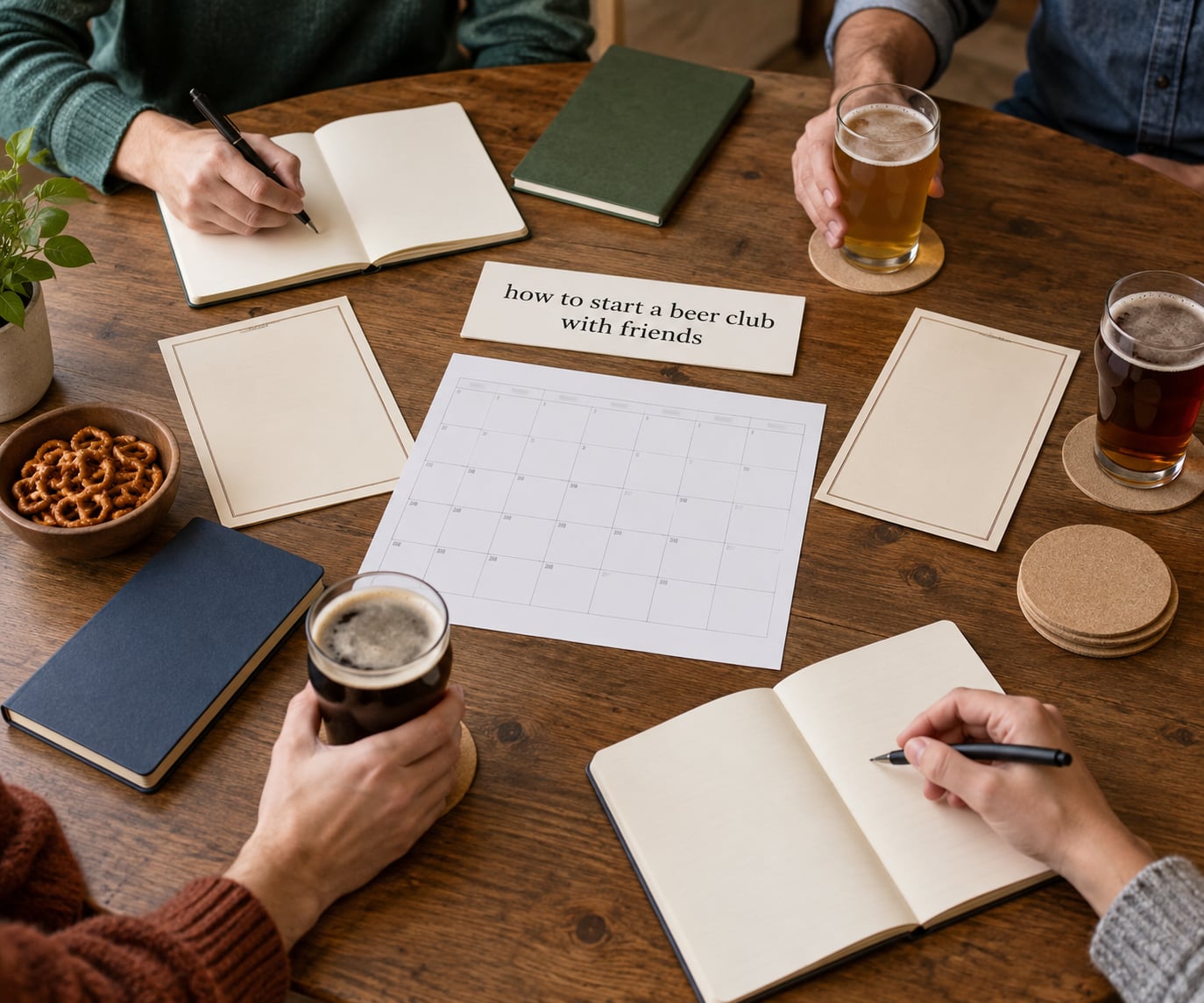
Table of Contents
- What You Need
- Step-by-Step
- Step 1: Define the Club’s Purpose and Format
- Step 2: Set a Budget and Payment System
- Step 3: Choose a Location and Meeting Rhythm
- Step 4: Build a Simple Beer-Tasting System
- Step 5: Launch the Club and Keep It Fun
- Common Mistakes
- Frequently Asked Questions
- How many people should be in a beer club?
- How much beer do I need for a tasting with 6 people?
- Do I need to know about beer to start a club?
- How often should a beer club meet?
- How do you handle non-drinkers and people who drive?
- Does a beer club need to be formal, with dues and officers?
What You Need
The whole checklist is short enough to cover in one sitting with your friends. A group chat is the only piece of software you actually need.
- A group chat everyone reads. This is where dates get set, themes get picked, and people decline without any awkward one-on-one texts. A single thread beats a group email chain every time.
- Five to eight committed members. Below five, one absence guts the evening. Above eight, you cannot pour samples for everyone in one sitting without buying more beer than you planned on.
- A shared budget, either per event or per month. Decide whether each person pays a fixed amount into a pot or each person covers their own purchases. Both work. Ambiguity is what causes arguments.
- A fixed meeting rhythm. A recurring day and time is non-negotiable. Organizers who pick a new date every month end up with the smallest group in the history of the club by month four.
- A theme or rotation system. Either a style theme per meeting, a rotating host who picks the beer, or a bottle share where each member brings something different.
- A tracking method for beers already tried. A shared spreadsheet, a free beer-logging app, or even a cheap notebook per member. The rule everyone agrees on is simple: no repeats.
- Glassware and a palate cleanser. Small tasting glasses, water, plain crackers, and something neutral to reset between beers. Dry sparkling water works well.
Two things worth adding to the list if your group is serious: a container to spit into, and a written one-page charter of your ground rules. The charter takes ten minutes to write and prevents most of the friction that shows up later.
Step-by-Step
Step 1: Define the Club’s Purpose and Format
Most of the work in how to start a beer club with friends happens before anyone buys anything: decide what kind of club this is. The format drives everything else, so it is worth ten minutes of group chat debate.
The most popular format among friends is the bottle share: each member brings the same number of bottles, and everyone tastes everything. One organizer described six people each bringing a six-pack, tasting through them together, and keeping a written log with no repeats. It spreads cost evenly and takes almost no coordination.
Other formats that work well:
- Local breweries first. Every meeting happens at a different local taproom or brewery. Best if you want to support nearby makers and meet brewers face to face.
- Monthly bar crawl. Two or three bars in one neighborhood per outing. Good for a bigger group, since movement keeps it lively.
- Themed tastings at home. One member hosts, one theme per month, such as stouts one night and German lagers the next.
- A mix. Taproom one month, someone’s house the next, a brewery tour the month after that. This is my favorite because the setting changes and nobody gets stuck in a routine.
Write two sentences. What is the club for, and how often does it meet? Something like “We taste beer we would not buy alone, mostly local, second Tuesday of each month.” That sentence goes at the top of your group chat, and it settles arguments for a year.
How you know it worked: you can describe the club’s purpose in one sentence without hedging, and you have a date on the calendar for the first meeting.
Step 2: Set a Budget and Payment System
Cost is the number-one reason people hesitate to start a club, and the fear is mostly about obligation rather than money. One host buying all the beer for six people feels heavier than it is. The bottle share format makes the same evening feel effortless because everyone funds a slice.
Pick one of three systems and tell the group before the first meeting.
- Even split. Everyone contributes the same amount per meeting. Simple, fair, and best for a home-hosted club.
- Bring-your-own. No money changes hands unless someone wants to split food or a reserved tasting fee.
- A monthly pot. Everyone adds a set amount once a month and the host covers the rest. Good if you want a bigger budget for special occasions.
Now add the practical math. Plan on four or five beers per meeting at 4 oz samples. A standard can yields roughly three samples, a 32 oz crowler about eight, and a 64 oz growler about sixteen. Six people tasting five beers needs about 15 oz per person, so a single growler per person covers the evening with nothing spare, while a pair of four-packs per person covers it comfortably.
Decide what happens to any extra beer before you meet, not after. Options include taking it home, giving the host first pick, or putting aside a few bottles for the next meeting. Unresolved extras end up in someone’s cabinet and then turn up warm and forgotten.
For shared costs like a reserved tasting or a table of food, the least awkward method is one person fronting the cost in a single payment app request to the group, then a shared note of who owes what. Nobody has to collect money from anyone in person.
How you know it worked: when someone asks how much they owe, there is a one-line answer already written down.
Step 3: Choose a Location and Meeting Rhythm
Where you meet shapes the evening more than anything else. Pick a location that is easy to reach, not the one with the best beer, unless they happen to be the same.
Home hosts win on cost control. You control pour size, music, and the schedule, and you can serve snacks that match the theme. The downside is cleanup and the fact that one member’s living room absorbs every meeting.
Taprooms and brewery taprooms win on variety. Someone else pours, someone else cleans, and the group gets fresh beer straight from the tank. What you give up is control over pour size, which matters more than people expect.
Rotate hosts so the same person’s house is not hosting for the fourth time in a year. A rotation also spreads the work of choosing the theme and buying the beer, which prevents the burnout that quietly ends most clubs.
Before confirming a venue, check a few practical things:
- Public transit access or nearby parking, so nobody is designated driver by default.
- Step-free entry and a restroom on the same floor if any member needs it.
- Non-alcoholic options on the menu, or an easy walk to a shop that sells them.
- Enough table space for glasses, notes, and snacks without crowding.
- A quiet hour, if members would rather talk than fight the music.
Set the cadence before you pick the day. Monthly is the most common and the easiest to keep, since it matches most people’s attention span for a new commitment. Biweekly works if the group is small and everyone genuinely enjoys beer. Anything more frequent becomes a chore.
Time the slot around real lives. An early evening start suits people with early mornings and leaves room for a second round somewhere afterward. A later slot suits groups with jobs that run long, but it cuts attendance when people are tired.
How you know it worked: nobody has to ask where the next meeting is or who is hosting. It is already on the calendar.
Step 4: Build a Simple Beer-Tasting System
A tasting system sounds formal, and that is exactly why it works. It gives the group something to talk about that is not “this one was good.” The version below takes about two seconds per beer per person.
For each beer, note six things:
- Style and brewery. Write it down before anyone guesses. Wrong guesses are the most fun part.
- Appearance. Color and clarity.
- Aroma. Two or three words is plenty. Citrus, toast, banana, pine.
- Flavor. What you actually taste once it is in your mouth.
- Drinkability. Would you happily drink a full glass of this?
- Overall pick. One beer per person gets a star. No numerical scores, and no arguing about points.
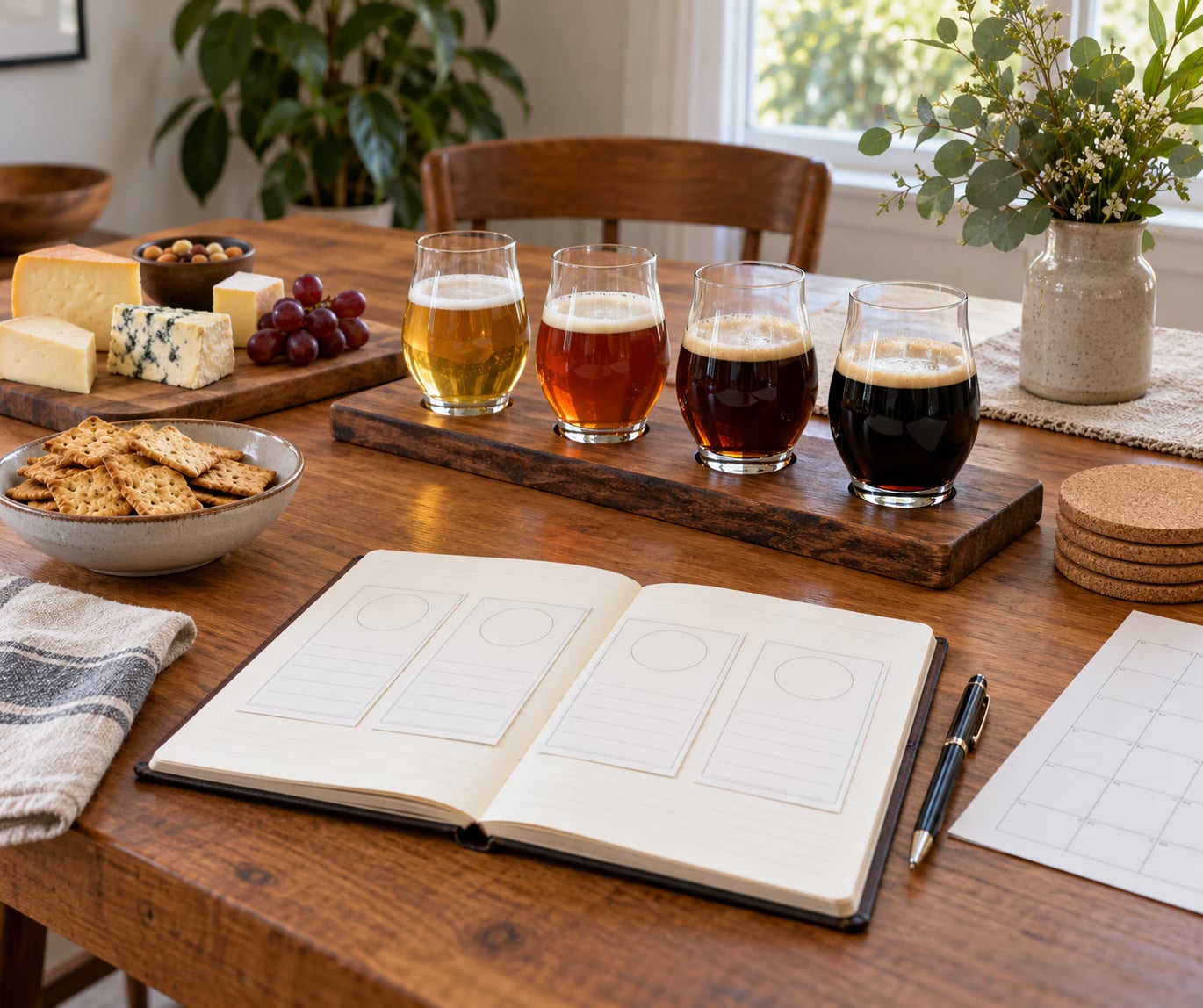
Order of service matters more than most newcomers expect. Pour lightest to darkest, low bitterness to high bitterness, and save sours for last because they wreck the palate for everything after them. Keep a glass of water going and put plain crackers or a mild cheese out for a reset between samples.
Keep the tracking log shared. One spreadsheet with a column for beer name, brewery, style, meeting date, and who brought it. The organizer on one forum thread bought every member a physical notebook for exactly this, and a spreadsheet does the same job for a group that mostly meets in person.
The no-repeats rule is what makes a club feel like it is going somewhere. Agree on it at the first meeting, and check the log before anyone buys. Duplicate bottles are the fastest way to make an evening feel wasted.
On spitting: do it. Pouring 4 oz samples and then trying to finish each one is how people get uncomfortable and stop coming. Spittoons or a spare glass handle it, and nobody in a tasting group will judge you for it.
How you know it worked: after two meetings, everyone can tell you a beer they loved and roughly why, and nobody had to invent an opinion on the spot.
Step 5: Launch the Club and Keep It Fun
The first meeting should be low-stakes. Announce it in the group chat with the date, the location, the format in one line, and what people should bring. Ask people to RSVP, then nudge the non-responders the day before. Attendance on night one sets the tone for the whole club.
Set expectations out loud, briefly: we taste four or five beers, we take small samples, we spit when we need to, nobody has to know anything about beer, and nobody’s favorite is wrong.
Invite a couple of new people once the rhythm is steady, not on night one. Two extra faces in month two is easy; two extra faces on night one means nobody has a seat at the table or a role in the group.
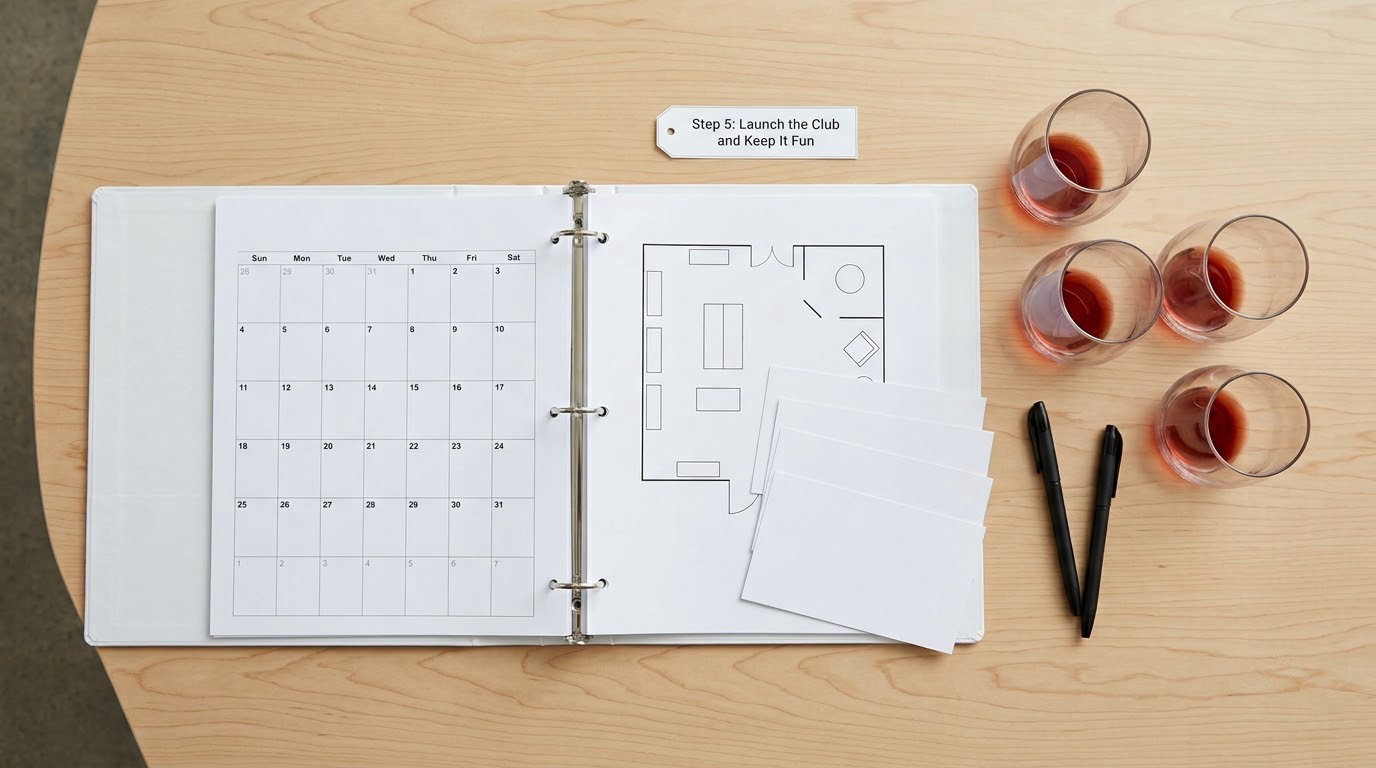
After each meeting, ask one question in the chat: what should we change? The answers that come back most often are “shorter pours,” “easier parking,” and “bring a food theme.” Change one thing at a time, otherwise the club stops feeling like the club.
To keep it going past month three, add variety rather than volume:
- Every fourth meeting becomes a field trip to a brewery taproom or tour, a suggestion that comes up repeatedly in beer groups.
- A seasonal theme rotates naturally: heavier styles in winter, lighter ones in spring, fruit and sour beers in summer.
- The beer with the most stars at the end of the night sets the theme for the next one. That single rule hands ownership to a different person every month and stops one member from running everything forever.
- Invite a brewer or taproom staff member to stop by once in a while. Homebrew clubs do this and members consistently rate it as the thing that moved the club from drinking to learning.
- Hold one field trip per year that costs more than usual, and announce it early.
Groups that disappear after three months usually have no rotation, no theme decision, and one person doing all the work. Add those three things back and attendance recovers.
How you know it worked: the group sets the next date before people leave, and somebody asks about bringing a friend.
Common Mistakes
Almost every club that quietly dies makes the same handful of mistakes. Each one has a simple fix.
- Every outing is expensive. The fix is a firm bottle-price ceiling agreed on at the start, plus a standing rule that a monthly meeting uses the normal budget rather than a special one.
- Only obscure beers get bought. Groups that only bring barrel-aged or sour beers turn off anyone who just wants a good lager. Include a couple of styles people already drink, and keep the adventurous picks as only part of the flight.
- The tasting becomes a competition. Numeric scoring and a visible leaderboard do this. Stars, a spoken favorite, and a theme chosen by the winner keep the tone friendly.
- Non-drinkers and drivers get ignored. Plan transport before the evening, offer good non-alcoholic options, and make spitting normal rather than embarrassing. A member who once felt they had to drink to belong stops coming.
- Nobody communicates. Themes chosen by one person without asking the group lead to drift and disengagement. Post the plan a week early and let people object.
- The schedule turns rigid. A single fixed slot punishes shift workers and new parents. Rotate the time or the neighborhood every other month.
- Extra beer gets ignored. Decide the rule on night one: take it home, host’s pick, or saved for the next meeting. It also cuts what you need to buy.
- One person hosts everything. Rotate hosts, rotate themes, and rotate who buys the snacks. Burnout is the most common cause of a club ending, and it is preventable.
One more habit matters more than any rule: end every meeting with the next one scheduled. Clubs that have to reschedule from scratch lose half their members the first time life gets in the way.
Frequently Asked Questions
How many people should be in a beer club?
Five to eight members is the sweet spot for most groups. Five is the minimum where losing one person still leaves a full evening, and eight is about the most you can sample in one sitting comfortably. If one person is buying everything, cap the group near six, since every additional member adds another set of pours. Fifteen-plus groups work by splitting into pairs, each pair bringing one beer.
How much beer do I need for a tasting with 6 people?
Plan on four or five beers at 4 oz samples each. Six people tasting five beers needs about 15 oz per person, so a 64 oz growler per person covers it with nothing spare, while a pair of four-packs per person leaves a margin. In container terms, a standard can yields about three samples, a 32 oz crowler about eight, and a 64 oz growler about sixteen.
Do I need to know about beer to start a club?
No, and this is the thing that stops most organizers. Nobody in the group needs brewing experience or formal tasting knowledge. Write the beer name and brewery down before anyone guesses the style, and let wrong guesses be part of the fun. Your job is logistics: the date, the venue, the budget, and the log.
How often should a beer club meet?
Monthly is the most common rhythm and the easiest to sustain, because it matches most people’s attention span for a new commitment. Every other week works well for a small group of dedicated members. Weekly is usually too much. Pick the cadence before you pick the day, and rotate the time slot every few months so shift workers and new parents can keep attending.
How do you handle non-drinkers and people who drive?
Plan transport before the evening rather than assuming. Offer real non-alcoholic options on the table so nobody has to fake a beer to feel included, and make spitting normal so drinkers do not feel pressure to finish samples. A group that decides this at the first meeting keeps members who would otherwise quietly stop coming.
Does a beer club need to be formal, with dues and officers?
Not at all. The easiest clubs have one page of ground rules and no money changing hands at all, since each member brings their own beer. Avoid annual dues, because paying a full year when only part of it remains feels unfair when attendance drops. If you want structure, a shared spreadsheet, a rotating host, and a scheduled date are enough.
The fastest way to learn how to start a beer club with friends is to start with the boring part tonight. Pick five to eight people, choose a recurring second-weeknight, decide on the bottle-share format so nobody carries the whole cost, and put the date in the group chat before the conversation dies.
Your first meeting does not need a theme, a charter, or a printable log. It needs four or five beers, small pours, water and crackers on the table, and a shared place to write down what you drank. Everything else on this list you can add once the group has shown up twice.