The highest ABV beer styles are imperial stouts, barleywines, Belgian quadrupels, strong bocks, and Scotch ales, and most land between 8 and 14 percent alcohol by volume. A handful of freeze-distilled releases push far past that, but they behave more like spirits than beer. This guide ranks ten strong styles by their typical strength and explains what each one actually tastes like, updated for 2026.
Strong beer gets a bad reputation for a reason. Order a 12 percent imperial stout as a full pint and you will feel it in one glass, and the honest answer is that no style is worth finishing at pace. Sipped slowly in a smaller pour, though, these are the most rewarding beers a taproom sells, with roast depth, dried fruit, and spice that a 5 percent lager will never get close to.
What follows is built around style, not brand. Style guidelines such as the Brewers Association guidelines and the BJCP style book set ranges rather than fixed numbers, so a specific bottle can land above or below the band you read here. Buy the bottle, not the style name, if the number on the label matters to you.
Table of Contents
- Highest ABV Beer Styles at a Glance
- 1. Russian Imperial Stout
- 2. Barleywine
- 3. Belgian Quadrupel
- 4. Belgian Tripel
- 5. American Strong Ale
- 6. Scotch Ale
- 7. Doppelbock or Strong Bock
- 8. Belgian Strong Dark Ale
- 9. Old Ale or Vintage Stock Ale
- 10. Double or Imperial Stout
- What Does ABV Mean, and Why Do Beer Styles Differ?
- How the highest abv beer styles actually get that strong
- How to Choose a Strong Beer Without Overdoing It
- Frequently Asked Questions
- Which beer style has the highest alcohol content?
- What are the strongest beer styles by ABV?
- What does a 14 percent beer taste like?
- Are high ABV beers just spirits in disguise?
- How should strong beer be stored and how long can it age?
- Conclusion
Highest ABV Beer Styles at a Glance
The table below ranks ten styles by typical alcohol by volume and summarizes what each one tastes like, how heavy it feels, and when it earns its place. Ranges come from published style definitions rather than a single brewery’s version, so treat them as a band and check the label.
| Rank | Beer style | Typical ABV | Dominant flavor | Body | Best occasion |
|---|---|---|---|---|---|
| 1 | Russian Imperial Stout | 10 to 15 percent | Roast, coffee, dark chocolate, oak | Very heavy | Cold winter nightcap |
| 2 | Barleywine | 8 to 14 percent | Caramel, dried fruit, toasted malt | Heavy | Slow shareable pour |
| 3 | Belgian Quadrupel | 9 to 14 percent | Dark fruit, caramel, spice | Full | Dinner, dessert course |
| 4 | Belgian Tripel | 8 to 12 percent | Spicy yeast, citrus peel, stone fruit | Medium to full | Warm-weather sipping |
| 5 | American Strong Ale | 8 to 12 percent | Varies, from malt-balanced to very bitter | Medium to heavy | Hop fans seeking punch |
| 6 | Scotch Ale | 8 to 12 percent | Toffee, raisins, nutty malt, light smoke | Full | Cellar, with aged cheese |
| 7 | Doppelbock or Strong Bock | 8 to 12 percent | Bread crust, caramel, dried fruit | Full | Cold months, dessert pairing |
| 8 | Belgian Strong Dark Ale | 8 to 12 percent | Dark fruit, chocolate, clove spice | Full | Cool weather, dessert |
| 9 | Old Ale or Vintage Stock Ale | 8 to 12 percent | Dark fruit, caramel, nutty malt | Full | After a long rest in the cellar |
| 10 | Double or Imperial Stout | 8 to 15 percent | Roast, smoke, sweetness, hop edge | Very heavy | Winter, dessert pairing |
Read across the ABV column and you will notice most of the strongest styles cluster in a narrow 8 to 14 percent band. That is not a coincidence. It is roughly where conventional brewing with alcohol-tolerant yeast stops looking efficient, which is the subject of the explainer further down.
1. Russian Imperial Stout
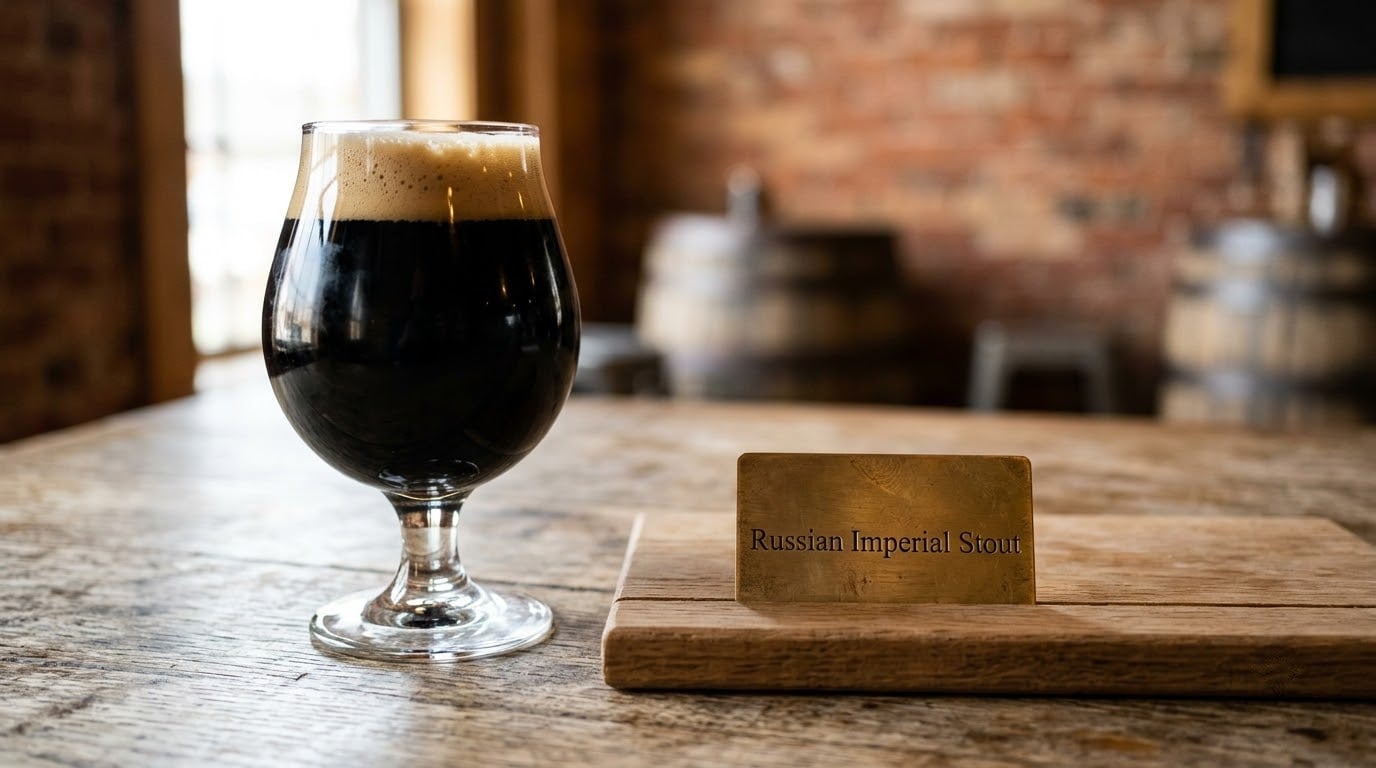
Russian imperial stout is one of the highest ABV beer styles for a practical reason: it carries enough character to stay interesting at 12 percent. Most lagers taste thin at 6 percent because there is not much flavor underneath the alcohol. A Russian imperial stout layers roast, smoke, and fermentation character thick enough that the strength reads as warmth rather than burn.
The style’s roots run back to nineteenth-century England, where export stouts were brewed darker and stronger to survive the trip. Russian versions came from brewers serving the imperial court, and the modern American interpretation is usually a thick, opaque pour with a dense brown to black head.
Bell’s Expedition Stout is the example most people meet first, and it does a good job of showing the style’s balance of roast coffee bitterness, dark chocolate, sweet malt, and a dry finish that stays relatively restrained despite the strength. Bourbon barrel-aged versions add vanilla, oak, and dried fruit on top.
Serve it around 50 to 55 degrees Fahrenheit, which is cellar temperature and warmer than a fridge pour. Even then, a small pour beats a full glass. A 4 ounce taste is roughly the alcohol of most people trying to unwind for the evening, and the flavors underneath are worth slowing down for.
2. Barleywine
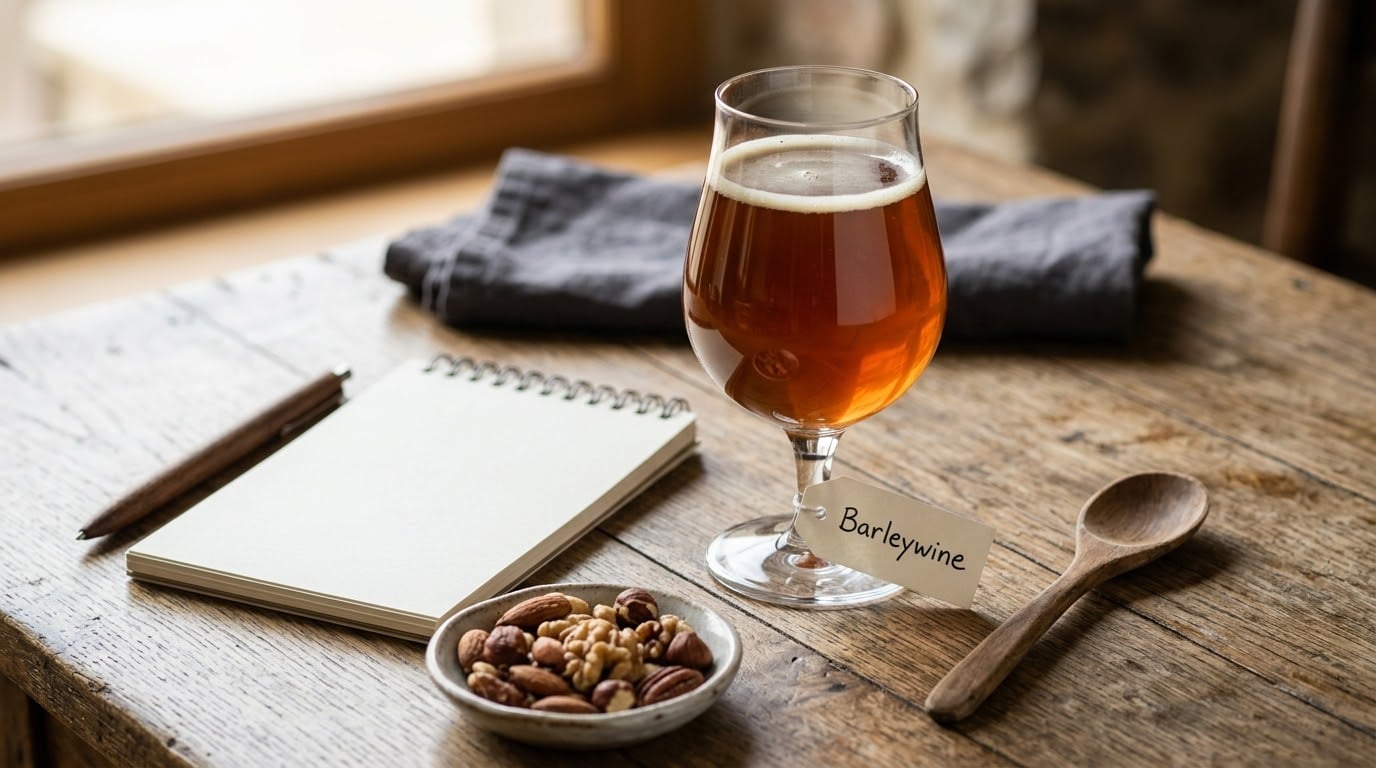
Barleywine is the English answer to the imperial stout, and the two differ more than most drinkers expect. Where a stout leans on roast, barleywine leans on caramelization and dried fruit. It tastes closer to a rich dessert wine in structure, though it is fermented, not aged in oak.
English barleywines are often fermented cool and conditioned cold for months, which slows yeast activity and leaves a malty, almost nutty character with restrained bitterness. American barleywines, by contrast, are usually hoppier and more assertive, with pine and citrus notes that can make the beer taste twice as bitter as it measures.
Sierra Nevada Bigfoot is the reference point most people recognize, a famous first-year release in a green bottle with a pine-tar and caramel profile. It is a good bottle to judge the style by, since it is malty, moderately bitter, and stronger than it tastes at first. A 9 percent barleywine can genuinely be sweeter on the palate than a 6 percent one.
Distinguish it from ordinary barley ale, which stays in the 4 to 6 percent range and tastes nothing like this. If a bottle says barleywine, the word ale is not there, and that difference tells you a brewer aimed at strength.
3. Belgian Quadrupel
Belgian quadrupels are strong, dark, bottle-conditioned ales that usually land between 9 and 14 percent. The name sounds like a strength category because it started as a marketing term in the 1990s to describe beers brewed by one abbey, but in practice it now means a broad family of dark Belgian ales with more body and character than a standard abbey ale.
What you get is dark fruit, caramel, plum, and clove-like spice, with a warming finish that arrives late. The carbonation is usually lively, which helps cut through the density. Because fermentation happens in the bottle, the yeast keeps working, and sediment at the bottom is normal rather than a fault.
Duvel is the famous name in this category, and it is a good style representative without being definitive. Plenty of smaller breweries across Belgium and the United States make quadrupels that are drier, fruitier, or less sweet, so a bottle shop shelf will show you a real range.
One thing to keep straight: a strong pale ale at 10 percent is not a quadrupel. Strength alone does not put a beer in this style, and plenty of very strong ales arrive with no dark fruit and no spice at all.
4. Belgian Tripel
A tripel shows that high strength does not require heavy color or heavy body. These golden to pale Belgian ales run roughly 8 to 12 percent and earn their strength through fermentation character rather than roast or raw sugar weight.
Expect spicy peppery yeast notes, fruity esters like pear and apricot, sometimes a hint of citrus peel, and a finish that turns surprisingly dry. That dryness is the tripel’s signature. A brewer using a substantial amount of malt must finish fermentation very clean, or the residual sweetness would make a 10 percent beer undrinkable.
De Dolle’s Stille Nacht is a well-known tripel worth trying if you can find it, though regional availability varies a lot. La Chouffe and Westmalle Tripel are other widely recognized names in the style. What you will not find is a consistent character between breweries, because tripel is a loose category more than a tightly defined one.
Among the highest ABV beer styles, a tripel is often the most useful entry point, since the flavor reads as spice and fruit rather than heat. Serve it cool, around 45 to 50 degrees Fahrenheit, in a tulip glass so you can pick up the aromatics.
5. American Strong Ale
American strong ale is a category rather than a flavor, and that is the single most important thing to know before you buy one. It generally covers beers above 8 percent, often as high as 12 percent, and within that range the flavor range is enormous. A strong ale can be malty and balanced, bone dry and aggressively bitter, or somewhere in between.
Stone Ruination IPA is a useful example of what happens when a brewer treats a double IPA as a strength exercise rather than an aroma exercise. It is bitter, resinous, and heavily hopped, and the bitterness masks alcohol warmth in a way that makes the ABV feel lower than the number suggests. That masking is a trick, not a free pass.
Do not assume a double IPA is always stronger than a barleywine or a tripel. Two beers at 9 percent can be wildly different in flavor, and a double IPA at 8 percent can taste more alcoholic than a barleywine at 11, because hop bitterness does not soften the sensation the way malt sweetness does.
6. Scotch Ale
Scotch ale is the style most likely to surprise you, because a 10 percent Scotch ale often looks and smells like a mild brown ale. The alcohol is present, but it stays in the background behind a wall of malt.
Typical flavors run to toffee, caramel, raisins, figs, and nutty bread crust, with a low hop profile that lets the malt carry everything. The stronger versions are sometimes labeled wee heavy in the United Kingdom, where they sit alongside other strong Scottish ales. Heavy is a taste description first and a strength description second.
Traquair House Ale, from an 18th-century Scottish brewery, is the name most often used to explain the style, and its restrained, malty profile is a good illustration of how little bitterness a Scotch ale needs.
One clarification matters here: heavily peated Scotch ales are a different experience again. That smoke character comes from peat in the malt, not from strength, and drinkers who want a 10 percent beer without any smoke should avoid the peated versions. Peat and ABV are unrelated decisions a brewer makes separately.
7. Doppelbock or Strong Bock
Strong bocks are concentrated malt-forward lagers, commonly around 8 to 12 percent, and the doppelbock is the most recognized form. Bock means a strong lager in German, so a doppelbock is a bock strong enough to be brewed in a larger format.
Ayinger Celebrator is a widely known doppelbock and a fair guide to the style: bread crust, caramel, dried fruit, and a dark malt edge with almost no hop bitterness to speak of. The finish is fuller than a bock and the warmth is unmistakable, which is why this is a cold-month beer in its home region.
Icebock, or eisbock, is the related style made by the freeze concentration method. A brewer partially freezes the finished beer, then drains away the ice, leaving the alcohol and the remaining sugars behind in a thicker, stronger liquid. That process can push a lager well past its normal range without distillation, which is why eisbock is often the most legitimately strong lager style in existence.
Sweetness does not mean sugar is the only thing creating strength. A doppelbock is a full-strength fermented lager, and its residual sweetness is mostly unfermented malt sugar that the yeast left behind. The alcohol and the sugar came from the same fermentable wort.
8. Belgian Strong Dark Ale
Belgian strong dark ales cover the abbey and monastery end of Belgian brewing, usually from 8 to 12 percent. Compared with a quadrupel they tend to be softer, less aggressively spiced, and more dependent on a single dark-fruit note that can read as plum, raisin, or fig.
Think of the category as caramel and dark fruit sitting on a spicy fermentation base, with chocolate notes coming more from roasted malt than from any added flavoring. Widely recognized abbey-style dark ales are the reference points here, and they are easy to find in most markets.
That is worth a word of caution. Abbey branding in Belgium is partly a marketing term, and beers from outside Belgium often use the word in a way that has no connection to an abbey at all. An abbey-style dark ale tells you the flavor profile it was brewed to imitate, not where it was made or who endorses it.
Serving temperature changes this style more than most. Poured cold, the alcohol warmth flattens and the fruit comes forward. Poured slightly cool instead of ice cold, the caramel and spice open up and the beer tastes rounder. Try the same bottle both ways if you have the patience; it is the cheapest lesson in tasting there is.
9. Old Ale or Vintage Stock Ale
Old ale is the historical English category that barleywine and stock ale both grew out of, and it usually sits around 8 to 12 percent. The defining flavors are dark fruit, caramel, nutty malt, and a gentle hop edge, with a smoothness that comes from long conditioning rather than from any strong hop presence.
The name causes confusion because old ale and vintage sound like the same idea, and they are not. Vintage refers to a year of production, and it should appear on the label with the year. Old ale refers to a style, and it can be from this year. A vintage is a dating claim; an old ale is a flavor category.
Established bottled old ales are the honest way to judge the style, and a well-aged bottle can taste completely different from a fresh one, with the sharp alcohol edge softened and the fruit flavors deepened. A young bottle from the same brewery can taste rougher and simpler.
Aging claims deserve the same skepticism. Some breweries bottle deliberately, and the vintage date is meaningful. Others buy beer and put a year on the label, which means very little. There is no standard that makes a vintage date trustworthy, so treat it as a manufacturer’s promise rather than a fact.
10. Double or Imperial Stout
Imperial stouts close out the ranking, commonly from 8 to 15 percent, and they are the widest-ranging family here. A sweet coffee-driven imperial stout and a dry, smoky, almost liquorice-heavy one can sit at the same ABV and behave like different drinks.
Stone Imperial Russian Stout and Founders Breakfast Stout are the two most cited names in the style. One leans dark and sweet with a thick, oily body; the other is smokier and more balanced, with coffee and bitter chocolate doing more of the work. Same style, same broad strength range, entirely different experience.
A high rating on a rate-and-review site tells you a beer is well made and well liked. It tells you nothing about its ABV. Imperial stout ratings and strength are effectively unrelated, because a 9 percent imperial stout with excellent balance will usually outscore a 16 percent novelty with a harsh alcohol finish.
Portion control is the whole trick here. Anything above 10 percent belongs in a 3 to 4 ounce pour, and anything above 14 percent belongs in something smaller still. A shared bottle gets you the flavor without the arithmetic problem, and it gives everyone at the table a chance to actually taste it.
What Does ABV Mean, and Why Do Beer Styles Differ?
ABV stands for alcohol by volume, and it measures how much of the liquid is alcohol. A beer at 10 percent ABV is ten percent alcohol by volume, which is roughly double the strength of a standard 5 percent session beer. Style guidelines treat anything above 8 percent as very strong and 12 percent or more as extreme.
There is a simple way to think about where the number comes from. A brewer makes wort, which is sweet liquid extracted from grain, measures how much sugar is in it, and that figure is the original gravity. After yeast converts that sugar into alcohol and carbon dioxide, the brewer measures again, and that final gravity tells you what is left over. The gap between the two readings, adjusted for temperature, is where the alcohol comes from.
You do not need to calculate it to enjoy these beers, but knowing the mechanism explains why the highest abv beer styles cluster where they do. If you want more detail on the arithmetic, our guide to calculating ABV at home walks through the steps with real numbers.
How the highest abv beer styles actually get that strong
Four decisions do most of the work, and they are worth knowing because they explain the flavor differences between the ten styles above.
Gravity selection. The brewer simply starts with more sugar. More fermentable sugar in the wort means more alcohol available after fermentation, which is why a barleywine and a session ale can share a grain bill but not a result.
Yeast tolerance. Ordinary ale yeast strains taper off somewhere around 10 to 12 percent because alcohol is toxic to them. Brewer’s yeast selected for high-alcohol fermentation pushes further, and Belgian abbey strains contribute their own peppery character along the way.
Attenuation. How completely the yeast eats the sugar changes everything downstream. A highly attenuated beer finishes dry, and at high strength that dryness is what keeps a 10 percent tripel drinkable. An under-attenuated one at the same strength would be a syrup you could stand a spoon in.
Concentration. Eisbock is the outlier. Rather than fermenting harder, the brewer freezes the finished beer and removes the ice, concentrating what remains. Naturally fermented beers in this list stay under roughly 14 percent, and anything dramatically above that line usually involves freeze concentration or a spirit-like process rather than yeast alone.
That last point answers the question people ask most often. Beers well past 20 percent are not stronger because the yeast worked harder. They are stronger because water was removed, and at some point the product legally and practically stops being beer.
How to Choose a Strong Beer Without Overdoing It
Start with the label, not the color. A dark beer at 6 percent and a pale beer at 11 percent both exist, and appearance predicts almost nothing about alcohol. The printed ABV is the only reliable number on the bottle, and it costs nothing to check.
Then pick a style for its flavor rather than its strength. If you like coffee and dark chocolate, an imperial stout. If you want fruit and spice, a tripel or a quadrupel. If you want caramel and nuts, a barleywine or a doppelbock. Choosing by flavor means the alcohol is something the beer has, not the only thing it has.
Pour small and commit to it. Between 2 and 4 ounces is the standard tasting size above 10 percent, and it is enough to judge a beer properly. Drink it slowly enough to notice the finish, which is where most strong beers put their best flavors and their alcohol warmth at the same time. If you have never done that methodically, our step-by-step guide to tasting beer breaks it down into what to look for and in what order.
Alternate with water and eat something alongside. Food and non-alcoholic drinks slow absorption, and a strong beer next to a meal is a completely different experience from the same beer on an empty stomach. The serving temperature guide covers the cellar-temperature and cool-pour split that makes these styles easier to drink.
Share the bottle when you can. Splitting a 750 milliliter bottle between two people gives you both the full flavor experience at half the total, and it is the simplest habit that keeps a tasting from turning into a mistake.
Two practical notes on strong beer specifically. Store these bottles away from heat and light even if you plan to drink them young, because extended warmth accelerates oxidation, and a strong beer that has oxidized tastes like bruised apple and cardboard rather than the fruit you paid for. And if you are not sure how you handle alcohol, start with the styles at the low end of the ranges above, where the flavor is strong but the number is manageable.
None of this is a lecture. It is just the practical reality that a 13 percent beer and a 5 percent beer do not behave the same way, and the drinkers who enjoy strong beer longest are the ones who treat it as a tasting rather than a drink.
Frequently Asked Questions
Which beer style has the highest alcohol content?
No single style holds the record, because strength depends on the beer. Naturally fermented styles generally top out around 12 to 14 percent, and eisbock reaches roughly 16 to 20 percent through freeze concentration. Freeze-distilled products above 30 percent exist, but at that point they are closer to a spirit than a beer and tell you very little about beer style.
What are the strongest beer styles by ABV?
The strongest commonly available styles are eisbock, barleywine, Belgian quadrupel, and Russian imperial stout, all sitting somewhere between 10 and 20 percent depending on the brewery. Double IPA, doppelbock, and strong Scotch ales cluster lower, around 8 to 12 percent, and are often more balanced and easier to enjoy than the very strongest examples.
What does a 14 percent beer taste like?
At 14 percent, a well-made beer tastes of its ingredients first and the alcohol second, so a barleywine reads as caramel and dried fruit and an imperial stout reads as coffee and chocolate. The alcohol shows up as warmth in the throat and a finish that lingers. Poorly made strong beer tastes hot and thin, which is the difference drinkers notice immediately.
Are high ABV beers just spirits in disguise?
Below about 15 percent, a strong beer is still recognizably beer, though the flavor profile moves toward port, sherry, or a sweet liqueur. Above 20 percent, most commercial examples have had water removed through freeze distillation, which concentrates the alcohol in the way a distiller would. Regulators in some jurisdictions classify those products differently for exactly that reason.
How should strong beer be stored and how long can it age?
Keep the bottle away from heat and light, and leave it upright if it has sediment from bottle conditioning. Most imperial stouts and Scotch ales are enjoyable young and improve for one to three years, while barleywines and old ales often keep going longer. Strong beer does not automatically get better with age, so drink a bottle early to learn what you like before you commit to cellaring.
Conclusion
The highest ABV beer styles all share a narrow practical band. Imperial stouts, barleywines, quadrupels, strong bocks, and Scotch ales occupy roughly 8 to 15 percent, and above that you are into eisbock or freeze-distilled territory where the category starts to blur.
Check the labeled ABV before you buy, choose one style for the flavor rather than the number, and pour it small enough to actually taste. If you want a place to start, a barleywine or an imperial stout at 9 to 10 percent gives you the full character of the highest ABV beer styles without the arithmetic getting out of hand.