Most beer tastes best somewhere between 38°F and 55°F (3–13°C), and the best temperature to serve different beer styles depends on the style itself. Light lagers want the cold end, hoppy ales sit in the middle, and strong dark beers open up near the warm end. Start with the range for your style, pour, taste, and adjust from there.
That is the whole answer. The messy part is that you will meet a dozen charts online, all of which disagree with each other, and the fridge in your kitchen serves one temperature no matter what is in it.
Table of Contents
- What Is the Best Temperature to Serve Different Beer Styles?
- Beer Serving Temperatures at a Glance
- How Temperature Changes Beer Flavor and Aroma
- What Temperature Should You Serve Light Lagers and Pale Ales?
- What Temperature Should You Serve Hazy IPA, Pale Ale, and IPA?
- What Temperature Should You Serve Stouts, Porters, and Dark Ales?
- What Temperature Should You Serve Wheat Beers, Sours, and Belgian-Style Ales?
- How to Adjust Serving Temperature Without Ruining the Beer
- Frequently Asked Questions
- What temperature is beer best served at?
- What temperature should a beer fridge be?
- What temperature do Germans drink their beer at?
- How long does beer take to get cold in the fridge?
- Does warm beer get you drunk faster?
- Conclusion
What Is the Best Temperature to Serve Different Beer Styles?
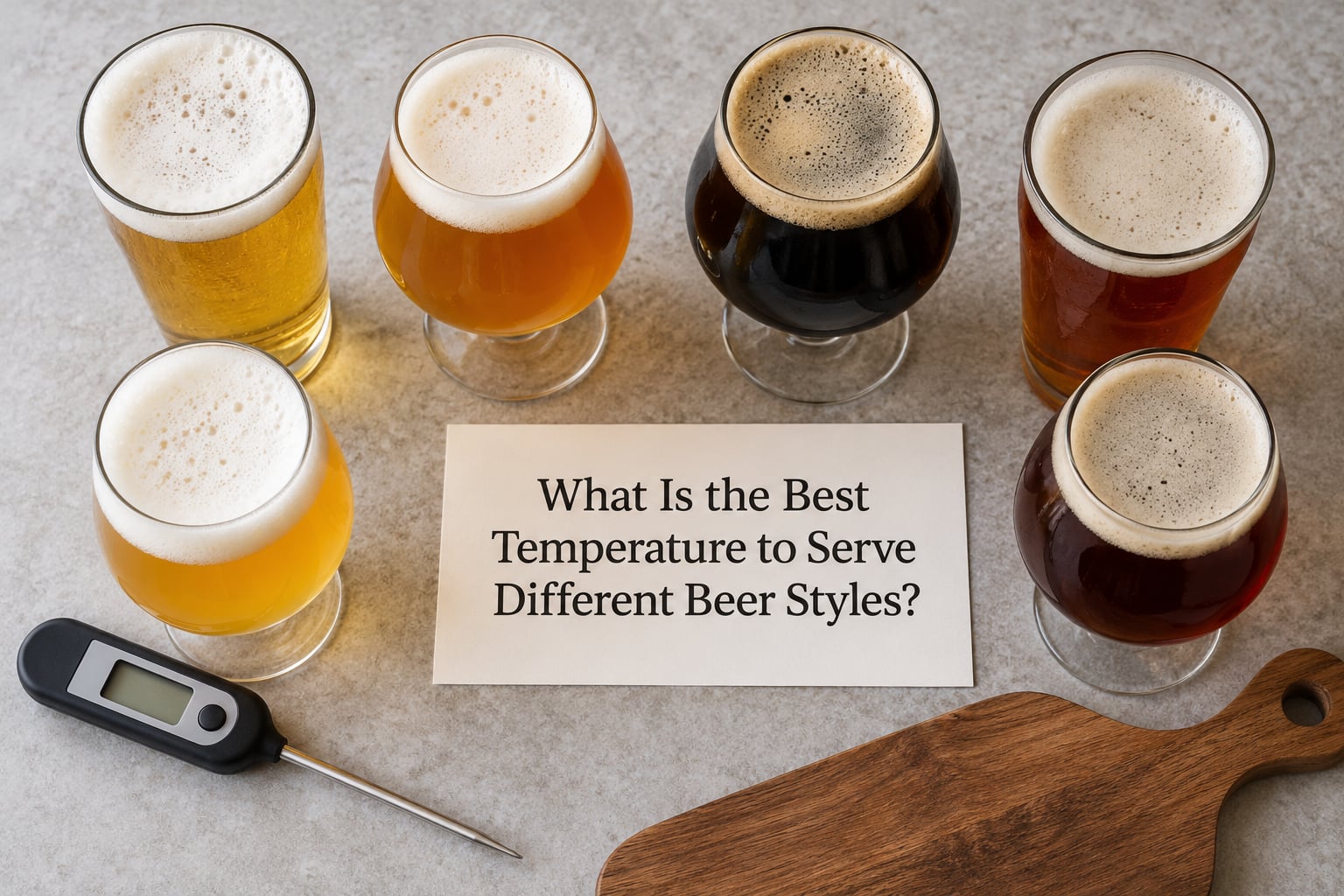
The best temperature to serve different beer styles is a range, not a number. Most beer lands between 38°F and 55°F (3–13°C), with three rules that explain nearly every case:
- Lagers generally want to be colder than ales.
- Stronger beers want to be warmer than ordinary ones.
- Darker beers want to be warmer than pale ones.
Those rules come from the BJCP style guidelines and from the American Homebrewers Association, whose table of recommended serving temperatures is drawn from Randy Mosher’s Tasting Beer. Breweries routinely publish their own number for a flagship, and it is usually right for that beer.
Everything else is adjustment. Glass shape, how long the pour sits, the temperature of the room, and how long your hand wraps around the glass all move the effective serving temperature by several degrees within a few minutes. Treat any single chart as a starting point rather than a rule.
Beer Serving Temperatures at a Glance
This is the reference table to keep near the fridge. Every range below is the temperature of the beer in the glass when you drink it, not the temperature of your storage.
| Beer style | Fahrenheit | Celsius | Typical glass | Why this temperature works |
|---|---|---|---|---|
| Light lager, American pilsner | 38–45°F | 3–7°C | Pint glass | Crisp and quenching; extra cold only mutes the clean grain and corn character |
| Munich helles, Bohemian pilsner | 41–46°F | 5–8°C | Seidel or mug | A touch of cold keeps the soft malt breadiness and fine hop snap distinct |
| Marzen, Oktoberfest lager | 44–48°F | 7–9°C | Seidel | Toasty malt needs a little warmth; ice cold flattens the whole grain character |
| Dunkel, dark lager | 46–50°F | 8–10°C | Seidel or mug | Roast and caramel notes need warmth to separate from the malt base |
| Blonde ale, cream ale | 40–45°F | 4–7°C | Pint glass | Light body and mild flavor tolerate a cool pour without losing much |
| American pale ale | 40–45°F | 4–7°C | Pint or tulip | Balanced malt and hops stay readable in this band |
| West Coast IPA | 45–50°F | 7–10°C | Tulip or IPA glass | Pine and grapefruit hop oils need warmth to volatilize; cold flattens the aroma |
| East Coast IPA | 45–50°F | 7–10°C | Tulip | Dried fruit and resin read better a few degrees up |
| Hazy IPA, New England IPA | 45–52°F | 7–11°C | Tulip or teku | Thick, juice-like hops are nearly flavorless poured straight from a fridge |
| Session IPA, light IPA | 40–45°F | 4–7°C | Pint glass | Thin body and low strength suit a colder, more refreshing pour |
| English bitter, ESB, mild | 50–55°F | 10–13°C | Nonic pint | Cask ale was never meant to be chilled; cold kills the delicate esters |
| Porter | 45–52°F | 7–11°C | Pint or tulip | Roast and chocolate aromatics need a warmer glass than its color suggests |
| Dry stout (Guinness-style) | 45–50°F | 7–10°C | Pint glass | Coffee and roasted barley come forward as it warms; nitrogen head holds better too |
| Milk stout | 45–52°F | 7–11°C | Tulip | Lactose reads as sweetness only when it is not fighting the cold |
| Oatmeal stout | 48–53°F | 9–11°C | Tulip | Thick, creamy body and roast both benefit from a warmer pour |
| Barrel-aged imperial stout | 50–55°F | 10–13°C | Snifter or tulip | Oak, vanilla, and high alcohol all need room to open up |
| Barleywine, English strong ale | 50–55°F | 10–13°C | Snifter | Alcohol warmth and dark fruit concentrate as temperature rises |
| Hefeweizen, dunkelweizen | 40–45°F | 4–7°C | Weizen glass | Banana and clove esters need coolness; warmer pours get sulfuric |
| Witbier, Belgian white | 40–45°F | 4–7°C | Hexagon tumbler | Light body and orange-coriander aromatics suit a cool serve |
| Saison, farmhouse ale | 45–50°F | 7–10°C | Tulip | Pepper, lemon, and barnyard character open up off ice |
| Lambic, gueuze, fruited sour | 48–55°F | 9–13°C | Flute or tulip | High carbonation and tart acetic character tolerate, even need, warmth |
| Berliner weisse | 40–46°F | 4–8°C | Flute | Thin, sour, and very fizzy; cold keeps the acidity sharp and the body light |
| Belgian tripel, quadrupel | 50–55°F | 10–13°C | Chalice or tulip | Esters, pepper, and 10% alcohol need warmth to smell like anything but warmth |
| Bock, doppelbock | 48–53°F | 9–12°C | Mug or stein | Dense malt and caramel want a warmer glass than body alone would suggest |
| Smoked beer, fruit beer, specialty | 45–52°F | 7–11°C | Tulip | Delicate smoke, fruit, or spice aromatics disappear when poured ice cold |
One note on conflicting sources. The BJCP guidelines publish official serving ranges that often sit a few degrees warmer than the numbers a taproom or a retailer’s chart shows, because the BJCP ranges are written for judging and for reference tasting, where a cold pour would suppress the very aromatics being evaluated. When the two disagree by a few degrees, that is usually the reason, not an error.
How Temperature Changes Beer Flavor and Aroma
Temperature does two main jobs at once: it controls how fast aroma compounds escape the glass, and it controls how much carbonation the beer holds. Each style has a window where both work.
Volatilization is why cold beer tastes flat. Hop oils, yeast esters like banana and clove, and roast character are all volatile. Warm liquid holds these compounds loosely, so they drift up into the air above the beer, where your nose finds them. Cold liquid holds on to them. That is why a hazy IPA poured at 38°F can taste like sweet grapefruit juice and not much else, then blossom into something far more aromatic in a tulip glass within a few minutes.
Carbonation works in reverse. Cold water holds carbon dioxide better, so a cold beer is foamier and more effervescent, and a warm beer goes flat. A lager poured at 35°F can feel almost sharp and over-fizzy because the gas is aggressive and the malt is muted. Bring it up ten degrees and the same beer looks calmer and tastes cleaner.
Perception shifts too. Taste sensitivity for sweetness peaks somewhere around 50°F, and bitterness tends to read sharper as a beer warms. That is why a hoppy IPA can seem abrasive at the wrong temperature and why an imperial stout tastes sweeter in a warm glass than a cold one. Neither change is the beer changing. It is your perception changing with it.
Too cold, the standard failure mode in American bars and home fridges, gives you muted aroma, exaggerated carbonation bite, heavy body, and a foam that over-foams the pour. Too warm gives you lost carbonation, flatness, a slick heavy mouthfeel, and a head that collapses in seconds. Both problems are fixable with a couple of minutes and a little attention.
What Temperature Should You Serve Light Lagers and Pale Ales?
Light lagers and American pilsners belong at 38–45°F (3–7°C). That is the range where the beer is refreshing and clean and the carbonation is doing the work instead of fighting you.
Serve one too warm and two things happen. The clean, crisp impression that makes a light lager worth drinking turns syrupy, and the carbonation that seemed lively at fridge temperature starts to look thin. Admirers of a well-made macro lager will happily drink it colder than this, down near 35°F, and they are not wrong. Just know that below about 38°F you are buying quenching at the cost of the grain and hop detail the brewer put in.
Not every pale beer needs the same coldness. Blonde ales, cream ales, and Kölsch-adjacent styles are more forgiving than a straight light lager because their malt character is mild and their alcohol is low. Munich helles and Bohemian pilsner are the interesting middle cases: serve them at 41–46°F (5–8°C) and the soft bread crust and the crisp Saaz hop both come through, which is exactly what a traditional bierhall would pour.
The styles in this family that take a warmer pour more gracefully are the ones with real malt weight. A Marzen or Oktoberfest lager at 44–48°F (7–9°C) shows caramel and toast; at 34°F it is a beige, bready nothing.
What Temperature Should You Serve Hazy IPA, Pale Ale, and IPA?
IPAs want more warmth than most people give them. A range of 45–52°F (7–11°C) suits the whole family, and hazy IPAs in particular taste thin and artificial when poured straight from a cold fridge.
Hop aroma is the reason. The volatile oils behind grapefruit, pine, mango, and stone fruit need liquid warmth to move into the air. West Coast IPAs built on pine and resin are the most obvious beneficiaries, but East Coast styles full of dried fruit and chewy hops suffer even more from over-chilling. A hazy IPA is mostly a delivery system for hop solids and soft water; cold makes it read as flavored water, and warm makes it read as beer.
Thicker, stronger IPAs lean toward the warmer end of the range. A double IPA at 10% with a heavy body will feel syrupy and hot at 40°F but balanced at 52°F, because the warmth spreads the malt and lets the hop aroma clear the alcohol.
Session IPAs are the exception in this family. Low alcohol and thin body mean a colder 40–45°F (4–7°C) pour is both appropriate and refreshing, and nobody is asking for more aroma from a beer designed for the third hour of a party.
Plain American pale ales sit between the two, and 40–45°F (4–7°C) is a good working number since the malt and hops are in balance either way.
What Temperature Should You Serve Stouts, Porters, and Dark Ales?
Dark beers want the warm end of the range, usually 45–55°F (7–13°C). The color is not the deciding factor, though. It is roast, body, and strength.
Roast character is aromatic, and aromatic means it needs warmth to be smelled. Coffee, dark chocolate, toast, and smoke in a dry stout or a porter are all muted by a fridge-cold pour, and the same beer warmed to 50°F suddenly smells like a coffee shop. Nitrogen stouts also hold a tighter, creamier head at warmer serving temperatures, which matters because a collapsing head is most of what a stout is for.
Strength pushes the number up further. An imperial stout or a barrel-aged version at 10–13% carries oak, vanilla, and alcohol warmth that simply will not register at 42°F. Barleywines want the same treatment. These are the beers most often ruined by a standard fridge setting, and they are the ones that reward a deliberate adjustment the most.
Watch the light-bodied porters and mild English brown ales, though. A porter that leans toward chocolate malt and little roast can turn dull and heavy above 55°F. Keep those in the 45–50°F band. English brown ale and Scotch ale fall in the same spot: modest alcohol, plenty of caramel, no reason to go above 52°F.
What Temperature Should You Serve Wheat Beers, Sours, and Belgian-Style Ales?
This family splits into two camps, and the dividing line is whether aroma or acidity leads the beer.
Wheat beers led by aroma want to be cold. Hefeweizen at 40–45°F (4–7°C) keeps its banana and clove clean; pour the same beer at 55°F and those esters tip over into a hot, almost solvent note that people describe as raw. Witbier sits in the same range, and Berliner weisse wants it too since its tartness and thin body both depend on coldness staying on top.
Sours and highly carbonated Belgian styles want warmth. Lambic, gueuze, and fruited sours at 48–55°F (9–13°C) open up nicely, and their high carbonation plus sharp acetic edge make them a good deal more pleasant when they are not fighting cold water. Saisons, which are dry and peppery, also gain a lot between 45°F and 50°F.
Belgian tripels and quadrupels are a clear case for warm service. At 10°C the yeast character reads as pepper, fruit, and honey; at 13°C the alcohol starts to dominate and the beer turns hot and simple. Bocks, which are cold-fermented lagers with a heavy malt bill, land at 48–53°F (9–12°C) for the same reason: a warm, dense, caramel sweet beer needs warmth to balance the weight.
How to Adjust Serving Temperature Without Ruining the Beer
Here is the routine I use. It is not complicated, but it is the difference between beer that tastes like the brewer intended and beer that tastes like whatever the fridge was set to.
Set the storage temperature below your target. Serve a beer 3–5°F (2–3°C) colder than you want to drink it, because the glass, the pour, and your hand will warm it in a couple of minutes. An all-lager fridge runs 36–38°F. An all-ale fridge runs 45–48°F. If you keep bottles, a cellar in the mid-40s works for almost everything except ice-heavy lagers.
Measure in the glass, not in the fridge. A fridge thermometer in open air reads colder than the beer and colder than what lands in your glass. A cheap probe thermometer in the pour is the honest number.
Let warm beers warm on purpose. Take a stout, an imperial stout, a barleywine, or a tripel out ahead of service. Twenty minutes out of a refrigerator is a commonly recommended wait, and a warm glass in your hand does more work than that. HomebrewTalk users running a single three-tap fridge at 45°F describe exactly this: the beer keeps changing as the glass warms, and the last third is usually the best part. A commenter in r/Homebrewing described the same approach with a three-way split, lagers at 34°F, pale ales near 42°F, and British and Scottish dark beers around 50°F, all from one fridge.
Use ice and water for cold correction, and your hands for warm correction. A glass sitting in an ice-water mix drops fast and stays cold; a glass in plain ice water only cools. To take a beer down quickly, fill the glass with cold water first, dump it, then pour. To bring one up, pour it and hold it, or set the glass in a room-temperature spot for five minutes.
Use the right glass and pre-rinse it. A tulip or snifter narrows at the top, concentrating aroma where your nose can find it. A wide pint glass warms faster in your hand. Rinse the glass with room-temperature water and dump it before pouring, which avoids thermal shock and means you are not chilling or warming the beer with the last of the rinse water.
Mind the room. Outdoors on a warm afternoon or in a packed, sunlit bar, a 45°F beer can climb ten degrees in a few minutes. Lower the target going in, and serve in smaller glasses you can hold by the base or the stem.
If you only have one temperature available, split the difference. Set the fridge to about 43–45°F (6–7°C), which is a little cool for the strongest dark beers and a little warm for a pilsner, and accept that trade for the sake of never fighting your equipment.
Frequently Asked Questions
What temperature is beer best served at?
Most beer is best served between 38 and 55 degrees Fahrenheit, or 3 to 13 degrees Celsius. Light lagers and pilsners sit at the cold end around 38 to 45 degrees, ales and IPAs in the middle around 45 to 50 degrees, and strong dark styles like imperial stout and barleywine at the warm end. Serve a few degrees below your target so the glass and your hands do not finish the job for you.
What temperature should a beer fridge be?
Set the fridge 3 to 5 degrees Fahrenheit below the temperature you want the beer to reach in the glass. An all-lager fridge runs 36 to 38 degrees, and an all-ale fridge runs 45 to 48 degrees. Put the probe against the wall of the keg or next to the bottles rather than in open air, and trust a thermometer in the glass over the fridge display.
What temperature do Germans drink their beer at?
German and Austrian beer is traditionally served at cellar temperature, roughly 46 to 54 degrees Fahrenheit, not ice cold. The idea that beer must be chilled came largely from 20th-century American lager advertising, which pushed the idea of a beer so cold it hurts. A German pils or helles meant for a biergarten is deliberately only barely cool, and English cask ale follows the same logic.
How long does beer take to get cold in the fridge?
A standard bottle or can from room temperature usually needs two to three hours in a domestic refrigerator, and longer in a very full fridge. A beer already in the fridge is easier: move it to a colder spot or an ice-water bath rather than waiting. Homebrewers who insist on letting a bottle sit out for twenty minutes before opening are warming a beer, not chilling one, and the practice matters more for stouts and strong ales.
Does warm beer get you drunk faster?
No. The widely repeated claim that cold beer hits harder has very little behind it, and most of it is a misreading of taste. Warm beer releases more aroma, and a fuller-tasting beer can seem stronger than it is, but temperature itself does not meaningfully change how much alcohol you absorb. Body, strength, pace, and how much you eat are what actually count.
Conclusion
Start at the recommended range for the style, pour it, and give it a minute before you decide. Most of the time the beer is exactly right where the table says it should be.
Adjust only when the glass tells you to. Flat, heavy, and dull means it went too warm and lost its carbonation and aromatics. Sharp, thin, and one-dimensional means it went too cold and locked everything down. Either way, the fix takes about five minutes and a glass of water. When a brewery publishes a temperature for a beer you love, follow that first, and let your own palate settle the rest.