A saison beer is a dry, highly carbonated Belgian farmhouse ale with a distinctive peppery and fruity character. It was brewed in the farmhouses of Wallonia for seasonal workers, and modern brewers still chase that same profile with farm yeast, warm fermentation, and very little residual sugar.
That definition gets you through the first thirty seconds. The interesting part is everything hiding underneath it: the reason a saison tastes like nothing else in your fridge, why the word on the label says season when the beer was made in the dead of winter, and why your favorite bottle might taste nothing like your other favorite bottle.
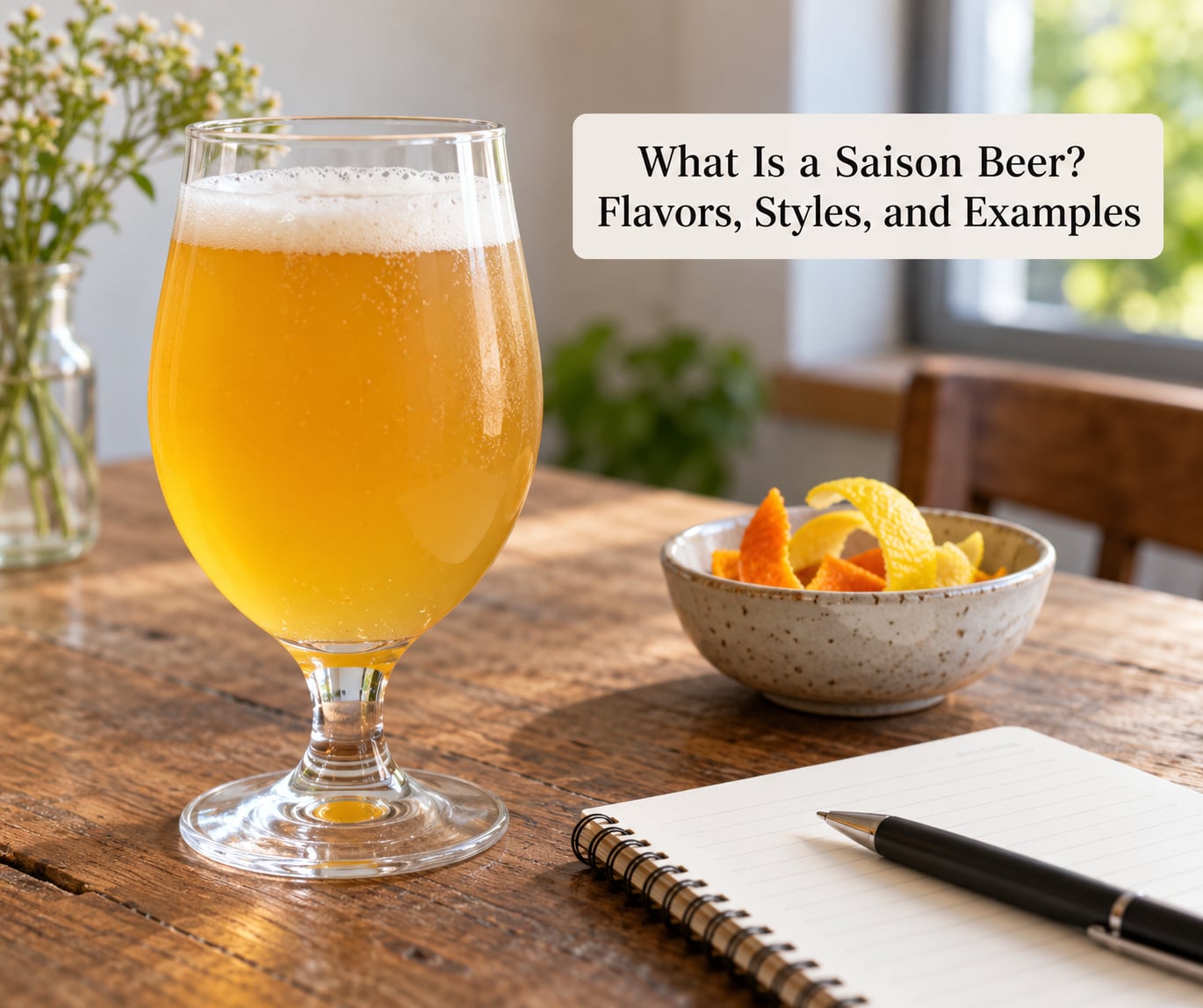
Table of Contents
- What Is a Saison Beer?
- Saison beer at a glance
- Where Does the Name Saison Come From?
- What Makes Saison Beer Taste Different?
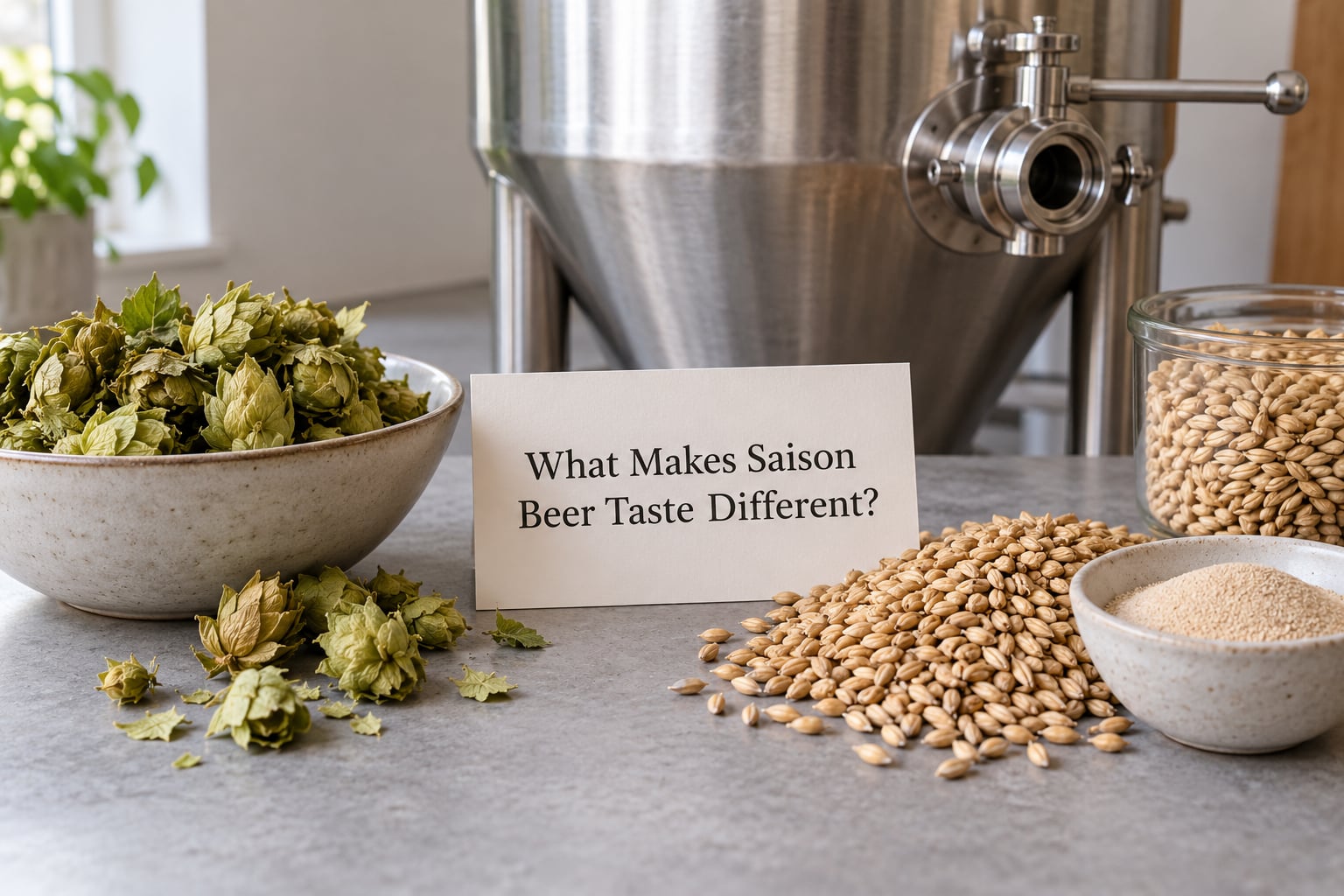
- The yeast is the whole personality
- Warm fermentation
- Mixed culture and Brettanomyces
- Hops, malt, and water
- Carbonation
- What Flavors Can You Expect From a Saison?
- What Is the Difference Between Saison and Farmhouse Ale?
- How Strong and Bitter Is a Saison Beer?
- Which Saison Beers Should Beginners Try?
- How Do You Taste a Saison Beer?
- What Is the Best Food to Pair With a Saison Beer?
- How Do You Choose a Saison at a Bar or Store?
- Frequently Asked Questions
- Is a saison beer a lager or an ale?
- What temperature should I serve a saison beer?
- What glass should I drink a saison from?
- Are all saison beers dry and hoppy?
- Can you age saison beer, and for how long?
- What is a saison d’hiver?
- Conclusion
What Is a Saison Beer?
Saison is an ale, which means the flavor comes from yeast rather than from a bottom-fermented lager process. The beer is gold to amber, usually cloudy, very light on the palate, and famously dry. Carbonation is high, sometimes pour-conditioned so you get a dense head.
The classic aroma has three pillars: fruit esters (think pear, apple, red berry), black pepper and clove-like spice from fermentation, and a faint earthy note that people describe as barnyard or hay. The finish is where the style earns its reputation, because it tends to disappear almost entirely, leaving you ready for the next sip.
Historically it was cheap, rustic, and made in whatever equipment was on hand. That old-world character is exactly what craft brewers fell in love with, and why the style now shows up in taprooms everywhere.
Saison beer at a glance
| Trait | Typical Range |
|---|---|
| Style family | Belgian farmhouse ale |
| Fermentation | Ale, top-fermenting, often warm or mixed culture |
| Alcohol | 4.4% to 10% ABV |
| Bitterness | 20 to 40 IBU |
| Color | 3 to 7 SRM, gold to amber, often hazy |
| Finish | Very dry, sometimes bone dry |
| Carbonation | High, frequently bottle-conditioned |
Those numbers describe a range, not a promise. Some breweries hit 5.5% and stay gentle; others push past 9% and roast the malt. Treat the range as a map of the territory, not a set of rules.
Where Does the Name Saison Come From?
The French word saison means season. In Wallonia, that pointed at one specific season: winter.
Farm work was seasonal labor, and the workers arrived on a farm in late summer and stayed through the harvest. They did not have cellars, and the beer brewed on site was stored, warm, and not always pleasant to drink. So brewers made beer in the winter, when the farmhouse was empty, and stored it in cool cellars until the workers showed up in warmer months. Even after opening, brewers fermented warm and fast in the uninsulated farm buildings to push the last of the sugar out before it got to the workers.
That practical story explains almost everything about the flavor. Cold storage meant no need for a smooth, round lager profile. Fast warm fermentation meant yeast character was the point. And high attenuation meant a beer you could drink in quantity while doing hard work.
Today the term covers a much wider category than those originals, which is part of why “what is a saison beer” gets confusing. A Belgian saison, an American farmhouse ale, and a French bière de garde all sit near each other without being the same thing.
What Makes Saison Beer Taste Different?
The short answer is the yeast, run warm and allowed to eat almost everything in the wort.
The yeast is the whole personality
Farmhouse yeast strains produce large amounts of both esters and phenols. Esters give the fruit, phenols give the pepper and clove. Most brewery strains top out somewhere around 80% attenuation, which leaves sweetness behind. Saison strains routinely exceed 90%, and some keep going to 98% or higher, which is why the beer reads as dry even before you reach the carbonation.
Homebrewers often compare common strains like this:
| Strain | Character | Watch for |
|---|---|---|
| Wyeast 3711 French Saison | Pepper and spice forward, ferments fast and dry | Can run hot and produce fusel character |
| Wyeast 3724 Belgian Saison | Fruity and citrus, softer spice | Notorious for stalling at high gravity |
| Belle Saison (dry) | Reliable, clean, easy for first batches | Less farmhouse funk than 3711 |
| Omega OYL-026 | Pear and apple esters, moderate pepper | Sweeter finish than Brett-forward strains |
Warm fermentation
Traditional farmhouse fermentation runs somewhere in the 75 to 85 degree Fahrenheit range, higher than almost any other ale. Warm temperatures drive off volatile esters and phenols that would stay muted when cold, which is exactly the aroma and flavor the style is built on.
The trade is real. Warm ferments move fast, and a fast ferment can produce fusel alcohols that read as harsh solvent or nail-polish remover. Brewers manage it with temperature ramps rather than one flat setting, starting moderate and pushing up only after the first few days.
Mixed culture and Brettanomyces
Older farmhouse batches were not inoculated with a single clean strain. Cooler cellars and open vessels meant lactobacilli, pediococcus, and wild yeast got in on their own, and Brettanomyces entered through contact with old barrels and equipment.
Brettanomyces is worth knowing by name. It is the source of the barnyard, horse blanket, and overripe apple notes, and it eats dextrins that ordinary yeast leaves behind. That gives saison its extreme dryness and makes the beer capable of slowly changing in the bottle or cellar for years.
Hops, malt, and water
Hops play a supporting role in most traditional examples, used for bitterness and a faint earthy or herbal aroma rather than a hop flavor you can name. Bitterness lands in that 20 to 40 IBU range, low enough that sweetness from the yeast usually reads first.
Malt is pale and simple, frequently Pilsner and sometimes a small amount of wheat or spelt for texture. Anything roasted or dark malt sits outside the style. Warmer mash temperatures keep the body light.
Water in the Wallonia region was soft, which gives the pale malt and the hops room to speak. Brewing with hard water pushes the balance toward bitterness and a heavier body.
Carbonation
Traditional versions were bottled with live yeast, so a second fermentation in the bottle delivered a natural, sometimes lively level of carbonation. Modern versions frequently force-carbonate instead, which gives a tighter, more consistent fizz. Both are legitimate saison.
What Flavors Can You Expect From a Saison?
Season hops are usually too low to call a saison hoppy, so most of what you smell comes from the yeast. The common notes break down like this.
- Fruit: pear, apple, peach, plum, red berry, and in hotter batches banana or tropical fruit.
- Pepper and spice: black pepper, clove, sometimes a hint of ginger or dried chili.
- Citrus: lemon peel, grapefruit pith, and a light grassy hop note that shows up in hoppier modern examples.
- Herbal and earthy: hay, grass, basement floor, and the barnyard funk from Brettanomyces.
- Bread crust: a faint bready character, usually from young malt or a touch of diastatic yeast.
- Sharp acidity: a small sour edge in farmhouse versions, more lactic in character than vinegar.
Dryness is the constant. A well-made one finishes with no sugar residue at all, so a 6.5% saison can feel lighter than a 4% pale ale.
Strength and sweetness are the two things that vary most. Some versions soften the edges with more malt and land a touch sweet, while others ferment down to almost nothing and taste bracingly lean. The label may say nothing, which is why reading the brewer’s description helps.
What Is the Difference Between Saison and Farmhouse Ale?
Farmhouse ale is the broad old category. Saison is one specific, historically French tradition inside it, and breweries use the two terms interchangeably often enough to make your head spin.
The table below sorts the three labels most drinkers confuse.
| Saison | Farmhouse ale | Biere de garde | |
|---|---|---|---|
| Region | Wallonia, Belgium | Belgium and France, mixed | Northern France |
| Typical ABV | 4.4% to 10% | Often 4% to 8% | 5% to 7.5% |
| Finish | Extremely dry | Dry to lightly sweet | Dry, sometimes sharper |
| Yeast | Peppery farm strains, warm ferment | Varies widely | Cleaner farmhouse yeast |
| Hop character | Low, herbal | Low to moderate | Low, sometimes herbal |
| Acidity | Light sour edge | Can be notably sour | Mild |
If a beer is labeled farmhouse ale, expect a rustic, dry, ferment-driven ale with more latitude for sourness and rustic character. If it is labeled saison, expect pepper, fruit, and a bone-dry finish from warm, energetic fermentation.
Biere de garde comes from northern France and reads as a gentler, rounder cousin. Same farmhouse family, a little more malt, less pepper, and usually lower carbonation than a Walloon version.
How Strong and Bitter Is a Saison Beer?
Standard style guidelines put saison at 4.4% to 10% ABV and 20 to 40 IBU, with a color range of 3 to 7 SRM. Sit with those numbers as a style, not as a description of the bottle in your hand.
American brewers tend toward the middle and add noticeable hops. Belgian versions span the widest range, from easy-drinking 5% bottles to strong 9% and 10% examples that warm your hands.
Bitterness is usually the last thing you notice, because the dryness and carbonation keep resetting your palate. A heavily hopped saison tastes bitter by comparison to other saisons, not by comparison to an IPA.
Body runs light to medium, occasionally fuller in stronger versions. Sweetness should be minimal, but sweet saison exists, especially in modern examples brewed with lower-attenuating yeast or a grist that leaves something behind.
Which Saison Beers Should Beginners Try?
Pick by the flavor profile on the label rather than by a ranking. Start with the style most likely to match what you already drink.
| If you enjoy | Look for |
|---|---|
| Belgian ales like Duvel or tripel | Dry, peppery, high carbonation, medium strength |
| Crisp lagers and pilsners | Clean, pale, lightly hopped, bone dry |
| White ale or witbier | Fruity, hazy, softer spice, lighter body |
| Hoppy craft beers | A modern saison with grapefruit or herbal hop aroma |
| Sour and funky beers | A farmhouse version with Brettanomyces and a sour edge |
| Big, warming beers | A strong saison at 8% or above, often with barrel character |
One caution for your first bottle. Highly hopped examples divide people, and the funk in a mixed culture version is not something everyone enjoys on the first try. If a shop offers samples, take one before committing.
How Do You Taste a Saison Beer?
A tasting takes five minutes and changes what you pick next time. Start with the beer cold, around 38 to 45 degrees Fahrenheit, which is straight from the fridge.
Glassware helps more than people expect. A wide tulip or a stemmed flute traps the carbonation and gives you room to swirl, which releases the aromatics. A standard pint glass works fine, but skip a straight-sided tumbler where the head dies.
Look first. A healthy saison is bright gold with a thick white head, and a haze from yeast and protein is normal and often a good sign.
Smell next, before drinking. You are looking for fruit, pepper, and that earthy hop note. If a bottle is six months old, the fruit may have shifted toward raisin and leather, which is normal.
Sip and let it sit. Pay attention to the carbonation at the front of the tongue and the finish at the back. A good dry finish leaves no residue, which can feel almost like a reset.
Finish with the aroma again while the glass is nearly empty. The second sniff is where the pepper usually shows itself most clearly, because the fruit has faded and the phenols have had time to open up.
What Is the Best Food to Pair With a Saison Beer?
Saison pairs well because it is dry, carbonated, and spicy, so it cuts through rich food and cleanses between bites. High carbonation scrubs fat, and pepper notes handle heat and char.
- Cheese: aged Belgian-style cheeses, mild washed-rind cheeses, and fresh goat cheese. The acidity handles a soft-ripened round, while a dry saison mirrors the saltiness of an aged Gouda.
- Sausage and cured meat: bratwurst, Andouille, soppressata, and any charcuterie. The peppery edge matches smoke and spice without adding more heat.
- Grilled and roasted meats: pork shoulder, whole chicken, ribs, and anything with a charred crust.
- Seafood: mussels, shrimp, fried fish, and oysters. A dry saison is the classic match for mussels in a garlic broth.
- Spicy food: curry, chili, and Thai dishes. A moderately hopped version stands up better than an ultra-dry one.
- Salads and vegetables: anything with a sharp vinegar dressing, plus grilled asparagus and zucchini.
- Desserts: a light saison works with fruit tarts and a strong, funky version works with dark chocolate.
Skip very sweet desserts with a bone dry beer. The contrast usually reads as thin rather than refreshing.
How Do You Choose a Saison at a Bar or Store?
Ask three questions and you will narrow the shelf fast. Is it dry or sweet? What strength is it? What yeast was used?
On a tap list, look for ABV and IBU first. If nothing is listed, ask the bartender. Good taprooms can tell you the yeast strain and whether it was bottle conditioned.
On a bottle, scan the label for the words dry, farmhouse, mixed culture, and Brett. Those words describe the flavor before you ever taste it. A brewer description that mentions pepper, fruit, or cellar aging is doing you a favor, so read it.
Watch for style labels that get used loosely. A brewery calling a hazy, IPA-like beer a saison is making a commercial choice, not a brewing one. That can be a good beer. It is just not what you are looking for if you want the farmhouse character.
Finally, buy a mixed case if a shop offers one. Saisons vary more than almost any style, and the only reliable way to find your favorite is to taste several side by side.
Frequently Asked Questions
Is a saison beer a lager or an ale?
A saison is an ale, brewed with top-fermenting yeast at warm temperatures. The pepper, clove, and fruit notes that define the style come directly from that fermentation. Its pale color can make it look like a lager, but the process and flavor are firmly ale.
What temperature should I serve a saison beer?
Serve it cold, around 38 to 45 degrees Fahrenheit. That range keeps the carbonation tight and the aromatics fresh without muting the peppery yeast character. Straight from the refrigerator is fine, though letting it warm for a few minutes before drinking reveals more fruit.
What glass should I drink a saison from?
A tulip or a stemmed flute works best. The shape traps carbonation and gives you room to swirl, which releases the aromatics you are trying to smell. A standard pint glass is perfectly acceptable, and a straight-sided tumbler is the one to avoid because the foam dies fast.
Are all saison beers dry and hoppy?
Dry, yes. Hoppy, not necessarily. Traditional saisons use only 20 to 40 IBU, so bitterness stays in the background while pepper and fruit lead. Many modern American examples add far more hops, and others go in the opposite direction with an even drier and fruitier fermentation character.
Can you age saison beer, and for how long?
Aged saisons are a mixed experience, especially when live yeast was used. Brettanomyces keeps evolving in the bottle, shifting fruit toward raisin, leather, and sherry notes over one to three years, and drinkers divide sharply on the result. Buy a few bottles if you want to test it rather than committing your only one.
What is a saison d’hiver?
A saison d’hiver is the winter counterpart to the farmhouse style, brewed for cold months in the Belgian tradition. It is generally stronger and maltier than a standard saison, with more body and often darker fruit character. Brewery saison d’hiver beers typically run from 7% up into the low double digits.
Conclusion
A saison beer is dry, highly carbonated, and driven by yeast rather than hops, with pepper and fruit as its signature and a finish that barely registers. Everything else about it, from strength to hop load to funk, depends on the brewery.
Your first move is simple. Buy one dry, highly carbonated example in the middle of the style, around 6% ABV, and drink it cold from a tulip glass. Then buy one that is stronger or fruitier and compare them side by side. That comparison teaches you the style faster than any definition can.