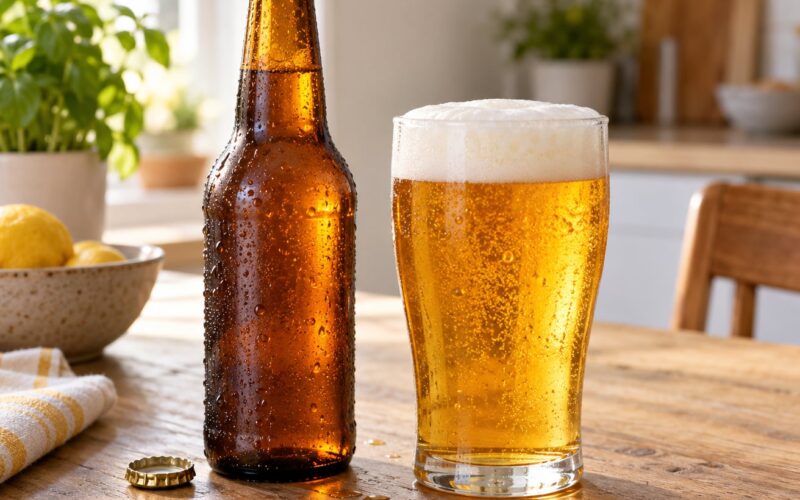
You can tell if a beer has gone bad by checking for a lack of carbonation, off smells like wet cardboard or skunk spray, and a sour or metallic taste. That check takes about a minute and needs nothing more than a clean glass and your nose, and in most cases the smell gives the answer before you ever take a sip.
The tricky part is that stale and spoiled are not the same thing. A beer that has been sitting since last summer is usually flat and cardboard-ish rather than dangerous, while a can that is bulging or leaking is a completely different conversation. This guide walks through the checks in order, from the least invasive clues to the moment you decide to open it or walk away.
Table of Contents
- What You Need
- Step-by-Step: How to Tell if a Beer Has Gone Bad
- 1. Check the Beer Type, Date, and Storage History
- 2. Inspect the Bottle or Can Before Opening It
- 3. Look for Changes in Color, Clarity, and Foam
- 4. Smell It Before Sampling
- 5. Decide Whether It Is Safe and Worth Tasting
- Common Mistakes
- Frequently Asked Questions
- Can you taste beer to check whether it is spoiled?
- Is sediment in a beer bottle always a sign that it has gone bad?
- How long does beer stay good after being opened?
- What does oxidation smell like in beer?
- Does a bulging beer can mean the beer is dangerous?
- Can old craft beer make you sick?
- What to Do First
What You Need
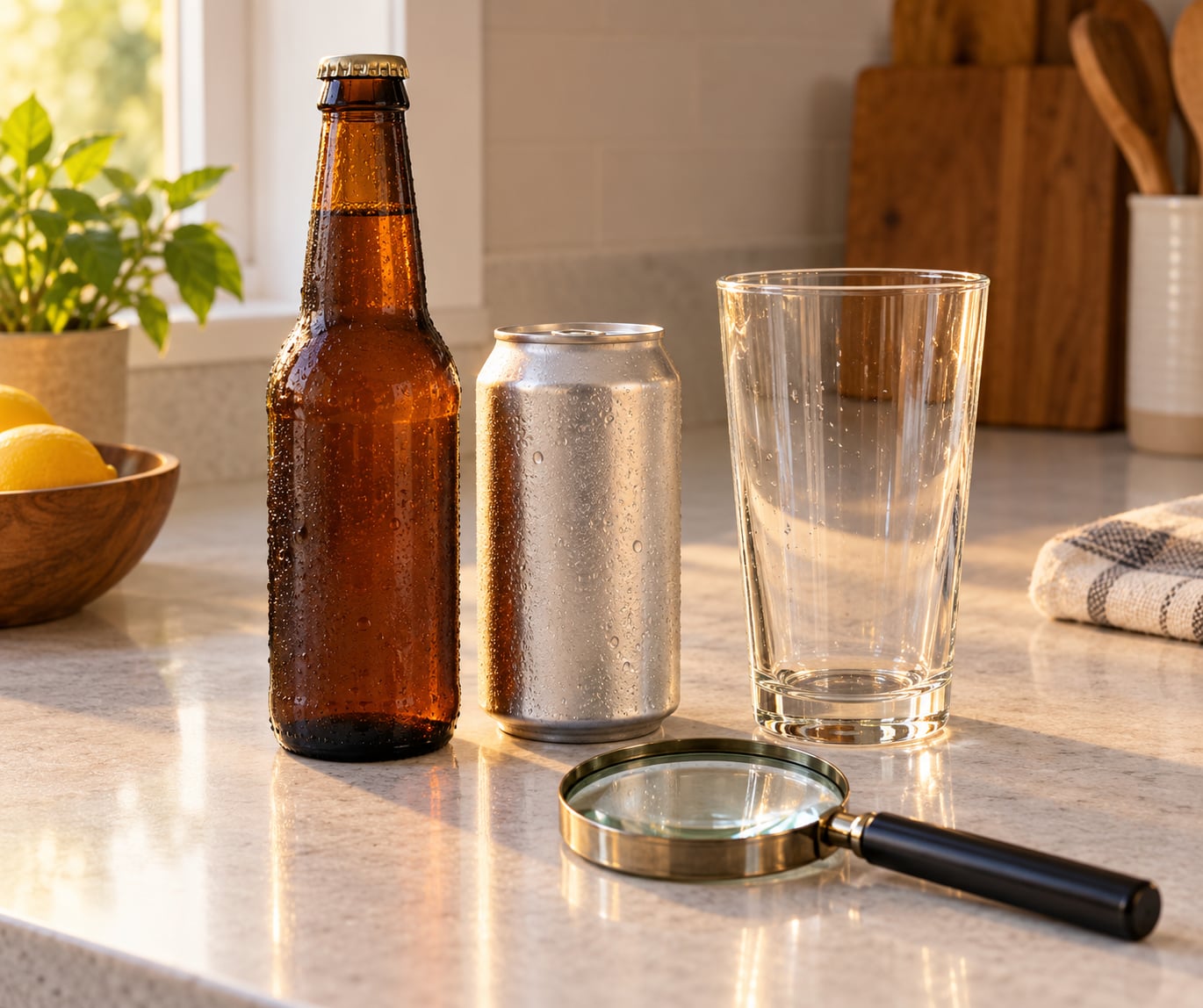
Before you start, gather five things. Most people already have all of them sitting on the counter.
- The unopened bottle or can. Keeping the seal intact matters, because once it is open the most useful clue is gone.
- The label, or a phone to photograph it. You want the printed date, the style, and the ABV before you decide anything.
- A clean, clear glass. A chilled pint glass works fine. Rinse it with cold water first so any smell in the glass does not get blamed on the beer.
- A neutral-smelling space. Not next to the sink, not above the trash can, and ideally not after cutting onions. Aromas travel more than people think.
- A plan for discarding it. Decide up front how you will get rid of a bad bottle without tasting it, so you are not making that call halfway down a bad pour.
No thermometer, no lab kit, no tasting spoon required. If you have those five things, you have everything.
Step-by-Step: How to Tell if a Beer Has Gone Bad
The order below matters. Each step uses information that costs you nothing, and the ones that carry the most weight come last.
1. Check the Beer Type, Date, and Storage History
A six-month-old pilsner and a six-month-old barleywine are not the same bottle of liquid, so the style sets your expectations before you do anything else.
Two kinds of date appear on beer. A best by date is a quality promise from the brewery, and the beer past it is usually stale rather than spoiled. A born on date marks the day it was packaged, which tells you how much clock time it has had. Neither is a food safety deadline, the way a date on milk is.
Julian date codes are common on European bottles and on some imports. The stamp is a day count from a fixed origin, usually printed as a letter and a number, so a code like 25082 reads as the 82nd day of the year it was stamped. If the format is unfamiliar, cross-check the number against the brewery before you trust it.
| Style | Typical freshness window | What goes wrong first |
|---|---|---|
| Hazy IPA and hop-heavy pale ales | 90 to 120 days | Aroma and hop bitterness |
| Pale lager and pilsner | 6 to 9 months | Very slow oxidation, then character |
| Wheat beer and session ale | 3 to 6 months | Yeast character and carbonation |
| Saison and farmhouse ale | 6 to 12 months | Hop aroma, then a mellowing |
| Porter and stout | 6 to 12 months | Roast character softens first |
| Barleywine and imperial stout | 1 year and up | Very little, they often improve |
| Lambic and gueuze | 1 to 3 years | Nothing much, cellaring is intended |
Storage history completes the picture. A beer that spent a summer in a hot car, froze solid in a garage, or sat in a sunny window has already been damaged no matter what the label says. Heat drives oxidation, sunlight triggers the skunky reaction in hop compounds, and freezing separates yeast and yeast sediment that was meant to stay mixed.
It helps to know what you already saw in the bottle or can, because that information is about to disappear.
2. Inspect the Bottle or Can Before Opening It
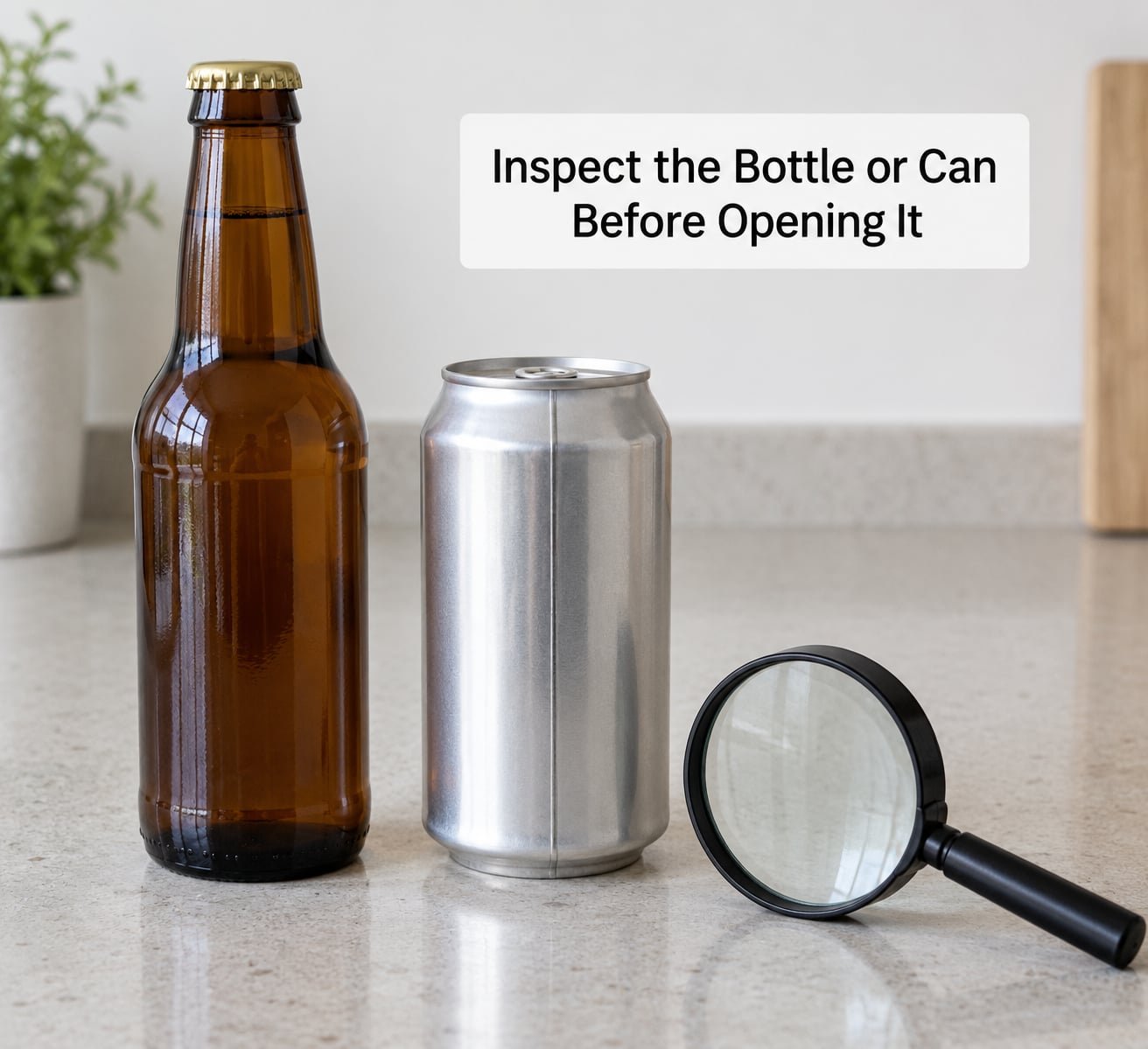
Pick the beer up and turn it slowly. You are looking for evidence that the seal failed or something is living inside the package.
- A leak. A wet ring under the can or a sticky cap means liquid escaped and air got back in.
- Corrosion or rust. Rust on the cap or around the seam, especially with any swelling.
- Deep dents or a swollen can. A can that feels bloated or springs back slowly is not normal. Do not open it.
- Cracked glass or a broken crown cap. Even a hairline crack is enough to skip the bottle.
- Unexpectedly light packaging. A can or bottle with no liquid sloshing inside has lost its beer to a leak you cannot see.
This step takes fifteen seconds and is the one people skip. A bulging can is the single clearest signal in this whole guide, and the appropriate response is to move it away from other food and let someone else handle disposal.
3. Look for Changes in Color, Clarity, and Foam
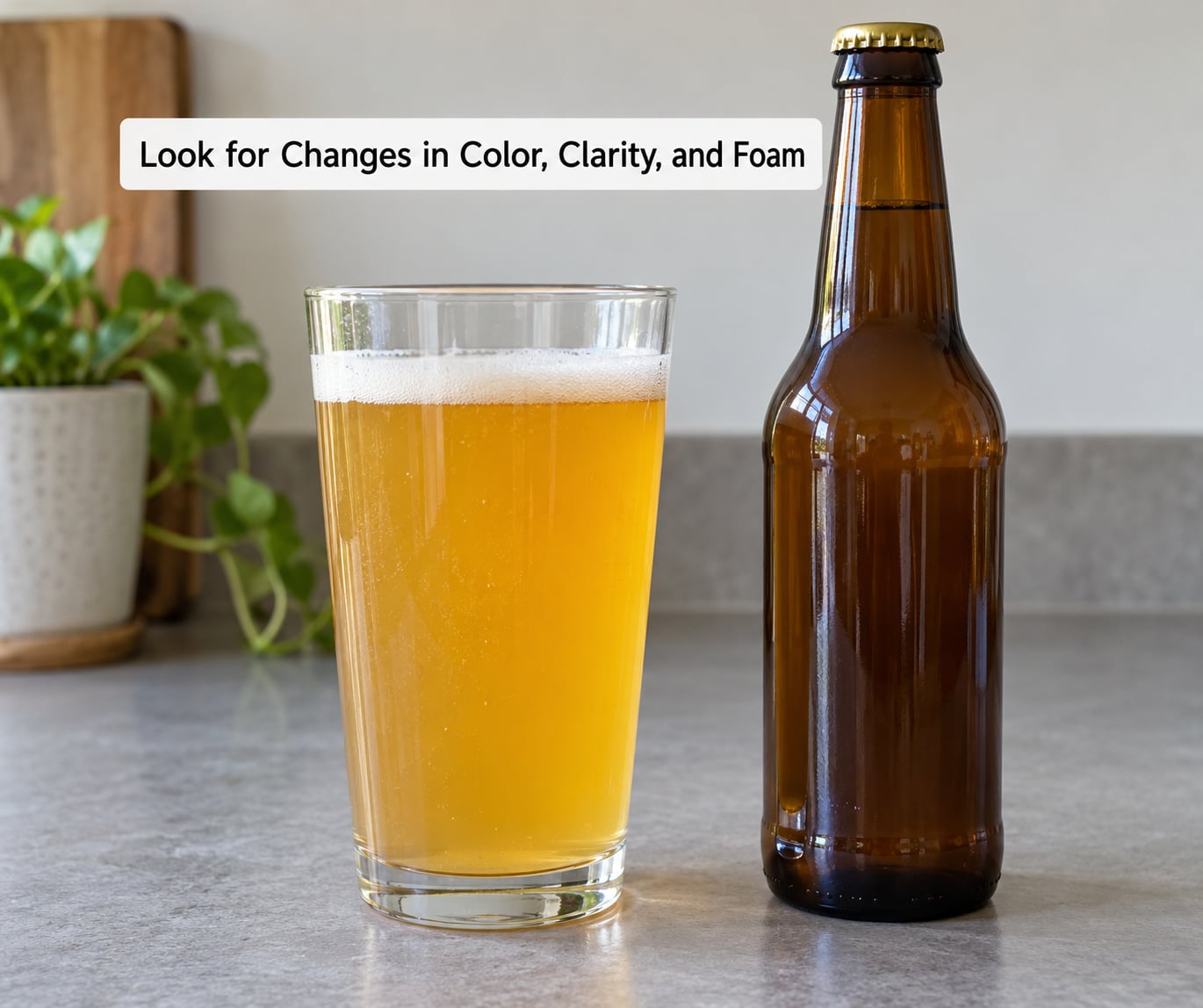
Now open it, or pour from the bottle into your glass. Watch the pour itself before you smell anything.
Ordinary lagers and pilsners pour bright and clear. A hazy IPA is supposed to be cloudy, and a wheat beer is supposed to be cloudy, and a gose is supposed to be cloudy. What matters is whether the appearance matches the style.
Signs that something is off include a film or skin on the surface, wispy strands or floating particles that will not disperse, sediment in a beer that is normally clear, or a color shift toward muddy brown in a beer that should be pale gold. Watch the head too. Beer with carbonation builds a foamy head and holds it. Beer that goes flat collapses almost as soon as it lands, and the pour looks watery and thin.
Sediment deserves its own note, because it causes more confusion than anything else. Yeast and hop sediment at the bottom of a bottle, and the cloudy layer in a hazy IPA, are normal. Let the bottle stand upright until the solids drop to the base, then pour carefully and leave the last inch or so behind. That sediment is exactly what the haze and the flavor of those styles are made of.
4. Smell It Before Sampling
Smell is the most reliable test you have, because the nose picks up the volatile compounds that oxidation and contamination produce at concentrations far below anything you can taste. Sniff the head rather than the liquid, where the aromatics collect, and take your time.
The trap is assuming every unusual aroma means spoilage. Hops smell grassy, herbal, tropical or piney. Belgian yeast can read as pear, banana or clove. A gose smells of salt and coriander. Lambic is supposed to smell like a barnyard, a horse blanket or a sweaty gym sock, and Brettanomyces in an old bottle is supposed to smell exactly as odd as it does. None of those are contamination.
| Smell | What is happening | Verdict |
|---|---|---|
| Wet cardboard, damp newspaper, old leather | Oxidation, the classic stale note | Stale, not dangerous. Drink it or dump it, your call. |
| Skunky, burnt rubber, crushed green leaves | Lightstruck, sunlight hit hop compounds | Tastes ruined but harmless. |
| Vinegar, sharp sour tang | Acetic acid from bacteria or an unintended sour | Stop. Do not drink it. |
| Acetone, nail polish remover | Solvent-like volatile compounds from a heavily stressed beer | Do not drink it. |
| Rotten, fecal, animal waste | Bacterial contamination | Discard without tasting. |
| Musty, damp basement | Oxidation plus a compromised container | Discard. |
| Grassy hops, pine, tropical fruit, clove, salt | Normal character for the style | Perfectly fine. |
If you can put a name to the smell and it is not on the bad list, take a small sip. If you cannot name it at all, that confusion is itself the answer, and it is what the craft beer community usually goes by. The habit of posting a photo to strangers and asking whether a bottle is normal comes up again and again, and the advice that comes back is consistent: if it smells and tastes off in a way you cannot explain, stop drinking it.
5. Decide Whether It Is Safe and Worth Tasting
Here is the rule I use. If the package was swollen, leaking, rusted, badly dented or cracked, do not open it and do not taste it. Nothing about the beer inside is worth the risk of a pressurized container or a broken glass, and there is no way to judge contents you cannot see.
If the seal was intact and the packaging looked clean, a small sample is a reasonable test. Take a sip rather than a glass, and pay attention to the finish. Sourness that sharpens the longer you stay with it, a metallic or tin-like edge, and a papery, bready flatness that lingers past the swallow all point the same direction.
Do not use taste as a food safety test. There is no sip that reliably tells you whether something will make you ill, which is exactly why a sip cannot clear a suspicious bottle. It can only tell you whether the beer tastes acceptable.
Draught and keg beer needs one extra step. If a taproom pour smells sour and the carbonation feels wrong, the likely culprit is the line and coupler rather than the beer, and a dirty pour will keep coming back no matter what you drink. If a homebrew batch tastes strange, give it time before you panic, since beer mid-fermentation and during conditioning smells alarming while it is still perfectly healthy.
Common Mistakes
Treating every sediment as mold. Yeast and hop sediment at the bottom of a bottle is normal, particularly in hazy IPAs, and in any bottle conditioning with yeast. It settles, it pours clear from the top, and it is not spoilage.
Assuming old means spoiled. Age ruins freshness far more often than safety. A two-year-old lager tastes stale and cardboard-like. A two-year-old barleywine or lambic may be better than the day it was bottled.
Tasting suspicious packaging. Bulging, leaking or badly dented containers do not get opened to see what is inside. That is the fastest way to turn a beer question into a cleanup problem.
Relying on smell alone. Smell is the strongest signal, but carbonation and appearance confirm it. Flat, thin, no head means the beer has lost its life regardless of how pleasant the aroma is.
Calling every sour beer spoiled. Lambic, gueuze, gose, saison and anything fermented with Brettanomyces is meant to be sour, funky or both. Dumping a gose for tasting sour is the most common mistake on this list, and it is the one that upsets the sour-beer crowd most. Real contamination smells like nail polish remover, rotten garbage or raw animal rather than like deliberate funk.
Thinking skunky means dangerous. The skunky smell comes from light reacting with hop compounds. It is a flavor failure caused by sunlight, not a safety problem, and brown bottles, cans and opaque liners exist entirely to prevent it.
Keeping opened beer too long. Once opened, a bottle or can loses carbonation within hours and oxidizes from that point on. A resealed can in the fridge is drinkable for a day or two, a bottle is closer to a day, and a growler is a drinking-it-today proposition. If you are not finishing it soon, pour the remainder into a sealed container and freeze it.
Storage is the cheapest fix here. Keep beer in the fridge or a cool cellar away from light, never above the fridge, never in a hot garage, and return it to the fridge the same trip you buy it. If you want the fuller picture on keeping beer fresh, remember that cold, dark and stable beats cool, dark and moved around. Beer stored in a temperature range that swings day to night will age faster than beer that never left a steady cellar, because every warm cycle pushes more oxygen through the seal.
For disposal, do not pour a spoiled bottle down the drain and do not compost it. A bottle with a swollen or broken container goes in with your regular trash, wrapped so nothing leaks, and check your local recycling rules for glass.
Frequently Asked Questions
Can you taste beer to check whether it is spoiled?
Only as a freshness test, never as a safety test. A small sip can tell you whether the beer tastes flat, sour or metallic, but no taste tells you reliably whether it will make you ill. If the packaging was swollen, leaking or badly damaged, do not open it at all, because the beer inside cannot be judged safely.
Is sediment in a beer bottle always a sign that it has gone bad?
No. Yeast and hop sediment is normal, especially in hazy IPAs, wheat beers and anything bottle-conditioned. Stand the bottle upright until the solids drop to the bottom, then pour slowly and leave the last inch behind. Sediment that smells sour, shows strands or film, or appears in a beer that should be crystal clear is a different situation and a reason to stop.
How long does beer stay good after being opened?
A day or two in the fridge, with carbonation dropping noticeably within the first few hours. Resealing the cap or using a proper capper helps, but nothing replaces the pressure you lost. For beer you will not finish, freeze it in a sealed container instead, and frozen beer is fine for cooking even when it is far past drinkable.
What does oxidation smell like in beer?
Wet cardboard or damp newspaper is the reliable reference point, and it can also come across as stale bread, old leather or a dusty basement. It shows up as beer has had oxygen through its seal, so it is a flavor failure rather than a safety one. Papery, bready and dull tastes usually accompany the same aroma.
Does a bulging beer can mean the beer is dangerous?
Treat it that way. A swollen can means pressure has built inside the container, usually from a failed seal and bacterial activity, and the contents are not something you should be tasting. Do not open it, do not pour it out, and move it away from other food before disposing of it with your regular trash.
Can old craft beer make you sick?
Very rarely, and usually from the packaging rather than the flavor. Old sealed beer usually tastes stale, flat or cardboard-like, and staleness does not cause illness. The genuine risks are a compromised container, beer that was contaminated during packaging, and homebrew or keg beer that went sour because of unsanitized equipment.
What to Do First
Start with the container and the label, before anything is opened. Check the seal, weigh the can in your hand, read the date, and remember the style, because those four details answer most of the question before the beer is ever on the counter.
Then smell it in a clean glass, and take the decision from there. If the package was compromised, discard it without opening. If the smell is sour, rotten or solvent-like, discard it without tasting. If the only complaint is that it is flat, cardboard-like or skunky, you have stale beer rather than spoiled beer, and the risk to you is close to zero. Updated for 2026.