Pouring a beer with a head comes down to four moves: hold the glass at roughly a 45-degree angle, open the faucet fully, run the beer down the inside of the glass until it is about two-thirds full, then straighten up and stop as soon as the foam touches the rim. A beer head is that layer of CO2 bubbles sitting on top of the pour, and for most styles the target is one to 1.5 inches (2.5-4 cm), about two fingers.
It sounds like fussing over nothing, and both too much foam and no foam at all are the two most common complaints from people pouring at home. The fix is rarely the beer. It is almost always the glass, the angle, or the pour rate. Ten seconds of attention changes aroma, mouthfeel and how the beer sits in the glass for the whole drink.
Table of Contents
- What You Need
- Step-by-Step: How to Properly Pour a Beer With a Head
- Step 1: Chill and Choose the Right Glass
- Step 2: Tilt the Glass and Start Low
- Step 3: Build the Head Gradually (How to Get a Head on Beer)
- Step 4: Let the Beer Settle and Serve
- Common Mistakes
- Tips for Different Beer Styles
- Frequently Asked Questions
- Should beer be poured with a head?
- What is the correct way of pouring beer?
- How much head should a draft beer pour have?
- Why is my beer not pouring with a head?
- Should the glass touch the faucet when pouring?
- Pour beer fast or slow for more head?
What You Need
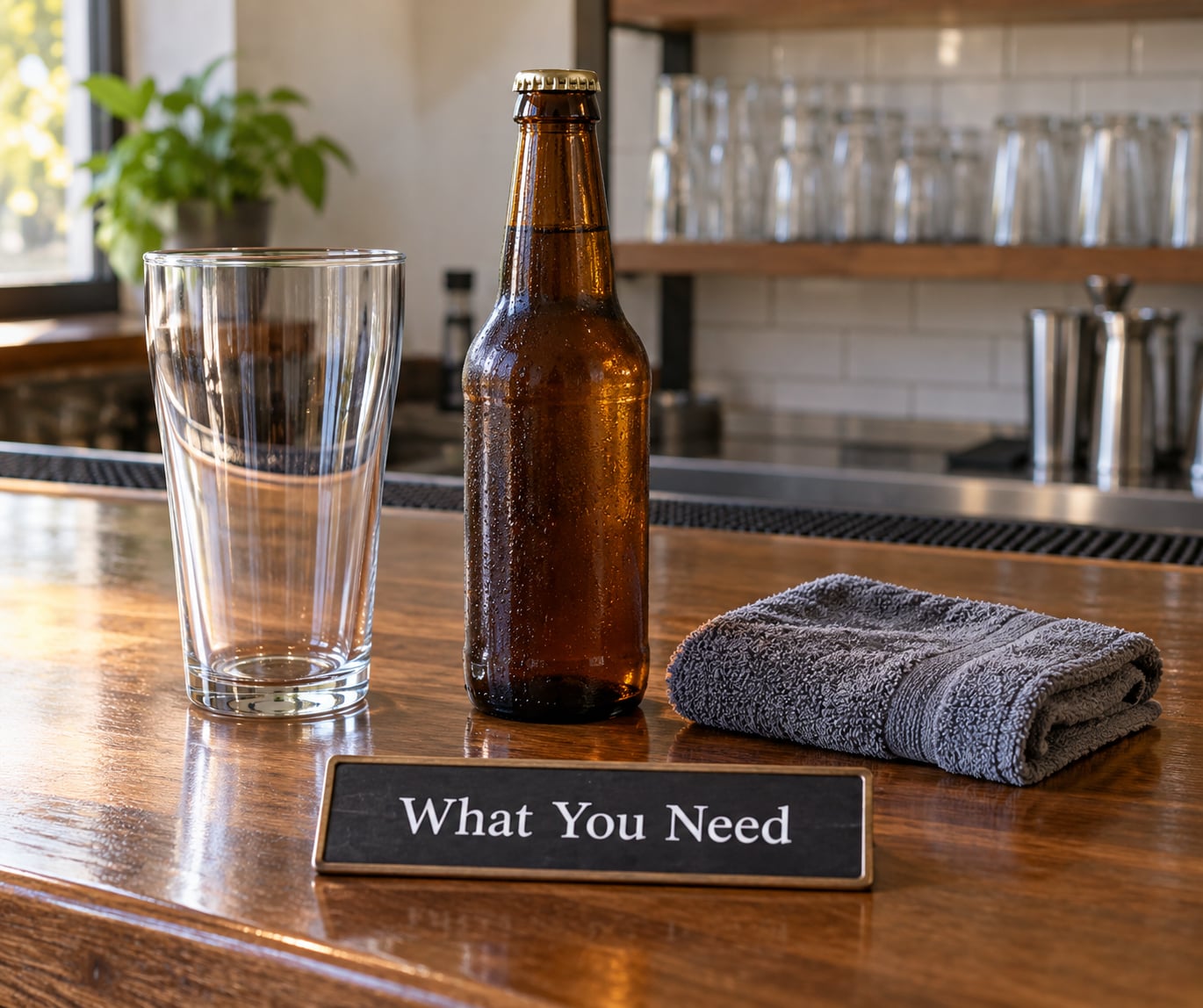
You do not need a tap tower or any equipment. You need the right glass, the right temperature, and about a minute of setup.
- A glass matched to the style. A stemmed nonic pint or a pilsner glass for lagers and ales, a tulip or weizen glass for wheat beers, a snifter for stouts and strong ales. Shape matters because a wider bowl traps more gas and holds a head better.
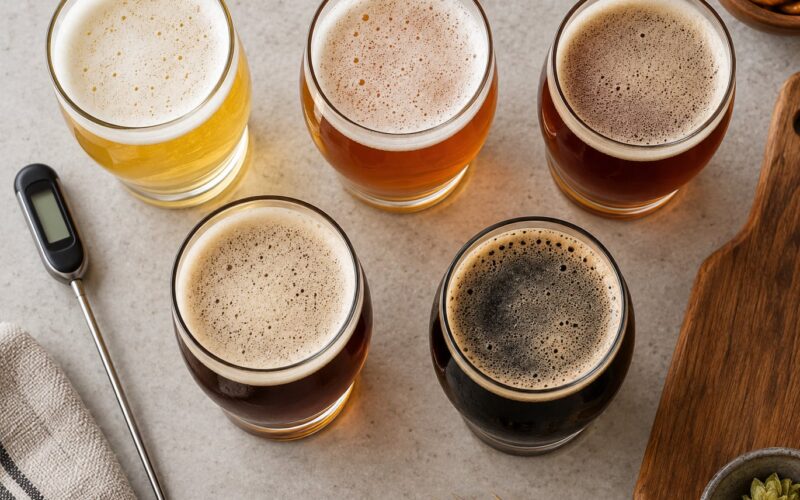
- The right temperature. Serve lighter beers cold and heavier ones warmer: lagers and pilsners at 40-45°F (4-7°C), pale ales and IPAs at 43-50°F (6-10°C), ambers, porters and strong beers at 46-54°F (8-12°C).
- Cold water. A quick pre-rinse chills the glass and washes off whatever is on it. This single habit fixes more dead-head problems than any technique change.
- A damp towel. For wiping the outside of the glass as you go, so your hand does not warm the bowl and warm the head.
- Optional. A rim brush, a bar mat to set the glass down on, and a second glass so you are not washing between pours.
Skip the freezer. A frozen mug looks like a party trick and it is the worst thing you can do to a pour. The shock freezes a thin layer against the glass, the beer chills below its serving range, aromas shut down, and the head comes out thin and short-lived. Cold, never frozen.
Step-by-Step: How to Properly Pour a Beer With a Head
Step 1: Chill and Choose the Right Glass
Rinse the glass with cold water and leave it cold. If you skip the rinse, detergent film, rinse aid and grease all coat the surface and the bubbles cannot hold on, so a clean-looking glass will still pour flat. The test is simple: if bubbles stick to the inside wall as they rise instead of releasing, that glass is not clean enough.
Cold glass, cold beer, both together. A room-temperature glass warms the first ounce fast, the carbon dioxide comes out of solution early, and the head goes flat before you carry it to the table.
Step 2: Tilt the Glass and Start Low
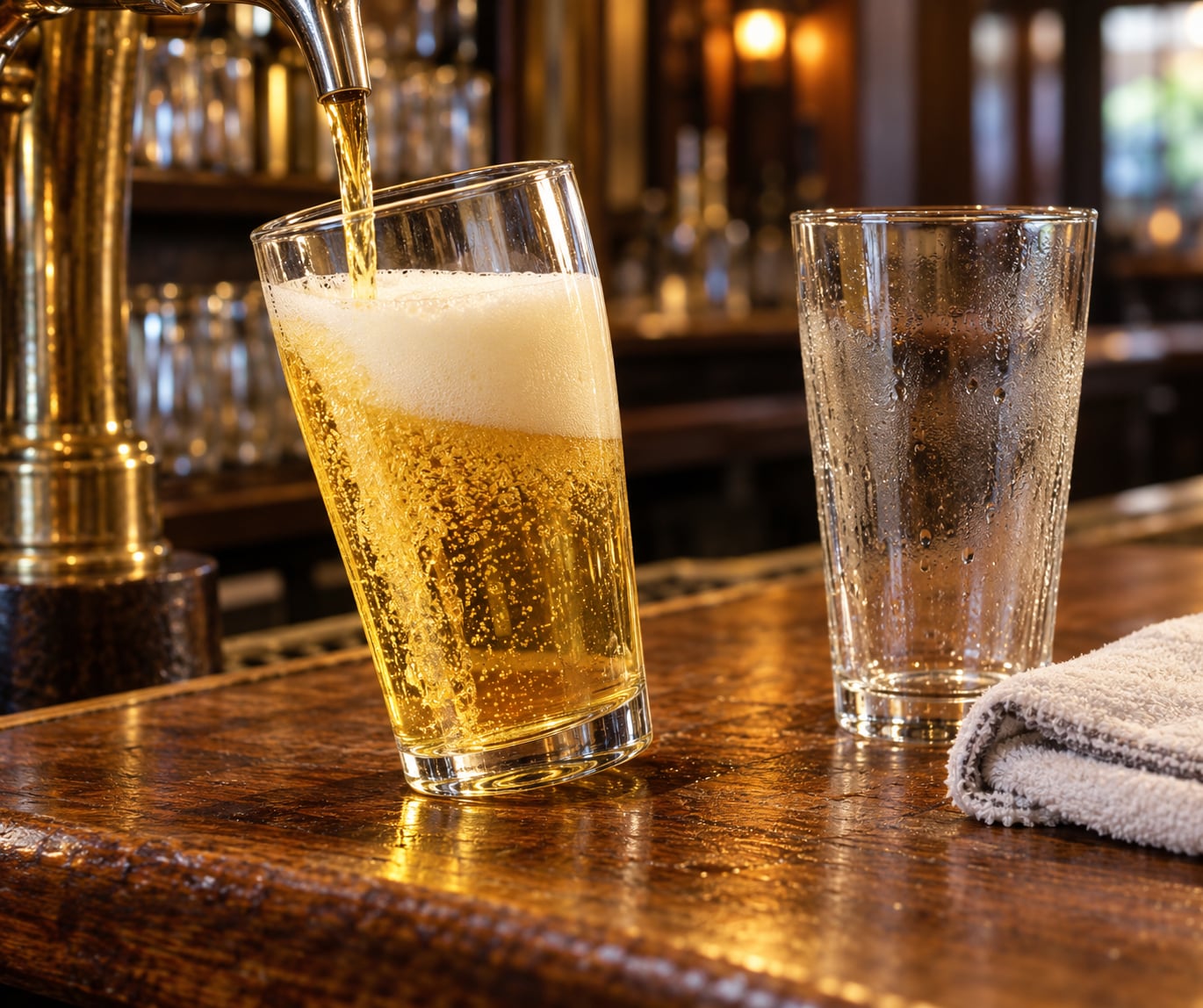
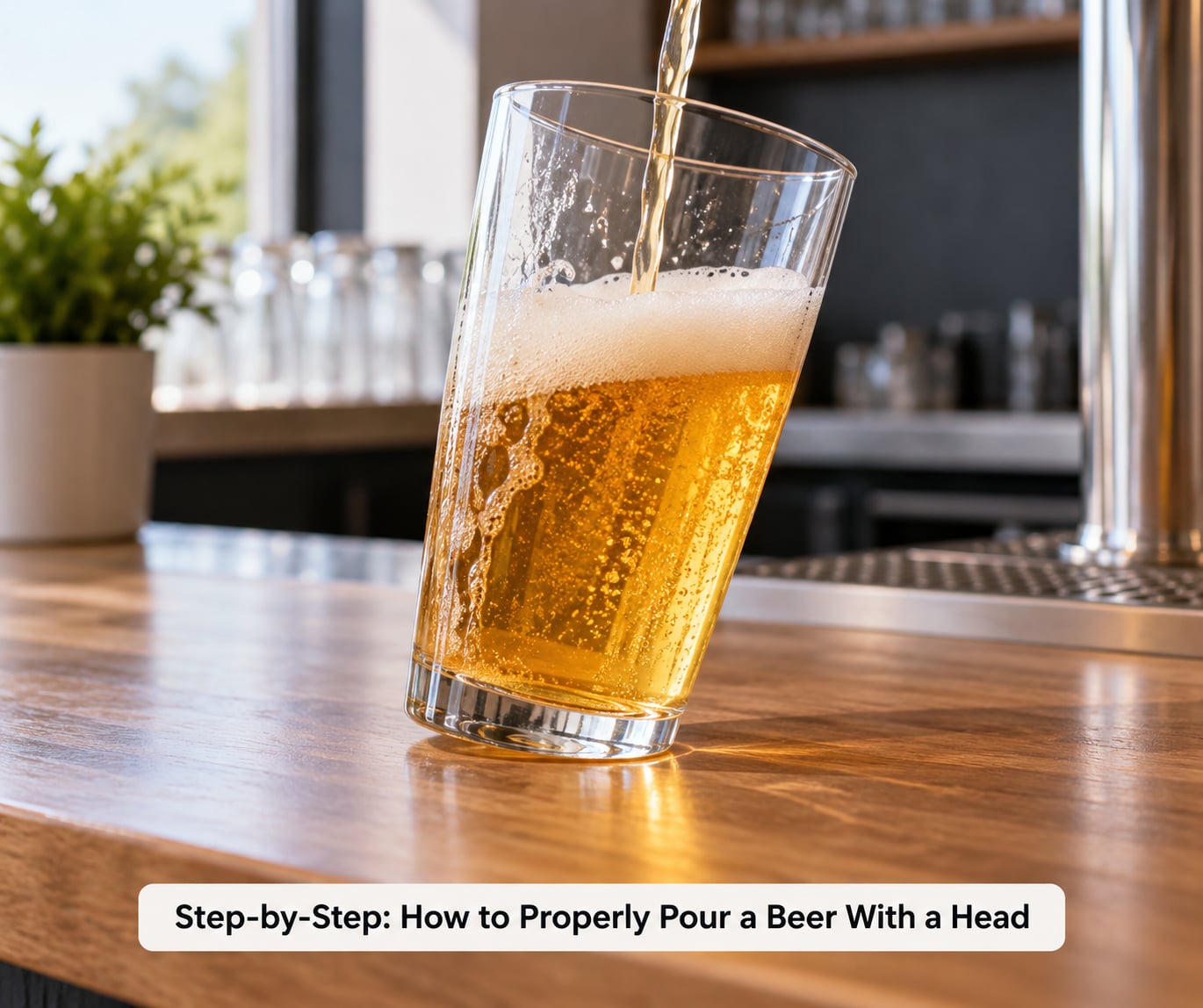
Grip the tap handle at its base and open it fully in one fluid motion. A partly opened faucet gives you an inconsistent stream, which creates more foam, not less. Hold the glass by the base or the stem with the rim tilted about 45 degrees from horizontal, and set the rim just under the spout with a couple of inches of drop.
You will see sources disagree on the exact angle. Thirty degrees turns up in some sommelier material, forty-five in bar training manuals. Both work. Forty-five is the better default for a home pour because the stream travels further down the wall and makes less turbulence; thirty degrees is a useful variation when you want to move faster or when you are pouring into a glass with a narrow base.
Two rules here that people break constantly. The glass never touches the faucet, and you never put the nozzle into the glass. A nozzle inside the glass aerates the beer directly and doubles the foam. More drop is better too: the further the beer falls before it lands, the more it churns, and churned beer foams. A glass that is all foam and barely any beer is the fastest way to lose a table, and anyone who has poured one at a busy bar will tell you the same.
Step 3: Build the Head Gradually (How to Get a Head on Beer)
Pour steadily down the inside wall until the glass is about two-thirds full. Then rotate the glass upright, aim the stream at the middle, and let the beer build its own foam. Stop the moment the foam reaches the rim, not a second after.
The counterintuitive part is pour speed. Pouring too slowly creates bigger foam than pouring at a moderate, steady rate. A stream so thin that it breaks into droplets is feeding the surface more nucleation than a smooth sheet of liquid. Do not stop halfway to let the foam settle either, and if the head grows past the rim in a small glass, keep pouring and let the excess run over into the drip tray. That is standard practice behind a bar and it is much better than trying to fix it with a spoon.
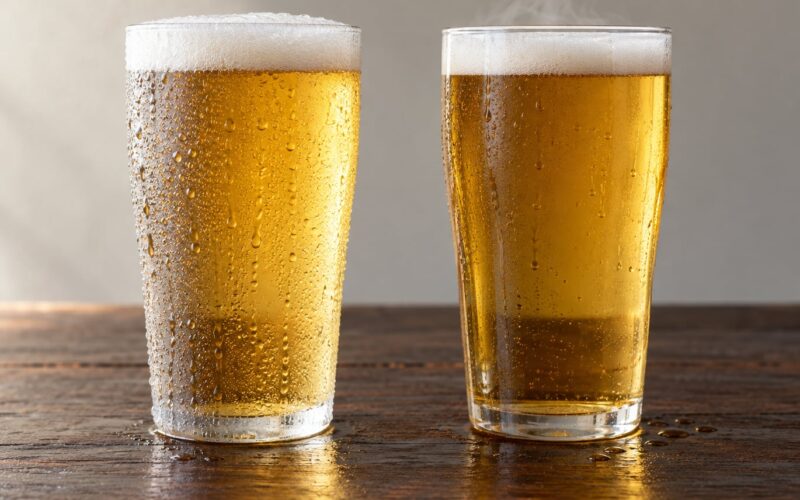
Aim for a head of one to 1.5 inches (2.5-4 cm), roughly two fingers, on most pours. More than that and you are drinking foam, less and the aroma never gets trapped.
Step 4: Let the Beer Settle and Serve
Let it stand for about twenty seconds before you lift it. Carry the glass from the base, not high on the bowl, so your hand does not warm the beer or leave fingerprints in the lacing. Set it down gently rather than sliding it across the bar.
A good head looks dense and pillowy, a cream-colored collar with fine lace patterns climbing the inside wall. Coarse, loose bubbles that pop and vanish mean too much turbulence in the pour. A head that collapses in thirty seconds almost always means a dirty glass or a beer that is warm.
Common Mistakes
Every one of these is fixable, and most of them are visible in the glass within seconds of the pour.
| What goes wrong | Why it happens | The fix |
|---|---|---|
| No head at all | Greasy or detergent-coated glass, or a warm glass | Rinse with cold water, no detergent, then chill |
| Head collapses fast | Glass is not clean, beer is too warm, or it lacks foam stability | Cold clean glass, correct serving temperature, a fresher pour |
| Massive foam, not enough beer | Pouring straight into the centre of an upright glass, or pouring from too high | Tilt to 45 degrees, pour down the side, lower the glass |
| Foam grows even more when you slow down | A thin broken stream feeds the surface more nucleation | Keep a steady moderate stream and never stop mid-pour |
| Head runs over the rim | Glass too small for the style, or too full too early | Use a larger glass, stop at the rim, let excess overflow into the tray |
| Pour foams from the first second | Nozzle touching or inside the glass, faucet only half open | Keep the glass below and clear of the spout, open the faucet fully |
| Headless look but good beer | Nitrogenated stout, or a beer that should be poured with no foam | Nitro stout is correct with a near-black headless look; skip the head-building step |
One more worth naming: the frozen mug. Ice-cold glass and ice-cold beer flatten the aroma and give you a thin, short-lived head. Chill properly and skip the frost.
Tips for Different Beer Styles
The method does not change. The target head size does, because styles carry different amounts of protein and carbonation, and those two things decide how much foam a beer can hold.
| Beer style | Target head | In cm | Fingers | Pour note |
|---|---|---|---|---|
| Lager or pilsner | 1 inch | 2.5 cm | 1 to 2 | Side pour, keep the foam tight and thin |
| Pale ale | 1 to 1.5 inch | 2.5-4 cm | 2 | Standard pour, watch the rim near the end |
| IPA or hazy IPA | 1.5 inch | 4 cm | 2 to 3 | Generous head is welcome, aroma is the point |
| Wheat beer or hefeweizen | 2 to 3 inch | 5-7 cm | 3 to 4 | Pour cloudy and cloudy-hazy, wake up the sediment |
| Stout or porter | 1 inch | 2.5 cm | 1 to 2 | Gentle side pour, less turbulence, creamy head |
| Nitrogenated stout | Almost none | 0 cm | 0 | Two-part pour: fill to 90 percent, wait, then top slowly |
| Belgian ale or dubbel | 2 inch | 5 cm | 2 to 3 | Bottle pour in two stages, swirl the last inch |
For a wheat beer, stop swirling the bottle a few inches from the bottom. That last cloudy pour is what a hefeweizen is supposed to look like, and bartenders in the know fight about it constantly.
For a bottle, hold the bottle by the body, not the neck, and do not tap the neck before pouring. Tapping does nothing except warm the beer and pull more carbonation loose. Pour in one continuous motion, side of the glass first, then a short final stage down the middle for Belgian ales.
For a can, crack the seal gently rather than wrenching it open, which releases a burst of carbonation that overflows the glass. Pour down the side at a 45-degree angle, then finish in the middle. Swirl the last inch for wheat beers and hazy IPAs.
For nitrogenated stout, the classic Guinness method has two stages. Fill the glass about 90 percent full in one steady pour and stop, then wait a few seconds for the nitrogen cascade to settle before topping up slowly. You are chasing a cascading effect, not foam. You will also notice a nitrogenated stout looks nearly headless, and that is correct rather than a failed pour.
Where you pour matters less than how. Working bartenders will tell you that dropping the glass a little lower under the spout changes the head, and they are right: a shorter drop means less turbulence and a tighter foam. The style of glass still wins, though, and enthusiasts notice immediately when a beer arrives in a small glass with no room for a head.
Frequently Asked Questions
Should beer be poured with a head?
Yes. A head is not decoration. The foam traps volatile aromatics and releases them as you drink, adds texture to the first sip, and slows carbonation release so the beer feels lighter rather than gassy. A beer with no head tastes flat and heavy, and it is the first sign of a careless pour or a dirty glass.
What is the correct way of pouring beer?
Hold the glass at about a 45-degree angle by the base, keep it clear of and just below the spout, and open the faucet fully in one motion. Pour down the inside wall until the glass is roughly two-thirds full, straighten it, pour down the middle, and stop the moment the foam reaches the rim. That leaves one to 1.5 inches of head on most styles.
How much head should a draft beer pour have?
One to 1.5 inches, which is 2.5-4 cm or roughly two fingers, on most styles. Working bar standards treat half an inch as the absolute minimum. Wheat beers and Belgian ales should carry a head three or four fingers thick, nitrogenated stouts should show almost none, and lagers and pilsners sit comfortably in the middle of the range.
Why is my beer not pouring with a head?
Check the glass first. Grease, detergent and rinse aid block the tiny imperfections bubbles need to grab, so a glass that looks clean still pours flat, and you can confirm it by watching bubbles cling to the inside wall. A warm glass or warm beer is the second cause. A cold-water pre-rinse and the correct serving temperature fix most cases on their own.
Should the glass touch the faucet when pouring?
No, and never put the nozzle inside the glass. Contact aerates the beer directly and doubles the foam, and it puts the stream on top of the liquid instead of down the wall where it belongs. Keep the rim a couple of inches below the spout with a little drop between them. A shorter drop gives a tighter, more controlled head.
Pour beer fast or slow for more head?
Steady and moderate beats both extremes. Pouring too fast from a height splashes the surface and blows up the foam, while pouring too slowly in a thin broken stream feeds the surface more nucleation and also creates extra foam. Do not stop halfway to let the foam settle either. If it overflows in a small glass, keep pouring and let the excess run off into the drip tray.
Start with the boring part, because it is where most pours fail: a cold glass rinsed with plain cold water, matched to the beer in front of you. Then tilt to 45 degrees, pour down the side until two-thirds full, straighten, and stop the moment the foam hits the rim. Everything else here is a variation on those four moves.